
Risk Profiles and Informed Consent


Welcome to a down to earth guide where we talk about risk profiles and informed consent in the world of open relationships. If you are exploring ethical non monogamy or ENM with a curious mind and a good heart you are in the right place. ENM stands for Ethical Non Monogamy a term used for relationship styles that include more than one romantic or sexual relationship with the knowledge and consent of everyone involved. We will break down risk in plain language explain the term consent and offer practical steps to keep the experience safe and positive for all involved.
Quick Links to Useful Sections
- What does informed consent mean in ENM
- Why risk profiling matters in ENM
- Key risk categories in open relationships
- Physical health and safety
- Emotional health and attachment
- Time and energy management
- Social and community risk
- Legal and financial risk
- Boundaries and boundary creep
- Informed consent in ENM a practical framework
- Core elements of informed consent
- How consent differs from permission
- Consent as a shared agreement not a veto
- Practical steps for risk profiling in ENM
- Realistic scenarios and how to respond
- Scenario one a new partner enters the scene
- Scenario two one partner travels for work and the distance heightens tension
- Scenario three a health change changes how consent works
- Communication strategies that support consent and safety
- I statements and reflective listening
- Check in scripts you can adapt
- Practical tools and templates for ENM consent
- Risk profile worksheet
- Consent renegotiation checklist
- Conversation starters for difficult talks
- Glossary of useful terms and acronyms
- Frequently asked questions
What does informed consent mean in ENM
Informed consent in open relationships is the ongoing process of making sure all people involved know what is happening what the boundaries are and what the potential emotional or physical risks could be. It is not a one time checkbox. Consent can be given and adjusted as feelings or situations change. Consent should be voluntary freely given and informed with no coercion or manipulation. Everyone should have access to the information they need to decide for themselves. If someone changes their mind consent can be revoked or renegotiated at any point without fear of punishment or guilt.
Why risk profiling matters in ENM
Risk profiling is not about scaring people away it is about making the unknown more manageable. When you know what could go wrong you can plan responses and create safeguards. A good risk profile helps partners make decisions together it supports trust and it reduces the chance of misunderstandings turning into pain or drama. The aim is not perfection but clarity and care. When the path gets murky you can refer back to your agreed guidelines and reset as needed.
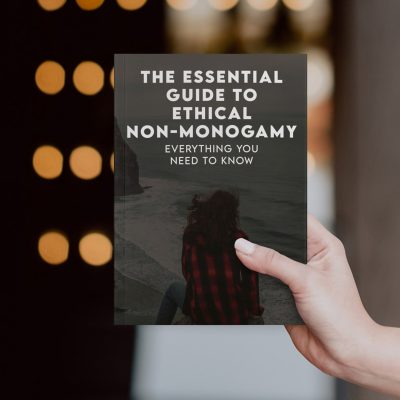
The freedom of an open relationship sounds incredible, but the logistics can feel like holding a grenade. That spinning "what if" anxiety isn't paranoia, it’s your survival instinct warning you that your bond is exposed. "Just seeing what happens" is the fastest way to turn a fantasy into a breakup.
The Essential Guide replaces chaos with discipline. We give you the blueprints, jealousy protocols, and repair scripts needed to explore the edge without falling off. Don't guess. Secure your foundation first.
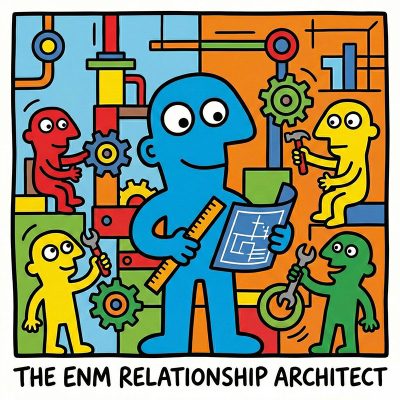
The world of non-monogamy is a maze of confusing labels. Trying to be "Polyamorous" when your heart actually needs "Swinging" isn't just a vocabulary error; it’s a recipe for misery.
You can't build a stable home on a foundation that doesn't fit your psychology. This tool analyzes your emotional bandwidth and jealousy triggers to design the exact structure you need. Stop trying to squeeze into a box that doesn't fit. Build a relationship that actually feels like home.

Opening up feels exciting, but if you aren't reading from the same script, you're writing a tragedy. The disconnect between "I want freedom" and "I want safety" is where hearts break. This isn't just a quiz; it’s a synchronization engine.
We identify the silent gaps in your desires—from sleepover rules to emotional bandwidth, before they become unbridgeable chasms. Don't wait until the damage is done to find out you were never on the same page. Align your compasses now.
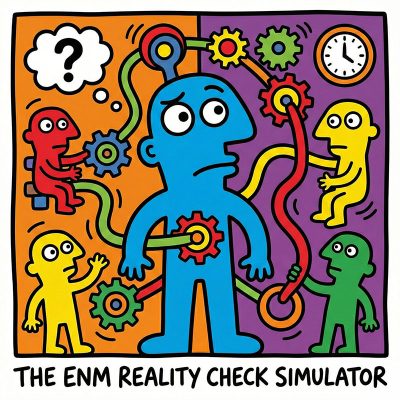
Theory is sexy. Reality is messy. You agreed you could date others, but how does your stomach drop when he takes her to your anniversary spot? Or when she comes home smelling like someone else?
This simulator drags your abstract rules into the harsh light of day. We force you to confront the visceral, gut-wrenching scenarios that actually destroy relationships, before they happen. Test your nervous system in the simulator so you don't crash the car in real life.
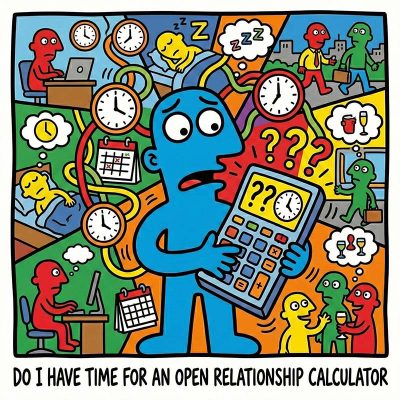
The fantasy is endless romance. The reality? It’s a logistical nightmare. Dating isn't just sex; it’s a second job of swiping, spending, and emotional processing that drains your sanity. Underestimating the "admin" of non-monogamy is the fastest way to turn your relationship into a burnout factory where resentment thrives.
This calculator forces you to confront the brutal math of your time, energy, and wallet. Can you actually afford this lifestyle, or are you just signing up for exhaustion?
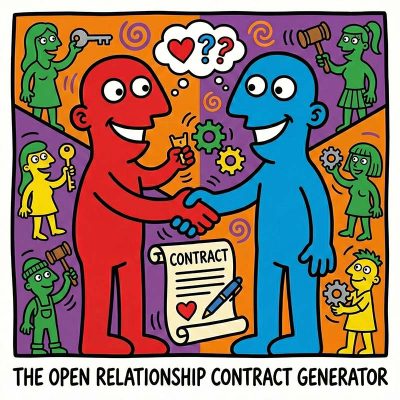
"I thought we agreed" is the sentence that destroys relationships & marriages. Relying on verbal promises when emotions run high is a gamble you cannot afford to lose. Your memory isn't just faulty; it's a liability. Ambiguity is the oxygen that jealousy breathes, turning "freedom" into a minefield of "did I mess up?"
This generator transforms vague permissions into a concrete, signed reality. Stop arguing about what you thought was said and lean on what is written. Secure your boundaries in ink, not hope.
Key risk categories in open relationships
Physical health and safety
Physical health risk is real in any dynamic that involves intimacy with more than one person. The basics are clear and doable with a plan. Regular STI testing is important especially if new partners are involved. Discuss testing frequency agree on what tests to take and how often. Use safer sex practices such as barrier methods and consistent condom use where appropriate. Some people choose to take PrEP or to discuss other preventive options with a medical professional. If pregnancy is possible talk about contraception pregnancy plans and what the group wants in that situation. Keep test results confidential between the people involved and share only what is necessary for safety.
Emotional health and attachment
Emotional risk is about feelings jealousy insecurity and the sense of emotional safety. It is normal for these feelings to arise when love grows in more than one direction. The key is open honest communication and proactive checking in. Some people find that journaling or therapy helps them identify patterns and triggers. Attending to the emotional needs of each person is essential. Compersion the sense of happiness for a partner when they are with someone else is a pleasant goal but it is not mandatory. A supportive environment where concerns can be discussed is the foundation here.
Time and energy management
Time is a finite resource and balancing more than one relationship takes planning. Overbooking can lead to exhaustion and to resentment. Create a realistic schedule that honours work rest and personal time. Build in regular check ins to adjust plans as life changes. The goal is sustainable connection not burnout.
Social and community risk
Social risk means potential judgments from friends family or colleagues. It can also mean the fear of stigma or misinterpretation. The best mitigation is clear communication with those who matter to you and privacy practices that you are comfortable with. Decide in advance who should know about which relationships and how much detail to share. Consider how to handle questions in social settings and what boundaries to set for talk about your dynamic in public forums.
Legal and financial risk
Legal risk is usually the subtle kind in ENM. There are no universal laws governing personal relationship structures but there can be practical concerns around parenting custody medical decision making and shared finances. Some couples choose to outline non binding agreements about boundaries or expectations. These are not contracts but living notes that are revisited as life changes. It is wise to seek professional guidance for complex situations especially when there are dependents shared assets or co custody involved.
Boundaries and boundary creep
Boundaries are the rules that define what is acceptable and what is not. Boundary creep happens when lines drift without a conversation. The antidote is regular renegotiation and explicit check ins. If someone crosses a boundary bring it up calmly and discuss how to restore safety for everyone involved. Boundaries should be specific concrete and revisited periodically.
Informed consent in ENM a practical framework
Let us translate the idea of consent into a practical actionable framework you can apply in real life. The goal is to keep conversations clear and decisions aligned with everyone values and goals.
Core elements of informed consent
- Knowledge of the situation People involved understand what is happening who is involved and what the potential risks are.
- Capacity to decide People have the emotional and cognitive ability to make a choice without coercion or pressure.
- Voluntary agreement Consent is given freely without manipulation threats or fear of consequences for saying no.
- Ongoing nature Consent is a living process that can be revised at any time as feelings or circumstances change.
- Specificity Consent is tied to a specific activity and to clear boundaries that have been discussed and agreed upon.
- Mutual alignment Everyone shares a common understanding of what is allowed and what is not within the agreed framework.
How consent differs from permission
Consent is an active ongoing agreement that can be revisited. Permission is often a one time yes that may be tacitly treated as a baseline. In ENM the air is healthier when a person can revisit what was agreed and adjust as life evolves. If a partner asks for something new or tweaks a boundary the other participants should have space to respond without pressure.
Consent as a shared agreement not a veto
In a healthy ENM dynamic consent is not a tool to achieve a yes from everyone no matter what. It is a process that helps people know where they stand and what they are willing to try or not. A veto is a powerful move and should be rare and handled with care through a calm conversation. The goal is connection not control.
Practical steps for risk profiling in ENM
- Map the relationships Create a simple map listing who is involved what role they play and how they connect. Include primary partners secondary partners and casual connections if any. The map helps you see where risk may lie and who is affected by a decision.
- Identify potential risk areas For each relationship consider physical emotional time social legal and financial risks. Don t rush the thinking. Include any unique concerns that come with shared housing children or long distance connections.
- Assess likelihood and impact For each risk guess how likely it is to occur and how serious it would be if it did. Use a simple scale such as low medium or high for both axis. This helps you prioritize which risks to address first.
- Agree on mitigation and safeguards For high risk items decide what steps will reduce the chances of the risk becoming real. This can include testing schedules boundaries or safer sex agreements. Create a shared plan with clear actions and owners for each step.
- Document decisions and boundaries Write down the key points in a simple document that all people can access. This does not replace conversation but it creates a reference you can all consult when there is doubt.
- Schedule routine check ins Set a recurring time to review how things are going and adjust as needed. Be proactive not reactive so small issues do not become big problems.
- Respect ongoing consent Accept that a person can change their mind at any time. If someone withdraws consent the others pause and renegotiate or pause the activity until everyone is aligned again.
Realistic scenarios and how to respond
Scenario one a new partner enters the scene
Two partners in a long term arrangement decide to explore dating someone new. The new energy is exciting yet it can stir up jealousy and insecurity. Start with a candid conversation about expectations how much time you want to dedicate to each connection and what constitutes emotional sharing. Agree on a testing and disclosure plan for safety and transparency. Revisit boundaries after a couple of weeks as you all settle into the new rhythm.
Scenario two one partner travels for work and the distance heightens tension
Distance can magnify insecurity. Set up regular video dates and short messages that keep you connected. Decide on a boundary about who shares what details and when. Use check ins to talk about feelings before they grow into arguments. If a partner feels overwhelmed discuss slowing down the pace or pausing certain forms of connection until the relationship feels stable again.
Scenario three a health change changes how consent works
If someone learns they are carrying a health condition or if medications change the dynamic shift. Have a frank talk about risk and how it affects sexual safety emotional closeness and time commitments. Update consent documents and check ins to reflect the new reality. This kind of renegotiation is a sign of care not a failure.
Communication strategies that support consent and safety
Clear warm communication keeps ENM healthy. Use speaking styles that reduce defensiveness and invite collaboration. Two useful approaches are to use I statements and to invite responses with open ended questions.
I statements and reflective listening
When you share your feelings start with I or we statements. For example I feel unsettled when we skip safety checks and I would prefer to talk before I meet someone new. After you speak invite reflection by asking what you heard or what the other person needs to feel safe. Reflective listening can help everyone feel heard and understood.
Check in scripts you can adapt
Try a few of these patterns in a calm moment not in the heat of the moment. These are simple and non confrontational.
- Let s pause and check in about how this feels for you.
- What would make this easier for you to handle right now?
- What is one boundary we should sharpen before we proceed?
- How can I show up in a way that respects your needs and ours together?
Practical tools and templates for ENM consent
Having practical tools helps you translate talk into action. Below you will find simple templates that you can copy and adapt. They are designed to be easy to use in real life not read like a legal document.
Risk profile worksheet
Use this worksheet to capture momentum and concerns. List each risk then note the probability and impact then add a mitigation plan and who is accountable.
- Relationship People involved and their roles.
- Risk A brief description of the risk.
- Probability Low medium or high.
- Impact Low medium or high.
- Mitigation What steps will reduce risk or make it safer.
- Owner Who is responsible to implement the mitigation.
- Review date When will you revisit this item.
Consent renegotiation checklist
When things shift use this quick checklist to reset the conversation. Start with a calm tone and invite responses from everyone involved.
- Describe what has changed and how it affects current agreements.
- Ask each person how they feel about the update and what they need.
- Propose concrete adjustments and confirm everyone is on board.
- Record the new terms and set a check in date.
Conversation starters for difficult talks
Use these to open delicate topics and reduce defensiveness.
- I want to understand how you feel about this and I am not aiming to win the argument.
- What would make this easier for you to handle right now?
- What is one boundary that feels essential to protect your wellbeing?
- How can we keep our connection strong while we explore new dynamics?
Glossary of useful terms and acronyms
- ENM Ethical non monogamy a relationship style where multiple partners are involved with consent and honesty.
- Open relationship A relationship openly allowing more than one romantic or sexual connection with all parties informed.
- Consensual non monogamy Another way to describe ENM focusing on mutual agreement.
- STI Sexually transmitted infection a health risk that is mitigated by testing and safer practices.
- PrEP A medication that reduces the risk of HIV transmission when taken as prescribed.
- Boundaries Clear agreements about what is allowed and what is not in a given situation.
- Check in A regular conversation to assess how everyone is feeling and what might need to change.
- Coercion Pressuring someone to agree to something that they would not choose freely.
- Veto A decision by one person to block a proposed plan a rarely used mechanism and one that should be avoided in healthy ENM.
- Compersion The positive feeling when a partner is happy with a different connection.
Frequently asked questions
What is the best way to start a risk discussion in ENM
Choose a calm moment and frame the talk around safety and care. Use I statements and invite responses. Start with a simple question such as what concerns do you have about meeting someone new or how do we want to handle testing and disclosure.
How often should we test for STIs in an ENM dynamic
The frequency depends on how many partners you have and how you crew interacts. A common approach is to test with each new partner and to test regularly every three to six months for those with multiple partners. If anyone experiences symptoms or exposure they should seek testing immediately.
Is a written consent document useful
A written consent document can be helpful as a reference it should not replace ongoing conversations. It works best as a living document that you review and update during check ins. It should be accessible to all involved and updated with any changes in dynamics boundaries or health status.
How do I handle jealousy within an ENM setup
Jealousy is normal the key is acknowledging it and exploring its roots. Talk about what triggers jealousy and what each person can do to reduce harm. Some find it helpful to scale down a new connection or to introduce additional a which share time or to create rituals that reinforce the bond with their primary partner.
What role do emotions play in informed consent
Emotions do not negate consent they are data that informs how you move forward. If someone feels uncertain or pressured the best move is to pause renegotiate or step back until everyone feels safe and able to consent clearly again.
Can consent be withdrawn after a contract is signed
Yes consent can be withdrawn at any time if someone changes their mind the activity should stop and a renegotiation should begin. A practice many find useful is to set up a monthly or quarterly consent review to catch issues early and keep the dynamic healthy.
Should we discuss boundaries with former partners when new people are involved
Yes if it affects safety or emotional wellbeing it is wise to discuss boundaries with all involved. The focus should be on safety respect and mutual care. Hidden details can create distrust so openness is usually the best path forward.
The freedom of an open relationship sounds incredible, but the logistics can feel like holding a grenade. That spinning "what if" anxiety isn't paranoia, it’s your survival instinct warning you that your bond is exposed. "Just seeing what happens" is the fastest way to turn a fantasy into a breakup.
The Essential Guide replaces chaos with discipline. We give you the blueprints, jealousy protocols, and repair scripts needed to explore the edge without falling off. Don't guess. Secure your foundation first.
The world of non-monogamy is a maze of confusing labels. Trying to be "Polyamorous" when your heart actually needs "Swinging" isn't just a vocabulary error; it’s a recipe for misery.
You can't build a stable home on a foundation that doesn't fit your psychology. This tool analyzes your emotional bandwidth and jealousy triggers to design the exact structure you need. Stop trying to squeeze into a box that doesn't fit. Build a relationship that actually feels like home.
Opening up feels exciting, but if you aren't reading from the same script, you're writing a tragedy. The disconnect between "I want freedom" and "I want safety" is where hearts break. This isn't just a quiz; it’s a synchronization engine.
We identify the silent gaps in your desires—from sleepover rules to emotional bandwidth, before they become unbridgeable chasms. Don't wait until the damage is done to find out you were never on the same page. Align your compasses now.
Theory is sexy. Reality is messy. You agreed you could date others, but how does your stomach drop when he takes her to your anniversary spot? Or when she comes home smelling like someone else?
This simulator drags your abstract rules into the harsh light of day. We force you to confront the visceral, gut-wrenching scenarios that actually destroy relationships, before they happen. Test your nervous system in the simulator so you don't crash the car in real life.
The fantasy is endless romance. The reality? It’s a logistical nightmare. Dating isn't just sex; it’s a second job of swiping, spending, and emotional processing that drains your sanity. Underestimating the "admin" of non-monogamy is the fastest way to turn your relationship into a burnout factory where resentment thrives.
This calculator forces you to confront the brutal math of your time, energy, and wallet. Can you actually afford this lifestyle, or are you just signing up for exhaustion?
"I thought we agreed" is the sentence that destroys relationships & marriages. Relying on verbal promises when emotions run high is a gamble you cannot afford to lose. Your memory isn't just faulty; it's a liability. Ambiguity is the oxygen that jealousy breathes, turning "freedom" into a minefield of "did I mess up?"
This generator transforms vague permissions into a concrete, signed reality. Stop arguing about what you thought was said and lean on what is written. Secure your boundaries in ink, not hope.
