
Setting Expectations for the First Three Months


Let us get real about the first three months in an open relationship or ethical non monogamy which we will call ENM from here on. ENM is not a free pass to do whatever you want nor is it a guarantee that every desire will be perfectly fulfilled. Open relationships are about choice communication consent and ongoing negotiation. The first three months are a window where you lay the groundwork learn more about yourself and grow with your partner or partners. The aim is to build a foundation you both feel good about while navigating new textures of connection energy and time. This guide breaks down practical steps words and frameworks you can use to set expectations that actually stick. We explain terms and acronyms as we go so you can speak the language together without confusion.
Quick Links to Useful Sections
- What ENM is and why the first three months matter
- Key terms and acronyms explained so you can talk with confidence
- The month by month map for the first three months
- Month one focus: Foundations and safety first
- Month two focus: Reassessment and adjustment
- Month three focus: Growth alignment and agreement evolution
- Common scenarios you might encounter and practical responses
- Scenario 1: A new date creates unexpected distance
- Scenario 2: Scheduled date overlaps with a previous plan
- Scenario 3: Jealousy arises around sexual experiences
- Scenario 4: Health and safety concerns
- Scenario 5: A partner wants more time or less time than you
- Structure what to talk about in your first three months
- Practical tips to keep you on track during the first three months
- The realities of open dynamics and what not to assume
- A simple glossary you can reference quickly
- Frequently asked questions
- Practical on the ground takeaways for the first three months
- Final reminders for staying aligned
- Checklist for the next three months
What ENM is and why the first three months matter
ENM stands for Ethical Non Monogamy. In plain terms it means choosing to have relationships with more than one person with the knowledge and consent of everyone involved. There are many shapes a dynamic can take. Some common labels include open relationships polyamory or swinging. The exact setup is between you and your partners and it can evolve over time. The first three months matter because this is when you test what works what feels off and what needs to be adjusted. It is also when you build a habit of talking openly about desires boundaries and feelings before old patterns kick in. Think of this period as a practical onboarding with your heart involved. The goal is to avoid guessing games and to replace guessing with clear agreements and regular check ins.
Key terms and acronyms explained so you can talk with confidence
Here are common ENM terms you will hear. We keep explanations short so you can drop them into everyday conversation without hesitation.
- ENM Ethical Non Monogamy. A relationship framework where you and your partners agree to relationships with others outside your main pairing.
- Polyamory A form of ENM where people have romantic connections with more than one partner at the same time.
- Open relationship A flexible arrangement where partners allow dating or sexual experiences with others outside the primary relationship.
- Primary The partner or relationship that you consider most central or long term in your life. This label is optional and not every couple uses it the same way.
- Secondary A partner who is important but not at the top tier. Terms like primary and secondary can be fluid and context specific.
- Meta The other partner or partners in the network. Some people call the meta a person you both share or a partner of your partner.
- Boundary A guardrail that protects your comfort and safety. Boundaries are about what is okay or not okay for you personally.
- Agreement A practical arrangement that you and your partners commit to. Agreements can be written or verbal but should be revisited regularly.
- Jealousy A normal feeling that can signal a boundary or need you want to address. Jealousy is about you and your needs not about another person’s value.
- Compersion The feeling of joy when a partner experiences happiness with someone else. It is the opposite of jealousy in many moments.
- Check-in A scheduled or spontaneous conversation to assess how things are going and adjust as needed.
- Rostering Keeping track of dating partners and time that has been scheduled with them. Rostering helps with visibility and planning.
- SCARF A simple memory aid for conversations about safety consent and comfort. Stands for Stories Choices Agreements Rules Feelings.
- Live agreements Agreements that you actively revisit and adjust as your life and feelings change.

The freedom of an open relationship sounds incredible, but the logistics can feel like holding a grenade. That spinning "what if" anxiety isn't paranoia, it’s your survival instinct warning you that your bond is exposed. "Just seeing what happens" is the fastest way to turn a fantasy into a breakup.
The Essential Guide replaces chaos with discipline. We give you the blueprints, jealousy protocols, and repair scripts needed to explore the edge without falling off. Don't guess. Secure your foundation first.

The world of non-monogamy is a maze of confusing labels. Trying to be "Polyamorous" when your heart actually needs "Swinging" isn't just a vocabulary error; it’s a recipe for misery.
You can't build a stable home on a foundation that doesn't fit your psychology. This tool analyzes your emotional bandwidth and jealousy triggers to design the exact structure you need. Stop trying to squeeze into a box that doesn't fit. Build a relationship that actually feels like home.

Opening up feels exciting, but if you aren't reading from the same script, you're writing a tragedy. The disconnect between "I want freedom" and "I want safety" is where hearts break. This isn't just a quiz; it’s a synchronization engine.
We identify the silent gaps in your desires—from sleepover rules to emotional bandwidth, before they become unbridgeable chasms. Don't wait until the damage is done to find out you were never on the same page. Align your compasses now.

Theory is sexy. Reality is messy. You agreed you could date others, but how does your stomach drop when he takes her to your anniversary spot? Or when she comes home smelling like someone else?
This simulator drags your abstract rules into the harsh light of day. We force you to confront the visceral, gut-wrenching scenarios that actually destroy relationships, before they happen. Test your nervous system in the simulator so you don't crash the car in real life.
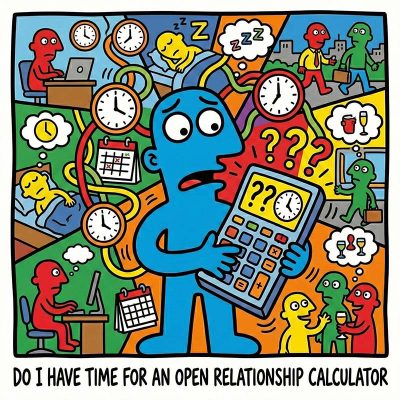
The fantasy is endless romance. The reality? It’s a logistical nightmare. Dating isn't just sex; it’s a second job of swiping, spending, and emotional processing that drains your sanity. Underestimating the "admin" of non-monogamy is the fastest way to turn your relationship into a burnout factory where resentment thrives.
This calculator forces you to confront the brutal math of your time, energy, and wallet. Can you actually afford this lifestyle, or are you just signing up for exhaustion?
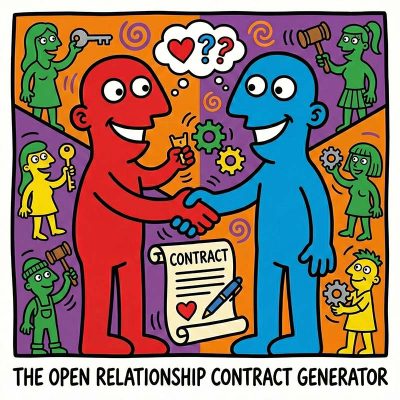
"I thought we agreed" is the sentence that destroys relationships & marriages. Relying on verbal promises when emotions run high is a gamble you cannot afford to lose. Your memory isn't just faulty; it's a liability. Ambiguity is the oxygen that jealousy breathes, turning "freedom" into a minefield of "did I mess up?"
This generator transforms vague permissions into a concrete, signed reality. Stop arguing about what you thought was said and lean on what is written. Secure your boundaries in ink, not hope.
The month by month map for the first three months
Below is a practical map you can adapt. It is not a rigid timetable but a sequence of priorities with flexible check ins. Take what helps and leave what does not fit your life and energy levels. The aim is to create clarity safety and care while you explore new dynamics together.
Month one focus: Foundations and safety first
Month one is all about laying the groundwork. You are learning each other again in a different frame and you want to minimize drama while maximizing understanding. Start with a shared narrative about what you want and why you want it. Do not assume your partner knows what you feel or what you fear. This is the moment to practice clear nonjudgmental communication and to begin regular check ins that become a habit instead of a special event.
- Make your core agreements explicit sit together and write down how you both want to handle dating outside the relationship. Cover topics like allowed activities who but not who when and how you will talk about dates.
- Clarify sleep and energy boundaries discuss how much emotional energy you can and want to invest outside the primary relationship. Decide how you will handle nights when you feel tired or overwhelmed.
- Health and safety share how you will approach safer sex STI testing and communication about potential exposures. Agree on honesty and transparency as a baseline value.
- Communication cadence set a regular rhythm for check-ins and updates. This can be a weekly 20 minute talk or a daily 5 minute message depending on what fits your lives.
- Emotional literacy practice learn to name your feelings clearly. Use language that describes your experience rather than blaming the other person.
- Boundary clarity define what is and is not allowed in dating scenarios for example solo dates vs group events or public spaces only.
- Expectations management agree on how you will handle disappointments or unmet expectations without accusing each other of wrongdoing.
- Realistic scope decide how many external relationships you want to explore in the near term and whether you want to cap new partners at a certain number.
Practical scripts for Month one
- Opening a conversation about openness you could say I want us to explore ENM in a way that leaves room for your comfort and mine. I would love to hear what your dream scenario looks like and what would feel like a red line for you.
- When discussing limits you might frame it as I feel X when Y happens and I would prefer Z if possible. This keeps the focus on your feelings and needs without accusing your partner.
Month two focus: Reassessment and adjustment
In month two you will start to see patterns and you may notice gaps in your agreements. This month is about recalibration. It is common to discover new needs or stronger boundaries as you live the ENM life day to day. The goal is not to peel back the openness but to strengthen trust and ensure your agreements stay useful as you evolve.
- Review and revise agreements go over your original documents and see what still fits. If it does not fit now adjust it together rather than letting resentment grow.
- Identify triggers without blame pay attention to moments when you feel anxious jealous or uncertain. Name the trigger and then explore the underlying need with your partner.
- Communicate about time management with more partners you may have busier weeks or quiet weeks. Create a time plan that respects everyone including you.
- Social energy balance note how much social energy you have for dates and meetups and plan accordingly. You do not want to burn out early.
- Meta relationships and boundaries if there is a meta partner discuss how your relationships affect each other. Decide how much information to share and what privacy looks like for you both.
- Health checks as a team agree to stay current on sexual health dating safety and any required testing. Health is a shared responsibility and a sign of care for all involved.
- Practice compassionate jealousy work when jealousy arises respond with curiosity rather than accusation. Ask what the need is and how you can meet it together.
Two sample conversations for Month two
- Jealousy moment you could say I notice I am feeling a bit jealous after hearing about your date with Alex. I want to understand what this means for me and how we can support each other through this emotion.
- Boundary update you might say I am comfortable with casual dating but I want a rule about overnight stays on weeknights to protect our connection. Is that workable for you
Month three focus: Growth alignment and agreement evolution
In the third month you should feel more confident in your ability to navigate ENM and you will start to see a stable pattern emerge. This is the moment to formalize and or renew agreements to reflect the reality you created together. It is also the moment to talk about long term visions in a non pressuring way so you can decide together how this dynamic might look in the next six to twelve months.
- Refine your live agreements move from generic guardrails to concrete rules and check in on how they feel in practice. Adjust wording if needed to keep things clear.
- Future planning discuss your hopes for long term growth or consolidation. Decide if you want to continue expanding your ENM network or if a more stable trio or quartet makes sense for now.
- Energy budgeting keep an eye on your energy levels across all relationships. Create space for rest and personal time to avoid burnout.
- Community signals talk about how you will handle social circles whether you go to events together or separately or in mixed groups. Agree on boundaries around sharing details with others outside your network.
- Reflection ritual establish a monthly practice to reflect on what has changed and what you still want to improve. This creates continuity and safety over time.
Examples of growth oriented statements you can try in Month three
- We are both comfortable exploring new partners and we want to keep our communication vibrant and honest about our needs.
- Our energy budget allows for two meaningful connections this quarter and any additional connection should be aligned with both of our schedules.
- We commit to a monthly check in that we both lead alternately to ensure balance in how we express concerns and celebrate wins.
Common scenarios you might encounter and practical responses
Real life is messy and unpredictable especially when you are navigating multiple connections. Here are a few realistic situations and calm practical ways to respond so you keep the trust beam intact.
Scenario 1: A new date creates unexpected distance
What might happen in your open relationship is you get excited about a new person and you notice your partner pulls back a little. You may start to worry that you are not enough or that you will lose what you share. The healthy response is to pause and check in with a calm tone.
Try this approach: Say I am glad you are meeting someone new. I notice I am feeling a little anxious and I want to understand how this new connection fits with our plans. Can we set a time to talk later today so I can hear what this means for us
Scenario 2: Scheduled date overlaps with a previous plan
Time management is a big part of ENM. When two dates collide with your shared plans you want to avoid guilt and blame. You can acknowledge the overlap and propose a reschedule that respects both commitments.
Example: I see we have a date with Sam on Thursday that overlaps with our movie night. I value our time together and I want to keep both commitments. Can we shift our plans by one hour or swap to a different night
Scenario 3: Jealousy arises around sexual experiences
Jealousy is a signal not a verdict about your worth. The right move is to pause breathe and explore the underlying need. Do you need more reassurance more transparency more time with your partner another type of connection with your partner or more personal space
A constructive script could be I am feeling a twinge of jealousy after hearing about your encounter with Jordan. I would like to know more about how you felt and what you need from me in this moment
Scenario 4: Health and safety concerns
Health matters are non negotiable. If concerns arise communicate them clearly and do not wait for a problem to escalate. You can say I want to talk about how we approach safer sex and testing this week. I prefer open sharing of test results and ongoing transparency about any risks that come up
Scenario 5: A partner wants more time or less time than you
Energy and time are finite resources. If one person wants more time and another needs more space you can negotiate a plan that respects both wants. A practical tactic is a hybrid schedule that balances in person time with remote connection while preserving core intimacy with your primary partner.
Structure what to talk about in your first three months
Having a routine for conversations makes the hard stuff easier. The following structure helps you cover all bases without turning every talk into a debate.
- Observations start with what you notice in behavior or mood. For example I have noticed we have not been sharing date details as much as before.
- Feelings name your emotions without blame. Example I feel anxious sometimes when I hear about new dating activity.
- Needs connect emotion to a need. Example I need more transparency and reassurance about our engagement with other people.
- Requests make a concrete request and keep it actionable. Example Would you be open to a weekly 20 minute check in where we share upcoming dates and feelings about them
That structure is a simple version of a method called a communication framework. It helps you stay focused on needs rather than falling into accusations or assumptions. It is a powerful tool for ENM dating where feelings can be intense and information can shift quickly.
Practical tips to keep you on track during the first three months
- Schedule regular check ins a standing time reduces anxiety because you know when you will talk about important stuff instead of letting concerns build up.
- Write things down keep a shared document or journal where you both log agreements updates and important dates. Written records reduce confusion and memory gaps.
- Use I statements speak from your experience not from a place of accusation. For example I feel unsettled when plans change last minute rather than You always cancel plans
- Respect boundaries a boundary is a personal limit that deserves care even when it is inconvenient. If you need a change you discuss it and adjust together.
- Practice safe sex talk about who is tested when where and how to share results. Make safety a shared value rather than a point of negotiation during a tense moment.
- Keep expectations aligned if you realize you miss a step or if a date went differently revise the plan for next time. Agreements are live not fixed in stone.
- Be kind to yourself and your partners ENM is a learning process. You will make mistakes and that is okay as long as you repair and learn.
The realities of open dynamics and what not to assume
A common pitfall is assuming that more sexual openness automatically means more satisfaction or more love. In reality ENM is about expanding choices while maintaining clear boundaries and emotional safety. You may discover that certain fantasies or expectations do not suit your life. That is normal and something you can renegotiate with care. The goal is a network that supports your well being and aligns with what you both want now not what you think you should want because of outside noise or relationship myths.
A simple glossary you can reference quickly
- Boundaries personal limits about what you will accept or not accept in any relationship including safety emotional proximity and exposure to certain situations.
- Compersion joy you feel when your partner experiences happiness with someone else. It is a positive counterpart to jealousy.
- Jealousy an invitation to understand your own needs better rather than a reason to shut down or blame.
- Rostering tracking who you are dating and when to help you stay organized and considerate of others’ time.
- Safety and consent ongoing agreement about what is okay for all parties involved and explicit consent before any new activity begins.
- Meta the term some ENM networks use for the other primary or partnered person in the shared ecosystem.
Frequently asked questions
In this section we answer common questions people have during the first three months of ENM. If your question is not listed here you can contact us and we can tailor guidance to your exact situation.
How soon should we discuss ENM after deciding to try it
Talk about it as soon as you both feel ready. It is better to address the desire to explore outside the primary relationship early rather than letting hidden expectations create friction later.
What is the best way to handle jealousy in the early months
Recognize jealousy as information about a need. Name the feeling and the need behind it. Then discuss practical steps you can take together such as more frequent check ins or scheduling adjustments.
How many partners should we consider in the first three months
There is no one size fits all. Some couples start with one outside connection, others test multiple. The key is to ensure your agreements keep you both feeling safe and supported and that you can manage your schedules.
What if one partner wants more openness than the other
That is a signal for a deeper conversation about needs boundaries and comfort levels. It may involve taking small steps together while rechecking the long term goals. You can pause to reassess and revisit expectations.
How do we keep health and safety a priority
Share the testing status discuss safer sex practices and set expectations for transparency about exposures. Create a plan that both partners feel confident in and revisit it if circumstances change.
Should we use a formal written agreement
Written agreements can be helpful especially for complex networks. They reduce ambiguity and make it easier to revisit topics as life changes. If you prefer to start verbally that is fine as long as you plan to formalize it later.
What is compersion and how can we cultivate it
Compersion is the genuine happiness you feel for a partner when they find joy with someone else. It grows with open honest communication patience and shared positive experiences. Practice focusing on your partner’s joy and celebrate their connections when appropriate.
Practical on the ground takeaways for the first three months
- Set up a shared space for agreements and notes and keep it up to date.
- Schedule regular check ins and protect that time no matter what. Consistency matters more than intensity early on.
- Practice clear non judgmental language so conversations stay constructive even when feelings run high.
- Be mindful of energy and time. Do not overload yourselves with multiple dates the moment you start expanding your network.
- Always default to safety and consent as the baseline of every interaction with others.
Final reminders for staying aligned
The first three months are an active period of learning. You will test boundaries you will adjust expectations and you will grow together if you stay curious and kind. There is no finish line here only a willingness to communicate honestly and to care for yourselves and for each other. If you remember one thing from this guide let it be this you deserve a relationship environment that respects your needs and supports your growth. ENM is not about speed or quantity it is about clarity consent and a sustainable sense of safety for everyone involved.
Checklist for the next three months
- Review all agreements and update as needed.
- Establish a steady check in cadence that fits both of you.
- Document boundaries and any changes in rosters or partner arrangements.
- Maintain health safety practices and share testing results as agreed.
- Practice compassionate communication and be ready to renegotiate when needed.
The freedom of an open relationship sounds incredible, but the logistics can feel like holding a grenade. That spinning "what if" anxiety isn't paranoia, it’s your survival instinct warning you that your bond is exposed. "Just seeing what happens" is the fastest way to turn a fantasy into a breakup.
The Essential Guide replaces chaos with discipline. We give you the blueprints, jealousy protocols, and repair scripts needed to explore the edge without falling off. Don't guess. Secure your foundation first.
The world of non-monogamy is a maze of confusing labels. Trying to be "Polyamorous" when your heart actually needs "Swinging" isn't just a vocabulary error; it’s a recipe for misery.
You can't build a stable home on a foundation that doesn't fit your psychology. This tool analyzes your emotional bandwidth and jealousy triggers to design the exact structure you need. Stop trying to squeeze into a box that doesn't fit. Build a relationship that actually feels like home.
Opening up feels exciting, but if you aren't reading from the same script, you're writing a tragedy. The disconnect between "I want freedom" and "I want safety" is where hearts break. This isn't just a quiz; it’s a synchronization engine.
We identify the silent gaps in your desires—from sleepover rules to emotional bandwidth, before they become unbridgeable chasms. Don't wait until the damage is done to find out you were never on the same page. Align your compasses now.
Theory is sexy. Reality is messy. You agreed you could date others, but how does your stomach drop when he takes her to your anniversary spot? Or when she comes home smelling like someone else?
This simulator drags your abstract rules into the harsh light of day. We force you to confront the visceral, gut-wrenching scenarios that actually destroy relationships, before they happen. Test your nervous system in the simulator so you don't crash the car in real life.
The fantasy is endless romance. The reality? It’s a logistical nightmare. Dating isn't just sex; it’s a second job of swiping, spending, and emotional processing that drains your sanity. Underestimating the "admin" of non-monogamy is the fastest way to turn your relationship into a burnout factory where resentment thrives.
This calculator forces you to confront the brutal math of your time, energy, and wallet. Can you actually afford this lifestyle, or are you just signing up for exhaustion?
"I thought we agreed" is the sentence that destroys relationships & marriages. Relying on verbal promises when emotions run high is a gamble you cannot afford to lose. Your memory isn't just faulty; it's a liability. Ambiguity is the oxygen that jealousy breathes, turning "freedom" into a minefield of "did I mess up?"
This generator transforms vague permissions into a concrete, signed reality. Stop arguing about what you thought was said and lean on what is written. Secure your boundaries in ink, not hope.
