
Sex Only Openness Versus Sex and Dating Openness


Open relationships are all around us in urban myth and in real life stories. They come in many shapes and sizes. If you are navigating an open relationship dynamic you probably know that there is more than one way to be open. Two common models are sex only openness and sex and dating openness. In this deep dive we will break down what each model means in practical terms explain how to decide which path fits you and your partner and share real world tips for making any open relationship work. We will also explain terms you may hear along the way and give you practical negotiation tools so you can set boundaries that feel fair and sustainable. Think of this as a candid downstairs chat with a trusted friend who also happens to be a relationship geek with a soft spot for honest talk and good boundaries. No drama just clear guidance and helpful examples.
Quick Links to Useful Sections
- What is sex only openness
- What is sex and dating openness
- Key differences between sex only openness and sex and dating openness
- Boundary frameworks and negotiation strategies
- Type of boundaries to consider
- Practical negotiation tips
- Jealousy and emotional work
- Practical scenarios you might face
- Scenario one
- Scenario two
- Scenario three
- Scenario four
- Safety and consent in open relationships
- Transitioning between models
- Common mistakes and how to avoid them
- Practical tools for open relationships
- Glossary of useful terms and acronyms
- Frequently asked questions
Before we dive in a quick note on language. Ethical non monogamy ENM is the umbrella term that covers relationships where honesty consent and communication across multiple people is part of the structure. Within ENM you may encounter terms like polyamory which usually means having multiple ongoing romantic relationships, and open relationships which focuses more on sexual openness with fewer expectations around emotional ties. In this article we focus on two specific open relationship models related to sex and dating. We will explain terms and acronyms as we go so that you can follow along even if you are new to the scene. If you hear terms you do not recognize think of them as sign posts inviting you to ask what they mean. Knowledge is power and clarity reduces confusion and conflict.
What is sex only openness
Sex only openness is a model where the allowed external sexual activity is restricted to sex with other people while romantic or emotional commitments with the primary partner are kept within the couple. In this model the core relationship remains the primary focus and the external connections are mostly physical. People choose sex only openness for different reasons. Some want to preserve the emotional exclusivity of the primary bond while still enjoying sexual variety with others. Others may have busy schedules or life circumstances that make dating or building new emotional connections complicated. The aim is to maintain the integrity of the primary relationship while adding sexual spice from outside sources.
Key terms you might hear in relation to sex only openness
- Primary partner The person or people who hold the central place in your relationship hierarchy. They often share time living together finances or long term plans.
- External partner A person outside the core relationship with whom you may have sexual encounters.
- Casual dating Low commitment dating that is common in sex only openness. The focus is usually on companionship or sex rather than building a long term romantic bond.
- Boundary creep When a boundary is pushed beyond what was agreed and this often causes friction or hurt feelings.
- Compersion A positive feeling when your partner experiences joy or pleasure with someone else. It can be a helpful compass during tough moments.
How sex only openness typically plays out in daily life
- Clear rules about what kind of sexual activities are allowed with outsiders
- Explicit agreements about protection and STI testing
- Limited or no romantic emotional involvement with external partners
- Structured time for the primary relationship with an emphasis on quality communication
Advantages of sex only openness
- Less emotional complexity compared with dating outside the primary relationship
- Greater predictability for time and energy management within the couple
- Better suited for partners who are highly invested in emotional exclusivity
Common challenges with sex only openness
- Jealousy can arise if external partners become emotionally significant or if boundaries feel blurred
- Pressure to keep the primary relationship stable while external encounters happen
- Managing safety and consent across multiple people can become complex
Real world scenarios for sex only openness
- A couple agrees that one partner may have sexual encounters with others but those encounters should not involve emotional conversations or shared social circles.
- Two partners coordinate a weekly date night with their primary partner ensuring that the time spent with outside partners does not encroach on this core time.
- A partner discloses that a casual encounter occurred with an external partner who also has a relationship with another person. They discuss boundaries and decide how to handle further connections.
What is sex and dating openness
Sex and dating openness is a broader model that allows not only sexual activity with external partners but also dating or forming new romantic relationships with those partners. In this framework the external connections can include emotional intimacy friendships and dating relationships alongside sexual activity. Some people refer to this as dating with openness or fully open relationships. The appeal here is the potential for rich emotional connections with multiple people alongside sexual exploration. The trade off is a higher risk of jealousy boundary management and time juggling because more relationships are in play.
Key terms you might hear in relation to sex and dating openness
- Romantic external partner A person with whom you have emotional and often romantic ties outside the primary relationship.
- Dating outside the primary relationship Engaging in social dating including activities that could lead to long term romance with someone who is not your primary partner.
- Primary relationship The core relationship that anchors your life and is often the most serious commitment in your personal network.
- Time management for multiple relationships Strategies to balance time across several partners while maintaining personal energy levels.
- Emotional check ins Regular conversations that explore feelings such as jealousy longing and security.
How sex and dating openness typically plays out in daily life
- Flexible boundaries that allow romantic and sexual connections with outsiders
- Regular discussions about emotional needs and relationship priorities
- Explicit agreements about how to handle new dating partners and how jealousy will be processed
- Clear boundaries about dating within shared social circles to minimize drama
Advantages of sex and dating openness
- Potential for deep emotional growth through multiple relationships
- Increased social and sexual opportunities and broader support networks
- Opportunity to rediscover personal boundaries and develop greater negotiation skills
Common challenges with sex and dating openness
- Higher potential for jealousy and fear of loss
- Time management becomes more complex and often requires meticulous scheduling
- More potential for miscommunication and boundary misunderstandings
Real world scenarios for sex and dating openness
- A couple negotiates a rule set that allows dating outside the relationship while designing a weekly check in where both partners share what they are feeling and what they need from each other.
- One partner starts a dating relationship with someone who also knows the primary partner. They arrange transparent communication and decide how to navigate social events together.
- Partners explore casual dating but decide to pause new relationships when the primary relationship experiences stress or life transitions such as a big career move or parenthood.
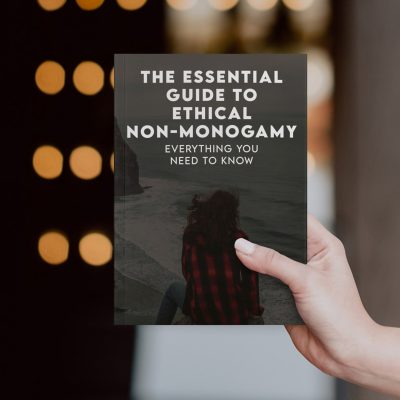
The freedom of an open relationship sounds incredible, but the logistics can feel like holding a grenade. That spinning "what if" anxiety isn't paranoia, it’s your survival instinct warning you that your bond is exposed. "Just seeing what happens" is the fastest way to turn a fantasy into a breakup.
The Essential Guide replaces chaos with discipline. We give you the blueprints, jealousy protocols, and repair scripts needed to explore the edge without falling off. Don't guess. Secure your foundation first.

The world of non-monogamy is a maze of confusing labels. Trying to be "Polyamorous" when your heart actually needs "Swinging" isn't just a vocabulary error; it’s a recipe for misery.
You can't build a stable home on a foundation that doesn't fit your psychology. This tool analyzes your emotional bandwidth and jealousy triggers to design the exact structure you need. Stop trying to squeeze into a box that doesn't fit. Build a relationship that actually feels like home.

Opening up feels exciting, but if you aren't reading from the same script, you're writing a tragedy. The disconnect between "I want freedom" and "I want safety" is where hearts break. This isn't just a quiz; it’s a synchronization engine.
We identify the silent gaps in your desires—from sleepover rules to emotional bandwidth, before they become unbridgeable chasms. Don't wait until the damage is done to find out you were never on the same page. Align your compasses now.

Theory is sexy. Reality is messy. You agreed you could date others, but how does your stomach drop when he takes her to your anniversary spot? Or when she comes home smelling like someone else?
This simulator drags your abstract rules into the harsh light of day. We force you to confront the visceral, gut-wrenching scenarios that actually destroy relationships, before they happen. Test your nervous system in the simulator so you don't crash the car in real life.

The fantasy is endless romance. The reality? It’s a logistical nightmare. Dating isn't just sex; it’s a second job of swiping, spending, and emotional processing that drains your sanity. Underestimating the "admin" of non-monogamy is the fastest way to turn your relationship into a burnout factory where resentment thrives.
This calculator forces you to confront the brutal math of your time, energy, and wallet. Can you actually afford this lifestyle, or are you just signing up for exhaustion?
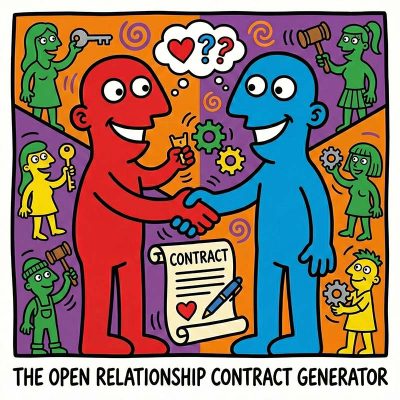
"I thought we agreed" is the sentence that destroys relationships & marriages. Relying on verbal promises when emotions run high is a gamble you cannot afford to lose. Your memory isn't just faulty; it's a liability. Ambiguity is the oxygen that jealousy breathes, turning "freedom" into a minefield of "did I mess up?"
This generator transforms vague permissions into a concrete, signed reality. Stop arguing about what you thought was said and lean on what is written. Secure your boundaries in ink, not hope.
Key differences between sex only openness and sex and dating openness
Think of these two models as different levels of openness. Sex only openness focuses on sexual encounters with outside people with minimal involvement beyond sex. Sex and dating openness expands the horizon to include emotional and romantic connections external to the primary relationship. Each model has its own rhythm and cadence. The choice often comes down to desire for emotional connection external to the couple the level of energy you want to invest in outside relationships and how comfortable you and your partner are with risk boundaries and renegotiation.
Here is a quick practical checklist to help you compare the two models. You can print this and use it as a starting point for a conversation with your partner.
- Are you hoping to maintain emotional exclusivity with your primary partner while seeking sexual variety outside the relationship
- Do you want or need romantic connections with people outside the primary relationship
- How much time are you willing to devote to outside relationships while balancing life and family
- What boundaries feel comfortable around dating in shared social spaces
- How will you handle jealousy and forgiveness if issues arise
- What safety measures are non negotiable for you around sex with outsiders
Boundary frameworks and negotiation strategies
Boundary work is the heart of any open relationship. Boundaries are not rigid rules carved in stone. They are living agreements that evolve as people learn more about themselves and each other. The two models use different boundary emphases but both benefit from clarity regular check ins and documented agreements.
Type of boundaries to consider
- Emotional boundaries What level of emotional connection with external partners is allowed and what needs to stay within the primary bond
- Sexual boundaries What activities are allowed with outside partners and what is off limits
- Time boundaries How much time outside partners can receive and how to protect family or shared life routines
- Communication boundaries How information about outside relationships is shared with the primary partner and what is kept private
- Safety boundaries STI testing frequency consent expectations and safety practices
- Social boundaries Boundaries around meeting partners in shared social circles or at family events
Practical negotiation tips
- Start with your core values. What matters most to you as a couple or triad
- Frame conversations around needs not accusations. Use I statements and share your feelings openly
- Define what counts as a renegotiation trigger. For example a change in employment or health status
- Document agreements in a simple written form. Do not rely on memory alone
- Set a time to revisit agreements regularly even if everything seems to be going well
Communication style matters in both models. The person who tends to be more anxious may need more frequent check ins. The person who enjoys space and independence may need longer intervals between conversations. The best approach is to tailor the cadence to what works for both people while keeping honesty front and center.
Jealousy and emotional work
Jealousy is a natural signal that something is not aligned emotionally. It is not a failure it is a message that something needs attention. In any open relationship you can expect jealousy to show up at least in small ways now and then. The goal is to respond with curiosity not defense. Here are some practical strategies that work well in both models.
- Acknowledge feelings Name what you feel without judgment. For example I am feeling unsettled about this because I need more reassurance
- Ask for what you need Clarify whether you need more time together more transparency or more emotional recalibration
- Practice compersion Try to feel genuine happiness for your partner if their encounter was meaningful even if it is painful to witness at first
- Set micro commitments Agree on small acts that restore trust such as brief daily check ins or a weekly open conversation about how things feel
Note that jealousy can point to a boundary that needs reinforcement or an emotional need that has not been met. Keep the conversation non punitive. The goal is to rebuild safety and trust.
Practical scenarios you might face
Scenario one
A couple in a sex only openness model agrees that one partner may have sexual experiences outside the relationship but must disclose any encounter and avoid dating or forming emotional ties. After a new casual encounter the partner feels a sudden wave of insecurity. They shadow the event with a late night text chain and feel more isolated the next day. The couple steps back to review boundaries and schedule a quick mid week check in to discuss how to handle lingering insecurity and whether to pause further external encounters until trust rebuilds.
Scenario two
In a sex and dating openness arrangement a triad is formed including the primary and two partners who both enjoy dating outside. One partner begins to date someone new who asks for time to understand the triad structure. The group uses an open discussion to renegotiate how much time each person can spend with new partners while still ensuring daily routines and family life are not disrupted. They decide to create a shared calendar with key personal days blocked for the core family and two weekly date nights where the partners can groom new emotional connections without stepping on core relationship time.
Scenario three
Two partners who share a long term relationship also have outside dating partners. They realize they have a clear line about outside sex but they struggle when emotional intensity grows with one of the outside partners. They choose to pause dating with that partner while they work on improving the emotional boundary within their primary relationship and set a date to reconsider with a renegotiated boundary framework.
Scenario four
A couple experiences a major life transition such as planning for a child. They examine how each model copes with reduced energy time and intensified emotions. They decide that sex only openness is not compatible with their current needs and opt to pause all external dating activities while they focus on their family and relationship. After several months they revisit the decision and adjust the boundary framework to reflect new priorities.
Safety and consent in open relationships
Safety and consent sit at the center of any healthy open dynamic. In both sex only openness and sex and dating openness you should operate with explicit consent from all involved parties. Here are core safety practices that work well in the real world.
- Regular STI testing Schedule testing for all partners and share results with openness partners as agreed
- Protection choices Use condoms or other barrier methods as appropriate and discuss PrEP PEP and other protections when relevant
- Honest disclosure Communicate about exposure to risks and any changes in sexual health
- Clear no contact boundaries Decide in advance if any outside partner is a no contact person such as a family member or a coworker and respect those boundaries
Ethical consent means all people involved understand the scope of the agreements and agree to them freely. Revisit consent whenever life changes for example changes in health status new partners or changes in living arrangements.
Transitioning between models
Sometimes a couple decides to shift from sex only openness to sex and dating openness or vice versa. Transitions can be smooth when approached with care and time. Here are steps that help a transition stay healthy and respectful.
- Have a dedicated negotiation session with both partners present to discuss motivations and readiness
- Set a trial period during which you test the new boundaries while keeping a safety net in place
- Document changes in writing and agree on a method to surface concerns during the trial period
- Schedule frequent check ins to assess emotional weather and adjust as needed
Remember that transitions are not a sign of failure. They are a reflection that you both aspire to build a healthier more satisfying relationship. The goal is to create a path that works for your unique needs and life situation.
Common mistakes and how to avoid them
Even well intentioned couples fall into traps. Here are frequent missteps and practical fixes you can apply right away.
- Assuming consent Always check in and confirm boundaries rather than assuming that past agreements remain valid forever
- Rushing into new connections Take time to process emotions before adding more outside energy into your life
- Talking only to one partner Ensure all parties in the dynamic have a voice and a chance to be heard
- Ignoring safety Make STI testing a routine part of the dynamic and discuss protective practices openly
- Blurring emotional boundaries If you notice real emotional closeness forming with an external partner pause to reassess the boundaries and the impact on the primary bond
Practical tools for open relationships
Here are simple practical tools you can start using today to help sex only openness or sex and dating openness feel manageable rather than overwhelming.
- Open dialogue templates Use a simple script to start important conversations such as I feel ______ when you ______ and I would like ______
- Boundary checklists Create a two column list with what is allowed and what is not and review it every few months
- Shared calendar Use a shared calendar to map out date nights and outside encounters so both partners can plan their lives
- Jealousy journal Keep a short private log of jealous feelings and what triggers them to help you talk about them clearly later
Glossary of useful terms and acronyms
- ENM Ethical non monogamy a general term for relationships that involve openness honesty and consent with multiple partners
- SOO Sex only openness a model where sexual activity with outsiders is allowed while emotional exclusivity is maintained with the primary partner
- SADO Sex and dating openness a model that allows both sexual encounters and dating or emotional connections with external partners
- Primary partner The main partner in the relationship hierarchy who typically receives primary consideration in planning and decision making
- Compersion A feeling of happiness when your partner experiences joy with someone else
- Boundary creep When an outside boundary starts to move or blur beyond what was agreed
- Negotiation The process of discussing terms boundaries and expectations to reach a mutual agreement
Frequently asked questions
Below are common questions people ask when they are exploring these two models. If you want more detail on any answer feel free to ask and we can dive deeper.
What exactly is sex only openness
Sex only openness means that you allow sexual activity with outside partners but you keep emotional involvement with the primary partner at a minimum. It is about physical experiences with others while preserving the emotional core of the main relationship.
What exactly is sex and dating openness
Sex and dating openness means you are open to both sexual encounters and dating or dating like relationships with outside partners. You may form new romantic connections while maintaining the primary relationship. The emotional life outside the main bond is a central feature of this model.
How do I decide which model fits us
Start with core values like do you want emotional exclusivity the level of risk you are comfortable with and how you handle jealousy. Have a dedicated negotiation session and discuss boundaries one by one. If you feel uncertain pick a trial period and reassess after a few weeks.
How do we handle jealousy in these models
Use a workload of emotions naming and regular check ins. Build a plan for what to do when jealousy rises such as pausing a dating activity or increasing reassurance through specific actions. The goal is to move through jealousy rather than suppress it.
Can we switch back and forth between models
Yes and it happens more often than you think. The switch should be negotiated with care and done with clear time frames. It helps to set a review date and a process for adjusting boundaries in response to life changes.
Is it possible to hide stuff in an open relationship
Honesty is non negotiable in open relationship life. Hiding things damages trust quickly. Agree on a rule to disclose anything that could impact the other person or the relationship dynamic.
Should we discuss these topics with outside partners
Yes. It is respectful to share boundaries and expectations with outside partners when appropriate. It also reduces the risk of miscommunication and helps everyone feel safer.
What about safety and health
Make STI testing a routine and discuss protection options upfront. Establish shared safety practices and never skip safety checks for convenience.
The freedom of an open relationship sounds incredible, but the logistics can feel like holding a grenade. That spinning "what if" anxiety isn't paranoia, it’s your survival instinct warning you that your bond is exposed. "Just seeing what happens" is the fastest way to turn a fantasy into a breakup.
The Essential Guide replaces chaos with discipline. We give you the blueprints, jealousy protocols, and repair scripts needed to explore the edge without falling off. Don't guess. Secure your foundation first.
The world of non-monogamy is a maze of confusing labels. Trying to be "Polyamorous" when your heart actually needs "Swinging" isn't just a vocabulary error; it’s a recipe for misery.
You can't build a stable home on a foundation that doesn't fit your psychology. This tool analyzes your emotional bandwidth and jealousy triggers to design the exact structure you need. Stop trying to squeeze into a box that doesn't fit. Build a relationship that actually feels like home.
Opening up feels exciting, but if you aren't reading from the same script, you're writing a tragedy. The disconnect between "I want freedom" and "I want safety" is where hearts break. This isn't just a quiz; it’s a synchronization engine.
We identify the silent gaps in your desires—from sleepover rules to emotional bandwidth, before they become unbridgeable chasms. Don't wait until the damage is done to find out you were never on the same page. Align your compasses now.
Theory is sexy. Reality is messy. You agreed you could date others, but how does your stomach drop when he takes her to your anniversary spot? Or when she comes home smelling like someone else?
This simulator drags your abstract rules into the harsh light of day. We force you to confront the visceral, gut-wrenching scenarios that actually destroy relationships, before they happen. Test your nervous system in the simulator so you don't crash the car in real life.
The fantasy is endless romance. The reality? It’s a logistical nightmare. Dating isn't just sex; it’s a second job of swiping, spending, and emotional processing that drains your sanity. Underestimating the "admin" of non-monogamy is the fastest way to turn your relationship into a burnout factory where resentment thrives.
This calculator forces you to confront the brutal math of your time, energy, and wallet. Can you actually afford this lifestyle, or are you just signing up for exhaustion?
"I thought we agreed" is the sentence that destroys relationships & marriages. Relying on verbal promises when emotions run high is a gamble you cannot afford to lose. Your memory isn't just faulty; it's a liability. Ambiguity is the oxygen that jealousy breathes, turning "freedom" into a minefield of "did I mess up?"
This generator transforms vague permissions into a concrete, signed reality. Stop arguing about what you thought was said and lean on what is written. Secure your boundaries in ink, not hope.
