
Sexual Health Agreements and Testing Norms


Welcome to a practical deep dive into sexual health agreements and testing norms for ethical non monogamy and open relationship dynamics. This guide is written in plain language with real world scenarios. You will find clear definitions for all terms and acronyms plus concrete steps you can take to keep your love life healthy and thriving without complicating trust. Think of this as a fun and useful playbook from your friendly experimental friend who tells it like it is.
Quick Links to Useful Sections
- What open relationships and ethical non monogamy are
- Why health agreements matter in ENM
- Core components of a health agreement
- Testing frequency and scope
- Disclosure and communication norms
- Condoms barrier methods and PrEP
- Pregnancy planning and fertility considerations
- Scope of allowed activities
- Conflict resolution and updates
- Privacy and data handling
- Testing norms and practical guidelines
- Baseline testing explained
- Ongoing testing cadence
- Understanding the window period
- Testing methods to know about
- Where to get tested
- How to handle test results with a network
- Disclosures and timing
- Realistic scenarios you might face
- Practical tips for successful health agreements
- Glossary of useful terms and acronyms
- Common mistakes to avoid
- Putting it all into practice
- Putting a human face on health in ENM
- FAQ about sexual health agreements and testing norms in ENM
What open relationships and ethical non monogamy are
Ethical non monogamy often shortened to ENM is a relationship style where people choose to have romantic or sexual connections with more than one partner. The key idea is consent, honesty and communication. In ENM the partners agree on rules and boundaries that fit their values. An open relationship is a common form of ENM. It typically involves a primary relationship along with one or more outside relationships that are managed through clear agreements. The important bit is that everyone involved knows the boundaries and agrees to them. If you are new to this world you are not alone and you are allowed to ask questions until you understand. We will break down the terms so you feel confident about how to talk about health and safety in your relationships.
Terms you might encounter
- ENM Short for ethical non monogamy. A broad term for relationship styles that involve multiple consensual partners.
- Open relationship A relationship arrangement that includes sexual or romantic connections with more than one person with the knowledge and consent of all involved.
- Primary partner The person who holds the central role in a relationship that might also include other partners.
- Secondary partner A partner who is important but not the main focus of the relationship structure.
- Solo polyamory A form of ENM where a person maintains independence and has multiple partners without a single primary relationship.
- Boundaries Agreements about what is allowed and what is not in terms of activities, timing and emotional involvement.
- Consent A clear and ongoing yes from all involved parties before engaging in any activity that affects them.
Why health agreements matter in ENM
When you practice ENM you share spaces and bodies with other people. That world can be thrilling and deeply rewarding. It can also introduce new health risks if conversations and planning do not happen. A good health agreement acts as a map. It helps you decide how to handle risk, how to disclose information and how to meet your needs while still protecting the well being of everyone involved. Without a solid plan you can end up with miscommunication jealousy and misaligned expectations. A strong health plan reduces fear and creates confidence so you can enjoy the connections you want with less drama.

The freedom of an open relationship sounds incredible, but the logistics can feel like holding a grenade. That spinning "what if" anxiety isn't paranoia, it’s your survival instinct warning you that your bond is exposed. "Just seeing what happens" is the fastest way to turn a fantasy into a breakup.
The Essential Guide replaces chaos with discipline. We give you the blueprints, jealousy protocols, and repair scripts needed to explore the edge without falling off. Don't guess. Secure your foundation first.

The world of non-monogamy is a maze of confusing labels. Trying to be "Polyamorous" when your heart actually needs "Swinging" isn't just a vocabulary error; it’s a recipe for misery.
You can't build a stable home on a foundation that doesn't fit your psychology. This tool analyzes your emotional bandwidth and jealousy triggers to design the exact structure you need. Stop trying to squeeze into a box that doesn't fit. Build a relationship that actually feels like home.

Opening up feels exciting, but if you aren't reading from the same script, you're writing a tragedy. The disconnect between "I want freedom" and "I want safety" is where hearts break. This isn't just a quiz; it’s a synchronization engine.
We identify the silent gaps in your desires—from sleepover rules to emotional bandwidth, before they become unbridgeable chasms. Don't wait until the damage is done to find out you were never on the same page. Align your compasses now.
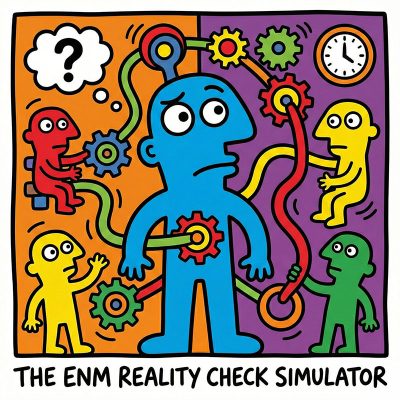
Theory is sexy. Reality is messy. You agreed you could date others, but how does your stomach drop when he takes her to your anniversary spot? Or when she comes home smelling like someone else?
This simulator drags your abstract rules into the harsh light of day. We force you to confront the visceral, gut-wrenching scenarios that actually destroy relationships, before they happen. Test your nervous system in the simulator so you don't crash the car in real life.
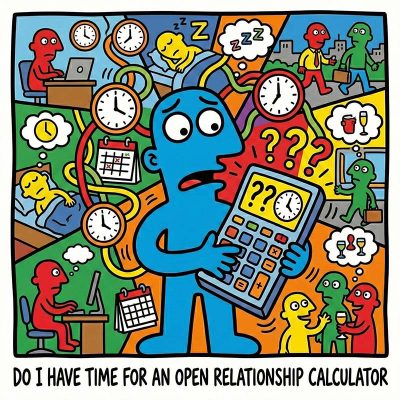
The fantasy is endless romance. The reality? It’s a logistical nightmare. Dating isn't just sex; it’s a second job of swiping, spending, and emotional processing that drains your sanity. Underestimating the "admin" of non-monogamy is the fastest way to turn your relationship into a burnout factory where resentment thrives.
This calculator forces you to confront the brutal math of your time, energy, and wallet. Can you actually afford this lifestyle, or are you just signing up for exhaustion?
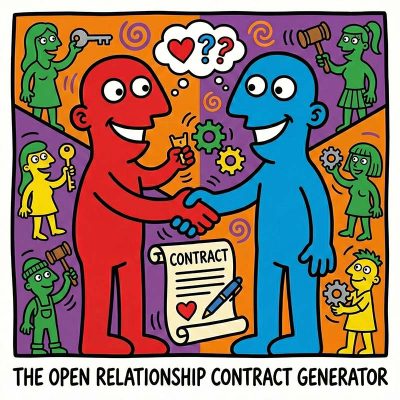
"I thought we agreed" is the sentence that destroys relationships & marriages. Relying on verbal promises when emotions run high is a gamble you cannot afford to lose. Your memory isn't just faulty; it's a liability. Ambiguity is the oxygen that jealousy breathes, turning "freedom" into a minefield of "did I mess up?"
This generator transforms vague permissions into a concrete, signed reality. Stop arguing about what you thought was said and lean on what is written. Secure your boundaries in ink, not hope.
Core components of a health agreement
A health agreement is not a one size fits all document. It should be customized to fit the people involved and the dynamics they share. Here are the core components you will want to cover.
Testing frequency and scope
Agree how often you will get tested and what tests will be included. The baseline principle is test before starting a new relationship if practical and then regular intervals based on risk. The simplest structure is a schedule such as every three months for ongoing dating you have with multiple partners. In some cases people choose six months or every four to six months when the network is smaller or the exposure risk is lower. The tricky part is ensuring that everyone is on the same page about what tests to include and what counts as up to date.
Common testing panels include tests for the most common sexually transmitted infections and infections that can be spread through sexual contact. The most important ones are human immunodeficiency virus HIV and sexually transmitted infections which include chlamydia gonorrhea syphilis hepatitis B and hepatitis C. Depending on the local health landscape some people also test for human papillomavirus HPV and herpes simplex virus type 1 and type 2. It is important to understand that testing looks back in time. A test only tells you your status at the moment the sample was collected. Sensible practices include discussing the window period the time after exposure before a test can reliably detect an infection or infection. The window period varies by infection and test type. For this reason it is wise to combine testing with ongoing prevention strategies until a test result is confirmed as negative for all infections over a given period.
Disclosure and communication norms
Agree to how results will be shared. Some people prefer direct one on one conversations while others prefer a written update or a shared health portal. Decide who should be informed about what results and how quickly news should be shared especially when a test result changes the risk dynamics in the group. The purpose is not to punish or blame but to protect everyone involved. Healthy norms include sharing test results in a timely and respectful way and giving others a chance to ask questions or request clarifications without judgment.
Condoms barrier methods and PrEP
Agree on when to use condoms and other barrier methods and what other risk reduction strategies will be used. For many people condoms are a reliable method for reducing the risk of a wide range of infections and pregnancies. Partners may also choose to use other barrier methods such as dental dams in appropriate situations. Some people take pre exposure prophylaxis commonly known as PrEP which is a medication that lowers the risk of HIV infection when taken as prescribed. It is not a substitute for testing but it is an important option for reducing risk for people who want it. Include how to handle no condom sex and what to do if someone misses a dose of PrEP or starts a new PrEP regimen.
Pregnancy planning and fertility considerations
Discuss plans around pregnancy and fertility if that matters to you. This can include contraception choices for partners or the option to test for pregnancy as appropriate. Open conversations reduce stress when life changes take place.
Scope of allowed activities
Clarify what kinds of sexual activity are allowed and with whom. For example some people may be comfortable with vaginal sex with a partner who is not a primary partner while others prefer to limit more intimate encounters to specific people. Align expectations to prevent friction later.
Conflict resolution and updates
Agree on how you will handle disagreements or if someone violates a boundary. Decide how you will reset the agreement over time as feelings and life circumstances change. A healthy plan invites updates through ongoing check ins rather than hiding concerns until they blow up.
Privacy and data handling
Decide how personal information will be kept private. You may want to limit what is shared in group chats or online spaces and who has access to test results. Respect for privacy helps maintain trust while still enabling honest disclosure when needed.
Testing norms and practical guidelines
Testing norms evolve with the dynamics of the network. Here is a practical way to think about testing in ENM open relationships. Start with baseline testing before you begin new connections and then agree on a recurring rhythm. The rhythm should reflect how risky the connections are. A more open network with frequent new partners requires more frequent testing. A smaller network with more stable partners may require less frequent testing but still regular check ins.
Baseline testing explained
A baseline test is a comprehensive panel performed before you start dating someone new who will be engaging in sexual activity with you. This test provides a current snapshot of your status. The baseline should include HIV testing and the most common sexually transmitted infections. If you already live with a partner you might still choose to have a baseline test when the relationship shifts focus or when a new partner enters the circle.
Ongoing testing cadence
Three months is a commonly used cadence for people with multiple partners or a history of exposure. Six months is a reasonable cadence for smaller networks with fewer risk factors. Some groups adopt a quarterly cadence that coincides with seasonal health check ins or with medical visits. The important part is that everyone agrees and trusts the plan and follows it consistently. If a partner changes the risk profile you may decide to adjust the cadence with a quick group check in to re align.
Understanding the window period
The window period is the time after exposure during which a test may not detect the infection. Different infections have different window periods. HIV tests may detect genetic material or antibodies with higher reliability after a few weeks to a few months depending on the test used. Chlamydia and gonorrhea tests are often detected in urine samples or swabs within a few days to a couple of weeks after exposure. It is important to know the window periods so you can choose tests that cover the risk you are taking and to plan testing around potential exposures.
Testing methods to know about
Testing can be performed in clinics at home or in mobile health settings. The most common tests to know about include:
- HIV tests which can detect the virus itself or antibodies and antigens depending on the test type. Fourth generation tests detect both HIV antibodies and the p24 antigen and can detect infection earlier than older tests.
- Chlamydia and gonorrhea tests usually done with a urine sample or swab. These infections often have no symptoms but can cause long term issues if not treated.
- Syphilis test typically a blood test or a sample from a lesion if present. Syphilis can be treated effectively with antibiotics when caught early.
- Hepatitis B and hepatitis C tests check for viral infection and liver involvement. Vaccination is available for hepatitis B and is recommended for many people in ENM networks.
- Herpes tests herpes simplex virus type 1 and type 2 can be detected with blood tests or swabs if there are active sores. Many people live without symptoms or with mild symptoms that go unnoticed.
- Other tests depending on risk factors can include tests for human papillomavirus HPV or other locally relevant infections. Your clinician can advise what is appropriate for your network.
Where to get tested
Options include primary care clinics sexual health clinics clinics that specialize in sexual health and some urgent care centers. In many places there are also home test kits for HIV and other infections. It is essential to use reputable providers and to confirm that the tests are approved and accurate. If you use home testing verify that the results are interpreted correctly or consider confirming with a clinician.
How to handle test results with a network
When results come back know that a positive result is a signal to take immediate care and to communicate with your partners. The goal is to protect health and maintain trust. If a partner tests positive for an infection the pair or group should discuss steps for treatment notification and the plan for partners who might have been exposed. Most infections are curable or controllable with treatment so it is important to act calmly and with information rather than fear.
Disclosures and timing
Develop a standard for timely disclosure. Some people prefer to share results at a group level while others share results individually. Many ENM groups choose to share results through a secure health portal a confidential chat thread or a designated contact within the group. The exact method is less important than consistency and respect for privacy while ensuring safety for all involved.
Realistic scenarios you might face
Scenario one a person in the network starts dating someone new. The group discusses the risk and agrees to baseline testing plus a three month follow up. They arrange a casual conversation with all parties to discuss how this new dynamic changes risk. Everyone feels heard and excited rather than anxious.
Scenario two a partner returns from travel with a potential exposure. They contact the group and immediately get tested and self isolate until results are confirmed. They notify all partners they may have exposed and arrange retesting as needed. The approach minimizes spread and preserves trust in the network.
Scenario three a partner tests positive for an infection that can be treated. The group discusses how to coordinate treatment and notification of partners while maintaining privacy where possible. The focus remains on health and responsible behavior while showing care for the person affected.
Practical tips for successful health agreements
Use these tips to implement a robust plan that fits your network and lifestyle.
- Start with a conversation Gather your key players and set a time to talk about health agreements. Create a calm space to discuss fears and expectations.
- Write it down Put the agreement in plain language. Include who is covered by the agreement what tests are required how results will be shared and how updates will be handled. Review the document regularly and adjust as needed.
- Keep it flexible Life changes and feelings shift. Allow room to adjust boundaries and testing cadence as relationships evolve. A flexible approach reduces friction later on.
- Make medical access easy Choose clinics that are convenient and familiar for everyone in the network. If possible arrange access through a shared portal or a preferred provider to simplify testing and results.
- Ensure privacy and trust Discuss how information is stored who can access it and under what circumstances it may be shared. Boundaries around privacy are essential for trust.
- Plan for emergencies If someone needs immediate testing after a potential exposure know where to go and who should be informed first. Have a plan for urgent scenarios without panic.
- Include pregnancy and fertility considerations If pregnancy is possible or desired have a plan for contraception testing and prenatal care when needed.
- Practice clear communication skills Use direct language be specific and avoid blaming. Confirm understanding after conversations and invite questions to ensure everyone is on the same page.
Glossary of useful terms and acronyms
- ENM Ethical non monogamy a framework for multiple consensual relationships
- STI Sexually transmitted infection an infection spread through sexual contact
- HIV Human immunodeficiency virus destroys immune system cells
- HCV Hepatitis C virus affects the liver
- HBV Hepatitis B virus a liver infection preventable by vaccination
- NAAT Nucleic acid amplification test a type of test that detects infections by identifying genetic material
- PCR Polymerase chain reaction a method used in some tests to detect infections
- PrEP Pre exposure prophylaxis a medication to reduce HIV risk for people at high risk
- POI Person of interest a term used to describe someone in a partner network
- CT Chlamydia and GC short for gonorrhea a common bacterial infection in sexual networks
- GC Gonorrhea a bacterial infection passed through sexual contact
- HSV Herpes simplex virus a common viral infection with oral and genital forms
- RSV A respiratory virus not directly a sexual infection but sometimes tested in multi infection panels
- PPD Purified protein derivative used in some tuberculosis tests
Common mistakes to avoid
- Assuming a test result is definitive forever without considering the window period or new exposures
- Relying on a single negative result to assume safety for all future activities
- Lacking clear updates when a partner leaves or enters the network
- Holding back information due to fear or shame instead of addressing health concerns openly
- Neglecting to discuss contraception and pregnancy planning alongside infections
Putting it all into practice
Here is a practical step by step approach you can take right now. First gather the core members of your network for a decisive talk about health. Bring a draft health agreement and a few questions to guide the discussion. It helps to set a date to review the agreement in a month and then again every three to six months. Real conversations take time and effort but they pay off with healthier relationships that last.
Next decide on testing cadence that works for your group. If you have many new partners and a high level of activity consider a three month cadence. If the group is smaller and the risk profile is lower a six month cadence might work better. Have a plan for after exposures and add a clear rule about seeking testing and informing others if someone may have been exposed.
Finally agree on how results will be shared. Some groups create a private shared notes document or use a secure health portal while others prefer a direct conversation with each partner. Decide who shares what and how quickly to avoid delays that could create anxiety among partners.
Putting a human face on health in ENM
It is easy to reduce sexual health to a set of numbers. The truth is this is about people we care about and the trust we build together. The health agreement is there to protect everyone and to enable the relationships you want. Embrace the conversations even when they feel awkward and you will build resilience in your network. The more you practice talking about health the easier it becomes to navigate challenges with grace and honesty. You deserve relationships that feel exciting and safe at the same time.
FAQ about sexual health agreements and testing norms in ENM
The following frequently asked questions cover common concerns and practical scenarios you will encounter in ENM settings. Each answer is concise and based on practical experience. If you have a question that is not covered here feel free to reach out for more guidance.
The freedom of an open relationship sounds incredible, but the logistics can feel like holding a grenade. That spinning "what if" anxiety isn't paranoia, it’s your survival instinct warning you that your bond is exposed. "Just seeing what happens" is the fastest way to turn a fantasy into a breakup.
The Essential Guide replaces chaos with discipline. We give you the blueprints, jealousy protocols, and repair scripts needed to explore the edge without falling off. Don't guess. Secure your foundation first.
The world of non-monogamy is a maze of confusing labels. Trying to be "Polyamorous" when your heart actually needs "Swinging" isn't just a vocabulary error; it’s a recipe for misery.
You can't build a stable home on a foundation that doesn't fit your psychology. This tool analyzes your emotional bandwidth and jealousy triggers to design the exact structure you need. Stop trying to squeeze into a box that doesn't fit. Build a relationship that actually feels like home.
Opening up feels exciting, but if you aren't reading from the same script, you're writing a tragedy. The disconnect between "I want freedom" and "I want safety" is where hearts break. This isn't just a quiz; it’s a synchronization engine.
We identify the silent gaps in your desires—from sleepover rules to emotional bandwidth, before they become unbridgeable chasms. Don't wait until the damage is done to find out you were never on the same page. Align your compasses now.
Theory is sexy. Reality is messy. You agreed you could date others, but how does your stomach drop when he takes her to your anniversary spot? Or when she comes home smelling like someone else?
This simulator drags your abstract rules into the harsh light of day. We force you to confront the visceral, gut-wrenching scenarios that actually destroy relationships, before they happen. Test your nervous system in the simulator so you don't crash the car in real life.
The fantasy is endless romance. The reality? It’s a logistical nightmare. Dating isn't just sex; it’s a second job of swiping, spending, and emotional processing that drains your sanity. Underestimating the "admin" of non-monogamy is the fastest way to turn your relationship into a burnout factory where resentment thrives.
This calculator forces you to confront the brutal math of your time, energy, and wallet. Can you actually afford this lifestyle, or are you just signing up for exhaustion?
"I thought we agreed" is the sentence that destroys relationships & marriages. Relying on verbal promises when emotions run high is a gamble you cannot afford to lose. Your memory isn't just faulty; it's a liability. Ambiguity is the oxygen that jealousy breathes, turning "freedom" into a minefield of "did I mess up?"
This generator transforms vague permissions into a concrete, signed reality. Stop arguing about what you thought was said and lean on what is written. Secure your boundaries in ink, not hope.
