
Social Media Boundaries


Open relationships and other ethical non monogamy dynamics can be rewarding and messy all at once. Social media adds a layer of visibility that can either strengthen trust or ignite drama. This guide breaks down how to set boundaries that work for your ENM or open relationship life. It is written in a practical tone with clear terms explained so you can apply what you read right away. We will cover what ENM means what terms you might hear and how to talk about boundaries with partners friends and your wider network. You will find real world scenarios and scripts you can adapt. We will also share action steps you can take today to protect your privacy and reduce misunderstandings online.
Quick Links to Useful Sections
- What ENM means and why social media boundaries matter
- Key terms and acronyms explained
- How to start building social media boundaries for ENM
- Boundaries by platform
- Facebook and public networks
- Instagram and image based platforms
- Twitter or X and micro blogging spaces
- TikTok and video platforms
- Dating apps and dating profiles
- Practical scripts you can use in conversations
- Opening a discussion about social media boundaries with a new partner
- Setting boundaries with a current partner about posting
- Addressing a friend who asks too many personal questions
- Handling a partner who posts without consent about a current story
- Realistic scenarios and how to navigate them
- Scenario one you and your partner are about to meet someone new
- Scenario two a friend asks a prying question about your dating life
- Scenario three an ex partner follows you on social media and interacts with posts
- Scenario four someone pushes you to tag them in a post about a shared date
- Privacy and safety first
- Checklist before posting about ENM online
- Managing jealousy and emotional responses online
- Templates you can adapt for your profiles
- About your relationship stance on your profile
- About sharing a partner's presence in a post
- About audience and visibility
- Common mistakes and how to avoid them
- How to renegotiate boundaries when life changes
- Glossary of useful terms and acronyms
- Frequently asked questions
What ENM means and why social media boundaries matter
ENM stands for ethical non monogamy. It is a way of describing relationships that intentionally involve more than two people with consent and communication at the center. An open relationship is a common subset of ENM where the primary relationship agrees that each partner may form romantic or sexual connections with other people while keeping certain commitments. A polyamorous arrangement often includes multiple overlapping relationships and a network sometimes called a polycule. These terms help people talk about the way they relate to others and the roles they play. Understanding the language helps ensure everyone is heard and informed.
Social media is a powerful tool in any relationship. It can help with connection and transparency or create envy and tension. Boundaries help you decide what to share who to tag and how to talk about your dynamic publicly. Boundaries are not rules set in stone. They are a living agreement that can change as relationships evolve. The aim is to protect emotional safety while allowing authentic self expression. The boundary set you agree on should feel fair and realistic for all parties involved.
Key terms and acronyms explained
- ENM Ethical Non Monogamy. A consensual approach that allows more than two people to be involved in dating or loving relationships.
- Open Relationship A relationship in which partners agree to pursue romantic or sexual connections outside the primary couple while keeping commitments to each other.
- Polyamory The practice of having multiple intimate relationships with the knowledge and consent of everyone involved.
- Polycule The network of people who are connected through relationships in a polyamorous arrangement.
- Primary Partner The person or partner who holds a central place in the relationship. This can be defined by each couple or by the individuals involved.
- Secondary Partner A person who has a relationship with one or both of the primary partners that is important but not the central partnership.
- Boundaries The agreed limits that guide what is acceptable in a relationship or in online behavior. Boundaries can be about time dating or sharing online information.
- Hard Limit A boundary that is non negotiable. Crossing a hard limit is not acceptable to the person who set it.
- Soft Limit A boundary that may be negotiable or context dependent. It can shift with trust and changing circumstances.
- Compersion The joy you feel when your partner experiences happiness with another person. It is the opposite of jealousy and a sign of secure attachment.
- Meta A partner or friend who is aware of multiple relationships in a network and who helps coordinate communication or logistics when appropriate.
- Solo poly A lifestyle where a person maintains independence and builds relationships without prioritizing a single primary partner above others.
- Close Friends feature A social media tool that allows you to share posts with a smaller audience for more privacy.
- Geotag A location tag on a post that reveals where you are. Some people prefer not to share precise locations for safety and privacy reasons.
- Consent In this context means explicit agreement from all people involved before sharing information about them online.
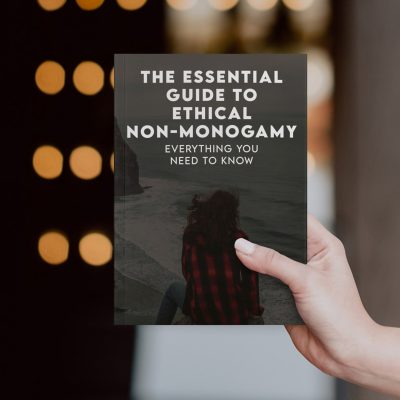
The freedom of an open relationship sounds incredible, but the logistics can feel like holding a grenade. That spinning "what if" anxiety isn't paranoia, it’s your survival instinct warning you that your bond is exposed. "Just seeing what happens" is the fastest way to turn a fantasy into a breakup.
The Essential Guide replaces chaos with discipline. We give you the blueprints, jealousy protocols, and repair scripts needed to explore the edge without falling off. Don't guess. Secure your foundation first.

The world of non-monogamy is a maze of confusing labels. Trying to be "Polyamorous" when your heart actually needs "Swinging" isn't just a vocabulary error; it’s a recipe for misery.
You can't build a stable home on a foundation that doesn't fit your psychology. This tool analyzes your emotional bandwidth and jealousy triggers to design the exact structure you need. Stop trying to squeeze into a box that doesn't fit. Build a relationship that actually feels like home.
Opening up feels exciting, but if you aren't reading from the same script, you're writing a tragedy. The disconnect between "I want freedom" and "I want safety" is where hearts break. This isn't just a quiz; it’s a synchronization engine.
We identify the silent gaps in your desires—from sleepover rules to emotional bandwidth, before they become unbridgeable chasms. Don't wait until the damage is done to find out you were never on the same page. Align your compasses now.

Theory is sexy. Reality is messy. You agreed you could date others, but how does your stomach drop when he takes her to your anniversary spot? Or when she comes home smelling like someone else?
This simulator drags your abstract rules into the harsh light of day. We force you to confront the visceral, gut-wrenching scenarios that actually destroy relationships, before they happen. Test your nervous system in the simulator so you don't crash the car in real life.

The fantasy is endless romance. The reality? It’s a logistical nightmare. Dating isn't just sex; it’s a second job of swiping, spending, and emotional processing that drains your sanity. Underestimating the "admin" of non-monogamy is the fastest way to turn your relationship into a burnout factory where resentment thrives.
This calculator forces you to confront the brutal math of your time, energy, and wallet. Can you actually afford this lifestyle, or are you just signing up for exhaustion?
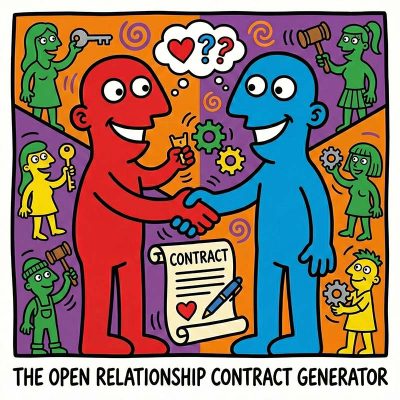
"I thought we agreed" is the sentence that destroys relationships & marriages. Relying on verbal promises when emotions run high is a gamble you cannot afford to lose. Your memory isn't just faulty; it's a liability. Ambiguity is the oxygen that jealousy breathes, turning "freedom" into a minefield of "did I mess up?"
This generator transforms vague permissions into a concrete, signed reality. Stop arguing about what you thought was said and lean on what is written. Secure your boundaries in ink, not hope.
How to start building social media boundaries for ENM
Boundaries work best when they are collaborative and revisitable. The steps below help you create a durable boundary framework without turning every post into a debate. The steps assume you have at least one other adult partner in your life who you discuss these topics with. If you are solo or in a new dynamic you can still use these steps by adapting them to your situation.
- Define your values Decide what matters most. Is honesty the baseline you want to uphold in every post? Do you want to protect other people’s privacy? Are you comfortable sharing some aspects of your life publicly while keeping other aspects private?
- Create a boundary map List the different areas where boundaries might be needed. These include profile content how you announce relationships to your networks what you post about a partner and who you tag. Consider responsibilities for managing shared accounts or co parent pages if that applies.
- Talk with your partners Have a calm conversation about what each person wants and needs. The aim is to find overlap and resolve potential conflicts before they appear on your feed. It is okay to have different comfort levels. The key is to listen and to find workable compromises.
- Document the agreement Write down the boundaries in a simple format that is easy to refer to. This can be a shared document a notebook entry or a note in a dating app profile. Clarity reduces the chance of miscommunication.
- Test and adapt Put your boundaries into practice for a period of time. If something feels off revisit and adjust. Boundaries are not permanent if your life shifts they can shift too.
Boundaries by platform
Different social platforms have different norms and different privacy features. Think about what is appropriate for your dynamic and what protection you want for partners who are not in your day to day life. The following are general guidelines you can adapt for your situation.
Facebook and public networks
- Be mindful of public posts that mention partners or romantic opportunities. If a partner is comfortable with a public mention that is fine but make sure consent is explicit and current.
- Consider separate profiles or clear labeling when talking about ENM topics. Consistency helps avoid confusion among friends family and colleagues.
- Avoid posting overly intimate details about others without consent. Even when you are comfortable with a partner details shared about them in your circle can feel personal and invasive to them.
- Use audience controls to limit who can see content about partners. The audience tools are a good way to prevent oversharing.
Instagram and image based platforms
- Think about image choices and captions. Photos of partners in compromising situations or in sensitive contexts should be posted only with consent.
- Use close friends lists to manage content that you share with a narrow audience. It gives you flexibility without creating confusion for your broader network.
- Respect location sharing boundaries. In many cases it is best to avoid geotags and to limit check in posts that reveal where people are staying or meeting.
- Tagging policy matters. Tagging partners or friends in posts invites them into your ongoing story. Confirm they are comfortable with being visible.
Twitter or X and micro blogging spaces
- Keep updates concise and respectful. Long posts can get edited by others or misinterpreted and escalate feelings.
- Avoid sharing sensitive relationship details. If you want to talk about a dynamic share high level information and direct people to private conversations if needed.
- Use pin posts or profile notes to set expectations. A short statement about your ENM boundaries can prime people to be considerate and respectful.
TikTok and video platforms
- Be careful about sharing someone else in a video without consent. A short reaction or educational clip can inform without exposing others.
- Respect the tone and pace. Short videos can be funny and light but do not pressure partners into appearing on camera if they do not want to.
- Case studies and Q and A formats can help explain ENM boundaries in a respectful way while avoiding personal disclosures.
Dating apps and dating profiles
- Be clear about your relationship stance. If you have a partner who is not a primary in your life you can state that you are open to dating within ethical guidelines.
- Do not misrepresent the network. If you have a polycule or several people connected please avoid implying a monogamous situation if that is not accurate.
- Respect the boundaries of others you meet online. Some people want to date single and do not wish to be introduced to others through your current network.
Practical scripts you can use in conversations
Having a few ready to customize scripts makes conversations easier. These are not one size fits all; they are starting points you can tailor to your tone and your dynamics.
Opening a discussion about social media boundaries with a new partner
Hi I am really glad we are getting to know each other. Before we go too far I want to talk about how we handle social media. I am open with you about my relationships and I would like to hear about your comfort level too. I would prefer not to post anything about a relationship with you without a conversation first. How do you feel about publicly sharing your involvement with others and what would you consider private?
Setting boundaries with a current partner about posting
Thanks for talking with me about this. I want to be transparent with how I share things online. We both value privacy and trust. I would like to avoid posting references to current dating partners without checking in first. If I do post I will blur faces or seek consent. If you ever want something removed I will take it down right away.
Addressing a friend who asks too many personal questions
I know you are curious about our open relationship life and I am happy to share at the level I am comfortable with. I would prefer not to discuss private details about others in our group. If you have questions I can point you to a resource or we can talk in general terms rather than about people you know personally.
Handling a partner who posts without consent about a current story
That post is not aligned with our boundaries. I value your autonomy and privacy and I want the network to understand that we are mindful about what we share. Let us remove that post or edit it to protect everyone involved and we can talk about why it happened and how we can prevent this in the future.
Realistic scenarios and how to navigate them
Scenario one you and your partner are about to meet someone new
You appreciate privacy and your partner wants to share the news in a casual post. You agree to a private message to introduce the new person to your trusted circle before posting. After you both meet the person and you have consent to share a general update you can post a joint statement that respects the new connection and avoids revealing private details.
Scenario two a friend asks a prying question about your dating life
Set a polite boundary. You can say I do not discuss private details about my relationships on public spaces. If you want to know more I can share general insights or direct you to a resource that explains ENM in a respectful way.
Scenario three an ex partner follows you on social media and interacts with posts
Assess the content and boundaries. If the ex is part of your past life but not part of your current network you might limit contact and adjust audience settings. If the ex is still part of a live arrangement discuss whether continued contact is appropriate and how it impacts your current partners.
Scenario four someone pushes you to tag them in a post about a shared date
Explain your boundary clearly. I want to protect privacy and avoid over exposure. If we mention the event I would rather reference it in a general way or ask you to confirm whether you want to be tagged before a post goes live.
Privacy and safety first
Online safety is a practical concern in any relationship. When you add more people to the network you increase the variety of needs and risk. Here are some safeguards to consider.
- Protect private information. Do not share addresses schedules or personal identifiers without explicit consent.
- Limit who can see your posts. Use audience controls and customize settings to minimize unwanted exposure.
- Avoid posting when emotions run high. Take a break if you feel triggered and revisit your boundaries when you feel calm.
- Practice consent in every context. If someone does not want a post seen by a certain portion of your audience respect that choice even if it complicates your plan.
- Think about future consequences. A post can echo into family circles and work life. Consider long term impacts before posting.
Checklist before posting about ENM online
- Have you confirmed consent with everyone who is part of the post or story?
- Is the content accurate and not overly intimate for a public audience?
- Would you want someone you care about to see this post and feel respected by it?
- Would a private message or a general statement work better than a detailed post?
- Are privacy settings adjusted so only the intended audience can see the content?
Managing jealousy and emotional responses online
Jealousy is a normal feeling in ENM and in many relationships whether online or in real life. When it surfaces on social media it can be especially sticky because posts can stay visible for a longer time. Here are ideas to handle jealousy without suppressing your emotions.
- Acknowledge the feeling without judgment. Label it and name the trigger.
- Talk with your partner about what would help. It could be a boundary adjustment or a specific reassurance practice.
- Use a cooling off period before engaging with the post. A short walk or a break can help you respond more calmly.
- Practice compersion. Try to celebrate your partner and the other person rather than comparing yourself. Focus on shared values and how the connection enhances your life.
Templates you can adapt for your profiles
Here are simple templates you can copy and tailor. They are designed to be transparent without oversharing. Use them as a starting point and adjust the tone to fit your personality and your network.
About your relationship stance on your profile
We are a pair pursuing honest open connections with consent central to every choice. Our boundaries are collaborative and can evolve as we grow in trust and life. If you want to learn more about how we handle social media for ENM we are happy to share in a conversation rather than in a post.
About sharing a partner's presence in a post
We appreciate privacy and consent. If a post is about a partner or another person we will check in before tagging or sharing identifying details. We prefer to keep some details private and offer general reflections instead.
About audience and visibility
Our online presence is designed for people who want to understand ethical non monogamy and who respect personal boundaries. If you come across content that makes you uncomfortable please reach out privately so we can discuss and adjust as needed.
Common mistakes and how to avoid them
- Posting without consent. Always check with everyone who is named or depicted before sharing online.
- Assuming that what works for one partner will work for all. Boundaries are personal and should be negotiated individually in the context of the whole network.
- Using a public space to solve private conflict. Do not turn a private disagreement into a public spectacle. Use direct conversations to resolve issues first.
- Forgetting to revisit boundaries. People change and so do comfort levels. Schedule periodic check ins to ensure boundaries still fit.
How to renegotiate boundaries when life changes
Relationships shift with new partners new job locations kids or health changes. It is normal to need to update boundaries. Approach renegotiation with openness and curiosity. Start with a clear check in. Share what is not working and invite input from others. Propose concrete changes and agree on a timeframe to test them. Agreement rarely needs to be permanent. It can be renewed or replaced as needed.
Glossary of useful terms and acronyms
- ENM Ethical Non Monogamy a term that describes relationships with more than two people with consent and honesty at the center.
- Open relationship A relationship in which partners pursue connections outside the main relationship while maintaining commitments to each other.
- Polyamory The practice of having multiple loving relationships at the same time with the consent of everyone involved.
- Polycule The network of people who are connected through romantic or sexual relationships.
- Primary partner The partner who is considered central in the relationship structure.
- Secondary partner A partner who is involved but not the central focus.
- Boundaries Agreed limits about what is acceptable and how to behave especially online.
- Hard limit A boundary that cannot be crossed under any circumstances.
- Soft limit A boundary that may be negotiated under certain conditions.
- Compersion The feeling of joy when a partner experiences happiness with someone else.
- Meta A partner or friend who helps coordinate or understand the network dynamics when appropriate.
- Close friends A social media feature that restricts sharing to a smaller trusted audience.
- Geotag A location tag on a post that can reveal exact places or routes. Many people choose not to share geotags for safety.
- Consent Clear agreement from all involved before sharing about them online.
Frequently asked questions
What are social media boundaries in ENM and open relationships
Social media boundaries are agreed rules about what to share who to tag and how to talk about dating and relationships online. They help protect privacy reduce jealousy and keep trust strong within the network.
How do I start a boundary conversation with a partner
Pick a calm moment and say I would like to talk about how we handle social media. Share your goals and invite their goals as well. Listen carefully. Look for overlap and note where you disagree. Agree on a few concrete steps to try. Schedule a follow up to revisit the conversation.
Should I post about my ENM life publicly
Only if all involved are comfortable with it. Some people share high level information while keeping specifics private. Others choose to keep their life offline for personal reasons. The key is consent clarity and ongoing communication.
How can I protect my partners privacy online
Respect consent and use built in tools like audience targeting close friends and private messaging. Avoid sharing identifying details such as full names addresses or workplaces without consent. When in doubt ask first and document the answer.
What if a boundary is challenged on social media
Move to a private conversation first. State how the boundary was breached and discuss how to prevent it from happening again. If a boundary cannot be honored consider whether the relationship continues or if renegotiation is needed.
How do I handle jealousy online
Recognize jealousy as a signal that a boundary may need adjustment. Talk openly about the feeling and discuss what would help. Slow down posting and use more private channels until the mood stabilizes.
Can I use the close friends feature to manage privacy
Yes close friends can be a useful tool when you want to share more intimate moments with a smaller circle while keeping the rest of your network free from those details.
Is it okay to discuss a partner or date in general terms
General insights without naming people is usually fine. If you want to discuss a specific person ensure you have their consent and avoid sharing anything that could embarrass or harm them.
What should I do if someone asks for a private detail about my ENM life
Politely decline and offer to discuss it in a private setting if you feel comfortable. If you do not want to share the information say so politely and redirect the conversation to a different topic.
The freedom of an open relationship sounds incredible, but the logistics can feel like holding a grenade. That spinning "what if" anxiety isn't paranoia, it’s your survival instinct warning you that your bond is exposed. "Just seeing what happens" is the fastest way to turn a fantasy into a breakup.
The Essential Guide replaces chaos with discipline. We give you the blueprints, jealousy protocols, and repair scripts needed to explore the edge without falling off. Don't guess. Secure your foundation first.
The world of non-monogamy is a maze of confusing labels. Trying to be "Polyamorous" when your heart actually needs "Swinging" isn't just a vocabulary error; it’s a recipe for misery.
You can't build a stable home on a foundation that doesn't fit your psychology. This tool analyzes your emotional bandwidth and jealousy triggers to design the exact structure you need. Stop trying to squeeze into a box that doesn't fit. Build a relationship that actually feels like home.
Opening up feels exciting, but if you aren't reading from the same script, you're writing a tragedy. The disconnect between "I want freedom" and "I want safety" is where hearts break. This isn't just a quiz; it’s a synchronization engine.
We identify the silent gaps in your desires—from sleepover rules to emotional bandwidth, before they become unbridgeable chasms. Don't wait until the damage is done to find out you were never on the same page. Align your compasses now.
Theory is sexy. Reality is messy. You agreed you could date others, but how does your stomach drop when he takes her to your anniversary spot? Or when she comes home smelling like someone else?
This simulator drags your abstract rules into the harsh light of day. We force you to confront the visceral, gut-wrenching scenarios that actually destroy relationships, before they happen. Test your nervous system in the simulator so you don't crash the car in real life.
The fantasy is endless romance. The reality? It’s a logistical nightmare. Dating isn't just sex; it’s a second job of swiping, spending, and emotional processing that drains your sanity. Underestimating the "admin" of non-monogamy is the fastest way to turn your relationship into a burnout factory where resentment thrives.
This calculator forces you to confront the brutal math of your time, energy, and wallet. Can you actually afford this lifestyle, or are you just signing up for exhaustion?
"I thought we agreed" is the sentence that destroys relationships & marriages. Relying on verbal promises when emotions run high is a gamble you cannot afford to lose. Your memory isn't just faulty; it's a liability. Ambiguity is the oxygen that jealousy breathes, turning "freedom" into a minefield of "did I mess up?"
This generator transforms vague permissions into a concrete, signed reality. Stop arguing about what you thought was said and lean on what is written. Secure your boundaries in ink, not hope.
