
When Opening Up Makes Existing Issues Worse

The Monogamy Experiment is here to tell it like it is. Open relationships or ethical nonmonogamy in short ENM can be wake up calls for a relationship or a moving train that runs over old problems. Opening up does not magically fix what is broken. In fact it can make old wounds sting more and new tensions rise. This guide will walk you through how to recognize when opening up is not the answer and what to do instead. We will break down terms so you can speak the language with confidence and provide realistic steps you can actually use in real life.
Quick Links to Useful Sections
- What ENM means and what an open relationship is
- Why people consider opening up in the first place
- Red flags that opening up may worsen the current issues
- The structure of a healthy ENM conversation
- Ground rules for the talk
- Clarifying needs and fears
- Defining consent and safety measures
- Boundary setting and boundary creep
- Emotional support and jealousy management
- Realistic scenarios and what goes wrong
- Scenario one a couple with mounting resentment
- Scenario two mismatched libido and a desire to open up
- Scenario three one partner acts on impulse
- Scenario four a new dynamic enters the conversation too quickly
- Practical steps to prepare before opening the relationship
- Rules vs boundaries what is the difference and why it matters
- How to talk about safety health and consent in ENM
- When to pause or stop and revisit the plan
- Communication tips that actually work in real life ENM talks
- Practical negotiation scripts you can adapt
- Real world boundaries that help prevent drift
- The role of therapy and community support
- Common mistakes to avoid when opening up
- A glossary of useful terms and acronyms
- Frequently asked questions
What ENM means and what an open relationship is
ENM stands for ethical nonmonogamy. It is a broad approach to letting more than one romantic or sexual connection exist at the same time with the consent of everyone involved. An open relationship is a common model within ENM where a primary couple agrees that each partner may date or form connections outside the relationship. Not all ENM looks the same. Some people keep dating on the side only for sex while others pursue emotional bonds with multiple people. Some communities use terms like polyamory which focuses on multiple emotional relationships and swinging which focuses more on sexual exploration with others. Relationship anarchism is another approach where relationships are organized around personal needs rather than fixed rules. The important thing is consent communication and continued mutual respect. If you are new to ENM you might hear words that sound fancy. That is normal. We will explain any term that might feel confusing.
- ENM Ethical nonmonogamy a framework that accepts more than one romantic or sexual connection with honest consent.
- Open relationship A relationship structure where partners allow dating or sex with others outside the primary bond with agreed boundaries.
- Polyamory The practice of having multiple loving relationships at once with the knowledge and consent of everyone involved.
- Swinging Variations focused more on sexual experiences with others often without emotional entanglement.
- Relationship anarchy A flexible approach that treats each relationship as unique rather than following a fixed set of rules.
Why people consider opening up in the first place
Many couples reach for ENM because they want more life and more excitement. They might feel stuck in a routine or worry about unmet needs. Sometimes one partner wants more sexual variety while the other craves more autonomy. In other cases a person may want to build connections that feel more authentic or aligned with their values. The idea is appealing because it promises honesty freedom and the chance to explore.
Reality check: opening up does not automatically fix communication issues or trust problems. If the core relationship is shaky adding more connections can magnify those issues. Think of it like adding more moving parts to a machine that already squeaks. The result can be power dynamics jealousy and misaligned expectations. This is why preparation and careful dialogue matter as much as desire and curiosity.
The freedom of an open relationship sounds incredible, but the logistics can feel like holding a grenade. That spinning "what if" anxiety isn't paranoia, it’s your survival instinct warning you that your bond is exposed. "Just seeing what happens" is the fastest way to turn a fantasy into a breakup.
The Essential Guide replaces chaos with discipline. We give you the blueprints, jealousy protocols, and repair scripts needed to explore the edge without falling off. Don't guess. Secure your foundation first.
The world of non-monogamy is a maze of confusing labels. Trying to be "Polyamorous" when your heart actually needs "Swinging" isn't just a vocabulary error; it’s a recipe for misery.
You can't build a stable home on a foundation that doesn't fit your psychology. This tool analyzes your emotional bandwidth and jealousy triggers to design the exact structure you need. Stop trying to squeeze into a box that doesn't fit. Build a relationship that actually feels like home.

Opening up feels exciting, but if you aren't reading from the same script, you're writing a tragedy. The disconnect between "I want freedom" and "I want safety" is where hearts break. This isn't just a quiz; it’s a synchronization engine.
We identify the silent gaps in your desires—from sleepover rules to emotional bandwidth, before they become unbridgeable chasms. Don't wait until the damage is done to find out you were never on the same page. Align your compasses now.
Theory is sexy. Reality is messy. You agreed you could date others, but how does your stomach drop when he takes her to your anniversary spot? Or when she comes home smelling like someone else?
This simulator drags your abstract rules into the harsh light of day. We force you to confront the visceral, gut-wrenching scenarios that actually destroy relationships, before they happen. Test your nervous system in the simulator so you don't crash the car in real life.
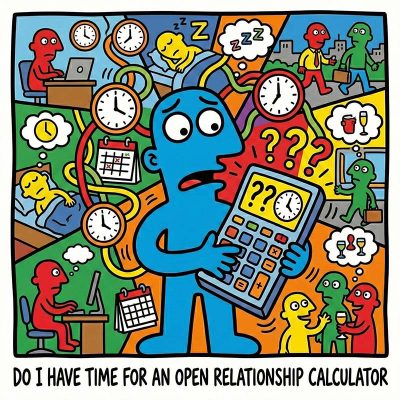
The fantasy is endless romance. The reality? It’s a logistical nightmare. Dating isn't just sex; it’s a second job of swiping, spending, and emotional processing that drains your sanity. Underestimating the "admin" of non-monogamy is the fastest way to turn your relationship into a burnout factory where resentment thrives.
This calculator forces you to confront the brutal math of your time, energy, and wallet. Can you actually afford this lifestyle, or are you just signing up for exhaustion?
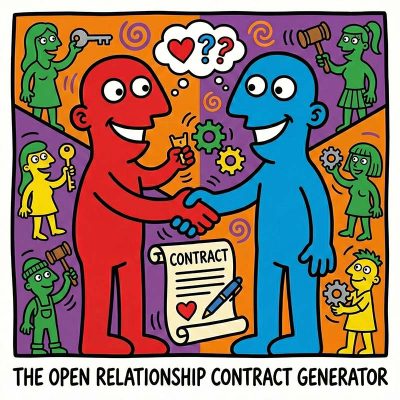
"I thought we agreed" is the sentence that destroys relationships & marriages. Relying on verbal promises when emotions run high is a gamble you cannot afford to lose. Your memory isn't just faulty; it's a liability. Ambiguity is the oxygen that jealousy breathes, turning "freedom" into a minefield of "did I mess up?"
This generator transforms vague permissions into a concrete, signed reality. Stop arguing about what you thought was said and lean on what is written. Secure your boundaries in ink, not hope.
Red flags that opening up may worsen the current issues
Before you jump into ENM you want to scan for warning signs. If you notice several of these patterns it may be a sign that opening up could worsen existing problems instead of healing them.
- Unequal desire One partner is excited about exploring while the other is unsure or feeling pressured.
- Unclear boundaries Rules that are vague or constantly shifting create room for boundary creep.
- Hidden agendas One person uses openness as a way to avoid addressing a different problem in the relationship.
- Lack of time and energy The couple already feels stretched and cannot support more connections in a healthy way.
- Trust gaps Past breaches or ongoing distrust make it risky to invite others into the dynamic.
- Communication breakdown Surface level talk about safety and logistics replaces honest conversations about needs and fears.
- Power imbalances One partner dominates the pace or direction of the opening while the other feels censored or coerced.
- Emotional safety concerns The risk of jealousy harm or emotional pain is high and not being prepared to manage it.
- Safety and consent neglect Inadequate attention to safety planning boundaries or consent cycles.
The structure of a healthy ENM conversation
If you decide to explore ENM the conversation needs to be bigger than a casual chat. You want a plan a clear purpose and a shared sense of safety. Here is a practical framework you can use with your partner or partners.
Ground rules for the talk
- Agree to be open and nonjudgmental during the discussion
- Set a timer to ensure you cover core topics without spiraling into chaos
- Decide on a break plan if the talk gets intense
- Commit to listening fully before reacting
Clarifying needs and fears
Each person should name what they want from ENM and what worries them. Write these down. Compare notes and look for overlaps. If you cannot find overlap you may need to pause and revisit later or seek professional support.
Defining consent and safety measures
Consent is ongoing. You will want to outline what is allowed who can participate and how you will handle safety decisions such as sexual health. Agreement on communicating what happens with new partners is crucial. Document basic agreements and agree to revisit them on a regular basis.
Boundary setting and boundary creep
Boundaries are explicit lines that help protect the relationship. Boundaries sometimes drift especially as feelings evolve. Set a process for reviewing boundaries and adjusting them without blame. Boundary creep happens when lines blur gradually. You want a plan to catch drift early.
Emotional support and jealousy management
Jealousy is common and not a failure. You want a plan to notice triggers and apply coping strategies. This can include pausing dates with others returning to the primary relationship for a buffer period or practicing direct honest conversations about what is being felt. Partner support is essential during this time.
Realistic scenarios and what goes wrong
Let us look at a few everyday situations where opening up can go wrong if you do not handle it carefully. Then we will discuss how to handle them better.
Scenario one a couple with mounting resentment
Two partners have not talked honestly about unmet needs for a long time. One person wants more sexual variety while the other has not felt connected lately. Instead of addressing the core issues they decide to date other people hoping the problems will disappear. The outcome is more distance and more frustration for both sides.
What to do instead
- Return to the core relationship first. Schedule dedicated time for talking about needs and emotional connection without other people in the mix.
- Work on rebuilding trust with small transparent steps before introducing any ENM elements.
- Seek couples therapy or a facilitator familiar with ENM dynamics to help navigate the transition.
Scenario two mismatched libido and a desire to open up
One partner has a high interest in dating others while the other partner experiences a low libido and fears that new relationships will threaten the bond. Opening up in this setting can amplify power imbalances and create a sense of betrayal even if none is intended.
What to do instead
- Explore ways to balance intimate time together with space for outside connections that feel respectful and voluntary.
- Establish a temporary pause or a slower pace and reassess after a set period.
- Use a neutral third party to help maintain fairness and reduce pressure.
Scenario three one partner acts on impulse
Someone acts on impulse without a well thought plan and then tries to fix things by claiming the openness was a solution. This approach tends to create more insecurity and fear in the partner who stayed home.
What to do instead
- Agree to a cooling off period before pursuing external connections
- Make decisions together and ensure both people have the space to express fears and hopes
- Document agreements to avoid misinterpretation
Scenario four a new dynamic enters the conversation too quickly
One partner wants to dive into polyamory while the other is still resolving feelings about a new job or life change. The pace may feel like pressure rather than curiosity.
What to do instead
- Set a timeline for exploring ENM ideas with milestones rather than forcing immediate action
- Keep the focus on emotional safety and clear communication
- Find a slower path that respects both partners needs
Practical steps to prepare before opening the relationship
If you decide to move forward with ENM, you will want a concrete plan. Here is a practical checklist to prepare for a healthier opening rather than an impulsive jump.
- Assess core relationship health Take stock of trust communication emotional safety and shared values. If these are shaky consider strengthening them first.
- Seek professional guidance A therapist who understands ENM can help you navigate sensitive issues and provide tools to keep conversations constructive.
- Define the model you want Decide on a model that fits both of you whether it is a single extra partner dating you or a broader polyamorous setup. Make sure it matches your values and comfort levels.
- Build a safety plan Create guidelines for safe sex talk about STI testing frequency and boundaries for sexual activity outside the relationship.
- Create a communication plan Agree on how often you will check in how you will handle conflicts and when you will pause the exploration.
- Talk about time and energy Decide how much time you are comfortable dedicating to outside connections and how you will protect the primary relationship.
Rules vs boundaries what is the difference and why it matters
In ENM language rules are explicit statements about what you can do and what you cannot do. Boundaries describe your personal limits and comfort levels. You should not impose rules on your partner that feel controlling. Focus on boundaries that are about safety respect and consent. A healthy dynamic uses boundaries to reduce risk rather than to police each other.
The freedom of an open relationship sounds incredible, but the logistics can feel like holding a grenade. That spinning "what if" anxiety isn't paranoia, it’s your survival instinct warning you that your bond is exposed. "Just seeing what happens" is the fastest way to turn a fantasy into a breakup.
The Essential Guide replaces chaos with discipline. We give you the blueprints, jealousy protocols, and repair scripts needed to explore the edge without falling off. Don't guess. Secure your foundation first.
The world of non-monogamy is a maze of confusing labels. Trying to be "Polyamorous" when your heart actually needs "Swinging" isn't just a vocabulary error; it’s a recipe for misery.
You can't build a stable home on a foundation that doesn't fit your psychology. This tool analyzes your emotional bandwidth and jealousy triggers to design the exact structure you need. Stop trying to squeeze into a box that doesn't fit. Build a relationship that actually feels like home.
Opening up feels exciting, but if you aren't reading from the same script, you're writing a tragedy. The disconnect between "I want freedom" and "I want safety" is where hearts break. This isn't just a quiz; it’s a synchronization engine.
We identify the silent gaps in your desires—from sleepover rules to emotional bandwidth, before they become unbridgeable chasms. Don't wait until the damage is done to find out you were never on the same page. Align your compasses now.
Theory is sexy. Reality is messy. You agreed you could date others, but how does your stomach drop when he takes her to your anniversary spot? Or when she comes home smelling like someone else?
This simulator drags your abstract rules into the harsh light of day. We force you to confront the visceral, gut-wrenching scenarios that actually destroy relationships, before they happen. Test your nervous system in the simulator so you don't crash the car in real life.
The fantasy is endless romance. The reality? It’s a logistical nightmare. Dating isn't just sex; it’s a second job of swiping, spending, and emotional processing that drains your sanity. Underestimating the "admin" of non-monogamy is the fastest way to turn your relationship into a burnout factory where resentment thrives.
This calculator forces you to confront the brutal math of your time, energy, and wallet. Can you actually afford this lifestyle, or are you just signing up for exhaustion?
"I thought we agreed" is the sentence that destroys relationships & marriages. Relying on verbal promises when emotions run high is a gamble you cannot afford to lose. Your memory isn't just faulty; it's a liability. Ambiguity is the oxygen that jealousy breathes, turning "freedom" into a minefield of "did I mess up?"
This generator transforms vague permissions into a concrete, signed reality. Stop arguing about what you thought was said and lean on what is written. Secure your boundaries in ink, not hope.
How to talk about safety health and consent in ENM
Safety goes beyond physical protection. It includes emotional safety honest disclosure and consent that is actively given not assumed. Here are some practical talking points to cover with your partner.
- STI testing and vaccination status for all partners
- Safe sex practices and use of protection
- Disclosure of sexual partners and connections as agreed
- Boundaries about romance emotional attachments and how much information to share
- A plan to handle care if jealousy or insecurity increases
When to pause or stop and revisit the plan
The willingness to pause shows maturity not weakness. If you notice a spike in distress a breakdown of trust or a breach of agreed boundaries you may want to pause the open experiment for a set period. Use this time to reconnect rebuild trust or rework the plan. You can resume when both partners have a renewed sense of safety and commitment to the primary relationship.
Communication tips that actually work in real life ENM talks
Talking about ENM is not about winning a debate. It is about keeping a relationship healthy and honest. Here are practical tips that tend to work in the real world.
- Use specific language Describe feelings situations and needs with concrete examples rather than vague statements like you never listen.
- Name your emotions It is okay to say I feel anxious I feel excited or I feel left out. Naming emotions reduces misinterpretation.
- Focus on impact not blame Shift from blaming your partner to describing how actions impact you and the relationship.
- Do not make threats Make requests not ultimatums. When you threaten consequences the conversation shuts down.
- Agree on check ins Schedule regular check ins to evaluate how things are going and adjust as needed.
Practical negotiation scripts you can adapt
Scripting can help you start challenging conversations without spiraling. Here are a few starter lines you can modify to fit your situation.
- I want to explore ENM but I want to do it in a way that protects our bond and keeps you feeling safe. Can we brainstorm a plan together?
- I feel unsettled when you go on a date without sharing details. I would like a short debrief after a date to reduce uncertainty.
- If either of us starts to feel overwhelmed we agree to pause and revisit within two weeks. Does that work for you?
Real world boundaries that help prevent drift
Drift happens when agreements fade. You want practical boundaries that you both can honor. Consider including details about time together with each other outdoor dates and how you will handle emotional closeness with outside partners.
- Schedule you time with each other weekly to maintain connection
- Decide whether emotional relationships with others are allowed and if so what level of disclosure is expected
- Agree on how much information to share with children or family members if relevant
- Establish a process to renegotiate boundaries on a set cadence
The role of therapy and community support
ENM can benefit from professional help just like any relationship. A therapist who understands ethical nonmonogamy can help you navigate complicated emotions and create healthier patterns. In addition some communities offer support groups or online forums where people share experiences and strategies. The goal is to learn from others without turning your relationship into a laboratory experiment. Real world advice from people who have been there can be invaluable.
Common mistakes to avoid when opening up
- Rushing the process Moving too quickly can bypass essential conversations and set you up for conflict.
- Coercion masquerading as openness Pushing a partner to agree because you want it so badly is not consent.
- Ignoring safety Skipping STI testing or unsafe practices raises risk for everyone involved.
- Boundary creep Slipping new expectations into the plan without discussion
- Using ENM as punishment Opening the relationship to punish a partner is a recipe for hurt and mistrust.
A glossary of useful terms and acronyms
- ENM Ethical nonmonogamy a broad approach to multiple connections with consent and honesty.
- Open relationship A relationship structure that allows dating or sex with others outside the primary bond with agreed rules.
- Polyamory The practice of love and connection with more than one person at the same time.
- Swinging Sexual exploration with others often without deep emotional involvement.
- Boundaries Personal limits that protect emotional and physical safety in relationships.
- Consent A clear and ongoing agreement to participate in activities that involve others.
- Monogamy A relationship model where two people commit exclusively to each other.
- Jealousy management Strategies to recognize and cope with jealousy in a healthy way.
- Communication plan A framework for regular honest conversations about needs fears and boundaries.
- Safety plan Practical steps to minimize risk including health checks and safe sex practices.
Frequently asked questions
The freedom of an open relationship sounds incredible, but the logistics can feel like holding a grenade. That spinning "what if" anxiety isn't paranoia, it’s your survival instinct warning you that your bond is exposed. "Just seeing what happens" is the fastest way to turn a fantasy into a breakup.
The Essential Guide replaces chaos with discipline. We give you the blueprints, jealousy protocols, and repair scripts needed to explore the edge without falling off. Don't guess. Secure your foundation first.
The world of non-monogamy is a maze of confusing labels. Trying to be "Polyamorous" when your heart actually needs "Swinging" isn't just a vocabulary error; it’s a recipe for misery.
You can't build a stable home on a foundation that doesn't fit your psychology. This tool analyzes your emotional bandwidth and jealousy triggers to design the exact structure you need. Stop trying to squeeze into a box that doesn't fit. Build a relationship that actually feels like home.
Opening up feels exciting, but if you aren't reading from the same script, you're writing a tragedy. The disconnect between "I want freedom" and "I want safety" is where hearts break. This isn't just a quiz; it’s a synchronization engine.
We identify the silent gaps in your desires—from sleepover rules to emotional bandwidth, before they become unbridgeable chasms. Don't wait until the damage is done to find out you were never on the same page. Align your compasses now.
Theory is sexy. Reality is messy. You agreed you could date others, but how does your stomach drop when he takes her to your anniversary spot? Or when she comes home smelling like someone else?
This simulator drags your abstract rules into the harsh light of day. We force you to confront the visceral, gut-wrenching scenarios that actually destroy relationships, before they happen. Test your nervous system in the simulator so you don't crash the car in real life.
The fantasy is endless romance. The reality? It’s a logistical nightmare. Dating isn't just sex; it’s a second job of swiping, spending, and emotional processing that drains your sanity. Underestimating the "admin" of non-monogamy is the fastest way to turn your relationship into a burnout factory where resentment thrives.
This calculator forces you to confront the brutal math of your time, energy, and wallet. Can you actually afford this lifestyle, or are you just signing up for exhaustion?
"I thought we agreed" is the sentence that destroys relationships & marriages. Relying on verbal promises when emotions run high is a gamble you cannot afford to lose. Your memory isn't just faulty; it's a liability. Ambiguity is the oxygen that jealousy breathes, turning "freedom" into a minefield of "did I mess up?"
This generator transforms vague permissions into a concrete, signed reality. Stop arguing about what you thought was said and lean on what is written. Secure your boundaries in ink, not hope.
