
When Professional Support Is Helpful

If you are riding the wave of Ethical Non Monogamy or ENM for short that is a fancy way of saying you and your partner open up your relationship with clear consent and honest communication you might wonder when do you bring in a pro. The Monogamy Experiment is here to break it down like a friendly roommate who keeps it real. Open relationships offer many rewards but they also come with unique challenges. Sometimes a talk with a professional can move things from chaotic to calm and practical. This guide explains what ENM means how professional support can help and how to choose the right expert for your situation
Quick Links to Useful Sections
- What ENM means and why professionals can help
- Terms you should know and what they mean
- When to consider professional support
- Persistent communication breakdown
- Vague rules that cause friction
- Jealousy that won t go away
- Health and safety concerns
- Family and social pressure
- Transitions in your relationship and life stage
- Trauma or past relationship wounds
- Types of professionals who can help
- Sex therapists
- Relationship therapists or marriage counselors
- Polyamory affirming therapists or counselors
- Coaches and facilitators who focus on ENM
- Individual therapists for personal work
- How to choose the right professional
- What to expect in ENM focused therapy or coaching
- Realistic scenarios and how a pro can help
- Scenario 1 the new partner challenge
- Scenario 2 juggling time and energy
- Scenario 3 dealing with jealousy without blame
- Scenario 4 health safety and STI conversations
- Scenario 5 dealing with a breach of boundaries
- Scenario 6 coming out to family or friends who are not supportive
- Practical tips to get the most from professional support
- Preparing for your first session
- What to ask a potential ENM friendly professional
- Red flags to watch for when seeking professional support
- Glossary of useful terms and acronyms
- Frequently asked questions
What ENM means and why professionals can help
ENM stands for Ethical Non Monogamy. This is a relationship approach in which all involved people agree that dating or sexual connections outside the primary relationship may happen. An Open Relationship is a common form of ENM where partners agree to dating others while maintaining a primary bond. There are many flavors of ENM including polyamory which means having more than one loving relationship at the same time and swinging which is often about sexual experiences with others but within a set of agreed boundaries. Each dynamic is unique and you should pick the path that makes sense for you and the people you care about
Professional support can be helpful for several reasons including improving communication reducing jealousy clarifying boundaries handling time management and keeping everyone safe emotionally and physically. A qualified professional can listen without judgment help you translate feelings into actions and offer tools that fit ENM realities not monogamy fantasies. The goal is not to fix you or your relationship but to give you more options and better skills to negotiate a path that works for everyone involved
Terms you should know and what they mean
While you may hear a lot of abbreviations in ENM circles here is a quick glossary so you are on the same page with any professional you speak to
- ENM Ethical Non Monogamy a relationship approach that includes consensual non monogamy and explicit agreement about dating or sexual activity outside the primary partnership
- Open Relationship A form of ENM where partners allow dating or connections outside the primary bond while maintaining commitment to the core relationship
- Polyamory An arrangement where individuals have more than one loving relationship at the same time
- Swinging Couples engaging in sexual activities with others often in a social or party like setting
- Primary Partner The person who holds the most central or longest standing place in a relationship often tied to living arrangements or long term plans
- Secondary Partner Someone who is important but not the primary relationship in terms of day to day life or housing
- Compersion The feeling of joy when your partner experiences happiness with someone else
- Jealousy A natural feeling that can signal boundaries needs or insecurity and is a common topic in ENM coaching or therapy
- Boundaries Boundaries are agreed lines that describe what is okay and what is not okay in a relationship
- Negotiation The process of discussing and agreeing on rules about dating sexual activity and communication
- Consent Clear voluntary agreement to engage in specific activities
- STI Sexually Transmitted Infection an important health topic in ENM that may require open discussion with partners and professionals
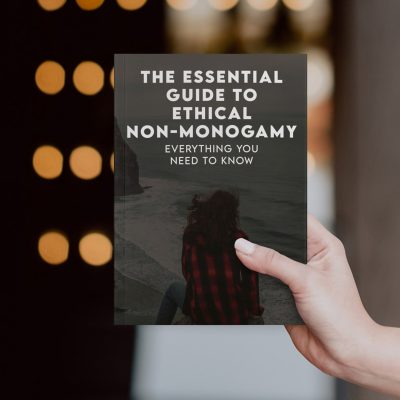
The freedom of an open relationship sounds incredible, but the logistics can feel like holding a grenade. That spinning "what if" anxiety isn't paranoia, it’s your survival instinct warning you that your bond is exposed. "Just seeing what happens" is the fastest way to turn a fantasy into a breakup.
The Essential Guide replaces chaos with discipline. We give you the blueprints, jealousy protocols, and repair scripts needed to explore the edge without falling off. Don't guess. Secure your foundation first.
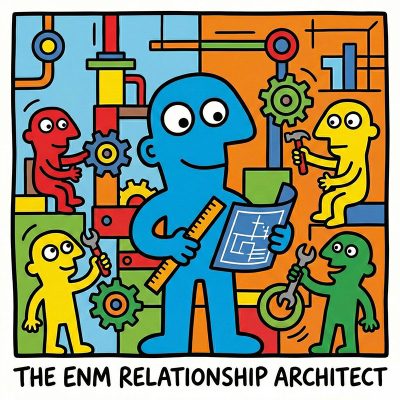
The world of non-monogamy is a maze of confusing labels. Trying to be "Polyamorous" when your heart actually needs "Swinging" isn't just a vocabulary error; it’s a recipe for misery.
You can't build a stable home on a foundation that doesn't fit your psychology. This tool analyzes your emotional bandwidth and jealousy triggers to design the exact structure you need. Stop trying to squeeze into a box that doesn't fit. Build a relationship that actually feels like home.
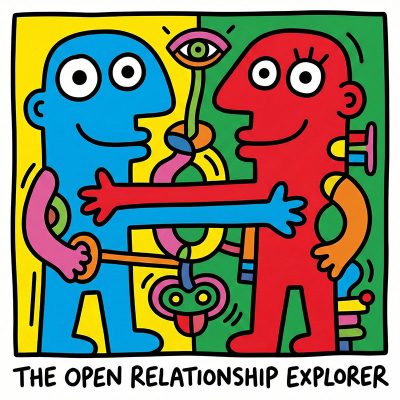
Opening up feels exciting, but if you aren't reading from the same script, you're writing a tragedy. The disconnect between "I want freedom" and "I want safety" is where hearts break. This isn't just a quiz; it’s a synchronization engine.
We identify the silent gaps in your desires—from sleepover rules to emotional bandwidth, before they become unbridgeable chasms. Don't wait until the damage is done to find out you were never on the same page. Align your compasses now.
Theory is sexy. Reality is messy. You agreed you could date others, but how does your stomach drop when he takes her to your anniversary spot? Or when she comes home smelling like someone else?
This simulator drags your abstract rules into the harsh light of day. We force you to confront the visceral, gut-wrenching scenarios that actually destroy relationships, before they happen. Test your nervous system in the simulator so you don't crash the car in real life.

The fantasy is endless romance. The reality? It’s a logistical nightmare. Dating isn't just sex; it’s a second job of swiping, spending, and emotional processing that drains your sanity. Underestimating the "admin" of non-monogamy is the fastest way to turn your relationship into a burnout factory where resentment thrives.
This calculator forces you to confront the brutal math of your time, energy, and wallet. Can you actually afford this lifestyle, or are you just signing up for exhaustion?
"I thought we agreed" is the sentence that destroys relationships & marriages. Relying on verbal promises when emotions run high is a gamble you cannot afford to lose. Your memory isn't just faulty; it's a liability. Ambiguity is the oxygen that jealousy breathes, turning "freedom" into a minefield of "did I mess up?"
This generator transforms vague permissions into a concrete, signed reality. Stop arguing about what you thought was said and lean on what is written. Secure your boundaries in ink, not hope.
When to consider professional support
Not every situation needs a therapist or coach but when you hit repeat cycles that feel stuck it can be a sign that professional support would be helpful. Here are common triggers and what to expect from professional help
Persistent communication breakdown
If conversations about dating outside the relationship consistently derail into arguments or silence a professional can offer skills to reframe talks create agendas and establish a safe structure for discussion. You will learn how to express needs without blame and how to hear concerns you might have been avoiding
Vague rules that cause friction
Rules that feel like they were written in a hurry or with hidden assumptions tend to backfire. A therapist or relationship coach can help you write clear boundaries and test them in real life with practical check ins and renegotiation points
Jealousy that won t go away
Jealousy is not a sign of failure it is a signal. A professional can teach you strategies to manage jealousy reduce triggers through planning and develop skills for compassionate communication and emotional regulation
Health and safety concerns
Open relationships require ongoing conversations about safer sex testing and transparency. A sex therapist or health aware counselor can provide guidance on STI testing scheduling risk reduction and honest disclosure practices that protect everyone involved
Family and social pressure
Friends family or faith communities might push for monogamy or judge ENM. A professional can help you navigate those conversations bolster your confidence in your chosen path and plan respectful boundaries with people who are important to you
Transitions in your relationship and life stage
Opening a relationship after a period of closeness or after a serious event like parenthood or relocation can feel awkward. A coach can help you reestablish trust rebuild routines and decide how to balance time and energy across partners
Trauma or past relationship wounds
Past experiences can color current ENM dynamics. If old wounds show up as triggers a therapist trained in trauma informed care can help you heal and re engage in healthier ways
Types of professionals who can help
You likely do not need a one size fits all approach. Here are options and what they typically help with in ENM contexts
Sex therapists
Sex therapists specialize in sexual function sexuality and sexual health. They are often well equipped to talk about safer sex boundaries consent and erotic intimacy in non monogamous settings. They bring clinical training to sensitive topics in a non judgmental way
Relationship therapists or marriage counselors
These professionals work with couples to improve communication resolve conflicts and build a sustainable relationship structure. When ENM is part of the picture they adapt their usual framework to include non monogamous dynamics and negotiated agreements
Polyamory affirming therapists or counselors
Some clinicians specialize in ENM or polyamory specifically. They understand the terminology the common fears and the unique emotional terrain of multiple relationships and can tailor approaches to your exact dynamic
Coaches and facilitators who focus on ENM
Coaches provide practical tools for negotiation time management and day to day logistics. They tend to be action oriented and provide checklists templates and exercises that you can apply between sessions
Individual therapists for personal work
Sometimes the best move is personal work before or alongside couples work. An individual therapist can help you explore your values attachment style and how your past shapes your ENM choices
How to choose the right professional
Finding the right fit matters as much as finding the right credentials. Here is a practical checklist to guide your search
- Experience with ENM Look for explicit references to ENM polyamory or open relationships in their practice or description
- Approach compatibility Do you want a cognitive behavioral approach a psychodynamic style or a more coaching oriented format
- Comfort with non traditional relationships Ask about their views on ENM and how they handle jealousy boundaries and consent
- Confidentiality and ethics Confirm how sessions are documented how records are stored and who else can access information
- Format and logistics In person telehealth or a hybrid approach what hours they offer and expected length of sessions
- Cost and accessibility Understand pricing cancellation policies and whether they accept your insurance if applicable
- Red flags Dismissiveness judgment or shaming of ENM or coercive pressure to change your lifestyle are signs to look elsewhere
What to expect in ENM focused therapy or coaching
Below is a practical picture of how these sessions typically flow and what you can do to get the most from them
- Initial assessment The professional asks about your goals boundaries and the history of your relationship dynamic. This sets the stage for a collaborative plan
- Goal setting You and your partner decide on 2 to 3 tangible goals for the next 4 to 8 weeks such as improving a specific communication skill or negotiating a new boundary
- skill building You learn and practice new communication patterns emotional check ins and negotiation frameworks
- homework and practice Expect exercises between sessions such as journaling or structured conversations with prompts
- progress review Each session includes a quick review of what worked what didn t and what needs adjustment
- long term plan As the dynamic evolves you may shift goals or try new approaches to keep things healthy and fair for everyone involved
Realistic scenarios and how a pro can help
Let’s walk through some everyday situations that come up in ENM dynamics and see how professional support can help
Scenario 1 the new partner challenge
You and your partner decide to date someone new. The first couple of conversations feel clunky and personal fears show up. A therapist can help you structure the conversation so both people feel heard and safe. They can help you craft a set of boundary phrases that feel natural and not rehearsed and set a check in protocol after your first date
Scenario 2 juggling time and energy
With multiple partners there is a real risk of overloading schedules and burning out. A coach can help you map your week create a realistic dating calendar and design rituals that preserve your couple time as well as your individual time with others
Scenario 3 dealing with jealousy without blame
Jealousy is normal in ENM and a good partner will respect it while still holding space for feedback. A professional can teach you a jealousy map a simple tool that helps you identify triggers express needs and negotiate adjustments without turning it into a power struggle
Scenario 4 health safety and STI conversations
Open relationships require transparency about sexual health. A pro can coach you on how to have open blunt conversations about testing results condom use and boundaries in a way that protects everyone involved
Scenario 5 dealing with a breach of boundaries
Boundaries may be crossed unintentionally. A therapist can help you repair trust re define boundaries and decide how to move forward in a way that doesn t punish anyone but restores safety and respect
Scenario 6 coming out to family or friends who are not supportive
Family pressure can be intense. A professional can help you prepare for conversations with loved ones set boundaries around what you will share and how you will protect your relationship while staying true to yourself
Practical tips to get the most from professional support
- Define your goals Before the first session write down 2 or 3 clear goals. This gives your therapist or coach a target to work toward
- Bring context Include a recent conversation script if you have one and any notes about what has happened since your last session
- Be honest It is okay to share awkward moments anger or confusion. The more open you are the better the guidance you will receive
- Ask about their ENM experience Specific questions help you gauge fit and comfort level
- Agree on a plan Decide how many sessions you will try and how you will measure progress
- Plan safety checks Schedule a quick check in after the first couple of dates or weeks to ensure boundaries still feel fair
Preparing for your first session
First sessions can feel a bit like a first date with a new professional. Go in with curiosity and a few practical expectations
- Prepare a short personal intro including your role in the relationship and the dynamic you have
- Bring a quick note on your primary goals and the challenges you want to address
- If you feel nervous write down a few prompts to help you start the conversation
- Ask about what to expect in terms of homework and follow up
What to ask a potential ENM friendly professional
- What is your experience with ENM open relationships and polyamory
- How do you handle confidentiality and safety with multiple partners
- Do you use any specific frameworks for negotiation and boundary setting
- What does success look like in your work with ENM clients
- How will you tailor your approach to my unique dynamic and boundaries
- Do you offer virtual sessions and what is the cost
Red flags to watch for when seeking professional support
- Judgmental language about ENM or pressure to return to monogamy
- Promises to “fix” non monogamy as a pathology
- Lack of clear consent procedures or confidentiality policies
- Encouraging you to hide information from partners or break agreed boundaries
- High pressure push to commit to a single outcome or a particular partner
Glossary of useful terms and acronyms
- ENM Ethical Non Monogamy a style of relationship with consensual non monogamy
- Open relationship A form of ENM where partners agree to dating or sexual activity outside the relationship
- Polyamory Having more than one loving relationship at the same time
- Swinging Couples engaging in sexual activities with others often in social settings
- Compersion Pleasure from your partner s happiness with someone else
- Jealousy A natural emotion that can be managed with tools and support
- Boundaries Clear lines that describe what is allowed and what is not
- Negotiation The process of discussing needs rules and timelines
- Consent Clear agreement to participate in a given activity
- STI Sexually Transmitted Infection a health topic relevant to safer sex practices
Frequently asked questions
The freedom of an open relationship sounds incredible, but the logistics can feel like holding a grenade. That spinning "what if" anxiety isn't paranoia, it’s your survival instinct warning you that your bond is exposed. "Just seeing what happens" is the fastest way to turn a fantasy into a breakup.
The Essential Guide replaces chaos with discipline. We give you the blueprints, jealousy protocols, and repair scripts needed to explore the edge without falling off. Don't guess. Secure your foundation first.
The world of non-monogamy is a maze of confusing labels. Trying to be "Polyamorous" when your heart actually needs "Swinging" isn't just a vocabulary error; it’s a recipe for misery.
You can't build a stable home on a foundation that doesn't fit your psychology. This tool analyzes your emotional bandwidth and jealousy triggers to design the exact structure you need. Stop trying to squeeze into a box that doesn't fit. Build a relationship that actually feels like home.
Opening up feels exciting, but if you aren't reading from the same script, you're writing a tragedy. The disconnect between "I want freedom" and "I want safety" is where hearts break. This isn't just a quiz; it’s a synchronization engine.
We identify the silent gaps in your desires—from sleepover rules to emotional bandwidth, before they become unbridgeable chasms. Don't wait until the damage is done to find out you were never on the same page. Align your compasses now.
Theory is sexy. Reality is messy. You agreed you could date others, but how does your stomach drop when he takes her to your anniversary spot? Or when she comes home smelling like someone else?
This simulator drags your abstract rules into the harsh light of day. We force you to confront the visceral, gut-wrenching scenarios that actually destroy relationships, before they happen. Test your nervous system in the simulator so you don't crash the car in real life.
The fantasy is endless romance. The reality? It’s a logistical nightmare. Dating isn't just sex; it’s a second job of swiping, spending, and emotional processing that drains your sanity. Underestimating the "admin" of non-monogamy is the fastest way to turn your relationship into a burnout factory where resentment thrives.
This calculator forces you to confront the brutal math of your time, energy, and wallet. Can you actually afford this lifestyle, or are you just signing up for exhaustion?
"I thought we agreed" is the sentence that destroys relationships & marriages. Relying on verbal promises when emotions run high is a gamble you cannot afford to lose. Your memory isn't just faulty; it's a liability. Ambiguity is the oxygen that jealousy breathes, turning "freedom" into a minefield of "did I mess up?"
This generator transforms vague permissions into a concrete, signed reality. Stop arguing about what you thought was said and lean on what is written. Secure your boundaries in ink, not hope.
