
Avoiding Avoidance Disguised as Autonomy

Here is the thing we all want autonomy and healthy freedom. In the world of ethical non monogamy and specifically solo polyamory the dream is to own your choices while staying emotionally available. But sometimes people slip into a pattern that looks like independence when it is really avoidance in disguise. This guide is designed to help you spot that pattern and turn it into genuine autonomy that serves your needs and respects the people you date. We will break down the terms we use and share practical steps you can take today to keep your relationships honest and thriving without losing your sense of self.
Quick Links to Useful Sections
- What solo polyamory and ENM mean
- What this article means by avoidance disguised as autonomy
- Signs this pattern might be happening in your life
- Healthy autonomy versus avoidance in solo polyamory
- How avoidance shows up in day to day solo poly life
- Example one a pattern of space making that erases connection
- Example two a tendency to redefine commitment as freedom
- Example three mixed signals about transparency
- Why this pattern arises in solo polyamory ENM
- The real boundaries of true autonomy
- Practical steps to reclaim authentic autonomy
- 1. Name your autonomy clearly
- 2. Build a candid communication habit
- 3. Create predictable but flexible structures
- 4. Practice ethical transparency
- 5. Use language that invites dialogue not defense
- 6. Align autonomy with responsibility
- 7. Avoid rerouting conversations into a blame game
- 8. Ground your autonomy in self knowledge
- 9. Learn to tolerate discomfort
- 10. Build a small support network outside your dating life
- Realistic scenarios and dialogues you can borrow
- Scenario A adjusting a schedule with a new partner
- Scenario B addressing a concern about transparency
- Scenario C handling a refusal to commit to a future plan
- Tools to support healthy autonomy
- Glossary of terms and acronyms you might see in this space
- Practical takeaways
- Checklist for staying on track
- Frequently asked questions
What solo polyamory and ENM mean
Solo polyamory is a form of ethical non monogamy where a person prioritizes independence and emotional self sufficiency while pursuing multiple intimate connections. It is not simply about dating a lot of people. It is about designing a life that does not revolve around a primary partner or a couple dynamic. The letters ENM stand for ethical non monogamy. This is the umbrella term for relationship styles that embrace more than one romantic or sexual connection with the knowledge and consent of all involved. A solo poly person might live alone or with partners and still maintain a web of connections that feels balanced and fulfilling to them. The key idea is consent communication and ongoing negotiation rather than blanket rules or rigid scripts.
What this article means by avoidance disguised as autonomy
Avoidance disguised as autonomy is when someone uses the language of independence to dodge the hard work of open communication, emotional labor or the practical negotiations that come with multiple relationships. It can show up as an insistence on total freedom with no obligation to share needs or to check in about compatibility. It can also manifest as withdrawal from conversations about future plans or a habit of canceling plans in a way that keeps distance rather than creates space for honest dialogue. People who fall into this pattern may believe they are protecting their autonomy but the effect is that their partners feel unseen and disrespected. In the long run this pattern damages trust and leaves everyone less empowered than they intended to be.
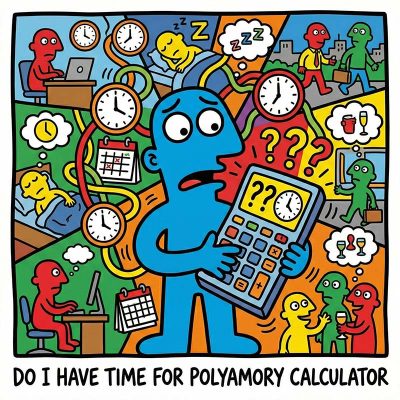
Love is infinite, but your calendar is brutally finite. The fantasy is deep connection; the reality is often just exhausted "calendar tetris." Promising time you don't actually have isn't romantic, it’s a recipe for burnout and broken trust. That sinking feeling when you have to cancel again? That’s the sound of overextension destroying your relationships.
This calculator forces you to confront the math of your life. Do you actually have space for another heart, or are you just setting everyone up for disappointment?

The fantasy is total autonomy and connection. The reality? It can feel like drowning in scheduling chaos and misunderstood expectations. That anxiety you feel isn’t just stress; it’s the wobble of living without a default "anchor." Without a solid architecture, Solo Polyamory stops being a life design and starts being a recipe for burnout and confusion.
The Essential Guide replaces the drift with a concrete anchor. We provide the "Solo Ethic," boundary scripts, and burnout protocols needed to protect your peace. Don't just date around—build a life that actually works for you.
Hierarchy sounds like a corporate org chart until someone gets their feelings hurt. That stomach-turning fear that you are just a "secondary" who can be fired at any time is real. If your relationship feels like a secret ranking system, you are doing it wrong.
Ambiguity is where resentment grows. The Essential Guide replaces the "who matters more" panic with a concrete charter. We provide the scripts and equity guardrails needed to protect every heart in the polycule. Stop guessing and start building.
The ideal is pure equality. The reality? It often slides into hidden rankings where someone gets hurt. That sinking feeling that you are secretly a "secondary" despite the label? That is your intuition detecting couple privilege. Ambiguity is where resentment thrives.
The Essential Guide replaces vague promises with concrete governance. We provide the charters, equity tools, and jealousy protocols needed to ensure "non-hierarchical" isn't just a fantasy. Stop guessing who matters most. Build a network that is actually fair.
The fantasy is total autonomy and connection. The reality? It can feel like drowning in scheduling chaos and misunderstood expectations. That anxiety you feel isn’t just stress; it’s the wobble of living without a default "anchor." Without a solid architecture, Solo Polyamory stops being a life design and starts being a recipe for burnout and confusion.
The Essential Guide replaces the drift with a concrete anchor. We provide the "Solo Ethic," boundary scripts, and burnout protocols needed to protect your peace. Don't just date around—build a life that actually works for you.
Hierarchy sounds like a corporate org chart until someone gets their feelings hurt. That stomach-turning fear that you are just a "secondary" who can be fired at any time is real. If your relationship feels like a secret ranking system, you are doing it wrong.
Ambiguity is where resentment grows. The Essential Guide replaces the "who matters more" panic with a concrete charter. We provide the scripts and equity guardrails needed to protect every heart in the polycule. Stop guessing and start building.
Signs this pattern might be happening in your life
Look for recurring behaviors that signal a gap between the idea of autonomy and actual practice. Here are common signs you may be dealing with. These are not judgments just indicators to examine with honesty.
- You frequently cancel or reschedule dates with little notice and provide vague reasons that do not invite conversation
- You steer conversations away from feelings by saying you need space or you want to focus on yourself and then do not revisit the topic later
- You avoid introducing partners to other important people in your life and keep relationships strictly compartmentalized
- You resist talking about future plans or long term expectations with partners outside your core circle
- You respond with silence or minimal text when a partner asks about emotional needs or boundaries
- You justify lack of transparency as a personal boundary or a non negotiable this time around
- You insist that your autonomy requires you to avoid accountability for how your actions affect others
Healthy autonomy versus avoidance in solo polyamory
Autonomy means making deliberate choices that honor your own needs while also honoring the needs of others. It is about being clear about what you want and about communicating those desires. It is about building a life that allows you to show up authentically in your relationships. Avoidance is a coping mechanism that hides behind the idea of personal freedom. It avoids the hard parts of intimacy and negotiation. Distinguishing between these two requires honesty and consistent practice.
Here is a quick framework you can use. If you can answer yes to the following questions you are likely practicing healthy autonomy. If you answer no or you feel doubt then you may be leaning into avoidance and you can use the next sections to course correct.
- Do you communicate your needs clearly and promptly when asked
- Do you accept responsibility for the impact of your choices on others
- Are you willing to negotiate boundaries in good faith without feeling attacked
- Do you maintain your independence while still prioritizing connection and honesty
- Do you revisit conversations when new information emerges rather than cutting them off
How avoidance shows up in day to day solo poly life
In everyday life the pattern can be subtle. Here are realistic examples you might recognize. These are not accusations they are signals to study and adjust.
Example one a pattern of space making that erases connection
You plan a lot of alone time to focus on personal projects and you tell your partners you need space to grow. Over weeks this transforms into a habit of avoiding joint planning. You find yourself consistently unavailable when a partner asks to try a new dating activity together. The energy of space becomes a wall rather than a doorway. A healthy autonomy would involve stating your needs for solo time and offering concrete options for staying connected such as a scheduled check in or a shared activity that respects both independence and companionship.
Example two a tendency to redefine commitment as freedom
A person frames commitment as a trap and argues that true autonomy means never having to negotiate or commit to a shared plan. In practice this means avoiding conversations about how relationships fit on the calendar or within life goals. In contrast a healthy approach is to negotiate the terms of commitment openly. You can declare what autonomy means for you while also listening to what your partners need and creating agreements that feel fair.
Example three mixed signals about transparency
You say you are open and honest about your other relationships but you consistently withhold information about one partner from another. This creates secrecy and erodes trust. True autonomy means transparency where it matters. It does not mean sharing every tiny detail but it does require honesty about major changes or when a partner is expressing concerns.
Why this pattern arises in solo polyamory ENM
Understanding why this pattern appears helps you spot it early and steer back toward healthy autonomy. Here are common roots and motivations that can create the feel of autonomy while hiding avoidance.
- Fear of vulnerability. Opening up to another person can feel risky especially if you have had painful experiences with closeness in the past
- Scarcity mindset about time and energy. The belief that there is not enough room for everyone to be seen leads to protective withdrawal
- Fear of entanglement. The idea of being deeply connected to another person can feel like losing personal freedom
- Past trauma that makes trust hard. Autonomy becomes a shield that blocks necessary healing conversations
- Confusion about what autonomy looks like in ENM. The language of autonomy has become a distraction from real world negotiation
The real boundaries of true autonomy
Healthy autonomy in solo polyamory means you can choose to engage in relationships on your terms while actively participating in the mutual responsibilities of care and respect. It means you know your boundaries and you communicate them. It means you do not hide behind a blanket demand for space and call it autonomy. It means you own your decisions and you stay connected to your people in honest ways.
Practical steps to reclaim authentic autonomy
Here is a practical playbook you can start using today. The aim is to transform avoidance into a disciplined and ethical form of independence that respects all involved.
1. Name your autonomy clearly
Write down what autonomy means to you in concrete terms. For example I want to date at a comfortable pace without pressure. I want to maintain a strong line of communication with each partner and I will share changes in my schedule within twenty four hours. I want to protect time for personal growth and for reflection. Put these statements into your own words and keep them visible as a reminder.
2. Build a candid communication habit
Commit to talking about needs even when it feels uncomfortable. Use a neutral tone and focus on the impact of behaviors instead of labeling people. For example I am feeling unsettled when plans change last minute and I would like to set a recurring date night or a weekly check in that allows us to adjust plans with notice.
3. Create predictable but flexible structures
Autonomy benefits from predictable frameworks that still allow flexibility. Try a weekly check in with each partner or a shared calendar where you mark important dates. You can keep your personal time blocks in your calendar but make room for adjustments when something needs to be renegotiated. Boundaries here are not about rigidity but about clear expectations and consent for changes.
4. Practice ethical transparency
Transparency does not require broadcasting every detail of your dating life. It does require revealing information that could affect someone else's decisions or wellbeing. If a meeting or a boundary has changed tell the relevant people. If you are forming a new dynamic explain how it might influence existing connections.
5. Use language that invites dialogue not defense
When you express a boundary say it as a desire and invite collaboration rather than making a demand. For example I would like to keep our time together consistent and I am open to talking about how we can adjust this as life changes. This invites a collaborative conversation instead of triggering defensiveness.
6. Align autonomy with responsibility
Independence needs to be backed by accountability. If you hurt a partner by overbooking or dropping a plan you owe a sincere apology and a plan to repair. Autonomy without accountability quickly becomes a pattern of harm and withdrawal.
7. Avoid rerouting conversations into a blame game
If a partner expresses a need you do not want to meet you can respond with curiosity and an offer to explore options. Avoid arguing that their needs are wrong or unnecessary. The goal is to find a path that respects both sides or to negotiate a new arrangement that works for all involved.
8. Ground your autonomy in self knowledge
Regular self reflection helps you see when you are leaning away from connection. Journaling after dates or conversations can reveal patterns such as avoidance of deep topics or reluctance to discuss future plans. Use these insights to course correct rather than blaming yourself.
9. Learn to tolerate discomfort
Autonomy does not remove discomfort. It shifts the way you handle it. Instead of escaping from feelings try acknowledging them and naming them. Then decide on a response that aligns with your values and with the needs of your partners.
10. Build a small support network outside your dating life
Your autonomy should not become a solo job. Cultivate friendships and communities that support your growth and hold you accountable in kind ways. Having a safety net helps you stay grounded when dating feels overwhelming.
Realistic scenarios and dialogues you can borrow
Sometimes hearing a script helps you apply the ideas in real life. Here are some practical dialogue templates you can adapt to your style. Keep them short and true to your voice.
Scenario A adjusting a schedule with a new partner
Partner B asks for a weekly date. You reply I am excited to date with you. I also have a standing personal time block on Saturdays. I can move that block once a month but I want to keep a predictable rhythm for us. If Saturday ever becomes impossible we can swap with another day with enough notice. Does that work for you
Scenario B addressing a concern about transparency
You notice a partner is seeing someone new and you want to know where you stand. You say I am happy for you and I want to understand what this new connection means for us. Could we talk about the level of updates you would like me to have and when you want more space and when you want more sharing
Scenario C handling a refusal to commit to a future plan
You want a sense of where a relationship is headed but you hear a lot of I am focusing on me right now. You respond I respect your focus on yourself. For my own peace of mind I would like to know if you see us continuing in the next quarter and what that would look like. If you cannot commit to a plan I would like to set a follow up discussion that is not dragging out over months. Is that fair
Tools to support healthy autonomy
Using practical tools helps you stay aligned with your goals. Try these ideas and adjust as you grow.
- Personal autonomy journal. Record your needs feelings and decisions. Revisit weekly to see what patterns emerge.
- Shared calendars with partner inputs. This creates visibility without forcing closeness beyond what is comfortable
- Weekly check in templates. A short structure helps conversations stay efficient and meaningful
- Boundary cheat sheet. A simple reference that outlines what you will and will not tolerate in different contexts
- Reflection prompts. End of week questions that help you see what went well and what did not
Glossary of terms and acronyms you might see in this space
- ENM Ethical non monogamy. A practice where partners consent to more than one romantic or sexual relationship with open communication and negotiation.
- Solo polyamory A form of ENM where the person prioritizes independence while maintaining multiple relationships. The person does not seek a primary couple dynamic.
- Autonomy The ability to make independent choices and act on them while respecting others needs and the terms of the relationship.
- Avoidance Steering away from conversations or negotiations that are necessary for a healthy relationship.
- Transparency Being open about important information that could affect others decisions or wellbeing.
- Boundaries Clear lines defining what is okay and not okay in a relationship and how to handle potential conflicts.
Practical takeaways
Autonomy is a powerful tool when used with intention. Avoidance disguised as autonomy damages trust and makes you feel less seen in the end. The aim is to live your truth while staying connected in honest and equitable ways. Use the steps in this guide as a daily practice. Keep checking in with yourself and if you notice patterns of withdrawal address them with compassion and concrete plans to repair. Your future self will thank you for staying honest and brave in the face of discomfort.
Checklist for staying on track
- Define precisely what autonomy means to you in the context of multiple relationships
- Engage in regular open conversations about needs with each partner
- Keep time blocks for self care and for nurturing connections
- Be accountable for the impact of your actions even when you want to protect yourself
- Ask for feedback from trusted partners about how your behavior lands with them
- When plans change provide clear reasons and propose alternatives
- Use written notes or templates to guide difficult conversations
Frequently asked questions
Love is infinite, but your calendar is brutally finite. The fantasy is deep connection; the reality is often just exhausted "calendar tetris." Promising time you don't actually have isn't romantic, it’s a recipe for burnout and broken trust. That sinking feeling when you have to cancel again? That’s the sound of overextension destroying your relationships.
This calculator forces you to confront the math of your life. Do you actually have space for another heart, or are you just setting everyone up for disappointment?
The fantasy is total autonomy and connection. The reality? It can feel like drowning in scheduling chaos and misunderstood expectations. That anxiety you feel isn’t just stress; it’s the wobble of living without a default "anchor." Without a solid architecture, Solo Polyamory stops being a life design and starts being a recipe for burnout and confusion.
The Essential Guide replaces the drift with a concrete anchor. We provide the "Solo Ethic," boundary scripts, and burnout protocols needed to protect your peace. Don't just date around—build a life that actually works for you.
Hierarchy sounds like a corporate org chart until someone gets their feelings hurt. That stomach-turning fear that you are just a "secondary" who can be fired at any time is real. If your relationship feels like a secret ranking system, you are doing it wrong.
Ambiguity is where resentment grows. The Essential Guide replaces the "who matters more" panic with a concrete charter. We provide the scripts and equity guardrails needed to protect every heart in the polycule. Stop guessing and start building.
The ideal is pure equality. The reality? It often slides into hidden rankings where someone gets hurt. That sinking feeling that you are secretly a "secondary" despite the label? That is your intuition detecting couple privilege. Ambiguity is where resentment thrives.
The Essential Guide replaces vague promises with concrete governance. We provide the charters, equity tools, and jealousy protocols needed to ensure "non-hierarchical" isn't just a fantasy. Stop guessing who matters most. Build a network that is actually fair.
The fantasy is total autonomy and connection. The reality? It can feel like drowning in scheduling chaos and misunderstood expectations. That anxiety you feel isn’t just stress; it’s the wobble of living without a default "anchor." Without a solid architecture, Solo Polyamory stops being a life design and starts being a recipe for burnout and confusion.
The Essential Guide replaces the drift with a concrete anchor. We provide the "Solo Ethic," boundary scripts, and burnout protocols needed to protect your peace. Don't just date around—build a life that actually works for you.
Hierarchy sounds like a corporate org chart until someone gets their feelings hurt. That stomach-turning fear that you are just a "secondary" who can be fired at any time is real. If your relationship feels like a secret ranking system, you are doing it wrong.
Ambiguity is where resentment grows. The Essential Guide replaces the "who matters more" panic with a concrete charter. We provide the scripts and equity guardrails needed to protect every heart in the polycule. Stop guessing and start building.
