
Balancing Multiple Partners Without Burnout

Welcome to a down to earth guide about keeping your heart and your calendar in balance when you practice solo polyamory. You are not chasing a messy social experiment you are choosing a path that values independence, consent and honest communication. This guide breaks down the realities of juggling multiple partners without burning out. We will explain terms and acronyms so you can move with confidence. And we will share practical steps you can apply in real life starting today.
Quick Links to Useful Sections
- What solo polyamory means
- Important terms and acronyms explained
- Why burnout happens in multi partner life
- Designing your energy budget for a multi partner life
- Step one take stock of your energy drains and energy sources
- Step two map a typical week
- Step three set flexible boundaries that protect your energy
- Step four create a simple energy ledger
- Step five practice energy honest negotiations
- Practical strategies to balance multiple partners without burning out
- 1. Prioritize asynchronous communication when possible
- 2. Use a color coded calendar system
- 3. Create cozy patient boundaries around NRE
- 4. Build a flexible but explicit set of agreements
- 5. Protect privacy without isolation
- 6. Design regular check ins with yourself and your partners
- 7. Practice compassionate jealousy management
- 8. Plan energy recovery time after intense interactions
- 9. Keep your self care non negotiable
- 10. Build a practical dating pace that fits your life
- Common scenarios and how to handle them
- Scenario A The high energy new partner and three existing connections
- Scenario B A conflict over time boundaries
- Scenario C A boundary misstep and a repair conversation
- Scenario D Pressure from social circles or family
- Maintaining healthy communication
- Safety sexual health and consent in solo poly life
- Self care that keeps you in the game
- Building routines that serve your life not your fear
- Recurring pitfalls and how to avoid them
- Practical tools to support a balanced multi partner life
- Honoring boundaries and access to information
- Gaining confidence through small wins
- Glossary of useful terms and acronyms
- Frequently asked questions
What solo polyamory means
Solo polyamory is a form of ethical non monogamy often used by people who want to keep their independence intact while loving more than one person. In a solo poly setup there is typically no primary or cohabiting partner who holds more influence over your time and decisions. People who practice solo polyamory value self sufficiency and choose how to share time and energy with partners. This dynamic emphasizes consent and ongoing negotiation rather than traditional relationship hierarchies. It is not about avoiding closeness it is about choosing closeness on your own terms and in ways that feel healthy for you.
Key ideas to keep in mind
- Independence is a strength not a lack of care. You can love deeply while maintaining your own life and goals.
- All partners deserve honesty about needs, schedules and capacity for connection.
- Relationships are networks not lines with a single ring border. The art is balancing energy across the network so no one feels neglected.
Important terms and acronyms explained
We break down the language you will hear in solo polyamory so you can follow along without needing a glossary in your head every time you talk to someone. If you see a term you do not know, skim this section and then keep moving.
- Ethical non monogamy ENM A broad category of relationship styles where honesty and consent guide multiple partnerships rather than a single exclusive relationship.
- Solo polyamory A form of ENM that centers independence and personal autonomy while maintaining multiple loving connections.
- New Relationship Energy NRE The rush of excitement and happiness that comes with a new connection which can feel overwhelming or dazzling.
- Compersion A positive feeling when a partner experiences joy with someone else. The opposite of envy in this context is called jealousy but compersion is the goal in many scenarios.
- Jealousy An emotional reaction to the perceived threat of losing time attention or love. Jealousy is normal and can be managed with skillful communication and boundaries.
- Boundaries Agreements about what is and is not acceptable in your connections. Boundaries help you protect your energy and your values.
- Energy budgeting A practical approach to planning where your emotional and time energy goes across multiple relationships.
- Polycule The network of people who are connected through relationships with each other in your circle.
- Open communication Speaking honestly about needs desires and limits even when it is uncomfortable.
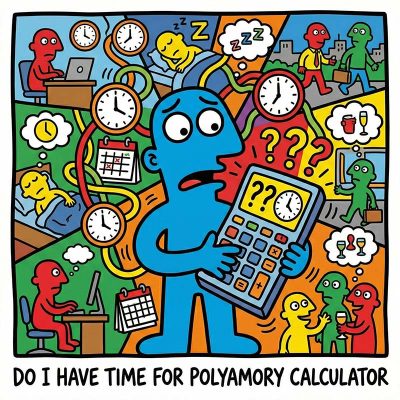
Love is infinite, but your calendar is brutally finite. The fantasy is deep connection; the reality is often just exhausted "calendar tetris." Promising time you don't actually have isn't romantic, it’s a recipe for burnout and broken trust. That sinking feeling when you have to cancel again? That’s the sound of overextension destroying your relationships.
This calculator forces you to confront the math of your life. Do you actually have space for another heart, or are you just setting everyone up for disappointment?

The fantasy is total autonomy and connection. The reality? It can feel like drowning in scheduling chaos and misunderstood expectations. That anxiety you feel isn’t just stress; it’s the wobble of living without a default "anchor." Without a solid architecture, Solo Polyamory stops being a life design and starts being a recipe for burnout and confusion.
The Essential Guide replaces the drift with a concrete anchor. We provide the "Solo Ethic," boundary scripts, and burnout protocols needed to protect your peace. Don't just date around—build a life that actually works for you.

Hierarchy sounds like a corporate org chart until someone gets their feelings hurt. That stomach-turning fear that you are just a "secondary" who can be fired at any time is real. If your relationship feels like a secret ranking system, you are doing it wrong.
Ambiguity is where resentment grows. The Essential Guide replaces the "who matters more" panic with a concrete charter. We provide the scripts and equity guardrails needed to protect every heart in the polycule. Stop guessing and start building.

The ideal is pure equality. The reality? It often slides into hidden rankings where someone gets hurt. That sinking feeling that you are secretly a "secondary" despite the label? That is your intuition detecting couple privilege. Ambiguity is where resentment thrives.
The Essential Guide replaces vague promises with concrete governance. We provide the charters, equity tools, and jealousy protocols needed to ensure "non-hierarchical" isn't just a fantasy. Stop guessing who matters most. Build a network that is actually fair.
The fantasy is total autonomy and connection. The reality? It can feel like drowning in scheduling chaos and misunderstood expectations. That anxiety you feel isn’t just stress; it’s the wobble of living without a default "anchor." Without a solid architecture, Solo Polyamory stops being a life design and starts being a recipe for burnout and confusion.
The Essential Guide replaces the drift with a concrete anchor. We provide the "Solo Ethic," boundary scripts, and burnout protocols needed to protect your peace. Don't just date around—build a life that actually works for you.
Hierarchy sounds like a corporate org chart until someone gets their feelings hurt. That stomach-turning fear that you are just a "secondary" who can be fired at any time is real. If your relationship feels like a secret ranking system, you are doing it wrong.
Ambiguity is where resentment grows. The Essential Guide replaces the "who matters more" panic with a concrete charter. We provide the scripts and equity guardrails needed to protect every heart in the polycule. Stop guessing and start building.
Why burnout happens in multi partner life
Burnout is not a badge of honor it is a signal that your energy reserves are being depleted faster than they can recover. In a solo polyamory setup burnout can creep in from several angles. You might be juggling demanding schedules you might be facing emotional labor from constant negotiation or you might be dealing with lingering jealousy or insecurities. The human brain has a finite amount of cognitive energy each day and when you push past healthy limits you start to feel exhausted overwhelmed and less able to show up fully for the people you care about. The good news is you can design systems to protect your energy and still nurture your connections. This guide explains how to do that with practical steps you can implement today.
Designing your energy budget for a multi partner life
A friendly way to think about this is to imagine your life as a multi colored pie. Each color represents a relationship or a major life area. The slices of the pie show where your energy goes. The goal is to keep the slices balanced in a way that feels sustainable for you. A well designed energy budget helps you avoid the trap of saying yes to too many things and burning out.
Step one take stock of your energy drains and energy sources
Start with a simple inventory. List everything that uses your energy and note how much energy it costs. Include big items like work commitments and travel as well as small daily tasks like texting back or planning a date. Then list energy boosters such as quality sleep time alone time with friends or activities you love. This creates a clear picture of where your energy is going and where you can reclaim some of it.
Step two map a typical week
Build a rough weekly calendar that shows you how much time you have for each relationship. Don t aim for perfection here just aim for a practical overview. In solo poly you will often have to negotiate around schedules. You might assign a partner time block for dates and another block for longer conversations. You might also reserve nights for solo time to recharge.
Step three set flexible boundaries that protect your energy
Boundaries should be clear but flexible. For example you might say I can commit to one longer date per week with Partner A and one short check in every other day with Partner B. If plans shift be prepared to renegotiate without guilt. The goal is to protect your well being while remaining responsive to people you care about.
Step four create a simple energy ledger
Keep a running tally of energy costs and gains. A small notebook or a digital note works fine. Each day write down what you did with each partner how long it lasted and how you felt afterwards. If a particular interaction drains you you can adjust upcoming plans or talk to your partner about pace and needs. If a moment is energizing note why it felt good and try to recreate it more often.
Step five practice energy honest negotiations
Negotiations should focus on what you need and what you can give. It is not a competition and it is not about forcing everyone to fit into your schedule. Be honest about your limits and be ready to offer practical alternatives such as shifting a date or proposing shorter more frequent check ins rather than one long session.
Practical strategies to balance multiple partners without burning out
1. Prioritize asynchronous communication when possible
Not every conversation needs to be a live chat. Sharing thoughts via voice notes or messages can give you space to respond without feeling pressured to perform in the moment. People in solo poly circles often appreciate the time to reflect and respond thoughtfully. It also helps you avoid back to back emotionally loaded conversations which can be taxing.
2. Use a color coded calendar system
Color coding helps you see at a glance where your energy goes. For example use red for high energy meetings or emotionally intense talks use blue for casual meetups and green for self care or solo time. Keeping a clear visual helps you spot potential overload days before they arrive.
3. Create cozy patient boundaries around NRE
NRE energy can be dazzling and it can sweep you off your feet. It is normal to feel excited but avoid letting it derail existing agreements. If you notice fatigue tension or a shift in priorities speak up early. A short review with a partner can help you adjust plans or pace without drama or guilt.
4. Build a flexible but explicit set of agreements
Explicit agreements protect your time and energy. They might include how you disclose romantic developments to new partners how you handle intimacy with different people how you split holidays and how you protect your private life. Revisit these agreements regularly and adjust as needed rather than letting them erode over time.
5. Protect privacy without isolation
You may value a high level of independence but you still need connection with people you care about. Balance privacy with openness that makes sense for you. For some you might share broad relationship updates while keeping details private. For others you might be comfortable sharing more about feelings or boundaries. The key is clear consent and respect for everyone involved.
6. Design regular check ins with yourself and your partners
Self checks are as important as partner checks. Schedule weekly or bi weekly mini check ins with each partner to review energy level boundaries and feelings. You can keep these short but focused. These checks prevent small annoyances from becoming real problems and they keep relationships healthy.
7. Practice compassionate jealousy management
Jealousy shows up as a signal that a need is not being met. Instead of pushing it away name the emotion and explore what would satisfy you. It might be more time with a partner it might be reassurance or it could be a personal project that uses your energy in a positive way. When you name the emotion you can transform it into a practical action rather than a storm.
8. Plan energy recovery time after intense interactions
After emotionally loaded conversations or dates give yourself recovery time. This could be a solo night a short walk a bath or a favorite show. The key is to listen to your body and give it what it needs before you dive back into more social energy.
9. Keep your self care non negotiable
Self care is not optional. Sleep regular meals movement time alone with your thoughts and creative outlets are essential. Without these the ability to show up for others fades quickly. Treat self care as a relationship requirement not a luxury.
10. Build a practical dating pace that fits your life
Dating should feel enjoyable not exhausting. If you find you are overcommitting or feeling overwhelmed slow the pace. You are allowed to pause dating or reduce the number of active partners for a period while you rebuild energy.
Common scenarios and how to handle them
Scenario A The high energy new partner and three existing connections
You may feel pulled in several directions. Start by mapping your weekly energy. Identify a couple of anchor moments where you know you can show up consistently. Communicate openly about capacity and set a plan for how often you will see the new partner while maintaining time for others. Consider short but meaningful check ins with other partners if lengthier dates are not feasible that week.
Scenario B A conflict over time boundaries
Two partners want more time with you but your schedule is already full. Revisit your agreements and propose a trade off such as longer dates with one partner on alternate weeks and shorter check ins with the others. Offer a concrete plan and invite feedback. The goal is a fair arrangement that respects everyone s needs including your own.
Scenario C A boundary misstep and a repair conversation
Sometimes boundaries are not perfectly followed. If this happens calmly acknowledge what occurred and explain what you need going forward. Apologize if you caused hurt and propose a revised plan. Repair conversations are a chance to reinforce trust and show that you value the relationship even when mistakes happen.
Scenario D Pressure from social circles or family
Pressure from friends or family who do not understand solo polyamory can be tough. It is okay to keep personal relationship details private and to set boundaries around what you will discuss. You can share general ideas about consent and respect and leave it at that. You do not owe anyone a full public explanation.
Maintaining healthy communication
Open honest and kind communication is the backbone of any successful polyamory arrangement especially solo poly. Here are practical ways to keep conversations productive rather than draining.
- Lead with what you want to protect not just what you want to avoid. For example talk about wanting steady sleep and energy for your work rather than accusing a partner of taking too much time.
- Use I statements to own your feelings. This reduces the chance that your words sound like judgments about someone else.
- Check your tone before sending a message. If a text feels heated wait a few minutes and reread it when you are calmer.
- Offer concrete options. When you discuss boundaries present two or three feasible alternatives rather than a single rigid demand.
- Practice active listening. Reflect back what you heard to confirm understanding before offering your own perspective.
Love is infinite, but your calendar is brutally finite. The fantasy is deep connection; the reality is often just exhausted "calendar tetris." Promising time you don't actually have isn't romantic, it’s a recipe for burnout and broken trust. That sinking feeling when you have to cancel again? That’s the sound of overextension destroying your relationships.
This calculator forces you to confront the math of your life. Do you actually have space for another heart, or are you just setting everyone up for disappointment?
The fantasy is total autonomy and connection. The reality? It can feel like drowning in scheduling chaos and misunderstood expectations. That anxiety you feel isn’t just stress; it’s the wobble of living without a default "anchor." Without a solid architecture, Solo Polyamory stops being a life design and starts being a recipe for burnout and confusion.
The Essential Guide replaces the drift with a concrete anchor. We provide the "Solo Ethic," boundary scripts, and burnout protocols needed to protect your peace. Don't just date around—build a life that actually works for you.
Hierarchy sounds like a corporate org chart until someone gets their feelings hurt. That stomach-turning fear that you are just a "secondary" who can be fired at any time is real. If your relationship feels like a secret ranking system, you are doing it wrong.
Ambiguity is where resentment grows. The Essential Guide replaces the "who matters more" panic with a concrete charter. We provide the scripts and equity guardrails needed to protect every heart in the polycule. Stop guessing and start building.
The ideal is pure equality. The reality? It often slides into hidden rankings where someone gets hurt. That sinking feeling that you are secretly a "secondary" despite the label? That is your intuition detecting couple privilege. Ambiguity is where resentment thrives.
The Essential Guide replaces vague promises with concrete governance. We provide the charters, equity tools, and jealousy protocols needed to ensure "non-hierarchical" isn't just a fantasy. Stop guessing who matters most. Build a network that is actually fair.
The fantasy is total autonomy and connection. The reality? It can feel like drowning in scheduling chaos and misunderstood expectations. That anxiety you feel isn’t just stress; it’s the wobble of living without a default "anchor." Without a solid architecture, Solo Polyamory stops being a life design and starts being a recipe for burnout and confusion.
The Essential Guide replaces the drift with a concrete anchor. We provide the "Solo Ethic," boundary scripts, and burnout protocols needed to protect your peace. Don't just date around—build a life that actually works for you.
Hierarchy sounds like a corporate org chart until someone gets their feelings hurt. That stomach-turning fear that you are just a "secondary" who can be fired at any time is real. If your relationship feels like a secret ranking system, you are doing it wrong.
Ambiguity is where resentment grows. The Essential Guide replaces the "who matters more" panic with a concrete charter. We provide the scripts and equity guardrails needed to protect every heart in the polycule. Stop guessing and start building.
Safety sexual health and consent in solo poly life
Safety is part of respect. When you manage multiple partnerships you also manage a web of sexual activity. Keep up to date with sexual health checks follow safe sex practices and share relevant information with partners when appropriate and with consent. Discuss boundaries around sex with new partners whether you want to go slow or you want to explore immediately. Clear consent and communication keep everyone safe and comfortable.
Self care that keeps you in the game
Self care is the fuel that makes solo poly work. It is not optional it is essential. Make self care a non negotiable part of your weekly plan. This can include sleep time creative outlets physical activity time alone reading or journaling. When you protect your well being you can show up with energy and empathy for your partners rather than fatigue and resentment.
Building routines that serve your life not your fear
Routines reduce decision fatigue. A simple weekly rhythm can help you stay connected to multiple partners while preserving your independence. For example reserve Monday for a deep conversation with Partner A Tuesday for a casual outing with Partner B Wednesday for a solo hobby tailors to your mood and Thursday a longer date with Partner C. Weekends can be flexible allowing you to gather with close partners or take solitary time to reset. The exact pattern is less important than consistency and respect for your own limits.
Recurring pitfalls and how to avoid them
- Over committing due to fear of missing out FOMO. FOMO can push you to take on more than you can handle. Slow down and ask yourself what you truly want to invest energy in this week.
- Neglecting self care because you want to keep people happy. Your energy matters and you deserve attention too. Prioritize rest and activities that replenish you.
- Equating love with time spent. Quality of connection matters more than quantity of moments in any given week.
- Trying to appease everyone at once. Boundaries exist for you as well as your partners. You cannot please everyone all the time and that is okay.
- Ignoring jealousy signals. When you notice envy listen to what the emotion is telling you and respond with adjustments to agreements or pacing.
Practical tools to support a balanced multi partner life
- Shared calendars with color coding for each relationship and for personal time.
- Energy tracking journals or apps to note how you feel after different interactions.
- Regular check in prompts you can send to partners to reset expectations and celebrate wins.
- A simple core list of personal values that reminds you why you choose solo poly and what you are protecting in your life.
Honoring boundaries and access to information
Some people in solo poly prefer to keep certain details private. Others want more transparency. Decide what feels right for you and discuss this with your partners. Boundaries around what you share about your life with new partners and what you keep private help protect relationships and prevent confusion. Clear agreements created with consent avoid misunderstandings and give people a sense of safety.
Gaining confidence through small wins
The path to burnout relief is gradual. Celebrate small wins like a well timed date a productive energy check in or a successful renegotiation that respects everyone. Small consistent steps add up to a sustainable lifestyle that honors independence while maintaining meaningful connections.
Glossary of useful terms and acronyms
- ENM Ethical non monogamy a relationship approach that involves honesty consent and communication when there are multiple romantic or sexual relationships.
- Solo polyamory A form of ENM where the person maintains independence and self directed relationships rather than a cohabiting primary.
- NRE New relationship energy a powerful surge of excitement when a new relationship begins.
- Compersion Feeling of joy when your partner experiences happiness with someone else.
- Jealousy A natural emotion that signals a need and a boundary that may require attention or adjustment.
- Boundaries Agreements about what is okay and what is not in your connections.
- Energy budget A plan that allocates time and emotional energy across relationships and personal needs.
- Polycule The network of people connected through relationships in a social circle.
- Open communication Honest ongoing dialogue about needs limits and changes in life and relationships.
Frequently asked questions
Love is infinite, but your calendar is brutally finite. The fantasy is deep connection; the reality is often just exhausted "calendar tetris." Promising time you don't actually have isn't romantic, it’s a recipe for burnout and broken trust. That sinking feeling when you have to cancel again? That’s the sound of overextension destroying your relationships.
This calculator forces you to confront the math of your life. Do you actually have space for another heart, or are you just setting everyone up for disappointment?
The fantasy is total autonomy and connection. The reality? It can feel like drowning in scheduling chaos and misunderstood expectations. That anxiety you feel isn’t just stress; it’s the wobble of living without a default "anchor." Without a solid architecture, Solo Polyamory stops being a life design and starts being a recipe for burnout and confusion.
The Essential Guide replaces the drift with a concrete anchor. We provide the "Solo Ethic," boundary scripts, and burnout protocols needed to protect your peace. Don't just date around—build a life that actually works for you.
Hierarchy sounds like a corporate org chart until someone gets their feelings hurt. That stomach-turning fear that you are just a "secondary" who can be fired at any time is real. If your relationship feels like a secret ranking system, you are doing it wrong.
Ambiguity is where resentment grows. The Essential Guide replaces the "who matters more" panic with a concrete charter. We provide the scripts and equity guardrails needed to protect every heart in the polycule. Stop guessing and start building.
The ideal is pure equality. The reality? It often slides into hidden rankings where someone gets hurt. That sinking feeling that you are secretly a "secondary" despite the label? That is your intuition detecting couple privilege. Ambiguity is where resentment thrives.
The Essential Guide replaces vague promises with concrete governance. We provide the charters, equity tools, and jealousy protocols needed to ensure "non-hierarchical" isn't just a fantasy. Stop guessing who matters most. Build a network that is actually fair.
The fantasy is total autonomy and connection. The reality? It can feel like drowning in scheduling chaos and misunderstood expectations. That anxiety you feel isn’t just stress; it’s the wobble of living without a default "anchor." Without a solid architecture, Solo Polyamory stops being a life design and starts being a recipe for burnout and confusion.
The Essential Guide replaces the drift with a concrete anchor. We provide the "Solo Ethic," boundary scripts, and burnout protocols needed to protect your peace. Don't just date around—build a life that actually works for you.
Hierarchy sounds like a corporate org chart until someone gets their feelings hurt. That stomach-turning fear that you are just a "secondary" who can be fired at any time is real. If your relationship feels like a secret ranking system, you are doing it wrong.
Ambiguity is where resentment grows. The Essential Guide replaces the "who matters more" panic with a concrete charter. We provide the scripts and equity guardrails needed to protect every heart in the polycule. Stop guessing and start building.
