
De Escalation as a Healthy Choice


If you are navigating ethical non monogamy in a solo polyamory setup you have likely learned that not every moment is a perfect harmony of schedules, boundaries and feelings. Deescalation is about choosing calm over contrast it is about lowering the heat when a situation gets tense so you can stay connected to yourself and to your partners. This guide is written in plain language with practical steps and real world examples. It is designed for people who want to keep autonomy and honesty at the center while also caring for others involved in the dynamic.
Quick Links to Useful Sections
- Why deescalation matters in solo polyamory ENM
- Principles that guide deescalation in solo poly life
- Deescalation toolkit for solo poly life
- Pause and breathe first
- Name the emotion without judgment
- Use I statements not you statements
- Clarify the underlying needs
- Offer a concrete plan instead of a stalemate
- Choose a cooling off period
- Write it out before you speak
- Plan a practical check in cadence
- Practice compassionate confrontation
- Use a neutral third party for de escalation
- Practice discipline with disclosure
- Grounding techniques you can borrow
- Practical conversation scripts you can customize
- Opening a difficult talk with care
- Addressing a boundary without blame
- Proposing a cooling off period
- Shifting to a collaborative problem solving mode
- Diaries and journals as a tool for de escalation
- Balancing autonomy and connection in solo poly life
- Scenarios and practical responses
- Scenario one new partner in the mix triggers a storm
- Scenario two time management conflict across multiple partners
- Scenario three ex partner re emerges into the orbit
- Scenario four safer sex and health open communications
- Self care and personal boundaries as daily practice
- Common mistakes to avoid during de escalation
- Summing up the practical side of de escalation
- Glossary of useful terms and acronyms
- Frequently asked questions
Before we dive deep lets start with the basics so you are on the same page about terms you will hear a lot. Ethical Non Monogamy often shortened to ENM is an approach to relationships where honesty consent and communication support multiple intimate connections. Solo polyamory is a form of ENM where the person maintains independence and autonomy rather than seeking a primary coupledom. Compersion is the opposite of jealousy it means feeling happy when a partner connects with someone else. Boundaries are personal limits or guidelines that help keep relationships healthy. Co negotiation is a process where all parties discuss and decide together what is acceptable. If any term is new here you are in good company and we will explain it as we go. Remember this is a conversation not a lecture and you can always choose to adopt a term or method that fits your life best.
Why deescalation matters in solo polyamory ENM
In a solo poly dynamic you hold a lot of independence and you also hold a lot of care for others. The space between those two can get crowded with misunderstandings insecurities and fear. When emotions run high it can be tempting to escalate to blame beefing over who did what or who should have done what differently. Deescalation is a choice to pause reflect and respond rather than react. It is a practice that protects your own emotional balance and it gives your partners a sense of safety which in turn makes it more likely that the relationship will thrive over time.
Let us be clear about what deescalation is not. It is not ignoring issues pretending nothing happened. It is not abandoning your needs or dropping boundaries because the moment feels uncomfortable. Deescalation is about handling the moment with care so you can address the real underlying issues with clarity and respect. It is also about respecting autonomy the core of solo polyamory it is about giving yourself space and giving space to others so that relationships can grow in a healthy way.
Principles that guide deescalation in solo poly life
- Own your feelings Acknowledge what you feel without blaming others. Naming emotions makes it easier to choose a response rather than a reaction.
- Keep needs visible Share your needs without attaching moral judgments to your partner choices. For example I need more time to process this before we decide the next step.
- Practice active listening Listen to what your partners are saying without interrupting. Reflect back what you heard to confirm you understood correctly.
- Trade blame for inquiry Swap questions like Why did you do this for questions like How can we approach this so it feels safe for both of us.
- Preserve autonomy Remember that your life and your relationships are yours to shape. Deescalation does not mean giving up boundaries it means negotiating with clarity and care.
- Use practical boundaries Boundaries are how we protect our well being. They can be time based space based or communication based and they can evolve as life changes.
- Schedule check ins Regular conversations about how things feel keep drift from becoming rifts. They do not have to be long or heavy just consistent.
- Embrace flexibility Situations change and so can needs. The ability to adjust is a strength not a weakness.
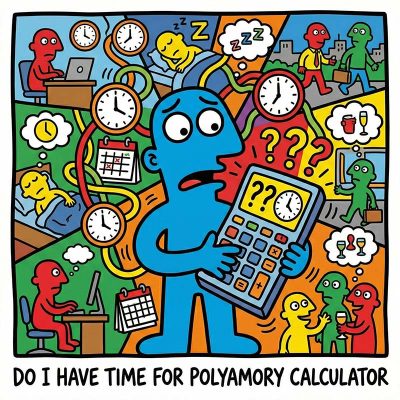
Love is infinite, but your calendar is brutally finite. The fantasy is deep connection; the reality is often just exhausted "calendar tetris." Promising time you don't actually have isn't romantic, it’s a recipe for burnout and broken trust. That sinking feeling when you have to cancel again? That’s the sound of overextension destroying your relationships.
This calculator forces you to confront the math of your life. Do you actually have space for another heart, or are you just setting everyone up for disappointment?

The fantasy is total autonomy and connection. The reality? It can feel like drowning in scheduling chaos and misunderstood expectations. That anxiety you feel isn’t just stress; it’s the wobble of living without a default "anchor." Without a solid architecture, Solo Polyamory stops being a life design and starts being a recipe for burnout and confusion.
The Essential Guide replaces the drift with a concrete anchor. We provide the "Solo Ethic," boundary scripts, and burnout protocols needed to protect your peace. Don't just date around—build a life that actually works for you.

Hierarchy sounds like a corporate org chart until someone gets their feelings hurt. That stomach-turning fear that you are just a "secondary" who can be fired at any time is real. If your relationship feels like a secret ranking system, you are doing it wrong.
Ambiguity is where resentment grows. The Essential Guide replaces the "who matters more" panic with a concrete charter. We provide the scripts and equity guardrails needed to protect every heart in the polycule. Stop guessing and start building.

The ideal is pure equality. The reality? It often slides into hidden rankings where someone gets hurt. That sinking feeling that you are secretly a "secondary" despite the label? That is your intuition detecting couple privilege. Ambiguity is where resentment thrives.
The Essential Guide replaces vague promises with concrete governance. We provide the charters, equity tools, and jealousy protocols needed to ensure "non-hierarchical" isn't just a fantasy. Stop guessing who matters most. Build a network that is actually fair.
The fantasy is total autonomy and connection. The reality? It can feel like drowning in scheduling chaos and misunderstood expectations. That anxiety you feel isn’t just stress; it’s the wobble of living without a default "anchor." Without a solid architecture, Solo Polyamory stops being a life design and starts being a recipe for burnout and confusion.
The Essential Guide replaces the drift with a concrete anchor. We provide the "Solo Ethic," boundary scripts, and burnout protocols needed to protect your peace. Don't just date around—build a life that actually works for you.
Hierarchy sounds like a corporate org chart until someone gets their feelings hurt. That stomach-turning fear that you are just a "secondary" who can be fired at any time is real. If your relationship feels like a secret ranking system, you are doing it wrong.
Ambiguity is where resentment grows. The Essential Guide replaces the "who matters more" panic with a concrete charter. We provide the scripts and equity guardrails needed to protect every heart in the polycule. Stop guessing and start building.
Deescalation toolkit for solo poly life
Below you will find concrete tools you can use in the moment or in preparation for the day to day work of ENM living. Each tool comes with a short explanation and practical ways to implement it in your life.
Pause and breathe first
When tension spikes the first move is a real pause. Close your eyes take a slow deep breath and count to four. Let the air fill your lungs then slowly release. This is not a magic trick it is a circuit breaker that helps you choose your next words instead of reacting impulsively.
Name the emotion without judgment
Try a simple sentence like I am feeling overwhelmed by this situation and I need a moment to think. By naming the emotion you create space to respond with intention rather than reacting from fear or anger.
Use I statements not you statements
Speak from your own experience avoid accusations. For example Instead of You never consider my schedule say I feel left out when my calendar is changed without notice. This keeps the focus on your experience rather than assigning blame.
Clarify the underlying needs
Ask yourself what need is not being met. Is it safety time respect or honesty. Naming the need makes it easier to discuss possible solutions that honor all parties involved.
Offer a concrete plan instead of a stalemate
Suggest a specific next step that helps move the relationship forward. For example I propose we take a 48 hour cooling off period then we revisit the topic with a fresh view. This gives everyone time to regain balance.
Choose a cooling off period
A cooling off period is a temporary pause in which no new decisions are made about the problem. It gives you time to reflect gather more information and return with a calmer frame of mind. The length can be a set number of hours or a specific time window that works for everyone involved.
Write it out before you speak
If you tend to get tangled in a conversation write a short note capturing the key points you want to cover. Reading from a written piece can help you stay on track especially when emotions are high. Keep it concise and focused on solutions.
Plan a practical check in cadence
Agree on a regular rhythm for discussing issues. This could be a weekly touch base a monthly deep dive or a check in after big life events. Regularity reduces the chance of small issues becoming big problems.
Practice compassionate confrontation
Confrontation does not have to be hostile. It can be a structured conversation with a clear intent to understand and solve. Start with appreciation for what is working and then describe the gap and ask for input on a remedy.
Use a neutral third party for de escalation
Sometimes a trusted friend or a therapist can act as a calm grounded observer helping you reframe the conversation and keep the discussion respectful. A neutral presence can be a lifeline when heat rises.
Practice discipline with disclosure
Disclosing information to partners is important in ENM but it should be done with care. Decide what is essential to share what can wait and how you will share it while respecting everyone privacy. Use privacy agreements if helpful and revisit them over time.
Grounding techniques you can borrow
Grounding helps you return to the present when you feel overwhelmed. Techniques include naming five things you can see four you can touch three you can hear two you can smell and one you can taste. Slow gentle breathing and stretching can also help bring you back into balance.
Practical conversation scripts you can customize
Scripts are not rules they are starting points you can adapt to your voice and situation. The key is to practice them so they feel natural when you need them most.
Opening a difficult talk with care
Hey I want to talk about something that matters to me. I value our connection and I want to handle this with care. I am feeling unsettled about how our plans have shifted this week. I would like to discuss a plan that helps me feel respected and also respects your needs.
Addressing a boundary without blame
My boundary is that I need advance notice before changes to our plans unless there is an urgent reason. I want to know how we can build a system that works for all of us without slowing down the connection you and I share.
Proposing a cooling off period
I think it would help me to step back for 48 hours so I can reflect. After that I would like to come back to this conversation with a clearer head. Does that work for you
Shifting to a collaborative problem solving mode
What are the options you see and what are mine. Let us create a short list with each idea rated by how well it respects our needs and boundaries. Then we can pick a path forward together.
Diaries and journals as a tool for de escalation
Keeping a simple relationship diary can help you track patterns that lead to tension. Note what happened who was involved what feelings arose what need was triggered and what solution was tried. Reviewing this over time helps you see recurring triggers and refine your de escalation approach.
Balancing autonomy and connection in solo poly life
One of the core strengths of solo polyamory is autonomy. Deescalation does not erase your independence. Instead it protects it by ensuring that conflicts do not erode your sense of self or your trust in the people you care about. When you can de escalate effectively you are more likely to retain the ability to choose your own path while maintaining honest open relationships with multiple partners. This balance is not a destination it is an ongoing practice and it gets easier with time and experience.
Scenarios and practical responses
Scenario one new partner in the mix triggers a storm
You are a solo poly individual who has begun seeing someone new. A partner you already date feels left out or worried about the impact of the new relationship. The heat rises quickly and a heated argument begins. The de escalation approach would begin with a pause and a breath followed by a named feeling such as I am feeling anxious and a need for reassurance. You would propose a cooling off period and a plan to create a shared schedule for date nights and check ins. You would avoid blame and instead ask what the other person needs and how you can meet in a way that honors both relationships. You might offer a short written note summarizing what you value about both connections and your desire to nurture them without making anyone feel replaced.
Scenario two time management conflict across multiple partners
In solo poly life it is common to juggle overlapping calendars and competing priorities. When someone feels let down by cancelled plans or late responses the emotions can escalate into a blame game. A de escalation approach would involve a clear explanation of the constraints on your time and a commitment to a transparent scheduling process. You might propose a weekly planning session where you review upcoming weeks and adjust expectations. The goal is to create predictability and reduce the sense of being sidelined.
Scenario three ex partner re emerges into the orbit
An old partner reaches out with renewed interest. The situation can trigger insecurity in current partners who fear being displaced. The de escalation path starts with a boundary based conversation about what is and is not acceptable. You would express appreciation for the history you share with the ex and confirm your current commitments. You would propose boundaries around communication and meetups and discuss how you will keep conversations respectful and non confusing for everyone involved.
Scenario four safer sex and health open communications
Open relationships often mean navigating safer sex practices and clear health narratives. If a partner is exploring someone new there may be worries around STI testing or contraception. De escalation here means providing factual information without drama. It means listening to concerns and offering a plan that reduces risk while supporting intimacy. You can agree on regular testing once results are shared making it easy for all partners to feel secure.
Self care and personal boundaries as daily practice
De escalation starts inside before it happens with you. Self care matters in ENM life and solo poly life is no exception. Make space for rest healthy meals movement and activities that center your own well being. When you feel strong emotionally you are less likely to react with heat during tough conversations. It is also helpful to have a few grounding rituals you can rely on when you sense anxiety rising.
Another essential habit is ongoing education. Read books listen to podcasts and engage with communities that reflect your values. This helps you grow a robust toolkit rather than relying on instinct alone. You are not alone in this journey. The world of ethical non monogamy is diverse vibrant and full of people who want to connect honestly while preserving personal autonomy. Your path will be unique you can borrow ideas from many sources and tailor them to fit your life.
Common mistakes to avoid during de escalation
- Ignore red flags Pausing too long or avoiding a necessary conversation can allow problems to fester.
- Let fear drive the conversation If you approach a talk with the aim to punish others you will likely escalate rather than resolve the issue.
- Over share or reveal private boundaries Be mindful of what is appropriate to share in different situations especially when you are dealing with multiple partners.
- Under communicate Failing to share your needs or plans can leave others guessing which increases friction.
- Make it about control Focus on understanding and collaboration rather than trying to control other people or outcomes.
Summing up the practical side of de escalation
De escalation is about choosing calm practice and clear communication in the midst of emotional energy. In solo poly life it protects your autonomy while safeguarding the feelings of people you care about. The tools outlined here are designed to be practical not theoretical. Use pause breathe and a simple set of statements to help you show up with intention when things get intense. The more you practice the more natural these steps will feel and the easier it will be to maintain honest open relationships that allow all the people in your life to thrive.
Glossary of useful terms and acronyms
- ENM Ethical non monogamy a relationship philosophy that supports multiple intimate connections with honesty consent and transparent communication.
- Solo polyamory A form of ethical non monogamy where the person prioritizes autonomy and independence rather than seeking a primary couple dynamic.
- Polyamory Engaging in multiple intimate relationships with the knowledge and consent of everyone involved.
- Boundaries Personal guidelines that protect emotional physical and practical well being.
- Compersion The joy you feel when your partner experiences happiness with another person.
- De escalation The conscious act of lowering emotional intensity during a tense moment to enable constructive discussion and resolution.
- Boundary negotiation The process of discussing and agreeing on limits that apply to one or more relationships.
- Cooling off period A defined pause before making important decisions to allow emotions to settle.
- Active listening A communication practice where you fully concentrate on what the other person is saying with the aim to understand.
- Nonviolent communication A communication framework that focuses on observations feelings needs and requests without blame.
Frequently asked questions
What is de escalation in a solo polyamory context
De escalation in a solo polyamory context is the intentional slowing down of emotional intensity during a tense moment so you can discuss needs and boundaries without blame. It is about protecting autonomy while caring for others and it is a practical skill that helps relationships endure stress while staying healthy.
Why is de escalation important for ENM relationships
ENM relationships require high levels of communication and negotiation because there are multiple connections. De escalation helps prevent conflicts from spiraling into resentment which can damage trust and undermine the flexibility ENM communities rely on.
How can I tell if I am escalating or de escalating
Escalation often looks like blame finger pointing defensiveness or making assumptions about the other person. De escalation shows up as pauses thoughtful responses I statements and a willingness to seek a collaborative solution even when the topic is hard.
What are some quick de escalation techniques for in the moment
Use breathing to reset your nervous system then name the feeling and state a need. Propose a cooling off period and a concrete plan for follow up. Focus on listening actively and avoiding blame while you discuss possible solutions.
How do I talk to multiple partners about a de escalation plan
Be transparent about your goals. Explain why de escalation helps you keep the connections strong and offer a simple framework for how you will proceed. Invite their input and be prepared to adjust the plan as needed while maintaining core boundaries.
Is de escalation a sign of weakness
Not at all. It is a sign of emotional intelligence and maturity. It shows you can take responsibility for your feelings and you care about the health of your relationships as much as your own well being.
Can de escalation work with very different needs across partners
Yes. The beauty of solo poly life is that each partner can have a distinct set of needs. A successful de escalation approach adapts to those differences while keeping everyone informed and respected.
How long does it take to become proficient at de escalation
That varies from person to person. Consistent practice including regular check ins and applying the toolkit during real life moments helps you improve. Most people notice a meaningful difference within a few months with ongoing effort.
Should I involve a therapist when learning de escalation
If you feel stuck or if conflicts are harming your emotional health a therapist specializing in relationship dynamics can be a big help. They can offer tools and a fresh perspective to support your growth.
Love is infinite, but your calendar is brutally finite. The fantasy is deep connection; the reality is often just exhausted "calendar tetris." Promising time you don't actually have isn't romantic, it’s a recipe for burnout and broken trust. That sinking feeling when you have to cancel again? That’s the sound of overextension destroying your relationships.
This calculator forces you to confront the math of your life. Do you actually have space for another heart, or are you just setting everyone up for disappointment?
The fantasy is total autonomy and connection. The reality? It can feel like drowning in scheduling chaos and misunderstood expectations. That anxiety you feel isn’t just stress; it’s the wobble of living without a default "anchor." Without a solid architecture, Solo Polyamory stops being a life design and starts being a recipe for burnout and confusion.
The Essential Guide replaces the drift with a concrete anchor. We provide the "Solo Ethic," boundary scripts, and burnout protocols needed to protect your peace. Don't just date around—build a life that actually works for you.
Hierarchy sounds like a corporate org chart until someone gets their feelings hurt. That stomach-turning fear that you are just a "secondary" who can be fired at any time is real. If your relationship feels like a secret ranking system, you are doing it wrong.
Ambiguity is where resentment grows. The Essential Guide replaces the "who matters more" panic with a concrete charter. We provide the scripts and equity guardrails needed to protect every heart in the polycule. Stop guessing and start building.
The ideal is pure equality. The reality? It often slides into hidden rankings where someone gets hurt. That sinking feeling that you are secretly a "secondary" despite the label? That is your intuition detecting couple privilege. Ambiguity is where resentment thrives.
The Essential Guide replaces vague promises with concrete governance. We provide the charters, equity tools, and jealousy protocols needed to ensure "non-hierarchical" isn't just a fantasy. Stop guessing who matters most. Build a network that is actually fair.
The fantasy is total autonomy and connection. The reality? It can feel like drowning in scheduling chaos and misunderstood expectations. That anxiety you feel isn’t just stress; it’s the wobble of living without a default "anchor." Without a solid architecture, Solo Polyamory stops being a life design and starts being a recipe for burnout and confusion.
The Essential Guide replaces the drift with a concrete anchor. We provide the "Solo Ethic," boundary scripts, and burnout protocols needed to protect your peace. Don't just date around—build a life that actually works for you.
Hierarchy sounds like a corporate org chart until someone gets their feelings hurt. That stomach-turning fear that you are just a "secondary" who can be fired at any time is real. If your relationship feels like a secret ranking system, you are doing it wrong.
Ambiguity is where resentment grows. The Essential Guide replaces the "who matters more" panic with a concrete charter. We provide the scripts and equity guardrails needed to protect every heart in the polycule. Stop guessing and start building.
