
Emergency Contacts and Support Planning

Here at The Monogamy Experiment we believe in clear direct talk even when the topics are hard to discuss. In this guide we explore emergency contacts and support planning within the solo polyamory and ethical non monogamy world. Solo polyamory means living a life with multiple relationships by choice while prioritizing independence and self direction. ENM stands for ethical non monogamy a term used to describe relationships where all partners know and consent to non exclusive dating or intimacy. In solo poly the default is often no one partner holds the role of primary or top priority and you balance many connections with honesty and consent. This guide offers practical steps you can take to protect yourself and the people you care about when crises happen and you must rely on others for help.
Quick Links to Useful Sections
- What this guide covers
- Key terms and acronyms you should know
- Why emergency planning matters in a solo poly ENM setup
- Deciding who to include as emergency contacts
- Categories to consider
- How to choose the right people
- Information you should share with emergency contacts
- Consent and privacy considerations
- Practical templates you can use today
- Template A a compact emergency contact list
- Template B a full crisis playbook
- Template C a one page printable wallet card
- Health emergencies and medical information
- Advance care planning and legal documents
- Boundary aware communication with partners and metamours
- Digital tools that help keep emergency plans handy
- Real world scenarios you may face
- Scenario one a medical emergency while you are travelling between partners
- Scenario two a mental health crisis and how to respond respectfully
- Scenario three a family emergency outside your relationship circle
- Scenario four a crisis with a partner who cannot reach you directly
- Maintenance plan how to keep this relevant over time
- Checklist for building your personal emergency plan
- Privacy friendly crisis communication templates
- Where to store your emergency plan
- How to talk about this with loved ones and partners
- Realistic expectations and common mistakes to avoid
- Final notes on empowering yourself through planning
What this guide covers
This article walks you through building a robust emergency contact network tailored to a solo polyamory ENM lifestyle. It covers who to include what information to share how to protect privacy and how to keep everyone informed during a crisis. You will find practical templates checklists and real world scenarios that reflect the realities of non monogamous life. We also explain common terms so you can talk about these topics with confidence and clarity. By the end you will have a plan you can implement now and a process to keep it up to date over time.
Key terms and acronyms you should know
- ENM Ethical non monogamy a broad family of relationship styles that involve open honest non exclusive dating with consent from everyone involved.
- Solo polyamory A polyamorous approach where the person maintains independence and does not assume a single primary partner. Relationships exist alongside personal autonomy.
- Metamour A partner of one of your partners who is not involved with you directly.
- Emergency contacts People you authorize to receive information or make decisions during a medical or safety crisis.
- Medical information Details about health allergies medications and conditions that are important for responders to know in an emergency.
- Advance care planning Tools and conversations that prepare others to act in your best interests if you cannot speak for yourself.
- Healthcare proxy A legal document designating someone to make medical decisions for you if you are unable to do so.
- Power of attorney A legal instrument that grants someone authority to handle financial or legal matters on your behalf.
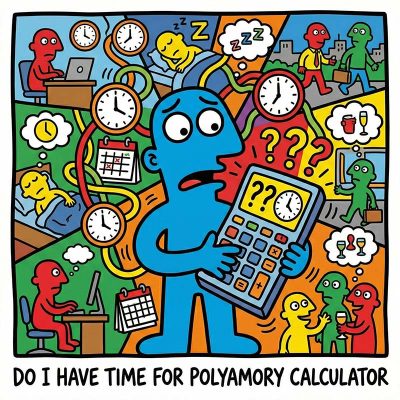
Love is infinite, but your calendar is brutally finite. The fantasy is deep connection; the reality is often just exhausted "calendar tetris." Promising time you don't actually have isn't romantic, it’s a recipe for burnout and broken trust. That sinking feeling when you have to cancel again? That’s the sound of overextension destroying your relationships.
This calculator forces you to confront the math of your life. Do you actually have space for another heart, or are you just setting everyone up for disappointment?

The fantasy is total autonomy and connection. The reality? It can feel like drowning in scheduling chaos and misunderstood expectations. That anxiety you feel isn’t just stress; it’s the wobble of living without a default "anchor." Without a solid architecture, Solo Polyamory stops being a life design and starts being a recipe for burnout and confusion.
The Essential Guide replaces the drift with a concrete anchor. We provide the "Solo Ethic," boundary scripts, and burnout protocols needed to protect your peace. Don't just date around—build a life that actually works for you.

Hierarchy sounds like a corporate org chart until someone gets their feelings hurt. That stomach-turning fear that you are just a "secondary" who can be fired at any time is real. If your relationship feels like a secret ranking system, you are doing it wrong.
Ambiguity is where resentment grows. The Essential Guide replaces the "who matters more" panic with a concrete charter. We provide the scripts and equity guardrails needed to protect every heart in the polycule. Stop guessing and start building.

The ideal is pure equality. The reality? It often slides into hidden rankings where someone gets hurt. That sinking feeling that you are secretly a "secondary" despite the label? That is your intuition detecting couple privilege. Ambiguity is where resentment thrives.
The Essential Guide replaces vague promises with concrete governance. We provide the charters, equity tools, and jealousy protocols needed to ensure "non-hierarchical" isn't just a fantasy. Stop guessing who matters most. Build a network that is actually fair.
The fantasy is total autonomy and connection. The reality? It can feel like drowning in scheduling chaos and misunderstood expectations. That anxiety you feel isn’t just stress; it’s the wobble of living without a default "anchor." Without a solid architecture, Solo Polyamory stops being a life design and starts being a recipe for burnout and confusion.
The Essential Guide replaces the drift with a concrete anchor. We provide the "Solo Ethic," boundary scripts, and burnout protocols needed to protect your peace. Don't just date around—build a life that actually works for you.
Hierarchy sounds like a corporate org chart until someone gets their feelings hurt. That stomach-turning fear that you are just a "secondary" who can be fired at any time is real. If your relationship feels like a secret ranking system, you are doing it wrong.
Ambiguity is where resentment grows. The Essential Guide replaces the "who matters more" panic with a concrete charter. We provide the scripts and equity guardrails needed to protect every heart in the polycule. Stop guessing and start building.
Why emergency planning matters in a solo poly ENM setup
Emergencies do not pause your relationship style. In a solo poly ENM life you may have several partners living in different places with various commitments. A crisis can involve medical decisions housing needs or care responsibilities for multiple people at once. Having a clear plan helps reduce stress for you and for the people who care about you. It also respects the autonomy you value while providing a safety net when you cannot advocate for yourself. In this approach you are the captain of your own ship but you invite trusted crew members who understand your values and boundaries to step in when needed.
Deciding who to include as emergency contacts
The right list looks different for every person. In a solo poly ENM life you should consider a mix of people who can respond to different kinds of emergencies. Start with core supporters and then expand based on the kinds of crises you anticipate. Core supporters are people who know you well and who are willing to act on your behalf in a crisis. They understand your relationships and boundaries and they respect your privacy while still getting you the help you need. After identifying core supporters you can add specialists like a trusted medical advocate or a legal advisor who can handle documents and permissions when you cannot.
Categories to consider
- Medical and health supporters A family member or friend who understands your health history and can communicate with doctors if you are unable to speak for yourself.
- Relationship and boundary supporters Someone who knows your relationship network and can help coordinate care across partners while honoring your boundaries.
- Emergency lifestyle supporters A person who can help with day to day tasks such as transportation or care duties if you are temporarily unable to manage them.
- Legal and financial supporters A trusted person who can handle documents and financial decisions within the scope you authorize.
- Privacy aware supporters Individuals who will protect your privacy and only share information with those you approve.
How to choose the right people
When selecting emergency contacts you want people who communicate clearly who understand the basics of your life and who consent to stepping in when needed. Look for people with a track record of reliability and emotional maturity. It is important that they respect your autonomy and your network boundaries so they act in ways that reflect your values. If someone cannot commit to being available in a crisis for any reason you should not place them on the primary list. It is better to have a smaller strong group than a large group who cannot be counted on in a crisis.
Information you should share with emergency contacts
Always share the essentials while protecting sensitive data you do not want to fall into the wrong hands. A core set of information should include your full legal name contact information for your primary care provider your preferred hospital or medical center a concise summary of medical conditions any allergies current medications and your healthcare proxy if you have one. In addition you should provide a short list of your important relationships with a brief note about your boundaries in emergencies. You do not need to share intimate relationship details unless you want those details to influence a medical decision or safety plan and you feel comfortable doing so.
Consent and privacy considerations
Consent is the foundation of any emergency plan. You should have conversations with potential contacts about what information you are comfortable sharing with each person and under what circumstances. Some people may be willing to access information for medical purposes while others may only be comfortable with being contacted in a safety related way. It is important to document these preferences so responders and partners know exactly who is allowed to see what and when. You should also consider how you want information to be shared with metamours or partners you are not with at the moment. You can set up a consent hierarchy that reflects your current reality while allowing flexibility as relationships evolve.
Love is infinite, but your calendar is brutally finite. The fantasy is deep connection; the reality is often just exhausted "calendar tetris." Promising time you don't actually have isn't romantic, it’s a recipe for burnout and broken trust. That sinking feeling when you have to cancel again? That’s the sound of overextension destroying your relationships.
This calculator forces you to confront the math of your life. Do you actually have space for another heart, or are you just setting everyone up for disappointment?
The fantasy is total autonomy and connection. The reality? It can feel like drowning in scheduling chaos and misunderstood expectations. That anxiety you feel isn’t just stress; it’s the wobble of living without a default "anchor." Without a solid architecture, Solo Polyamory stops being a life design and starts being a recipe for burnout and confusion.
The Essential Guide replaces the drift with a concrete anchor. We provide the "Solo Ethic," boundary scripts, and burnout protocols needed to protect your peace. Don't just date around—build a life that actually works for you.
Hierarchy sounds like a corporate org chart until someone gets their feelings hurt. That stomach-turning fear that you are just a "secondary" who can be fired at any time is real. If your relationship feels like a secret ranking system, you are doing it wrong.
Ambiguity is where resentment grows. The Essential Guide replaces the "who matters more" panic with a concrete charter. We provide the scripts and equity guardrails needed to protect every heart in the polycule. Stop guessing and start building.
The ideal is pure equality. The reality? It often slides into hidden rankings where someone gets hurt. That sinking feeling that you are secretly a "secondary" despite the label? That is your intuition detecting couple privilege. Ambiguity is where resentment thrives.
The Essential Guide replaces vague promises with concrete governance. We provide the charters, equity tools, and jealousy protocols needed to ensure "non-hierarchical" isn't just a fantasy. Stop guessing who matters most. Build a network that is actually fair.
The fantasy is total autonomy and connection. The reality? It can feel like drowning in scheduling chaos and misunderstood expectations. That anxiety you feel isn’t just stress; it’s the wobble of living without a default "anchor." Without a solid architecture, Solo Polyamory stops being a life design and starts being a recipe for burnout and confusion.
The Essential Guide replaces the drift with a concrete anchor. We provide the "Solo Ethic," boundary scripts, and burnout protocols needed to protect your peace. Don't just date around—build a life that actually works for you.
Hierarchy sounds like a corporate org chart until someone gets their feelings hurt. That stomach-turning fear that you are just a "secondary" who can be fired at any time is real. If your relationship feels like a secret ranking system, you are doing it wrong.
Ambiguity is where resentment grows. The Essential Guide replaces the "who matters more" panic with a concrete charter. We provide the scripts and equity guardrails needed to protect every heart in the polycule. Stop guessing and start building.
Practical templates you can use today
Template A a compact emergency contact list
In this template you list primary contacts and a couple of alternates. Include contact methods and a short note about each person role.
- Your name First middle last
- Primary caregiver contact Name contact method and your relationship
- Medical information contact Name contact method and role
- Legal or financial contact Name contact method and role
- Alternate contacts Name(s) contact method and brief notes
Template B a full crisis playbook
This is a more detailed version that covers medical decisions privacy and who to contact for various scenarios. Use it as a living document that you keep updated.
list of primary and alternates with roles list of conditions allergies medications and the name and location of your preferred hospital name contact details and the scope of authority list of documents and people who can act on your behalf including any limits short statements about what you want shared with partners metamours and friends during a crisis
Template C a one page printable wallet card
Keep this card in your wallet or phone case. It should be simple enough for responders to read quickly.
- Your name and date of birth
- Primary hospital and medical information at a glance
- Two emergency contacts with phone numbers
- Healthcare proxy if you have one
Health emergencies and medical information
In a medical emergency you will want responders to understand your health needs quickly. The card and the master document should include information that helps doctors make fast decisions. This can include chronic conditions allergies current medications prior surgeries or implanted devices and any special care instructions. If you use a specific pain management plan or have preferences about life sustaining measures make sure these are clearly documented and accessible even if you are unconscious. Remember that medical professionals must follow your legal permissions so the healthcare proxy and power of attorney documents should be prepared and stored where the medical team can access them with your consent.
Advance care planning and legal documents
Advance care planning is the process of making decisions about the care you would want to receive if you become unable to speak for yourself. It includes appointing someone to speak for you and documenting your medical preferences. The healthcare proxy is a common tool in many places and it gives your chosen person the authority to interpret your wishes. You might also need a durable power of attorney for financial affairs if others will manage your money during a crisis. It can be wise to consult with a lawyer or a trusted legal advisor who understands your jurisdiction while you set these documents up. In a solo poly ENM world it is important that your documents reflect the reality of multiple relationships and the boundaries you want respected.
Boundary aware communication with partners and metamours
In non monogamous life people connect with multiple partners and metamours. In emergencies the default can quickly shift to including people who may not normally interact with each other. The most important thing is to protect privacy while ensuring someone can coordinate care and safety. Decide in advance who should be informed about what. You can appoint a single point person for medical updates who can relay information to others within your circle. You can also create a short script that answers the most common questions for metamours who may contact you or your contacts during a crisis. This helps reduce confusion and accidental disclosure of private details.
Digital tools that help keep emergency plans handy
Technology can make a big difference in a crisis. Use a mix of digital and physical solutions so you are covered in different situations. Consider creating a secure online document or a password protected note that holds the master plan. Share access with your healthcare proxy and one or two trusted contacts. On your phone keep a medical ID that lists essential information such as allergies and emergency contact numbers. In addition you can set up trusted contacts in your mobile device so that your circle can be alerted quickly if you are in danger or unable to respond.
Real world scenarios you may face
To make this practical we look at a few common situations that might come up in a solo poly ENM life. These stories help you see how emergency planning works in action.
Scenario one a medical emergency while you are travelling between partners
You are visiting a partner who lives in another city and you experience a medical emergency. You have a trusted contact in that city who knows your medical history. They contact your healthcare proxy and your primary care doctor to coordinate care and communicate decisions with the responding medical team. Because you carry a wallet card and a digital copy of your plan responders have the information they need without delay. Your other partners are kept informed according to your consent preferences and only the necessary information is shared with them.
Scenario two a mental health crisis and how to respond respectfully
You experience a mental health crisis and a partner you do not have a primary relationship with but who you asked to be part of your support network steps in. They contact your designated crisis contact and arrange for safe housing and transportation if needed. They also ensure you have access to a therapist you trust and your medical provider is notified. Everyone involved respects your privacy while focusing on your safety and wellbeing.
Scenario three a family emergency outside your relationship circle
A family member has a crisis and you need to be reachable quickly. Your emergency contacts include a family member you have agreed can handle certain personal requests. They coordinate with your legal and financial contact to manage any urgent matters while your partners are informed in a manner that fits your privacy boundaries and consent choices. This scenario shows how a broad network can work together to support you in a non traditional life.
Scenario four a crisis with a partner who cannot reach you directly
One of your partners is in trouble and you are unavailable due to a hospital stay or a personal reason. Your secondary contact steps in to communicate with the partner and arrange support that aligns with your stated preferences. The metamour network can also be kept informed about non sensitive updates if you have consented to sharing information in that way. This ensures care continues even when you cannot be the organizer of the plan yourself.
Maintenance plan how to keep this relevant over time
A living plan beats a paper plan that never gets updated. Schedule a quarterly or semi annual review. Use a simple checklist to update contact details medical information and legal documents. When relationships shift as they do in ethical non monogamy you should revise who is in your contact pool and what they know. If you move to a new city or country make sure your contacts in the new place are aware of the plan and that you have updated medical and legal documents to reflect your location. Keeping your plan current is a sign of respect for both yourself and the people who support you.
Checklist for building your personal emergency plan
- Identify core supporters and optional contacts with roles clearly defined
- Create a compact medical information card or digital equivalent
- Decide who can access your information and what you are comfortable sharing
- Prepare healthcare proxy and power of attorney documents if applicable
- Write down short boundary notes about who should be contacted for what
- Store documents securely and share copies with your healthcare proxy and at least one other trusted contact
- Practice how you would explain your plan to responders and to metamours
- Review and update the plan at least every six months or after major life changes
Privacy friendly crisis communication templates
Use these sample statements to guide conversations during a crisis. These are not legal or medical advice they are templates to keep the conversation clear and respectful while protecting privacy.
- To a hospital or first responder this is [Your name]. I am in a crisis and I cannot speak for myself. My healthcare proxy is [Name] and their contact is [Phone]. I have provided my medical ID and plan with the details of my health history in the file I left with them.
- To metamours and partners you can say I am in a medical situation and I cannot share the full details. Please contact my healthcare proxy if you need medical updates or decision making permission. Please respect my privacy and only share information that is essential for my care and safety.
- To a family member you can say I have a plan in place and you may review it with my healthcare proxy or legal representative if needed. I will not be able to share every detail but I want you to know who is responsible for care decisions on my behalf.
Where to store your emergency plan
Keep multiple copies in different formats. A physical copy kept in a safe but accessible location a digital copy stored in a secure cloud folder and a small wallet card for emergencies. Ensure your healthcare proxy and one or two trusted contacts have access to the digital files. Use a simple naming convention so the most important document can be found quickly in a crisis. Do not forget to review access permissions if someone leaves your network or if a new caregiver takes on a role.
How to talk about this with loved ones and partners
Starting a conversation can feel awkward but you are doing a careful and important thing. Be direct and kind. Explain that you want to create a plan that protects your wellbeing and respects the autonomy of your relationships. Invite questions and listen before you respond. If the conversation feels difficult consider meeting with a neutral trusted friend or a therapist who understands ethics and boundaries in non traditional relationships. The goal is to align on practical steps while keeping lines of communication open and respectful.
Realistic expectations and common mistakes to avoid
- Assuming everyone knows your boundaries without documenting them
- Forgetting to update your documents after life changes
- Over sharing private details that are not necessary for care
- Relying on memory instead of written plans during a crisis
- Choosing contacts who cannot be reached quickly or who cannot commit to the role
Final notes on empowering yourself through planning
Building an emergency contact network and a solid support plan is a powerful act of self care and responsibility. It helps you protect your health your relationships and your community. In a solo poly ESP world you will often manage care for several people at once. Your plan makes it possible for you to receive help when you need it and to give consent when decisions must be made urgently. It also makes it easier for metamours and friends to act with clarity and respect. The investment you make now will pay off when a crisis arrives and your plan is already in place. You are creating a resilient framework that honors your values and keeps your life moving forward even under pressure.
Love is infinite, but your calendar is brutally finite. The fantasy is deep connection; the reality is often just exhausted "calendar tetris." Promising time you don't actually have isn't romantic, it’s a recipe for burnout and broken trust. That sinking feeling when you have to cancel again? That’s the sound of overextension destroying your relationships.
This calculator forces you to confront the math of your life. Do you actually have space for another heart, or are you just setting everyone up for disappointment?
The fantasy is total autonomy and connection. The reality? It can feel like drowning in scheduling chaos and misunderstood expectations. That anxiety you feel isn’t just stress; it’s the wobble of living without a default "anchor." Without a solid architecture, Solo Polyamory stops being a life design and starts being a recipe for burnout and confusion.
The Essential Guide replaces the drift with a concrete anchor. We provide the "Solo Ethic," boundary scripts, and burnout protocols needed to protect your peace. Don't just date around—build a life that actually works for you.
Hierarchy sounds like a corporate org chart until someone gets their feelings hurt. That stomach-turning fear that you are just a "secondary" who can be fired at any time is real. If your relationship feels like a secret ranking system, you are doing it wrong.
Ambiguity is where resentment grows. The Essential Guide replaces the "who matters more" panic with a concrete charter. We provide the scripts and equity guardrails needed to protect every heart in the polycule. Stop guessing and start building.
The ideal is pure equality. The reality? It often slides into hidden rankings where someone gets hurt. That sinking feeling that you are secretly a "secondary" despite the label? That is your intuition detecting couple privilege. Ambiguity is where resentment thrives.
The Essential Guide replaces vague promises with concrete governance. We provide the charters, equity tools, and jealousy protocols needed to ensure "non-hierarchical" isn't just a fantasy. Stop guessing who matters most. Build a network that is actually fair.
The fantasy is total autonomy and connection. The reality? It can feel like drowning in scheduling chaos and misunderstood expectations. That anxiety you feel isn’t just stress; it’s the wobble of living without a default "anchor." Without a solid architecture, Solo Polyamory stops being a life design and starts being a recipe for burnout and confusion.
The Essential Guide replaces the drift with a concrete anchor. We provide the "Solo Ethic," boundary scripts, and burnout protocols needed to protect your peace. Don't just date around—build a life that actually works for you.
Hierarchy sounds like a corporate org chart until someone gets their feelings hurt. That stomach-turning fear that you are just a "secondary" who can be fired at any time is real. If your relationship feels like a secret ranking system, you are doing it wrong.
Ambiguity is where resentment grows. The Essential Guide replaces the "who matters more" panic with a concrete charter. We provide the scripts and equity guardrails needed to protect every heart in the polycule. Stop guessing and start building.
