
End of Life Planning and Legal Documents


End of life planning is not the fun topic you brag about at parties but it is the responsible thing to do. For people practicing solo polyamory within ethical non monogamy ENM the complexity multiplies. You probably have a rotating cast of partners, friends who count as chosen family, and a network that matters deeply to you. The practical reality is that without clear plans your wishes may get buried under paperwork and old school assumptions about family and love. This guide is your no nonsense playbook for getting your affairs in order while keeping your values intact. We will explain terms as we go and give you concrete steps, templates to consider, and real world scenarios you can adapt. Think of this as your experimental manual for protecting the people you care about when you cannot speak for yourself.
Quick Links to Useful Sections
- Who this guide is for
- What end of life planning means in the ENM world
- Key concepts you should know
- Why solo polyamory makes end of life planning different
- First steps you can take today
- Legal documents you will likely need
- Health care planning across chosen family and partners
- What about advance directives and living wills
- Financial planning in ENM households
- Estate planning for multiple partners
- Guardianship and pet care considerations
- Digital legacy and social media
- Practical steps to implement your plan
- Real world scenarios you can use
- Communication tips that protect everyone
- Checklist before you finalize anything
- Common mistakes to avoid
- Glossary of useful terms and acronyms
- Frequently asked questions
Who this guide is for
This guide is for anyone who identifies as solo polyamorous or who navigates ethical non monogamy and wants to make sure their partners and chosen family have legal access to the care and information they need. Solo polyamory means you maintain romantic or intimate connections with more than one person while you do not define a single primary partner as your sole decision maker. ENM stands for ethical non monogamy and that means consent, honesty, and clear boundaries drive the relationships. The reality is you may not be legally married to any partner, you may have many people who are equally important in your life, and you may live in a jurisdiction that treats relationships differently from the conventional married couple model. The good news is you can design an end of life plan that respects all of your people and reduces stress during a difficult time.
What end of life planning means in the ENM world
End of life planning is about making sure your medical, financial, and personal wishes are known and accessible when you cannot speak for yourself. In ENM and solo poly contexts this often involves more than a single named person. You may want to designate multiple health care decision makers, create a flexible estate plan, and ensure your social ghosts and chosen family can participate in important moments like medical decisions and memorials. It is also about protecting your digital legacy and your pets. The core idea is to reduce uncertainty for the people you care about and to keep your values front and center even when life gets messy.
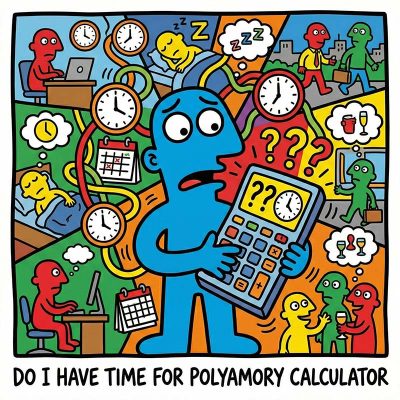
Love is infinite, but your calendar is brutally finite. The fantasy is deep connection; the reality is often just exhausted "calendar tetris." Promising time you don't actually have isn't romantic, it’s a recipe for burnout and broken trust. That sinking feeling when you have to cancel again? That’s the sound of overextension destroying your relationships.
This calculator forces you to confront the math of your life. Do you actually have space for another heart, or are you just setting everyone up for disappointment?
The fantasy is total autonomy and connection. The reality? It can feel like drowning in scheduling chaos and misunderstood expectations. That anxiety you feel isn’t just stress; it’s the wobble of living without a default "anchor." Without a solid architecture, Solo Polyamory stops being a life design and starts being a recipe for burnout and confusion.
The Essential Guide replaces the drift with a concrete anchor. We provide the "Solo Ethic," boundary scripts, and burnout protocols needed to protect your peace. Don't just date around—build a life that actually works for you.
Hierarchy sounds like a corporate org chart until someone gets their feelings hurt. That stomach-turning fear that you are just a "secondary" who can be fired at any time is real. If your relationship feels like a secret ranking system, you are doing it wrong.
Ambiguity is where resentment grows. The Essential Guide replaces the "who matters more" panic with a concrete charter. We provide the scripts and equity guardrails needed to protect every heart in the polycule. Stop guessing and start building.
The ideal is pure equality. The reality? It often slides into hidden rankings where someone gets hurt. That sinking feeling that you are secretly a "secondary" despite the label? That is your intuition detecting couple privilege. Ambiguity is where resentment thrives.
The Essential Guide replaces vague promises with concrete governance. We provide the charters, equity tools, and jealousy protocols needed to ensure "non-hierarchical" isn't just a fantasy. Stop guessing who matters most. Build a network that is actually fair.
The fantasy is total autonomy and connection. The reality? It can feel like drowning in scheduling chaos and misunderstood expectations. That anxiety you feel isn’t just stress; it’s the wobble of living without a default "anchor." Without a solid architecture, Solo Polyamory stops being a life design and starts being a recipe for burnout and confusion.
The Essential Guide replaces the drift with a concrete anchor. We provide the "Solo Ethic," boundary scripts, and burnout protocols needed to protect your peace. Don't just date around—build a life that actually works for you.
Hierarchy sounds like a corporate org chart until someone gets their feelings hurt. That stomach-turning fear that you are just a "secondary" who can be fired at any time is real. If your relationship feels like a secret ranking system, you are doing it wrong.
Ambiguity is where resentment grows. The Essential Guide replaces the "who matters more" panic with a concrete charter. We provide the scripts and equity guardrails needed to protect every heart in the polycule. Stop guessing and start building.
Key concepts you should know
Before we dive into documents and steps here is a quick glossary of terms you will encounter. If a term is new or unclear we will explain it in plain language so you can use it right away.
- Solo polyamory A relationship style where an individual maintains multiple intimate relationships at the same time without seeking a single primary partnership.
- ENM Ethical non monogamy. A consent driven approach to having more than one romantic or sexual relationship at a time.
- Advance directive A legal document that describes your health care wishes if you cannot speak for yourself. It can guide doctors and loved ones about the care you want or do not want.
- Health care proxy Also known as a health care power of attorney. This is a person you name to make medical decisions for you if you are unable to do so.
- Durable power of attorney for finances A document that names someone to handle your finances and legal affairs if you cannot manage them yourself.
- POLST A medical order that translates your treatment preferences into actionable orders for health care professionals in emergencies. Not all places use this form but it is common in many communities.
- Living will A document that spells out what kinds of life sustaining treatments you would or would not want in certain scenarios.
- Executor or personal representative The person who handles your estate after you pass away, ensuring your will is carried out and debts are paid.
- Beneficiary designation The people or entities named to receive assets from a retirement account life policy or other financial accounts when you die.
- Chosen family People who are not legally related to you but whom you regard as family for practical and emotional reasons.
- Guardianship If you have dependents or pets you may name guardians who will take care of them according to your instructions.
Why solo polyamory makes end of life planning different
In a traditional setup with a spouse and kids the chain of care and inheritance often follows a predictable path. In solo polyamory you may have multiple partners who all deserve a voice in decisions around life support, end of life care, and the memorial process. You might not want any one partner to act as a sole decision maker, or you might want to share that authority among people who know you well. You may also have practical concerns around practical access to accounts, property, and digital assets. The goal is to build a network of interoperability where the people who matter most to you know your preferences and have access to the resources to implement them.
First steps you can take today
Start with small but meaningful actions. You do not have to do everything at once. The following steps build a strong foundation you can expand over time.
- List your important people Create a current roster of all the partners, friends, and chosen family who matter to you. Include contact details and a note about how you want them to participate in end of life decisions.
- Choose core decision makers Identify two to four people you trust to help with medical and financial decisions if you cannot speak for yourself. Discuss your preferences with them and confirm they are comfortable with the role.
- Write a basic will A will declares who inherits your assets and who will manage the estate. If you have a lot of assets or complex arrangements you can start with a simple will and later upgrade to a trust or more advanced plan.
- Assign a health care proxy Pick someone who understands your values and is willing to advocate for you in medical situations. Talk through scenarios so they know how you want decisions made and how you want to communicate with doctors and your other partners.
- Check beneficiary designations Make sure every retirement account life insurance policy and payable on death designation reflects your current wishes and names the right people.
- Coordinate digital assets Create a plan for what happens to social media accounts email and digital belongings. Decide who should access these and what kind of memorial or privacy rules apply.
- Pet care plan If you have pets designate guardians and provide instructions for care and emergency funds. Pets are often family members in ENM circles and they deserve a plan too.
Legal documents you will likely need
In many places you can start with a core set of documents and then customize as your life and network evolve. Here is a practical list tailored for solo polyamory ENM households. Remember that laws vary by jurisdiction so check local rules or talk to a lawyer who understands non traditional families.
- Will A will is the backbone for asset distribution and for naming an executor. In solo poly setups you can name multiple beneficiaries and specify how assets should be divided among several partners or friends. You can also include a letter of wishes that explains your values and the stories behind your choices. A will does not bypass probate in all cases but it provides a roadmap and helps protect those you love.
- Durable power of attorney for finances This document lets a trusted person handle banking bills property and other financial responsibilities if you are unable to manage them. In ENM networks finances are often shared across people who provide support so it is essential to have a clear mechanism for who can act and when.
- Health care proxy and medical power of attorney This designates someone to make medical decisions on your behalf if you cannot. In a polyamorous circle you may want to name more than one person to participate in discussions with doctors, provided your local laws allow multiple decision makers or coplays of authority. Discuss scenarios with your proxy so there is no confusion in a crisis.
- Living will and POLST A living will states which life sustaining treatments you want or do not want in certain situations. A POLST or similar medical order translates your wishes into actionable orders for emergency personnel. Not every place uses POLST but it is common in many regions. If you have medical preferences be sure to document them clearly in both documents where applicable.
- Executor or personal representative appointment This person will guide the estate through probate (if needed) pay debts and distribute assets according to your will. In solo poly groups you may designate multiple executors or alternate executors and specify how they should coordinate with your chosen family members.
- Beneficiary designations and trusts Review all beneficiary designations on retirement accounts life insurance and other assets. You may want to set up a trust to manage assets for partners or for dependents. A trust can offer more control and privacy than a will in some cases and can help avoid probate entirely in certain jurisdictions.
- Guardianship provisions for dependents or pets If you have dependent children or beloved pets you should name guardians who will care for them under your rules. You can attach instructions and funding to support their care. For pets the plan should include funds for ongoing care and arrangements with guardians who share your values.
- Digital asset plan This covers social media accounts email photo libraries cryptocurrency wallets and other online properties. Designate who should access accounts and what should happen to digital assets after your death. Provide login information securely to a trusted person you name in a separate document or use a password manager with explicit access instructions.
Health care planning across chosen family and partners
In ENM and solo poly circles the question of who makes health decisions can be tricky. You may not have a legal spouse but you have people who know you deeply. A thoughtful approach is to designate more than one health care proxy or to create a framework for shared decision making that your clinicians recognize. Some jurisdictions allow co proxies or a main proxy with alternates. Have conversations with your medical team and with the people who matter to you to establish who is authorized to speak for you and how they should handle disagreements. It is essential to document your values and your boundaries so the medical team can act in a way that aligns with your wishes even if you cannot communicate clearly at the moment.
Love is infinite, but your calendar is brutally finite. The fantasy is deep connection; the reality is often just exhausted "calendar tetris." Promising time you don't actually have isn't romantic, it’s a recipe for burnout and broken trust. That sinking feeling when you have to cancel again? That’s the sound of overextension destroying your relationships.
This calculator forces you to confront the math of your life. Do you actually have space for another heart, or are you just setting everyone up for disappointment?
The fantasy is total autonomy and connection. The reality? It can feel like drowning in scheduling chaos and misunderstood expectations. That anxiety you feel isn’t just stress; it’s the wobble of living without a default "anchor." Without a solid architecture, Solo Polyamory stops being a life design and starts being a recipe for burnout and confusion.
The Essential Guide replaces the drift with a concrete anchor. We provide the "Solo Ethic," boundary scripts, and burnout protocols needed to protect your peace. Don't just date around—build a life that actually works for you.
Hierarchy sounds like a corporate org chart until someone gets their feelings hurt. That stomach-turning fear that you are just a "secondary" who can be fired at any time is real. If your relationship feels like a secret ranking system, you are doing it wrong.
Ambiguity is where resentment grows. The Essential Guide replaces the "who matters more" panic with a concrete charter. We provide the scripts and equity guardrails needed to protect every heart in the polycule. Stop guessing and start building.
The ideal is pure equality. The reality? It often slides into hidden rankings where someone gets hurt. That sinking feeling that you are secretly a "secondary" despite the label? That is your intuition detecting couple privilege. Ambiguity is where resentment thrives.
The Essential Guide replaces vague promises with concrete governance. We provide the charters, equity tools, and jealousy protocols needed to ensure "non-hierarchical" isn't just a fantasy. Stop guessing who matters most. Build a network that is actually fair.
The fantasy is total autonomy and connection. The reality? It can feel like drowning in scheduling chaos and misunderstood expectations. That anxiety you feel isn’t just stress; it’s the wobble of living without a default "anchor." Without a solid architecture, Solo Polyamory stops being a life design and starts being a recipe for burnout and confusion.
The Essential Guide replaces the drift with a concrete anchor. We provide the "Solo Ethic," boundary scripts, and burnout protocols needed to protect your peace. Don't just date around—build a life that actually works for you.
Hierarchy sounds like a corporate org chart until someone gets their feelings hurt. That stomach-turning fear that you are just a "secondary" who can be fired at any time is real. If your relationship feels like a secret ranking system, you are doing it wrong.
Ambiguity is where resentment grows. The Essential Guide replaces the "who matters more" panic with a concrete charter. We provide the scripts and equity guardrails needed to protect every heart in the polycule. Stop guessing and start building.
What about advance directives and living wills
An advance directive is a legal tool that states your wishes for medical treatment if you are unable to express them. A living will is often part of this set of documents and it provides concrete instructions for end of life care. In solo poly life you might opt for a broad directive that allows your proxies to help make choices about life support while respecting your core values. You can also include preferences about organ donation funeral arrangements and memorial preferences. The key is to be explicit and to share these documents with your health care proxies and your partners so there is no confusion in a medical crisis.
Financial planning in ENM households
Money conversations can be uncomfortable but they save stress later. A durable power of attorney for finances gives a trusted person the ability to manage bills taxes and banking if you are incapacitated. In addition ensure that important financial documents are accessible. You may want to keep a master list of accounts with account numbers contact information and where the documents are stored. If you have joint finances or shared living arrangements with several partners consider how debt and assets will be handled and how to protect everyone you care about in a fair and transparent way.
Estate planning for multiple partners
Wills and trusts in ENM communities are often more nuanced. You might want to allocate shares of different assets to multiple partners rather than a single beneficiary. You can also designate alternate beneficiaries to avoid disputes. If you have partners who live far away or who are not legally recognized as spouses you can use a letter of instruction to express your preferences and explain the relationships that matter to you. A lawyer who understands non traditional families can help you draft a document that reflects your values while meeting legal standards.
Guardianship and pet care considerations
Pets are family in many ENM circles. If you have a cherished pet you should name guardians who will care for them and you should provide a financial plan for their care. You can include instructions about feeding routines medical needs and even who is allowed to make decisions about vet care. For children or dependent adults you must plan for guardianship separately under applicable laws. Having clear guardianship arrangements prevents a crisis from turning into a fight among friends or partners who all deserve love and careful care for the people who depend on them.
Digital legacy and social media
Digital assets are real assets even if they live online. You may want to specify who can access social media accounts email accounts cryptocurrency wallets and other online properties. Decide if you want accounts closed preserved or archived. You can assign a digital executor or provide guidelines for what should be done with your online presence. Having a plan keeps your memory intact and reduces confusion for your chosen family during a difficult time.
Practical steps to implement your plan
Now that you know what to plan for here is a practical path you can start today. You can implement these steps in a few evenings or over a weekend and then update them as your network grows or changes.
- Gather documents Collect all existing wills trusts powers of attorney advance directives and any burial or memorial preferences. Put them in a single clearly labeled folder both in print and in a secure digital location.
- Talk with your core people Have calm conversations with your chosen family about who matters and what they should know. Share your general approach to medical decisions and asset distribution. This helps prevent surprises later.
- Consult a professional A lawyer who specializes in family law estate planning or elder care can help you tailor documents to your jurisdiction. Bring your current life situation and all relevant relationships to the meeting so they can advise properly.
- Set up a plan for updates Your relationships and assets will evolve. Create a reminder system to review documents annually or after major life events such as cohabitation a new partner or a move to a new state or country.
- Choose a digital safe Store copies of important documents in a secure place and provide access instructions to your trusted allies. Consider using a password manager with a trusted emergency access option.
- Leave a letter of wishes A non binding letter describing your values and the emotional reasoning behind decisions can help your executors interpret your documents. It is not a legal requirement but it is incredibly useful and personal.
Real world scenarios you can use
Stories help. Here are some practical scenarios showing how a solo polyamory ENM plan might work in real life. Adapt these to your situation and use them as talking points with your partners and your lawyer.
- Scenario A You have two long term partners in different states. You designate both as health care proxies with an order that if they disagree the hospital ethics committee or a designated physician helps mediate. You specify in your living will that you want full treatment if a reversible condition is possible but you refuse prolonged life support in a non recoverable situation. Your executor is a friend who knows your values and can coordinate with both partners for decisions and information sharing.
- Scenario B You have several friends who are close but not romantically involved. You want to ensure your digital assets are managed by a designated partner or friend who understands your online relationships. You set up a digital executor and provide access instructions to a trusted ally. You also assign guardians for a beloved pet and provide funds for ongoing care.
- Scenario C You want to keep matters simple but fair. You create a straightforward will naming a primary beneficiary among your partners and a secondary beneficiary who shares your values. You include a letter of instruction about how you want to celebrate your life and who should be involved in the memorial. You share these with your health care proxies and your executor to minimize confusion during a crisis.
Communication tips that protect everyone
Honest conversations are essential but they can be awkward. Here are practical tips to protect everyone involved and keep relationships intact even when topics are tough.
- Start early Do not wait for a health scare to begin the conversations. The more time you give people to ask questions the better.
- Use a neutral facilitator If you fear conflict consider bringing in a professional mediator a trusted friend or a co attorney who can help keep discussions productive and respectful.
- Document the conversation Take notes or record an agreed summary of decisions with consent. This helps all parties stay on the same page and reduces memory errors when stress runs high.
- Respect boundaries Not everyone will be comfortable with every arrangement. Honor boundaries while explaining why certain choices matter to you.
- Share access details gradually If you use a password manager or secure vault provide a step by step plan for who can access what and when it should be opened.
Checklist before you finalize anything
- Meet with a qualified attorney who understands ENM and non traditional families
- Review all beneficiary designations and update them as needed
- Choose your core decision makers and have open conversations about roles and expectations
- Prepare copies of documents and give them to your trusted people along with a clear plan for updates
- Record your preferences in a letter of wishes that can guide your executors without creating legal obligations
Common mistakes to avoid
- Assuming a traditional family structure will automatically protect your partners
- Failing to name backups for health care proxies and executors
- Forgetting to update documents after major life changes such as new partners changes in residence or a loss of a partner
- Underestimating the importance of digital assets and social media in the plan
Glossary of useful terms and acronyms
- Advance directive A document that describes your health care wishes if you cannot communicate them yourself.
- Health care proxy The person you designate to make medical decisions on your behalf.
- Durable power of attorney for finances A document that allows someone to handle your financial matters if you are unable.
- POLST Physician orders for life sustaining treatment a medical order that reflects your treatment preferences in tangible form.
- Living will A document that outlines your preferences for end of life care.
- Executor The person who carries out the terms of your will and manages your estate after your death.
- Beneficiary designation The person or entity listed to receive assets from a policy or account after your death.
- Guardian A person named to care for dependents or pets according to your instructions.
- Digital executor A person designated to handle digital assets and online accounts after your death.
- Chosen family People who function as family in real life even if they are not legally related.
Frequently asked questions
How do I start end of life planning if I am part of a solo polyamory ENM network?
Begin by listing the people who matter to you and the roles you want them to play. Identify two or more health care proxies if possible and discuss your wishes with them. Then consult an attorney who understands ENM so your documents reflect your reality rather than making assumptions about traditional families.
What documents should I absolutely have in place?
A will a durable power of attorney for finances a health care proxy or medical power of attorney and a living will or advance directive are foundational. If possible add a POLST if it is available in your area. Review beneficiary designations on all accounts and consider a trust if you have complex assets or want more privacy.
How can I protect multiple partners in medical decisions?
Discuss your preferences with each partner and document a plan that explains how decisions should be made if there is disagreement. Some jurisdictions allow multiple decision makers with defined roles. A health care proxy plus a trusted advisor system can work well when you clarify who does what and how to communicate with medical staff.
How should I handle digital assets and online memorials?
Name a digital executor and provide access guidance for critical accounts. Decide whether to close memorial pages or preserve them. Include instructions about what should happen to password locked vaults and crypto wallets if they apply.
What if I have dependents or pets?
Guardian designations for dependents and pets are essential. Name guardians who align with your values and include funds to support their care. This reduces the risk of family disputes during a difficult time and ensures your loved ones are protected.
How often should I review and update my plan?
Aim for at least once a year or after any major life change such as a new partner a move or changes in health. ENM and solo poly life can shift quickly so make updating a regular habit.
Can I change documents later if my life changes?
Yes. Most documents are flexible. A simple amendment or a new will can replace earlier versions. Keep a log of changes and share updated copies with your core people and your attorney.
Do I need a lawyer if I practice ENM?
While not strictly required you gain significant protection from working with a lawyer who understands non traditional families and ENM dynamics. They can tailor language to your jurisdiction ensure documents are legally sound and help you navigate guardianship and estate issues that are common in polyamorous networks.
Love is infinite, but your calendar is brutally finite. The fantasy is deep connection; the reality is often just exhausted "calendar tetris." Promising time you don't actually have isn't romantic, it’s a recipe for burnout and broken trust. That sinking feeling when you have to cancel again? That’s the sound of overextension destroying your relationships.
This calculator forces you to confront the math of your life. Do you actually have space for another heart, or are you just setting everyone up for disappointment?
The fantasy is total autonomy and connection. The reality? It can feel like drowning in scheduling chaos and misunderstood expectations. That anxiety you feel isn’t just stress; it’s the wobble of living without a default "anchor." Without a solid architecture, Solo Polyamory stops being a life design and starts being a recipe for burnout and confusion.
The Essential Guide replaces the drift with a concrete anchor. We provide the "Solo Ethic," boundary scripts, and burnout protocols needed to protect your peace. Don't just date around—build a life that actually works for you.
Hierarchy sounds like a corporate org chart until someone gets their feelings hurt. That stomach-turning fear that you are just a "secondary" who can be fired at any time is real. If your relationship feels like a secret ranking system, you are doing it wrong.
Ambiguity is where resentment grows. The Essential Guide replaces the "who matters more" panic with a concrete charter. We provide the scripts and equity guardrails needed to protect every heart in the polycule. Stop guessing and start building.
The ideal is pure equality. The reality? It often slides into hidden rankings where someone gets hurt. That sinking feeling that you are secretly a "secondary" despite the label? That is your intuition detecting couple privilege. Ambiguity is where resentment thrives.
The Essential Guide replaces vague promises with concrete governance. We provide the charters, equity tools, and jealousy protocols needed to ensure "non-hierarchical" isn't just a fantasy. Stop guessing who matters most. Build a network that is actually fair.
The fantasy is total autonomy and connection. The reality? It can feel like drowning in scheduling chaos and misunderstood expectations. That anxiety you feel isn’t just stress; it’s the wobble of living without a default "anchor." Without a solid architecture, Solo Polyamory stops being a life design and starts being a recipe for burnout and confusion.
The Essential Guide replaces the drift with a concrete anchor. We provide the "Solo Ethic," boundary scripts, and burnout protocols needed to protect your peace. Don't just date around—build a life that actually works for you.
Hierarchy sounds like a corporate org chart until someone gets their feelings hurt. That stomach-turning fear that you are just a "secondary" who can be fired at any time is real. If your relationship feels like a secret ranking system, you are doing it wrong.
Ambiguity is where resentment grows. The Essential Guide replaces the "who matters more" panic with a concrete charter. We provide the scripts and equity guardrails needed to protect every heart in the polycule. Stop guessing and start building.
