
Energy Management and Overextension Risks


Alright friend, let us talk about energy. Not the kind you use to power your devices or light the room, but the energy you bring into your relationships. In the world of ethical non monogamy and specifically the solo polyamory dynamic, energy is a currency you spend with care. This guide breaks down how to manage that energy so you stay vibrant, sane, and true to your own needs while you navigate multiple connections. We keep the tone practical, friendly and easy to understand, with clear terms explained so you can level up without getting lost in jargon.
Quick Links to Useful Sections
- What energy management means in ENM and why it matters
- Key energy currencies you will manage
- Why solo poly dynamics can increase energy risk
- Multiple partners mean more calendars to align
- Boundary negotiation takes energy too
- Jealousy compersion and emotional complexity
- Identity and autonomy work
- Signs you are overextending yourself
- Common energy drain patterns in solo polyamory
- Overbooked social energy
- Creative and emotional overflow
- Energy debt from conflict and repair work
- Partial misalignment with personal boundaries
- External life stress amplifies energy costs
- Practical strategies to manage energy and reduce overextension risk
- Create a personal energy ledger
- Construct a realistic energy budget for relationships
- Use time blocking with clear personal boundaries
- Practice energy aware communication
- Build a gentle boundary framework that can adapt
- Prioritize rest recovery and self care
- Integrate boundaries with consent negotiations
- Detect and address red flags early
- Realistic scenarios and energy friendly playbooks
- Scenario one: a new partner arrives while your current energy is already stretched
- Scenario two: a partner asks for more time and intimacy than you can give right now
- Scenario three: conflict triggers energy drain and you feel overwhelmed
- Practical tools you can use right away
- Glossary of useful terms and acronyms
- Safe language for boundaries and energy planning
- Putting it all together
- Checklist before you step into a busy week
- Frequently asked questions
First up a quick set of ground rules for this article. We are talking about solo polyamory which is a form of ethical non monogamy where there is no primary relationship that takes precedence over all others. It is a dynamic that values autonomy and intentional choice about how energy is spent. We will use the term ENM to stand for ethical non monogamy. We will also use the phrase solo polyamory to describe the style that centers personal sovereignty and flexible relationship structures. If a term is new or unclear we explain it right there in the text so you never have to guess what we mean. Now let us walk through energy management and the real risks of overextension in this rich and rewarding dynamic.
What energy management means in ENM and why it matters
Energy management is the practice of watching how much emotional creative and social effort you have available and then deciding how to spend that energy across your relationships and personal life. In solo polyamory the energy you invest is highly personal and is often distributed across several connections that each demand different things from you. When you manage energy well you can show up in a way that feels authentic and sustainable. When energy slips away you risk burnout resentment stress and a sense that you are losing yourself in the process. This is not about being perfect every day. It is about honest accounting honest communication and honoring boundaries that keep you whole.
Key energy currencies you will manage
- Time energy This is the hours and minutes you can give to talking planning dates and deep conversations.
- Emotional energy This is the feeling work the empathy listening and the emotional repair that comes with being with another person or people.
- Attention energy The focus you bring to each interaction whether it is a chat a plan a date or a check in.
- Cognitive load The mental energy it takes to manage plans hold boundaries and juggle information from several partners.
- Physical energy The stamina you have for activities long evenings travel and the daily foundations like sleep and meals.
Why solo poly dynamics can increase energy risk
In solo polyamory you are the captain of your own ship. There is no single partner who sets a fixed schedule for you or defines your calendar. While that autonomy is empowering it also means you face a few distinctive energy traps. Here are the big ones to watch for.
Multiple partners mean more calendars to align
When you are in more than one active connection there are overlapping needs and different timelines. Back to back dates text threads and planning can start to feel like a project management job. If energy margins shrink you may end up exhausted before the next meeting. The solution is not to cut back on love but to design a calendar that respects your limits and preserves space for rest and routine.
Boundary negotiation takes energy too
In solo polyamory you often negotiate boundaries with each partner as well as with yourself. Boundaries are not walls they are guard rails that keep you safe and present. Explaining your needs and listening to others can be deeply satisfying but it also requires attention time and patience. When boundaries feel vague or constantly changing you can burn energy fast.
Jealousy compersion and emotional complexity
Jealousy is a natural human emotion and it is not a sign that you are failing. In solo polyamory jealousy can surface when you perceive a threat to your own time attention or closeness. The opposite feeling compersion is the joy you feel when a partner is happy with someone else. Both emotions require energy to process and express and the balance matters for long term energy health.
Identity and autonomy work
Solo polyamory often invites ongoing reflection about who you are and how you want to live. This inner work is nourishing yet it costs energy. The more you are clear about your identity your boundaries and your needs the more you can protect your energy. The reverse is also true if you stay uncertain your energy can drift and you may lose track of what you truly want.
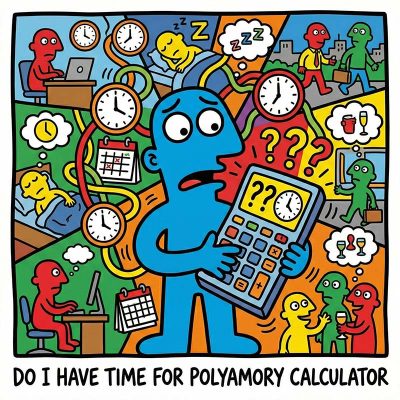
Love is infinite, but your calendar is brutally finite. The fantasy is deep connection; the reality is often just exhausted "calendar tetris." Promising time you don't actually have isn't romantic, it’s a recipe for burnout and broken trust. That sinking feeling when you have to cancel again? That’s the sound of overextension destroying your relationships.
This calculator forces you to confront the math of your life. Do you actually have space for another heart, or are you just setting everyone up for disappointment?

The fantasy is total autonomy and connection. The reality? It can feel like drowning in scheduling chaos and misunderstood expectations. That anxiety you feel isn’t just stress; it’s the wobble of living without a default "anchor." Without a solid architecture, Solo Polyamory stops being a life design and starts being a recipe for burnout and confusion.
The Essential Guide replaces the drift with a concrete anchor. We provide the "Solo Ethic," boundary scripts, and burnout protocols needed to protect your peace. Don't just date around—build a life that actually works for you.

Hierarchy sounds like a corporate org chart until someone gets their feelings hurt. That stomach-turning fear that you are just a "secondary" who can be fired at any time is real. If your relationship feels like a secret ranking system, you are doing it wrong.
Ambiguity is where resentment grows. The Essential Guide replaces the "who matters more" panic with a concrete charter. We provide the scripts and equity guardrails needed to protect every heart in the polycule. Stop guessing and start building.

The ideal is pure equality. The reality? It often slides into hidden rankings where someone gets hurt. That sinking feeling that you are secretly a "secondary" despite the label? That is your intuition detecting couple privilege. Ambiguity is where resentment thrives.
The Essential Guide replaces vague promises with concrete governance. We provide the charters, equity tools, and jealousy protocols needed to ensure "non-hierarchical" isn't just a fantasy. Stop guessing who matters most. Build a network that is actually fair.
The fantasy is total autonomy and connection. The reality? It can feel like drowning in scheduling chaos and misunderstood expectations. That anxiety you feel isn’t just stress; it’s the wobble of living without a default "anchor." Without a solid architecture, Solo Polyamory stops being a life design and starts being a recipe for burnout and confusion.
The Essential Guide replaces the drift with a concrete anchor. We provide the "Solo Ethic," boundary scripts, and burnout protocols needed to protect your peace. Don't just date around—build a life that actually works for you.
Hierarchy sounds like a corporate org chart until someone gets their feelings hurt. That stomach-turning fear that you are just a "secondary" who can be fired at any time is real. If your relationship feels like a secret ranking system, you are doing it wrong.
Ambiguity is where resentment grows. The Essential Guide replaces the "who matters more" panic with a concrete charter. We provide the scripts and equity guardrails needed to protect every heart in the polycule. Stop guessing and start building.
Signs you are overextending yourself
Careful signs do not always scream loud but they whisper. If you notice any of the following it is time to slow down and reassess your energy plan.
- You feel chronically tired even after restful periods.
- Friction and irritability appear more often in conversations with partners.
- You have little desire for alone time and you feel labeled as selfish for needing it.
- Sleep quality declines and your appetite or exercise routine changes in ways you do not like.
- Tasks that used to feel simple now feel overwhelming or impossible to finish.
- You begin avoiding tasks that used to be easy or postpone important personal care like medical appointments or hygiene routines.
- Your communication becomes reactive rather than thoughtful and you notice misinterpretations more often.
Common energy drain patterns in solo polyamory
Understanding typical patterns helps you see trouble coming so you can intervene early. Here are patterns that show up often in solo poly dynamics.
Overbooked social energy
You say yes to too many invitations because you love your partners and you want to be fair. Soon you are juggling several plans that stretch you thin. The energy cost of being present in many conversations can add up and you start to feel depleted even when you are having fun.
Creative and emotional overflow
Deep listening and generous responding require energy. You may be the friend who always shows up ready to help with emotional processing and planning. That generosity drains you over time if you never refill your own cup.
Energy debt from conflict and repair work
When you have multiple people to navigate you also have more potential for misunderstandings and negotiation. Repair work after a conflict is energy heavy and not always immediately visible on a calendar. Over time that debt can build up if you do not have a plan for rapid repair and recovery.
Partial misalignment with personal boundaries
You might set boundaries that feel good in the moment but you do not check back after a week to see if they still fit. Boundaries need updating as life and relationships evolve. When they do not you end up paying the price in energy later on.
External life stress amplifies energy costs
Career pressures family health financial concerns and other big life events can steal energy from your relationship energy pool. In solo polyamory it is essential to acknowledge that your personal life and relationship life share the same energy budget.
Practical strategies to manage energy and reduce overextension risk
This section is your tool kit. It is a practical playbook you can adapt to your own rhythm. The goal is not to eliminate energy drain altogether but to keep it within healthy bounds and to refill faster than you spend it.
Create a personal energy ledger
Treat energy like money you track income and expenses every day. Start with a simple ledger that lists partner related energy costs and your own core needs. Each day or week jot down how much energy you spent and how much you gained in return. Review weekly and adjust plans to keep a healthy balance. If you notice recurring deficits in a particular area explore changes such as fewer commitments or more support from a trusted partner.
Construct a realistic energy budget for relationships
Think of your energy budget as a monthly or weekly allowance. Allocate a reasonable amount of energy for each relationship and an amount for your own rest growth and hobbies. Include a buffer for emergencies or spontaneous needs so you do not derail your overall plan when life happens. The budget should be explicit about when you will say yes and when you will say no or not now.
Use time blocking with clear personal boundaries
Time blocking means allotting specific blocks for different purposes. One block might be for deep conversations with a partner a different block for social plans and another block for rest and self care. Within each block set a limit and a non negotiable boundary. When a block ends you reset and move on rather than letting energy bleed into the next activity.
Practice energy aware communication
When you set or adjust expectations talk about energy not just outcomes. Use language that reflects your inner state and your limits. A simple template goes like this I would like to plan a date with you but I have a lower energy week and I want to make sure I am fully present. Could we keep it light this time or push it to next week? This approach respects both your own needs and your partner s need for communication and connection.
Build a gentle boundary framework that can adapt
Boundaries should be clear but flexible. Create a framework that outlines the types of requests you can handle and the times when you need space. Example boundaries can include no late night planning during weekdays a cap on how often you can text in a day or a rule about caring for yourself before helping others. Review and revise boundaries every month or after a major life shift so they stay aligned with your truth.
Prioritize rest recovery and self care
Rest is not a luxury it is a foundation. Make sleep a priority and design recovery rituals that work for you. This could be a calm morning routine a short walk a journaling session or time with a trusted friend. Your energy returns when you invest in your well being on a daily basis.
Integrate boundaries with consent negotiations
In ENM style consent is ongoing and active. When negotiating with partners explicitly discuss energy costs and boundaries. Check in regularly and invite feedback. A consent conversation that includes energy needs is a kind and effective way to keep rapport strong and energy balanced.
Detect and address red flags early
If you notice persistent fatigue a drop in mood or a breakdown in communication take action. The quickest approach is a short check in with yourself and one trusted partner. You can propose a pause on new commitments or a temporary shift to lower energy modes such as more asynchronous communication or fewer in person meetings. Then re assess after a short trial period.
Realistic scenarios and energy friendly playbooks
Let us walk through two or three real world situations and how to handle them in a way that protects energy while keeping your connections healthy.
Scenario one: a new partner arrives while your current energy is already stretched
First breathe. It is important to acknowledge that your energy is stretched and that a new relationship will demand more attention. Step one is to pause new commitments and review your energy ledger. Step two is to have honest conversations with your existing partners about how you plan to allocate energy in the coming weeks. Step three is to propose a slower tempo for the new connection perhaps with shorter initial dates or more asynchronous communication until energy levels rebound. Step four is to set a check in date to revisit energy usage and adjust as needed. A simple script could be I am excited about meeting someone new but I am currently carrying a heavy energy load. I want to be present when we spend time together and I would like to slow the pace a bit. Are you comfortable with a plan that keeps us connected while I refuel?
Scenario two: a partner asks for more time and intimacy than you can give right now
Honest direct communication is the best path. Acknowledge their request and your limit. Offer a concrete alternative such as more frequent but shorter connections or a commitment to see them on a lighter schedule. You might say I value our time together and I want to be honest about my energy. This week I can offer a shorter date or a longer but less intense conversation offline. I want you to know that I am still here and I care about us while I refill my energy bank. Then schedule a clear follow up date to reassess together.
Scenario three: conflict triggers energy drain and you feel overwhelmed
Take a break from the conversation if needed and reconnect with your boundaries. Use a calm and non blaming tone. A practical approach is to say I notice this topic is draining my energy. I want to pause and come back with clearer thoughts and a plan for where we can meet halfway. After a short pause plan a follow up conversation with a specific time that works for both of you. During the pause center your own needs do a simple self care activity and return with your energy restored enough to engage constructively.
Practical tools you can use right away
- Energy ledger template Create a simple table with columns for date partner name energy spent energy gained and notes. Update daily or every other day.
- Weekly energy review Set a recurring time to review what went well what drained energy and what you want to adjust in the coming week.
- Boundaries cheat sheet Write down your non negotiables and your negotiables. Keep this list handy when you are negotiating plans with partners.
- Check in prompts Prepare short questions you can use with partners such as How is your energy today How do you feel about our pace and where should we adjust.
- Rest rituals Design a few reliable rest rituals that help you reset your nervous system after a busy period. A long walk a warm bath or a short mindfulness session can make a big difference.
Glossary of useful terms and acronyms
- ENM stands for ethical non monogamy a relationship style that emphasizes honesty consent and ethical practice with more than one romantic partner.
- Solo polyamory A form of ENM where an individual maintains autonomy and agreements that do not center on a traditional couple nesting arrangement.
- Boundaries Explicit limits you set to protect your well being and energy in relationships.
- Energy ledger A simple tool to track how you spend and refill your energy across life and relationships.
- Compersion The positive feeling you experience when your partner is happy with someone else which can reduce energy drain from jealousy.
- Jealousy management The process of noticing jealousy without acting on it in ways that hurt yourself or others and finding constructive ways to respond.
Safe language for boundaries and energy planning
When you speak about energy and boundaries use clear direct language. For example I want to keep evenings free this week for rest and self care so I can bring my best self to future plans. Or I am not available on Tuesday but I can do Wednesday and Friday. This kind of direct non blaming language makes negotiations easier and energy management more effective.
Putting it all together
Energy management in solo polyamory is a practical everyday practice not a heroic one off effort. Start with a simple ledger and a weekly check in with yourself. From there build a flexible energy budget that can handle life surprises. Add honest boundary conversations and a plan for back up in case energy runs low. As you keep using these tools you will begin to notice patterns that tell you when you are close to your limits and you will have already prepared counter measures. The goal is to maintain a dynamic that feels generous and alive rather than one that collapses under pressure. Remember you are the designer of your own life and your own relationships. You deserve time energy and space to thrive in all of your connections.
Checklist before you step into a busy week
- Review your energy ledger for the past week and identify patterns that drained energy.
- Set a realistic energy budget for the upcoming week with clear limits for each connection.
- Schedule rest time and personal care as non negotiable appointments on your calendar.
- Prepare a short boundary script for each partner in case plans shift.
- Plan a weekly check in with yourself and a trusted confidant for feedback and accountability.
- Include at least one low energy activity to help restoration during busy weeks.
Frequently asked questions
How can I tell if energy management is working for me
Look for signs that you have a steady base of rest and that you can show up as your best self for each connection. If you feel more present less irritable and more able to handle stress you are likely on the right track.
What part does jealousy play in energy management
Jealousy is a signal that something matters to you. It costs energy to process and respond to jealousy. When you acknowledge it and communicate openly you can often dissipate the energy drain more quickly and even learn something valuable about your own needs.
How do I handle a partner who asks for more time than I can give right now
Offer a clear honest plan such as a slower pace with shorter meetings or fewer commitments. Propose a revisit date and keep the conversation focused on energy needs rather than personal flaws. A compassionate approach helps protect energy for everyone involved.
Is it okay to put my energy first and say no to new connections
Yes absolutely. Solo polyamory thrives on intentional choices. Saying no today to a new connection can protect energy for the relationships you already have and open space for future connections when you feel ready.
How do I restart after a period of energy deficit
Start with foundational self care sleep one healthy meal movement and a short reflection on what restored energy in the past. Then re introduce social plans gradually while tracking how energy changes. Small steady steps beat big bursts of effort that quickly crash you.
What is the best way to talk about energy with a partner
Use compassionate and precise language. Share the numbers if that helps such as I have a low energy week. I can do short meetups but I want to protect space for rest. Invite their input and plan together what works best in this moment.
Love is infinite, but your calendar is brutally finite. The fantasy is deep connection; the reality is often just exhausted "calendar tetris." Promising time you don't actually have isn't romantic, it’s a recipe for burnout and broken trust. That sinking feeling when you have to cancel again? That’s the sound of overextension destroying your relationships.
This calculator forces you to confront the math of your life. Do you actually have space for another heart, or are you just setting everyone up for disappointment?
The fantasy is total autonomy and connection. The reality? It can feel like drowning in scheduling chaos and misunderstood expectations. That anxiety you feel isn’t just stress; it’s the wobble of living without a default "anchor." Without a solid architecture, Solo Polyamory stops being a life design and starts being a recipe for burnout and confusion.
The Essential Guide replaces the drift with a concrete anchor. We provide the "Solo Ethic," boundary scripts, and burnout protocols needed to protect your peace. Don't just date around—build a life that actually works for you.
Hierarchy sounds like a corporate org chart until someone gets their feelings hurt. That stomach-turning fear that you are just a "secondary" who can be fired at any time is real. If your relationship feels like a secret ranking system, you are doing it wrong.
Ambiguity is where resentment grows. The Essential Guide replaces the "who matters more" panic with a concrete charter. We provide the scripts and equity guardrails needed to protect every heart in the polycule. Stop guessing and start building.
The ideal is pure equality. The reality? It often slides into hidden rankings where someone gets hurt. That sinking feeling that you are secretly a "secondary" despite the label? That is your intuition detecting couple privilege. Ambiguity is where resentment thrives.
The Essential Guide replaces vague promises with concrete governance. We provide the charters, equity tools, and jealousy protocols needed to ensure "non-hierarchical" isn't just a fantasy. Stop guessing who matters most. Build a network that is actually fair.
The fantasy is total autonomy and connection. The reality? It can feel like drowning in scheduling chaos and misunderstood expectations. That anxiety you feel isn’t just stress; it’s the wobble of living without a default "anchor." Without a solid architecture, Solo Polyamory stops being a life design and starts being a recipe for burnout and confusion.
The Essential Guide replaces the drift with a concrete anchor. We provide the "Solo Ethic," boundary scripts, and burnout protocols needed to protect your peace. Don't just date around—build a life that actually works for you.
Hierarchy sounds like a corporate org chart until someone gets their feelings hurt. That stomach-turning fear that you are just a "secondary" who can be fired at any time is real. If your relationship feels like a secret ranking system, you are doing it wrong.
Ambiguity is where resentment grows. The Essential Guide replaces the "who matters more" panic with a concrete charter. We provide the scripts and equity guardrails needed to protect every heart in the polycule. Stop guessing and start building.
