
Gifts Trips and Resource Boundaries


Welcome to a clear eyed, down to earth guide about gifts trips and resource boundaries in the world of solo polyamory which is a flavor of ethical non monogamy or ENM. If you are exploring love outside the traditional couple dynamic you are not alone. Solo polyamory means you date multiple people while maintaining your independence rather than placing someone as a primary partner. That independence is precious and also challenges us to be intentional with gifts and travel and with how we share resources including time energy and money. This guide breaks down what counts as a gift what counts as a trip and how to set boundaries that protect you and the people you care about.
Quick Links to Useful Sections
- Who this guide is for
- Key terms and acronyms you will hear
- What counts as a gift and what counts as a trip
- Gifts
- Trips
- Boundaries that matter in a solo polyamory dynamic
- Time boundaries
- Financial boundaries
- Emotional energy boundaries
- Privacy boundaries
- Information sharing
- Space and autonomy
- Planning gifts and trips without overcomplicating things
- Step one set a constructive intention
- Step two map out resources
- Step three outline boundaries in plain language
- Step four draft scripts for common moments
- Step five test and adjust
- Negotiation strategies that actually work
- Realistic scenarios you can learn from
- Scenario one a new partner suggests a weekend away
- Scenario two a partner asks you to fund a big trip
- Scenario three a gift feels like pressure
- Scenario four dealing with NRE and impulse purchases
- Practical templates you can use today
- Template A Thoughful gift offer
- Template B Proposed trip outline
- Template C Boundary focused conversation starter
- Template D Dealing with a no
- Self care and boundary maintenance
- Glossary of terms and acronyms
- Frequently asked questions
Our aim here is simple. We want you to feel seen heard and able to negotiate in a way that respects everyone involved. We will explain terms acronyms and key ideas so you can use practical language in real conversations. We will offer realistic scenarios and ready to adapt scripts. And we will keep the tone honest and approachable because we believe in relationships that feel human not robotic.
Who this guide is for
This guide speaks to people who practice solo polyamory or who are exploring ENM with a strong preference for independence. It is for people who want to offer gifts or plan trips with lovers while keeping clear boundaries. It is for people who want to protect their own resources including money time energy and personal space. It is for partners and friends who want to understand how to navigate complex interactions with care and fairness. If you are new to ethical non monogamy this guide will help you translate naive big gestures into thoughtful boundaries that keep everyone feeling good about the arrangement. If you are already seasoned this guide may give you new angles for negotiation new scripts for difficult conversations and new ideas for long term boundaries you can refine over time.
Key terms and acronyms you will hear
We keep it simple and always explain terms so you can follow along without guessing. Here are the terms you are likely to encounter when talking about gifts trips and resource boundaries in solo polyamory.
- ENM short for ethical non monogamy. It describes relationships in which honesty consent and communication are prioritized over exclusivity.
- Solo polyamory a style within ENM where the person pursues relationships with multiple people while maintaining a strong sense of independence and without one partner being a primary focus.
- Gift anything given with intent to nurture a relationship. Gifts can be material like a thoughtful present or experiential like a shared trip or a dinner. The key idea is that gifts are about connection not debt or coercion.
- Trip any travel experience planned with another person or people that involves time away from everyday life. Trips can be short like a weekend away or longer depending on circumstances and agreements.
- Resource boundaries boundaries that protect time energy money and other personal resources. These boundaries help you avoid burnout protect your finances and maintain autonomy.
- NRE New Relationship Energy. This is the rush of excitement that can color how you see a new connection. NRE can make gifts and trips feel bigger or more urgent than they are so it is useful to pause and check in with your boundaries.
- Compersion the ability to feel happiness for your partner when they are excited about someone else. That feeling matters when you navigate gifts and trips in ENM dynamics.
- Boundaries clear limits you set to protect your well being. Boundaries cover what you will do what you will not do how you will share information and how you will spend time and money with others.
- Consent explicit agreement between all involved parties before a gift or travel plan is pursued. Consent is ongoing and can be revoked if circumstances change.
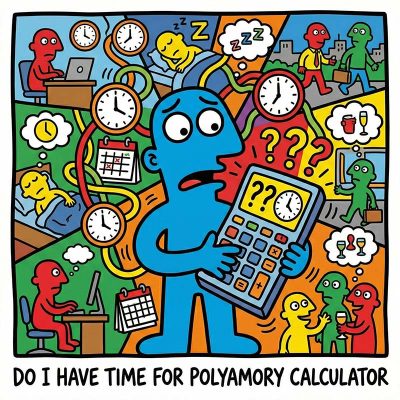
Love is infinite, but your calendar is brutally finite. The fantasy is deep connection; the reality is often just exhausted "calendar tetris." Promising time you don't actually have isn't romantic, it’s a recipe for burnout and broken trust. That sinking feeling when you have to cancel again? That’s the sound of overextension destroying your relationships.
This calculator forces you to confront the math of your life. Do you actually have space for another heart, or are you just setting everyone up for disappointment?

The fantasy is total autonomy and connection. The reality? It can feel like drowning in scheduling chaos and misunderstood expectations. That anxiety you feel isn’t just stress; it’s the wobble of living without a default "anchor." Without a solid architecture, Solo Polyamory stops being a life design and starts being a recipe for burnout and confusion.
The Essential Guide replaces the drift with a concrete anchor. We provide the "Solo Ethic," boundary scripts, and burnout protocols needed to protect your peace. Don't just date around—build a life that actually works for you.
Hierarchy sounds like a corporate org chart until someone gets their feelings hurt. That stomach-turning fear that you are just a "secondary" who can be fired at any time is real. If your relationship feels like a secret ranking system, you are doing it wrong.
Ambiguity is where resentment grows. The Essential Guide replaces the "who matters more" panic with a concrete charter. We provide the scripts and equity guardrails needed to protect every heart in the polycule. Stop guessing and start building.
The ideal is pure equality. The reality? It often slides into hidden rankings where someone gets hurt. That sinking feeling that you are secretly a "secondary" despite the label? That is your intuition detecting couple privilege. Ambiguity is where resentment thrives.
The Essential Guide replaces vague promises with concrete governance. We provide the charters, equity tools, and jealousy protocols needed to ensure "non-hierarchical" isn't just a fantasy. Stop guessing who matters most. Build a network that is actually fair.
The fantasy is total autonomy and connection. The reality? It can feel like drowning in scheduling chaos and misunderstood expectations. That anxiety you feel isn’t just stress; it’s the wobble of living without a default "anchor." Without a solid architecture, Solo Polyamory stops being a life design and starts being a recipe for burnout and confusion.
The Essential Guide replaces the drift with a concrete anchor. We provide the "Solo Ethic," boundary scripts, and burnout protocols needed to protect your peace. Don't just date around—build a life that actually works for you.
Hierarchy sounds like a corporate org chart until someone gets their feelings hurt. That stomach-turning fear that you are just a "secondary" who can be fired at any time is real. If your relationship feels like a secret ranking system, you are doing it wrong.
Ambiguity is where resentment grows. The Essential Guide replaces the "who matters more" panic with a concrete charter. We provide the scripts and equity guardrails needed to protect every heart in the polycule. Stop guessing and start building.
What counts as a gift and what counts as a trip
In solo polyamory gifts and trips operate differently from traditional monogamous relationships. A gift is not a debt it is a gift. A gift should feel voluntary and aligned with your boundary framework. A trip is an experience that creates shared memory and connection but it can also obscure boundaries if not discussed openly. Here is how to think about each category in practical terms.
Gifts
- Material gifts with meaning such as a book a piece of jewelry or a gadget that relates to a shared interest.
- Experiential gifts like tickets to a concert a cooking class or a weekend away that both people consent to and can afford.
- Time gifts such as carving out a date night a long phone catch up or a plan to help with a stressful period in someone life.
- Boundaries for gifts include a clear understanding of who pays for what who has control over the gift and how it will be received. Gifts should not be used to create obligation or to manipulate a dynamic.
Trips
- Weekend getaways with one or more partners or simple day trips that create shared memories without disrupting existing boundaries.
- Longer trips such as city breaks or nature adventures that require advance planning and budget alignment.
- Trip boundaries include agreeing on who pays what who will host when the trip will occur and what responsibilities each person has during the trip including safety and communication expectations.
Boundaries that matter in a solo polyamory dynamic
Boundaries are not rules etched in stone they are living agreements that evolve as you grow. When you operate solo you do not have one partner controlling your calendar you have a web of agreements that protect your energy and your finances. Here are the core boundary categories you should consider when gifts and trips come up.
Time boundaries
Time is your most precious resource. Decide how much time you can safely invest with each partner and how much you want to reserve for yourself. You may choose to have a time budget that you allocate for dates trips and messages. You might also decide on a per week cap that keeps your life in balance. Clear time boundaries make scheduling easier for everyone.
Financial boundaries
Money topics are common in ENM conversations. Decide in advance how expenses for gifts and trips will be handled. Some people prefer equal sharing across partners while others choose proportional contributions based on income. You can also decide to contribute only when you have the capacity and make it clear what counts as an acceptable gift or expense for a trip.
Emotional energy boundaries
Emotional energy is real and finite. You may be able to give a lot in one week and need a quiet week after a trip or a period of new dating. Plan for downtimes where you do not schedule heavy social obligations. Communicate openly about when you need space and how you want to be supported during intense periods.
Privacy boundaries
In solo poly you may not want to share every detail of every relationship with all your partners. Decide what information you will share and with whom. You can set guidelines around social media updates about a partner you are dating or about trips that involve multiple people.
Information sharing
Who knows what and when can be tricky. Some people want full transparency while others prefer confidentiality about certain aspects of their dating life. Clarify what types of information you will share and with whom and set expectations for future changes.
Space and autonomy
Solo polyamory thrives on independence. You may want your own home base or a personal schedule that feels yours. Boundaries around space ensure that you do not feel crowded or overwhelmed by the presence of others. It is perfectly healthy to protect personal routines and personal space as part of your boundary plan.
Planning gifts and trips without overcomplicating things
The key to successful gifts and trips in a solo poly dynamic is to plan with clarity and keep things manageable. Here is a practical approach you can apply right away.
Step one set a constructive intention
Ask yourself what is the goal of the gift or trip. Are you celebrating a milestone a new connection or a turning point in your own life? Write down one sentence that captures the intention. Sharing the intention helps your partners understand why this plan matters to you.
Step two map out resources
Take stock of what you have to offer in terms of time energy and money. Be honest about what you can contribute now and what will require future planning. If the plan requires more than you can safely offer you can propose an adjusted version of the idea instead.
Step three outline boundaries in plain language
Turn your boundaries into concrete statements. For example instead of saying I am not comfortable with surprises you can say This trip is planned six weeks in advance and I want two weeks of separate time to decompress after the trip. Specific statements reduce misinterpretations and make negotiations smoother.
Step four draft scripts for common moments
Having ready to use language helps you. It reduces anxiety and keeps the conversation respectful. Scripts can cover how to say yes how to say no and how to propose a modification to a plan.
Step five test and adjust
After a conversation reflect on what worked and what did not. You can tweak the plan and adjust boundaries for future gifts and trips. Boundaries are not set in stone they are living guidelines you refine as you learn what works for you and your partners.
Negotiation strategies that actually work
Negotiation in a solo poly setting is about fairness honesty and care. Here are practical strategies you can adopt to keep conversations constructive.
- Lead with values. Begin by reinforcing your shared values like honesty respect and mutual care. This sets a positive tone for the discussion.
- Be concrete. Specific examples of what you want and what you do not want help prevent vague misunderstandings.
- Offer options. If a plan feels heavy propose a lighter version or a step by step approach that allows you to test the waters before committing fully.
- Check in with all involved. At times you may need to revisit the plan with every person who is part of the dynamic to ensure ongoing consent and comfort.
- Pause when needed. If emotions run high take a short break to think and regain clarity before continuing the conversation.
Realistic scenarios you can learn from
Understanding how real conversations unfold helps you prepare for your own. Here are some common situations and how to handle them with care and directness.
Scenario one a new partner suggests a weekend away
In this scenario you listen and acknowledge their excitement. You then pause to assess your own boundaries. You say I would love to celebrate your connection but I need a plan that respects my time and money. I would prefer a weekend escape that is two to three hours away and I want to split the cost equitably. If that feels too much we can plan a shorter trip for now and revisit a longer trip later.
Scenario two a partner asks you to fund a big trip
Money conversations can be tough. You reply I want to support your connection but I have a fixed budget for gifts this quarter. Here is a plan that keeps us within budget and we can revisit adding more later if I have more capacity. If you want to plan a separate trip with your other partner I would be open to discussing a different arrangement that also respects my limits.
Scenario three a gift feels like pressure
If a gift starts to feel like obligation you can say I appreciate the thought and I would prefer to slow down. Let us set a small target like a shared experience next month and I can contribute in a way that feels comfortable to me. Your partner can choose to accept the revised plan or we can wait until all of us feel ready.
Scenario four dealing with NRE and impulse purchases
NRE can push people into quick decisions. You can acknowledge the energy and then propose a cooling off period You can say I am excited about this new connection and I want to think it through for a couple of days. If we still feel good about it after the pause we can revisit the plan and adjust the budget and schedule accordingly.
Practical templates you can use today
Use these fill in the blank templates to start conversations and outline boundaries. Personalize them so they fit your voice and your situation.
Template A Thoughful gift offer
Hi [Name] I am thinking about a gift that celebrates our connection. I would like to give you [gift description] and I want to make sure it fits within both of our boundaries. I can cover [cost] and I would love to know if you want to receive it as a surprise or prefer a shared moment together instead. If this feels right I will plan [timeline].
Template B Proposed trip outline
Hey [Name] I have been thinking about a trip for us and maybe one more person. The idea is [destination] from [start date] to [end date]. I expect us to share costs about equally and we will agree on what we will each handle before we book. I want to build in alone time as well as group time. Let me know what works for you and we can adjust together.
Template C Boundary focused conversation starter
Can we talk about boundaries for gifts and trips for a moment. I want to be open about what I can offer in terms of time energy and money. I would like to set a limit of [time] per week for social plans and a budget of [amount] per month for gifts and trips. If anything changes I will let you know and I would appreciate the same from you.
Template D Dealing with a no
Thank you for being honest. I hear your boundary and I would like to propose an alternative that respects both of our needs. If an alternative works I am happy to proceed if not we can revisit this later when circumstances change.
Self care and boundary maintenance
Maintaining boundaries is not a one time thing. It is ongoing work that protects your well being and the health of your relationships. Here are tips to stay steady and sane while navigating gifts and trips in a solo poly world.
- Schedule regular check ins with yourself. A weekly reflection helps you notice when a boundary needs adjusting.
- Communicate in writing when possible. A short text or email can clarify a boundary before a face to face conversation becomes emotional.
- Practice compassionate honesty. It is better to state what you need than to pretend everything is fine when it is not.
- Seek allies you trust. A friend a therapist or a coach can help you reframe conversations and stay grounded.
- Protect your time buffer. Don dates on the calendar that are pure you time with no plans to ensure you do not burn out.
Glossary of terms and acronyms
- ENM ethical non monogamy a category of relationship styles that emphasize consent openness and honest communication.
- Solo polyamory dating multiple people while maintaining independence and often without a traditional primary partner structure.
- Gift any gesture that strengthens a connection including items experiences time together or thoughtful acts.
- Trip a planned excursion or vacation with one or more partners.
- Resource boundaries limits that protect money time energy space and other personal resources.
- NRE new relationship energy a surge of excitement when a new connection begins which can influence decisions.
- Compersion the feeling of happiness for a partner when they experience joy with someone else.
- Consent explicit agreement that is freely given and can be withdrawn at any time.
- Boundary management ongoing negotiation and adjustment of boundaries as life changes.
Frequently asked questions
Below are common questions people ask about gifts trips and resource boundaries in solo polyamory. If you are unsure about anything you can use these as a starting point for a conversation with your partners.
How do I bring up the topic of gifts and trips without triggering jealousy
Lead with curiosity and care. Acknowledge your own feelings and invite your partner to share theirs. Use neutral language and focus on boundaries and budgets rather than on who deserves what. This keeps the talk practical and reduces emotional heat.
What if I cannot afford to give a gift or fund a trip right now
Be honest and propose alternatives. You can offer a different kind of gift like planning a day together or a cheaper experience. Or you can propose delaying the plan until your finances improve. Clear communication keeps everyone respected.
How can I protect my autonomy within a gift or trip plan
Ask for explicit consent before any plan moves forward and insist on a pause if you feel pressure. Use boundaries that are specific about what you can contribute and what you need in return such as space time and reciprocity rules.
Is it okay to refuse a gift or trip from a partner
Yes it is perfectly fine to decline a gift or trip if it does not fit your boundaries or budget. You can express appreciation and offer an alternative that you feel comfortable with. Boundaries are there to protect your well being and they should be respected by everyone involved.
How do I handle NRE when planning gifts or trips
Acknowledge the energy while pausing before making big commitments. NRE can distort thinking so give yourself time to check your boundaries. If the plan still feels exciting after a cooling off period you can proceed with a revised plan that fits your limits.
What are practical ways to track boundaries and agreements
Document conversations in writing do not rely on memory alone. Use simple checklists calendars and shared planning documents. Regularly review what is working and adjust as needed. Boundaries evolve and that is healthy.
Love is infinite, but your calendar is brutally finite. The fantasy is deep connection; the reality is often just exhausted "calendar tetris." Promising time you don't actually have isn't romantic, it’s a recipe for burnout and broken trust. That sinking feeling when you have to cancel again? That’s the sound of overextension destroying your relationships.
This calculator forces you to confront the math of your life. Do you actually have space for another heart, or are you just setting everyone up for disappointment?
The fantasy is total autonomy and connection. The reality? It can feel like drowning in scheduling chaos and misunderstood expectations. That anxiety you feel isn’t just stress; it’s the wobble of living without a default "anchor." Without a solid architecture, Solo Polyamory stops being a life design and starts being a recipe for burnout and confusion.
The Essential Guide replaces the drift with a concrete anchor. We provide the "Solo Ethic," boundary scripts, and burnout protocols needed to protect your peace. Don't just date around—build a life that actually works for you.
Hierarchy sounds like a corporate org chart until someone gets their feelings hurt. That stomach-turning fear that you are just a "secondary" who can be fired at any time is real. If your relationship feels like a secret ranking system, you are doing it wrong.
Ambiguity is where resentment grows. The Essential Guide replaces the "who matters more" panic with a concrete charter. We provide the scripts and equity guardrails needed to protect every heart in the polycule. Stop guessing and start building.
The ideal is pure equality. The reality? It often slides into hidden rankings where someone gets hurt. That sinking feeling that you are secretly a "secondary" despite the label? That is your intuition detecting couple privilege. Ambiguity is where resentment thrives.
The Essential Guide replaces vague promises with concrete governance. We provide the charters, equity tools, and jealousy protocols needed to ensure "non-hierarchical" isn't just a fantasy. Stop guessing who matters most. Build a network that is actually fair.
The fantasy is total autonomy and connection. The reality? It can feel like drowning in scheduling chaos and misunderstood expectations. That anxiety you feel isn’t just stress; it’s the wobble of living without a default "anchor." Without a solid architecture, Solo Polyamory stops being a life design and starts being a recipe for burnout and confusion.
The Essential Guide replaces the drift with a concrete anchor. We provide the "Solo Ethic," boundary scripts, and burnout protocols needed to protect your peace. Don't just date around—build a life that actually works for you.
Hierarchy sounds like a corporate org chart until someone gets their feelings hurt. That stomach-turning fear that you are just a "secondary" who can be fired at any time is real. If your relationship feels like a secret ranking system, you are doing it wrong.
Ambiguity is where resentment grows. The Essential Guide replaces the "who matters more" panic with a concrete charter. We provide the scripts and equity guardrails needed to protect every heart in the polycule. Stop guessing and start building.
