
Intersectionality in Solo Poly Experiences

Welcome to a candid exploration of how identity layers shape solo polyamory and ethical nonmonogamy in real life. This is not about chasing perfect compatibility but about understanding how race, gender, sexuality, ability, class and culture intersect with desire, consent and relationship boundaries. We are talking about the solo polyamory ENM dynamic here which means folding autonomy and personal sovereignty into a framework of ethical openness. Let us break down the terms you might see, share practical guidance and offer vivid scenarios to help you navigate this landscape with honesty, humor and humility.
Quick Links to Useful Sections
- What does intersectionality mean in the context of solo polyamory ENM
- Key terms and acronyms you should know explained
- How intersectionality shapes solo poly experiences
- Race and ethnicity
- Gender identity and expression
- Sexual orientation and desire
- Ability and accessibility
- Class and economic position
- Age and life stage
- Real world scenarios illustrating intersectional solo poly ENM dynamics
- Scenario 1: A Black nonbinary person navigating dating apps
- Scenario 2: A cisgender woman coordinating multiple partners across different cultural backgrounds
- Scenario 3: A disabled person exploring intimacy while managing energy and health needs
- Scenario 4: A partner who is exploring gender transition while maintaining multiple relationships
- Scenario 5: A person navigating class and immigration status while dating in a poly network
- Practical tips for building intersectional awareness in solo poly ENM
- Do the personal work
- Practice honest transparent communication
- Center consent and safety
- Build inclusive communities
- Practice cultural humility
- Protect privacy
- Manage jealousy with empathy
- Must no s when exploring intersectionality in solo poly ENM
- Glossary of useful terms and acronyms
- What is intersectionality and why does it matter in solo poly
- How can I practice inclusive consent in a diverse poly network
- What should I do if I fear I might be unintentionally disrespectful
- How can solo poly communities be more inclusive
- What if a boundary gets crossed
- How do I support partners who carry multiple marginalized identities
- How can I expand my circle respectfully across cultural lines
- Where can I find additional resources about intersectionality and ENM
What does intersectionality mean in the context of solo polyamory ENM
Intersectionality is a framework that helps us understand how different parts of a person aspect of identity combine to shape experiences of privilege and oppression. The term was coined to describe how race and gender intersect to produce unique forms of discrimination that are not simply the sum of their parts. In the world of ethical nonmonogamy and more specifically solo polyamory the idea is essential. Solo polyamory or ENM which stands for Ethical Nonmonogamy is a relationship style where people pursue intimate connections with multiple partners while prioritizing personal autonomy. In this dynamic there is no prescribed primary partner and each person builds connections on their own terms. Intersectionality asks us to look at how identities such as race ethnicity gender sexuality class ability age religion immigration status and language influence how people show up in these scenarios and how others respond to them. This is not about labeling people or making someone a poster child for a single identity. It is about acknowledging complexity and using that awareness to cultivate more respectful and more intentional relationships.
In practice this means recognizing that two solo polyamorous people might both be navigating a UX of privilege and vulnerability that looks different from a third person who shares a similar sexual orientation. It means acknowledging that the same consent practices may land differently depending on who is involved and what identities they bring to the table. It means recognizing power dynamics that come with professional roles family histories cultural expectations and systemic inequities. This is not about guilt or blame. It is about building better consent conversations better boundaries and better communities where people from diverse backgrounds can connect with dignity and honesty.
Key terms and acronyms you should know explained
- ENM Ethical Nonmonogamy. A broad term for relationship styles that involve ethical agreements about intimacy with more than one person at a time.
- Solo polyamory A form of polyamory where a person is not seeking a cohabiting primary couple but instead maintains multiple intimate connections from a stance of personal autonomy.
- Intersectionality A framework for understanding how overlapping identities influence experiences of privilege and oppression.
- Privilege A set of unearned advantages that come from belonging to a dominant group in a given social context.
- Marginalization The experience of being pushed to the edge of society or a subculture due to identity factors such as race gender or ability.
- Consent culture A practice of seeking clear enthusiastic agreement before any intimate or sexual activity and continuously checking in as dynamics evolve.
- Boundaries Personal limits about what one is willing to share or do in relationships and what one expects from others.
- Cultural humility An ongoing practice of self reflection to understand how one’s own background affects interactions with people from different backgrounds.
- Microaggression Small everyday slights or dismissals that communicate disrespect toward a marginalized group.
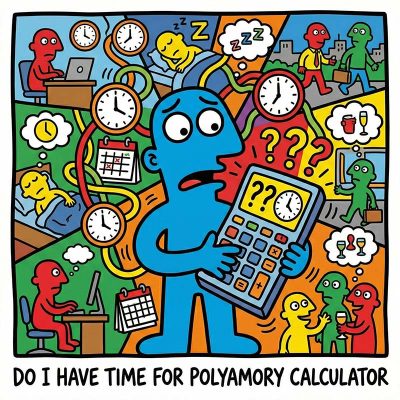
Love is infinite, but your calendar is brutally finite. The fantasy is deep connection; the reality is often just exhausted "calendar tetris." Promising time you don't actually have isn't romantic, it’s a recipe for burnout and broken trust. That sinking feeling when you have to cancel again? That’s the sound of overextension destroying your relationships.
This calculator forces you to confront the math of your life. Do you actually have space for another heart, or are you just setting everyone up for disappointment?
The fantasy is total autonomy and connection. The reality? It can feel like drowning in scheduling chaos and misunderstood expectations. That anxiety you feel isn’t just stress; it’s the wobble of living without a default "anchor." Without a solid architecture, Solo Polyamory stops being a life design and starts being a recipe for burnout and confusion.
The Essential Guide replaces the drift with a concrete anchor. We provide the "Solo Ethic," boundary scripts, and burnout protocols needed to protect your peace. Don't just date around—build a life that actually works for you.
Hierarchy sounds like a corporate org chart until someone gets their feelings hurt. That stomach-turning fear that you are just a "secondary" who can be fired at any time is real. If your relationship feels like a secret ranking system, you are doing it wrong.
Ambiguity is where resentment grows. The Essential Guide replaces the "who matters more" panic with a concrete charter. We provide the scripts and equity guardrails needed to protect every heart in the polycule. Stop guessing and start building.
The ideal is pure equality. The reality? It often slides into hidden rankings where someone gets hurt. That sinking feeling that you are secretly a "secondary" despite the label? That is your intuition detecting couple privilege. Ambiguity is where resentment thrives.
The Essential Guide replaces vague promises with concrete governance. We provide the charters, equity tools, and jealousy protocols needed to ensure "non-hierarchical" isn't just a fantasy. Stop guessing who matters most. Build a network that is actually fair.
The fantasy is total autonomy and connection. The reality? It can feel like drowning in scheduling chaos and misunderstood expectations. That anxiety you feel isn’t just stress; it’s the wobble of living without a default "anchor." Without a solid architecture, Solo Polyamory stops being a life design and starts being a recipe for burnout and confusion.
The Essential Guide replaces the drift with a concrete anchor. We provide the "Solo Ethic," boundary scripts, and burnout protocols needed to protect your peace. Don't just date around—build a life that actually works for you.
Hierarchy sounds like a corporate org chart until someone gets their feelings hurt. That stomach-turning fear that you are just a "secondary" who can be fired at any time is real. If your relationship feels like a secret ranking system, you are doing it wrong.
Ambiguity is where resentment grows. The Essential Guide replaces the "who matters more" panic with a concrete charter. We provide the scripts and equity guardrails needed to protect every heart in the polycule. Stop guessing and start building.
How intersectionality shapes solo poly experiences
Identity layers do not vanish in the world of dating or dating apps. In solo poly scenes you might see the same dynamics expressed differently depending on who is involved. The following areas are especially important to consider when thinking through intersectionality in solo poly ENM contexts.
Race and ethnicity
Racial and ethnic identities can influence how people are perceived attractive or trusted. This shows up in complex ways. For example a person of color may encounter fetishization or exoticization from some partners while multi cultural settings can also offer deeply affirming connections with people who share or honor their heritage. In solo poly strategies it helps to consciously diversify your social circles avoid assumptions and ask open questions about how race and culture shape expectations and comfort levels. When you explain your own boundaries be specific about what you are comfortable sharing and what you prefer to keep private. Remember that comfort is a moving target and it can shift as relationships develop.
Gender identity and expression
Gender identity and expression influence how people respond to you and how you respond to others. In solo poly ENM contexts you may encounter partners who identify across the gender spectrum. This can include cisgender people transgender people nonbinary people and gender diverse folks. Always approach conversations with curiosity and respect. Use people preferred pronouns and be ready to adjust if a partner shares new information about their identity. Gender dynamics can also influence power and vulnerability within dating and in communities. The goal is to cultivate spaces where everyone feels seen and safe to express themselves.
Sexual orientation and desire
Sexual orientation intersects with solo poly experiences in meaningful ways. A person may be attracted to different genders in different contexts or time periods. In ENM the key is to have honest conversations about what sexual connection means to each person in a given relationship and to check in about changes over time. People may navigate desires alongside commitments to other partners. Staying curious while practicing transparent consent helps avoid miscommunications and heartbreak.
Ability and accessibility
Disability and health status influence how people show up in social spaces and in dating life. Accessibility there we go not only refers to physical access but to communication access mental health support and scheduling. In solo poly ENM it is important to discuss needs clearly. This includes how you manage energy levels how you handle downtime and how you seek accommodations if needed for dating events social gatherings or travel. An inclusive approach invites a wider range of potential partners and deepens empathy in the community.
Class and economic position
Socio economic differences shape dating opportunities and risk taking. People with varying levels of income may face different access obstacles such as time constraints transportation or the cost of social events. In solo poly ENM the most helpful stance is to discuss boundaries around money openness about expectations and to look for creative low stress ways to connect that respect everyone financial reality. This does not mean you cannot date across class lines it means you should talk about practicalities early and with sensitivity.
Age and life stage
Younger and older participants may experience different social norms and expectations within poly communities. Age can influence perceived desirability and power in conversations about time emotional energy and future plans. A thoughtful approach is to acknowledge these dynamics explicitly and to cultivate spaces where people from multiple life stages can connect with equal respect.
Real world scenarios illustrating intersectional solo poly ENM dynamics
These scenarios are designed to help you think through how intersectionality plays out in real life. They are not exhaustive but they give you practical lenses to examine your own relationships and communities.
Scenario 1: A Black nonbinary person navigating dating apps
Alex who uses they them pronouns identifies as nonbinary and Black. They join a poly dating app and discover that some conversations shift quickly toward racialized stereotypes or fetishization. To navigate this they set clear boundaries about what is acceptable and what is not. They also choose to join a local social group that centers Black queer and poly identities which helps them build networks with people who understand the unique pressures they face. Alex communicates a preference for conversations about values and shared interests rather than surface level curiosity about race. They practice consent conversations that check in on emotional energy and time constraints as new connections emerge.
Scenario 2: A cisgender woman coordinating multiple partners across different cultural backgrounds
Sara is a cisgender woman practicing solo polyamory ENM. One of her partners is from a different cultural background with different family expectations regarding romance and dating. Sara realizes that directness about boundaries is essential because cultural norms may shape how comfortable someone is with open relationships. She creates a shared communication template that includes expectations about frequency of contact consent for new partners and a plan for how to handle potential conflicts. She also invites her partners to discuss their cultural concerns and to bring up issues as soon as they arise rather than letting small misunderstandings grow into bigger problems.
Scenario 3: A disabled person exploring intimacy while managing energy and health needs
Kai uses a mobility aid and manages chronic fatigue. In solo poly contexts Kai places a high priority on energy management and transparent scheduling. They explain in advance how much time they want to spend on dates and what kinds of activities are comfortable. Kai also seeks partners who are okay with slower pacing. They emphasize that accessibility is a joint responsibility that includes planning travel accommodations and routing conversations about consent in ways that honor their health needs. Through this approach Kai builds meaningful connections with partners who value reliability and thoughtful planning.
Scenario 4: A partner who is exploring gender transition while maintaining multiple relationships
Rhea is transitioning and juggling multiple connections. They recognize that identity shifts can be emotionally charged for themselves and their partners. Rhea communicates openly about how their transition might affect time priorities and how partners can be supportive. They also encourage partners to ask questions and to share their own boundaries and fears in a safe space. In this scenario consent discussions become ongoing rather than one time events, ensuring that every relationship evolves with mutual respect and care.
Scenario 5: A person navigating class and immigration status while dating in a poly network
Ahmed is an immigrant navigating financial pressures and visa related uncertainties. In a poly network he makes sure to disclose only what feels safe and appropriate while also seeking relationships with people who respect his circumstances. He relies on community organizations for support and looks for partners who value honesty about logistics like work hours visa status and potential travel limitations. This approach reduces stress and makes it easier to build sustainable connections across time and distance.
Practical tips for building intersectional awareness in solo poly ENM
These tips are designed to help you grow as a person who wants to honor multiple identities in a solo poly setting. They work whether you are new to ENM or you are a seasoned player in the poly scene.
Do the personal work
Begin with honest self reflection about your own identities and how they shape your desires fears and expectations. Consider journaling or talking with a therapist or coach who understands polyamory and diversity. The goal is to name blind spots and to build a personal map that guides your decisions. Understand that you cannot fully know someone else’s experience but you can approach them with humility and curiosity.
Practice honest transparent communication
In solo poly ENM conversations about boundaries consent and energy levels should be ongoing and explicit. Ask open questions and invite your partners to do the same. Pay attention to nonverbal cues and create space for conversations after emotionally charged moments. When you are unsure ask for clarity rather than assuming you know what the other person wants. Clarity reduces misinterpretations and builds trust over time.
Center consent and safety
Consent is a process not a one off event. Check in regularly about whether boundaries are still in place and whether new dynamics require updates to agreements. If someone is uncomfortable with a particular scenario pause talk it through and if needed adjust plans. A strong consent culture creates safety for all identities involved and reduces the risk of harm or coercion.
Build inclusive communities
If you are hosting events or meetups aim for accessibility and inclusivity. Consider location accessibility transport options and cost. Create ground rules that forbid harassment or exclusion and actively welcome people from diverse backgrounds. Partner with groups that represent marginalized communities and invite their voices into planning processes. This is how inclusive communities grow and become truly welcoming rather than performative.
Practice cultural humility
Cultural humility means recognizing that you do not know everything about another person’s background and that you can learn. Practice active listening ask respectful questions and be willing to adjust your assumptions. When someone shares something personal about their culture or identity value that information and let it shape how you show up in the relationship. This small stance goes a long way toward reducing harm and increasing connection.
Protect privacy
Privacy matters a great deal in ethical nonmonogamy especially for people with marginalized identities. Be mindful about what you share publicly and what you keep private. Seek consent before sharing stories about a partner or a situation and respect boundaries about what details can be discussed even within your own community. Some stories belong to the people involved and deserve protection regardless of how open you feel about your life.
Manage jealousy with empathy
Jealousy is a normal human emotion not a failure. In intersectional contexts jealousy can be shaped by power dynamics and identity related insecurities. Name the feeling and explore its roots. Then discuss concrete steps you can take to reduce triggers for all involved. This might mean lowering time commitments or revisiting how you introduce new partners to existing networks. The goal is to move from reaction to response and to nurture empathy rather than blame.
Must no s when exploring intersectionality in solo poly ENM
- Avoid reducing people to a single identity or using stereotypes to describe a group.
- Do not force someone to explain or perform aspects of their identity for your comfort.
- Avoid tokenism which means adding someone to a circle purely to check a box rather than to honor their voice and agency.
- Do not assume that someone will automatically understand your own intersectional lens, share it clearly and with generosity.
Glossary of useful terms and acronyms
- ENM Ethical Nonmonogamy a broad term for relationship styles that involve ethical agreements about intimacy with more than one person.
- Solo polyamory A form of polyamory where a person maintains multiple intimate connections from a stance of personal autonomy.
- Intersectionality The framework for understanding how overlapping identities influence experiences of privilege and oppression.
- Privilege Unearned advantages that come from belonging to a dominant group in a given social context.
- Marginalization The experience of being pushed to the edge of society or a subculture due to identity factors.
- Consent culture A practice of seeking clear enthusiastic agreement before any intimate activity and continuously checking in as dynamics evolve.
- Boundaries Personal limits about what one is willing to share or do in relationships and what one expects from others.
- Cultural humility An ongoing practice of self reflection to understand how one’s own background affects interactions with people from different backgrounds.
- Microaggression Small everyday slights or dismissals that communicate disrespect toward a marginalized group.
What is intersectionality and why does it matter in solo poly
Intersectionality is a framework for understanding how overlapping identities influence experiences of privilege and oppression. In solo poly ENM it matters because it helps you see how race gender sexuality ability class and culture shape desire consent power dynamics and access to community. It is not about stigma it is about awareness and better communication.
How can I practice inclusive consent in a diverse poly network
Start with explicit enthusiastic consent for every relationship and for any new dynamic. Check in about power and privilege and invite partners to share what makes them feel safe. Use language that invites questions and avoids assumptions. Keep a record of agreements and revisit them as needs change.
What should I do if I fear I might be unintentionally disrespectful
Pause listen learn apologize when needed and ask what would help. Offer to adjust boundaries and seek guidance from someone you trust who understands the identities involved. The goal is to grow not defend your initial stance.
How can solo poly communities be more inclusive
Invite diverse voices into planning events establish accessible spaces provide low cost or free participation options and create mentorship programs for people who are newer to ENM. Celebrate stories from different identities and actively challenge stereotypes and exclusionary behavior.
What if a boundary gets crossed
Address it promptly with specificity without shaming. State what happened what affect it had and what you need to feel safe going forward. If needed pause or renegotiate the arrangement to protect everyone involved.
How do I support partners who carry multiple marginalized identities
Show up with respect and curiosity but avoid putting the burden of education on them. Share resources offer space for them to lead if they want to and back them up when they speak up about their needs. Consistency matters more than grand gestures.
How can I expand my circle respectfully across cultural lines
Attend community events listen before you speak and ask questions with humility. Be willing to learn and adapt your behavior. Build friendships rather than treating cultural exchange as a performance or a momentary novelty.
Where can I find additional resources about intersectionality and ENM
Look for books on intersectionality and relationship ethics as well as articles and podcasts by diverse voices in poly communities. Local community centers LGBTQ plus organizations and inclusive sex education programs are excellent places to start. Follow organizers who prioritize inclusivity and ask for recommendations from people you trust.
Love is infinite, but your calendar is brutally finite. The fantasy is deep connection; the reality is often just exhausted "calendar tetris." Promising time you don't actually have isn't romantic, it’s a recipe for burnout and broken trust. That sinking feeling when you have to cancel again? That’s the sound of overextension destroying your relationships.
This calculator forces you to confront the math of your life. Do you actually have space for another heart, or are you just setting everyone up for disappointment?
The fantasy is total autonomy and connection. The reality? It can feel like drowning in scheduling chaos and misunderstood expectations. That anxiety you feel isn’t just stress; it’s the wobble of living without a default "anchor." Without a solid architecture, Solo Polyamory stops being a life design and starts being a recipe for burnout and confusion.
The Essential Guide replaces the drift with a concrete anchor. We provide the "Solo Ethic," boundary scripts, and burnout protocols needed to protect your peace. Don't just date around—build a life that actually works for you.
Hierarchy sounds like a corporate org chart until someone gets their feelings hurt. That stomach-turning fear that you are just a "secondary" who can be fired at any time is real. If your relationship feels like a secret ranking system, you are doing it wrong.
Ambiguity is where resentment grows. The Essential Guide replaces the "who matters more" panic with a concrete charter. We provide the scripts and equity guardrails needed to protect every heart in the polycule. Stop guessing and start building.
The ideal is pure equality. The reality? It often slides into hidden rankings where someone gets hurt. That sinking feeling that you are secretly a "secondary" despite the label? That is your intuition detecting couple privilege. Ambiguity is where resentment thrives.
The Essential Guide replaces vague promises with concrete governance. We provide the charters, equity tools, and jealousy protocols needed to ensure "non-hierarchical" isn't just a fantasy. Stop guessing who matters most. Build a network that is actually fair.
The fantasy is total autonomy and connection. The reality? It can feel like drowning in scheduling chaos and misunderstood expectations. That anxiety you feel isn’t just stress; it’s the wobble of living without a default "anchor." Without a solid architecture, Solo Polyamory stops being a life design and starts being a recipe for burnout and confusion.
The Essential Guide replaces the drift with a concrete anchor. We provide the "Solo Ethic," boundary scripts, and burnout protocols needed to protect your peace. Don't just date around—build a life that actually works for you.
Hierarchy sounds like a corporate org chart until someone gets their feelings hurt. That stomach-turning fear that you are just a "secondary" who can be fired at any time is real. If your relationship feels like a secret ranking system, you are doing it wrong.
Ambiguity is where resentment grows. The Essential Guide replaces the "who matters more" panic with a concrete charter. We provide the scripts and equity guardrails needed to protect every heart in the polycule. Stop guessing and start building.
