
Maintaining Self Partnership Through Loss

Your world is built on connection and independence at the same time. When loss shows up in a solo polyamory powered life that means a lot of feelings and a need to protect your core self. This guide is designed to feel practical and real not glossy or clinical. We break down what solo polyamory means in everyday terms explain common terms so you can follow along even if you are new to ENM which stands for ethically non monogamous. The focus here is on maintaining a strong sense of self while you navigate the waves of grief and change that come with loss. Think of this as your friendly playbook for keeping your center while relationships evolve or end and while life tosses curve balls your way. We keep it down to earth and straight forward with clear steps you can try today.
Quick Links to Useful Sections
- What solo polyamory means and why loss lands differently
- Key terms you will see in this guide
- The kinds of loss that show up for solo practitioners
- Loss of a primary connection or a thinning of a close bond
- Change in time and energy capacity
- Bereavement and health related losses
- Loss of forward momentum or shared dreams
- Why self partnership matters in a solo poly life
- What you can do right away to protect your self partnership
- Clear your core needs and values
- Reaffirm boundaries in your relationships
- Create a personal recovery routine
- Build a solo support net
- Practice honest open communication
- Create a flexible but consistent routine for your time
- Redefine what success looks like for you
- Practical strategies for navigating loss day to day
- Plan a self honoring ritual
- Journal with intention
- Create micro goals
- Use a practical safety net
- Engage in community and shared activities
- Keep your boundaries visible and flexible
- Real life scenarios and how to respond with self partnership in mind
- Scenario one
- Scenario two
- Scenario three
- Addressing jealousy and grief in a responsible way
- Communication prompts that keep you centered
- Glossary of useful terms and acronyms
- Frequently asked questions
What solo polyamory means and why loss lands differently
Solo polyamory is a form of relationship life where a person prioritizes their own autonomy while having intimate connections with more than one person. The goal is not to give up independence but to enjoy meaningful connections without merging identity or life entirely with any single partner. In a solo poly setup you may maintain separate lives with different partners and you might not have a single dominant relationship that governs your schedule or your plans for the future. Loss in this context can take several forms. A partner may end a relationship or reduce contact or shift priorities. A partner may grieve a death or a health crisis that changes how they show up. You can also experience loss in your own life such as a move or a change in work that alters how you can meet needs within the poly network. The common thread is the disruption of plans and the feeling of being less than whole. The good news is that you can cultivate a strong sense of self even as the landscape shifts. The skill is to treat self partnership as a practice a habit you can rely on when the storm hits.
Key terms you will see in this guide
- Solo polyamory a form of polyamory where a person maintains independence while having multiple intimate connections.
- ENM short for ethically non monogamous meaning relationships emphasize consent openness honesty and clear boundaries.
- CNM consensual non monogamy another broad term for relationships that are openly non exclusive with consent from all involved.
- Loss in this guide refers to anything that reduces emotional closeness or alters the ability to maintain current relationship structures including breakups bereavement life events or shifts in time and energy availability.
- Self partnership the ongoing practice of taking care of your own needs values and growth while staying connected to others.
- Grief and jealousy often overlap in ENM life. Grief is the sadness about loss while jealousy is a feeling tied to insecurity or comparison. Both can show up together.
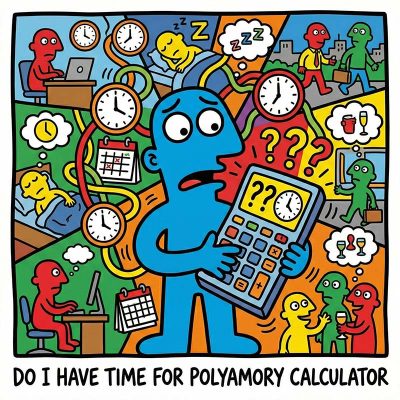
Love is infinite, but your calendar is brutally finite. The fantasy is deep connection; the reality is often just exhausted "calendar tetris." Promising time you don't actually have isn't romantic, it’s a recipe for burnout and broken trust. That sinking feeling when you have to cancel again? That’s the sound of overextension destroying your relationships.
This calculator forces you to confront the math of your life. Do you actually have space for another heart, or are you just setting everyone up for disappointment?
The fantasy is total autonomy and connection. The reality? It can feel like drowning in scheduling chaos and misunderstood expectations. That anxiety you feel isn’t just stress; it’s the wobble of living without a default "anchor." Without a solid architecture, Solo Polyamory stops being a life design and starts being a recipe for burnout and confusion.
The Essential Guide replaces the drift with a concrete anchor. We provide the "Solo Ethic," boundary scripts, and burnout protocols needed to protect your peace. Don't just date around—build a life that actually works for you.

Hierarchy sounds like a corporate org chart until someone gets their feelings hurt. That stomach-turning fear that you are just a "secondary" who can be fired at any time is real. If your relationship feels like a secret ranking system, you are doing it wrong.
Ambiguity is where resentment grows. The Essential Guide replaces the "who matters more" panic with a concrete charter. We provide the scripts and equity guardrails needed to protect every heart in the polycule. Stop guessing and start building.
The ideal is pure equality. The reality? It often slides into hidden rankings where someone gets hurt. That sinking feeling that you are secretly a "secondary" despite the label? That is your intuition detecting couple privilege. Ambiguity is where resentment thrives.
The Essential Guide replaces vague promises with concrete governance. We provide the charters, equity tools, and jealousy protocols needed to ensure "non-hierarchical" isn't just a fantasy. Stop guessing who matters most. Build a network that is actually fair.
The fantasy is total autonomy and connection. The reality? It can feel like drowning in scheduling chaos and misunderstood expectations. That anxiety you feel isn’t just stress; it’s the wobble of living without a default "anchor." Without a solid architecture, Solo Polyamory stops being a life design and starts being a recipe for burnout and confusion.
The Essential Guide replaces the drift with a concrete anchor. We provide the "Solo Ethic," boundary scripts, and burnout protocols needed to protect your peace. Don't just date around—build a life that actually works for you.
Hierarchy sounds like a corporate org chart until someone gets their feelings hurt. That stomach-turning fear that you are just a "secondary" who can be fired at any time is real. If your relationship feels like a secret ranking system, you are doing it wrong.
Ambiguity is where resentment grows. The Essential Guide replaces the "who matters more" panic with a concrete charter. We provide the scripts and equity guardrails needed to protect every heart in the polycule. Stop guessing and start building.
The kinds of loss that show up for solo practitioners
Loss comes in many shapes and sizes. In a solo poly life the risk is that a change in one relationship can ripple across the entire personal ecosystem. Here are common forms of loss and why they matter for self partnership.
Loss of a primary connection or a thinning of a close bond
A primary connection in ENM can feel like a keystone in your life. When a bond weakens or ends you may fear losing your sense of safety or your daily rhythm. The challenge is to avoid collapsing your entire sense of self into one relationship and to rebuild a new steady center that is not dependent on any single person.
Change in time and energy capacity
Bereavement and health related losses
Death illness or serious life events in your networks can change how people show up. You may feel a sense of loneliness or fear about the future. You can still hold your own needs clear while offering support to others. The balance is not to absorb all pain and not to give away your boundaries.
Loss of forward momentum or shared dreams
Sometimes you and a partner move toward shared visions only to discover that your paths no longer align. It can sting to rethink long term plans. The move here is to redefine what you want while keeping your core values intact and evaluating what you can still offer to your relationships and to yourself.
Why self partnership matters in a solo poly life
Self partnership is not selfish it is essential. When you nurture a strong sense of self you can be more generous with others because you are not trying to fill a void with a relationship. You are bringing your full self to every connection and you can decide what you want your life to look like if a relationship shifts. In solo poly the ability to stay connected to your own goals and your own community makes it easier to adapt to loss without losing yourself. Self partnership supports healthy boundaries honest communication and creative problem solving. It is the anchor you hold onto when the seas get rough.
What you can do right away to protect your self partnership
Start with small practical actions that build resilience. You do not have to solve everything at once. Even tiny steps count and add up over time.
Clear your core needs and values
Take a quiet hour to list the core needs that must be met for you to feel cared for respected and linked to your authentic self. Include emotional needs such as reassurance about honesty and trust as well as practical needs such as time and space for your personal pursuits. When you know your non negotiables you can communicate them with less anxiety and more clarity.
Reaffirm boundaries in your relationships
Boundaries become more important after loss. Check in with your partners about what you can still offer and what you cannot. Clarify how you will handle missed plans how you will manage emotional work and how you will protect private space for your own growth. Boundaries are not barriers they are a form of care that helps both sides feel safer and more confident.
Create a personal recovery routine
A recovery routine is a short durable set of daily or weekly practices that sustain you. It can include journaling a brief mindfulness moment a workout a creative activity a social check in with friends or a date with yourself. The point is consistency and compassion for yourself as you move through loss.
Build a solo support net
Invest in a circle that understands your life and respects your boundaries. This can be friends family a therapist or a support group. In a solo poly life your network becomes part of your self partnership because it offers grounding and perspective when relationships shift.
Practice honest open communication
Share your needs plainly without blaming others. Use simple statements that begin with I feel I need or I would like and then describe the change you want. Invite dialogue and give others space to respond. Communication keeps your connections strong even when pain is high.
Create a flexible but consistent routine for your time
Structure matters but you also want to stay adaptable. Set a weekly rhythm that includes time with partners and time alone. Put you first during your solo moments yet remain open to adjustments as circumstances change. Consistency will reduce stress and make the unknown easier to manage.
Redefine what success looks like for you
We often measure success by how much we are connected to others. In a solo poly life success is about staying true to your values and maintaining intentional relationships that enrich your life. A small but steady feeling of progress matters more than big dramatic shifts. Celebrate the small wins as you rebuild.
Practical strategies for navigating loss day to day
The following practical steps are designed for use right away. They are realistic and doable in the real world not theoretical ideas that stay on a page.
Plan a self honoring ritual
Rituals can be simple. Light a candle make a cup of tea take a slow walk and reflect on what you need most from yourself in this moment. The ritual is a quiet moment where you reaffirm your own value. It can be a daily occurrence or a weekly check in with yourself.
Journal with intention
Use a notebook to track feelings what changed what you learned and what you want to prioritize next. Write as if you are speaking to a friend who is honest and kind. Focus not on judgment but on clarity. Over time your notes become a map of how your self partnership evolves.
Create micro goals
Break big changes into tiny tasks. If a relationship shifts you can set a tiny goal such as connecting with one friend two times this week or exploring a new hobby for twenty minutes. Achieving small steps builds confidence and momentum.
Use a practical safety net
Based on your life set up practical supports that you can rely on. This could be a payment plan if financial pressure grows it could be a person who can stay with you during tough conversations or a therapist who you see regularly to manage intense feelings. A robust safety net keeps you steady when stress rises.
Engage in community and shared activities
Meaningful social activities help counter isolation and remind you that you are not alone. Seek groups events and gatherings that fit your energy and time. Connection can be healing and it can spark new ideas for how you want to live your life.
Keep your boundaries visible and flexible
Place a few reminders in plain sight about your non negotiables and what you are willing to adapt. You want to stay accountable to yourself while also respecting the needs of others. Boundaries that are too rigid can backfire yet too loose can invite drift. Find the middle lane that fits your current reality.
Real life scenarios and how to respond with self partnership in mind
Scenario one
You are in a solo poly life and you lose a close connection that was a central source of support. Instead of retreating into silence you lean into your personal recovery ritual and reach out to a trusted friend for a check in. You pause to assess your needs and you adjust your schedule to include one activity that feeds your soul a weekly call with a therapist and a month of space to explore other interests. You communicate openly with your other partners about your need for space without blaming them and you hold onto your boundaries while staying curious about new possibilities.
Scenario two
A partner faces a health crisis and their priorities shift. You do not vanish into silence but you stay present offered practical help and also protect your own emotional needs. You renegotiate a lighter schedule with your partners reframe your personal commitments and plan for time you will spend on your own projects. You keep honest about how you feel and invite a cooperative discussion about how you can support one another moving forward.
Scenario three
You experience a personal loss such as a job change or a move that reduces how often you can meet with partners. You treat this as a chance to deepen your self practice. You lean into the extra time to study a new skill test a new hobby and build a stronger personal routine. You communicate the change early and outline how you will stay connected and how you will handle contact expectations. You remain open to adjusting plans as you settle into the new normal.
Addressing jealousy and grief in a responsible way
Jealousy and grief are natural parts of any relationship life especially in ENM which includes solo poly dynamics. The key is to acknowledge these feelings without letting them drive decisions that hurt you or others. Use a simple process to handle strong emotions. Name the feeling describe what caused it and decide on a concrete action. For example I feel a pang of jealousy because I am missing time with a partner right now. I would like to schedule a longer conversation with them this week to talk about needs. This process helps you move from emotion to action in a constructive way.
Communication prompts that keep you centered
Clear honest language is essential. Try phrases like I feel I need to protect my personal time and plan more for myself I am noticing a change in my energy and I want to adjust our plans I would like to keep our connection strong while we both focus on our own growth. These phrases respect the other person while keeping your own needs in view. Practice makes this natural and less tense over time.
Glossary of useful terms and acronyms
- Ethical non monogamy ENM a framework where all people involved consent to multiple relationships with open and honest communication.
- Consensual non monogamy CNM a broader term that includes ENM and similar relationship models built on consent and transparency.
- Solo polyamory a practice where a person maintains autonomy and independence while forming intimate connections with others.
- Loss in this guide means any event that disrupts the normal flow of relationships or personal life caused by death separation or major life change.
- Self partnership the ongoing practice of caring for your own needs values and growth while you remain connected to other people.
- Grief a natural response to loss that ebbs and flows over time not something you simply get over.
- Boundaries clear agreements about what you will and will not accept in relationships they help keep you emotionally and physically safe.
Frequently asked questions
What is solo polyamory and how is it different from other CNM styles
Solo polyamory centers on personal autonomy while maintaining intimate connections with others. Unlike arrangements where a couple builds a shared life the focus is on keeping individual life separate while still sharing closeness with partners. It is not about avoiding commitment it is about choosing commitments that respect personal independence.
How do I maintain self partnership after a loss in a solo poly life
Begin with a clear list of your non negotiables and your values. Create a recovery routine a strong support network and plan for time that is just for you. Communicate needs to your partners early and renegotiate plans as needed. Practice self compassion and treat your needs as legitimate not as indulgences.
What are practical steps to cope with grief while staying connected
Ground yourself with routines that reinforce your sense of self such as journaling regular exercise and creative activity. Stay connected to your community and maintain honest conversations with partners about what you need. Allow yourself to pause when needed and resume when you feel ready.
How can I handle jealousy in a healthy way during loss
Name the feeling and what triggered it. Communicate the need behind the feeling to your partner and seek a practical adjustment in plans for your own comfort. Reaffirm the value of the relationship while also prioritizing your emotional well being.
What if I am new to ENM and facing loss
Give yourself permission to learn as you go. Seek mentors or resources from trusted communities and consider therapy that understands non monogamy. Build a small but reliable network of friends who get your life and can offer honest feedback.
Should I share my experience publicly or keep it private
That depends on your boundaries and what you are comfortable with. If you do share consider the impact on others and protect privacy where needed. When in doubt prefer private support and keep public messages reflective and respectful.
Love is infinite, but your calendar is brutally finite. The fantasy is deep connection; the reality is often just exhausted "calendar tetris." Promising time you don't actually have isn't romantic, it’s a recipe for burnout and broken trust. That sinking feeling when you have to cancel again? That’s the sound of overextension destroying your relationships.
This calculator forces you to confront the math of your life. Do you actually have space for another heart, or are you just setting everyone up for disappointment?
The fantasy is total autonomy and connection. The reality? It can feel like drowning in scheduling chaos and misunderstood expectations. That anxiety you feel isn’t just stress; it’s the wobble of living without a default "anchor." Without a solid architecture, Solo Polyamory stops being a life design and starts being a recipe for burnout and confusion.
The Essential Guide replaces the drift with a concrete anchor. We provide the "Solo Ethic," boundary scripts, and burnout protocols needed to protect your peace. Don't just date around—build a life that actually works for you.
Hierarchy sounds like a corporate org chart until someone gets their feelings hurt. That stomach-turning fear that you are just a "secondary" who can be fired at any time is real. If your relationship feels like a secret ranking system, you are doing it wrong.
Ambiguity is where resentment grows. The Essential Guide replaces the "who matters more" panic with a concrete charter. We provide the scripts and equity guardrails needed to protect every heart in the polycule. Stop guessing and start building.
The ideal is pure equality. The reality? It often slides into hidden rankings where someone gets hurt. That sinking feeling that you are secretly a "secondary" despite the label? That is your intuition detecting couple privilege. Ambiguity is where resentment thrives.
The Essential Guide replaces vague promises with concrete governance. We provide the charters, equity tools, and jealousy protocols needed to ensure "non-hierarchical" isn't just a fantasy. Stop guessing who matters most. Build a network that is actually fair.
The fantasy is total autonomy and connection. The reality? It can feel like drowning in scheduling chaos and misunderstood expectations. That anxiety you feel isn’t just stress; it’s the wobble of living without a default "anchor." Without a solid architecture, Solo Polyamory stops being a life design and starts being a recipe for burnout and confusion.
The Essential Guide replaces the drift with a concrete anchor. We provide the "Solo Ethic," boundary scripts, and burnout protocols needed to protect your peace. Don't just date around—build a life that actually works for you.
Hierarchy sounds like a corporate org chart until someone gets their feelings hurt. That stomach-turning fear that you are just a "secondary" who can be fired at any time is real. If your relationship feels like a secret ranking system, you are doing it wrong.
Ambiguity is where resentment grows. The Essential Guide replaces the "who matters more" panic with a concrete charter. We provide the scripts and equity guardrails needed to protect every heart in the polycule. Stop guessing and start building.
