
Managing Insecurity Without Default Reassurance

Let us get real for a moment. In any relationship setup that involves more than two adults there are going to be moments when insecurity taps you on the shoulder. It can feel like a small animal gnawing at your confidence or a loud voice in your head that says you are not enough. In solo polyamory communication, non possessive love, and ethical non monogamy ENM dynamicsn tend to throw a lot of variables at once. The goal here is not to chase constant reassurance from others. The goal is to build a sturdy inner map that helps you navigate uncertainty with clarity, self respect, and humor. Think of this as a practical playbook for managing insecurity without default reassurance in a dynamic where autonomy is prized and emotional growth is ongoing. If you are new to solo polyamory ENM you will find definitions and scenarios sprinkled throughout to help you orient quickly. If you are already deep in the practice you will find fresh tools to test and adapt to your own style.
Quick Links to Useful Sections
- What this guide covers
- Understanding solo polyamory ENM dynamics
- Insecurity versus jealousy
- The must nots in solo polyamory ENM when insecurity is high
- Practical strategies to manage insecurity without default reassurance
- Build an inner security map
- Practice internal dialogue that grows you
- Decode needs from wants
- Strengthen boundaries that protect your autonomy
- Develop daily self care rituals
- Turn insecurity into curiosity rather than alarm
- Practice compersion and compassionate accountability
- Scenarios that test independence and how to handle them
- Scenario 1: A partner dates someone else
- Scenario 2: Flexible scheduling with multiple partners
- Scenario 3: Metamour boundaries and boundaries on contact
- Scenario 4: Rejection or ghosting by a partner
- Communication patterns that reduce the need for reassurance
- Speak in terms of needs not verdicts
- Ask for information not certainty
- Create predictable touchpoints
- Own your emotional process
- Tools and exercises you can use today
- Thought record exercise
- In the moment check in
- Journaling prompts
- Grounding techniques for anxiety relief
- Realistic case studies and examples
- Case study A: Mina is practicing independence within a fluid network
- Case study B: Jax builds a security map with clear boundaries
- Glossary of useful terms and acronyms
- Frequently asked questions
What this guide covers
This guide offers a down to earth approach to insecurity in solo polyamory. It explains the core terms you will meet, distinguishes insecurity from jealousy, and provides concrete methods to reduce the habit of seeking reassurance as a reflex. You will find practical exercises you can do alone or with partners, real life style scenarios, and a set of inclusive tips to support your emotional hygiene. The aim is to help you stay connected to yourself while also honoring the integrity and needs of the people in your life. We keep the language clear and we explain all terms so nothing feels like a mystery.
Understanding solo polyamory ENM dynamics
Solo polyamory is a form of ethical non monogamy ENM that centers autonomy and personal growth. Let us break down the terms so nobody feels left out in the metaphorical snack bar of relationship styles.
- Solo polyamory A relationship style where people engage with multiple partners but maintain a strong sense of personal independence. There is no single default primary partner who controls all time and energy. Each person sets their own boundaries and arrangements.
- ENM stands for ethical non monogamy. This means all parties agree to non monogamous arrangements and commit to ethical behavior like honesty, consent, and clear communication.
- Metamour A partner of your partner. In solo poly you may have a metamour you interact with or you may not. Either way the relationship exists in the broader map of your social web.
- Reassurance seeking A habit where a person looks for others to confirm their value, worth, or safety in a situation. In healthy dynamics reassurance is available but not the main tool to manage feelings.
- Security system A personal practice that builds inner strength so that you can tolerate uncertainty while maintaining healthy relationships with others.
- Boundary A personal rule about what you will and will not do in terms of time, emotional availability, and energy. Boundaries are for self and others and they can evolve over time.
In solo polyamory ENM the key idea is not to own others or to demand constant alignment. The aim is to cultivate independence that thrives within a network of care. It is about choosing tools that help you feel solid when plans shift or when your partner is with someone else. You get to decide how much you want to share and how you want to cope. No one else can fully manage your inner weather. That responsibility belongs to you and to the practices you choose to adopt.

Love is infinite, but your calendar is brutally finite. The fantasy is deep connection; the reality is often just exhausted "calendar tetris." Promising time you don't actually have isn't romantic, it’s a recipe for burnout and broken trust. That sinking feeling when you have to cancel again? That’s the sound of overextension destroying your relationships.
This calculator forces you to confront the math of your life. Do you actually have space for another heart, or are you just setting everyone up for disappointment?
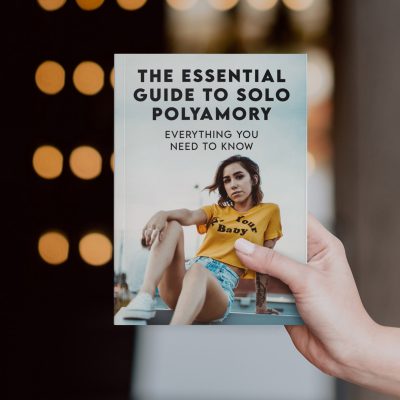
The fantasy is total autonomy and connection. The reality? It can feel like drowning in scheduling chaos and misunderstood expectations. That anxiety you feel isn’t just stress; it’s the wobble of living without a default "anchor." Without a solid architecture, Solo Polyamory stops being a life design and starts being a recipe for burnout and confusion.
The Essential Guide replaces the drift with a concrete anchor. We provide the "Solo Ethic," boundary scripts, and burnout protocols needed to protect your peace. Don't just date around—build a life that actually works for you.

Hierarchy sounds like a corporate org chart until someone gets their feelings hurt. That stomach-turning fear that you are just a "secondary" who can be fired at any time is real. If your relationship feels like a secret ranking system, you are doing it wrong.
Ambiguity is where resentment grows. The Essential Guide replaces the "who matters more" panic with a concrete charter. We provide the scripts and equity guardrails needed to protect every heart in the polycule. Stop guessing and start building.

The ideal is pure equality. The reality? It often slides into hidden rankings where someone gets hurt. That sinking feeling that you are secretly a "secondary" despite the label? That is your intuition detecting couple privilege. Ambiguity is where resentment thrives.
The Essential Guide replaces vague promises with concrete governance. We provide the charters, equity tools, and jealousy protocols needed to ensure "non-hierarchical" isn't just a fantasy. Stop guessing who matters most. Build a network that is actually fair.
The fantasy is total autonomy and connection. The reality? It can feel like drowning in scheduling chaos and misunderstood expectations. That anxiety you feel isn’t just stress; it’s the wobble of living without a default "anchor." Without a solid architecture, Solo Polyamory stops being a life design and starts being a recipe for burnout and confusion.
The Essential Guide replaces the drift with a concrete anchor. We provide the "Solo Ethic," boundary scripts, and burnout protocols needed to protect your peace. Don't just date around—build a life that actually works for you.
Hierarchy sounds like a corporate org chart until someone gets their feelings hurt. That stomach-turning fear that you are just a "secondary" who can be fired at any time is real. If your relationship feels like a secret ranking system, you are doing it wrong.
Ambiguity is where resentment grows. The Essential Guide replaces the "who matters more" panic with a concrete charter. We provide the scripts and equity guardrails needed to protect every heart in the polycule. Stop guessing and start building.
Insecurity versus jealousy
A useful starting point is to distinguish insecurity from jealousy. They often show up together but they have different roots and different paths to resolution. Jealousy is a response to a perceived threat to a valued relationship. In a healthy dynamic you acknowledge the feeling and explore what it is about. Insecurity is more about a sense of self worth and safety within the bigger picture of your life. Insecurity can show up as persistent self doubt or a feeling of not being good enough as a person. It is not inherently about the other person. It is about your internal landscape and your sense of belonging in the network you have chosen.
When insecurity shows up the instinct to seek reassurance is a natural reflex. You might want a partner to tell you that you are loved, that you will always be enough, or that everything is going to be okay. The problem with default reassurance is that it can become a dependency. It can also sidestep the real work of growing your own inner security. Our goal is not to eliminate reassurance completely but to reduce reliance on it as the primary coping mechanism. You want to cultivate a repertoire of responses that are not dependent on someone else’s word for your sense of self.
The must nots in solo polyamory ENM when insecurity is high
There are some moves that tend to amplify insecurity or trigger drama when you are in a vulnerable moment. Here are a few of them with gentle guidance on healthier alternatives.
- Do not blame your partners for your feelings. Blaming creates defensiveness and blocks honest dialogue. Instead name your needs and observe your emotions without turning them into a courtroom.
- Do not expect a single person to fill every emotional need. A diverse network can offer different kinds of support. Normalize reaching out to different people for different things rather than triangulating with one person.
- Do not compare your chapter to someone else’s highlight reel. Social feeds and curated moments do not reflect the full texture of real life. You do not need others to validate a life that is valid in its own right.
- Do not abandon boundaries when insecurity spikes. Boundaries stay in place to protect you and others. When the going gets tough you may renegotiate small aspects rather than throw the rulebook out the window.
- Do not chase universal certainty. Uncertainty is part of any living relationship. The goal is to manage uncertainty well rather than to pretend it does not exist.
Practical strategies to manage insecurity without default reassurance
Here is a toolbox you can pull from when insecurity shows up. The ideas range from quick in the moment steps to longer term practices you can weave into your week. Pick a few that resonate with your style and test them for a month. If something does not fit your vibe you can adapt or swap it out. The goal is progress not perfection.
Build an inner security map
Start with a simple exercise to map your inner landscape. Write down three areas where you tend to feel insecure. Examples might be time management, fear of abandonment, or concerns about not being enough as a person. Then write one concrete action you can take to shore up each area. For instance, if time management is your trigger you can commit to planning your week in advance and logging how you spend your time. If you fear abandonment you can practice self soothing rituals or expand your social circle to include reliable platonic supports. The point is to translate feeling into actionable steps that you can repeat regardless of what your partners are doing or saying.
Practice internal dialogue that grows you
When insecurity rides into the room you have a choice about the script you run in your head. A productive internal dialogue looks like this. Acknowledge the feeling. Label it clearly. Offer a non judgmental interpretation. Decide what is within your control and what is not. Then choose a small, concrete action that supports your wellbeing. This is not about negating emotion. It is about shifting from a reactive stance to a proactive one. Write out your preferred script on a note card and read it aloud when you need a reminder.
Decode needs from wants
Insecure moments often mix up what you truly need with what you want in a given moment. A need is something you must have to feel safe and connected. A want is something that would be nice but is not essential. For example you may need to feel heard and seen while you process a boundary breach. A want might be to be guaranteed exclusive time with a partner. When you can separate these two you can ask for what you truly need without setting yourself up for disappointment. This clarity makes conversations more productive and your own sense of agency stronger.
Strengthen boundaries that protect your autonomy
Boundaries are not a wall you put up to punish others. They are a flexible framework that protects your emotional energy. Start with a simple set of personal boundaries you can defend with calm and clarity. Examples include how much time you allocate to dating outside your main pairings, how you handle scheduling conflicts, and how you communicate when you need space. Boundaries help you stay grounded even when external plans shift. They also teach your networks how to interact with you in ways that respect your independence.
Develop daily self care rituals
Self care is not luxury it is a practical foundation. Build a simple routine that nourishes mind body and spirit. This could include a mindful wake up routine a walk outside a short journaling session a few minutes of breath work and a small daily victory. The goal is consistency not intensity. Small rituals accumulate into a sense of stability that remains intact even when your relationship landscape changes.
Turn insecurity into curiosity rather than alarm
Curiosity is a superpower when insecurity shows up. Rather than spiraling into worst case scenarios ask questions instead of jumping to conclusions. Questions might include what would it take for me to feel secure in this moment what am I assuming about my partner’s intentions and what evidence would I need to update my view. This shift from fear to curiosity reduces the emotional charge of insecurity and opens space for honest dialogue without shaming the other person.
Practice compersion and compassionate accountability
Compersion is the opposite of jealousy a term you will hear in polyamory communities. It means feeling happy for your partner s positive experiences with others rather than resenting them. You do not have to fake support you can practice honest care and celebration for your partner while also taking care of yourself. Compassionate accountability means you own your emotions without blaming your partners. You can acknowledge that you feel insecure while also outlining steps you will take to feel more secure. This combination creates a healthier dynamic for everyone involved.
Scenarios that test independence and how to handle them
Real life is the best teacher. Here are some common situations you may face in solo polyamory and how to respond in ways that reduce the need for reassurance while preserving trust and connection.
Scenario 1: A partner dates someone else
In solo poly your partner dating another person is a natural possibility. The instinct to seek reassurance can show up strongly. A productive approach is to acknowledge emotion naming it and then deciding on a concrete action. For example you might say I feel unsettled when you tell me about your date this late and I need time to process Please check in with me tomorrow and share a short update about how you feel. This keeps your autonomy intact while inviting care and communication without demanding constant verification.
Scenario 2: Flexible scheduling with multiple partners
Schedules in ENM can be fluid. When you feel anxious about time you can create a personal schedule that offers you structure two or three anchor moments each week where you connect with your network and then give space for spontaneity. This helps you feel grounded even when plans change. If a partner cancels a plan you can respond with an honest update of your own needs and offer an alternative. The focus is on maintaining momentum in your own life while staying open to other people s needs.
Scenario 3: Metamour boundaries and boundaries on contact
Metamour dynamics can be a wild card in solo poly. You may not know how to relate to someone who is not your partner but is a partner of a partner. Start with clear boundaries about what you want and do not want with metamours. It is okay to keep interactions limited and to ask your partner to help facilitate safe and comfortable encounters. You can also decide that you would rather not meet metamours at all. The point is to honor your own comfort level while supporting honest communication among all involved.
Scenario 4: Rejection or ghosting by a partner
Rejection hurts and ghosting can sting. Insecurity can be a loud voice in your head after such events. A practical response is to lean into your inner security map. Reach out to a reliable friend to process the event and practice a short grounding exercise such as five breaths in and five breaths out to reset any residual adrenaline. Then rewrite the narrative to focus on what you learned and how you will apply it going forward. Reframing helps you hold onto your autonomy while still honoring the connection you had.
Communication patterns that reduce the need for reassurance
Communication is the playground where healthy autonomy and care meet. You do not need to extract constant reassurance in order to maintain connection. Here are patterns that help you express needs clearly while keeping your own agency intact.
Speak in terms of needs not verdicts
Frame statements as needs rather than judgments about others. For example instead of You never text me back say When I do not hear from you I feel unsettled and I would appreciate a quick message to confirm you are safe. This approach reduces defensiveness and increases the chance you will be heard.
Ask for information not certainty
Sometimes what you really want is clarity not guarantees. Ask for information that helps you understand the situation. For instance a request like Could you share your current plan for the next week so I know when we can connect would be more productive than a blanket reassurance that everything is fine. Clarity supports autonomy instead of creating a dependency.
Create predictable touchpoints
Set regular check in times with yourself and with key partners. This does not mean demanding emotional performance from others at every moment. It means agreeing on predictable opportunities to share needs and updates so the pace of the relationship stays human and sustainable.
Own your emotional process
Take responsibility for your own security yes you can lean on a trusted friend for reflection and you can practice self soothing rituals. The aim is to reduce the habit of asking others to constantly reassure you. When you own the process you also empower yourself to grow no matter what the relationship landscape looks like in that season.
Tools and exercises you can use today
Try these exercises to build a stronger internal sense of safety while staying connected with others. They are designed to be simple to practice and easy to adapt to your life.
Thought record exercise
Keep a small notebook or a notes doc where you jot down the situation the feeling the thought and the evidence you have for and against that thought. For example Situation: I felt ignored when my partner did not respond to my text. Feeling: anxious. Thought: They are probably losing interest in me. Evidence for: they did not reply promptly. Evidence against: they have a busy life and have reminded me they care in other ways. Action: message a friend for support and plan a self care activity. This exercise helps you see the pattern and choose a more balanced interpretation.
In the moment check in
When insecurity spikes try a simple three step check in. Step one name the feeling. Step two identify a need. Step three decide on a small action. For instance I am feeling anxious I need a sense of safety and I will call a friend for a quick chat or I will take a ten minute walk outside. This quick routine buys you time and prevents a knee jerk course of action that might undermine your autonomy.
Journaling prompts
Use a few prompts to deepen self awareness. Prompts could include what am I most afraid of in this moment what evidence supports this fear and what would be a realistic outcome in the next week. Another prompt could be what small step can I take today to feel more in control of my life even if my relationship plans shift. Prompts like these help you turn emotion into a learning process rather than a stress response.
Grounding techniques for anxiety relief
Grounding helps you return to the present moment when your mind spirals. A quick grounding exercise is to notice five things you can see four you can touch three you can hear two you can smell and one you can taste. You can do this anywhere and it takes only a few minutes. Regular practice strengthens your resilience and lowers the intensity of insecurity when you are away from your support network.
Realistic case studies and examples
Learning from real life can make these ideas easier to apply. Here are a couple of case studies that illustrate how the strategies above work in practice. They reflect typical solo poly dynamics and show how individuals have built stronger inner security without becoming locked into reassurance seeking.
Case study A: Mina is practicing independence within a fluid network
Mina loves her solo poly setup. She has a handful of ongoing connections and she values autonomy. When insecurity showed up after a new date with someone else, Mina did not spiral. She used the thought record technique to separate fear from evidence. She discovered that a core fear was not about her partner s care but about her own plans for connection that week. She shared a short note with a partner outlining what support she could use and then she planned a personal night with a friend and her favorite hobby. The next day her partner checked in but Mina did not need a constant stream of reassurance. The interaction strengthened trust because it was built on clear communication and respected boundaries.
Case study B: Jax builds a security map with clear boundaries
Jax felt insecure when his primary partner began seeing someone new. He created a personal security map focusing on three areas: time management with his own pursuits, emotional processing routines, and clear communication guidelines. He negotiated a weekly check in that did not require him to hear that everything is okay. Instead he asked for agree to a plan for the next week and a short update on feelings after each new date. Jax also expanded his social circle to include a close friend who offered emotional support without judgment. Over time the need for constant reassurance faded and the relationship flourished with more resilience than before.
Glossary of useful terms and acronyms
- ENM Ethical non monogamy a framework embracing honesty consent and ethical care when multiple partners are involved.
- Solo poly A polyamorous approach where individuals maintain primary independence while dating multiple partners.
- Metamour A partner of a partner not directly connected to you in a romantic sense.
- Insecurity Feelings of uncertainty or self doubt that can arise within the context of relationships especially when plans shift or partners date others.
- Reassurance An emotional comfort offered by others that can become a crutch if relied on too heavily.
- Boundaries Personal limits that guide what you are comfortable with in terms of time energy and emotional exposure.
- Compersion The feeling of joy from seeing a partner experience happiness with others rather than jealousy.
- Boundary renegotiation The process of updating rules to fit current needs while keeping everyone safe and respected.
Frequently asked questions
What is the best way to reduce the need for reassurance in solo polyamory?
Focus on strengthening your inner security map and practicing internal dialogue. Normalize asking for information that helps you understand a situation rather than seeking blanket assurances. Build personal boundaries and daily self care rituals that anchor you regardless of your partner s actions.
How can I tell my partner that I feel insecure without making them feel blamed?
Use language that centers your experience rather than accusing your partner. For example say I feel unsettled when I don t hear from you after a date and I would like to have a quick check in text after. This communicates a need without blaming your partner for their actions.
Is it okay to rely on a friend for emotional support?
Yes it is perfectly fine to lean on trusted friends for perspective and support. Just be mindful that your emotional self management remains your responsibility and that you do not outsource your sense of self worth entirely to others.
How do I handle a situation where my partner wants to become more involved with someone else?
Ask questions about timelines boundaries and expectations. Clarify what you can handle and what you cannot. Discuss how you want to be involved in planning and how you will maintain your own routines and hobbies. The goal is to reach a plan that respects autonomy and care for all.
What if I fear I am not enough for my partner in the long term?
Acknowledge the fear without accepting it as fact. Use the thought record and boundary tools to test the assumption. If the fear persists consider speaking with a therapist who specializes in non monogamous relationships. You deserve support that helps you grow and protect your mental health.
How do I balance compersion with moments of insecurity?
Compersion is a practice not a feeling you either have or do not have. You can cultivate it by reminding yourself that your partner s happiness does not diminish your own value. When insecurity shows up lean into the supportive parts of your network and practice noticing the positive outcomes your partner s experiences bring to the shared web you all exist within.
Love is infinite, but your calendar is brutally finite. The fantasy is deep connection; the reality is often just exhausted "calendar tetris." Promising time you don't actually have isn't romantic, it’s a recipe for burnout and broken trust. That sinking feeling when you have to cancel again? That’s the sound of overextension destroying your relationships.
This calculator forces you to confront the math of your life. Do you actually have space for another heart, or are you just setting everyone up for disappointment?
The fantasy is total autonomy and connection. The reality? It can feel like drowning in scheduling chaos and misunderstood expectations. That anxiety you feel isn’t just stress; it’s the wobble of living without a default "anchor." Without a solid architecture, Solo Polyamory stops being a life design and starts being a recipe for burnout and confusion.
The Essential Guide replaces the drift with a concrete anchor. We provide the "Solo Ethic," boundary scripts, and burnout protocols needed to protect your peace. Don't just date around—build a life that actually works for you.
Hierarchy sounds like a corporate org chart until someone gets their feelings hurt. That stomach-turning fear that you are just a "secondary" who can be fired at any time is real. If your relationship feels like a secret ranking system, you are doing it wrong.
Ambiguity is where resentment grows. The Essential Guide replaces the "who matters more" panic with a concrete charter. We provide the scripts and equity guardrails needed to protect every heart in the polycule. Stop guessing and start building.
The ideal is pure equality. The reality? It often slides into hidden rankings where someone gets hurt. That sinking feeling that you are secretly a "secondary" despite the label? That is your intuition detecting couple privilege. Ambiguity is where resentment thrives.
The Essential Guide replaces vague promises with concrete governance. We provide the charters, equity tools, and jealousy protocols needed to ensure "non-hierarchical" isn't just a fantasy. Stop guessing who matters most. Build a network that is actually fair.
The fantasy is total autonomy and connection. The reality? It can feel like drowning in scheduling chaos and misunderstood expectations. That anxiety you feel isn’t just stress; it’s the wobble of living without a default "anchor." Without a solid architecture, Solo Polyamory stops being a life design and starts being a recipe for burnout and confusion.
The Essential Guide replaces the drift with a concrete anchor. We provide the "Solo Ethic," boundary scripts, and burnout protocols needed to protect your peace. Don't just date around—build a life that actually works for you.
Hierarchy sounds like a corporate org chart until someone gets their feelings hurt. That stomach-turning fear that you are just a "secondary" who can be fired at any time is real. If your relationship feels like a secret ranking system, you are doing it wrong.
Ambiguity is where resentment grows. The Essential Guide replaces the "who matters more" panic with a concrete charter. We provide the scripts and equity guardrails needed to protect every heart in the polycule. Stop guessing and start building.
