
Solo Polyamory Versus Non Hierarchical Polyamory

If you are exploring ethical non monogamy you are probably hearing a lot of buzzwords that sound shiny and scary at the same time. Two terms that come up a lot are solo polyamory and non hierarchical polyamory. They describe different ways people structure their romantic and sexual lives within an ethical non monogamy framework. This guide breaks down what each dynamic means in plain language. It gives you practical tips for talking about it with partners and for testing whether these ways of loving fit your needs. We keep the tone relatable and honest because relationships are human and messy in the best possible ways.
Quick Links to Useful Sections
- What these terms mean
- Solo polyamory defined
- Non hierarchical polyamory defined
- Core differences between the two dynamics
- Independence versus shared structure
- Power dynamics and decision making
- Time management and energy investment
- Living arrangements and finances
- Communication styles and conflict resolution
- Where these dynamics shine and when they struggle
- Ideal fit scenarios for solo polyamory
- Ideal fit scenarios for non hierarchical polyamory
- Common challenges for both dynamics
- Practical tips for building healthy dynamics
- Start with explicit agreements
- Develop a strong communication routine
- Create flexible time blocking
- Work on emotional literacy
- Practice compersion and healthy jealousy management
- Guard personal boundaries and energy
- Nurture consent rich conversations
- Real life scenarios you can learn from
- Scenario one the independent planner and the group dancer
- Scenario two the evenly shared calendar crew
- Scenario three the boundary driven transition
- Common myths and the truth about solo polyamory and non hierarchical polyamory
- Glossary of useful terms and acronyms
- Frequently asked questions
We will explain terms and acronyms as we go so you can feel confident about what you are reading. No jargon fog machine here. If you come from a different relationship background you will still find actionable ideas you can apply. Let us dive in and make the world of solo polyamory and non hierarchical polyamory feel less like a puzzle and more like a path you can walk with clarity and curiosity.
What these terms mean
Solo polyamory defined
Solo polyamory is a way of loving that emphasizes personal autonomy. People who pursue this dynamic often maintain a strong sense of independence. They may date multiple people while keeping their own living situation finances and daily life separate from their partners. A key idea is that there is no shared living space or common central plan that everyone follows. Each connection exists on its own terms and the person practicing solo polyamory does not give up their own independence for the sake of romantic life.
In practical terms solo polyamory looks like a person who dates several partners and chooses how much time they spend with each person. They may not want a traditional primary partner or a shared household with a partner. They might date people who also live independently. They are often clear that their personal goals and life projects are central to how they structure dating. The exact rules vary person to person because solo polyamory is about autonomy not about a universal blueprint.
Common questions you might encounter include how to handle time management with multiple partners how to share information about plans and how to protect personal space and energy. The answer is that boundaries and communication are tailored to the individuals involved. The whole point is to stay aligned with your own needs while staying honest with others about what you can and cannot offer at any given moment.
Non hierarchical polyamory defined
Non hierarchical polyamory is a form of ethical non monogamy where there is no agreed upon ladder of importance among partners. In other words there is no primary partner that takes precedence over others for time resources or decision making. Partners are viewed as equal in value and importance and relationships are built on consent communication and mutual respect rather than a ranking system. The main idea is that love energy and time are allocated through conversations rather than a fixed hierarchy.
In practice non hierarchical polyamory can look like a group of partners who all contribute to each other s lives in meaningful ways. There might be regular check ins about how everyone is feeling and how time is shared. It is common for people in this dynamic to develop close friendships with each other as well as romantic or sexual connections. The important thing is that everyone agrees on the absence of a dominant partner and that agreements are revisited as life changes.
One helpful way to think about non hierarchical polyamory is to imagine a circle of friends who also have romantic connections rather than a tree with a single trunk and branches. Everyone is connected but no one is automatically the central node. The structure supports flexibility and openness while still requiring clear communication about boundaries needs and expectations.
Core differences between the two dynamics
Independence versus shared structure
Solo polyamory puts a premium on personal independence. People who orient toward solo polyamory value space for themselves they guard their own schedules and they avoid letting romance override personal goals. Non hierarchical polyamory emphasizes equality among all partners and often involves shared calendars group conversations and agreements about how much time is spent with who and when. Neither approach is inherently right or wrong. They simply reflect different emotional needs and life circumstances.
What this means in practice is that solo poly people may still enjoy deep intimate connections they just expect to maintain their own life structure. In non hierarchical polyamory you are more likely to see coordinated time with multiple partners plus collaborative decisions about common resources and shared activities. Both require strong communication and both require a willingness to renegotiate boundaries when life changes.
Power dynamics and decision making
In solo polyamory power dynamics are often balanced by personal autonomy. Decision making is usually driven by the individual s needs and the boundaries they set. In non hierarchical polyamory power is distributed among partners through consent and ongoing dialogue. There may be more emphasis on consensus building and regular check ins to keep everyone feeling valued and included. Neither approach guarantees harmony but both can work well when people communicate openly and honestly.
Time management and energy investment
Time and energy flow differently in each dynamic. Solo polyamory gives you the flexibility to shape your days around your own goals while weaving in romance as a complement rather than a central anchor. Non hierarchical polyamory invites a more collaborative rhythm where time is allocated with the group in mind. This can mean coordinated dates with several partners or planned social events where everyone can participate. The right fit depends on how you want to live your life and how you want your partnerships to feel in your day to day reality.
Living arrangements and finances
In solo polyamory you may keep finances and living arrangements separate from your partners. You might rent a place alone or cohabit with a chosen partner but with clear boundaries about what is shared. In non hierarchical polyamory there is often more conversation around shared practicalities such as living arrangements or finances though not with a required hierarchy. The key concept is mutuality rather than ownership. People work out what makes sense for their situation and revisit it as needed.
Communication styles and conflict resolution
Communication is the heartbeat of both dynamics. Solo polyamory benefits from explicit boundaries being stated and revisited regularly as life changes. Non hierarchical polyamory benefits from ongoing collaborative conversations where every voice is given equal weight. Both styles work best when people assume good intent and when they practice active listening and non judgmental feedback. A simple rule to keep in mind is to speak from your own experience use I statements and avoid blaming language when discussing concerns.
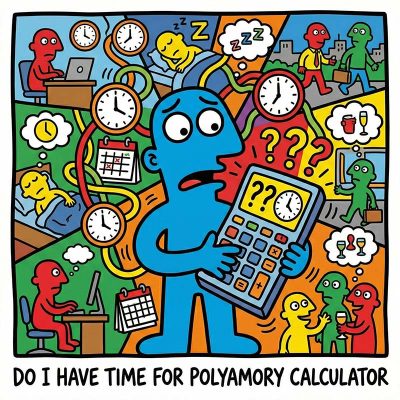
Love is infinite, but your calendar is brutally finite. The fantasy is deep connection; the reality is often just exhausted "calendar tetris." Promising time you don't actually have isn't romantic, it’s a recipe for burnout and broken trust. That sinking feeling when you have to cancel again? That’s the sound of overextension destroying your relationships.
This calculator forces you to confront the math of your life. Do you actually have space for another heart, or are you just setting everyone up for disappointment?
The fantasy is total autonomy and connection. The reality? It can feel like drowning in scheduling chaos and misunderstood expectations. That anxiety you feel isn’t just stress; it’s the wobble of living without a default "anchor." Without a solid architecture, Solo Polyamory stops being a life design and starts being a recipe for burnout and confusion.
The Essential Guide replaces the drift with a concrete anchor. We provide the "Solo Ethic," boundary scripts, and burnout protocols needed to protect your peace. Don't just date around—build a life that actually works for you.

Hierarchy sounds like a corporate org chart until someone gets their feelings hurt. That stomach-turning fear that you are just a "secondary" who can be fired at any time is real. If your relationship feels like a secret ranking system, you are doing it wrong.
Ambiguity is where resentment grows. The Essential Guide replaces the "who matters more" panic with a concrete charter. We provide the scripts and equity guardrails needed to protect every heart in the polycule. Stop guessing and start building.
The ideal is pure equality. The reality? It often slides into hidden rankings where someone gets hurt. That sinking feeling that you are secretly a "secondary" despite the label? That is your intuition detecting couple privilege. Ambiguity is where resentment thrives.
The Essential Guide replaces vague promises with concrete governance. We provide the charters, equity tools, and jealousy protocols needed to ensure "non-hierarchical" isn't just a fantasy. Stop guessing who matters most. Build a network that is actually fair.
The fantasy is total autonomy and connection. The reality? It can feel like drowning in scheduling chaos and misunderstood expectations. That anxiety you feel isn’t just stress; it’s the wobble of living without a default "anchor." Without a solid architecture, Solo Polyamory stops being a life design and starts being a recipe for burnout and confusion.
The Essential Guide replaces the drift with a concrete anchor. We provide the "Solo Ethic," boundary scripts, and burnout protocols needed to protect your peace. Don't just date around—build a life that actually works for you.
Hierarchy sounds like a corporate org chart until someone gets their feelings hurt. That stomach-turning fear that you are just a "secondary" who can be fired at any time is real. If your relationship feels like a secret ranking system, you are doing it wrong.
Ambiguity is where resentment grows. The Essential Guide replaces the "who matters more" panic with a concrete charter. We provide the scripts and equity guardrails needed to protect every heart in the polycule. Stop guessing and start building.
Where these dynamics shine and when they struggle
Ideal fit scenarios for solo polyamory
- You prioritize personal growth and career or education goals that require flexibility.
- You value strong friendships and want romantic connections while keeping your own life in the driver seat.
- You want to avoid the pressure of maintaining a primary partnership or shared household.
- You enjoy dating multiple people without the expectation that any one relationship defines your life.
Ideal fit scenarios for non hierarchical polyamory
- You crave equality among partners and want to avoid ranking anyone as more important.
- You enjoy group activities with multiple partners and feel energized by social connection.
- You value transparent communication and regular check ins about needs and boundaries.
- You are comfortable with flexibility and are prepared to renegotiate agreements as relationships grow and life changes.
Common challenges for both dynamics
- Jealousy and insecurity can arise in any non monogamous arrangement even when good communication is ongoing.
- Scheduling conflicts and energy management require ongoing attention and creativity.
- Negotiating privacy versus transparency with different partners can be tricky.
- Friends and family may have opinions that add pressure or confusion.
Practical tips for building healthy dynamics
Start with explicit agreements
Whether you lean toward solo polyamory or non hierarchical polyamory you should start with clear agreements. These are not rules carved in stone but living documents that reflect current needs. Agreements may cover how you share information with partners how you handle dating new people how you handle time and how you deal with travel and holidays. Revisit agreements at regular intervals or when big life changes occur such as a move a new job or the end of a relationship.
Develop a strong communication routine
Establish a communication habit that fits your life. This can include weekly check ins monthly reviews and open conversations about feelings as they arise. The goal is to prevent small concerns from becoming big problems. Use compassionate language and practice listening without preparing a rebuttal while the other person speaks. Validate their feelings even if you disagree with the situation.
Create flexible time blocking
Time blocking is a simple tool that helps with autonomy and equality. In solo polyamory you can reserve blocks for personal projects dates and self care. In non hierarchical polyamory you can schedule group social time as well as one on one time with each partner. The key is to communicate these blocks in advance and to honor them when they are set. Flexibility is essential so be prepared to adjust when life happens.
Work on emotional literacy
Emotional literacy means understanding your own feelings and being able to express them clearly. It also means reading the room and noticing how others are feeling. Practices such as journaling reflecting after dates and discussing emotions with a trusted friend can help you stay grounded. When you know what you feel you can explain it to partners without turning a conversation into a venting session.
Practice compersion and healthy jealousy management
Compersion is the experience of joy when a partner experiences happiness with someone else. It is not always easy but it is a skill you can cultivate. If jealousy arises acknowledge it name it and explore its trigger. Ask what you need and negotiate a plan that makes you feel safer and supported. This might include more check ins more time alone with a partner or adjusting the pace of a new relationship.
Guard personal boundaries and energy
Boundaries protect your wellbeing. They are not walls to keep people out but guardrails that help you show up as your best self. In solo polyamory you might need more space between connections certain privacy boundaries or time for self care. In non hierarchical polyamory you might need boundaries around how much information you share how you spend time with each partner and what activities you are willing to pursue together as a group.
Nurture consent rich conversations
Consent is ongoing and dynamic in any ethical non monogamy arrangement. It goes beyond saying yes or no to a date. It includes discussing how experiences will unfold what boundaries exist for intimacy what safety practices are in place and how you will handle any changes to the agreements. Make room for questions and for people to renegotiate if needed.
Real life scenarios you can learn from
Scenario one the independent planner and the group dancer
Alex embraces solo polyamory and keeps a separate living situation. They enjoy dating several partners and their energy is best when they maintain a vibrant personal life alongside romance. They meet a potential partner who is excited about group outings and shared social events. The test is whether everyone involved can communicate openly about schedules boundaries and the pace of the relationship. The outcome depends on how well all parties can align without losing personal space or energy.
Scenario two the evenly shared calendar crew
Taylor is exploring non hierarchical polyamory and has two partners with whom they share time equally. They use a single joint calendar for social events and separate one on one time to sustain intimacy with each person. Challenges arise when all three people want to attend a same event or when one person needs extra time for a personal project. The solution is a flexible plan with clear expectations about priority and consent to adjust shared plans when emergencies or new attractions appear.
Scenario three the boundary driven transition
Nia started with a strong sense of independence but over time they discovered a desire for closer friendships with some partners. They decide to experiment with a hybrid approach blending solo polyamory and non hierarchical practices. They establish a boundary that some partners are only casual while others are open to deeper connections and occasional cohabitation scenarios. The transition includes a thorough renegotiation of agreements and a few uncomfortable yet honest conversations that ultimately strengthened trust.
Common myths and the truth about solo polyamory and non hierarchical polyamory
- Myth: Solo polyamory means avoiding commitment entirely. Truth: It means choosing not to anchor your life around a single relationship. Commitment to honesty and care remains essential.
- Myth: Non hierarchical polyamory means everyone dates the same person. Truth: It means no partner holds a privileged position over others; relationships can be deeply personal and varied.
- Myth: These dynamics are chaotic and unreliable. Truth: When agreements are clear and communication is strong these dynamics can be stable and deeply fulfilling.
- Myth: You have to be naturally extroverted to do this. Truth: People with all personality types can thrive in these dynamics as long as boundaries are respected and needs are communicated.
- Myth: Jealousy never appears in non monogamy. Truth: Jealousy can arise in any relationship style. It is manageable with the right tools and support.
Glossary of useful terms and acronyms
- ENM Short for ethical non monogamy. A practice where all partners consent to more than one romantic or sexual relationship.
- Solo polyamory A form of ENM that emphasizes personal autonomy and independent living while maintaining multiple relationships.
- Non hierarchical polyamory A form of ENM where all relationships are treated equally with no single primary partner in charge.
- Primary partner A term used in some polyamory circles to describe the main or most significant relationship partner, which may imply more time or decisions shared. In non hierarchical settings this term is avoided or minimized.
- Secondary partner A partner who is not the primary but still holds significance in a person s life. In non hierarchical dynamics this role is less formal and more flexible.
- Compersion The feeling of joy when a partner experiences happiness with another relationship. It is the opposite of jealousy and a sign of emotional maturity.
- Check in A planned conversation where partners share feelings needs and updates about the relationship. Check ins help keep agreements aligned with current life circumstances.
- Energy management The practice of balancing emotional and social energy across multiple relationships so you do not burn out.
- Boundaries Personal limits about what you will and will not do in relationships. Boundaries are essential in both solo and non hierarchical polyamory.
- Consent An ongoing enthusiastic agreement to engage in a specific activity or relationship arrangement. Consent is required and can be renegotiated at any time.
Frequently asked questions
Question 1 what is the simplest way to tell someone I practice solo polyamory
Be honest and direct. Say something like I want to be upfront with you I practice solo polyamory which means I value independence while dating multiple people. I am attracted to you and I want to see where this goes without merging lives too soon. This keeps expectations clear from the start.
Question 2 how can I decide if solo polyamory or non hierarchical polyamory fits me best
Start by listing your top life goals and energy levels. If personal autonomy and strong personal boundaries matter most you may gravitate toward solo polyamory. If you value equality and shared planning among several partners you may prefer non hierarchical polyamory. It can help to try a trial period with clear agreements and to reflect on how you feel after a set amount of time.
Question 3 what signs suggest I might be leaning toward a primary relationship
Common signs include a strong desire to align living arrangements with one partner a wish to share finances or a need for a single partner who takes a lead on coordination. If these signals feel important to you you might explore a form of structured polyamory that acknowledges those needs while still keeping it flexible and consensual.
Question 4 how do I handle jealousy in a solo polyamory setup
Jealousy is normal and manageable. Practice naming the feeling and its trigger then talk about it with the partner who is involved. Seek reassurance and adjust boundaries if needed. Compersion can also grow with time and honest communication as you learn to celebrate your partner s joy.
Question 5 how do I approach a conversation about shifting from one dynamic to another
Plan a calm moment choose a time when you and your partner are not distracted. Explain what you are feeling and what you want to explore. Invite questions and listen without interruption. Agree to a trial period and set a date to review how things are going.
Question 6 is it okay to blend dynamics with a current relationship
Yes it can be possible to blend different dynamics as long as everyone involved consents and feels safe. Take care to renegotiate boundaries and to ensure everyone has a voice in the changes. It can be helpful to write down the new agreements and review them together.
Question 7 what should I do if a partner is pushing for more structure than I want
Express your needs clearly and propose a compromise. If your partner needs more structure you can offer a clearer plan about some boundaries while maintaining your autonomy in other areas. If you cannot find common ground it may be time to reassess compatibility and consider a different arrangement that respects both sides.
Love is infinite, but your calendar is brutally finite. The fantasy is deep connection; the reality is often just exhausted "calendar tetris." Promising time you don't actually have isn't romantic, it’s a recipe for burnout and broken trust. That sinking feeling when you have to cancel again? That’s the sound of overextension destroying your relationships.
This calculator forces you to confront the math of your life. Do you actually have space for another heart, or are you just setting everyone up for disappointment?
The fantasy is total autonomy and connection. The reality? It can feel like drowning in scheduling chaos and misunderstood expectations. That anxiety you feel isn’t just stress; it’s the wobble of living without a default "anchor." Without a solid architecture, Solo Polyamory stops being a life design and starts being a recipe for burnout and confusion.
The Essential Guide replaces the drift with a concrete anchor. We provide the "Solo Ethic," boundary scripts, and burnout protocols needed to protect your peace. Don't just date around—build a life that actually works for you.
Hierarchy sounds like a corporate org chart until someone gets their feelings hurt. That stomach-turning fear that you are just a "secondary" who can be fired at any time is real. If your relationship feels like a secret ranking system, you are doing it wrong.
Ambiguity is where resentment grows. The Essential Guide replaces the "who matters more" panic with a concrete charter. We provide the scripts and equity guardrails needed to protect every heart in the polycule. Stop guessing and start building.
The ideal is pure equality. The reality? It often slides into hidden rankings where someone gets hurt. That sinking feeling that you are secretly a "secondary" despite the label? That is your intuition detecting couple privilege. Ambiguity is where resentment thrives.
The Essential Guide replaces vague promises with concrete governance. We provide the charters, equity tools, and jealousy protocols needed to ensure "non-hierarchical" isn't just a fantasy. Stop guessing who matters most. Build a network that is actually fair.
The fantasy is total autonomy and connection. The reality? It can feel like drowning in scheduling chaos and misunderstood expectations. That anxiety you feel isn’t just stress; it’s the wobble of living without a default "anchor." Without a solid architecture, Solo Polyamory stops being a life design and starts being a recipe for burnout and confusion.
The Essential Guide replaces the drift with a concrete anchor. We provide the "Solo Ethic," boundary scripts, and burnout protocols needed to protect your peace. Don't just date around—build a life that actually works for you.
Hierarchy sounds like a corporate org chart until someone gets their feelings hurt. That stomach-turning fear that you are just a "secondary" who can be fired at any time is real. If your relationship feels like a secret ranking system, you are doing it wrong.
Ambiguity is where resentment grows. The Essential Guide replaces the "who matters more" panic with a concrete charter. We provide the scripts and equity guardrails needed to protect every heart in the polycule. Stop guessing and start building.
