
Warning Signs of Isolation Masquerading as Autonomy

Solo polyamory is a dynamic within ethical non monogamy where a person pursues multiple intimate connections while preserving a strong sense of personal independence. It can be a liberating way to explore desire, time, and personal growth. But like any relationship style there are pitfalls. One of the biggest traps is mistaking isolation for autonomy. When independence turns into retreat or secrecy it stops being empowering and starts to hamper genuine connection. This guide breaks down the signs to watch for, explains what healthy autonomy looks like in a solo poly context, and offers practical steps to realign your living reality with your stated values.
Quick Links to Useful Sections
- What solo polyamory means in practice
- Why autonomy can look like isolation
- Recognizing the warning signs
- Consistently limited disclosure
- Chronic secrecy about relationships
- Avoidance of social integration
- Consistent unilateral boundary enforcement
- The fear of vulnerability
- Inconsistent communication patterns
- Time mismanagement and prioritization misalignment
- Emotional shutdown or suppression
- Avoidance of conflict resolution
- Diminished sense of belonging
- Dismissal of intimacy in favor of novelty
- Realistic scenarios you might recognize
- Scenario one the hidden life
- Scenario two the safety shield
- Scenario three the responsibility gap
- Scenario four the boundary weapon
- Scenario five the envy of the grid
- How to tell healthy autonomy from isolation
- Mutual consent and ongoing negotiation
- Transparency without oversharing
- Emotional availability
- Consistent effort to maintain connections
- Alignment with values
- Practical strategies to cultivate healthy autonomy
- Clarify your intention
- Create a realistic schedule
- Build routines of communication
- Practice reflective journaling
- Develop a vulnerability ladder
- Seek accountability and support
- Experiment with mindful monogamy alternatives
- Must no s in a solo poly life
- Glossary of useful terms and acronyms
- Frequently asked questions
What solo polyamory means in practice
First let us spell out the terms in plain language. Ethical non monogamy ENM stands for a consensual approach to having more than one romantic or sexual relationship at the same time while respecting everyone involved. Solo polyamory is a subset of ENM where the emphasis is on keeping life assets separate and maintaining independence rather than merging lives into a single household or core nest. In a solo poly framework people may date multiple partners without setting up a traditional nesting dynamic or hierarchical structure. That is not a rejection of closeness it is a deliberate stance about boundaries time and emotional energy.
Key terms you may encounter include kitchen table poly and parallel poly. Kitchen table poly means partners and metamors meet up in real life or online and interact in a shared social space. Parallel poly means partners live separate lives with limited cross over between partners and networks. Other important terms are compersion the joy you feel when a partner experiences happiness with another person jealousy a natural feeling that can be managed rather than suppressed and miscommunication a frequent source of trouble. If any of these terms are new to you this guide will explain them in clear language so you are not left guessing.
Why autonomy can look like isolation
Autonomy is about self direction and choosing how you spend your time without giving up the ability to connect with others. The problem arises when autonomy becomes avoidance. In a solo poly dynamic this can show up as a protective shield around the self that keeps others at a distance while still engaging in new relationships. People may claim they are prioritizing personal growth or protecting their freedom. In practice though this behavior can morph into a pattern that excludes emotional closeness and ongoing communication.
Autonomy can be healthy and necessary. It becomes a problem when it crosses into secrecy when you stop sharing your life with the people who care about you and when you err on the side of silence over honest conversation. The goal is not control or isolation but clarity and consent. You should be able to name your needs and be honest about your limits while also showing up for your partners in ways that feel respectful and sustainable.
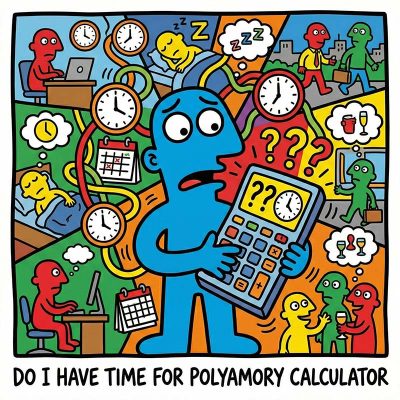
Love is infinite, but your calendar is brutally finite. The fantasy is deep connection; the reality is often just exhausted "calendar tetris." Promising time you don't actually have isn't romantic, it’s a recipe for burnout and broken trust. That sinking feeling when you have to cancel again? That’s the sound of overextension destroying your relationships.
This calculator forces you to confront the math of your life. Do you actually have space for another heart, or are you just setting everyone up for disappointment?
The fantasy is total autonomy and connection. The reality? It can feel like drowning in scheduling chaos and misunderstood expectations. That anxiety you feel isn’t just stress; it’s the wobble of living without a default "anchor." Without a solid architecture, Solo Polyamory stops being a life design and starts being a recipe for burnout and confusion.
The Essential Guide replaces the drift with a concrete anchor. We provide the "Solo Ethic," boundary scripts, and burnout protocols needed to protect your peace. Don't just date around—build a life that actually works for you.
Hierarchy sounds like a corporate org chart until someone gets their feelings hurt. That stomach-turning fear that you are just a "secondary" who can be fired at any time is real. If your relationship feels like a secret ranking system, you are doing it wrong.
Ambiguity is where resentment grows. The Essential Guide replaces the "who matters more" panic with a concrete charter. We provide the scripts and equity guardrails needed to protect every heart in the polycule. Stop guessing and start building.
The ideal is pure equality. The reality? It often slides into hidden rankings where someone gets hurt. That sinking feeling that you are secretly a "secondary" despite the label? That is your intuition detecting couple privilege. Ambiguity is where resentment thrives.
The Essential Guide replaces vague promises with concrete governance. We provide the charters, equity tools, and jealousy protocols needed to ensure "non-hierarchical" isn't just a fantasy. Stop guessing who matters most. Build a network that is actually fair.
The fantasy is total autonomy and connection. The reality? It can feel like drowning in scheduling chaos and misunderstood expectations. That anxiety you feel isn’t just stress; it’s the wobble of living without a default "anchor." Without a solid architecture, Solo Polyamory stops being a life design and starts being a recipe for burnout and confusion.
The Essential Guide replaces the drift with a concrete anchor. We provide the "Solo Ethic," boundary scripts, and burnout protocols needed to protect your peace. Don't just date around—build a life that actually works for you.
Hierarchy sounds like a corporate org chart until someone gets their feelings hurt. That stomach-turning fear that you are just a "secondary" who can be fired at any time is real. If your relationship feels like a secret ranking system, you are doing it wrong.
Ambiguity is where resentment grows. The Essential Guide replaces the "who matters more" panic with a concrete charter. We provide the scripts and equity guardrails needed to protect every heart in the polycule. Stop guessing and start building.
Recognizing the warning signs
Below are common signals that autonomy might be masking isolation. Not all signs mean trouble. Some indicate growing pains or adjustment. Look for a pattern over time rather than a single incident. If you notice several of these signs in your own life or in the life of someone you care about it is time to pause and assess what is truly happening.
Consistently limited disclosure
When you choose a solo path yet share almost nothing about your dating life with close friends or your chosen network you may be slipping into isolation. Healthy independence allows for selective sharing. If you find yourself withholding important relationship information because you fear judgment or questions you are nudging toward isolation rather than autonomy.
Chronic secrecy about relationships
Secrecy can protect privacy but secrecy that borders on hiding significant relationships or activities is a sign something is off. If a person hides partner names locations or details to avoid questions you may be skating toward disconnection rather than keeping life compact and private.
Avoidance of social integration
In many solo poly scenarios there is a spectrum between overlap and separation. If you consistently avoid social events where partners networks would intersect or you make excuses to skip gatherings you may be signaling a retreat from communal life rather than choosing space for yourself.
Consistent unilateral boundary enforcement
Boundaries are essential. Healthy boundary setting is a two way street and often renegotiated in conversation. When boundaries are used as a blunt weapon to isolate you from community or from a partner there is a danger signal. Boundaries should protect well being not wall off the world.
The fear of vulnerability
Autonomy can feel safer than vulnerability especially if past wounds are present. A tell tale sign is a persistent fear that sharing emotions will lead to rejection or judgment. If you avoid expressing needs or asking for support you risk drifting into emotional isolation even if you stay physically present with others.
Inconsistent communication patterns
Regular check ins with partners and metamors are part of many ENM styles. If you find yourself communicating only at the boundary of formal connection or when there is a problem you may be skirting around real closeness. Consistency in communication is a sign of healthy connection not a lack of independence.
Time mismanagement and prioritization misalignment
Independence means you choose how you spend your time. When you consistently delay or cancel plans with partners to pursue other activities that serve only you it can become a way to avoid emotional closeness. The key question is whether you are still available for meaningful connection when it matters to your partners.
Emotional shutdown or suppression
If you notice you regularly shut down feelings or avoid discussing emotions with your partners you could be hiding loneliness behind a persona of busy independence. Healthy autonomy includes the ability to name feelings and seek support when needed even if you also value space and self sufficiency.
Avoidance of conflict resolution
Conflict is inevitable in any relationship style. If you avoid addressing disputes or step away from conversations indefinitely you may be slipping into isolation. Autonomy means choosing how you engage not avoiding the effort altogether.
Diminished sense of belonging
When your own story outsizes the place you hold within a chosen community you may begin to feel like an external observer rather than a participant. Autonomy that erodes belonging undermines the possibility of deep connection which is often the opposite of what you hoped to achieve.
Dismissal of intimacy in favor of novelty
If the drive for new experiences consistently eclipses the need for steady intimate connection you can end up with a string of casual connections without real emotional depth. Autonomy should not erase meaningful intimacy and trust.
Realistic scenarios you might recognize
Seeing these scenarios in real life can help you identify patterns without labeling people as flawed. These are grounded, relatable examples that reflect how easy it can be to slide from healthy independence into isolation.
Scenario one the hidden life
Sara is practicing solo polyamory and has a roster of partners. She keeps most details about her partners hidden from friends and family. She answers questions with vague phrases and insists that her relationships are private. When a close friend asks for a group hangout her response is I am too busy I am focusing on my own projects. In truth she is avoiding a situation that could lead to emotional closeness and vulnerability. This is a classic pattern of isolation masked as autonomy.
Scenario two the safety shield
David is dating two partners but he maintains almost no overlap between crowds. He insists on total independence and does not introduce any partner to his friends or family. He often cites personal growth as the reason for his distance. A friend notices that he avoids talking about his feelings or asking for support even when his partners express concern. This looks like healthy independence but the underlying current is avoidance of emotional risk.
Scenario three the responsibility gap
Aria has a demanding career and multiple partners. She prides herself on handling everything on her own and rarely asks for help or even for small favors. When she does need something emotional or practical she tends to handle it without involving others. Over time her partners start feeling neglected and unseen. The autonomy is real but the responsibility to nurture connections is not being fulfilled.
Scenario four the boundary weapon
Leon makes and enforces strict boundaries to keep people at arm length. He refuses to discuss why a boundary exists and shows little willingness to renegotiate as life changes. His partners feel cut off from his inner life and begin to question whether they should keep investing in the relationship. Autonomy has become a protective barrier rather than a choice to live more freely.
Scenario five the envy of the grid
Nova celebrates the freedom of solo poly but she notices a creeping pattern of jealousy in her own mood. Instead of addressing it she withdraws further and avoids talking about her feelings. The end result is a more solitary existence as she avoids engaging with her partners on the topics that matter most. This is a slow drift toward isolation disguised as personal growth.
How to tell healthy autonomy from isolation
The distinction is not always obvious. Here are practical signs that autonomy is healthy and sustainable versus signs it is masking a retreat from connection.
Mutual consent and ongoing negotiation
Healthy autonomy rests on clear boundaries that everyone involved has agreed to and can revisit. You should feel heard and you should feel you can renegotiate as needed. The moment boundaries feel final and unalterable without discussion you may be dealing with rigidity rather than healthy space.
Transparency without oversharing
You do not owe every detail of your dating life to everyone. You do owe enough to maintain trust. If you feel compelled to hide basic information or lie by omission you are reducing trust and fracturing openness. Sharing at a level that makes sense for your network is a sign of mature autonomy.
Emotional availability
Healthy autonomy does not demand emotional surrender but it does require emotional presence. If you can acknowledge needs and ask for support when needed and you can also offer support to others you are likely in a balanced space. If you consistently avoid vulnerability you may be disguising loneliness as independence.
Consistent effort to maintain connections
Autonomy should include regular effort to maintain meaningful connections. If people in your life are increasingly experiencing distance and you are not making any effort to address it you may be isolating yourself instead of choosing healthy space.
Alignment with values
Your chosen relationship style should reflect your values not brand new excuses. If solitude is a deliberate choice that nourishes your well being and your partners consent this is a sign of maturity. If solitude has become a tactic to avoid accountability you are in trouble.
Practical strategies to cultivate healthy autonomy
If you recognize some of the warning signs in your life it is time to take action. These strategies help you hold space for independence and keep your relationships thriving.
Clarify your intention
Take time to write down your core reasons for choosing solo poly. What goals are you trying to achieve? Are you seeking freedom flexibility growth or something else? Understanding your intent helps you discern whether your actions serve genuine need or serve fear.
Create a realistic schedule
Independence means you own your calendar. Create a weekly plan that includes time for work personal growth and social connections. Having a predictable rhythm reduces the temptation to withdraw when life gets busy. It is easier to show up for others when you have a predictable plan for yourself.
Build routines of communication
Establish regular check ins with each partner and with your meta network if that applies. Short messages a weekly call or a monthly planning session can keep the lines open and reduce the risk of misunderstandings piling up.
Practice reflective journaling
Journaling helps you see patterns you may not notice in daily life. Note when you felt overwhelmed when you wanted privacy or when you chose alone time over social time. Look for recurring triggers that might be pushing you toward isolation and brainstorm healthier responses.
Develop a vulnerability ladder
Start with small disclosures and gradually increase the depth of what you share as trust builds. A vulnerability ladder gives you a practical path to more authentic connection without feeling exposed or unsafe.
Seek accountability and support
Work with a trusted friend therapist or coach who understands ENM and solo dynamics. A neutral sounding board can help you see blind spots and move toward healthier patterns rather than slipping into retreat or secrecy.
Experiment with mindful monogamy alternatives
If your network values includes nested relationships consider gentle experiments that allow more integration with metamors and friends while preserving personal space. Even small steps toward shared activities or co coordinating events can reduce isolation and increase sense of belonging.
Must no s in a solo poly life
- Do not use independence as a weapon or as an excuse to avoid accountability.
- Do not hide significant relationships or facts from your networks or partners.
- Do not withdraw from emotional conversations forever you deserve support and you deserve to give it as well.
- Do not pretend that loneliness is purely a personal problem when it is affecting your connections with others.
- Do not punish yourself for needing closeness search for healthy ways to meet that need.
Glossary of useful terms and acronyms
- ENM Ethical Non Monogamy a relationship orientation that treats everyone with respect while embracing more than one romantic or sexual connection.
- Solo polyamory A form of ENM where a person pursues relationships while maintaining maximum personal independence rather than nesting with one partner.
- Kitchen table poly A style where partners and metamors meet and socialize together more often in a shared social space.
- Parallel poly A style where partners keep separate social circles and limited cross over between partners.
- Compersion The feeling of joy when a partner experiences happiness with someone else rather than jealousy.
- Jealousy A natural emotion that can be felt in ENM settings and is best managed through honest communication and self reflection.
- Boundaries Statements about what is acceptable for you within a relationship. They are most effective when they are clear and flexible as needed.
- Integrity of intent Aligning your actions with your stated values and the consent of all involved.
- Boundaries renegotiation The process of updating agreements as life changes and needs shift.
Frequently asked questions
What is solo polyamory in simple terms
Solo polyamory is a form of ethical non monogamy in which a person has multiple intimate relationships while prioritizing personal independence and separate living situations rather than nesting with a single primary partner.
What are warning signs that autonomy has become isolation
Warning signs include consistent secrecy about relationships with minimal disclosure to your network, avoidance of social integration with metamors, rigid boundaries used to wall off connections, a pattern of endless busy schedules used to justify withdrawal, persistent fear of vulnerability and a reluctance to renegotiate agreements.
How can I tell healthy autonomy from isolation
Healthy autonomy involves mutual consent ongoing negotiation transparency and emotional availability. Isolation tends to involve secrecy avoidance and avoidance of deeper connection over time. Regular communication and a willingness to seek help when needed are key indicators of healthy autonomy.
What should I do if I notice I am isolating myself
Take a step back and assess your intent. Talk with a trusted friend or therapist who understands ENM. Revisit your boundaries in a collaborative manner with your partners and consider scheduling more social activities or joint events with metamors to reestablish connection.
How do I address concerns about autonomy with my partners
Use non accusatory language and share your feelings using I statements. For example I feel distant lately and I want to understand if we are losing touch. Invite your partner to share their perspective and be open to renegotiating boundaries together.
Is it normal to want to be alone sometimes in a solo poly dynamic
Yes wanting alone time is normal and healthy. The key is to distinguish between needed space and avoidance that damages relationships. If alone time is leading to a pattern of withdrawal consider adjusting your schedule and checking in with others more often.
Can therapy help with autonomy and isolation issues
Absolutely. A therapist experienced with ENM or relationship dynamics can help you explore attachment patterns communication skills and strategies to balance independence with connectedness.
Love is infinite, but your calendar is brutally finite. The fantasy is deep connection; the reality is often just exhausted "calendar tetris." Promising time you don't actually have isn't romantic, it’s a recipe for burnout and broken trust. That sinking feeling when you have to cancel again? That’s the sound of overextension destroying your relationships.
This calculator forces you to confront the math of your life. Do you actually have space for another heart, or are you just setting everyone up for disappointment?
The fantasy is total autonomy and connection. The reality? It can feel like drowning in scheduling chaos and misunderstood expectations. That anxiety you feel isn’t just stress; it’s the wobble of living without a default "anchor." Without a solid architecture, Solo Polyamory stops being a life design and starts being a recipe for burnout and confusion.
The Essential Guide replaces the drift with a concrete anchor. We provide the "Solo Ethic," boundary scripts, and burnout protocols needed to protect your peace. Don't just date around—build a life that actually works for you.
Hierarchy sounds like a corporate org chart until someone gets their feelings hurt. That stomach-turning fear that you are just a "secondary" who can be fired at any time is real. If your relationship feels like a secret ranking system, you are doing it wrong.
Ambiguity is where resentment grows. The Essential Guide replaces the "who matters more" panic with a concrete charter. We provide the scripts and equity guardrails needed to protect every heart in the polycule. Stop guessing and start building.
The ideal is pure equality. The reality? It often slides into hidden rankings where someone gets hurt. That sinking feeling that you are secretly a "secondary" despite the label? That is your intuition detecting couple privilege. Ambiguity is where resentment thrives.
The Essential Guide replaces vague promises with concrete governance. We provide the charters, equity tools, and jealousy protocols needed to ensure "non-hierarchical" isn't just a fantasy. Stop guessing who matters most. Build a network that is actually fair.
The fantasy is total autonomy and connection. The reality? It can feel like drowning in scheduling chaos and misunderstood expectations. That anxiety you feel isn’t just stress; it’s the wobble of living without a default "anchor." Without a solid architecture, Solo Polyamory stops being a life design and starts being a recipe for burnout and confusion.
The Essential Guide replaces the drift with a concrete anchor. We provide the "Solo Ethic," boundary scripts, and burnout protocols needed to protect your peace. Don't just date around—build a life that actually works for you.
Hierarchy sounds like a corporate org chart until someone gets their feelings hurt. That stomach-turning fear that you are just a "secondary" who can be fired at any time is real. If your relationship feels like a secret ranking system, you are doing it wrong.
Ambiguity is where resentment grows. The Essential Guide replaces the "who matters more" panic with a concrete charter. We provide the scripts and equity guardrails needed to protect every heart in the polycule. Stop guessing and start building.
