
A Brief History of Swinging and Partner Exchange


If you have ever wondered how swinging and partner exchange came to be this is your guide. We will journey from early whispers in private circles to the modern open dynamic you may know today. Expect a straightforward, down to earth tour with a healthy dose of humor and practical insights. No fluff, just the real story behind swinging and the ethics that keep it respectful and fun.
Quick Links to Useful Sections
- What swinging means today and what it is not
- A quick timeline of swinging and partner exchange
- Origins in the era of the sexual revolution
- The rise of clubs and social venues in the seventies
- From media coverage to mainstream awareness
- The digital era and input from the internet generation
- The culture of swinging today
- The building blocks of swinging etiquette and communication
- Clear ongoing consent
- Honest and specific boundaries
- Respect for privacy and discretion
- Safety first
- Honest debriefs after experiences
- The language and terms you may hear in swinging
- How to approach swinging if you are curious but new
- Realistic scenarios you might encounter
- Common myths and misconceptions about swinging
- Debriefing and ongoing growth
- Navigating the broad world of ethical non monogamy
- A practical glossary for quick reference
- Real world takeaways for curious readers
- The future of swinging in ethical non monogamy
What swinging means today and what it is not
Swinging is a form of ethical non monogamy where committed couples or sometimes solo partners choose to engage in romantic or sexual activity with other people. The emphasis is on consent communication boundaries and mutual respect. It is not about cheating or sneaking behind a partner’s back. It is about clear agreements and ongoing check ins. Different couples define swinging in their own way. Some prefer soft swaps which means they swap partners for sexual activity but stay within a social or romantic boundary. Others prefer full swaps where all involved partners may engage in sexual activity with others. The exact definition matters less than the shared commitment to consent and respect.
Ethical non monogamy is the umbrella idea. Within it you will hear terms like swinging open relation and polyamory. Swinging focuses on partner exchange often in social settings such as clubs house parties or a friendly rendezvous. Open relationship is a broader label that can include dating outside the couple as well as swinging. Polyamory emphasizes emotional connections and intimate relationships with more than one partner. The important thing is that everyone involved agrees on what is allowed and how communication will work. We will unpack those terms more as we go along so you can recognize the subtle differences and the overlaps without getting tangled in jargon.
A quick timeline of swinging and partner exchange
Origins in the era of the sexual revolution
Swinging as a social phenomenon traces back to the mid twentieth century when conversations about sex started to loosen their grip on traditional mores. In the 1950s and 1960s private parties and secret clubs cropped up in several Western countries. These scenes offered a place where couples could explore sexual variety while maintaining a commitment to their relationship. The culture was often discreet and judgment was not uncommon outside those circles. The core idea there was honest agreement about what each couple wanted and did not want. The community benefited from trust openness and mutual respect even when society at large offered criticism.
The rise of clubs and social venues in the seventies
By the 1970s swinging moved from private gatherings into more structured social spaces. Clubs and organized events began to appear in major cities. These spaces created a shared language and set of expectations for attendees. People learned to navigate boundaries and to treat others with care. The style was still breezy and playful but with a clear focus on consent and communication. This period also brought more articles and books that started to explain the dynamics in plain language rather than just rumor and gossip.
From media coverage to mainstream awareness
In the eighties and nineties the idea of swinging started to leak into mainstream media. Documentaries magazine articles and sensationalized stories teased out both the romance and the risk of partner exchange. Some people saw swinging as a liberating experiment others as a possible trap. The truth many discovered was that swinging works best when it is a well planned part of a couple s relationship with rules that both partners can live with. The conversation shifted from secrecy to a more open discussion about why adults choose to explore beyond monogamy.
The digital era and input from the internet generation
With the arrival of the internet a whole layer of possibilities opened. Couples could connect with others who shared the same interests across distances. Websites and forums offered education and practical tips. The online world also made it easier to learn about etiquette negotiate boundaries and find venues that felt safe. The modern swinging scene benefits from clear consent practices and a culture of respect. People are more likely to have conversations before meeting up and to revisit boundaries after experiences. This evolution is not about abandoning values but about strengthening trust and shared curiosity.
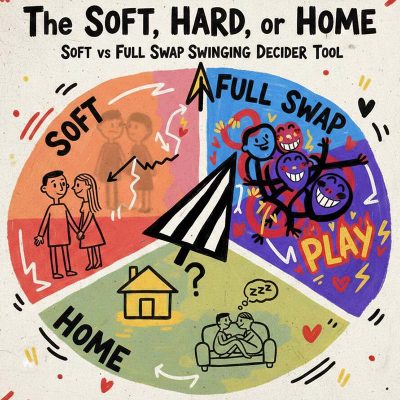
Don't let a "Soft Swap" night turn into a "Hard Feelings" morning.
Walking into the club with different expectations is a grenade waiting to explode. He thinks it’s a free-for-all; she thinks it’s just drinks and dancing. That silence in the car ride home? That’s the sound of a preventable disaster.
Stop guessing. Use this tool to sync your "sexual GPS" before you leave the driveway. Determine exactly how wild you’re getting tonight, so the only surprise is how much fun you have.
The fantasy of swinging is electric, but that cold sweat you feel when thinking about your partner with someone else? That’s your survival instinct warning you that your foundation is at stake. Most couples don’t fail because they lacked desire; they fail because they lacked a safety net. Ambiguity is where jealousy festers, and "winging it" is the fastest way to turn a dream into a nightmare of resentment and "what have we done?"
The Essential Guide to Swinging is your anxiety-proof roadmap through the chaos. Don't gamble your marriage on hope. Build a fortress of trust, master the repair chats, and ensure your exploration is defined by care, not a catastrophe
Full swap is the deep end. The rush is intense, but so is the risk of emotional wreckage. That tightening in your chest isn’t just nerves; it’s the fear that a "fun night" could become a permanent scar on your marriage. You can’t un-ring this bell, so never strike it without a plan.
The Essential Guide to Full Swap Swinging replaces reckless gambling with calculated discipline. From ironclad vetting to "emergency brake" scripts, we provide the safety architecture required to swap bodies without losing your minds. Don't just hope it goes well, engineer it
Gemini said
The fantasy is electric. The reality? It can be a grenade that blows up your marriage and your social circle. That tightening in your chest isn't just nerves. It is a warning that you are risking everything on a vibe. "Winging it" is the fastest way to turn a fun group chat into a toxic war zone.
The Essential Guide replaces the chaos with ironclad protocols. We provide the vetting tools, jealousy airlocks, and privacy scripts needed to swap bodies without losing your mind. Secure your safety first.
The fantasy of swinging is electric, but that cold sweat you feel when thinking about your partner with someone else? That’s your survival instinct warning you that your foundation is at stake. Most couples don’t fail because they lacked desire; they fail because they lacked a safety net. Ambiguity is where jealousy festers, and "winging it" is the fastest way to turn a dream into a nightmare of resentment and "what have we done?"
The Essential Guide to Swinging is your anxiety-proof roadmap through the chaos. Don't gamble your marriage on hope. Build a fortress of trust, master the repair chats, and ensure your exploration is defined by care, not a catastrophe
Full swap is the deep end. The rush is intense, but so is the risk of emotional wreckage. That tightening in your chest isn’t just nerves; it’s the fear that a "fun night" could become a permanent scar on your marriage. You can’t un-ring this bell, so never strike it without a plan.
The Essential Guide to Full Swap Swinging replaces reckless gambling with calculated discipline. From ironclad vetting to "emergency brake" scripts, we provide the safety architecture required to swap bodies without losing your minds. Don't just hope it goes well, engineer it
The culture of swinging today
Today swinging has a robust ecosystem that includes private house parties swinger friendly bed and breakfasts and social clubs. Many couples start with small and controlled experiences then expand as their communication skills grow. The community values consent explicit expectations and care for everyone involved. Across the global scene there is a recognition that what works for one couple may not work for another and that flexibility is a strength not a weakness. The modern swinging world is diverse with people from many backgrounds choosing to explore in ways that feel right for them.
We should also acknowledge that swinging is not a solution to relationship trouble. Entering these waters requires honesty effort and ongoing negotiation. If you are with a partner who is not on board or who feels pressured this is a clear sign to pause and re evaluate. Ethical non monogamy works best when all parties feel seen heard and respected.
The building blocks of swinging etiquette and communication
Good etiquette comes from a simple place. It is about respect for boundaries gratitude for honesty and care for the emotional wellbeing of everyone involved. Here are practical building blocks you can use whether you are new to swinging or revisiting the scene after a hiatus.
Clear ongoing consent
Consent is not a one time event it is a continuous conversation. Check in before during and after any interaction. If someone says no or changes their mind in the moment that decision must be respected without judgment. Consent should feel like a collaborative agreement not a box to check.
Honest and specific boundaries
Boundaries are the guardrails of a successful experience. They cover what kinds of contact are allowed who will be present what types of activities are on or off the table and what safety practices will be followed. Boundaries can be adjusted over time as comfort grows. Always document changes so there is no confusion later.
Respect for privacy and discretion
Private details stay private unless all involved explicitly consent to sharing. People may want to keep experiences discreet for personal or professional reasons. You should never pressure someone to reveal information they do not want to share. Mutual respect for privacy is a cornerstone of a healthy swinging dynamic.
Safety first
Discuss safe sex practices and protection. Ensure that all parties understand any health considerations and the steps taken to minimize risks. The commitment to safety is part of ethical practice and good community norms. In addition it is wise to discuss what happens if a boundary is crossed and how to handle discomfort in the moment.
Honest debriefs after experiences
A debrief is a calm talk after a night of exploration. What went well what did not and what should change next time are the typical questions. Debriefs help couples grow and adjust their agreements. They are not a sign of failure they are a signal that you care about the relationship and about your shared experience.
The language and terms you may hear in swinging
Learning the vocabulary helps reduce awkwardness and increases the chance of a positive experience. Here are some common terms you will likely encounter along the way along with plain language explanations.
- Swinging A form of ethical non monogamy where couples exchange partners for sexual activity or social interaction within agreed boundaries.
- Partner exchange The act of one or both partners engaging with others outside the primary relationship in a negotiated way.
- Open relationship A relationship where partners are free to date or connect with others outside the couple for various levels of involvement.
- Ethical non monogamy An approach to love and sex that involves openness honesty and consent with multiple partners.
- Soft swap A form of partner exchange where the couples engage in sexual activity while not going all the way with the other partner often limited to kissing and touching or touching with clothing on depending on the rules set by the couple.
- Full swap Both partners swap partners for sexual activity with others. This is a deeper level of exchange and requires careful planning and strong communication.
- Negotiated boundaries The explicit limits the group or couple agrees on before engaging in activities.
- De briefing A calm discussion after a dating or play session to review what happened and how everyone felt.
- Consent check in A moment during an encounter to confirm that everyone is still comfortable and agreeable to continue.
- Safety practices Plans and actions to reduce health and safety risks during encounters.
How to approach swinging if you are curious but new
Starting in a thoughtful way pays off. Here is a practical starter guide for couples who are exploring swinging or partner exchange for the first time.
- Talk early and often Have multiple conversations long before any event. Discuss why you are curious what you want to learn and what would feel safe for both of you.
- Establish a shared goal Decide what you want to get from this experience. Is it new excitement is it testing boundaries or something else? A clear goal helps guide decisions.
- Choose a friendly environment Start with a low pressure setting such as a small social gathering or a private party with couples you know and trust.
- Practice consent and boundaries Practice saying yes and no with confidence. Clarify what the lines are and how you will honor them if emotions run high.
- Inspect health and safety Discuss STI screening boundaries and protection options. Agree on what safety looks like and how you will handle it if someone suspects risk.
Realistic scenarios you might encounter
Let us paint a few scenes you might see in the swinging world. The aim is not to scare you but to demystify the experience and show how real people manage it with care.
Scenario one the social start
A couple attends a small party where couples mingle. The hosts set clear guidelines about what is allowed. The couple has spoken in advance about potential signals they can use if one person is feeling uncomfortable. The evening flows with light flirting and a few friendly conversations. When a moment feels right they check in with each other making sure both are comfortable and willing to proceed. The night ends with a friendly hug and plans for a future meetup with a similar vibe.
Scenario two a first mutual boundary breach
During a play session one partner feels a boundary being pushed but the other is having a positive experience. The couple communicates openly about the shift in feelings and pauses the activity. They discuss what they would do differently next time and decide to adjust their boundaries to maintain trust. Everyone leaves feeling heard and respected and the relationship grows stronger for having navigated the moment honestly.
Scenario three safety first in a new scene
In a new venue the group agrees on a limited play area and a time limit. They use a safe word a simple word that can be said at any moment to stop the activity. After the session they debrief and share feedback. The night ends with gratitude for the courage to explore together and a plan for future adventures that respect both partners needs.
Common myths and misconceptions about swinging
Myths thrive when people skip the details. Here are some common misunderstandings along with plain truth so you can separate curiosity from opinionated rumor.
- Myth 1 swinging means a relationship is broken. Truth swinging can strengthen a relationship when both partners enter with a shared purpose and active communication.
- Myth 2 swinging is always about sex. Truth swinging often involves social connections emotional bonding and a sense of play and exploration that surrounds physical intimacy.
- Myth 3 jealousy is never a problem. Truth jealousy is real but with good communication coping strategies and steady boundaries couples can manage it and even grow from it.
- Myth 4 you must be single to swing. Truth swinging is most common in couples who choose to explore with other couples or individuals but solo play is not unheard of when all parties consent and feel safe.
- Myth 5 swinging is reckless. Truth responsible swinging is about planning boundaries health and consent and listening to your partner with care.
Debriefing and ongoing growth
Every successful swinging journey benefits from honest post encounter talks. A brief debrief helps you calibrate boundaries confirm consent and align your emotional well being. Use debrief talk to celebrate what went well and to adjust future practice. The aim is to keep the relationship strong and the experiences enjoyable for both partners. It is not about proving something or comparing experiences with others. It is about your shared story and how you want it to unfold.
Navigating the broad world of ethical non monogamy
Swinging is one path within ethical non monogamy. There are many other paths each with its own flavor and rules. Some couples prefer polyamory where emotional connections with more than one person are pursued. Others choose an open relationship focusing on dating outside the primary partnership. The key is to be honest with yourself and with your partner about what you want and what you can handle. The landscape can feel confusing at first but a steady practice of open dialogue and compassionate listening makes the path clearer and more enjoyable.
A practical glossary for quick reference
- Ethical non monogamy An umbrella term for relationships that involve more than one partner with consent and honesty at the center.
- Swinging An arrangement that centers on partner exchange within negotiated boundaries often in social settings.
- Open relationship A relationship structure where partners may date or connect with others outside the main couple with agreed guidelines.
- Polyamory The practice of maintaining more than one loving relationship at the same time with the knowledge and consent of everyone involved.
- Soft swap A form of swinging where sexual activity with others is limited by rules such as no penetration or no contact beyond a certain boundary.
- Full swap Partners exchange partners for sexual activity with others with fewer restrictions within agreed boundaries.
- Boundary A limit that a person or couple sets to define what is and is not allowed.
- Consent An ongoing clear agreement from all people involved about what will happen and how it will happen.
- Debrief A post encounter conversation to reflect on what happened and how it felt for each person.
Real world takeaways for curious readers
Understanding swinging means recognizing that it is a personal choice guided by respect and consent. If you are curious this is a good moment to engage in self conversation with your partner about your fears hopes and boundaries. A respectful approach includes asking questions listening deeply and moving forward only when you both feel ready and excited. The best experiences come from relationships where both partners feel safe supported and free to explore within agreed limits.
The future of swinging in ethical non monogamy
The swinging world continues to evolve. New venues new digital meeting places and more inclusive attitudes push the scene toward greater accessibility and safety. Innovations in health education consent and community support help keep people safe and informed. The essential elements remain stable though. Mutual consent honest communication and a shared plan for how to navigate the unexpected are the backbone of any successful swinging journey. Whether you are here for the social spark the physical exploration or the emotional growth you can approach swinging with curiosity and care and you can do it in a way that respects your relationship and your values.
If you are ready to begin or you want to refresh your approach remember that education and conversation are your best allies. Swinging is a dynamic that adapts as you do. With humor patience and prudent planning you and your partner can explore in ways that feel right for you both. The history is long and the potential is personal. Your journey is the next chapter and that chapter starts with a simple conversation and a clear set of shared intentions.
Don't let a "Soft Swap" night turn into a "Hard Feelings" morning.
Walking into the club with different expectations is a grenade waiting to explode. He thinks it’s a free-for-all; she thinks it’s just drinks and dancing. That silence in the car ride home? That’s the sound of a preventable disaster.
Stop guessing. Use this tool to sync your "sexual GPS" before you leave the driveway. Determine exactly how wild you’re getting tonight, so the only surprise is how much fun you have.
The fantasy of swinging is electric, but that cold sweat you feel when thinking about your partner with someone else? That’s your survival instinct warning you that your foundation is at stake. Most couples don’t fail because they lacked desire; they fail because they lacked a safety net. Ambiguity is where jealousy festers, and "winging it" is the fastest way to turn a dream into a nightmare of resentment and "what have we done?"
The Essential Guide to Swinging is your anxiety-proof roadmap through the chaos. Don't gamble your marriage on hope. Build a fortress of trust, master the repair chats, and ensure your exploration is defined by care, not a catastrophe
Full swap is the deep end. The rush is intense, but so is the risk of emotional wreckage. That tightening in your chest isn’t just nerves; it’s the fear that a "fun night" could become a permanent scar on your marriage. You can’t un-ring this bell, so never strike it without a plan.
The Essential Guide to Full Swap Swinging replaces reckless gambling with calculated discipline. From ironclad vetting to "emergency brake" scripts, we provide the safety architecture required to swap bodies without losing your minds. Don't just hope it goes well, engineer it
Gemini said
The fantasy is electric. The reality? It can be a grenade that blows up your marriage and your social circle. That tightening in your chest isn't just nerves. It is a warning that you are risking everything on a vibe. "Winging it" is the fastest way to turn a fun group chat into a toxic war zone.
The Essential Guide replaces the chaos with ironclad protocols. We provide the vetting tools, jealousy airlocks, and privacy scripts needed to swap bodies without losing your mind. Secure your safety first.
The fantasy of swinging is electric, but that cold sweat you feel when thinking about your partner with someone else? That’s your survival instinct warning you that your foundation is at stake. Most couples don’t fail because they lacked desire; they fail because they lacked a safety net. Ambiguity is where jealousy festers, and "winging it" is the fastest way to turn a dream into a nightmare of resentment and "what have we done?"
The Essential Guide to Swinging is your anxiety-proof roadmap through the chaos. Don't gamble your marriage on hope. Build a fortress of trust, master the repair chats, and ensure your exploration is defined by care, not a catastrophe
Full swap is the deep end. The rush is intense, but so is the risk of emotional wreckage. That tightening in your chest isn’t just nerves; it’s the fear that a "fun night" could become a permanent scar on your marriage. You can’t un-ring this bell, so never strike it without a plan.
The Essential Guide to Full Swap Swinging replaces reckless gambling with calculated discipline. From ironclad vetting to "emergency brake" scripts, we provide the safety architecture required to swap bodies without losing your minds. Don't just hope it goes well, engineer it
