
Alcohol and Substance Boundaries at Events


Welcome friend. If you are part of the swinging world you know that events can be electric and complicated all at once. This guide is here to help you set boundaries around alcohol and substances so your experiences stay aligned with consent respect and your personal comfort. We speak plainly explain terms and give you practical tools you can use at your next gathering without turning the night into a guessing game.
Quick Links to Useful Sections
- What this guide covers
- Why boundaries matter at swinging events
- Common dynamics at events in this space
- Key terms you will hear
- Personal boundaries you should consider before an event
- How alcohol and substances can affect consent
- Practical boundaries you can set for an event
- Setting boundaries with your partner or partners
- Boundary language and consent in action
- Communicating boundaries with the group you are with
- Safety strategies during the night
- Handling boundary conflicts in the moment
- Aftercare and post event check in
- Stories and scenarios you might relate to
- What to communicate to hosts and venue staff
- Inclusive consent for mixed groups
- Practical templates you can use
- Checklist before you head out for an event
- Glossary of useful terms and acronyms
- Frequently asked questions
What this guide covers
We will break down why boundaries matter at events in the ethical non monogamy space. We will cover how alcohol and substances can influence choices and how to talk about limits before you go. There are real world scenarios sample scripts and checklists you can print and bring with you. We will also discuss safety plans after the event and how to handle discussions with partners hosts and other guests. All terms are explained and you will find a glossary of common acronyms at the end.
Why boundaries matter at swinging events
Boundaries are not about building walls they are about keeping your experience safe and enjoyable. When people come together to explore intimacy ethics consent and connection the presence of alcohol and substances can tilt the balance toward things you might regret or toward things you did not sign up for. Boundaries help you keep control over your own choices and give others a clear map for how to interact with you. Boundaries also support the relationship you have with your partner or partners. If everyone agrees on a set of expectations the chances of miscommunication drop and the night can flow with more ease.
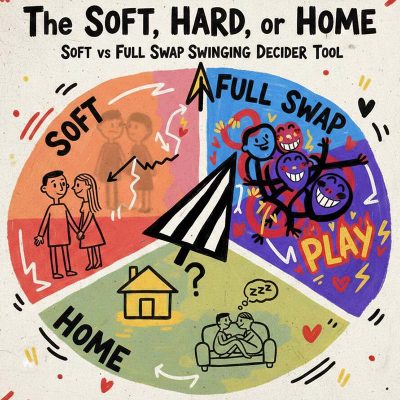
Don't let a "Soft Swap" night turn into a "Hard Feelings" morning.
Walking into the club with different expectations is a grenade waiting to explode. He thinks it’s a free-for-all; she thinks it’s just drinks and dancing. That silence in the car ride home? That’s the sound of a preventable disaster.
Stop guessing. Use this tool to sync your "sexual GPS" before you leave the driveway. Determine exactly how wild you’re getting tonight, so the only surprise is how much fun you have.

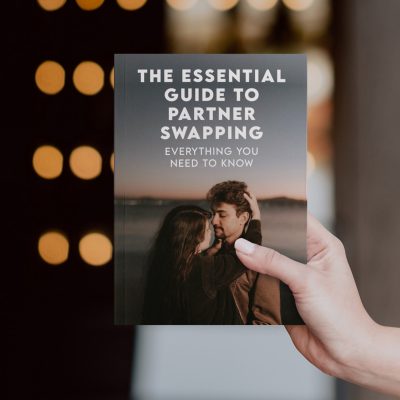
The fantasy of swinging is electric, but that cold sweat you feel when thinking about your partner with someone else? That’s your survival instinct warning you that your foundation is at stake. Most couples don’t fail because they lacked desire; they fail because they lacked a safety net. Ambiguity is where jealousy festers, and "winging it" is the fastest way to turn a dream into a nightmare of resentment and "what have we done?"
The Essential Guide to Swinging is your anxiety-proof roadmap through the chaos. Don't gamble your marriage on hope. Build a fortress of trust, master the repair chats, and ensure your exploration is defined by care, not a catastrophe
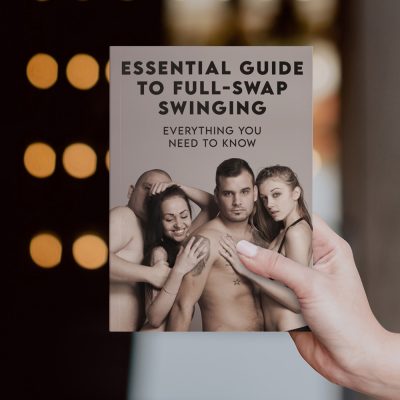
Full swap is the deep end. The rush is intense, but so is the risk of emotional wreckage. That tightening in your chest isn’t just nerves; it’s the fear that a "fun night" could become a permanent scar on your marriage. You can’t un-ring this bell, so never strike it without a plan.
The Essential Guide to Full Swap Swinging replaces reckless gambling with calculated discipline. From ironclad vetting to "emergency brake" scripts, we provide the safety architecture required to swap bodies without losing your minds. Don't just hope it goes well, engineer it
Gemini said
The fantasy is electric. The reality? It can be a grenade that blows up your marriage and your social circle. That tightening in your chest isn't just nerves. It is a warning that you are risking everything on a vibe. "Winging it" is the fastest way to turn a fun group chat into a toxic war zone.
The Essential Guide replaces the chaos with ironclad protocols. We provide the vetting tools, jealousy airlocks, and privacy scripts needed to swap bodies without losing your mind. Secure your safety first.
The fantasy of swinging is electric, but that cold sweat you feel when thinking about your partner with someone else? That’s your survival instinct warning you that your foundation is at stake. Most couples don’t fail because they lacked desire; they fail because they lacked a safety net. Ambiguity is where jealousy festers, and "winging it" is the fastest way to turn a dream into a nightmare of resentment and "what have we done?"
The Essential Guide to Swinging is your anxiety-proof roadmap through the chaos. Don't gamble your marriage on hope. Build a fortress of trust, master the repair chats, and ensure your exploration is defined by care, not a catastrophe
Full swap is the deep end. The rush is intense, but so is the risk of emotional wreckage. That tightening in your chest isn’t just nerves; it’s the fear that a "fun night" could become a permanent scar on your marriage. You can’t un-ring this bell, so never strike it without a plan.
The Essential Guide to Full Swap Swinging replaces reckless gambling with calculated discipline. From ironclad vetting to "emergency brake" scripts, we provide the safety architecture required to swap bodies without losing your minds. Don't just hope it goes well, engineer it
Common dynamics at events in this space
In swinging circles alcohol is common and can be used to loosen inhibitions or to celebrate. Some people are averse to drinking or have medical or personal reasons to avoid substances. Some guests enjoy controlled amounts while others choose sobriety. The main idea is to move through the evening with integrity and consent. Being aware of how alcohol may affect your perception and your ability to give and read consent is essential. Some individuals participate in substances in a party safe way while others avoid them entirely. Either choice is valid as long as it is the result of personal decision and informed consent.
Key terms you will hear
- ENM stands for ethical non monogamy a framework where romantic or sexual connections with more than one person are built on consent honesty and clear communication.
- Swinging a form of ENM where couples seek sexual experiences with other couples or singles in a consensual setting.
- Boundaries clear limits about what you are comfortable with during interactions or activities.
- Soft limits gentle boundaries that you are open to exploring if comfort and consent evolve during the moment.
- Hard limits boundaries you will not cross under any circumstances.
- Consent explicit and ongoing agreement to participate in a specific activity with another person or persons.
- Aftercare support provided after intense experiences to ensure everyone feels safe cared for and respected.
Personal boundaries you should consider before an event
Take time before you attend to set boundaries that reflect your values and comfort level. This is not about policing others this is about protecting your body your mental space and your relationship agreements. Here are core areas to consider.
- Alcohol tolerance decide how many drinks you are willing to have per hour and total for the night. Consider how alcohol affects your judgment and your communication with partners.
- Substance use if you choose to engage with substances think about what you will use how you will dose how you will monitor your wellbeing and what you will do if you start to feel unsafe.
- Healthy pacing plan a pace that lets you stay aware of your surroundings and your decisions. This often means alternating alcoholic drinks with water or non alcoholic options.
- Safety plan know where you will go if you need a quiet space find a trusted friend or partner to check in with and have a time limit for stepping away.
- Sexual boundaries be explicit about what you are open to and what you want to avoid. If you are unsure allow room for clarification and revision as the night unfolds.
- Social boundaries determine how long you will stay in certain social circles and how you will handle flirtation or advances that feel uncomfortable.
How alcohol and substances can affect consent
Consent is a clear and ongoing agreement. When alcohol or substances are involved clarity can fade and misinterpretation can rise. The risk is not just about consent in the moment it is about making sure you have the ability to reconsider at any time. If you sense you may lose capacity to consent you should step away from any sexual situation right away. You should also be prepared to stop if your partner or someone else communicates a boundary that you respect and honor. It is essential that everyone involved has the option to pause or stop at any time even if a previous agreement seemed clear.
Practical boundaries you can set for an event
These boundaries are practical and easy to adapt to most party styles. You can print this list and use it as a quick reference when you arrive or during a pre event check in with your partner or partners.
- No crossing the line while intoxicated do not engage in any sexual activity that you would not consent to while sober.
- No sharing of personal location or contact information keep boundaries about privacy unless all parties have agreed in advance to share contact details or social media.
- Designated drivers and safe transport arrange reliable transportation to and from the venue and know the plan if someone is too intoxicated to travel safely.
- Clear rules for kissing and touching this includes what counts as acceptable affection in different rooms or corners of a venue.
- No uninvited touching of someone without a prior explicit tag a tag system can help guests indicate what is on the table or not.
- Public spaces stay public do not move sexual interactions into private rooms or areas without express consent from all involved and the venue policies.
- Respect the host or venue rules some events ban certain activities or substances. Know and follow the rules to avoid problems for everyone.
- Check ins plan regular check ins with your partner and with friends who have volunteered to keep an eye on you during the night.
Setting boundaries with your partner or partners
Clear communication before the event is essential. Have a pre event talk that covers the night simple rules and how you will handle potential triggers. A good approach is to share your top three boundaries three must know issues and one scenario you want to explore together. This creates a shared map that you can refer to during the night.
Sample talking prompts you can adapt
- What amount of alcohol is acceptable for you before you start to feel unsure about decisions
- Are there rooms or areas you want to avoid entirely
- What happens if one of us feels uncomfortable or wants to step away
- What kind of flirtation or interaction is okay and how will we signal a shift in mood
- Do we want to use a safety word or a hand signal to indicate a pause
Don't let a "Soft Swap" night turn into a "Hard Feelings" morning.
Walking into the club with different expectations is a grenade waiting to explode. He thinks it’s a free-for-all; she thinks it’s just drinks and dancing. That silence in the car ride home? That’s the sound of a preventable disaster.
Stop guessing. Use this tool to sync your "sexual GPS" before you leave the driveway. Determine exactly how wild you’re getting tonight, so the only surprise is how much fun you have.
The fantasy of swinging is electric, but that cold sweat you feel when thinking about your partner with someone else? That’s your survival instinct warning you that your foundation is at stake. Most couples don’t fail because they lacked desire; they fail because they lacked a safety net. Ambiguity is where jealousy festers, and "winging it" is the fastest way to turn a dream into a nightmare of resentment and "what have we done?"
The Essential Guide to Swinging is your anxiety-proof roadmap through the chaos. Don't gamble your marriage on hope. Build a fortress of trust, master the repair chats, and ensure your exploration is defined by care, not a catastrophe
Full swap is the deep end. The rush is intense, but so is the risk of emotional wreckage. That tightening in your chest isn’t just nerves; it’s the fear that a "fun night" could become a permanent scar on your marriage. You can’t un-ring this bell, so never strike it without a plan.
The Essential Guide to Full Swap Swinging replaces reckless gambling with calculated discipline. From ironclad vetting to "emergency brake" scripts, we provide the safety architecture required to swap bodies without losing your minds. Don't just hope it goes well, engineer it
Gemini said
The fantasy is electric. The reality? It can be a grenade that blows up your marriage and your social circle. That tightening in your chest isn't just nerves. It is a warning that you are risking everything on a vibe. "Winging it" is the fastest way to turn a fun group chat into a toxic war zone.
The Essential Guide replaces the chaos with ironclad protocols. We provide the vetting tools, jealousy airlocks, and privacy scripts needed to swap bodies without losing your mind. Secure your safety first.
The fantasy of swinging is electric, but that cold sweat you feel when thinking about your partner with someone else? That’s your survival instinct warning you that your foundation is at stake. Most couples don’t fail because they lacked desire; they fail because they lacked a safety net. Ambiguity is where jealousy festers, and "winging it" is the fastest way to turn a dream into a nightmare of resentment and "what have we done?"
The Essential Guide to Swinging is your anxiety-proof roadmap through the chaos. Don't gamble your marriage on hope. Build a fortress of trust, master the repair chats, and ensure your exploration is defined by care, not a catastrophe
Full swap is the deep end. The rush is intense, but so is the risk of emotional wreckage. That tightening in your chest isn’t just nerves; it’s the fear that a "fun night" could become a permanent scar on your marriage. You can’t un-ring this bell, so never strike it without a plan.
The Essential Guide to Full Swap Swinging replaces reckless gambling with calculated discipline. From ironclad vetting to "emergency brake" scripts, we provide the safety architecture required to swap bodies without losing your minds. Don't just hope it goes well, engineer it
Boundary language and consent in action
Practice helps. Try rehearsing a few boundary statements like these in a calm voice before arrival. You can tailor them to your voice and your relationships.
- I feel comfortable with light playful flirting but I do not want anyone to initiate anything intimate without a direct check in from both of us.
- If I say stop that means stop and I expect a quick immediate response from you and from other people involved.
- If I lose track of what I want I will cue a pause and we will reassess together.
- In the event we need a quiet space we will go to that space and reconnect before continuing.
Communicating boundaries with the group you are with
At a swinging event people may be interacting in larger groups in smaller corners or in other arrangements. It helps to state your boundaries politely but firmly when you join conversations. You can say things like I am in a relationship with two people and I am exploring with them tonight. I am open to playful flirting but any sexual activity requires explicit consent from all participants. I appreciate your respect for that. Keep it simple and set the tone with your own honesty.
Safety strategies during the night
Plan how to stay safe while enjoying yourself. These are practical tips that work well in real life.
- Hydration drink water between alcoholic beverages to maintain awareness and energy levels.
- Food eat before and during the night to help slow alcohol absorption and keep mood steady.
- Monitoring pay attention to cues from your body that signal tiredness or overwhelm and remove yourself if needed.
- Peer support designate one or two friends you can text or approach if you need a reminder of your boundaries.
- Time boundaries set a rough time for a check in with your partner or a walk outside to reset if the room becomes too intense.
Handling boundary conflicts in the moment
Conflicts happen when emotions rise or when someone else crosses a line. Here is a calm approach to resolve things without escalating drama.
- Pause reflect and assess what boundary was crossed and why it matters to you.
- State your boundary clearly and calmly to the person involved and to your partner or partners if present.
- Seek a quick agreed solution such as stepping away or changing the dynamic and continuing with clear consent.
- After the moment is resolved check in with your partner about how you feel and what you need next.
Aftercare and post event check in
Aftercare helps all parties feel connected and respected after any intense interaction. Plan time after the event to check in with your partner or partners. Share what went well what could be improved and what you learned that you want to carry forward. If someone wants to debrief later that is fine too. The point is to keep lines of communication open and to make space for processing emotions in a healthy way.
Stories and scenarios you might relate to
These are not real people but common situations you may encounter at swinging events. Use them to practice your responses or adapt them as you see fit.
- A couple you have never met before compliments you with a cheek kiss and then asks about moving to a more intimate space. You are not comfortable with that and you share your boundary clearly stating no escalation without explicit consent from all involved and with both your partner present agreeing.
- You have two drinks too many and start feeling dizzy. You tell your partner you need a break and step away from the crowd to a quieter space and perhaps a shower or a water refill. Your partner stays nearby for support until you feel steadier.
- Someone offers a joint you do not use any substances and you voice that preference politely but firmly. If you feel pressure you remove yourself from the situation and re join your group later when you feel ready.
- A friend notices you are slipping into confusion and gently offers to help by guiding you to a comfortable chair and checking in. You accept and reset for the rest of the night with renewed boundaries.
What to communicate to hosts and venue staff
Hosts set the tone for the night. Share your boundaries succinctly with the event host especially about room usage privacy and safety. If you have any medical considerations mention them to trusted staff or hosts so they can respond quickly if needed. Some hosts may provide a policy on behavior that everyone must follow. Respect those policies and communicate openly about any changes to your own boundaries as the night unfolds.
Inclusive consent for mixed groups
In ethical non monogamy settings you may be interacting with multiple couples and singles. Consent has to be universal and must be renegotiated if anyone wants to adjust the boundaries. Inclusion means checking in with all involved before advancing to anything beyond a light level of contact. Do not assume that a partner online or off is consenting simply because a mutual interest was declared earlier in the evening. Keep asking and keep listening.
Practical templates you can use
Sometimes the easiest way to handle boundaries is a simple spoken script you can adapt on the spot. Here are ready to use templates you can rewrite to fit your style.
- Before any escalation say I am enjoying meeting you and I am with my partner. We have agreed on light flirtation only at this point and any sexual contact needs explicit consent from both of us.
- If you sense pressure respond with a calm boundary statement and a redirection for the conversation I am not interested in that type of interaction tonight but I hope you enjoy the rest of the evening.
- When you need a break say I need a moment to reset and I will reconnect with you in a little while is that okay with you
Checklist before you head out for an event
- Discuss boundaries with your partner or partners in advance and confirm comfort levels for the night
- Agree on a signal or word to pause or stop any activity at any time
- Pack water non alcoholic drinks and light snacks
- Plan safe transportation and identify a designated driver if needed
- Bring a small personal item that reminds you of your boundaries a token or card with your top three rules
Glossary of useful terms and acronyms
- ENM ethical non monogamy a framework for multiple connections with consent and honesty
- Swinging sexual activity with others outside your primary relationship in a consensual setting
- Boundaries personal limits that guide what you will and will not do
- Soft limits a boundary you are open to revisiting with permission
- Hard limits boundaries you will not cross under any circumstances
- Consent clear explicit agreement to participate in a specific action
- Aftercare post encounter caresupport and check in after intense experiences
Frequently asked questions
How do I set boundaries about alcohol without sounding rigid
Be clear but kind. State your personal limit and the reason it matters to you. You can say I am choosing to drink water most of the night to stay aware and connected. It is a personal choice not a judgment of others.
What should I do if someone pressures me to drink more
Use a firm boundary and repeat it. You can say I am not drinking more tonight and I would appreciate your respect for that. If pressure continues remove yourself from the situation or seek help from a trusted friend or staff member.
How can I involve my partner in a supportive way
Share your boundaries in advance and keep your partner involved in check ins during the night. If you feel unsure about a situation discuss it with your partner and get a quick alignment before proceeding or stepping away.
What is a good plan for sobriety at events
Set a personal rule such as no alcohol from arrival until you have completed your main social interactions. Bring tasty non alcoholic options and a plan for how you will fill the time if social energy drops.
What should I do if a boundary is crossed
Address it immediately with the person or people involved in a calm direct way. If needed pause the interaction and check in with your partner. After the moment is resolved revisit your boundary for the rest of the night and adjust if required.
How can I talk to hosts about boundaries
Reach out before the event with a short description of your boundaries and any accessibility needs. Hosts appreciate clarity and will often support you in enforcing reasonable expectations during the night.
Is it okay to change my boundaries during the event
Yes. Boundaries can shift as the night unfolds. If you feel uncertain you can pause and renegotiate with your partner and with others involved. You are always allowed to revise your boundaries as long as you communicate clearly and respectfully.
