
Assessing Readiness as a Couple

Welcome to a straight talking guide from The Monogamy Experiment. If you and your partner are curious about swinging as part of ethical non monogamy or ENM you are in good company. This guide is here to help you answer the big question: are we really ready to explore this dynamic together
Quick Links to Useful Sections
- What swinging and ethical non monogamy mean in plain terms
- Are you both on the same page
- The readiness check list you can use together
- A practical approach to talking it through
- Boundary mapping and boundary language that works
- Health and safety first
- Jealousy and emotional management
- Realistic scenarios and how to navigate them
- Scenario one
- Scenario two
- Scenario three
- Practice exercises you can try this week
- What to do if one person wants to pause or stop
- Common mistakes to avoid
- What helps a couple stay resilient in swinging ENM
- Resources and community guidance
- Checklist before stepping into swing experiences
- Glossary of useful terms and acronyms
- Frequently asked questions
What swinging and ethical non monogamy mean in plain terms
Ethical non monogamy is the umbrella term for relationships that allow romantic or sexual openness with the full consent and communication of all involved. Swinging is a subset of ENM that focuses on recreational sexual experiences with others while typically staying within a couple. There are many paths people take within this space. Some couples prefer soft swaps where partners kiss or flirt but stay with their own boundaries. Others embrace full swaps where sexual activity occurs with other partners outside the couple. The key idea is consent transparency and ongoing dialogue between partners.
Terms you might hear in this space and what they mean
- Ethical non monogamy A broad approach to relationships where more than two people have consented to form intimate or sexual connections.
- Swinging A dynamic where a couple exchanges sexual partners with others or participates in sexual activity with others together or individually under agreed rules.
- NRE New relationship energy. The excited feelings that come with a new connection and new partner experiences.
- Compersion The joy you feel when your partner connects with someone else in a positive way. It is the opposite of jealousy and a core skill in ENM life.
- Boundaries Concrete lines that define what is allowed and what is not in your shared sexual and emotional space.
- Rules Specific expectations that guide behavior. Rules are meant to prevent harm and ease anxiety not to trap people.
- Soft swap A scenario where partners may engage in flirting or non penetrative activity with others while remaining emotionally and physically within the couple contract.
- Full swap Sexual activity with another person or people outside the couple that involves risk management and clear consent from all involved.
- Veto A mechanism that gives a partner the right to veto a potential encounter or a future situation. Veto rules should be agreed and revisited as needed.
- STI Sexually transmitted infection. Regular testing and honest reporting are essential in swinging communities.
- Contraception Methods used to prevent pregnancy during sexual activities especially when there is risk with multiple partners.
Understanding these terms helps you have clearer conversations with your partner and with other potential partners. The aim is not to win a debate but to build a shared map of how you want to live together in this space.
Are you both on the same page
Readiness in a swinging ENM setup is not just about one person wanting more freedom. It is about two people choosing to navigate a shared path with clarity. Here are practical questions to help you assess alignment without turning the talk into a boring survey.
- Why do we want to explore swinging What needs are we hoping to meet through ENM and does swinging feel like the right vehicle for that
- What fears do we carry Do we fear jealousy fear losing emotional connection or fear the relationship changing in a way that feels risky
- What is off limits Are there lines that absolutely cannot be crossed such as dating outside the circle or sleeping with a new partner in our own bed
- What does consent look like for us How will we check in with each other before during and after any encounter
- What is our plan for health safety Are we both committed to STI testing protective practices and transparent communication
- How will we handle time and energy Do we have a system for balancing relationship energy without neglecting our primary bond
- What is our exit strategy If the dynamic stops feeling good how do we gracefully step back
Alignment does not mean two identical minds it means two people who feel heard respected and ready to grow together. If you answer these questions and feel a gap in trust or comfort take time to address it before moving forward. Rushing can create more problems later on and you want a strong foundation for what may be a long journey.
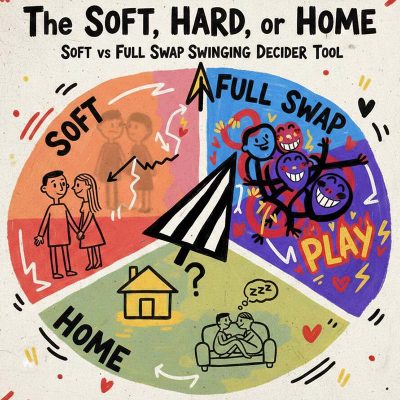
Don't let a "Soft Swap" night turn into a "Hard Feelings" morning.
Walking into the club with different expectations is a grenade waiting to explode. He thinks it’s a free-for-all; she thinks it’s just drinks and dancing. That silence in the car ride home? That’s the sound of a preventable disaster.
Stop guessing. Use this tool to sync your "sexual GPS" before you leave the driveway. Determine exactly how wild you’re getting tonight, so the only surprise is how much fun you have.
The fantasy of swinging is electric, but that cold sweat you feel when thinking about your partner with someone else? That’s your survival instinct warning you that your foundation is at stake. Most couples don’t fail because they lacked desire; they fail because they lacked a safety net. Ambiguity is where jealousy festers, and "winging it" is the fastest way to turn a dream into a nightmare of resentment and "what have we done?"
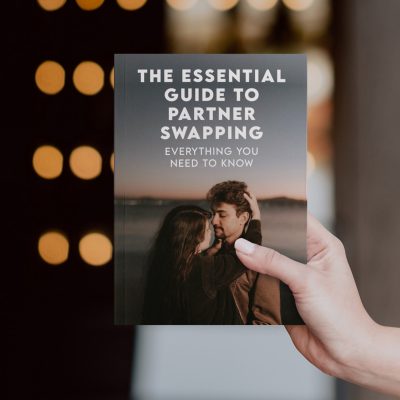
The Essential Guide to Swinging is your anxiety-proof roadmap through the chaos. Don't gamble your marriage on hope. Build a fortress of trust, master the repair chats, and ensure your exploration is defined by care, not a catastrophe
Full swap is the deep end. The rush is intense, but so is the risk of emotional wreckage. That tightening in your chest isn’t just nerves; it’s the fear that a "fun night" could become a permanent scar on your marriage. You can’t un-ring this bell, so never strike it without a plan.
The Essential Guide to Full Swap Swinging replaces reckless gambling with calculated discipline. From ironclad vetting to "emergency brake" scripts, we provide the safety architecture required to swap bodies without losing your minds. Don't just hope it goes well, engineer it
Gemini said
The fantasy is electric. The reality? It can be a grenade that blows up your marriage and your social circle. That tightening in your chest isn't just nerves. It is a warning that you are risking everything on a vibe. "Winging it" is the fastest way to turn a fun group chat into a toxic war zone.
The Essential Guide replaces the chaos with ironclad protocols. We provide the vetting tools, jealousy airlocks, and privacy scripts needed to swap bodies without losing your mind. Secure your safety first.
The fantasy of swinging is electric, but that cold sweat you feel when thinking about your partner with someone else? That’s your survival instinct warning you that your foundation is at stake. Most couples don’t fail because they lacked desire; they fail because they lacked a safety net. Ambiguity is where jealousy festers, and "winging it" is the fastest way to turn a dream into a nightmare of resentment and "what have we done?"
The Essential Guide to Swinging is your anxiety-proof roadmap through the chaos. Don't gamble your marriage on hope. Build a fortress of trust, master the repair chats, and ensure your exploration is defined by care, not a catastrophe
Full swap is the deep end. The rush is intense, but so is the risk of emotional wreckage. That tightening in your chest isn’t just nerves; it’s the fear that a "fun night" could become a permanent scar on your marriage. You can’t un-ring this bell, so never strike it without a plan.
The Essential Guide to Full Swap Swinging replaces reckless gambling with calculated discipline. From ironclad vetting to "emergency brake" scripts, we provide the safety architecture required to swap bodies without losing your minds. Don't just hope it goes well, engineer it
The readiness check list you can use together
- Open honest baseline Both partners clear the air about current desires boundaries fears and boundaries
- Joint agreement on the type of swinging Decide whether you want soft swap full swap or a mix and whether you prefer couple only experiences or solo partner play as well
- Emotional safety plan Agree how you will support each other during and after encounters
- Health safety commitments Set a routine for STI testing discuss contraception and practical safety steps
- Communication cadence Decide how often you will talk about these topics and what triggers a conversation that can not wait
- Time allocation Ensure you have room in your schedule for dating experiences and for your couple time
- Boundary map Create a visual boundary map that shows what is allowed who is involved where when and with whom
- Relationship energy accounting Monitor the energy levels you give to your primary relationship and to other connections
- Exit checklist Agree on how you will step back or pause the dynamic if needed
- Support network Consider talking with a therapist or a trusted mentor who understands ethical non monogamy
Use this list as a living document. You will revise it as you grow or as your feelings change. The aim is not completeness in a single moment but ongoing clarity in a living relationship.
A practical approach to talking it through
Communication is the backbone of any ENM journey. A practical conversation helps you avoid making it about who is right. It is about agreeing on how you want to handle things together. Here is a simple outline you can use to have productive talks.
- Set a calm time Choose a moment when you both feel relaxed. Turn off distractions and allow time for a thoughtful discussion.
- State intentions Share why you are having the talk and what you hope to find as a result.
- Share personal boundaries Each person explains their non negotiables and what would feel like a violation
- Explore scenarios Talk through possible situations you might encounter and discuss how you would handle them
- Document the agreements Write down the decisions you make and decide how you will check in on them moving forward
- Plan a check in Decide on a schedule for revisiting agreements and adjusting as needed
In these talks it helps to keep a few rules in mind. First do not attack the other person for having different feelings. Second you want to listen as much as you speak. Third you aim to build a shared road map not to win a debate.
Boundary mapping and boundary language that works
Boundaries are about safety both physical and emotional. They are not set in stone forever. They can be revisited as your relationship grows or as new life circumstances present themselves. A useful approach is to describe boundaries in concrete terms rather than abstract ideas. For example instead of saying I do not want to feel left out you can say I want to know when you are with someone else and I want a post encounter debrief. This is less about control and more about connection.
Common boundary categories you will see in swinging ENM
- Time boundaries How much time you will devote to other partners and how that affects couple time
- Location boundaries Where encounters can take place including in person online or at specific venues
- Participation boundaries Whether both of you will participate together solo or in mixed arrangements
- Communication boundaries How and when updates are shared and what information is kept private
- Sexual activity boundaries What activities are allowed with others and what is restricted
- Emotional boundaries How to handle feelings such as jealousy or insecurity and how to offer reassurance
Write your boundary map in plain language and keep it accessible. Refer back to it when you plan experiences so you stay aligned with what you and your partner agreed to.
Health and safety first
Health safety is non negotiable in any swinging ENM plan. Your plan should address STI testing safety and contraception as well as the steps you will take to protect each other and your other partners.
- STI testing Regular testing for both partners is a smart habit. Schedule tests every three to six months depending on activity. Consider testing for common infections including chlamydia gonorrhea syphilis and HIV where relevant. Share results openly with your partner.
- Protection Use condoms or other barrier methods as appropriate for the activities you engage in and discuss what you will use with each partner before any encounter
- Contraception If pregnancy is a concern choose a reliable method together and discuss backup plans
- Post encounter communication After any experience talk through what went well what could be improved and whether any adjustments are needed to boundaries or rules
Safety planning reduces anxiety and sets a standard you both agree on. It also helps you manage any unexpected feelings by knowing there is a clear plan in place.
Jealousy and emotional management
Jealousy is not a sign of failure or weakness in a swinging ENM context. It is a signal that something needs attention. The goal is to acknowledge feelings and find a path forward together. There are proven strategies that help couples handle jealousy constructively.
- Practice compersion Cultivate the ability to feel happy for your partner when they connect with someone new. This is a core skill in ENM communities.
- Use check in rituals Have a simple daily or every other day touch base to share how you feel and what you need.
- Create post encounter rituals A short debrief after a date can help you both process experiences and reinforce trust
- Seek external support If emotions get heavy consider seeing a therapist who understands ethical non monogamy
Jealousy can be an opportunity to grow closer if handled with care. The aim is not to eliminate all uncomfortable feelings but to learn how to talk through them with kindness and honesty.
Don't let a "Soft Swap" night turn into a "Hard Feelings" morning.
Walking into the club with different expectations is a grenade waiting to explode. He thinks it’s a free-for-all; she thinks it’s just drinks and dancing. That silence in the car ride home? That’s the sound of a preventable disaster.
Stop guessing. Use this tool to sync your "sexual GPS" before you leave the driveway. Determine exactly how wild you’re getting tonight, so the only surprise is how much fun you have.
The fantasy of swinging is electric, but that cold sweat you feel when thinking about your partner with someone else? That’s your survival instinct warning you that your foundation is at stake. Most couples don’t fail because they lacked desire; they fail because they lacked a safety net. Ambiguity is where jealousy festers, and "winging it" is the fastest way to turn a dream into a nightmare of resentment and "what have we done?"
The Essential Guide to Swinging is your anxiety-proof roadmap through the chaos. Don't gamble your marriage on hope. Build a fortress of trust, master the repair chats, and ensure your exploration is defined by care, not a catastrophe
Full swap is the deep end. The rush is intense, but so is the risk of emotional wreckage. That tightening in your chest isn’t just nerves; it’s the fear that a "fun night" could become a permanent scar on your marriage. You can’t un-ring this bell, so never strike it without a plan.
The Essential Guide to Full Swap Swinging replaces reckless gambling with calculated discipline. From ironclad vetting to "emergency brake" scripts, we provide the safety architecture required to swap bodies without losing your minds. Don't just hope it goes well, engineer it
Gemini said
The fantasy is electric. The reality? It can be a grenade that blows up your marriage and your social circle. That tightening in your chest isn't just nerves. It is a warning that you are risking everything on a vibe. "Winging it" is the fastest way to turn a fun group chat into a toxic war zone.
The Essential Guide replaces the chaos with ironclad protocols. We provide the vetting tools, jealousy airlocks, and privacy scripts needed to swap bodies without losing your mind. Secure your safety first.
The fantasy of swinging is electric, but that cold sweat you feel when thinking about your partner with someone else? That’s your survival instinct warning you that your foundation is at stake. Most couples don’t fail because they lacked desire; they fail because they lacked a safety net. Ambiguity is where jealousy festers, and "winging it" is the fastest way to turn a dream into a nightmare of resentment and "what have we done?"
The Essential Guide to Swinging is your anxiety-proof roadmap through the chaos. Don't gamble your marriage on hope. Build a fortress of trust, master the repair chats, and ensure your exploration is defined by care, not a catastrophe
Full swap is the deep end. The rush is intense, but so is the risk of emotional wreckage. That tightening in your chest isn’t just nerves; it’s the fear that a "fun night" could become a permanent scar on your marriage. You can’t un-ring this bell, so never strike it without a plan.
The Essential Guide to Full Swap Swinging replaces reckless gambling with calculated discipline. From ironclad vetting to "emergency brake" scripts, we provide the safety architecture required to swap bodies without losing your minds. Don't just hope it goes well, engineer it
Realistic scenarios and how to navigate them
Having a few real life examples in your mind can make the readiness process feel practical rather than theoretical. Here are some common scenarios and thoughtful responses that keep the couple’s bond strong.
Scenario one
A couple agrees to soft swap for the first few experiences. One partner develops stronger feelings for a new connection than anticipated. How should they respond
- Pause and check in with each other. Acknowledge the feeling without judgment
- Discuss what is needed to feel safe again such as shorter timeframes or a pause on certain activities
- Revisit the boundary map and adjust if needed
- Plan a debrief to reflect on what worked and what did not
Scenario two
One partner has a slow burn crush while the other is ready for more immediate experiences. The couple feels tension about pacing. The best approach is to respect each other’s rhythm while keeping a shared goal in view
- Agree on a pace that honors both partners
- Set a timer for periodic reassessment
- Allow the partner who is slower to take part in social activities that do not involve sexual contact
- Maintain open honest dialogue about what each person is feeling
Scenario three
A couple experiences a miscommunication during a first encounter leading to hurt feelings. The mistake becomes a learning moment for how to communicate more clearly
- Invite a calm debrief after the encounter
- Jointly script a better way to communicate during future dates
- Apologize when needed and forgive when ready
- Update your boundary map to prevent a similar misunderstanding
Practice exercises you can try this week
Try these exercises in small manageable steps to build trust and practical communication skills.
- Ask three questions a day Each partner asks a single question about feelings boundaries or needs and answers honestly. Do not interrupt.
- Write a joint consent script Draft a short script you can say before meeting anyone new to confirm comfort level and consent for all involved
- Design a post encounter debrief Agree on a brief one to two paragraph debrief that will be shared after any encounter
- Plan a weekly check in Schedule a time to talk about how you are feeling about swinging and ENM as a couple
- Practice compassion radio When tensions arise switch to a calmer tone and reflect back what you are hearing before offering your own perspective
What to do if one person wants to pause or stop
Some couples hit moments when one partner feels unsure or wants to slow down. That is a very common arc in ethical non monogamy. The important thing is to respect the boundary and proceed with care.
- Acknowledge the request Validate their feelings and avoid pushing forward in a way that makes them feel unsafe
- Revisit agreements Review the boundary map and discuss what changes would help
- Set a pause or slow down Agree on a time frame for reassessment and keep the other partner informed
- Preserve the couple bond Emphasize that the priority is the health and longevity of the primary relationship
Common mistakes to avoid
- Moving too fast without emotional readiness
- Assuming a partner will automatically adapt to new dynamics
- Over looking health safety and transparent communication
- Trying to police a partner or restrict their autonomy beyond what was agreed
What helps a couple stay resilient in swinging ENM
Resilience grows from honest conversation shared goals and a willingness to adjust. You are not trying to fix a problem you are building a shared path. The more you practice clear communication the more you will learn about what you both truly want and need.
Resources and community guidance
Many couples leaning into ethical non monogamy find value in reading and listening to experiences from others. Look for resources that respect consent emphasize safety and share practical tools for building healthier relationships.
- Books on ethical non monogamy and swinging that emphasize communication and consent
- Podcasts where couples discuss their ENM journeys including the challenges and triumphs
- Therapists and counselors who specialize in non monogamy friendly therapy and couples work
- Local meetups or online communities where couples discuss boundaries and share safe practices
Checklist before stepping into swing experiences
- Time and space Ensure you have dedicated time to plan talk and debrief without rushing
- Mutual consent Confirm both partners approve every step of the plan
- Clear boundaries Write down boundaries and ensure both partners agree
- Health plan Confirm STI testing schedule contraception and safe practices with all involved
- Emergency plan Agree how you will respond if feelings become overwhelming
Glossary of useful terms and acronyms
- ENM Short for ethical non monogamy. It describes relationship styles that involve honest consent and openness with multiple partners.
- Swinging A form of ENM where couples engage in sexual activity with other partners to varying degrees while maintaining their partnership.
- NRE New relationship energy the excitement that comes with new connections and experiences.
- Compersion A feeling of joy when your partner experiences pleasure with someone else.
- Boundaries Clear lines that define what is acceptable and what is not in your shared space
- Rules Specific expectations that guide behavior and decisions about how you interact with others
- Soft swap A form of swinging where partners may flirt or be physically intimate but avoid penetrative sex with others
- Full swap When both partners engage in penetrative sex with others outside the couple
- Veto A right to stop a potential encounter or relationship arrangement if one partner feels uncomfortable
- STI Sexually transmitted infection
- Debrief A post encounter conversation to assess how both partners felt and what could be improved
- Consent Clear voluntary agreement to participate in any activity
Frequently asked questions
Don't let a "Soft Swap" night turn into a "Hard Feelings" morning.
Walking into the club with different expectations is a grenade waiting to explode. He thinks it’s a free-for-all; she thinks it’s just drinks and dancing. That silence in the car ride home? That’s the sound of a preventable disaster.
Stop guessing. Use this tool to sync your "sexual GPS" before you leave the driveway. Determine exactly how wild you’re getting tonight, so the only surprise is how much fun you have.
The fantasy of swinging is electric, but that cold sweat you feel when thinking about your partner with someone else? That’s your survival instinct warning you that your foundation is at stake. Most couples don’t fail because they lacked desire; they fail because they lacked a safety net. Ambiguity is where jealousy festers, and "winging it" is the fastest way to turn a dream into a nightmare of resentment and "what have we done?"
The Essential Guide to Swinging is your anxiety-proof roadmap through the chaos. Don't gamble your marriage on hope. Build a fortress of trust, master the repair chats, and ensure your exploration is defined by care, not a catastrophe
Full swap is the deep end. The rush is intense, but so is the risk of emotional wreckage. That tightening in your chest isn’t just nerves; it’s the fear that a "fun night" could become a permanent scar on your marriage. You can’t un-ring this bell, so never strike it without a plan.
The Essential Guide to Full Swap Swinging replaces reckless gambling with calculated discipline. From ironclad vetting to "emergency brake" scripts, we provide the safety architecture required to swap bodies without losing your minds. Don't just hope it goes well, engineer it
Gemini said
The fantasy is electric. The reality? It can be a grenade that blows up your marriage and your social circle. That tightening in your chest isn't just nerves. It is a warning that you are risking everything on a vibe. "Winging it" is the fastest way to turn a fun group chat into a toxic war zone.
The Essential Guide replaces the chaos with ironclad protocols. We provide the vetting tools, jealousy airlocks, and privacy scripts needed to swap bodies without losing your mind. Secure your safety first.
The fantasy of swinging is electric, but that cold sweat you feel when thinking about your partner with someone else? That’s your survival instinct warning you that your foundation is at stake. Most couples don’t fail because they lacked desire; they fail because they lacked a safety net. Ambiguity is where jealousy festers, and "winging it" is the fastest way to turn a dream into a nightmare of resentment and "what have we done?"
The Essential Guide to Swinging is your anxiety-proof roadmap through the chaos. Don't gamble your marriage on hope. Build a fortress of trust, master the repair chats, and ensure your exploration is defined by care, not a catastrophe
Full swap is the deep end. The rush is intense, but so is the risk of emotional wreckage. That tightening in your chest isn’t just nerves; it’s the fear that a "fun night" could become a permanent scar on your marriage. You can’t un-ring this bell, so never strike it without a plan.
The Essential Guide to Full Swap Swinging replaces reckless gambling with calculated discipline. From ironclad vetting to "emergency brake" scripts, we provide the safety architecture required to swap bodies without losing your minds. Don't just hope it goes well, engineer it
