
Balancing Swinging With Parenting and Family Life

Balancing swinging with parenting and family life can feel like a high wire act performed in public with a crowd watching every move. You want to stay true to your relationship path while giving your kids a steady home, clear routines, and a sense of safety. This guide dives into practical, realistic ways to navigate ethical non monogamy with a focus on swinging while you raise children and run a family life that works for everyone involved. We will keep things plain and useful and we will keep the humor honest so you can breathe while you read. If you are new to swinging in a family setting or you are trying to adjust an existing balance this guide is for you. We will explain terms along the way so you can speak with confidence and clarity.
Quick Links to Useful Sections
- What swinging and ethical non monogamy mean in plain terms
- Why balance matters for family life
- Key terms you should know
- Ground rules that protect kids and the home
- How to talk with your partner about balancing swinging and parenting
- Discussing ENM with kids in age appropriate ways
- How to handle jealousy and insecurity in a family setting
- Real life scenarios and how they can work
- Scenario one the family weekend without guests
- Scenario two a planned event with responsible adults present
- Scenario three a partner forms a new emotional connection
- Scenario four time management during busy seasons
- Practical tips for staying organized and keeping harmony
- What to tell family and friends outside the home
- Safety health and privacy considerations
- Glossary of useful terms and acronyms
- Frequently asked questions
What swinging and ethical non monogamy mean in plain terms
Ethical non monogamy or ENM is a relationship approach where all adults involved openly agree to sexual or romantic connections beyond the primary partnership. Swinging is a subset of ENM where couples or groups engage in sexual activities with other couples or singles in a social setting usually with the goal of recreation rather than forming new long term relationships. The core idea here is consent honesty and communication. If any part of this feels unclear we will explain terms as we go so you have a shared vocabulary with your partner and with your kids where appropriate.
In a family context swinging does not mean exposing children to sexual activity. It means adults in the household manage relationships in a way that is safe respectful and age appropriate. The big principles are consent transparency and boundaries that protect the kids emotional and physical safety. When done with care swinging can fit alongside a reliable parenting approach and a stable home life.
Why balance matters for family life
Children thrive when their home is predictable and calm. They benefit from routines trusted caregivers and clear communication. When adults in the home practice good boundaries and honest conversations it reduces confusion and stress for kids. Balancing swinging with parenting means actively protecting routines safeguarding privacy and keeping the focus on the children when it matters most. The goal is to maintain a strong family unit while staying true to the relationship paths the adults choose. This is not about hiding or pretending but about thoughtful planning and respectful disclosure where appropriate.
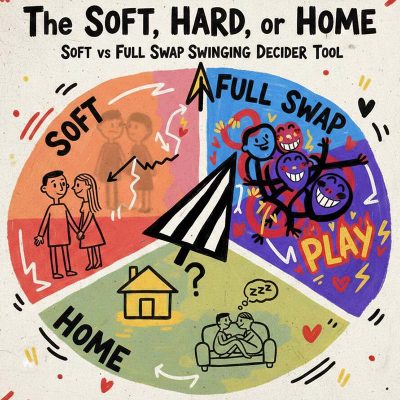
Don't let a "Soft Swap" night turn into a "Hard Feelings" morning.
Walking into the club with different expectations is a grenade waiting to explode. He thinks it’s a free-for-all; she thinks it’s just drinks and dancing. That silence in the car ride home? That’s the sound of a preventable disaster.
Stop guessing. Use this tool to sync your "sexual GPS" before you leave the driveway. Determine exactly how wild you’re getting tonight, so the only surprise is how much fun you have.

The fantasy of swinging is electric, but that cold sweat you feel when thinking about your partner with someone else? That’s your survival instinct warning you that your foundation is at stake. Most couples don’t fail because they lacked desire; they fail because they lacked a safety net. Ambiguity is where jealousy festers, and "winging it" is the fastest way to turn a dream into a nightmare of resentment and "what have we done?"
The Essential Guide to Swinging is your anxiety-proof roadmap through the chaos. Don't gamble your marriage on hope. Build a fortress of trust, master the repair chats, and ensure your exploration is defined by care, not a catastrophe

Full swap is the deep end. The rush is intense, but so is the risk of emotional wreckage. That tightening in your chest isn’t just nerves; it’s the fear that a "fun night" could become a permanent scar on your marriage. You can’t un-ring this bell, so never strike it without a plan.
The Essential Guide to Full Swap Swinging replaces reckless gambling with calculated discipline. From ironclad vetting to "emergency brake" scripts, we provide the safety architecture required to swap bodies without losing your minds. Don't just hope it goes well, engineer it
Gemini said
The fantasy is electric. The reality? It can be a grenade that blows up your marriage and your social circle. That tightening in your chest isn't just nerves. It is a warning that you are risking everything on a vibe. "Winging it" is the fastest way to turn a fun group chat into a toxic war zone.
The Essential Guide replaces the chaos with ironclad protocols. We provide the vetting tools, jealousy airlocks, and privacy scripts needed to swap bodies without losing your mind. Secure your safety first.
The fantasy of swinging is electric, but that cold sweat you feel when thinking about your partner with someone else? That’s your survival instinct warning you that your foundation is at stake. Most couples don’t fail because they lacked desire; they fail because they lacked a safety net. Ambiguity is where jealousy festers, and "winging it" is the fastest way to turn a dream into a nightmare of resentment and "what have we done?"
The Essential Guide to Swinging is your anxiety-proof roadmap through the chaos. Don't gamble your marriage on hope. Build a fortress of trust, master the repair chats, and ensure your exploration is defined by care, not a catastrophe
Full swap is the deep end. The rush is intense, but so is the risk of emotional wreckage. That tightening in your chest isn’t just nerves; it’s the fear that a "fun night" could become a permanent scar on your marriage. You can’t un-ring this bell, so never strike it without a plan.
The Essential Guide to Full Swap Swinging replaces reckless gambling with calculated discipline. From ironclad vetting to "emergency brake" scripts, we provide the safety architecture required to swap bodies without losing your minds. Don't just hope it goes well, engineer it
Key terms you should know
- ENM Abbreviation for ethical non monogamy. It means consenting adults pursue relationships beyond a single exclusive partnership.
- Swinging A subset of ENM where couples engage in sexual activity with other couples or singles often in social settings and away from home for privacy and safety.
- Primary partner The person or people who hold a central place in a relationship often tied to a shared home or family life.
- Secondary partner A partner who is meaningful but not the central focus of the home life.
- Compersion A positive feeling of happiness for a partner when they thrive with someone else rather than feeling jealousy.
- Boundaries Limits set by adults to protect safety and emotional well being. Boundaries can be soft or hard depending on the situation.
- Code words Simple words or phrases agreed in advance to signal a need to pause or adjust plans without making a big scene.
- Age appropriate disclosure Sharing information with children at a level that suits their age and understanding while keeping adult concerns private.
- Safety plan A plan that covers physical safety including safe sex practices and protecting kids from exposure to adult activities.
- Transparency Honesty about plans and feelings with partners and, when appropriate, within the family or with chosen support networks.
Ground rules that protect kids and the home
Ground rules form the spine of a balanced life. They are not there to punish but to protect. Here are some rules that many families find helpful when swinging is part of the relationship dynamic.
- No public sexual activity in the home The home is a family space and children should never witness sexual activity. All sexual events should occur outside the home and in a setting that respects everyone involved.
- Clear privacy boundaries for children Information about adult dating life should be kept private unless a child asks a direct age appropriate question. There is a line between honesty and unnecessary details.
- Communication hours Establish times when adults talk about relationships and times when family life is focused on friends and children. This helps avoid crossover conflicts and keeps kids from feeling unresolved tension.
- Consent everywhere Any activities that involve other adults should be based on explicit consent and open conversations before they occur. Kids do not have to be involved in those conversations unless they are old enough to understand a basic concept of consent.
- Safety first Use condoms and ongoing sexual health checks as required. Keep clear lines of communication with all involved to prevent risk and protect family health.
- Respectful communication When disagreements happen within the adult network they should stay adult and private and not spill into family life in a way that harms kids or increases stress at home.
- Time management Build a schedule that protects school work meals bedtime and family activities. Consistency matters for kids.
- Rules for social settings When social events occur with other adults present in the swing circle keep behaviors respectful and mindful of children who may be nearby or mentioned in conversation.
How to talk with your partner about balancing swinging and parenting
Open talk is the backbone of any ENM dynamic and this is especially true when kids are in the mix. Here is a practical talk plan you can adapt to your own style.
- Set a calm planning time Schedule a time when both of you can talk without interruption and with enough time to explore ideas.
- Name your goals Talk about what you want in your parenting life and what you want from swinging. Clarify non negotiables for both of you.
- Explore boundaries together Decide what you are comfortable with in terms of who you see what venues you use what topics you share and how much you disclose to the kids and to your wider circle.
- Agree on a check in cadence Decide how often you will review boundaries and plans. Consider a monthly cadence or a quarterly review depending on what you both need.
- Add a code word plan Choose a few simple words or short phrases that signal a pause a reevaluation or a shift without creating tension in the moment.
Discussing ENM with kids in age appropriate ways
Kids deserve honesty and security but they do not need every detail of adult life. When you choose to disclose information you should tailor it to the child’s age development and emotional readiness. Here are some practical guidelines that many families find helpful.
- Keep it simple Use clear simple language focused on safety and care rather than sexual content. You can say that adults have friendships and relationships in many different ways and that some friendships involve spending time with other adults in different ways than a typical family might.
- Focus on safety and privacy Emphasize that adult life includes private matters and that there are boundaries that protect everyone including children.
- Provide reassurance Reassure kids that their home is safe that routines will remain consistent and that they will continue to have support from you and from trusted caregivers.
- Answer questions honestly but briefly If a child asks who your friends are or where someone fits into your life give a short respectful answer and avoid unnecessary details.
- Involve the right helpers In some cases you may want to bring in a family therapist or a trusted counselor who can help navigate questions that come up from time to time.
How to handle jealousy and insecurity in a family setting
Jealousy is normal in adult relationships and it can show up in parenting life as well. The key is to address it early and use practical steps to reduce friction.
- Name the feeling If you feel jealousy identify the emotion and name it without blaming your partner. For example you might say I am feeling unsettled about a new friendship and I would like to talk about it.
- Go to core needs Ask what you need from your partner to feel safe and supported. This often reduces the intensity of the feeling.
- Create reassurance rituals This can look like a weekly date night with just the two of you or a check in before school mornings to share plans and expectations for the day.
- Use a pause plan If a situation escalates use a pre agreed pause code to step back and come back to the conversation later when emotions are calmer.
Real life scenarios and how they can work
Concrete examples help make ideas feel possible. Here are some common situations and practical ways families manage them to minimize risk and maximize trust.
Scenario one the family weekend without guests
You and your partner decide to keep weekend family time quiet with no guests. The focus is on school activities meals family walks and movie nights. The other adults in your life coordinate plans for the following weekend ensuring all routines stay intact and the kids feel supported. You review a simple safety plan before the weekend and agree not to host at home if it could disrupt routines.
Scenario two a planned event with responsible adults present
Two trusted couples meet for a social evening away from home with clear boundaries in place. The evening involves conversation games a shared meal and an activity that does not involve intimate contact in a way that would be uncomfortable for kids or neighbors. There is a pre agreed signal in case adults decide to step back and revisit plans for another time. Everyone involved respects privacy and keeps the children at the center of any decisions that affect the home life.
Scenario three a partner forms a new emotional connection
Emotional connections can emerge slowly and require time. Before any disclosure to children or the wider circle the adults discuss what is safe and appropriate. The primary aim is to preserve family stability. The couple may agree to keep personal revelations private until they both sense it is the right moment to share the essentials with the kids in an age appropriate manner. If concerns come up the couple revisits boundaries and adjusts plans until both partners feel secure.
Scenario four time management during busy seasons
School events holidays and family trips can complicate schedules. A practical approach is to map the calendar a few weeks at a time grouped by family commitments and by personal time for adults. In this approach there is room for social activities with other adults while ensuring that the kids have stable routines and predictable support from caregivers including grandparents or trusted babysitters.
Practical tips for staying organized and keeping harmony
- Calendar blocks Use a shared calendar to map family time social events personal time and planned swinging activities. Seeing it all in one place reduces the chance of conflicts and helps you stay aligned.
- Communication scripts Prepare a few simple talking points that cover interests concerns and boundaries. Revisit them when plans change or when life gets busy.
- Private conversations Keep adult conversations behind closed doors whenever children are present or nearby. This protects kids from confusion and questions they should not have to answer.
- Privacy first Decide in advance what information you will share with the kids with family members and with friends. Privacy protects emotional safety for all.
- Consistency and reliability Be reliable about routines school meals bedtimes and family time. Consistency gives kids a sense of safety even when adult life looks different on the outside.
What to tell family and friends outside the home
Disclosures outside the home should be careful and purposeful. You want to be honest without inviting unnecessary scrutiny or misunderstandings. Consider a few practical guidelines:
- Choose the audience Only share with people who will respect boundaries and who you trust to keep information private.
- Offer an explanation that fits the audience A simple explanation such as we are in an open relationship that works for us and we keep it private within the family is usually enough for most circles.
- Provide boundaries If someone asks for more detail offer a general description and redirect to respect and privacy. Be ready to politely set a boundary if needed.
- Invite questions but pace disclosures Do not feel pressured to answer every question. It is okay to say you prefer to discuss that another time.
Safety health and privacy considerations
Health and safety matter in any ENM plan. They take on extra importance when children are involved. Here are practical steps to keep everyone safe.
- Regular health checks Ensure all adults follow recommended sexual health testing frequencies and practice safe sex when engaging with others.
- Clear boundaries for privacy Decide what you share publicly and what stays private. Protect kids from adult topics that belong in adult spaces.
- Digital boundaries Be mindful of what is posted online including pictures and comments that may involve other adults. Use privacy settings and avoid tagging locations that reveal where a child spends time.
- Support networks Build a trusted group of friends or professionals who can provide advice and support when things feel overwhelming. A therapist with experience in ENM can be a valuable resource.
Glossary of useful terms and acronyms
- ENM Ethical non monogamy a relationship approach that embraces multiple intimate connections with consent and honesty.
- Swinging A form of ENM where couples engage in sexual activities with other couples or singles typically for recreation rather than forming new romantic bonds.
- Primary partner The partner who holds a central place in the household and often shares parenting responsibilities and a home life.
- Secondary partner A partner who is meaningful but not the central focus of the home life or parenting duties.
- Compersion A positive feeling when a partner enjoys experiences with someone else rather than feeling jealousy.
- Boundaries Limits set by adults to protect safety and emotional well being. They can be soft or firm depending on the situation.
- Code words Simple signals agreed to pause or adjust plans without a big discussion in the moment.
- Age appropriate disclosure Sharing information with children at a level that matches their age and emotional development.
- Safety plan A plan covering sexual health safety and privacy that protects everyone in the home.
- Transparency Honest communication about plans feelings and concerns with partners and family when appropriate.
Frequently asked questions
How do we start this conversation with our kids if they ask about our life outside the home
Begin with a calm confident tone and keep your language simple. You can say that adults may have different kinds of friendships and that the home is the place where they know they are safe loved and cared for. Reassure them that their routine and safety remain the priority. Answer only what is asked and avoid unnecessary details.
What should we tell other grown ups about our swinging life
Share a concise description that emphasizes consent honesty and respect. Avoid intimate details and focus on how you protect your family and health. Be prepared to set a boundary if someone pushes beyond what you are comfortable sharing.
Is compersion realistic and how can we cultivate it
Compersion tends to grow from honest communication patience and shared positive experiences. Celebrate your partner success and stay curious about their feelings. If jealousy arises discuss it with empathy and focus on your own emotional needs as well as your partner's.
How do we handle scheduling while keeping kids a priority
Put family time first in the calendar and treat it as non negotiable. Use blocks for date nights and time with other adults that do not interfere with school days meals and bedtime. Adjust plans as needed but communicate changes early and clearly.
What if we feel overwhelmed or exhausted by all the planning
Seek support from a trusted therapist or a social circle that understands ENM and parenting. It is perfectly acceptable to pause new activities while you recalibrate. Your well being matters and taking a step back can prevent bigger problems later.
How do we maintain privacy on social media
Be deliberate about what you post and who can see it. Consider separate accounts for different parts of your life or adjust privacy settings so kids cannot be tagged in posts that reveal private information. Keep discussions about partners and events off public channels or group chats that include children.
Should we disclose our swinging life to extended family
Only if you feel safe and comfortable. When in doubt choose privacy. If you do disclose keep it brief and focused on your commitment to family values health and safety. Be ready for different reactions and maintain firm boundaries about how much you will discuss.
What if a child asks directly about sexual activity
Redirect to safety and privacy. You can say that adults have private activities that are not for children to know about. Encourage questions about feelings and friendships while keeping the details appropriate for their age.
Don't let a "Soft Swap" night turn into a "Hard Feelings" morning.
Walking into the club with different expectations is a grenade waiting to explode. He thinks it’s a free-for-all; she thinks it’s just drinks and dancing. That silence in the car ride home? That’s the sound of a preventable disaster.
Stop guessing. Use this tool to sync your "sexual GPS" before you leave the driveway. Determine exactly how wild you’re getting tonight, so the only surprise is how much fun you have.
The fantasy of swinging is electric, but that cold sweat you feel when thinking about your partner with someone else? That’s your survival instinct warning you that your foundation is at stake. Most couples don’t fail because they lacked desire; they fail because they lacked a safety net. Ambiguity is where jealousy festers, and "winging it" is the fastest way to turn a dream into a nightmare of resentment and "what have we done?"
The Essential Guide to Swinging is your anxiety-proof roadmap through the chaos. Don't gamble your marriage on hope. Build a fortress of trust, master the repair chats, and ensure your exploration is defined by care, not a catastrophe
Full swap is the deep end. The rush is intense, but so is the risk of emotional wreckage. That tightening in your chest isn’t just nerves; it’s the fear that a "fun night" could become a permanent scar on your marriage. You can’t un-ring this bell, so never strike it without a plan.
The Essential Guide to Full Swap Swinging replaces reckless gambling with calculated discipline. From ironclad vetting to "emergency brake" scripts, we provide the safety architecture required to swap bodies without losing your minds. Don't just hope it goes well, engineer it
Gemini said
The fantasy is electric. The reality? It can be a grenade that blows up your marriage and your social circle. That tightening in your chest isn't just nerves. It is a warning that you are risking everything on a vibe. "Winging it" is the fastest way to turn a fun group chat into a toxic war zone.
The Essential Guide replaces the chaos with ironclad protocols. We provide the vetting tools, jealousy airlocks, and privacy scripts needed to swap bodies without losing your mind. Secure your safety first.
The fantasy of swinging is electric, but that cold sweat you feel when thinking about your partner with someone else? That’s your survival instinct warning you that your foundation is at stake. Most couples don’t fail because they lacked desire; they fail because they lacked a safety net. Ambiguity is where jealousy festers, and "winging it" is the fastest way to turn a dream into a nightmare of resentment and "what have we done?"
The Essential Guide to Swinging is your anxiety-proof roadmap through the chaos. Don't gamble your marriage on hope. Build a fortress of trust, master the repair chats, and ensure your exploration is defined by care, not a catastrophe
Full swap is the deep end. The rush is intense, but so is the risk of emotional wreckage. That tightening in your chest isn’t just nerves; it’s the fear that a "fun night" could become a permanent scar on your marriage. You can’t un-ring this bell, so never strike it without a plan.
The Essential Guide to Full Swap Swinging replaces reckless gambling with calculated discipline. From ironclad vetting to "emergency brake" scripts, we provide the safety architecture required to swap bodies without losing your minds. Don't just hope it goes well, engineer it
