
Bi Men and Stigma in Swinging Communities

Welcome to a grounded exploration of what bi men experience inside swinging circles. We keep it real and accessible, explaining terms as we go and offering practical tips you can actually use. This isn t about shaming anyone it is about understanding the pressures bi men face and learning how to navigate them with respect, consent and clear communication. Think of this as a friendly biosphere tour through a buzzing community that sometimes feels like a crowded room with a lot of voices. We ll break down myths, share honest scenarios and give you actionable steps for healthier connections.
Quick Links to Useful Sections
- What bi means in swinging communities
- Why stigma exists in swinging communities
- Common myths and the truths underneath them
- Myth one Bi men must choose between partners or live a double life
- Myth two Bi men are less trustworthy or more likely to cheat
- Myth three Bi men are always seeking random hookups
- Myth four Bi men disrupt the emotional safety of a couple
- Realities that bi men in swinging communities often face
- Impact on mental health and self esteem
- Communication strategies that preserve dignity and consent
- Practical tips for bi men navigating swinging spaces
- Boundaries and negotiation for bi men
- How to handle jealousy in mixed dynamics
- Ethical considerations for bi men in swinging spaces
- Real life scenarios how things can play out
- Scenario 1 A couple invites you to join a play session
- Scenario 2 You sense a partner feels uncertain about your bisexual orientation
- Scenario 3 A solo bi man joins a group event and feels left out
- Must no s and best practices for bi men
- Glossary of useful terms and acronyms
- Practical resources if you are exploring bi life in swinging spaces
- News ways to approach stigma with confidence
- Checklist for bi men new to swinging spaces
- Frequently asked questions
Before we dive in let s define our terms so everyone is speaking the same language. ENM stands for Ethical Non Monogamy a broad umbrella for relationship styles where honesty and consent guide multiple intimate or sexual connections. Swinging is a form of ENM that typically focuses on sexual activities with partners outside the primary relationship while romance may be limited or absent. Bi men means individuals who identify as male and who are attracted to more than one gender including women and men or non binary people. Bi does not imply a fixed behavior it is an orientation and a range of attractions that can shift with time and context. In swinging communities the dynamics vary a lot from couple led to solo practitioner models and everything in between. The goal is to create space for consentual exploration while respecting all boundaries involved. Now let s explore the terrain in more detail.
What bi means in swinging communities
Bi in this world sits at the intersection of sexual orientation and the practice of swinging. It is possible to identify as bi while negotiating consent with a partner or a couple. Some bi men also identify as pansexual or queer arguing that attraction is not limited to conventional binaries. The key idea is that attraction can extend beyond a single gender or identity and that sexual exploration can be a shared adventure when everyone agrees and communicates clearly. In swinging spaces you may find bi men who are open to same gender experiences as well as opposite gender experiences or who prefer to explore in specific contexts. This flexibility often leads to rich, varied experiences but it can also invite complex emotions and stigma. We will unpack both sides in this article.
Why stigma exists in swinging communities
Stigma around bi men arises from several sources including stereotypes about sexual behavior jealousy concerns and cultural norms. Some common myths include the idea that bi men are less committed to one partner that they are unreliable or that their attraction to two genders makes them indecisive. Another persistent stereotype is that bi men are seeking novelty or that their presence in a swinging scenario undermines the primary couple s bond. These viewpoints can be reinforced by miscommunication or by experiences that were not navigated with clear consent. The reality is more nuanced. Bi men bring genuine curiosity and a flexible approach to intimacy but like any erotic or romantic pursuit it works best when everyone involved knows the rules of engagement and feels respected.
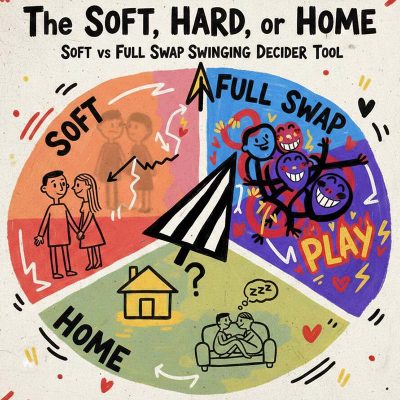
Don't let a "Soft Swap" night turn into a "Hard Feelings" morning.
Walking into the club with different expectations is a grenade waiting to explode. He thinks it’s a free-for-all; she thinks it’s just drinks and dancing. That silence in the car ride home? That’s the sound of a preventable disaster.
Stop guessing. Use this tool to sync your "sexual GPS" before you leave the driveway. Determine exactly how wild you’re getting tonight, so the only surprise is how much fun you have.
The fantasy of swinging is electric, but that cold sweat you feel when thinking about your partner with someone else? That’s your survival instinct warning you that your foundation is at stake. Most couples don’t fail because they lacked desire; they fail because they lacked a safety net. Ambiguity is where jealousy festers, and "winging it" is the fastest way to turn a dream into a nightmare of resentment and "what have we done?"
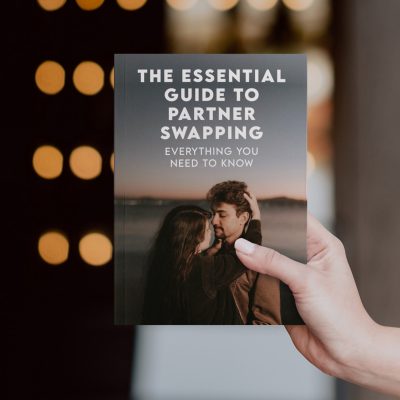
The Essential Guide to Swinging is your anxiety-proof roadmap through the chaos. Don't gamble your marriage on hope. Build a fortress of trust, master the repair chats, and ensure your exploration is defined by care, not a catastrophe
Full swap is the deep end. The rush is intense, but so is the risk of emotional wreckage. That tightening in your chest isn’t just nerves; it’s the fear that a "fun night" could become a permanent scar on your marriage. You can’t un-ring this bell, so never strike it without a plan.
The Essential Guide to Full Swap Swinging replaces reckless gambling with calculated discipline. From ironclad vetting to "emergency brake" scripts, we provide the safety architecture required to swap bodies without losing your minds. Don't just hope it goes well, engineer it
Gemini said
The fantasy is electric. The reality? It can be a grenade that blows up your marriage and your social circle. That tightening in your chest isn't just nerves. It is a warning that you are risking everything on a vibe. "Winging it" is the fastest way to turn a fun group chat into a toxic war zone.
The Essential Guide replaces the chaos with ironclad protocols. We provide the vetting tools, jealousy airlocks, and privacy scripts needed to swap bodies without losing your mind. Secure your safety first.
The fantasy of swinging is electric, but that cold sweat you feel when thinking about your partner with someone else? That’s your survival instinct warning you that your foundation is at stake. Most couples don’t fail because they lacked desire; they fail because they lacked a safety net. Ambiguity is where jealousy festers, and "winging it" is the fastest way to turn a dream into a nightmare of resentment and "what have we done?"
The Essential Guide to Swinging is your anxiety-proof roadmap through the chaos. Don't gamble your marriage on hope. Build a fortress of trust, master the repair chats, and ensure your exploration is defined by care, not a catastrophe
Full swap is the deep end. The rush is intense, but so is the risk of emotional wreckage. That tightening in your chest isn’t just nerves; it’s the fear that a "fun night" could become a permanent scar on your marriage. You can’t un-ring this bell, so never strike it without a plan.
The Essential Guide to Full Swap Swinging replaces reckless gambling with calculated discipline. From ironclad vetting to "emergency brake" scripts, we provide the safety architecture required to swap bodies without losing your minds. Don't just hope it goes well, engineer it
Common myths and the truths underneath them
Myth one Bi men must choose between partners or live a double life
Truth is bi men can enjoy a spectrum of attractions and still maintain clear boundaries with each partner. The best swinging setups are ones where everyone is invited to participate or opt out according to their own comfort level. Consent is ongoing and reversible. It is not about choosing at all times it is about choosing in the moment with all parties in the loop.
Myth two Bi men are less trustworthy or more likely to cheat
Trustworthiness has nothing to do with sexual orientation. It has to do with communication honesty and agreed rules. In healthy ENM arrangements trust is built through explicit conversations about expectations what counts as cheating how risks are managed and how emotions will be handled if things get complicated. In practice bi men who want to participate in swinging responsibly establish transparent boundaries with their partners and respect when a boundary is set or renegotiated.
Myth three Bi men are always seeking random hookups
The swinging world includes a wide range of preferences. Some bi men enjoy casual connections while others seek longer term friends with benefits or intimate connections that feel almost like a polyamorous vibe. The key is that all parties know the scope of the connection and consent to it. If you are in a group setting always check the agreed level of involvement and respect what s not on the table.
Myth four Bi men disrupt the emotional safety of a couple
Emotional safety is a shared obligation. Bi men who approach swinging with care focus on consent consent and communication. They listen to concerns from the couple or other partners and adjust their behavior accordingly. The best experiences arise when there is a clear plan for handling jealousy or insecurity and when all voices are heard without shaming anyone for their feelings.
Realities that bi men in swinging communities often face
Bi men frequently encounter subtle pressures that can affect self esteem and sexual well being. Some common realities include a fear of being labeled as insincere or unreliable especially when bystanders misinterpret bisexuality as promiscuity. Others worry about being used as a complement to a couple s fantasy rather than treated as full participants with their own boundaries and goals. These pressures can be intensified by the way conversations are framed or by a lack of inclusive language in some groups.
Impact on mental health and self esteem
Stigma can lead to anxiety body tension and burnout after a scene. It is not unusual for bi men to question their attraction or their place in a group setting because they feel mischaracterized or judged. On the flip side a supportive environment can enhance self esteem foster authenticity and create more enjoyable experiences. Grounded communication and mutual respect are the antidotes to stigma. When people feel seen and heard they are more able to participate in ways that feel ethical and exciting rather than draining or evaluative.
Communication strategies that preserve dignity and consent
Good communication is the backbone of any ENM arrangement and it is especially critical for bi men navigating swinging spaces. Here are practical approaches you can apply in real time.
- Define your boundaries clearly Before you enter a scene or a party discuss what you are open to and what is off limits. Write it down if it helps you stay steady.
- Use explicit consent checks Ask yes rather than assuming. A simple Are you comfortable with this is a powerful tool for keeping everyone aligned.
- Agree on signals for discomfort If someone wants to pause the action or step away a discreet cue should be agreed upon in advance. This protects everyone s emotional space.
- Practice reflective debriefs After a scene take time to talk about what went well and what could be improved. This builds trust and lowers the chance of miscommunication next time.
- Acknowledge consent can evolve It is normal for boundaries to shift as feelings grow or change. Revisit agreements regularly and with sensitivity.
- Guard against labeling Avoid reducing a bi man to his orientation. Focus on actions experiences and boundaries rather than assuming motives or character traits.
Practical tips for bi men navigating swinging spaces
Use these tactics to help your experiences stay positive and aligned with your values.
- Do your homework Learn the rules of the space you are entering. Some groups have explicit policies about bisexual participants and some do not. Knowing the local norms helps you show up respectfully.
- Share your intentions up front If you are seeking a certain type of connection say so in the first conversation. This saves time and reduces friction.
- Bring a friend or trusted ally If you feel uncertain consider going with a supportive partner or friend who respects your boundaries. Safety in numbers helps you feel grounded.
- Plan for aftercare Acknowledge that intimate experiences can be emotionally taxing. Have a plan to decompress with water a snack or quiet time after a scene if needed.
- Track your emotional weather Keep a simple log of how you felt before during and after interactions. This helps you notice patterns and make better choices next time.
Don't let a "Soft Swap" night turn into a "Hard Feelings" morning.
Walking into the club with different expectations is a grenade waiting to explode. He thinks it’s a free-for-all; she thinks it’s just drinks and dancing. That silence in the car ride home? That’s the sound of a preventable disaster.
Stop guessing. Use this tool to sync your "sexual GPS" before you leave the driveway. Determine exactly how wild you’re getting tonight, so the only surprise is how much fun you have.
The fantasy of swinging is electric, but that cold sweat you feel when thinking about your partner with someone else? That’s your survival instinct warning you that your foundation is at stake. Most couples don’t fail because they lacked desire; they fail because they lacked a safety net. Ambiguity is where jealousy festers, and "winging it" is the fastest way to turn a dream into a nightmare of resentment and "what have we done?"
The Essential Guide to Swinging is your anxiety-proof roadmap through the chaos. Don't gamble your marriage on hope. Build a fortress of trust, master the repair chats, and ensure your exploration is defined by care, not a catastrophe
Full swap is the deep end. The rush is intense, but so is the risk of emotional wreckage. That tightening in your chest isn’t just nerves; it’s the fear that a "fun night" could become a permanent scar on your marriage. You can’t un-ring this bell, so never strike it without a plan.
The Essential Guide to Full Swap Swinging replaces reckless gambling with calculated discipline. From ironclad vetting to "emergency brake" scripts, we provide the safety architecture required to swap bodies without losing your minds. Don't just hope it goes well, engineer it
Gemini said
The fantasy is electric. The reality? It can be a grenade that blows up your marriage and your social circle. That tightening in your chest isn't just nerves. It is a warning that you are risking everything on a vibe. "Winging it" is the fastest way to turn a fun group chat into a toxic war zone.
The Essential Guide replaces the chaos with ironclad protocols. We provide the vetting tools, jealousy airlocks, and privacy scripts needed to swap bodies without losing your mind. Secure your safety first.
The fantasy of swinging is electric, but that cold sweat you feel when thinking about your partner with someone else? That’s your survival instinct warning you that your foundation is at stake. Most couples don’t fail because they lacked desire; they fail because they lacked a safety net. Ambiguity is where jealousy festers, and "winging it" is the fastest way to turn a dream into a nightmare of resentment and "what have we done?"
The Essential Guide to Swinging is your anxiety-proof roadmap through the chaos. Don't gamble your marriage on hope. Build a fortress of trust, master the repair chats, and ensure your exploration is defined by care, not a catastrophe
Full swap is the deep end. The rush is intense, but so is the risk of emotional wreckage. That tightening in your chest isn’t just nerves; it’s the fear that a "fun night" could become a permanent scar on your marriage. You can’t un-ring this bell, so never strike it without a plan.
The Essential Guide to Full Swap Swinging replaces reckless gambling with calculated discipline. From ironclad vetting to "emergency brake" scripts, we provide the safety architecture required to swap bodies without losing your minds. Don't just hope it goes well, engineer it
Boundaries and negotiation for bi men
Boundaries are tools not walls. They are there to help you participate in ways that feel good and safe for you while honoring others. Some common boundary topics in swinging conversations include who you are open to meeting what kind of activities you are comfortable with how much you want to disclose about your orientation and how you will handle potential awkward moments.
Examples of boundary language you can adapt
- I enjoy meeting new people but I want to keep this scene purely physical with no romantic entanglements for now.
- I am bi and comfortable with both men and women present but I prefer not to engage in any same gender interaction this time.
- If jealousy arises I want to pause and reevaluate rather than push through the moment.
- I would like to debrief after the experience to talk about feelings and boundaries for future events.
How to handle jealousy in mixed dynamics
Jealousy is a common emotion in ENM and swinging. The key is how you respond not the fact that it appears. Build a toolbox for managing jealousy that includes honest vulnerability with your partner or partners sharing your fears with a trusted friend and practicing a quick grounding exercise like a slow inhale count to five and a slow exhale count to five. Some people find it useful to set a temporary pause on a scene if emotions run too high. Returning to the conversation later with calmer energy often leads to clearer decisions about what to do next.
Ethical considerations for bi men in swinging spaces
Ethics in ENM means acting with consent transparency and respect for all involved. For bi men this often involves explicit consent about the level of exposure to others including whether one plans to disclose orientation to new partners and how to handle discretion in shared spaces. It also means recognizing that some people may have conditions or boundaries that require different handling. Listening first and sharing your own boundaries honestly helps create a culture where everyone feels respected and included.
Real life scenarios how things can play out
Scenario 1 A couple invites you to join a play session
You are bi and find yourself attracted to both partners in a couple that has invited you into their play space. You outline your boundaries early you confirm what kind of touch is allowed and you discuss whether romance or deeper emotional connection is on the table. You listen to the couple s expectations and you align or gently decline if anything feels off. The night ends with mutual satisfaction and a clear sense of what s next for everyone involved.
Scenario 2 You sense a partner feels uncertain about your bisexual orientation
In this case a quick check in can help. You acknowledge the other person s feelings and you explain your orientation in a respectful calm way focusing on safety consent and shared boundaries. You may propose a pause to talk components of the setup and a debrief after the experience to ensure everyone feels heard.
Scenario 3 A solo bi man joins a group event and feels left out
In such moments it helps to establish inclusive norms up front invite everyone into conversations and avoid cliques. If you feel excluded you can gracefully step back and discuss with the event host or with potential partners about how to create a more inclusive environment for future events. Your comfort matters and you deserve to be part of the experience if you choose to be.
Must no s and best practices for bi men
- Avoid assuming consent or assuming that bisexual attraction translates to automatic compatibility or willingness to engage with any partner.
- Never pressure a partner or a group to accept a dynamic that makes someone uncomfortable.
- Do not disclose someone else s orientation without their explicit consent.
- Respect everyone s boundaries even if they are different from your own.
- Do not justify behavior by claiming that everyone in swinging is open minded about anything sexual.
- Always verify the safety practices including consent and STI risk discussions before any intimate activity.
Glossary of useful terms and acronyms
- ENM Ethical Non Monogamy a framework that prioritizes consent honest communication and ethical behavior when multiple intimate connections are involved.
- Swinging A form of ENM focused on sexual connections with people outside a primary relationship usually without romantic commitments.
- Bi Short for bisexual referring to attraction to more than one gender including both men and women and sometimes non binary people.
- CNM Consensual Non Monogamy another umbrella term used to describe relationships where all parties agree to non monogamous arrangements.
- Boundary A personal line that defines what is and is not acceptable in terms of behavior and interactions.
- Consent A clear enthusiastic agreement given freely by all participants before engaging in any activity.
- Aftercare The care and check in after an intimate interaction to ensure everyone feels safe supported and heard.
- Jealousy management Techniques and conversations that help people process feelings that arise when boundaries are tested.
- Discord A mismatch or conflict in expectations that should be addressed openly rather than ignored.
Practical resources if you are exploring bi life in swinging spaces
Learning from trusted communities and educational sources can reduce stigma and help you discover healthier dynamics. Look for communities that emphasize consent inclusive language and respectful behavior. Consider workshops and discussion circles focused on ethical non monogamy that include dedicated conversations about bisexual visibility and concerns. Books and podcasts from queer and polyamory authors often address the unique experiences of bi men in group settings. Seek out mentors or coaches who understand ENM and can help you negotiate boundaries and improve communication in a compassionate way.
News ways to approach stigma with confidence
Stigma often thrives in ambiguity. By bringing clarity to your own boundaries naming your needs and inviting open dialogue you can reduce misinterpretation and build trust. Here is a simple framework you can use starting today.
- Clarify who you are and what you want in this moment not as a fixed label but as an evolving position.
- Communicate your orientation and desires in blunt but respectful terms so there is less room for misreadings.
- Invite feedback and listen without becoming defensive. If someone expresses concern explore what underlies that feeling rather than debating identity.
- Follow up with action that aligns with what you promised in the conversation. Consistency matters more than grand statements.
Checklist for bi men new to swinging spaces
- Define your boundaries and desired experiences before you walk into a space.
- Ask about group norms and consent requirements ahead of time.
- Establish a plan for aftercare and emotional support.
- Practice how you will explain your orientation in a concise non defensive way.
- Identify a trusted ally who can help if conversations become tense or if you need moral support during events.
Frequently asked questions
What does bi mean in swinging communities and how does it affect participation?
Bi describes a spectrum of attraction and can influence who someone is comfortable engaging with. The impact on participation is about clear consent not about orientation alone. If a group understands and honors the conventional rules of engagement everyone can participate in a way that feels respectful and enjoyable.
How can bi men communicate their orientation without feeling exposed or threatened?
Lead with clarity and consent. A short statement such as I am bi and I am here to explore respectfully with everyone s consent helps set expectations. Be prepared to answer questions but only share what you are comfortable sharing. Boundaries are your right and they deserve to be respected.
What are warning signs that a space is unsafe for bi men?
Look for vague language hostility toward bisexuality inconsistent boundaries or pressure to participate in activities beyond your comfort level. If the environment feels performative or if consent is not treated as ongoing the space is likely not safe. Trust your instincts and step away if needed.
How do you handle jealousy when multiple people are involved and one partner is bi?
Jealousy is normal in any intimate setting. Use open dialogue keep lines of communication clear and practice aftercare. Revisit boundaries after reflective discussions and adjust where necessary to preserve emotional safety for everyone involved.
Is there a difference between swinging and polyamory for bi men?
Yes the main difference is usually the emphasis on sexual interactions with others in swinging versus the potential for ongoing romantic bonds in polyamory. Many bi men move between these worlds or blend elements from both. The key in all cases is consent honest communication and respectful behavior.
How can allies be respectful and supportive of bi men in swinging spaces?
Allies should listen before offering advice they should avoid labeling or judging. They can support by learning the terminology understanding the boundaries and helping to create inclusive spaces where bi men feel seen and valued. Allies can also challenge stigma when they hear it and advocate for clear consent practices.
Don't let a "Soft Swap" night turn into a "Hard Feelings" morning.
Walking into the club with different expectations is a grenade waiting to explode. He thinks it’s a free-for-all; she thinks it’s just drinks and dancing. That silence in the car ride home? That’s the sound of a preventable disaster.
Stop guessing. Use this tool to sync your "sexual GPS" before you leave the driveway. Determine exactly how wild you’re getting tonight, so the only surprise is how much fun you have.
The fantasy of swinging is electric, but that cold sweat you feel when thinking about your partner with someone else? That’s your survival instinct warning you that your foundation is at stake. Most couples don’t fail because they lacked desire; they fail because they lacked a safety net. Ambiguity is where jealousy festers, and "winging it" is the fastest way to turn a dream into a nightmare of resentment and "what have we done?"
The Essential Guide to Swinging is your anxiety-proof roadmap through the chaos. Don't gamble your marriage on hope. Build a fortress of trust, master the repair chats, and ensure your exploration is defined by care, not a catastrophe
Full swap is the deep end. The rush is intense, but so is the risk of emotional wreckage. That tightening in your chest isn’t just nerves; it’s the fear that a "fun night" could become a permanent scar on your marriage. You can’t un-ring this bell, so never strike it without a plan.
The Essential Guide to Full Swap Swinging replaces reckless gambling with calculated discipline. From ironclad vetting to "emergency brake" scripts, we provide the safety architecture required to swap bodies without losing your minds. Don't just hope it goes well, engineer it
Gemini said
The fantasy is electric. The reality? It can be a grenade that blows up your marriage and your social circle. That tightening in your chest isn't just nerves. It is a warning that you are risking everything on a vibe. "Winging it" is the fastest way to turn a fun group chat into a toxic war zone.
The Essential Guide replaces the chaos with ironclad protocols. We provide the vetting tools, jealousy airlocks, and privacy scripts needed to swap bodies without losing your mind. Secure your safety first.
The fantasy of swinging is electric, but that cold sweat you feel when thinking about your partner with someone else? That’s your survival instinct warning you that your foundation is at stake. Most couples don’t fail because they lacked desire; they fail because they lacked a safety net. Ambiguity is where jealousy festers, and "winging it" is the fastest way to turn a dream into a nightmare of resentment and "what have we done?"
The Essential Guide to Swinging is your anxiety-proof roadmap through the chaos. Don't gamble your marriage on hope. Build a fortress of trust, master the repair chats, and ensure your exploration is defined by care, not a catastrophe
Full swap is the deep end. The rush is intense, but so is the risk of emotional wreckage. That tightening in your chest isn’t just nerves; it’s the fear that a "fun night" could become a permanent scar on your marriage. You can’t un-ring this bell, so never strike it without a plan.
The Essential Guide to Full Swap Swinging replaces reckless gambling with calculated discipline. From ironclad vetting to "emergency brake" scripts, we provide the safety architecture required to swap bodies without losing your minds. Don't just hope it goes well, engineer it
