
Bisexual Women Stereotypes and Ethical Responses

Welcome to The Monogamy Experiment where we take big ideas and explain them with blunt honesty, humor, and practical tips. If you have ever heard buzz about bisexual women in swinging or ethical non monogamy or you want to understand the dynamics without losing your mind this guide is for you. We are going to unpack common stereotypes about bisexual women in swinging ENM which means ethical non monogamy and talk through ethical responses that keep everyone safe respected and heard. We will use clear terms and explain acronyms so this feels like a friendly conversation not a secret club handshake. We are going to get practical about boundaries communication consent and the everyday realities of swinging in the bisexual women space.
Quick Links to Useful Sections
- What swinging and ethical non monogamy are
- Key terms and acronyms you will see here
- Bisexual women stereotypes in swinging ENM what people often get wrong
- Stereotype one: Bi women are indecisive or flaky
- Stereotype two: Bi women go along with every fantasy to satisfy others
- Stereotype three: Bi women are only interested in men or in pleasing male gaze
- Stereotype four: Bisexual women in swinging are always looking to add more partners
- Stereotype five: Bisexual women are easy to replace as unicorns
- Stereotype six: Bi women are always open about their bisexuality in these settings
- Stereotype seven: Bi women only want to be seen as a fantasy or a prop
- Ethical responses and practices that help everyone flourish
- Center consent and clearly negotiated boundaries
- Practice transparent communication
- Approach jealousy with care and compersion as a root helper
- Respect identity and avoid tokenization
- Prioritize safety and health
- Language matters and how we talk about bisexual women
- Realistic scenarios and practical responses
- Scenario A: A new couple wants to join a swinging night and a bisexual woman is considering participating
- Scenario B: A bisexual woman is in a long running polyamorous triad and new partners join
- Scenario C: A bisexual woman feels pressured to perform for the crowd at a party
- Scenario D: After a sexual encounter a partner discloses an STD test result that requires discussion
- Practical tools and templates you can use today
- Must nots in swinging ENM with bisexual women
- Glossary of useful terms and acronyms
- Practical tips for ethical swinging with bisexual women
- Checklist for ethical swinging with bisexual women
- Final thoughts about stereotypes and ethical responses
- Frequently asked questions
Before we dive in a quick reminder. Stereotypes are tall tales used to simplify people. They are not accurate for everyone and they rarely capture the full spectrum of what is possible in a real world relationship. The goal here is not to shame or police anyone. The aim is to equip you with tools to navigate a swinging ENM dynamic with respect for bisexual women and for all partners involved. Let us start by grounding ourselves in the core terms we will use. If any term is new to you take a moment to note it down because we will keep surfacing these acronyms and concepts throughout the article.
What swinging and ethical non monogamy are
Ethical non monogamy abbreviated as ENM is an umbrella term for relationship styles that involve honesty consent and negotiated boundaries around sexual or romantic connections outside the primary couple or group unit. Swinging specifically refers to partnered adults who engage in sexual activities with others outside their relationship usually in social settings such as parties or organized events. The key idea behind swinging is consent communication and safety first. It is not about cheating or secrecy. It is about having explicit agreements that work for everyone involved.
In swinging the emphasis is often on partner to partner interactions within negotiated limits while allowing for emotional safety and clarity. When we talk about bisexual women in swinging ENM we mean women who experience attraction to more than one gender and who participate in swinging dynamics that include or accommodate multiple partners including men women or non binary people depending on the couple or group rules. This is a broad field with many possible configurations and there is no one size fits all rule. The beauty of ENM is that it can be customized to fit the needs values and comfort levels of the people involved.
Key terms and acronyms you will see here
We explain terms so readers are never left guessing. If a term appears in this guide you will find a quick explanation here.
- ENM Ethical non monogamy. An approach to relationships that allows more than one romantic or sexual connection with the knowledge and consent of all involved.
- Swinging A form of ENM where couples or groups engage in sexual activities with others outside the primary relationship while maintaining boundaries and agreements.
- Bisexual A person who experiences attraction to more than one gender. In this guide we focus on women who identify as bisexual and participate in swinging ENM dynamics.
- Unicorn A term used in some swinging circles to describe a person who enters a couple as a third participant often with the expectation of fitting neatly into pre existing boundaries. The term can be seen as problematic when used to stereotype or objectify a person seeking connection rather than sex or safety first.
- Compersion A feeling of joy one experiences when a partner experiences positive feelings with another person. The opposite of jealousy in many ENM contexts.
- Boundary An agreed limit or guideline that defines what is acceptable and what is not in a given relationship. Boundaries can be about sex touch time communication or public behavior.
- Consent A clear enthusiastic and ongoing agreement to participate in a specific activity. Consent is dynamic and can be withdrawn at any time.
- Safe sex Practices that reduce the risk of sexually transmitted infections and other health issues. This includes barrier methods routine testing and open communication about sexual health.
- Maap Not an actual term widely used in this context but a reminder to pause check in and respect everyone involved. If you see this term in other guides you should know it simply means mutual accountability and care.
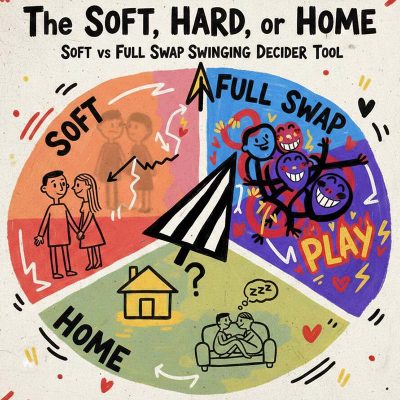
Don't let a "Soft Swap" night turn into a "Hard Feelings" morning.
Walking into the club with different expectations is a grenade waiting to explode. He thinks it’s a free-for-all; she thinks it’s just drinks and dancing. That silence in the car ride home? That’s the sound of a preventable disaster.
Stop guessing. Use this tool to sync your "sexual GPS" before you leave the driveway. Determine exactly how wild you’re getting tonight, so the only surprise is how much fun you have.
The fantasy of swinging is electric, but that cold sweat you feel when thinking about your partner with someone else? That’s your survival instinct warning you that your foundation is at stake. Most couples don’t fail because they lacked desire; they fail because they lacked a safety net. Ambiguity is where jealousy festers, and "winging it" is the fastest way to turn a dream into a nightmare of resentment and "what have we done?"
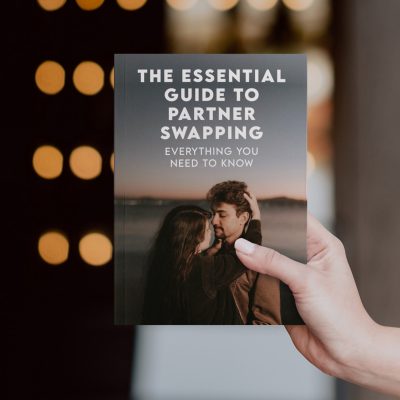
The Essential Guide to Swinging is your anxiety-proof roadmap through the chaos. Don't gamble your marriage on hope. Build a fortress of trust, master the repair chats, and ensure your exploration is defined by care, not a catastrophe
Full swap is the deep end. The rush is intense, but so is the risk of emotional wreckage. That tightening in your chest isn’t just nerves; it’s the fear that a "fun night" could become a permanent scar on your marriage. You can’t un-ring this bell, so never strike it without a plan.
The Essential Guide to Full Swap Swinging replaces reckless gambling with calculated discipline. From ironclad vetting to "emergency brake" scripts, we provide the safety architecture required to swap bodies without losing your minds. Don't just hope it goes well, engineer it
Gemini said
The fantasy is electric. The reality? It can be a grenade that blows up your marriage and your social circle. That tightening in your chest isn't just nerves. It is a warning that you are risking everything on a vibe. "Winging it" is the fastest way to turn a fun group chat into a toxic war zone.
The Essential Guide replaces the chaos with ironclad protocols. We provide the vetting tools, jealousy airlocks, and privacy scripts needed to swap bodies without losing your mind. Secure your safety first.
The fantasy of swinging is electric, but that cold sweat you feel when thinking about your partner with someone else? That’s your survival instinct warning you that your foundation is at stake. Most couples don’t fail because they lacked desire; they fail because they lacked a safety net. Ambiguity is where jealousy festers, and "winging it" is the fastest way to turn a dream into a nightmare of resentment and "what have we done?"
The Essential Guide to Swinging is your anxiety-proof roadmap through the chaos. Don't gamble your marriage on hope. Build a fortress of trust, master the repair chats, and ensure your exploration is defined by care, not a catastrophe
Full swap is the deep end. The rush is intense, but so is the risk of emotional wreckage. That tightening in your chest isn’t just nerves; it’s the fear that a "fun night" could become a permanent scar on your marriage. You can’t un-ring this bell, so never strike it without a plan.
The Essential Guide to Full Swap Swinging replaces reckless gambling with calculated discipline. From ironclad vetting to "emergency brake" scripts, we provide the safety architecture required to swap bodies without losing your minds. Don't just hope it goes well, engineer it
Bisexual women stereotypes in swinging ENM what people often get wrong
Stereotype one: Bi women are indecisive or flaky
Reality: People are individuals with different levels of comfort and decision making processes. In any ENM scenario some partners prefer strict schedules and crisp boundaries while others prefer loose guidelines that evolve with trust. The key is transparent communication not labeling someone as indecisive. When a bisexual woman or any partner expresses a boundary or requests time to think about a situation that is a sign of respect for self and others not a sign of inconsistency.
Stereotype two: Bi women go along with every fantasy to satisfy others
Reality: A healthy swinging ENM arrangement should be about mutual enjoyment and consent not about pleasing a single partner at the expense of someone’s safety or energy. Bisexual women in swinging contexts are not obligated to perform or to participate in anything that makes them uncomfortable. They have a right to set limits and to say no without shame. Ethical dynamics require that all participants support each other’s boundaries and do not pressure for participation beyond what was agreed upon.
Stereotype three: Bi women are only interested in men or in pleasing male gaze
Reality: Bisexual women can be attracted to more than one gender including women. In swinging ENM there is space for bisexual women to explore attractions with partners of different genders if consent is given and boundaries are honored. The old myth that bisexual women in swinging exist for male validation erodes when communities prioritize mutual respect and autonomy. The focus should be on shared consent and genuine connection rather than on gender oriented fantasies alone.
Stereotype four: Bisexual women in swinging are always looking to add more partners
Reality: It is common for groups to set up triads or small circles but not all participants want to expand endlessly. Some bisexual women may enjoy a stable couple dynamic with occasional other interactions while others may embrace a broader network. The important factor is clear communication about needs and ongoing consent. Pushing for more partners without checking in with all involved erodes trust and increases risk for misunderstandings.
Stereotype five: Bisexual women are easy to replace as unicorns
Reality: The unicorn trope describes a third person joining a couple with the expectation of fitting into predetermined roles. This dynamic can be unfair and physically and emotionally exhausting for the person joining a couple. Ethical practice rejects treating any person as a disposable resource. The healthier approach is to value each participant as a whole person with wants needs and boundaries beyond the sexual act.
Stereotype six: Bi women are always open about their bisexuality in these settings
Reality: Honesty about identity is important, yet personal disclosure should always align with comfort and safety. Some bisexual women choose to share their identity early in a conversation others may wait until a better fit emerges. Respecting privacy while maintaining open lines of communication is a hallmark of ethical ENM practice.
Stereotype seven: Bi women only want to be seen as a fantasy or a prop
Reality: People join swinging ENM for many reasons including connection intimacy and shared experiences. It is essential to treat bisexual women as full people with agency not as a prop in someone else s story. Equal voice equal consent and equal respect are critical for ethical dynamics to work for everyone involved.
Ethical responses and practices that help everyone flourish
The aim here is not to police identity it is to foster ethical respectful and joyful experiences for all. If you are navigating a swinging ENM dynamic with a bisexual woman or if you are that person this framework can help you keep the space healthy.
Center consent and clearly negotiated boundaries
Consent should be explicit enthusiastic and ongoing. Before any interaction is proposed have a talk about boundaries written down agreed upon and revisited as needed. Boundaries can cover topics such as which acts are allowed who is involved when interactions happen where they take place how you discuss partner other partners after plans change and what level of disclosure is expected after events. Revisit boundaries regularly especially after new people join the dynamic or after emotional shifts occur.
Practice transparent communication
Transparency means sharing relevant information about intent feelings and expectations. It does not mean oversharing personal details or pressuring someone to disclose more than they are comfortable with. Create a culture where questions are welcomed and responses are respectful. When in doubt speak up early not later. A well timed and thoughtful check in can prevent a lot of harm.
Approach jealousy with care and compersion as a root helper
Jealousy is a natural emotion in any shared space especially when feelings run strong. Compersion is the sense of joy when a partner experiences happiness with someone else. Cultivating compersion involves celebrating others successes without hostility while maintaining your own boundaries. If jealousy arises use specific steps to address it rather than letting it fester. Name the emotion identify the trigger name the need and propose a boundary or solution. A trusted friend or partner can help with perspective during this process.
Respect identity and avoid tokenization
Respect means listening when a bisexual woman describes her experiences and acknowledging her voice in decisions. Tokenization happens when someone is used as a symbol for a group rather than a person with unique feelings and needs. If you are organizing events or creating group norms ensure every person is invited to speak share and decide what happens next. Avoid reducing someone to a stereotype or a role regardless of how appealing that stereotype may seem in the moment.
Prioritize safety and health
Safe sex is a foundation in swinging ENM. This means using barriers when appropriate discussing sexual health openly and sharing up to date STI testing information with partners. It also means respecting each person s comfort level around health practices and providing resources for testing vaccination and safe sex supplies. Make sure there is a shared understanding about consent to engage in any activity and that all participants feel safe to pause or stop at any moment without judgment.
Language matters and how we talk about bisexual women
The words we choose shape the experience. Use language that centers consent autonomy and respect. Avoid labeling or judging phrases and be careful with terms that imply hierarchy such as primary secondary or peripheral. Every person deserves an equal place at the table and every person s voice should count when decisions are being made about the dynamic.
Realistic scenarios and practical responses
Scenario A: A new couple wants to join a swinging night and a bisexual woman is considering participating
In this scenario a couple invites a bisexual woman to join a swinging night as a third participant. The woman has expressed interest but wants to confirm boundaries before the event. Ethical response includes a clear boundary discussion about what activities are on the table who will be present how touch will be managed and what aftercare will look like. All parties should have a chance to ask questions and confirm consent in writing or via a trusted facilitator. The bisexual woman should feel free to decline if any part of the plan feels unsafe or misaligned with her values. Aftercare should be offered to all participants to talk through emotions and process the experience in a supportive way.
Scenario B: A bisexual woman is in a long running polyamorous triad and new partners join
In this case energy shifts as new partners come into the space. The ethical move is to hold a boundary and consent check in with all members including the bisexual woman affected. The group should discuss how to integrate the new members keep existing emotional connections intact and ensure that everyone continues to feel heard and respected. It is essential to acknowledge the bisexual partner s experiences and not treat her as a stepping stone for others. A plan for time with each partner and a method for addressing conflicts should be established early on.
Scenario C: A bisexual woman feels pressured to perform for the crowd at a party
Pressure to perform is a common risk in social swinging environments. The ethical response is for the host or facilitator to intervene by pausing activities and reopening the boundary conversation with all participants. The person feeling pressured should be empowered to say no without fear of stigma. Aftercare debriefs help ensure that everyone processes the experience well and to prevent repeat pressure in future events.
Scenario D: After a sexual encounter a partner discloses an STD test result that requires discussion
Health status disclosure is a non negotiable element of ethical ENM. When someone receives an update about their health they should communicate with all involved partners promptly and clearly. The group should review safety protocols including testing cadence and protection methods to reduce risk. Reassessing consent in light of new health information is a sign of maturity and respect for everyone involved. The bisexual woman should be treated with care and included in decisions that protect the group s health without shaming or blaming anyone.
Practical tools and templates you can use today
Tools help keep conversations efficient and respectful. Here are a few practical resources you can adapt for your group or couple dynamics.
- Consent first checklist A one page list of activities with a required yes from all participants before moving forward. Reopen consent if anyone expresses doubt at any point.
- Boundary log A shared document that records current boundaries and any changes. Update it after experiences or when new people join the dynamic.
- Communication scripts Short clear messages you can copy paste to invite partners or to clarify expectations. Scripts reduce miscommunication and keep tone respectful.
- Aftercare plan A simple plan describing how participants will check in after encounters including emotional support and practical needs such as hydration or quiet space.
- Health information protocol A standard approach to sharing STI testing results and health information with consent from the person involved and protection for privacy when needed.
Must nots in swinging ENM with bisexual women
- Do not pressure anyone to participate beyond their stated boundaries even if the energy feels intense
- Avoid labeling people as tokens or unicorns regardless of how appealing the dynamic may seem
- Do not assume a bisexual woman must perform or engage with all partners in the group
- Avoid sharing private conversations or health information without explicit consent
- Do not isolate someone or exclude their voice in group decisions
- Avoid shaming or policing sexual preferences or identities
Glossary of useful terms and acronyms
- ENM Ethical non monogamy a relationship practice that embraces multiple consensual romantic or sexual connections
- Swinging A form of ENM where couples or groups engage in sexual activities with others outside the partnership
- Bisexual A person who is attracted to more than one gender
- Unicorn A third partner who joins a couple often expected to fit specific predefined roles
- Compersion Feeling happiness when a partner experiences joy with someone else
- Boundary A limit or guideline about what is allowed in a relationship
- Consent A clear enthusiastic ongoing agreement to participate
- Safety practices Health and safety steps including STI testing and protective measures
- Disclosure Sharing relevant information about boundaries health and intent with all involved
Practical tips for ethical swinging with bisexual women
These tips are practical and action oriented. Use them as quick references during conversations and when planning events.
- Lead with respect from the first invitation and make it clear you value the person s boundaries
- Always invite questions and respond with patience and clarity
- Respect the pace of the person you are engaging and do not rush decisions
- Keep conversations private and avoid gossip or sharing sensitive details in public spaces
- Hold space for emotional reactions and provide aftercare when needed
Checklist for ethical swinging with bisexual women
- Have a boundary conversation before any interaction
- Obtain explicit consent for each activity and be prepared to pause or stop
- Confirm health safety measures including STI testing cadence
- Respect identity and avoid tokenizing or stereotyping
- Maintain open channels for feedback and adjustments
- Provide and participate in aftercare to support emotional well being
Final thoughts about stereotypes and ethical responses
We want to end this guide with a practical takeaway. Stereotypes are shallow shortcuts that rarely capture real people s lives. In swinging ENM the most important ingredients are consent genuine communication fair boundaries and mutual respect. When bisexual women are part of any ENM dynamic it is essential to honor their autonomy listen to their needs and ensure they feel valued not only for what they bring to the experience but for who they are as individuals. The Monogamy Experiment believes in down to earth conversations witty humor and actionable steps that help real people create relationships that fit their values. If you leave with one idea today let it be this. Ethical boundaries written down validated by all participants and revisited regularly are how we build safe joyful experiences in swinging ENM for everyone involved.
Frequently asked questions
What is ENM and what does swinging mean in practice
Ethical non monogamy means consensual non monogamy based on openness honesty and agreed upon boundaries. Swinging is a common form of ENM that involves sexual activities with others outside a primary couple or group in a controlled and mutually agreed setting.
How can I spot a stereotype about bisexual women in swinging
Look for generalizations about temperament gender and sexual preferences applied to all bisexual women. If you hear phrases like all bisexual women want to be with multiple partners or all bisexual women are here for male validation that is a stereotype not a fact. Ask for specifics and observe whether the claim respects individual boundaries and consent.
What is compersion and how can it help in swinging ENM
Compersion is the feeling of happiness for your partner s joy with someone else. It helps reduce jealousy and supports a more compassionate approach to shared desire and connection. Building compersion takes time practice and honest communication about needs and boundaries.
How do I keep a bisexual woman safe in a swinging event
Safety comes from planning consent checks clear boundaries and ongoing health discussions. Use barrier methods when appropriate discuss STI testing intervals and ensure there is a trusted support person available to pause or de escalate situations if needed.
What should I do if I feel jealous
Acknowledge the feeling name it and talk to your partner about it. Request a boundary adjustment or a pause if needed. Jealousy is a signal that something in the dynamic needs attention not a reason to punish someone or shut down communication.
Is it okay to discuss bisexual identity early in the process
Yes it is appropriate to discuss identity if it is relevant to consent safety and comfort for everyone involved. Be mindful of timing and ensure that sharing is voluntary and respectful and not a tactic to compel participation.
How do we avoid turning a bisexual woman into a unicorn
By focusing on equal voice clear consent and a shared purpose that goes beyond fulfilling fantasies. Ensure the third partner has autonomy and opportunities to set her own boundaries and to shape the dynamic rather than merely filling a role.
What happens if a boundary is crossed
Address the violation promptly with a calm but firm conversation. Review boundaries then decide on whether to pause proceed or adjust the agreements. Aftercare and documentation help protect everyone involved and reduce the chance of a repeat incident.
Should I include health information in our conversations
Health information should be shared with consent and careful privacy practices. Discuss testing schedules and what information will be disclosed to partners. Avoid sharing sensitive information without clear consent from all parties.
Don't let a "Soft Swap" night turn into a "Hard Feelings" morning.
Walking into the club with different expectations is a grenade waiting to explode. He thinks it’s a free-for-all; she thinks it’s just drinks and dancing. That silence in the car ride home? That’s the sound of a preventable disaster.
Stop guessing. Use this tool to sync your "sexual GPS" before you leave the driveway. Determine exactly how wild you’re getting tonight, so the only surprise is how much fun you have.
The fantasy of swinging is electric, but that cold sweat you feel when thinking about your partner with someone else? That’s your survival instinct warning you that your foundation is at stake. Most couples don’t fail because they lacked desire; they fail because they lacked a safety net. Ambiguity is where jealousy festers, and "winging it" is the fastest way to turn a dream into a nightmare of resentment and "what have we done?"
The Essential Guide to Swinging is your anxiety-proof roadmap through the chaos. Don't gamble your marriage on hope. Build a fortress of trust, master the repair chats, and ensure your exploration is defined by care, not a catastrophe
Full swap is the deep end. The rush is intense, but so is the risk of emotional wreckage. That tightening in your chest isn’t just nerves; it’s the fear that a "fun night" could become a permanent scar on your marriage. You can’t un-ring this bell, so never strike it without a plan.
The Essential Guide to Full Swap Swinging replaces reckless gambling with calculated discipline. From ironclad vetting to "emergency brake" scripts, we provide the safety architecture required to swap bodies without losing your minds. Don't just hope it goes well, engineer it
Gemini said
The fantasy is electric. The reality? It can be a grenade that blows up your marriage and your social circle. That tightening in your chest isn't just nerves. It is a warning that you are risking everything on a vibe. "Winging it" is the fastest way to turn a fun group chat into a toxic war zone.
The Essential Guide replaces the chaos with ironclad protocols. We provide the vetting tools, jealousy airlocks, and privacy scripts needed to swap bodies without losing your mind. Secure your safety first.
The fantasy of swinging is electric, but that cold sweat you feel when thinking about your partner with someone else? That’s your survival instinct warning you that your foundation is at stake. Most couples don’t fail because they lacked desire; they fail because they lacked a safety net. Ambiguity is where jealousy festers, and "winging it" is the fastest way to turn a dream into a nightmare of resentment and "what have we done?"
The Essential Guide to Swinging is your anxiety-proof roadmap through the chaos. Don't gamble your marriage on hope. Build a fortress of trust, master the repair chats, and ensure your exploration is defined by care, not a catastrophe
Full swap is the deep end. The rush is intense, but so is the risk of emotional wreckage. That tightening in your chest isn’t just nerves; it’s the fear that a "fun night" could become a permanent scar on your marriage. You can’t un-ring this bell, so never strike it without a plan.
The Essential Guide to Full Swap Swinging replaces reckless gambling with calculated discipline. From ironclad vetting to "emergency brake" scripts, we provide the safety architecture required to swap bodies without losing your minds. Don't just hope it goes well, engineer it
