
Boundaries Versus Rules in Swinging


Boundaries and rules show up in every swinging dynamic even when you think you are making it up as you go. In ethical non monogamy swinging is about consent open communication and respect. Boundaries are about what feels safe and good for you as a person and as part of a couple. Rules are agreements that help you maintain those boundaries when the going gets tricky. The trick is to keep boundaries flexible enough to respect growth yet clear enough to prevent pain from missteps. This guide dives deep into what boundaries and rules mean in swinging and how to use them to build trust not friction. We will explain terms offer relatable scenarios and give you practical steps to create conversations that land and stick.
Quick Links to Useful Sections
- What swinging means in ethical non monogamy
- Boundaries versus rules defined
- Why couples use boundaries and rules in swinging
- Common boundaries you will see in swinging ENM
- Common rules you might see in swinging ENM
- How to create boundaries that actually work
- How to create rules that support your boundaries
- Realistic scenarios and how boundaries and rules play out
- Scenario one A couple invites a new partner into a date night
- Scenario two A polycule scenario where multiple partners interact
- Scenario three A long distance dynamic with periodic meetups
- Scenario four A new partner joins the orbit
- Communication strategies that support boundaries and rules
- When boundaries feel like decisions you cannot revoke
- Handling boundary violations and the path to repair
- Maintaining boundaries and rules over time
- Common mistakes to avoid
- Safety and consent in swinging
- Glossary of useful terms and acronyms
- Frequently asked questions
What swinging means in ethical non monogamy
Swinging in the context of ethical non monogamy ENM is the practice of dating or having sexual experiences with people outside a primary couple with the knowledge and often involvement of the other partner. The key piece is consent communication and respect for all people involved. Swinging is not about replacing a partner or seeking to hurt someone it is about exploring intimacy and connection in ways that align with the values of those involved. It is not a one size fits all scenario but a flexible approach that can adapt as relationships grow or shift. Understanding this helps when you start talking about boundaries and rules because you want tools that actually support your shared goals rather than rules that feel like prison walls.
Boundaries versus rules defined
Boundaries are personal lines that guide what you are comfortable with. They protect your emotions physical well being and sense of safety. Boundaries are not about controlling others they are about protecting yourself. You can set a boundary about how you want to be communicated with or about what experiences you are willing to have. Boundaries focus on your feelings needs and limits.
Rules are shared agreements you create with your partner or partners. Rules are what you do or do not do in specific situations. Rules help manage expectations and provide a framework for action If a boundary is a line that you do not cross a rule is a method for how to operate within that line. A rule might say that a couple must check in after every encounter or that certain activities are not permitted with certain partners. The best rules support boundaries and make them easier to honor while still allowing for exploration.

Don't let a "Soft Swap" night turn into a "Hard Feelings" morning.
Walking into the club with different expectations is a grenade waiting to explode. He thinks it’s a free-for-all; she thinks it’s just drinks and dancing. That silence in the car ride home? That’s the sound of a preventable disaster.
Stop guessing. Use this tool to sync your "sexual GPS" before you leave the driveway. Determine exactly how wild you’re getting tonight, so the only surprise is how much fun you have.

The fantasy of swinging is electric, but that cold sweat you feel when thinking about your partner with someone else? That’s your survival instinct warning you that your foundation is at stake. Most couples don’t fail because they lacked desire; they fail because they lacked a safety net. Ambiguity is where jealousy festers, and "winging it" is the fastest way to turn a dream into a nightmare of resentment and "what have we done?"
The Essential Guide to Swinging is your anxiety-proof roadmap through the chaos. Don't gamble your marriage on hope. Build a fortress of trust, master the repair chats, and ensure your exploration is defined by care, not a catastrophe
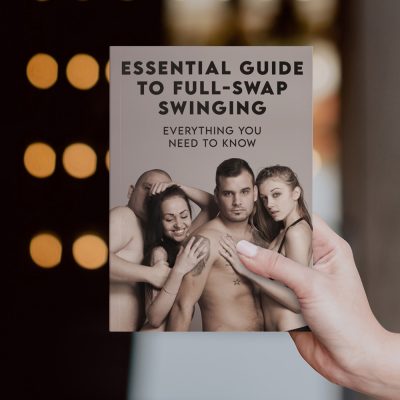
Full swap is the deep end. The rush is intense, but so is the risk of emotional wreckage. That tightening in your chest isn’t just nerves; it’s the fear that a "fun night" could become a permanent scar on your marriage. You can’t un-ring this bell, so never strike it without a plan.
The Essential Guide to Full Swap Swinging replaces reckless gambling with calculated discipline. From ironclad vetting to "emergency brake" scripts, we provide the safety architecture required to swap bodies without losing your minds. Don't just hope it goes well, engineer it
Gemini said
The fantasy is electric. The reality? It can be a grenade that blows up your marriage and your social circle. That tightening in your chest isn't just nerves. It is a warning that you are risking everything on a vibe. "Winging it" is the fastest way to turn a fun group chat into a toxic war zone.
The Essential Guide replaces the chaos with ironclad protocols. We provide the vetting tools, jealousy airlocks, and privacy scripts needed to swap bodies without losing your mind. Secure your safety first.
The fantasy of swinging is electric, but that cold sweat you feel when thinking about your partner with someone else? That’s your survival instinct warning you that your foundation is at stake. Most couples don’t fail because they lacked desire; they fail because they lacked a safety net. Ambiguity is where jealousy festers, and "winging it" is the fastest way to turn a dream into a nightmare of resentment and "what have we done?"
The Essential Guide to Swinging is your anxiety-proof roadmap through the chaos. Don't gamble your marriage on hope. Build a fortress of trust, master the repair chats, and ensure your exploration is defined by care, not a catastrophe
Full swap is the deep end. The rush is intense, but so is the risk of emotional wreckage. That tightening in your chest isn’t just nerves; it’s the fear that a "fun night" could become a permanent scar on your marriage. You can’t un-ring this bell, so never strike it without a plan.
The Essential Guide to Full Swap Swinging replaces reckless gambling with calculated discipline. From ironclad vetting to "emergency brake" scripts, we provide the safety architecture required to swap bodies without losing your minds. Don't just hope it goes well, engineer it
Why couples use boundaries and rules in swinging
Boundaries are often used to protect core values and emotional safety. They reduce anxiety and help people feel seen and heard. Boundaries can reflect values such as honesty respect or consent and they create room for trust to grow. Rules are useful when a boundary needs clear application in real time. They provide actionable steps for situations that come up regularly such as how to handle aftercare what to share with a partner who is not present or how to manage information flow. Boundaries plus rules together create a sturdy map for navigating discovery while keeping care for everyone involved at the center.
Common boundaries you will see in swinging ENM
Boundaries vary from couple to couple and from dynamic to dynamic. Here are categories of boundaries you may encounter along with examples to help you talk about what matters to you without turning it into a list of commands.
- Communication boundaries How you want updates delivered and when. Example boundaries commonly include the preference for direct honest messages and a decision about sharing details that may be sensitive or private.
- Emotional boundaries What emotions you want to protect including avoiding certain topics or limiting how much emotional energy is invested in other relationships.
- Time boundaries How much time you are comfortable giving to other relationships or encounters and how you balance it with time for your primary relationship.
- Physical boundaries The kinds of physical interactions you are comfortable with besides sex and the places where sex may occur.
- Practical boundaries Practicalities such as safe sex practices location of encounters and how you handle logistics around dating and meetups.
- Relationship boundaries The nature of the primary relationship how you view dating and where the line sits between friendship and romance with other people.
Common rules you might see in swinging ENM
Rules are explicit agreements that make it easier to stay aligned when feelings run high or the calendar fills up. Below are examples of rules that couples frequently use in swinging ENM. Remember rules should be personal and revisited with care to avoid turning them into power struggles or hidden resentments.
- Check in rules One partner must check in after every encounter or at set intervals to share feelings or concerns and to reassess how things feel in real time.
- Disclosure rules Decide what needs to be shared about the encounter and what can stay private. This is about comfort level not about policing every detail.
- Protection rules Enforce safe sex practices require certain protective measures and regular testing. This is for physical safety and peace of mind for all involved.
- Venue rules Set where encounters can happen whether in a public space at a private home or while traveling. Rules may also cover privacy around social media or tracking of contact details.
- Partner consent rules In some setups a person may require explicit consent for specific activities or for introductions to new partners.
- First contact rules Agree who can initiate contact with someone new and how the introduction should happen to minimize jealousy or miscommunication.
- Relationship maintenance rules Rules about how to handle jealousy trust rebuilding and after care to support the health of the primary relationship.
How to create boundaries that actually work
Effective boundaries are clear simple and easy to remember. They are not a long grocery list they are the guard rails that keep your relationship stable while you explore. Here is a practical process you can use to craft boundaries that feel right to you.
- Start with a check in Gather your partner and share what you want from swinging what scares you what would feel disrespectful or unsafe. Create a space that feels non judgmental.
- Identify personal needs Each person names what they personally need to feel safe loved and respected. These become the core boundaries.
- Translate needs into boundaries Convert each need into a simple statement that reflects what you will not accept or what you require to proceed.
- Test your boundaries Try the boundary in a low risk scenario and discuss how it feels. If it creates tension look for a more workable version that still honors your need.
- Document and share Write the boundaries clearly and share them with all partners involved. Keep them accessible and refer back to them regularly.
- Review and adjust Set a review date to discuss what is working and what is not. Boundaries can change as people grow and dynamics shift.
Tips for writing boundaries that feel fair and not punitive include keeping the language positive whenever possible focusing on what you want rather than what you do not want. For example phrase a boundary as I feel most comfortable when we check in after an encounter rather than I do not want you to talk about the details with anyone else. Positive framed boundaries feel easier to honor and negotiate because they emphasize care rather than control.
How to create rules that support your boundaries
Rules should be practical and doable not vague. A well constructed rule makes it easier to honor a boundary without needing to micromanage every moment. Here is a simple approach you can use to craft rules that help you stay aligned.
- Link rules to boundaries Ensure every rule is designed to support a boundary or address a risk. If a rule does not support a boundary consider removing it.
- Keep rules specific Use concrete actions examples and times. Specific rules are easier to follow than broad statements.
- Make rules checkable Use measurable criteria such as time frames or written check ins rather than vague intentions.
- Include consequences Decide in advance what happens if a rule is broken. The consequence should be fair and agreed upon by everyone involved.
- Agree on a process to revise If a rule stops working or feels unfair agree on a process to revisit and revise it with care.
When you craft rules think about the following categories range of experiences communication safety and emotional impact. Keep your list manageable and practical. Avoid piling on too many rules at once. The goal is clarity not control. Remember that rules are there to support boundaries not to trap people in rigid expectations.
Don't let a "Soft Swap" night turn into a "Hard Feelings" morning.
Walking into the club with different expectations is a grenade waiting to explode. He thinks it’s a free-for-all; she thinks it’s just drinks and dancing. That silence in the car ride home? That’s the sound of a preventable disaster.
Stop guessing. Use this tool to sync your "sexual GPS" before you leave the driveway. Determine exactly how wild you’re getting tonight, so the only surprise is how much fun you have.
The fantasy of swinging is electric, but that cold sweat you feel when thinking about your partner with someone else? That’s your survival instinct warning you that your foundation is at stake. Most couples don’t fail because they lacked desire; they fail because they lacked a safety net. Ambiguity is where jealousy festers, and "winging it" is the fastest way to turn a dream into a nightmare of resentment and "what have we done?"
The Essential Guide to Swinging is your anxiety-proof roadmap through the chaos. Don't gamble your marriage on hope. Build a fortress of trust, master the repair chats, and ensure your exploration is defined by care, not a catastrophe
Full swap is the deep end. The rush is intense, but so is the risk of emotional wreckage. That tightening in your chest isn’t just nerves; it’s the fear that a "fun night" could become a permanent scar on your marriage. You can’t un-ring this bell, so never strike it without a plan.
The Essential Guide to Full Swap Swinging replaces reckless gambling with calculated discipline. From ironclad vetting to "emergency brake" scripts, we provide the safety architecture required to swap bodies without losing your minds. Don't just hope it goes well, engineer it
Gemini said
The fantasy is electric. The reality? It can be a grenade that blows up your marriage and your social circle. That tightening in your chest isn't just nerves. It is a warning that you are risking everything on a vibe. "Winging it" is the fastest way to turn a fun group chat into a toxic war zone.
The Essential Guide replaces the chaos with ironclad protocols. We provide the vetting tools, jealousy airlocks, and privacy scripts needed to swap bodies without losing your mind. Secure your safety first.
The fantasy of swinging is electric, but that cold sweat you feel when thinking about your partner with someone else? That’s your survival instinct warning you that your foundation is at stake. Most couples don’t fail because they lacked desire; they fail because they lacked a safety net. Ambiguity is where jealousy festers, and "winging it" is the fastest way to turn a dream into a nightmare of resentment and "what have we done?"
The Essential Guide to Swinging is your anxiety-proof roadmap through the chaos. Don't gamble your marriage on hope. Build a fortress of trust, master the repair chats, and ensure your exploration is defined by care, not a catastrophe
Full swap is the deep end. The rush is intense, but so is the risk of emotional wreckage. That tightening in your chest isn’t just nerves; it’s the fear that a "fun night" could become a permanent scar on your marriage. You can’t un-ring this bell, so never strike it without a plan.
The Essential Guide to Full Swap Swinging replaces reckless gambling with calculated discipline. From ironclad vetting to "emergency brake" scripts, we provide the safety architecture required to swap bodies without losing your minds. Don't just hope it goes well, engineer it
Realistic scenarios and how boundaries and rules play out
Scenario one A couple invites a new partner into a date night
In this situation the couple might set a boundary about what kind of date night feels good. For example a boundary could be We want to keep the date three hours which feels comfortable and leaves room for aftercare. A boundary could also specify that the couple must check in within an hour after the date and share any strong emotions that came up. A rule might specify that a single partner becomes the lead organizer for the encounter or that both partners must agree on the venue and activities beforehand. The key is to ensure the rules and boundaries are practical and geared toward preserving trust and comfort for both partners.
Scenario two A polycule scenario where multiple partners interact
Boundaries become essential when more than two people are involved. A boundary might specify that emotional disclosures about another person stay within the group and are not shared with external partners without consent. A boundary could also indicate how communications are handled across the network for example who receives updates and how often. Rules in this scenario might cover how often group meetups occur what information is shared with which partners and how to handle scheduling conflicts. Clear boundaries and well defined rules help prevent jealousy from becoming a barrier to healthy connection.
Scenario three A long distance dynamic with periodic meetups
Boundaries here may address the cadence of encounters the type of connection that is meaningful during visits and how to manage long distance trust and safety. Rules might specify how to handle planning for visits how to share safety checks and how to participate in aftercare during the trip. In this dynamic boundaries may change over time as schedules shift so regular reviews are essential to keep everyone feeling seen and secure.
Scenario four A new partner joins the orbit
When a new partner enters a swinging dynamic boundaries are essential for setting expectations early. A boundary could include time to build trust before any physical intimacy takes place another boundary might limit how much information is shared with other partners until the group agrees it is appropriate. Rules might specify the process for introductions the format of initial conversations and the roles each person will play in ongoing communication. Scenarios like this highlight the usefulness of a flexible boundary system that can adjust as relationships evolve.
Communication strategies that support boundaries and rules
Clear honest communication is the backbone of successful boundaries and rules. Here are practical techniques you can start using today.
- Use I statements Speak from your own experience such as I feel more secure when we check in after every encounter rather than you never check in. This reduces blame and invites collaboration.
- Practice reflective listening Repeat back what you hear your partner saying to confirm you understood. This reduces misinterpretations and builds empathy.
- Schedule dedicated conversations Set aside time for boundary and rule discussions when emotions are calm not in the heat of the moment after a triggering encounter.
- Make space for adjustments Normal bound aries and rules are living they can change as people grow. Build in time to revise them without judgment.
- Avoid all or nothing thinking If a boundary feels too restrictive look for alternatives that still protect everyone involved. There is room to experiment safely.
When boundaries feel like decisions you cannot revoke
Boundaries should empower you not trap you. If a boundary feels like an ultimatum or a punishment it is worth revisiting. Boundaries are best when they are expressed as personal needs and protections rather than as punishments for the other person. If you find yourself using boundaries to control your partner or to win a power struggle pause have a candid conversation about what exactly makes you feel safe and how you can both feel respected. The healthiest swinging dynamics grow when boundaries are used to protect connection not to police behavior.
Handling boundary violations and the path to repair
Violations will happen in every relationship at some point. The important thing is how you respond. If a boundary is crossed first acknowledge the impact name the feeling that arises such as hurt confusion or fear. Then discuss what happened what led to it and what it means for future actions. Decide together on a realistic adjustment to the boundary or rule and agree on a time to review again. Rebuilding trust takes time and consistency but it is absolutely possible with open communication and commitment.
Maintaining boundaries and rules over time
As you grow as a couple or as a poly dynamic the needs that underlie boundaries may shift. Scheduling regular check ins or boundary reviews helps keep everyone aligned. Some couples find it useful to create a simple one page boundary summary that is revisited every few months. The goal is to prevent drift where people forget what was agreed and why it mattered in the first place. A light touch approach is often best especially when life gets busy with work family and other commitments.
Common mistakes to avoid
- Trying to enforce too many rules A long list of rules is hard to track and can feel stifling. Focus on a few core issues and revisit as needed.
- Equating boundaries with restrictions on your partner Boundaries are personal protections not punishments aimed at your partner’s choices.
- Fearing to renegotiate Boundaries are not set in stone. If a boundary no longer serves you it is time to renegotiate.
- Withholding information to avoid conflict Secrets breed mistrust. Honest timely communication is essential to keep trust intact.
- Assuming others know your needs Be explicit clarify your boundaries and give space for questions to ensure everyone is on the same page.
Safety and consent in swinging
Safety and consent are the core of any healthy ENM practice. Boundaries and rules should reflect both physical safety and emotional safety. Safe sex practices including contraception regular testing and open conversations about health are essential. Consent is ongoing it can be withdrawn or adjusted at any time and every partner has a right to say no without pressure. Always prioritize respect and care above curiosity or novelty.
Glossary of useful terms and acronyms
- ENM Ethical non monogamy a framework in which partners agree to explore relationships outside the primary unit with consent and transparency.
- Swinging The practice of engaging in sexual activities with others outside the primary relationship usually with the knowledge and involvement of the primary partner.
- Boundary A personal limit describing what you are comfortable with and how you want to be treated in a relationship.
- Rule A shared agreement about how a situation will be handled or what actions will be taken in specific conditions.
- Aftercare The care and reassurance provided after an intimate experience to help everyone feel secure and valued.
- Consent An ongoing affirmative yes from all involved that allows a sexual experience to proceed.
- Open communication Honest transparent dialogue about needs feelings boundaries and changes in the dynamic.
Understanding these terms helps keep conversations grounded and reduces misinterpretations. Being able to explain terms clearly to a partner or a new partner makes negotiations smoother and more enjoyable.
Frequently asked questions
How do I start a boundary discussion without turning it into a fight
Start with a calm moment choose a neutral space and use I statements. Focus on shared safety and the desire to deepen trust rather than on what one person is doing wrong. Keep the conversation focused on specific behaviors and feelings rather than personalities.
What is the difference between a boundary and a rule
A boundary is a personal limit about what you are comfortable with it is about your safety and feelings. A rule is a shared agreement about what will happen or not happen in a given situation. Rules are meant to operationalize boundaries and provide a clear path for action.
How do we handle jealousy when a boundary is crossed
Acknowledge the feeling name it and discuss what happened. Reaffirm the boundary and adjust if needed. Consider additional aftercare or more frequent check ins to rebuild trust. Jealousy is common and can be a signal to adjust boundaries or improve communication rather than a failure of the relationship.
Should we revisit our boundaries regularly
Yes regular reviews help the dynamic adapt to new partners life events and changing needs. Many couples find it helpful to schedule reviews every three to six months or after a major life event.
How can we approach a new partner about boundaries
Be direct but kind share the boundaries your primary partner cares about and invite the new partner to ask questions. Transparency from the start sets a positive tone and reduces the chance of confusion later.
Can boundaries become flexible
Boundaries can and should become flexible as trust grows and needs evolve. A boundary is a guideline not a rigid rule. The willingness to adjust shows maturity and care for everyone involved.
Don't let a "Soft Swap" night turn into a "Hard Feelings" morning.
Walking into the club with different expectations is a grenade waiting to explode. He thinks it’s a free-for-all; she thinks it’s just drinks and dancing. That silence in the car ride home? That’s the sound of a preventable disaster.
Stop guessing. Use this tool to sync your "sexual GPS" before you leave the driveway. Determine exactly how wild you’re getting tonight, so the only surprise is how much fun you have.
The fantasy of swinging is electric, but that cold sweat you feel when thinking about your partner with someone else? That’s your survival instinct warning you that your foundation is at stake. Most couples don’t fail because they lacked desire; they fail because they lacked a safety net. Ambiguity is where jealousy festers, and "winging it" is the fastest way to turn a dream into a nightmare of resentment and "what have we done?"
The Essential Guide to Swinging is your anxiety-proof roadmap through the chaos. Don't gamble your marriage on hope. Build a fortress of trust, master the repair chats, and ensure your exploration is defined by care, not a catastrophe
Full swap is the deep end. The rush is intense, but so is the risk of emotional wreckage. That tightening in your chest isn’t just nerves; it’s the fear that a "fun night" could become a permanent scar on your marriage. You can’t un-ring this bell, so never strike it without a plan.
The Essential Guide to Full Swap Swinging replaces reckless gambling with calculated discipline. From ironclad vetting to "emergency brake" scripts, we provide the safety architecture required to swap bodies without losing your minds. Don't just hope it goes well, engineer it
Gemini said
The fantasy is electric. The reality? It can be a grenade that blows up your marriage and your social circle. That tightening in your chest isn't just nerves. It is a warning that you are risking everything on a vibe. "Winging it" is the fastest way to turn a fun group chat into a toxic war zone.
The Essential Guide replaces the chaos with ironclad protocols. We provide the vetting tools, jealousy airlocks, and privacy scripts needed to swap bodies without losing your mind. Secure your safety first.
The fantasy of swinging is electric, but that cold sweat you feel when thinking about your partner with someone else? That’s your survival instinct warning you that your foundation is at stake. Most couples don’t fail because they lacked desire; they fail because they lacked a safety net. Ambiguity is where jealousy festers, and "winging it" is the fastest way to turn a dream into a nightmare of resentment and "what have we done?"
The Essential Guide to Swinging is your anxiety-proof roadmap through the chaos. Don't gamble your marriage on hope. Build a fortress of trust, master the repair chats, and ensure your exploration is defined by care, not a catastrophe
Full swap is the deep end. The rush is intense, but so is the risk of emotional wreckage. That tightening in your chest isn’t just nerves; it’s the fear that a "fun night" could become a permanent scar on your marriage. You can’t un-ring this bell, so never strike it without a plan.
The Essential Guide to Full Swap Swinging replaces reckless gambling with calculated discipline. From ironclad vetting to "emergency brake" scripts, we provide the safety architecture required to swap bodies without losing your minds. Don't just hope it goes well, engineer it
