
Building Community Without Losing Autonomy

Let us get straight to it. You want a thriving circle of people who share good vibes, honest communication and shared adventures without surrendering your own sense of self. That is a tall order and a delicious one. In this guide we are going to unpack practical ways to build a vibrant swinging ENM network while protecting your autonomy. ENM stands for ethical non monogamy. Swinging is one form of ENM that often involves couples swapping partners for intimacy or sex within agreed boundaries. The goal here is not to convince you to abandon your own needs but to show you how to grow a community that respects your limits. Think of it as growing relationships like you would grow a garden. You plant seeds you want to nurture you water thoughtfully you prune with care and you ensure the soil stays healthy so everything that should thrive does.
Quick Links to Useful Sections
- What swinging ENM is and why community matters
- Core principles of autonomy in ENM
- Open consent and ongoing renegotiation
- Clear personal boundaries that travel with you
- Consent and boundaries written in plain language
- Fairness without force
- Time for self and essential downtime
- Accountability and repair rituals
- Building community without losing autonomy practical strategies
- Own your boundaries and communicate them clearly
- Create transparent communication rituals
- Separate but connected social calendars
- Develop a consent rich onboarding process
- Prioritize quality over quantity in relationships
- Respect privacy and manage social spillover
- Practice consent focused conversations in real time
- Realistic scenarios and sample conversations
- Scenario 1: A partner wants to join a new play space or party but you feel unsure
- Scenario 2: A new couple wants to join your circle and your boundaries are unclear
- Scenario 3: You feel overwhelmed by a large event and need space
- Scenario 4: A group dynamic starts to feel like pressure to perform
- Scenario 5: A boundary is crossed and you need repair
- Pitfalls and no nos
- Tools and frameworks you can use
- Boundaries matrix
- Consent checklists
- Communication scripts for quick talks
- Practical tips for dating apps and events
- Glossary of useful terms and acronyms
- Frequently asked questions
In this guide you will find definitions of terms as well as real world scenarios. You will see practical playbooks and conversation scripts that you can adapt. You will also see a glossary and a set of frequently asked questions so you can move with confidence. Now let us dive into what makes a swinging ENM community feel expansive rather than overwhelming and how to maintain your own autonomy while you expand your social circle.
What swinging ENM is and why community matters
First a quick primer so we are all on the same page. ENM or ethical non monogamy refers to relationships that involve more than two adults with everyone’s consent and clear agreements. Swinging is a subset of ENM where partners may engage with others in sexual or intimate contexts typically in a social setting or a party style environment. The important piece is consent communication and a focus on respect for everyone involved. A community in this space is not about collecting trophies or chasing constant novelty. It is about creating trusted spaces where people can explore safely while staying connected to their core values. A strong community provides support and shared resources it offers opportunities to learn and it helps you feel less alone when things get complicated.
When you have a good community you gain access to practical help from people who have walked similar paths you have access to play spaces and social events that fit your comfort level and you have a sense of belonging. The flip side is easy to drift into pressure to join activities you do not want to or to make choices to please others rather than honoring your own needs. That is why autonomy must stay front and center. Autonomy means you retain the ability to decide for yourself what you want who you want to be with and when you want to step back. It means you own your own choices and you accept responsibility for the consequences while treating others in the same way. Autonomy is not selfishness it is a healthy boundary that allows trust to grow.
Now that we have the big picture let us get into the principles that make autonomy practical inside a swinging ENM community.
Core principles of autonomy in ENM
Open consent and ongoing renegotiation
Consent is not a one time checkbox. It is a living agreement that may shift as people learn more about themselves and their boundaries. Ongoing renegotiation means you check in regularly even when things went well in the past. The goal is to keep agreements aligned with current needs. If a boundary feels off you speak up promptly and you adjust. This protects autonomy because it prevents drift and pressure that can quietly erode personal limits.
Clear personal boundaries that travel with you
Boundaries are not walls meant to trap you rather they are guardrails that keep you safe and comfortable. Personal boundaries can include the kinds of activities you participate in places you are comfortable going the frequency of contact with partners outside your primary relationship and how you want to handle time with other people. These boundaries should be explicit and easy to understood by everyone involved. Boundaries are not negotiable if they protect core values. When you see a boundary being crossed you should feel empowered to address it without fear of losing the connection you value.
Consent and boundaries written in plain language
Words matter. You want agreements that are easy to recall and apply in real time. When you write down boundaries be specific. For example instead of saying I am not comfortable with X say I do not want my partner to engage in solo sexual activity with a new partner during weekdays without a plan to check in. Specificity reduces guesswork and helps everyone stay aligned with autonomy intact.
Fairness without force
Autonomy includes fairness. It is not about a power struggle or who is in control. It is about a process that respects each person equally. That means you should have a voice in decisions that affect you and you should listen when others speak. It also means you do not have to say yes to every invitation or activity. You can opt in or out without fear of judgment. When the group makes decisions consider rotating leadership or rotating facilitation to avoid one person calling all the shots.
Time for self and essential downtime
Autonomy thrives when you protect your own time. Solo time with partners maybe a weekly date with your primary and occasional blocks for alone time. You may protect space for self care or for pursuing a personal hobby. It is not selfish to recharge your energy. It is essential. A well rested person brings more presence to the relationships they care about and that in turn strengthens the entire community.
Accountability and repair rituals
Even in a healthy network things can go off track. A good rule is to have a simple repair ritual. That means choosing a time to pause when a boundary is thought to have been crossed and agreeing on what comes next. The goal is to restore trust and to prevent resentment from building up in a hidden layer below the surface. You may use a structured debrief after large events or create a monthly circle for feedback and reflection. The important thing is to act quickly and respectfully when harm occurs and to commit to repairing rather than escaping the issue.
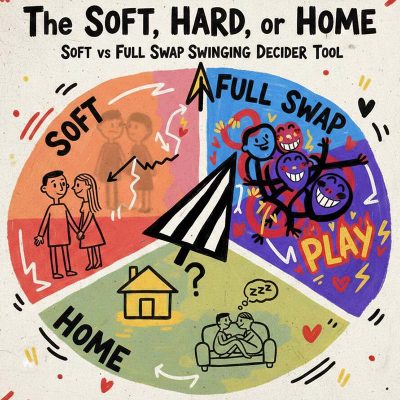
Don't let a "Soft Swap" night turn into a "Hard Feelings" morning.
Walking into the club with different expectations is a grenade waiting to explode. He thinks it’s a free-for-all; she thinks it’s just drinks and dancing. That silence in the car ride home? That’s the sound of a preventable disaster.
Stop guessing. Use this tool to sync your "sexual GPS" before you leave the driveway. Determine exactly how wild you’re getting tonight, so the only surprise is how much fun you have.
The fantasy of swinging is electric, but that cold sweat you feel when thinking about your partner with someone else? That’s your survival instinct warning you that your foundation is at stake. Most couples don’t fail because they lacked desire; they fail because they lacked a safety net. Ambiguity is where jealousy festers, and "winging it" is the fastest way to turn a dream into a nightmare of resentment and "what have we done?"
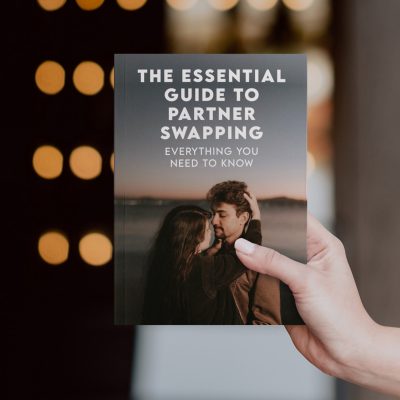
The Essential Guide to Swinging is your anxiety-proof roadmap through the chaos. Don't gamble your marriage on hope. Build a fortress of trust, master the repair chats, and ensure your exploration is defined by care, not a catastrophe
Full swap is the deep end. The rush is intense, but so is the risk of emotional wreckage. That tightening in your chest isn’t just nerves; it’s the fear that a "fun night" could become a permanent scar on your marriage. You can’t un-ring this bell, so never strike it without a plan.
The Essential Guide to Full Swap Swinging replaces reckless gambling with calculated discipline. From ironclad vetting to "emergency brake" scripts, we provide the safety architecture required to swap bodies without losing your minds. Don't just hope it goes well, engineer it
Gemini said
The fantasy is electric. The reality? It can be a grenade that blows up your marriage and your social circle. That tightening in your chest isn't just nerves. It is a warning that you are risking everything on a vibe. "Winging it" is the fastest way to turn a fun group chat into a toxic war zone.
The Essential Guide replaces the chaos with ironclad protocols. We provide the vetting tools, jealousy airlocks, and privacy scripts needed to swap bodies without losing your mind. Secure your safety first.
The fantasy of swinging is electric, but that cold sweat you feel when thinking about your partner with someone else? That’s your survival instinct warning you that your foundation is at stake. Most couples don’t fail because they lacked desire; they fail because they lacked a safety net. Ambiguity is where jealousy festers, and "winging it" is the fastest way to turn a dream into a nightmare of resentment and "what have we done?"
The Essential Guide to Swinging is your anxiety-proof roadmap through the chaos. Don't gamble your marriage on hope. Build a fortress of trust, master the repair chats, and ensure your exploration is defined by care, not a catastrophe
Full swap is the deep end. The rush is intense, but so is the risk of emotional wreckage. That tightening in your chest isn’t just nerves; it’s the fear that a "fun night" could become a permanent scar on your marriage. You can’t un-ring this bell, so never strike it without a plan.
The Essential Guide to Full Swap Swinging replaces reckless gambling with calculated discipline. From ironclad vetting to "emergency brake" scripts, we provide the safety architecture required to swap bodies without losing your minds. Don't just hope it goes well, engineer it
Building community without losing autonomy practical strategies
Own your boundaries and communicate them clearly
The most practical way to protect autonomy is to start with your own boundaries. Spend quiet time listing the activities you are into and the ones you want to avoid. Translate those into clear statements you can share with partners and the group. For instance you might say I am happy to join group social nights and I prefer not to participate in specific sexual activities outside the group setting. You can also discuss how often you want updates from others about their experiences. If you share your boundaries up front you reduce the chance of pressure and you give others a clear map to follow.
Create transparent communication rituals
Rituals are repeating patterns that make it easier to communicate what you need. The simplest ritual is a weekly check in where each person states anything they want to adjust in relation to their agreements. You can use a five minute stand up format where everyone shares a note about their current comfort level and any boundary changes. Another ritual is a monthly debrief to surface concerns in a calm setting before they grow into drama. The key is consistency. A predictable rhythm makes it easier to protect autonomy while staying connected with the group.
Separate but connected social calendars
A shared social calendar can be a boon for a swinging ENM network but it can also create pressure if everyone feels the need to say yes to every event. The solution is to have both a group calendar and personal calendars. The group calendar can list large events where many people participate while your personal calendar holds dates for your own couple time or solo dates with others. Keeping these calendars distinct helps you decide with clarity where you want to invest your time. It also communicates to others what you are comfortable with and what you are not willing to do.
Develop a consent rich onboarding process
New people often bring new energy and a different set of boundaries. It is wise to design an onboarding process that educates newcomers about consent expectations and group norms. This can include a short welcome guide a mini workshop on communication and a buddy system that pairs new members with more experienced participants. A thoughtful onboarding reduces the risk of boundary drift and helps preserve autonomy by setting the tone early on.
Prioritize quality over quantity in relationships
Autonomy does not require a huge network. It rewards depth with a smaller circle that shares high quality communication and mutual respect. A dense social calendar can feel exciting but it can also erode autonomy if you are saying yes even when you want to say no. Focusing on a core group you trust makes it easier to negotiate boundaries with confidence and reduces the social fatigue that can lead to resentment.
Respect privacy and manage social spillover
In a swinging ENM space people often mix personal relationships with public events. It is essential to set boundaries around what events you want to discuss outside the circle and how much you want to share with other friends or colleagues. Decide together where the line is between openness and privacy. When people know the expectations in advance they feel safer and more willing to participate with authenticity.
Practice consent focused conversations in real time
Consent can be a moment by moment practice not just a pre event checkbox. When you are invited to new activities take a breath and respond with clarity so the other person knows where you stand. If you need time to think say I need to sleep on it and I will get back to you by a specific time. This approach protects your autonomy and reduces rushed decisions that you might regret later.
Realistic scenarios and sample conversations
Scenario 1: A partner wants to join a new play space or party but you feel unsure
In this moment you want to honor your own comfort while supporting your partner. You can say I hear that this event looks exciting and I am not sure it feels right for me yet. Can we agree to a one week trial period where we both reflect on our experience and then talk again? If your partner insists you can propose a lower risk alternative such as attending as a couple without any potential sexual activity or attend as a social guest only. The goal is to preserve autonomy by choosing a path that respects both of you and allows space to reflect.
Scenario 2: A new couple wants to join your circle and your boundaries are unclear
Start with a conversation that covers expectations. You can say I want to learn more about what you are seeking and I want to share what our group values. We prioritize clear consent respectful communication and time for our own couples. How do you see yourselves contributing to the dynamic and what boundaries do you want us all to honor? If things align you can set a low pressure trial period and agree on check ins. If not you can kindly decline and keep your boundary intact.
Scenario 3: You feel overwhelmed by a large event and need space
Here is a direct and kind way to handle it. You can say I am grateful to be here but I am feeling overwhelmed and I need some quiet time today. I would like to step out for a short walk and recharge. We can reconnect later or tomorrow if that works. This approach protects autonomy by giving you permission to pause without guilt and gives the group an explicit signal that you still belong but need space.
Scenario 4: A group dynamic starts to feel like pressure to perform
Address the pressure early with a calm tone. You could say I am noticing a vibe where it feels like I should do more than I want to. I want to preserve autonomy and I would like us to pause and renegotiate the energy of the night. I would feel more comfortable if we slowed down and kept conversations light and inclusive. The goal is to shift the dynamics back to a respectful and comfortable place for everyone involved.
Scenario 5: A boundary is crossed and you need repair
Use a simple repair script. Start with I want to talk about something that happened that left me feeling uncomfortable. The boundary that was crossed was both clear and important to me. I would like to understand what happened and to discuss how we can ensure it does not happen again. Then listen openly and offer your own perspective. The repair focus is on understanding and rebuilding trust rather than assigning blame.
Pitfalls and no nos
- Letting fear drive decisions that harm your own autonomy
- Assuming your partners share every desire and boundary as you do
- Overloading yourself with events you do not want to attend
- Letting group pressure erode essential boundaries
- Using manipulation or guilt to get agreement
Tools and frameworks you can use
Boundaries matrix
A simple matrix helps you visualize what you are comfortable with in different contexts. Create a grid with columns representing contexts such as social only group time intimate dates one on one and time with third parties. Rows represent levels of involvement such as observe support participate and decline. Fill in your personal lines so you can reference this quickly when a new opportunity arises. This tool makes it easier to protect autonomy while staying open to possibilities.
Consent checklists
A concise checklist you can use before every big event includes questions such as Do I want to participate in this activity Are my boundaries clear Have I communicated them Do I have time to rest afterwards Is there a plan for renegotiation if something changes. Run through the checklist and you will find decisions are easier and more aligned with your values.
Communication scripts for quick talks
Keep a few phrases ready to go. Examples include I am excited about this but I need to pass on this part right now. I value our connection and I want to keep our boundaries intact. I will check in after the event to share how I felt. These short scripts reduce friction and keep autonomy intact even in emotionally charged moments.
Practical tips for dating apps and events
Online tools can help you meet like minded people but they can also pressure you into fast decisions. Be explicit in your profile about what you are seeking and what you are not seeking. Use clear photos and concise bios that reflect your values. When you plan events consider a flexible flow that allows social time and private time for couples who want to connect in different ways. For example you might host a neutral social night first then offer optional small group or couple specific activities later in the evening. The aim is to create inclusion not coercion.
During events practice visible consent rituals such as checking in with each other and naming how you feel about activities. If someone asks you to do something that you do not want to do you can say I do not feel comfortable with that right now. If you would like I can suggest something else that would feel better. This approach keeps the energy positive and ensures autonomy remains protected.
Glossary of useful terms and acronyms
- ENM Stands for ethical non monogamy. A relationship approach that involves more than two people with consent and communication.
- Swinging A form of ENM that often involves couples exchanging partners for intimate or sexual experiences within agreed boundaries.
- Autonomy The ability to make your own choices and live in alignment with your values while staying respectful of others.
- Boundaries Limits and guidelines that protect your comfort and safety in relationships.
- Consent A clear and ongoing agreement for participation in any activity.
- Renegotiation revisiting and adjusting agreements as needs change.
- Compersion Feeling joy from seeing a partner with someone else rather than jealousy.
- NRE New relationship energy. The excitement and intensity that come with a new connection.
- Polycule The network of people who are connected through romantic or sexual relationships.
- Primary partner The person who holds a central role in a relationship for most people in a ENM setting.
- Play space An environment or event where adults meet for social or intimate interactions within agreed boundaries.
- Onboarding The process of introducing a new member to the group norms and consent expectations.
Frequently asked questions
How do I start building a swinging ENM community without losing my autonomy
Begin with your own boundaries and a clear idea of what you want from the community. Share your boundaries in a calm and direct way while inviting others to describe theirs. Create regular check ins and a simple repair protocol for when things go off track. Build a core group first and then expand gradually to avoid overwhelm.
What is the best way to handle conflicts in a group that is focused on autonomy
Address conflicts early with direct and respectful language. Use a structured conversation format where each person speaks without interruption. Focus on feelings and needs rather than blame. When helpful bring in a neutral facilitator for large or recurring issues. The aim is to repair and restore trust rather than win an argument.
How can I protect my personal time while still being part of a community
Protect your calendar by blocking out personal time and making those blocks visible to others. Use a personal boundary statement such as I want group time but I also need evenings for us as a couple. Communicate those needs early and revisit them as your life changes.
What should I do if I feel pressured to do something I do not want to
Say no clearly and without apology. Offer an alternative that fits your boundary or simply restate your boundary and your desire to participate in other ways. If pressure persists consider stepping back from a particular activity or from the group until you feel safe again.
How do I know if a potential partner or couple aligns with my autonomy goals
Look for alignment on communication style boundaries and time management. Do they respect your no without trying to persuade you to change your mind Are they willing to renegotiate when needs shift Do they show openness to feedback and to learning from missteps
Is compersion a real thing and how do I cultivate it
Compersion is the feeling of joy when your partner experiences happiness with someone else. It can take time to cultivate. Start by noticing small moments of pride and relief when your partner shares positive experiences with others. Practice open curiosity and celebrate the relationships that support your shared life while maintaining your own autonomy.
How should onboarding for new members be structured
Provide a welcome outline that covers group norms safety rules and consent expectations. Include a short educational module on communication strategies and a buddy system that pairs newcomers with experienced members. Run a brief Q and A session to address common concerns and clarify how decisions are made within the group.
Don't let a "Soft Swap" night turn into a "Hard Feelings" morning.
Walking into the club with different expectations is a grenade waiting to explode. He thinks it’s a free-for-all; she thinks it’s just drinks and dancing. That silence in the car ride home? That’s the sound of a preventable disaster.
Stop guessing. Use this tool to sync your "sexual GPS" before you leave the driveway. Determine exactly how wild you’re getting tonight, so the only surprise is how much fun you have.
The fantasy of swinging is electric, but that cold sweat you feel when thinking about your partner with someone else? That’s your survival instinct warning you that your foundation is at stake. Most couples don’t fail because they lacked desire; they fail because they lacked a safety net. Ambiguity is where jealousy festers, and "winging it" is the fastest way to turn a dream into a nightmare of resentment and "what have we done?"
The Essential Guide to Swinging is your anxiety-proof roadmap through the chaos. Don't gamble your marriage on hope. Build a fortress of trust, master the repair chats, and ensure your exploration is defined by care, not a catastrophe
Full swap is the deep end. The rush is intense, but so is the risk of emotional wreckage. That tightening in your chest isn’t just nerves; it’s the fear that a "fun night" could become a permanent scar on your marriage. You can’t un-ring this bell, so never strike it without a plan.
The Essential Guide to Full Swap Swinging replaces reckless gambling with calculated discipline. From ironclad vetting to "emergency brake" scripts, we provide the safety architecture required to swap bodies without losing your minds. Don't just hope it goes well, engineer it
Gemini said
The fantasy is electric. The reality? It can be a grenade that blows up your marriage and your social circle. That tightening in your chest isn't just nerves. It is a warning that you are risking everything on a vibe. "Winging it" is the fastest way to turn a fun group chat into a toxic war zone.
The Essential Guide replaces the chaos with ironclad protocols. We provide the vetting tools, jealousy airlocks, and privacy scripts needed to swap bodies without losing your mind. Secure your safety first.
The fantasy of swinging is electric, but that cold sweat you feel when thinking about your partner with someone else? That’s your survival instinct warning you that your foundation is at stake. Most couples don’t fail because they lacked desire; they fail because they lacked a safety net. Ambiguity is where jealousy festers, and "winging it" is the fastest way to turn a dream into a nightmare of resentment and "what have we done?"
The Essential Guide to Swinging is your anxiety-proof roadmap through the chaos. Don't gamble your marriage on hope. Build a fortress of trust, master the repair chats, and ensure your exploration is defined by care, not a catastrophe
Full swap is the deep end. The rush is intense, but so is the risk of emotional wreckage. That tightening in your chest isn’t just nerves; it’s the fear that a "fun night" could become a permanent scar on your marriage. You can’t un-ring this bell, so never strike it without a plan.
The Essential Guide to Full Swap Swinging replaces reckless gambling with calculated discipline. From ironclad vetting to "emergency brake" scripts, we provide the safety architecture required to swap bodies without losing your minds. Don't just hope it goes well, engineer it
