
Common Myths About Swinging


So you want to understand swinging and how it fits into ethical non monogamy. You are not alone. Swinging has a lot of myths floating around that can make people unsure about what it really is and how it works in real life. This guide is here to set the record straight in plain language with concrete examples. We will unpack what swinging actually means in a healthy relationship dynamic and we will call out myths that sometimes keep people from exploring a consensual path that might be a great fit for them. This piece is written in a down to earth style with practical tips and not a single fear based scare tactic. Humor is allowed when it serves a point and helps you breathe. We will explain terms and acronyms so you can read this without needing a glossary in your head from page one.
Quick Links to Useful Sections
- What swinging is and is not
- Myth 1 : Swinging is for reckless thrill seekers
- Myth 2 : Swinging means your relationship is broken or failing
- Myth 3 : Jealousy disappears completely in swinging
- Myth 4 : Swinging is all about casual sex with strangers
- Myth 5 : Swingers chase better looks or status
- Myth 6 : Swinging means losing control of boundaries or turning partners into property
- Myth 7 : You need perfect communication to swing
- Myth 8 : Swinging is a guaranteed path to sexual enhancement or discovery
- Myth 9 : Swinging is only for people who live in cities or have money to burn
- Myth 10 : Seeing other couples means you love your partner less
- Myth 11 : There is a single swinger culture that everyone follows
- Myth 12 : Swinging is not compatible with having kids or with parenting life
- Myth 13 : Swinging means you will inevitably contract sexually transmitted infections
- Myth 14 : Swinging means non consensual polyamory
- Myth 15 : Swinging requires going to clubs or big events
- Myth 16 : The swinger scene is inherently unsafe or shady
- Real world dynamics and tips for navigating myths
- Tip 1 : Start with a clear why
- Tip 2 : Build a boundary framework you both can trust
- Tip 3 : Practice open and honest communication routines
- Tip 4 : Prioritize consent and ongoing consent
- Tip 5 : Safety first and health second
- Tip 6 : Communicate aftercare needs
- Realistic scenarios and sample conversations
- Scenario A : Early exploration between a couple who is curious
- Scenario B : A couple discovers jealousy during a play night
- Must know terms and acronyms
- Frequently asked questions
- Glossary of useful terms and acronyms
- Key takeaways you can use today
Before diving in let us get one thing straight swinging is not a one size fits all label. Ethical non monogamy ENM is an umbrella term. Swinging refers to partnered adults engaging in sexual activities with others as a couple or as a small group. Some folks use the term full swap to describe a scenario where both partners have sexual experiences with others on the same night. Others use soft swap to describe a boundary where couples explore sexual activities with others but do not engage in intercourse for example. The key idea in ENM is consent communication and boundaries that reflect the values of the people involved. Now let us break down the myths and replace fear with understanding.
What swinging is and is not
Understanding the core concept helps you spot myths quickly. Swinging is about consent honesty and negotiated boundaries. It is not about proving something about your worth or about having endless sex with strangers. It is not about chasing a perfect sexual fantasy at the expense of a relationship. It is not a cure for relationship problems though some couples find that it changes the energy in a positive way when done intentionally. The best way to approach swinging is with clear communication a willingness to slow down and a curiosity about how two people can explore together while staying connected. Real world swinging happens along a spectrum and it looks different for every couple. Some couples attend social events others keep things intimate between a couple with limited play partners. The only musts are consent respect and ongoing communication.
Myth 1 : Swinging is for reckless thrill seekers
Reality check for this stereotype. People in healthy swinging arrangements typically spend a lot of time talking through boundaries and checking in with each other. They plan risk management including safe sex practices and consent check ins. Some couples prefer to keep things simple with a single play partner or a defined set of rules about where and when events happen. The myth paints swinging as chaotic which could not be farther from the truth for many ethical non monogamy practitioners. In reality swinging done well is about responsibility accountability and care for the primary relationship. If you see a couple living in fear or secrecy that is a red flag not a blueprint for how swinging should work. The mature path focuses on communication consent and shared values not adrenaline and secrecy.
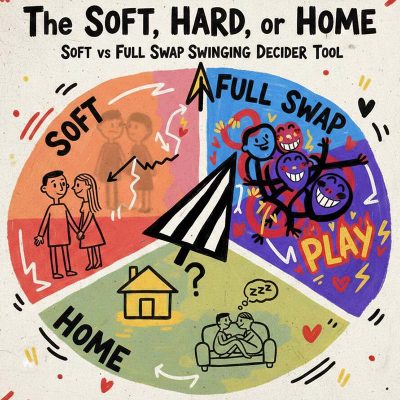
Don't let a "Soft Swap" night turn into a "Hard Feelings" morning.
Walking into the club with different expectations is a grenade waiting to explode. He thinks it’s a free-for-all; she thinks it’s just drinks and dancing. That silence in the car ride home? That’s the sound of a preventable disaster.
Stop guessing. Use this tool to sync your "sexual GPS" before you leave the driveway. Determine exactly how wild you’re getting tonight, so the only surprise is how much fun you have.
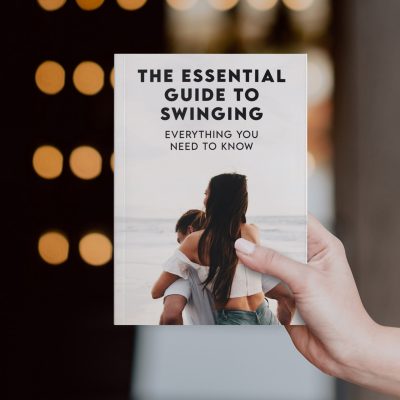
The fantasy of swinging is electric, but that cold sweat you feel when thinking about your partner with someone else? That’s your survival instinct warning you that your foundation is at stake. Most couples don’t fail because they lacked desire; they fail because they lacked a safety net. Ambiguity is where jealousy festers, and "winging it" is the fastest way to turn a dream into a nightmare of resentment and "what have we done?"
The Essential Guide to Swinging is your anxiety-proof roadmap through the chaos. Don't gamble your marriage on hope. Build a fortress of trust, master the repair chats, and ensure your exploration is defined by care, not a catastrophe
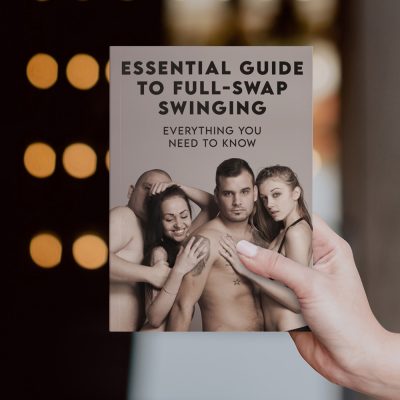
Full swap is the deep end. The rush is intense, but so is the risk of emotional wreckage. That tightening in your chest isn’t just nerves; it’s the fear that a "fun night" could become a permanent scar on your marriage. You can’t un-ring this bell, so never strike it without a plan.
The Essential Guide to Full Swap Swinging replaces reckless gambling with calculated discipline. From ironclad vetting to "emergency brake" scripts, we provide the safety architecture required to swap bodies without losing your minds. Don't just hope it goes well, engineer it
Gemini said
The fantasy is electric. The reality? It can be a grenade that blows up your marriage and your social circle. That tightening in your chest isn't just nerves. It is a warning that you are risking everything on a vibe. "Winging it" is the fastest way to turn a fun group chat into a toxic war zone.
The Essential Guide replaces the chaos with ironclad protocols. We provide the vetting tools, jealousy airlocks, and privacy scripts needed to swap bodies without losing your mind. Secure your safety first.
The fantasy of swinging is electric, but that cold sweat you feel when thinking about your partner with someone else? That’s your survival instinct warning you that your foundation is at stake. Most couples don’t fail because they lacked desire; they fail because they lacked a safety net. Ambiguity is where jealousy festers, and "winging it" is the fastest way to turn a dream into a nightmare of resentment and "what have we done?"
The Essential Guide to Swinging is your anxiety-proof roadmap through the chaos. Don't gamble your marriage on hope. Build a fortress of trust, master the repair chats, and ensure your exploration is defined by care, not a catastrophe
Full swap is the deep end. The rush is intense, but so is the risk of emotional wreckage. That tightening in your chest isn’t just nerves; it’s the fear that a "fun night" could become a permanent scar on your marriage. You can’t un-ring this bell, so never strike it without a plan.
The Essential Guide to Full Swap Swinging replaces reckless gambling with calculated discipline. From ironclad vetting to "emergency brake" scripts, we provide the safety architecture required to swap bodies without losing your minds. Don't just hope it goes well, engineer it
Myth 2 : Swinging means your relationship is broken or failing
Committing to swinging does not automatically signal a failed relationship. In many cases swinging is a conscious choice made by couples who want more connection excitement or variety while preserving their bond. It can be used as a tool for growth and as a way to explore intimacy in a guided environment. Some couples try swinging as a one off to answer curiosity and then decide it is not their path. Others make it a long term part of their relationship practice. The key is to approach this dynamic with honesty transparency and a solid shared reason for engaging in it. If you begin swinging to fix problems you still have to address the underlying issues with the same commitment you would bring to any other relationship work. You do not get a free pass on communication just because swinging is on the table.
Myth 3 : Jealousy disappears completely in swinging
Jealousy is a natural feeling and it can appear in any relationship style including swinging. The idea that jealousy vanishes once you cross a threshold is a myth that can set people up for disappointment. Instead many teams learn to recognize and manage jealousy more effectively. They use strategies like pre negotiated boundaries agreed upon before any encounter and quick check in talks after experiences. Some people discover that jealousy shifts into a different form such as insecurity about time attention or affection. The goal is not to eliminate jealousy but to reduce its frequency and to have tools ready to manage it when it happens. Compersion the feeling of genuinely enjoying your partner s joy can grow with practice and supportive guidance from both partners. The important part is to talk about the emotion openly and without judgment so you can learn together rather than letting it simmer into resentment.
Myth 4 : Swinging is all about casual sex with strangers
Reality is more nuanced. For many couples swinging involves mutual consent and shared decisions about where the experiences take place and who is involved. Some couples meet people through trusted social venues swap partners in a controlled environment with boundaries in place and then come home to their primary partner. Other couples may experiment with a planned date night that involves a single play partner or a small group. People choose different levels of exposure and different venues depending on comfort level and safety concerns. It is not a monolith. The most important factor is consent and transparent discussion with all parties about expectations aftercare and safety practices.
Myth 5 : Swingers chase better looks or status
Yes you will hear stories about looks and status in pop culture but the real world is often less flashy. For many couples the appeal lies in shared exploration intimacy and the chance to learn more about themselves as a pair. Some people may value physical chemistry while others place more emphasis on emotional connection or shared humor. A healthy swinging dynamic centers on mutual respect and aligned desires not on chasing an idealized external image. If looks are the sole draw that can become a hollow path that undermines trust. It is far more sustainable to build a dynamic that respects boundaries and prioritizes the relationship you already have.
Myth 6 : Swinging means losing control of boundaries or turning partners into property
Boundaries are the map in any ethical non monogamy exploration. In swinging every boundary is negotiated and documented by the couple or group involved. When done well these boundaries protect the primary relationship while enabling shared curiosity. If someone feels their boundaries are not being respected the problem is not the theory of swinging but the practice and communication behind it. The best approach is to review boundaries regularly and adjust them when needed. Boundaries should reflect what you both want not what you fear or what you think you should want. A healthy dynamic keeps trust at the center and treats all participants with respect and dignity.
Don't let a "Soft Swap" night turn into a "Hard Feelings" morning.
Walking into the club with different expectations is a grenade waiting to explode. He thinks it’s a free-for-all; she thinks it’s just drinks and dancing. That silence in the car ride home? That’s the sound of a preventable disaster.
Stop guessing. Use this tool to sync your "sexual GPS" before you leave the driveway. Determine exactly how wild you’re getting tonight, so the only surprise is how much fun you have.
The fantasy of swinging is electric, but that cold sweat you feel when thinking about your partner with someone else? That’s your survival instinct warning you that your foundation is at stake. Most couples don’t fail because they lacked desire; they fail because they lacked a safety net. Ambiguity is where jealousy festers, and "winging it" is the fastest way to turn a dream into a nightmare of resentment and "what have we done?"
The Essential Guide to Swinging is your anxiety-proof roadmap through the chaos. Don't gamble your marriage on hope. Build a fortress of trust, master the repair chats, and ensure your exploration is defined by care, not a catastrophe
Full swap is the deep end. The rush is intense, but so is the risk of emotional wreckage. That tightening in your chest isn’t just nerves; it’s the fear that a "fun night" could become a permanent scar on your marriage. You can’t un-ring this bell, so never strike it without a plan.
The Essential Guide to Full Swap Swinging replaces reckless gambling with calculated discipline. From ironclad vetting to "emergency brake" scripts, we provide the safety architecture required to swap bodies without losing your minds. Don't just hope it goes well, engineer it
Gemini said
The fantasy is electric. The reality? It can be a grenade that blows up your marriage and your social circle. That tightening in your chest isn't just nerves. It is a warning that you are risking everything on a vibe. "Winging it" is the fastest way to turn a fun group chat into a toxic war zone.
The Essential Guide replaces the chaos with ironclad protocols. We provide the vetting tools, jealousy airlocks, and privacy scripts needed to swap bodies without losing your mind. Secure your safety first.
The fantasy of swinging is electric, but that cold sweat you feel when thinking about your partner with someone else? That’s your survival instinct warning you that your foundation is at stake. Most couples don’t fail because they lacked desire; they fail because they lacked a safety net. Ambiguity is where jealousy festers, and "winging it" is the fastest way to turn a dream into a nightmare of resentment and "what have we done?"
The Essential Guide to Swinging is your anxiety-proof roadmap through the chaos. Don't gamble your marriage on hope. Build a fortress of trust, master the repair chats, and ensure your exploration is defined by care, not a catastrophe
Full swap is the deep end. The rush is intense, but so is the risk of emotional wreckage. That tightening in your chest isn’t just nerves; it’s the fear that a "fun night" could become a permanent scar on your marriage. You can’t un-ring this bell, so never strike it without a plan.
The Essential Guide to Full Swap Swinging replaces reckless gambling with calculated discipline. From ironclad vetting to "emergency brake" scripts, we provide the safety architecture required to swap bodies without losing your minds. Don't just hope it goes well, engineer it
Myth 7 : You need perfect communication to swing
Perfection does not exist in relationships and it is not a prerequisite for starting a swinging journey. What matters is a commitment to honest clear communication and a willingness to learn as you go. Start with simple conversations and build toward deeper topics. You can begin with basic boundaries and a plan for safe sex and then expand as you gain experience. Great communication is a practice not a destination. People who succeed in swinging often use tools like check in conversations agreed upon phrases that signal discomfort and written agreements that you both can refer back to. It is not about being flawless it is about showing up for each other every time you have a new experience.
Myth 8 : Swinging is a guaranteed path to sexual enhancement or discovery
People often hope swinging will unlock new sexual energy or reveal hidden desires. While some couples report positive changes such as increased curiosity better communication and new experiences these outcomes are not guaranteed. Sex is complex and moving parts like stress fatigue body image preferences and emotional safety all play a role. A responsible approach is to set realistic expectations and to frame any sexual exploration as a joint process of learning rather than a mission to achieve a specific outcome. If you approach swinging with the goal of constant peak experiences you miss that the journey can include awkward moments nervous conversations and moments of discomfort that eventually lead to growth.
Myth 9 : Swinging is only for people who live in cities or have money to burn
While some social venues and events exist in urban areas swinging is not exclusively a city phenomenon. People pursue ENM in many different environments including suburban towns and rural areas. The key factor is access to a trusted community or understanding of how to connect with others openly and honestly. It is possible to create your own safe spaces with careful planning whether that is hosting a private night at home inviting willing play partners or attending a small group event. There are free or low cost resources and online communities that emphasize consent and safety. Money can help with certain events but it is not a determining factor for whether swinging is right for you.
Myth 10 : Seeing other couples means you love your partner less
This is one of the most painful myths because it implies a zero sum game where additional experiences threaten the core relationship. The reality is that many couples experience increased closeness when they engage in ENM with clear communication and affection. The confidence of knowing your partner is choosing you as their primary connection can actually strengthen the bond. Jealousy or insecurity can emerge but they do not have to derail the relationship. The goal is to build trust and to reaffirm the value of your shared life together while welcoming new experiences that you both consent to explore.
Myth 11 : There is a single swinger culture that everyone follows
Every swing set and every group has its own tone and rules. The scene ranges from casual social meetups to more structured dating circles to private play parties. Some communities emphasize health and safety with clear etiquette while others focus more on social bonding and shared interests. There is no universal code that fits all people all the time. The best approach is to start with your own couple culture and to align with communities that match your values and comfort level. Don t assume one path will fit you just because you heard a story from a friend or saw a film that made swinging look one way. Real life is diverse and that is a strength not a weakness.
Myth 12 : Swinging is not compatible with having kids or with parenting life
Many couples are parents and they navigate swinging alongside family responsibilities. The key is to separate personal desires from family safety and to communicate openly about when and where experiences happen. Parenting schedules can complicate logistics and energy levels so you may prefer to keep certain activities to times when you both have childcare in place or when you can fully focus on consent and play. This myth is often born from fear rather than actual risk. With practice appropriate boundaries and good planning swinging can fit into a family life just as long as the needs of all involved are respected.
Myth 13 : Swinging means you will inevitably contract sexually transmitted infections
Any sexual activity has a risk for infections and STIs. This risk is not unique to swinging it exists in all sexual activity including monogamy when partners have multiple partners or when there are inconsistent safe sex practices. The practical response to this myth is to follow strict sexual health practices. Use barrier protection for sex when appropriate have regular STI testing and communicate health information with all involved parties. Some couples keep a shared health checklist or set up a boundary around who is approved for certain types of experiences. Responsible practice reduces risk and protects everyone involved just like in any safe sex framework.
Myth 14 : Swinging means non consensual polyamory
There is a difference between swinging and polyamory. Swinging is typically about sexual experiences with others while the primary couple remains the central emotional bond. Polyamory is about forming emotional connections and romantic relationships with more than one person with consent and communication among all involved. Some people eventually move from swinging to polyamory if the emotional needs evolve but this is a separate journey with its own set of rules and negotiations. If your aim is to keep romance out of the equation swinging can still be very fulfilling as long as all parties understand the expectations and boundaries in place.
Myth 15 : Swinging requires going to clubs or big events
Not at all. There are many ways to engage in ethical non monogamy without stepping into crowded venues. Some couples meet partners privately through trusted apps or communities and choose to meet in familiar spaces like their home or a trusted hotel room. Others prefer small private gatherings with clear guest lists and safety plans. Clubs and organized events are one option but they are not mandatory. The best approach is to find environments that align with your comfort level and your boundaries and to prioritize consent and safety regardless of the setting.
Myth 16 : The swinger scene is inherently unsafe or shady
Like any social or sexual scene there can be people who act in bad faith or without respect. The overall swinger and ENM community has many people who value consent safety privacy and mutual respect. The best defense against harm is education clear rules and an emphasis on personal boundaries. Take time to vet events or partners ask about safety practices and listen to your gut. If something feels off it probably is and you should step back talk it through and reassess. A healthy community grows from accountability transparency and the shared desire to create experiences that are respectful for everyone involved.
Real world dynamics and tips for navigating myths
Now that the myths are out of the way let us talk about how this works in real life. Here are practical tips to help you navigate swinging without turning it into a life long stress bubble.
Tip 1 : Start with a clear why
Ask yourselves why you want to explore swinging. Are you seeking new experiences together? Do you want to address a sexual mismatch in a constructive way? Perhaps you want more play partners while keeping the emotional primary bond strong. Write down a short statement that captures your shared why. Refer back to it when temptation or fear pops up. A strong why keeps you grounded in your values rather than chasing a fantasy.
Tip 2 : Build a boundary framework you both can trust
Boundaries are your safety rails. They should be specific dark or light for different situations and easy to revisit. Examples include who is allowed to be present at a given event what activities are on and off the table and what aftercare looks like. Regular boundary reviews are normal and healthy. If you find yourselves arguing about boundaries you are not failing you are creating a living document that respects both partners needs.
Tip 3 : Practice open and honest communication routines
Communication is a muscle. You can practice with non sexual topics that require honesty such as planning a trip or choosing a new hobby. Then gradually apply those communication skills to swinging conversations. Use phrases that invite collaboration for example I feel this and I would prefer that we try this approach. The goal is to keep the lines clear while remaining kind and curious about each other s feelings.
Tip 4 : Prioritize consent and ongoing consent
Consent is not a single yes you give once then forget. It is ongoing and can be withdrawn at any time. Check in during experiences with simple questions like Are you comfortable with how this is going Are you enjoying this. If someone says no stop immediately. No one should ever feel pressured to continue. A culture of consent is a culture of respect and safety for all involved.
Tip 5 : Safety first and health second
Establish safety practices and agree on STI testing schedules safe sex tools and hygiene standards. Discuss what to do if someone experiences a medical issue during a scene and how you will manage it if you are in a different city or country. The more practical details you cover the less stress you carry into a scene.
Tip 6 : Communicate aftercare needs
Aftercare is how you reconnect after an experience. Some people need quiet time and a cuddle others want to talk through what happened and what you learned. Decide in advance how you will handle aftercare. It does not have to be long or elaborate but it should be centered on ensuring both partners feel safe and cared for.
Realistic scenarios and sample conversations
Seeing examples can make myths melt away. Here are two short open conversations you can adapt. They illustrate how a couple might navigate different stages in their swinging journey.
Scenario A : Early exploration between a couple who is curious
Spencer says to Mia We have been talking about this for weeks. I would like us to explore a single play partner together in a controlled setting. I want to make sure we both feel comfortable and safe. Mia responds I appreciate that we are starting with one partner who matches our values. I want to set a boundary around what we will share and what we will not. I would also like to agree on an aftercare plan so we still feel connected after the experience.
Scenario B : A couple discovers jealousy during a play night
Ari and Jordan go into a small social event with a set of defined boundaries. After a positive start a moment of insecurity arises for Jordan. Jordan says I felt a twinge of jealousy when I saw Ari share a comment for lengthier interaction with our play partner. I want to take a quick break and check in. Ari replies Let s pause for a moment and then we will talk about it. It helps me to know what triggers you so we can adjust our boundaries together. They regroup rediscuss boundaries and decide to limit the duration of future interactions while keeping the same level of open communication.
Must know terms and acronyms
- ENM Ethical non monogamy a broad term for relationships that involve consensual non monogamy with clear guidelines and mutual consent.
- Swinging A form of ENM where couples engage in sexual activity with others while maintaining their primary relationship.
- Full swap When two partners have sexual experiences with others on the same night often both partners join in a shared event or encounter.
- Soft swap A form of swinging where partners engage in sexual activities with others but do not have intercourse with third parties.
- Boundaries Agreements about what is allowed and what is not during experiences.
- Aftercare The care and reconnection that happens after a sexual or emotional activity to ensure both partners feel safe and connected.
- Compersion The experience of joy when your partner experiences pleasure with someone else.
- Consent A clear and ongoing agreement to participate in an activity.
Frequently asked questions
How early should we start talking about swinging?
The best time to start talking about swinging is before you try it. Begin with curiosity questions about values and boundaries. You do not have to rush a decision you can take a few months to plan a path that feels safe for both of you.
What if only one partner wants to try swinging?
That is a challenging situation. The fair path is to pause and discuss the reasons the interest exists for the one partner and whether the other partner feels comfortable exploring a smaller step such as a sensory experience or a fantasy discussion. If one person feels strongly that swinging is not for them it is ok to honor that boundary and explore other ways to improve the relationship.
Is there a right age to start swinging?
There is no universal age. Some couples start in their twenties while others begin in their thirties forties or beyond. What matters is readiness communication and safety not age. A key factor is the couple s shared values and the maturity to handle the emotional aspects of ENM.
Can we swing if we have kids?
Yes many couples with kids explore swinging while prioritizing family life. The important part is scheduling role clarity privacy and safety. Some families prefer to keep activities away from home and to set clear boundaries about who knows what and when you can engage in these experiences safely.
What if my partner wants more experiences than I do?
That tension is common. The best approach is a serious conversation that explores each other needs and a possible compromise. Some couples agree to a fixed number of experiences per year while others agree to limit to one partner at a time. The process is about negotiation and fairness not about winning or losing.
How do I know if swinging is right for us?
The quickest path is to start with a clear conversation list. If both partners feel excited and comfortable with the approach and the boundaries you set then give it a low risk test such as a social event or a planned night with a trusted couple. If either partner feels consistently uneasy it is perfectly fine to pause or stop and revisit the conversation later.
Are there safety resources I should use?
Yes safety both physical and emotional matters. Use barrier protection for sexual activity where appropriate and maintain open health communication with all involved. Many couples create a shared accountability plan to ensure testing and health practices are up to date. The goal is safety and respect for everyone involved.
What about online dating and apps for swinging
Online platforms can be very useful to connect with like minded people. Choose reputable apps that emphasize consent and safety and always meet in public spaces for initial introductions. Do not rush into meetings and ensure clear communication about boundaries and expectations before any in person interaction.
Glossary of useful terms and acronyms
- ENM Ethical non monogamy a framework for relationships that involve consensual non monogamy with clear rules and consent.
- Swinging Sexual activities involving others while maintaining a primary relationship.
- Boundaries Negotiated limits that protect all involved parties and reflect shared values.
- Consent Ongoing voluntary agreement to participate in an activity.
- Soft swap Reception of sexual activities with others without intercourse.
- Full swap Experiencing intercourse with others during a shared experience.
- Compersion Feeling happiness for your partner s pleasure with someone else.
- Aftercare Caring for partners emotionally and physically after a sexual or intimate encounter.
- Stigma Negative social judgment about a lifestyle or choice that can impact how people feel about themselves.
- Open communication Honest direct conversation about needs boundaries and feelings.
Key takeaways you can use today
- Swinging is built on consent clear boundaries and ongoing communication.
- Jealousy may arise and can be managed with compersion empathy and steady check ins.
- There is no universal swinger culture and every couple can tailor a path that fits their values.
- Start small with shared curiosity and scale up only when both partners feel safe and aligned.
- Health safety and privacy are non negotiables and should be part of every plan you make.
Don't let a "Soft Swap" night turn into a "Hard Feelings" morning.
Walking into the club with different expectations is a grenade waiting to explode. He thinks it’s a free-for-all; she thinks it’s just drinks and dancing. That silence in the car ride home? That’s the sound of a preventable disaster.
Stop guessing. Use this tool to sync your "sexual GPS" before you leave the driveway. Determine exactly how wild you’re getting tonight, so the only surprise is how much fun you have.
The fantasy of swinging is electric, but that cold sweat you feel when thinking about your partner with someone else? That’s your survival instinct warning you that your foundation is at stake. Most couples don’t fail because they lacked desire; they fail because they lacked a safety net. Ambiguity is where jealousy festers, and "winging it" is the fastest way to turn a dream into a nightmare of resentment and "what have we done?"
The Essential Guide to Swinging is your anxiety-proof roadmap through the chaos. Don't gamble your marriage on hope. Build a fortress of trust, master the repair chats, and ensure your exploration is defined by care, not a catastrophe
Full swap is the deep end. The rush is intense, but so is the risk of emotional wreckage. That tightening in your chest isn’t just nerves; it’s the fear that a "fun night" could become a permanent scar on your marriage. You can’t un-ring this bell, so never strike it without a plan.
The Essential Guide to Full Swap Swinging replaces reckless gambling with calculated discipline. From ironclad vetting to "emergency brake" scripts, we provide the safety architecture required to swap bodies without losing your minds. Don't just hope it goes well, engineer it
Gemini said
The fantasy is electric. The reality? It can be a grenade that blows up your marriage and your social circle. That tightening in your chest isn't just nerves. It is a warning that you are risking everything on a vibe. "Winging it" is the fastest way to turn a fun group chat into a toxic war zone.
The Essential Guide replaces the chaos with ironclad protocols. We provide the vetting tools, jealousy airlocks, and privacy scripts needed to swap bodies without losing your mind. Secure your safety first.
The fantasy of swinging is electric, but that cold sweat you feel when thinking about your partner with someone else? That’s your survival instinct warning you that your foundation is at stake. Most couples don’t fail because they lacked desire; they fail because they lacked a safety net. Ambiguity is where jealousy festers, and "winging it" is the fastest way to turn a dream into a nightmare of resentment and "what have we done?"
The Essential Guide to Swinging is your anxiety-proof roadmap through the chaos. Don't gamble your marriage on hope. Build a fortress of trust, master the repair chats, and ensure your exploration is defined by care, not a catastrophe
Full swap is the deep end. The rush is intense, but so is the risk of emotional wreckage. That tightening in your chest isn’t just nerves; it’s the fear that a "fun night" could become a permanent scar on your marriage. You can’t un-ring this bell, so never strike it without a plan.
The Essential Guide to Full Swap Swinging replaces reckless gambling with calculated discipline. From ironclad vetting to "emergency brake" scripts, we provide the safety architecture required to swap bodies without losing your minds. Don't just hope it goes well, engineer it
