
Compersion and Shared Excitement


Welcome to The Monogamy Experiment where we break down big ideas into real life play by play. Today we are diving into compersion and shared excitement in the swinging ethical non monogamy world. If you have ever watched a partner explore a connection with someone else and felt both heat and happiness at the same time you are not alone. Compersion is a real phenomenon and it can become a superpower for couples who want to grow their bond while expanding their sexual and emotional experiences. We will explain what compersion is how it shows up in swinging ENM and how you can cultivate it even when nerves and fears pop up. This isn't a dry academic treatise. It is practical, funny and rooted in everyday moments. Let’s get to the good stuff and learn how to cheer your partner on while keeping your own center intact.
Quick Links to Useful Sections
- What compersion means in the swinging ENM world
- Key terms you will hear when talking about compersion
- Why compersion matters in the swinging ENM lifestyle
- Compersion in practice not philosophy
- How compersion differs from normal jealousy and envy
- The swinging ENM frame what makes it different from other relationship styles
- Common swinging ENM terms you may hear in this context
- Building the mental habits that support compersion
- Practical steps to cultivate compersion in your swinging journey
- Pre play conversations that set the stage for joy
- During play keep channels open and the mood respectful
- Post encounter debriefs that strengthen trust
- Boundaries that support compersion not fences that trap you
- Consent and consent culture in ENM
- Real life scenarios and how compersion can show up
- Scenario one a first date outside the relationship
- Scenario two a group play event and energy dynamics
- Scenario three moving to a new structure such as a triad or quad
- Scenario four jealousy triggers and reframing them into learning opportunities
- Scenario five aftercare misalignment
- Scenario six long distance ENM relationships
- Tools that help you grow compersion
- Common mistakes and how to avoid them
- Glossary of useful terms and acronyms
- Frequently asked questions
What compersion means in the swinging ENM world
Compersion is a word that might feel new if you grew up in a story that equated happiness with possession. In plain terms compersion is the ability to feel joy when your partner experiences joy with another person or people. In the swinging world it often looks like feeling happy for your partner when they have a positive experience with someone else. It can include admiration for their connection the thrill of hearing about what happened and the sense that the relationship you share is strengthened by each new positive encounter. Compersion does not erase your own emotions. It simply expands your emotional palette so you can hold multiple truths at once. The pain and the pleasure the nerves and the excitement can share the same moment. That is compersion in action.
Key terms you will hear when talking about compersion
- Compersion Joy you feel because your partner is happy with someone else. It is the opposite of jealousy in many moments.
- Envy A push to compare yourself with another person or to wish for what they have. Envy can arise in swinging the same way it can in any relationship dynamic.
- Jealousy A complex emotion that mixes fear of loss with longing or insecurity. Jealousy is common and not a failure you must avoid. It is a signal to explore needs.
- Boundary An agreed limit that helps two people navigate space time and expectations. Boundaries are dynamic and can change as feelings grow or shift.
- Consent A clear yes given by all involved. Consent in ENM is ongoing and dynamic never a one time checkbox.
- Aftercare The care and attention you exchange after an experience to help both people feel safe and valued.
Why compersion matters in the swinging ENM lifestyle
In swinging ENM you are building a life where multiple connections and experiences can enrich the whole. Compersion matters for several reasons. It reduces the friction that can derail a relationship when one partner spends time with someone else. It invites trust openness and vulnerability rather than secrecy. It also creates space for couples to celebrate growth together instead of feeling threatened by new experiences. When compersion shows up you may notice better communication more honest check ins and a greater sense of shared adventure. That creates a strong emotional base that supports all kinds of sexual experiences including spontaneous outings long term dates and even group play. Compersion is not about denying your own needs or pretending everything feels perfect. It is about cultivating a stance that says I want you to be happy and I will work to understand how to be happy with you in this journey.
Compersion in practice not philosophy
You will rarely feel purely compersion in every moment. Real life is messy and humans are complicated. The aim is to grow a default posture rather than to erase all jealousy. When you practice compersion you create a habit of stepping back from automatic judgments and choosing curiosity curiosity about your own reaction and curiosity about your partner s experience. When you approach things this way you can celebrate wins big and small and you can handle the rough patches with more empathy.
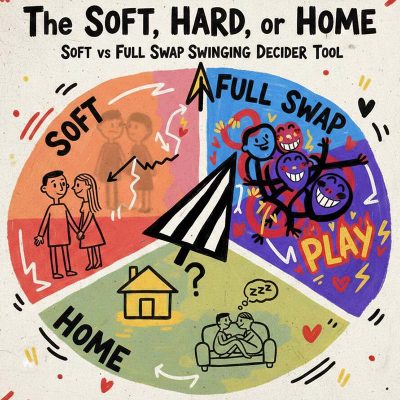
Don't let a "Soft Swap" night turn into a "Hard Feelings" morning.
Walking into the club with different expectations is a grenade waiting to explode. He thinks it’s a free-for-all; she thinks it’s just drinks and dancing. That silence in the car ride home? That’s the sound of a preventable disaster.
Stop guessing. Use this tool to sync your "sexual GPS" before you leave the driveway. Determine exactly how wild you’re getting tonight, so the only surprise is how much fun you have.

The fantasy of swinging is electric, but that cold sweat you feel when thinking about your partner with someone else? That’s your survival instinct warning you that your foundation is at stake. Most couples don’t fail because they lacked desire; they fail because they lacked a safety net. Ambiguity is where jealousy festers, and "winging it" is the fastest way to turn a dream into a nightmare of resentment and "what have we done?"
The Essential Guide to Swinging is your anxiety-proof roadmap through the chaos. Don't gamble your marriage on hope. Build a fortress of trust, master the repair chats, and ensure your exploration is defined by care, not a catastrophe
Full swap is the deep end. The rush is intense, but so is the risk of emotional wreckage. That tightening in your chest isn’t just nerves; it’s the fear that a "fun night" could become a permanent scar on your marriage. You can’t un-ring this bell, so never strike it without a plan.
The Essential Guide to Full Swap Swinging replaces reckless gambling with calculated discipline. From ironclad vetting to "emergency brake" scripts, we provide the safety architecture required to swap bodies without losing your minds. Don't just hope it goes well, engineer it

Gemini said
The fantasy is electric. The reality? It can be a grenade that blows up your marriage and your social circle. That tightening in your chest isn't just nerves. It is a warning that you are risking everything on a vibe. "Winging it" is the fastest way to turn a fun group chat into a toxic war zone.
The Essential Guide replaces the chaos with ironclad protocols. We provide the vetting tools, jealousy airlocks, and privacy scripts needed to swap bodies without losing your mind. Secure your safety first.
The fantasy of swinging is electric, but that cold sweat you feel when thinking about your partner with someone else? That’s your survival instinct warning you that your foundation is at stake. Most couples don’t fail because they lacked desire; they fail because they lacked a safety net. Ambiguity is where jealousy festers, and "winging it" is the fastest way to turn a dream into a nightmare of resentment and "what have we done?"
The Essential Guide to Swinging is your anxiety-proof roadmap through the chaos. Don't gamble your marriage on hope. Build a fortress of trust, master the repair chats, and ensure your exploration is defined by care, not a catastrophe
Full swap is the deep end. The rush is intense, but so is the risk of emotional wreckage. That tightening in your chest isn’t just nerves; it’s the fear that a "fun night" could become a permanent scar on your marriage. You can’t un-ring this bell, so never strike it without a plan.
The Essential Guide to Full Swap Swinging replaces reckless gambling with calculated discipline. From ironclad vetting to "emergency brake" scripts, we provide the safety architecture required to swap bodies without losing your minds. Don't just hope it goes well, engineer it
How compersion differs from normal jealousy and envy
Jealousy often whispers that you may lose something that is valuable. It can feel like a threat to your identity or your bond. Envy tends to be directed at someone else a comparison that says why does that other person get what I want. Compersion flips the script it is a choice to celebrate the positive experiences of your partner. You may still experience a twinge of discomfort or insecurity. The important part is what you do next. You can name the feeling you can check in with your partner you can revisit your boundaries or you can adjust the tempo of a swinging schedule. The goal is not to pretend that all feelings are gone but to prevent those feelings from controlling your actions. With practice compersion can become a reflex that supports warmth generosity and resilience in your relationship.
The swinging ENM frame what makes it different from other relationship styles
In swinging ENM the emphasis is typically on shared sexual experiences with consent and clear boundaries. There is usually time limited or event specific intimacy with other couples or singles. Compersion grows best where there is strong communication honesty and a sense that the primary relationship remains central. It is not a license to neglect emotional needs or to use others as a prop for your own curiosity. It is a practice where both partners take responsibility for their feelings and for how those feelings influence the relationship as a whole. The ENM frame provides practical tools a calendar a checklist a conversation guide and a set of norms that help people stay aligned even when new experiences arise. Compersion becomes a glue that helps the couple move forward together while exploring outside connections.
Common swinging ENM terms you may hear in this context
- Swing A structured or casual meeting that involves sexual activity with outside partners often within the context of a couple or a group.
- Ethical non monogamy A relationship approach where dating or sexual activity with others is considered ethical when all people involved consent and communicate openly.
- Primary couple The couple at the center of a relationship in an ENM arrangement.
- Secondary connection A person who is a partner or play partner but not the primary focus of the relationship.
- Soft swap A form of swinging that involves sexual activity without penetrative intercourse between partners in a specific agreement.
Building the mental habits that support compersion
Compersion grows from small daily practices not from a single big moment. The basics are honesty curiosity and patience. You want to cultivate a stance that allows you to hear about your partner s experiences with others without immediately coloring it with fear. Start with simple steps such as asking questions about what excited your partner what they learned and what they enjoyed about the connection. Reflect on your own feelings with a neutral tone rather than accusing or escalating. The more you practice the more you will be able to respond with warmth even if you feel a little unsure inside. This shift opens up space for genuine shared excitement and builds a stronger emotional base for both partners.
Practical steps to cultivate compersion in your swinging journey
Pre play conversations that set the stage for joy
Before you engage in any outside connection have a calm conversation about boundaries boundaries evolve as you grow. Discuss what kind of information feels safe to share what you want to celebrate about the other person and how you want to handle emotional moments. Some couples like to establish a check in ritual after a date or encounter a quick text or call that lets the other know how the experience felt. Others prefer longer debriefs at a later time. The key is to agree on something you both feel comfortable with and to keep the channel open for changes as needed.
During play keep channels open and the mood respectful
While both partners are in a scenario there are small moves that help with compersion. Use respectful language ask for updates check in on feelings and celebrate progress. If you are a partner who is not present in person you can show support with a quick message a note of appreciation or a small gesture that communicates you are glad they enjoyed their time. It is not about policing the experience it is about staying connected to the emotional current of the relationship. When you keep the door open you create a sense that the other person is not stepping out of the relationship they are expanding it.
Post encounter debriefs that strengthen trust
After any outside encounter schedule time to talk. Share what you learned what excited you and what you hope for next time. This is your chance to reinforce the bond in your primary relationship thanks to the shared excitement. If something did not go as planned discuss it with kindness and curiosity. That is where you turn a tricky moment into a learning experience that benefits both of you.
Boundaries that support compersion not fences that trap you
Boundaries are essential in swinging ENM. They keep the relationship priorities clear while still allowing for exploration. Boundaries are not a punishment they are a map that shows you where you feel safe and where you want to proceed with more care. Some boundary ideas include how much detail you share about an encounter whether you want to be present during certain activities whether you want to see photos or hear about specifics and how to handle emotional aftercare. Boundaries should be revisited regularly and adjusted as trust grows or as new situations arise. The aim is to protect the relationship while also preserving personal wellbeing and joy.
Consent and consent culture in ENM
Consenting to outside encounters means more than a single yes at the start. It requires ongoing confirmation that all parties are comfortable with the direction and the pace. Check ins to confirm consent should be part of the routine. If someone feels uncertain the pace should slow or the arrangement should be adjusted. Consent is not a one time event it is a continuous practice that strengthens trust and respect in the relationship.
Real life scenarios and how compersion can show up
Scenario one a first date outside the relationship
Two months into their swinging path Mia and Jay decide to invite a new partner into a date night. Jay feels excited and a little nervous about how Mia will connect with someone else. Mia is curious about the new person s energy and the different dynamic. They agree to a check in after the date and a shared space to discuss things they learned. After the date Mia shares a story about how she felt heard and respected which makes Jay happy because it confirms their relationship values. They celebrate this moment together as a win for the partnership and for both individuals. Compersion arrives through shared curiosity and mutual respect rather than ownership or control.
Scenario two a group play event and energy dynamics
At a group play event two couples navigate the energy flow between people. Alex notices that his partner Sam feels drawn to a certain person. Instead of feeling left out Alex asks clarifying questions and uses a steady tone to express admiration for Sam s connection. Sam notices how comfortable Alex is with the overall flow and this helps the group environment feel safe and welcoming. The experience becomes a social arc where both partners enjoy being part of the moment in different ways. Composure and honest communication lead to a sense of shared excitement rather than competition.
Scenario three moving to a new structure such as a triad or quad
Lena and Omar decide to explore a triad with a third partner. The transition is smooth because they already had strong communication lines and clear boundaries. Lena expresses pride in Omar s growing capacity to connect with someone outside their own duo. Omar appreciates Lena s openness and their joint growth as a couple not a static duo. In this scenario compersion grows from a deliberate choice to value connection over the fear of losing exclusivity. It becomes a living practice rather than a theoretical ideal.
Scenario four jealousy triggers and reframing them into learning opportunities
A trigger moment arises when one partner learns a detail about an encounter that unsettles them. The immediate impulse might be to pull back or to overreact. Instead the couple uses a structured response check in. They name the trigger they describe their emotions and they discuss what would help them feel safer. The partner who triggered the emotion explains what they learned about themselves from the experience which builds empathy and a plan for moving forward. The result is more compersion because both partners feel seen and heard and because they learned to navigate the emotional turbulence without escalating it.
Scenario five aftercare misalignment
Two partners finish a session and realize their aftercare needs were not aligned. One person wants a long cuddle and a debrief while the other wants space. They pause and talk through what each person needs and adjust the plan for the next time. They discover that aftercare is not a single formula but a flexible set of actions that can be adapted for each encounter. Their ability to revisit and adjust aftercare strengthens trust and makes room for more shared excitement in the future.
Scenario six long distance ENM relationships
In a long distance setup compersion can still thrive. Partners check in daily with small updates a shared calendar helps coordinate visits and the couple keeps an open mind about how to share excitement in between visits. When one person experiences a meaningful connection with someone else the other is able to celebrate and to be proud of their partner s emotional growth. The distance adds a layer of challenge yet the core practice of compersion remains the same listening acknowledging and celebrating the other person s happiness.
Tools that help you grow compersion
- Journaling practice to capture your emotional weather daily. Note moments of joy curiosity and friction and review what patterns appear over time.
- Structured check in templates that cover what went well what was difficult and what you want next time.
- A simple shared calendar that marks dates events and boundaries so everyone stays informed without getting overwhelmed by messages.
- Aftercare plans that are clear and flexible including physical touch space time and conversation time after an encounter.
- Education resources such as books or podcasts about compersion and ENM that help you grow together rather than apart.
Common mistakes and how to avoid them
One common mistake is assuming compersion is a feeling you must instantly produce. Compersion is a practice that grows over time and sometimes it is absent in some moments. Treat those moments with care rather than guilt. Another mistake is letting jealousy become a habit that leads to controlling behavior. Instead use jealousy as a signal to talk and to adjust boundaries or tempo. Finally avoid comparing yourself to other people or trying to imitate someone else s relationship style. Your path is unique and what works for another couple may not fit your dynamic. The aim is to align with your values and to keep the primary bond strong while exploring what feels right for you both.
Glossary of useful terms and acronyms
- Compersion Joy at your partner s happiness with someone else.
- Envy A desire to have what another person has.
- Jealousy A challenging emotion that signals insecurity or fear of loss.
- Ethical non monogamy ENM An approach to relationships that emphasizes consent openness and honesty with multiple partners.
- Swinging A form of ENM typically involving sexual experiences with others in a context that respects a primary couple.
- Aftercare Time and actions after an encounter focused on emotional safety and healing.
- Boundaries Rules or guidelines set by partners about acceptable behavior and limits.
Frequently asked questions
Don't let a "Soft Swap" night turn into a "Hard Feelings" morning.
Walking into the club with different expectations is a grenade waiting to explode. He thinks it’s a free-for-all; she thinks it’s just drinks and dancing. That silence in the car ride home? That’s the sound of a preventable disaster.
Stop guessing. Use this tool to sync your "sexual GPS" before you leave the driveway. Determine exactly how wild you’re getting tonight, so the only surprise is how much fun you have.
The fantasy of swinging is electric, but that cold sweat you feel when thinking about your partner with someone else? That’s your survival instinct warning you that your foundation is at stake. Most couples don’t fail because they lacked desire; they fail because they lacked a safety net. Ambiguity is where jealousy festers, and "winging it" is the fastest way to turn a dream into a nightmare of resentment and "what have we done?"
The Essential Guide to Swinging is your anxiety-proof roadmap through the chaos. Don't gamble your marriage on hope. Build a fortress of trust, master the repair chats, and ensure your exploration is defined by care, not a catastrophe
Full swap is the deep end. The rush is intense, but so is the risk of emotional wreckage. That tightening in your chest isn’t just nerves; it’s the fear that a "fun night" could become a permanent scar on your marriage. You can’t un-ring this bell, so never strike it without a plan.
The Essential Guide to Full Swap Swinging replaces reckless gambling with calculated discipline. From ironclad vetting to "emergency brake" scripts, we provide the safety architecture required to swap bodies without losing your minds. Don't just hope it goes well, engineer it
Gemini said
The fantasy is electric. The reality? It can be a grenade that blows up your marriage and your social circle. That tightening in your chest isn't just nerves. It is a warning that you are risking everything on a vibe. "Winging it" is the fastest way to turn a fun group chat into a toxic war zone.
The Essential Guide replaces the chaos with ironclad protocols. We provide the vetting tools, jealousy airlocks, and privacy scripts needed to swap bodies without losing your mind. Secure your safety first.
The fantasy of swinging is electric, but that cold sweat you feel when thinking about your partner with someone else? That’s your survival instinct warning you that your foundation is at stake. Most couples don’t fail because they lacked desire; they fail because they lacked a safety net. Ambiguity is where jealousy festers, and "winging it" is the fastest way to turn a dream into a nightmare of resentment and "what have we done?"
The Essential Guide to Swinging is your anxiety-proof roadmap through the chaos. Don't gamble your marriage on hope. Build a fortress of trust, master the repair chats, and ensure your exploration is defined by care, not a catastrophe
Full swap is the deep end. The rush is intense, but so is the risk of emotional wreckage. That tightening in your chest isn’t just nerves; it’s the fear that a "fun night" could become a permanent scar on your marriage. You can’t un-ring this bell, so never strike it without a plan.
The Essential Guide to Full Swap Swinging replaces reckless gambling with calculated discipline. From ironclad vetting to "emergency brake" scripts, we provide the safety architecture required to swap bodies without losing your minds. Don't just hope it goes well, engineer it
