
Consent With Multiple People at Once

Consent is the foundation of any healthy ENM swing dynamic. When more than two people are involved at the same time the stakes go up because you are juggling more feelings, more boundaries and more lines in the sand. This guide breaks down how to navigate consent with several people at once in a practical, friendly and down to earth way. We will explain terms and acronyms so you can speak clearly with everyone involved. You will find real world scenarios, check lists and tips to keep things safe fun and fair for all parties.
Quick Links to Useful Sections
- What does consent mean in an ENM swinging context
- Why consent matters when more people are involved
- Consent models and frameworks that work in group play
- Explicit consent from everyone involved
- Ongoing consent rather than a one time yes
- Rolling consent with a consent menu
- Consensus with a lead facilitator
- Who should give consent in a multi person scenario
- Setting boundaries and must nots
- Practical steps for obtaining consent from multiple people at once
- Step one plan a pre play group chat
- Step two create a consent menu and personal boundaries sheet
- Step three establish clear signals and a communication rhythm
- Step four assign a safety buddy or facilitator
- Step five keep an ongoing written record for reference
- Communication during group play
- Safe sex and health considerations in a multiple partner setting
- Jealousy and emotional dynamics in multi person play
- Realistic scenarios you may encounter
- Scenario one a casual group play night
- Scenario two a stable triad expands to a quad
- Common mistakes to avoid in multi person consent situations
- Checklist for consent in a group swing scenario
- Glossary of useful terms and acronyms
- Further notes on terms
- Frequently asked questions
What does consent mean in an ENM swinging context
Consent in ethical non monogamy is agreement that is informed enthusiastic and ongoing. It means everyone involved understands the activities on the table and freely says yes with no pressure. When a group is involved the concept of consent expands beyond a single yes it becomes a process of ongoing communication where all voices are considered. Consent is not a one time checkbox it is a living conversation that adapts as the situation changes.
In a multi person setting consent involves three core ideas. The first is clarity. The second is agreement. The third is ongoing check ins. Clarity means everyone understands what is about to happen. Agreement means each person has given explicit permission to participate in the activities. Ongoing check ins means you pause and verify consent as things evolve. When consent is active and ongoing the dynamic can feel safe and respectful even as the energy builds.
Why consent matters when more people are involved
Adding more players to any relationship scene increases the potential for misunderstandings miscommunication and hurt feelings. Clear consent helps prevent assumptions and mis reading signals. It also creates a shared language for talking about boundaries and desires. By establishing a consent framework you give everyone a reliable way to say yes or no without fear of judgement. A strong consent culture supports trust reduces anxiety and keeps the experience enjoyable for all parties.
In practice this means people should feel comfortable saying yes or no clearly and quickly without feeling pressured. It also means a yes can become a no at any time and the others adjust accordingly. Consent is not about a perfect plan it is about a flexible plan that respects everyone involved.
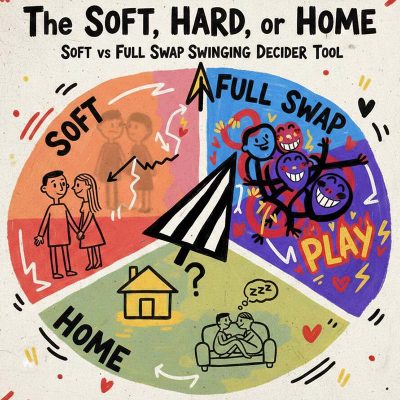
Don't let a "Soft Swap" night turn into a "Hard Feelings" morning.
Walking into the club with different expectations is a grenade waiting to explode. He thinks it’s a free-for-all; she thinks it’s just drinks and dancing. That silence in the car ride home? That’s the sound of a preventable disaster.
Stop guessing. Use this tool to sync your "sexual GPS" before you leave the driveway. Determine exactly how wild you’re getting tonight, so the only surprise is how much fun you have.

The fantasy of swinging is electric, but that cold sweat you feel when thinking about your partner with someone else? That’s your survival instinct warning you that your foundation is at stake. Most couples don’t fail because they lacked desire; they fail because they lacked a safety net. Ambiguity is where jealousy festers, and "winging it" is the fastest way to turn a dream into a nightmare of resentment and "what have we done?"
The Essential Guide to Swinging is your anxiety-proof roadmap through the chaos. Don't gamble your marriage on hope. Build a fortress of trust, master the repair chats, and ensure your exploration is defined by care, not a catastrophe

Full swap is the deep end. The rush is intense, but so is the risk of emotional wreckage. That tightening in your chest isn’t just nerves; it’s the fear that a "fun night" could become a permanent scar on your marriage. You can’t un-ring this bell, so never strike it without a plan.
The Essential Guide to Full Swap Swinging replaces reckless gambling with calculated discipline. From ironclad vetting to "emergency brake" scripts, we provide the safety architecture required to swap bodies without losing your minds. Don't just hope it goes well, engineer it

Gemini said
The fantasy is electric. The reality? It can be a grenade that blows up your marriage and your social circle. That tightening in your chest isn't just nerves. It is a warning that you are risking everything on a vibe. "Winging it" is the fastest way to turn a fun group chat into a toxic war zone.
The Essential Guide replaces the chaos with ironclad protocols. We provide the vetting tools, jealousy airlocks, and privacy scripts needed to swap bodies without losing your mind. Secure your safety first.
The fantasy of swinging is electric, but that cold sweat you feel when thinking about your partner with someone else? That’s your survival instinct warning you that your foundation is at stake. Most couples don’t fail because they lacked desire; they fail because they lacked a safety net. Ambiguity is where jealousy festers, and "winging it" is the fastest way to turn a dream into a nightmare of resentment and "what have we done?"
The Essential Guide to Swinging is your anxiety-proof roadmap through the chaos. Don't gamble your marriage on hope. Build a fortress of trust, master the repair chats, and ensure your exploration is defined by care, not a catastrophe
Full swap is the deep end. The rush is intense, but so is the risk of emotional wreckage. That tightening in your chest isn’t just nerves; it’s the fear that a "fun night" could become a permanent scar on your marriage. You can’t un-ring this bell, so never strike it without a plan.
The Essential Guide to Full Swap Swinging replaces reckless gambling with calculated discipline. From ironclad vetting to "emergency brake" scripts, we provide the safety architecture required to swap bodies without losing your minds. Don't just hope it goes well, engineer it
Consent models and frameworks that work in group play
There are several ways to approach consent with multiple people. The best approach is often a blend that fits the personalities and boundaries of everyone involved. Below are common models.
Explicit consent from everyone involved
This model relies on direct statements from each person about what they are comfortable with. Everyone voices their boundaries and what is allowed. This approach minimizes assumptions and keeps everyone in the loop from the start. It works well in new group situations and in long term swinging dynamics where people want to revisit boundaries as needs change.
Ongoing consent rather than a one time yes
Ongoing consent means you re check in throughout the interaction. A simple way to implement this is to include quick check in phrases such as Is this still okay for you or Should we keep going with this. You can set up a rhythm for check ins such as after a certain activity or after a set amount of time. This approach helps keep energy aligned and reduces the risk of late surprises.
Rolling consent with a consent menu
A consent menu lists activities with clear yes boundaries or limits for each party. It is a practical way to pre define what is in play and what is not. If the conversation reveals changes you can adjust the menu in real time. This method is flexible and easy to adapt to different group sizes.
Consensus with a lead facilitator
In some group settings a lead facilitator helps coordinate the discussion ensuring every voice is heard. This does not give one person unilateral power it simply keeps the process moving and reduces the risk of someone being steamrolled by group energy. The facilitator can be a rotating role so everyone gets a chance to guide the conversation.
Who should give consent in a multi person scenario
Every adult participant must give explicit informed consent for each activity. This includes all sexual activities emotional dynamics and any sharing or swapping of partners. In a group setting it is common to make sure each participant has had time to think and reflect before agreeing. Do not assume that someone is comfortable with a given arrangement because a previous encounter went well. Boundaries can shift over time and so can comfort levels. Always treat consent as dynamic and revisitable.
Setting boundaries and must nots
Before any group play begins take time to write down non negotiables and hard limits. These are limits you will not cross regardless of mood or energy. Examples include no sleeping with certain people no activities that involve a specific practice you want to avoid or no play in a particular setting such as a bedroom with a pet in the house. Make sure each person has access to this list and agrees that it reflects their own boundaries.
Soft limits are boundaries that can be revisited with consent. For example if a partner says I would be willing to try this in a specific scenario but only with careful pacing that kind of limit is a soft limit. Soft limits can become hard limits if someone changes their mind mid scene. It is important to check in when soft limits are approached to see if the person still wants to proceed or would prefer to stop or slow down.
Practical steps for obtaining consent from multiple people at once
Below is a practical approach you can adopt for group play. You can adapt it to your own group size and dynamic but the core ideas stay the same.
Step one plan a pre play group chat
Bring all involved parties together for a relaxed conversation before any physical activities begin. The goal is to align on goals values boundaries and expectations. Start with a simple question like What are we hoping to experience tonight and what would make it a red flag for you. Encourage honesty and remind everyone that they can pause or stop at any moment. The atmosphere should be non judgemental and supportive.
Step two create a consent menu and personal boundaries sheet
Develop a menu that outlines allowed activities and clear limits for each person. Include sections for kissing touching oral sex penetrative sex or any BDSM elements perhaps. Each participant should mark Yes No or Ask me later for each item and provide a short personal note if helpful. This is not a contract it is a guide you can revisit and revise as you grow more comfortable with the dynamic.
Step three establish clear signals and a communication rhythm
Agree on non verbal and verbal signals to indicate comfort or discomfort. A common method is traffic light signals green meaning proceed yellow meaning pause and reassess red meaning stop immediately. Use a pre defined signal for when someone needs to retreat to a private space or take a break. The group should also schedule brief check in pauses to confirm continuing consent as energy changes.
Step four assign a safety buddy or facilitator
Choose one or two people who will act as safety buddies to monitor the room for signs of discomfort or hesitation. They should feel safe to approach anyone who looks uneasy and to prompt a pause if needed. The facilitator helps keep the conversation on track but does not control anyone else’s boundaries. Everyone should feel they have equal standing in the process.
Step five keep an ongoing written record for reference
It can be extremely helpful to have a short written reference that the group can glance at. This could be a combined consent menu or a one page reminder of boundaries and signals. A simple copy posted on a digital note or printed copy placed in an easy to access area can prevent miscommunication during the heat of the moment.
Communication during group play
Even with all the planning things can shift once energy takes over. Keep these practices to preserve consent and respect for everyone involved.
- Pause if anyone signals a yellow or red light. It is better to slow down than risk harm or discomfort.
- Use clear words to describe what is happening not generic phrases. Instead of You are making me feel uncomfortable try I would like a short break and I want to talk privately for a moment.
- Check in with each person after a major moment especially after activities that involve intimacy or vulnerability.
- Avoid pressuring someone to continue with an activity they previously said yes to but later want to stop. Their change of mind must be respected.
- Respect the privacy of all participants. Do not share private details about someone without their explicit consent.
Safe sex and health considerations in a multiple partner setting
Practice safer sex and discuss health measures before engaging in activities with more than one person. This not only protects physical health but also supports emotional safety. Common practices include using barrier methods for oral sex and penetrative sex when appropriate discuss STI testing schedules and be open about recent results in group conversations. Decide as a group whether you want to use condoms or other barrier methods even in situations where you might otherwise forego protection. Establish rules about sharing toys and about cleaning and sanitizing gear between uses.
Additionally consider discussing vaccination status differences and any health concerns that may impact the group. Acknowledging these topics upfront reduces anxiety and helps everyone feel cared for and respected.
Jealousy and emotional dynamics in multi person play
Jealousy is a natural emotion in any relationship situation. In a group context it can feel intensified. The key is to acknowledge the emotion name it and share what you need to feel secure. Techniques that help include taking time to de escalate and removing yourself from a situation briefly to regain balance. Honest conversations after a moment of distress can often strengthen the trust within the dynamic. If jealousy becomes persistent it may be a sign to pause and re evaluate boundaries.
Some practical ideas to handle jealousy include centring on personal needs such as time with a specific partner or reassurance conversation with your primary partner if that exists. Revisit the consent menu and perhaps adjust boundaries to reduce triggers. Remember jealousy is not a crime it is a signal that deserves attention and care.
Realistic scenarios you may encounter
Two scenarios help illustrate how consent with multiple people can work in practice. The first is a group setting with casual intimate play the second is a connected trio in a long term swinging dynamic. Each example highlights how to apply explicit consent ongoing check ins and respectful boundaries.
Scenario one a casual group play night
Four adults gather for a social evening and some playful exploration. Before any physical activity the group sits together for a quick check in. Each person states their general goals for the night and their top three boundaries. The consent menu is consulted and any items that require particular attention are flagged. The group agrees on a traffic light system with a designated safety buddy. As energy builds the facilitator leads a short pause to confirm that everyone is still comfortable with the plan. The conversation remains direct and kind with no pressure and any red flags are addressed immediately. The night unfolds with clear communication and mutual respect for each other’s boundaries.
Scenario two a stable triad expands to a quad
A long term triad invites a fourth partner into their dynamic with a clear consent process. The group discusses what feels right and what would cross a hard boundary. They agree that the new person will participate in scoped activities while the others maintain certain routines they have agreed on in the past. They rate safety and comfort as high priorities and decide to check in every twenty minutes using a simple set of signals. They also agree that if anyone feels uncomfortable about something they can opt out of any specific activity without explanation and without negative consequence. The tone remains respectful and the energy remains playful while boundaries stay intact.
In both scenarios communication is the anchor. The participants use explicit statements and practical check ins to keep consent alive and the experience positive for everyone involved.
Common mistakes to avoid in multi person consent situations
- Assuming that a previous consent means ongoing consent across all activities. Always check in and confirm for each new activity or partner.
- Overlooking the needs of someone who is new to the group. Take time to bring them up to speed and ensure they feel seen and heard.
- Using fear based language or pressure to push someone into a boundary they are not comfortable with.
- Rushing the process. In group dynamics it is better to slow down and ensure everyone is on the same page than to move forward quickly and risk harm.
Checklist for consent in a group swing scenario
- All participants have clearly stated what is allowed and what is not.
- There is a written or shared consent menu that is accessible to everyone.
- There is a designated safety buddy or facilitator to monitor the space.
- There are agreed signals for pausing or stopping and a plan for privacy if needed.
- Health and safety guidelines are discussed including STI testing and barrier methods used.
- All participants know they can revoke consent at any moment without judgement.
Glossary of useful terms and acronyms
- ENM Ethical non monogamy a relationship style that chooses honesty consent and communication over possessiveness or secrecy.
- Swinging Romantic or sexual relationships with people outside your primary couple typically in a social group setting.
- Consent An informed enthusiastic ongoing yes from each person involved for each activity.
- Affirmative consent A clear enthusiastic yes that confirms agreement to participate in a specific activity.
- Boundaries Personal limits that define what is acceptable and what is not for each person.
- Soft limit A boundary that can be revisited with further discussion and consent.
- Hard limit A boundary that cannot be crossed under any circumstances.
- Check in A moment during an activity to confirm that everyone still wants to continue.
- Traffic light system A signaling method using green yellow and red to indicate go pause or stop.
- Consent menu A written list of activities with each person’s consent status and boundaries.
- Safety buddy A designated person who monitors the space for safety and comfort signals.
Further notes on terms
Terms can vary between groups and communities. The most important thing is that everyone involved understands and agrees on what each term means in your specific context. If you use a term differently from how someone else uses it take a moment to clarify before proceeding.
Frequently asked questions
What does consent look like in a group play setting
In a group setting consent looks like clear verbal or written permission from each person for each activity. It means that no one is surprised by something happening and that anyone can pause stop or ask for a revision at any time. It is a collaborative process not a top down command.
How do we obtain consent from multiple people at once
Start with a group check in where everyone states their general boundaries and what they hope to experience. Use a consent menu for specific activities and designate a safety buddy or facilitator to keep the process flowing. Use clear signals to manage in the moment communication and revisit consent as needed.
What is affirmative consent and why does it matter
Affirmative consent means a clear yes that is enthusiastic and specific to the activity being proposed. It matters because it reduces ambiguity and ensures that all participants are actively agreeing rather than assuming consent based on prior interactions.
What if someone changes their mind during the evening
Respect the change immediately. Stop the activity related to the boundary and discuss next steps. Revisit the consent menu and adjust plans if needed. No one should feel pressured to continue anything that makes them uncomfortable.
How do we handle jealousy in a group dynamic
Jealousy is a natural emotion and can be managed with open honest conversation. Validate feelings avoid blaming others and practice self soothers or time with a trusted partner to process emotions. If jealousy becomes frequent consider stepping back and revisiting boundaries or even re configuring the group if needed.
Should we have a formal written contract for consent
A formal contract can be useful in some groups but it is not essential. A flexible consent menu and written boundaries with agreed signals works well for many groups. The key is that everyone understands and agrees to the terms and knows how to revise them when needed.
Is it okay to game the system by testing limits quickly
No. The goal is to respect boundaries and ensure ongoing enthusiastic consent. Pushing to test limits can erode trust and increase emotional risk. If you want to explore a new activity use a slow pace and obtain explicit consent at each step.
How should we include new partners into an established group
New partners should join after a separate consent conversation that covers their boundaries and expectations. The existing group should be patient and inclusive and offer time for the newcomer to feel comfortable. Revisit the consent menu and adjust as needed to accommodate everyone fairly.
Don't let a "Soft Swap" night turn into a "Hard Feelings" morning.
Walking into the club with different expectations is a grenade waiting to explode. He thinks it’s a free-for-all; she thinks it’s just drinks and dancing. That silence in the car ride home? That’s the sound of a preventable disaster.
Stop guessing. Use this tool to sync your "sexual GPS" before you leave the driveway. Determine exactly how wild you’re getting tonight, so the only surprise is how much fun you have.
The fantasy of swinging is electric, but that cold sweat you feel when thinking about your partner with someone else? That’s your survival instinct warning you that your foundation is at stake. Most couples don’t fail because they lacked desire; they fail because they lacked a safety net. Ambiguity is where jealousy festers, and "winging it" is the fastest way to turn a dream into a nightmare of resentment and "what have we done?"
The Essential Guide to Swinging is your anxiety-proof roadmap through the chaos. Don't gamble your marriage on hope. Build a fortress of trust, master the repair chats, and ensure your exploration is defined by care, not a catastrophe
Full swap is the deep end. The rush is intense, but so is the risk of emotional wreckage. That tightening in your chest isn’t just nerves; it’s the fear that a "fun night" could become a permanent scar on your marriage. You can’t un-ring this bell, so never strike it without a plan.
The Essential Guide to Full Swap Swinging replaces reckless gambling with calculated discipline. From ironclad vetting to "emergency brake" scripts, we provide the safety architecture required to swap bodies without losing your minds. Don't just hope it goes well, engineer it
Gemini said
The fantasy is electric. The reality? It can be a grenade that blows up your marriage and your social circle. That tightening in your chest isn't just nerves. It is a warning that you are risking everything on a vibe. "Winging it" is the fastest way to turn a fun group chat into a toxic war zone.
The Essential Guide replaces the chaos with ironclad protocols. We provide the vetting tools, jealousy airlocks, and privacy scripts needed to swap bodies without losing your mind. Secure your safety first.
The fantasy of swinging is electric, but that cold sweat you feel when thinking about your partner with someone else? That’s your survival instinct warning you that your foundation is at stake. Most couples don’t fail because they lacked desire; they fail because they lacked a safety net. Ambiguity is where jealousy festers, and "winging it" is the fastest way to turn a dream into a nightmare of resentment and "what have we done?"
The Essential Guide to Swinging is your anxiety-proof roadmap through the chaos. Don't gamble your marriage on hope. Build a fortress of trust, master the repair chats, and ensure your exploration is defined by care, not a catastrophe
Full swap is the deep end. The rush is intense, but so is the risk of emotional wreckage. That tightening in your chest isn’t just nerves; it’s the fear that a "fun night" could become a permanent scar on your marriage. You can’t un-ring this bell, so never strike it without a plan.
The Essential Guide to Full Swap Swinging replaces reckless gambling with calculated discipline. From ironclad vetting to "emergency brake" scripts, we provide the safety architecture required to swap bodies without losing your minds. Don't just hope it goes well, engineer it
