
Couple Privilege and How It Shows Up


Couple privilege is a real thing even when consent and communication are strong. If you are navigating the swinging world a little privilege can sneak in and shape the way things feel for both partners. This guide breaks down what couple privilege is in a swinging ethical non monogamy dynamic, how it shows up in everyday decisions, and practical ways to level the playing field so both partners feel seen, heard and respected. We will keep it practical, no judgement, and full of concrete steps you can try in your next conversation or date night.
Quick Links to Useful Sections
- What this guide covers
- What is couple privilege
- How couple privilege tends to show up in Swinging ENM
- Access to time and energy
- Decision making power and rule setting
- Access to social and safety resources
- Communication style and emotional labor
- Performance expectations and social signaling
- Impact on metamours and other partners
- Recognizing privilege in practice
- Pattern one you hear the phrase we two versus you as an individual
- Pattern two messages about access to venues or events
- Pattern three unequal emotional load sharing
- Pattern four uneven safety practices
- Pattern five language that sounds protective of the couple s image
- How to navigate couple privilege in Swinging ENM
- Start with a privilege audit
- Invite equal voice into boundary setting
- Share information openly
- Balance planning and spontaneity
- Practice transparent social dynamics
- Develop a couple back up plan
- Communication tools that help reduce privilege dynamics
- Three part check in
- I statements and neutral language
- Boundary re framing script
- After action debrief
- Practical tools to keep everyone safe and respected
- Consent is ongoing
- Soft vs hard limits
- Documentation and accountability
- Metamour friendly practices
- Jealousy and compersion in Swinging ENM
- The role of power dynamics in swinging ENM
- Case studies you can learn from
- Case study one a couple learns to rebalance after a misstep
- Case study two a couple examines gatekeeping patterns
- Case study three when a hard limit is reached
- Glossary of useful terms and acronyms
- Frequently asked questions
What this guide covers
This article is for couples and their partners who swing or explore ENM in a way that respects everyone involved. We explain terms and acronyms as we go so you don t have to run for a glossary every time. You will find real life scenarios, honest talk prompts, boundaries you can adapt, and a plan to grow together while keeping everyone safe and empowered.
What is couple privilege
Privilege in this context means advantages that come from the couple status rather than from the individual needs or desires of each person. It is not about blame or fault. It is about noticing where a couple dynamic gives one or both partners more leverage in decisions, access to information or control over the pace and scope of experiences. When a couple has privilege in a swinging ENM setup, that privilege can show up in a few familiar ways. It can shape who gets to set the rules for the couple, who gets more time or attention from other partners, and who is more comfortable with risk or with certain kinds of play. The key thing to remember is privilege is not about being bad it is about recognizing patterns so you can choose how you want to move forward together with intent.
In the swinging ENM world we often talk in terms like ethical non monogamy or ENM which is shorthand for relationships that involve more than two people with consent from everyone involved. Swinging specifically refers to partnered couples who choose to have sexual experiences with others in a sexual exchange or social setting. The term polyamory is another umbrella category used when people have multiple ongoing intimate relationships. Metamours are the partners of your partner in a poly style arrangement. That distinction matters because privilege can appear differently depending on whether you are swinging strictly as a couple or courting multiple relationships at once. We will use clear explanations so you can identify what matters in your own context.
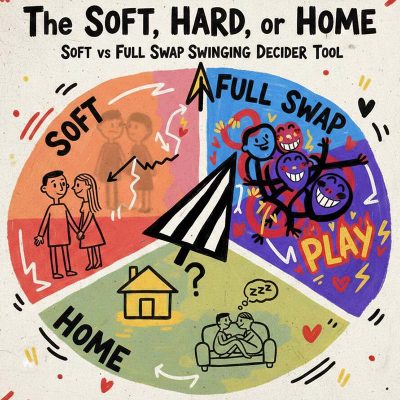
Don't let a "Soft Swap" night turn into a "Hard Feelings" morning.
Walking into the club with different expectations is a grenade waiting to explode. He thinks it’s a free-for-all; she thinks it’s just drinks and dancing. That silence in the car ride home? That’s the sound of a preventable disaster.
Stop guessing. Use this tool to sync your "sexual GPS" before you leave the driveway. Determine exactly how wild you’re getting tonight, so the only surprise is how much fun you have.
The fantasy of swinging is electric, but that cold sweat you feel when thinking about your partner with someone else? That’s your survival instinct warning you that your foundation is at stake. Most couples don’t fail because they lacked desire; they fail because they lacked a safety net. Ambiguity is where jealousy festers, and "winging it" is the fastest way to turn a dream into a nightmare of resentment and "what have we done?"
The Essential Guide to Swinging is your anxiety-proof roadmap through the chaos. Don't gamble your marriage on hope. Build a fortress of trust, master the repair chats, and ensure your exploration is defined by care, not a catastrophe
Full swap is the deep end. The rush is intense, but so is the risk of emotional wreckage. That tightening in your chest isn’t just nerves; it’s the fear that a "fun night" could become a permanent scar on your marriage. You can’t un-ring this bell, so never strike it without a plan.
The Essential Guide to Full Swap Swinging replaces reckless gambling with calculated discipline. From ironclad vetting to "emergency brake" scripts, we provide the safety architecture required to swap bodies without losing your minds. Don't just hope it goes well, engineer it
Gemini said
The fantasy is electric. The reality? It can be a grenade that blows up your marriage and your social circle. That tightening in your chest isn't just nerves. It is a warning that you are risking everything on a vibe. "Winging it" is the fastest way to turn a fun group chat into a toxic war zone.
The Essential Guide replaces the chaos with ironclad protocols. We provide the vetting tools, jealousy airlocks, and privacy scripts needed to swap bodies without losing your mind. Secure your safety first.
The fantasy of swinging is electric, but that cold sweat you feel when thinking about your partner with someone else? That’s your survival instinct warning you that your foundation is at stake. Most couples don’t fail because they lacked desire; they fail because they lacked a safety net. Ambiguity is where jealousy festers, and "winging it" is the fastest way to turn a dream into a nightmare of resentment and "what have we done?"
The Essential Guide to Swinging is your anxiety-proof roadmap through the chaos. Don't gamble your marriage on hope. Build a fortress of trust, master the repair chats, and ensure your exploration is defined by care, not a catastrophe
Full swap is the deep end. The rush is intense, but so is the risk of emotional wreckage. That tightening in your chest isn’t just nerves; it’s the fear that a "fun night" could become a permanent scar on your marriage. You can’t un-ring this bell, so never strike it without a plan.
The Essential Guide to Full Swap Swinging replaces reckless gambling with calculated discipline. From ironclad vetting to "emergency brake" scripts, we provide the safety architecture required to swap bodies without losing your minds. Don't just hope it goes well, engineer it
How couple privilege tends to show up in Swinging ENM
Privilege shows up in everyday moments and sometimes in subtle ways. Here are the patterns you might notice in a swinging ENM dynamic. As you read these, you can think about your own relationship and what feels true for you both.
Access to time and energy
When a couple is balancing two schedules plus the expectations of new partners there can be a default assumption that the couple should take priority. This might show up as scheduling playdates or conversations about new partners happening primarily in the couple unit without inviting the individual partner to participate in planning. It can also mean that one partner s needs or rest times are deprioritized because the other partner has more social stamina or enthusiasm for new experiences. In a healthy dynamic the conversation centers both partners voices and negotiates a plan that respects each person s energy levels.
Decision making power and rule setting
Couples tend to negotiate the ground rules for their shared experiences. When privilege is at play one person in the relationship might dominate those decisions or justify rules by saying This is what we do as a couple. The other partner may feel their personal boundaries or concerns are minimized or dismissed. The goal is to keep decisions collaborative and to ensure both partners can opt out or adjust boundaries without fear of losing relationship status or access to shared experiences.
Access to social and safety resources
Some couples have easier access to resources like social networks, trusted venues, or safer play spaces. If one partner is more connected into a community or has a longer history with a venue or venue staff, they might naturally steer invitations or recommendations. Privilege here can manifest as a comfort advantage and a gatekeeping effect where one partner helps shape who gets access to opportunities and information.
Communication style and emotional labor
Two voices speaking as a couple can create a strong sense of solidarity to onlookers. Yet there is a risk that one partner bears an unequal share of emotional labor when it comes to processing feelings that come up from sexual exploration. If one partner consistently carries the mental load of safety planning, aftercare discussions, and checking in on boundaries while the other partner avoids those conversations or relies on the first partner to carry the talking, privilege is at work. Balanced dynamics invite both partners to co create emotional labor and both to participate in aftercare and debriefs.
Performance expectations and social signaling
In some couples there is a sense that the couple should present a certain image to the outside world. This can create pressure to show a confident front even when one or both partners are unsure or uncomfortable. The pressure to appear perfectly connected can silence honest conversations about speed, scope of experiences or boundaries. The antidote is transparency and a willingness to show vulnerability in safe spaces so the relationship stays authentic rather than performative to others.
Impact on metamours and other partners
Couple privilege can ripple outward. If the couple s status makes other partners defer to them or assume certain needs must be met at their pace, metamours can feel pushed aside or undervalued. Respect for all involved means inviting clear communication with every partner and creating space for the voices of single partners, date partners and metamours alike. A healthy swinging ENM circle builds practices that honor everyone s safety, consent and comfort regardless of relationship status.
Recognizing privilege in practice
Privilege rarely looks like a bad intention. It often looks like a pattern that has become invisible over time. Here are practical signals to watch for in your own dynamic. If you notice several of these in your day to day life, it might be time to pause and re negotiate with care.
Pattern one you hear the phrase we two versus you as an individual
When decisions about play or rules routinely come from the sense that the couple knows what is best for all involved, you may be seeing couple privilege in action. It is healthy for couples to speak with a shared voice but each partner should still feel free to voice a personal boundary or different opinion without fear of retribution.
Pattern two messages about access to venues or events
If the couple consistently seems to have priority access to certain events, parties or play spaces, it could reflect privilege in the sense of gatekeeping. This happens when the couple is grew in its social position and uses that position to influence who gets invited or included.
Pattern three unequal emotional load sharing
Two partners may share physical experiences while one person bears most of the emotional follow up and aftercare tasks. The person doing most of the emotional labor may feel overwhelmed or unseen. Balanced dynamics share the emotional weight and make space for both voices after a date or encounter.
Pattern four uneven safety practices
If one partner is consistently taking responsibility for safety planning and the other partner relies on them to manage consent and risk, the dynamic is leaning on privilege. A healthier pattern involves both partners participating in risk discussions and consent checks with each new interaction.
Pattern five language that sounds protective of the couple s image
When partners feel pressure to present a certain image of being the ideal couple, they may skip honest conversations about discomfort or concerns. If you feel that you cant bring up a boundary without worrying about the couple s reputation, you may be in a privilege heavy dynamic. Honest talk with a trusted friend or coach can help you re center consent and care.
How to navigate couple privilege in Swinging ENM
If you spot privilege patterns in your life together, you can shift toward a more equitable and enjoyable dynamic. Here are practical steps you can try. You do not need to fix everything at once. Start with one or two changes and build from there.
Start with a privilege audit
A privilege audit is a guided reflection on where the couple status might be influencing decisions more than individual needs. Set a timer for fifteen to twenty minutes and answer these prompts for both partners separately and then together:
- What decisions do we feel most confident making as a couple and without discussion? Could that certainty be a sign of privilege?
- Which boundaries feel easier to enforce for one partner than the other? Why?
- Where are we assuming consent or enthusiasm without asking for explicit yes from the other partner or partners involved?
- Who bears the emotional or logistical load in aftercare and debriefs after encounters and why?
After you complete the audit share your reflections in a calm conversation. The goal is curiosity, not blame. You want to identify one or two patterns to address first and mark a specific time to re check progress.
Invite equal voice into boundary setting
Make a rule that every new boundary or rule is discussed by both partners. If one person feels unsure about a boundary, give them space to voice a concern. Then give both people a chance to propose adjustments. Put the outcome in writing so the plan feels concrete rather than hypothetical.
Share information openly
Privilege can thrive in silence. A simple practice is to share information that matters for safety and consent. This includes who you are dating or playing with, what activities you plan to try, any changes in boundaries, and what aftercare looks like. When both partners have current information you reduce the risk of misunderstandings and misaligned expectations.
Balance planning and spontaneity
Two stable people can still offer space for spontaneous experiences. The trick is to balance the calendar with room to adapt while keeping each partner s boundaries clear. If one partner needs more lead time to consider an option, respect that need and plan around it rather than forcing bells and whistles that push past comfort levels.
Practice transparent social dynamics
If your social circle tends to influence decisions, bring more people into the conversation. Invite metamours and other partners to participate in planning when appropriate. This creates a shared sense of community rather than a two person gatekeeping system.
Develop a couple back up plan
Every relationship benefits from a back up plan when things go sideways. In a swinging ENM setup this means having a plan for disagreements about boundaries or experiences. Agree on steps like pausing activities, rescheduling, or bringing in a neutral mediator or counselor if needed. A back up plan protects both partners and keeps the relationship safe when heat rises.
Communication tools that help reduce privilege dynamics
Clear communication makes a real difference. Here are practical prompts and formats you can borrow or adapt to your own style. Use these in conversations after a date, after a new partner is introduced, or whenever you feel a boundary needs reinforcement.
Three part check in
Start with a reminder of the shared goal, then express your feelings, and end with a concrete next step. For example you might say It matters to me that we both feel safe in this dynamic. I felt anxious when we scheduled a first meeting without you present and I would like us to discuss a plan for future introductions that works for both of us. Can we agree on a brief pre date check in before the next encounter?
I statements and neutral language
Use I statements to own your experience and avoid placing blame. For instance I felt left out when plans were made without me rather than You never include me in planning. Neutral language helps reduce defensiveness and keeps the conversation productive.
Boundary re framing script
When a boundary needs adjusting, try a gentle framing such as I would like to adjust our boundary around solo time with new partners. Here is a draft proposal I think could work. Let us know what you think and we can tweak it together.
After action debrief
After a date or play session schedule a quick debrief within twenty four to forty eight hours. A short conversation about what went well what surprised you and what you want to adjust keeps things moving forward in a healthy way. It also helps prevent resentment from building up behind the scenes.
Practical tools to keep everyone safe and respected
Safety is not just physical safety it includes emotional and relational safety too. Here are a set of practical tools you can adapt to your life. Use them as checklists or as thought starters for your next conversation.
Consent is ongoing
Consent can be given every time a new encounter or a new partner is introduced. It is never a one time thing. Check in with both partners before making a shift in plans or trying something new. If either partner says no the exploration stops or is paused until both sign off again.
Soft vs hard limits
Soft limits are boundaries you are open to revisiting under certain circumstances. Hard limits are boundaries you will not cross. In swinging ENM it helps to clarify both types. Revisit them as needed because feelings can change with time and experience.
Documentation and accountability
Keep a shared note or a simple log of decisions and boundaries. This makes it easier to track what you agreed to and ensures both partners know the current state of the relationship. It can be a private shared document or a simple chat thread kept to the point.
Metamour friendly practices
When you have metamours or multiple partners be mindful of how you introduce them to the rest of your world. Avoid talking over a partner when they are not present and always give your partner a chance to speak their own mind about any situation involving a metamour.
Jealousy and compersion in Swinging ENM
Jealousy is a natural human emotion and compersion is the opposite reaction the sense of joy in your partner s happiness. In a healthy swinging ENM setup it is useful to distinguish between a moment of jealousy and a longer term pattern. You can work with jealousy by naming the feeling and exploring its source. It is possible to move toward compersion with time, communication and shared experiences that build trust. Both partners deserve validation and support as they navigate these complex emotions. If jealousy is persistent consider reaching out to a therapist who understands ENM dynamics for guidance.
The role of power dynamics in swinging ENM
Power dynamics can subtly shape how decisions are made and how comfortable partners feel with new experiences. Acknowledge that some advantage can come with relationship history, social circles, or even economic resources. The aim is not to erase these differences but to actively balance them so both partners feel heard and empowered. This often means creating explicit processes for consent decisions, ensuring both voices are equally valued, and keeping a check on any tendency to steer experiences toward one partner s comfort zone alone.
Case studies you can learn from
Case study one a couple learns to rebalance after a misstep
A couple notices they have been planning most experiences without including the partner with less confidence in social settings. They run a privilege audit and discover the pattern. They agree to a new rule requiring both to approve plans before moving forward and they establish a shared calendar with alternating planning responsibilities. After a few weeks both partners feel more connected and their new partners notice they are easier to talk to and more balanced in energy and enthusiasm.
Case study two a couple examines gatekeeping patterns
One partner has extensive community ties and ends up steering invitations toward their own circle. They talk about gatekeeping and agree to broaden invitations and to actively check in with the other partner about opportunities. The change expands their dating pool and reduces pressure on either partner to represent the couple in strange or uncomfortable situations. It also creates more room for personal development for both partners as individuals rather than as a joined unit only.
Case study three when a hard limit is reached
During a discussion about a new partner a hard limit surfaces that surprises both partners. They pause the conversation to reflect. They realize the limit is about a past boundary they both respected but never revisited. They revise the plan with a clear do not cross and an alternative that keeps the core boundaries intact. Both partners feel heard and the encounter moves forward with written consent and renewed trust.
Glossary of useful terms and acronyms
- ENM Short for ethical non monogamy which describes relationships where more than two people may be involved with consent and honesty as guiding principles.
- Swinging A dynamic where committed couples engage in sexual experiences with other couples or individuals often in social venues or organized events.
- Metamour The partner of your partner in a poly style arrangement or in a swinging network where multiple relationships exist.
- Compersion The feeling of joy from seeing your partner experience happiness with someone else often described as the opposite of jealousy.
- Jealousy An emotional response that can show up when you feel a threat to your relationship or to your partner s attention and affection.
- Hard limits Boundaries that cannot be crossed under any circumstances.
- Soft limits Boundaries that can be revisited or adjusted under certain conditions.
- Consent An ongoing agreement to participate in an activity that can be renegotiated at any time.
- Gatekeeping A pattern where someone controls access to opportunities, people or spaces for others.
- Boundaries Personal limits that guide how you want to be treated in a relationship or during experiences.
- Aftercare Time spent after an encounter to check in emotionally and physically with partners involved.
- Hard yes A strong affirmative consent given clearly and enthusiastically.
- Hard no A clear rejection of a proposal or idea.
- Consent check A quick question to confirm continuing agreement before each new step in a dynamic.
- Privilege audit A guided reflection on where relationship status and history may influence decisions more than individual needs.
Frequently asked questions
What is couple privilege in Swinging ENM
Couple privilege refers to advantages that come from the couple status rather than from the individual needs of each person. In swinging ENM this can show up as priority in scheduling, control over who is invited, or decision making in ways that favor the couple rather than both partners equally.
How can I tell if privilege is affecting my relationship
Look for patterns like one partner always making plans without the other, gatekeeping access to new partners or venues, or emotional labor being carried by one person more than the other. If you notice that one partner consistently has more say in the direction of experiences or if conversations feel one sided, privilege may be at play.
What should I do if I identify privilege in my dynamic
Start with a calm conversation about the patterns you noticed using I statements. Propose a privilege audit and set a short plan to test a more reciprocal approach. Agree on a follow up meeting to review progress and adjust as needed. You can also involve a neutral third party such as a counselor who understands ENM dynamics if things feel stuck.
Is privilege always intentional
No. In many cases privilege is unintentional and rooted in habit, history or social structure rather than malice. The goal is to notice patterns and move toward more balanced and respectful interactions that honor both partners needs.
How do we handle hard limits in a swinging ENM setup
Hard limits should be respected without pressure. If a hard limit arises you pause and revisit your overall plan. You might explore alternatives that keep both partners comfortable or consider a different partner or activity that aligns with both s limits.
What about safety and consent when dealing with multiple partners
Consent is ongoing and informed. Always check in before pursuing a new encounter and keep all partners in the loop about plans and boundaries. Practice clear communication and keep written notes of agreements when possible to prevent misunderstandings.
How can we prevent privilege from harming our metamour relationships
Invite metamours into conversations when appropriate and ensure their voices are respected. Avoid making plans behind someone s back and maintain transparent boundaries. Show appreciation for all partners and practice consistent aftercare to keep everyone feeling valued.
Can a couple privilege audit be done in a quick check in
A concise check in can be a useful starting point. You might dedicate a single hour to reflect on the patterns you have noticed, identify one actionable change, and set a date to review progress. Small steps can be very effective when done with care and honesty.
Don't let a "Soft Swap" night turn into a "Hard Feelings" morning.
Walking into the club with different expectations is a grenade waiting to explode. He thinks it’s a free-for-all; she thinks it’s just drinks and dancing. That silence in the car ride home? That’s the sound of a preventable disaster.
Stop guessing. Use this tool to sync your "sexual GPS" before you leave the driveway. Determine exactly how wild you’re getting tonight, so the only surprise is how much fun you have.
The fantasy of swinging is electric, but that cold sweat you feel when thinking about your partner with someone else? That’s your survival instinct warning you that your foundation is at stake. Most couples don’t fail because they lacked desire; they fail because they lacked a safety net. Ambiguity is where jealousy festers, and "winging it" is the fastest way to turn a dream into a nightmare of resentment and "what have we done?"
The Essential Guide to Swinging is your anxiety-proof roadmap through the chaos. Don't gamble your marriage on hope. Build a fortress of trust, master the repair chats, and ensure your exploration is defined by care, not a catastrophe
Full swap is the deep end. The rush is intense, but so is the risk of emotional wreckage. That tightening in your chest isn’t just nerves; it’s the fear that a "fun night" could become a permanent scar on your marriage. You can’t un-ring this bell, so never strike it without a plan.
The Essential Guide to Full Swap Swinging replaces reckless gambling with calculated discipline. From ironclad vetting to "emergency brake" scripts, we provide the safety architecture required to swap bodies without losing your minds. Don't just hope it goes well, engineer it
Gemini said
The fantasy is electric. The reality? It can be a grenade that blows up your marriage and your social circle. That tightening in your chest isn't just nerves. It is a warning that you are risking everything on a vibe. "Winging it" is the fastest way to turn a fun group chat into a toxic war zone.
The Essential Guide replaces the chaos with ironclad protocols. We provide the vetting tools, jealousy airlocks, and privacy scripts needed to swap bodies without losing your mind. Secure your safety first.
The fantasy of swinging is electric, but that cold sweat you feel when thinking about your partner with someone else? That’s your survival instinct warning you that your foundation is at stake. Most couples don’t fail because they lacked desire; they fail because they lacked a safety net. Ambiguity is where jealousy festers, and "winging it" is the fastest way to turn a dream into a nightmare of resentment and "what have we done?"
The Essential Guide to Swinging is your anxiety-proof roadmap through the chaos. Don't gamble your marriage on hope. Build a fortress of trust, master the repair chats, and ensure your exploration is defined by care, not a catastrophe
Full swap is the deep end. The rush is intense, but so is the risk of emotional wreckage. That tightening in your chest isn’t just nerves; it’s the fear that a "fun night" could become a permanent scar on your marriage. You can’t un-ring this bell, so never strike it without a plan.
The Essential Guide to Full Swap Swinging replaces reckless gambling with calculated discipline. From ironclad vetting to "emergency brake" scripts, we provide the safety architecture required to swap bodies without losing your minds. Don't just hope it goes well, engineer it
