
Deciding Whether Swinging Is Right for You


If you are curious about swinging you are not alone. Swinging is a dynamic within the broader umbrella of ethical non monogamy or ENM. ENM stands for ethical non monogamy and is a umbrella term for relationships where all parties consent to romantic or sexual connections outside the primary relationship. Swinging specifically refers to couples or partners exploring sexual experiences together with others. This guide is written in a friendly practical voice to help you decide whether swinging fits your values boundaries and relationship goals. We will break down terms share real world strategies and walk you through decision making with clear steps and honest questions. Think of this as a friendly conversation with a trusted friend who tells it like it is and keeps the vibe light while staying real.
Quick Links to Useful Sections
- What swinging is and what it is not
- Key terms and acronyms explained
- Is swinging right for you two
- Starting the conversation with your partner
- Set the stage
- Share your curiosity clearly
- Invite your partner to share
- Co create a cautious pilot plan
- Boundaries and negotiations that protect you
- Safer sex and health in a swinging dynamic
- Jealousy jealousy management and emotional growth
- Realistic scenarios what swinging might look like in practice
- Scenario one a social meetup turns into a flirtation
- Scenario two a new partner expresses strong interest
- Scenario three jealousy spikes after a date
- Common myths about swinging debunked
- Decision making framework a practical step by step
- What if only one partner wants to try swinging
- Is swinging a good fit for you long term
- Practical resources and mindset shifts that help
- Putting it all together
- Checklist before you dip your toes in
- Glossary of useful terms and acronyms
What swinging is and what it is not
Swinging is not about replacing your partner it is about expanding experiences in a consensual way. It is not therapy and it is not a magic fix for relationship problems. Swinging is a choice that requires communication consent and ongoing check ins. Some couples use swinging as a way to explore sexual curiosity while maintaining a primary bond others view swinging as a long term lifestyle. There is no one right version of swinging there are many ways to approach it and every couple or individual can tailor it to their needs.
Important distinctions you should know
- Ethical non monogamy a broad approach to dating or sexual activities with multiple people that all partners openly agree to.
- Swinging a form of ethical non monogamy where couples or partners engage in sexual activities with others together or with consent of all involved.
- Primary relationship the relationship that holds a central place in a person s life often with defined commitments and responsibilities.
- Secondary relationship a relationship that is important but not the central focus of life and commitments.
- Boundaries agreed rules about what is and is not allowed within the swinging dynamic.
- Consent an ongoing explicit agreement from all involved that a particular activity is acceptable.
Key terms and acronyms explained
We will define common terms you are likely to encounter so you can follow conversations without guessing what someone means.
- ENM Ethical non monogamy a broad term for relationships that involve romantic or sexual connections with more than one partner with the knowledge and consent of everyone involved.
- SW Swinging shorthand used by some communities to refer to the practice of engaging in sexual activities with others as a couple or with others while in a relationship.
- Primary The person or relationship that holds the most significance for a given individual often tied to living arrangements or long term commitments.
- Compersion A feeling of joy you experience when your partner has a positive experience with someone else.
- Jealousy script A planned response to jealousy that helps you communicate in a healthy way rather than reacting impulsively.
- Boundaries Clear lines or rules set by partners to protect emotional safety and comfort in the dynamic.
- Negotiation The process of discussing needs wants and limits to reach an agreed plan that works for everyone involved.
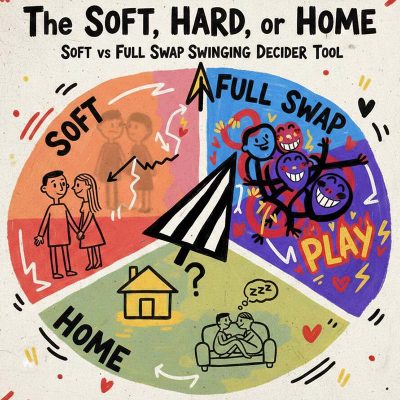
Don't let a "Soft Swap" night turn into a "Hard Feelings" morning.
Walking into the club with different expectations is a grenade waiting to explode. He thinks it’s a free-for-all; she thinks it’s just drinks and dancing. That silence in the car ride home? That’s the sound of a preventable disaster.
Stop guessing. Use this tool to sync your "sexual GPS" before you leave the driveway. Determine exactly how wild you’re getting tonight, so the only surprise is how much fun you have.
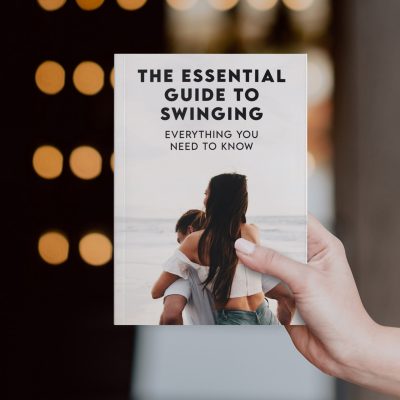
The fantasy of swinging is electric, but that cold sweat you feel when thinking about your partner with someone else? That’s your survival instinct warning you that your foundation is at stake. Most couples don’t fail because they lacked desire; they fail because they lacked a safety net. Ambiguity is where jealousy festers, and "winging it" is the fastest way to turn a dream into a nightmare of resentment and "what have we done?"
The Essential Guide to Swinging is your anxiety-proof roadmap through the chaos. Don't gamble your marriage on hope. Build a fortress of trust, master the repair chats, and ensure your exploration is defined by care, not a catastrophe
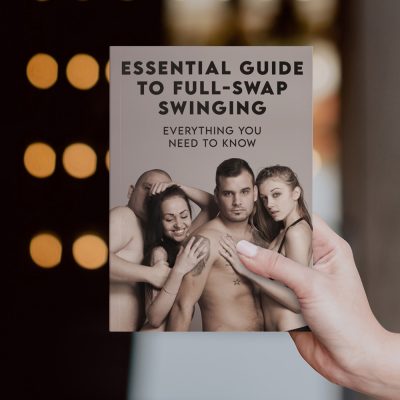
Full swap is the deep end. The rush is intense, but so is the risk of emotional wreckage. That tightening in your chest isn’t just nerves; it’s the fear that a "fun night" could become a permanent scar on your marriage. You can’t un-ring this bell, so never strike it without a plan.
The Essential Guide to Full Swap Swinging replaces reckless gambling with calculated discipline. From ironclad vetting to "emergency brake" scripts, we provide the safety architecture required to swap bodies without losing your minds. Don't just hope it goes well, engineer it
Gemini said
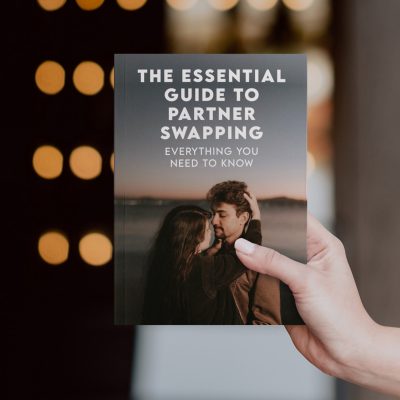
The fantasy is electric. The reality? It can be a grenade that blows up your marriage and your social circle. That tightening in your chest isn't just nerves. It is a warning that you are risking everything on a vibe. "Winging it" is the fastest way to turn a fun group chat into a toxic war zone.
The Essential Guide replaces the chaos with ironclad protocols. We provide the vetting tools, jealousy airlocks, and privacy scripts needed to swap bodies without losing your mind. Secure your safety first.
The fantasy of swinging is electric, but that cold sweat you feel when thinking about your partner with someone else? That’s your survival instinct warning you that your foundation is at stake. Most couples don’t fail because they lacked desire; they fail because they lacked a safety net. Ambiguity is where jealousy festers, and "winging it" is the fastest way to turn a dream into a nightmare of resentment and "what have we done?"
The Essential Guide to Swinging is your anxiety-proof roadmap through the chaos. Don't gamble your marriage on hope. Build a fortress of trust, master the repair chats, and ensure your exploration is defined by care, not a catastrophe
Full swap is the deep end. The rush is intense, but so is the risk of emotional wreckage. That tightening in your chest isn’t just nerves; it’s the fear that a "fun night" could become a permanent scar on your marriage. You can’t un-ring this bell, so never strike it without a plan.
The Essential Guide to Full Swap Swinging replaces reckless gambling with calculated discipline. From ironclad vetting to "emergency brake" scripts, we provide the safety architecture required to swap bodies without losing your minds. Don't just hope it goes well, engineer it
Is swinging right for you two
Before you even talk about swinging with your partner ask yourself some honest questions. There is no right or wrong answer. The goal is to understand your own needs and the needs of your relationship. Consider the following questions and note your answers without judging yourself.
- Are you curious about sexual experiences with others or do you feel pressured to try swinging to save the relationship?
- Do you feel safe and secure with your partner and do you trust them to respect your boundaries?
- Would you be comfortable stopping the activity if one of you feels uncomfortable or unsafe at any point?
- Do you prefer to explore in a casual way or do you want a long term lifestyle change?
- Does your partner s interest in swinging align with your own levels of desire and curiosity?
- Are you prepared to discuss feelings openly even when emotions run high and not make your partner responsible for your emotions?
- Do you have a plan for safer sex and STI testing and are you comfortable with it?
If you answer yes to curiosity and you both feel legally and emotionally safe there is a good chance swinging could be a fit. If you find yourself answering no to most questions swinging may not be the right move for now. It is important to move at a pace that feels right and to choose a path that honors both partners needs and boundaries.
Starting the conversation with your partner
Conversation is the backbone of any ENM journey. The goal is to create a space where both people feel heard not to win a argument. Here is a practical approach you can use step by step.
Set the stage
Choose a calm time show up without distractions and agree to a no pressure discussion. You can say something like I have been thinking about our relationship and I want to explore a topic together to see if it might be a fit for us. I want to hear your thoughts and I want us both to feel safe sharing honestly. We can pause or table it if it feels too intense right now.
Share your curiosity clearly
Be specific about what attracts you to swinging and what worries you. For example I am curious about meeting other couples in a controlled environment and I am also worried about losing our bond or creating jealousy. Let your partner respond and reflect back what you hear to show you are listening.
Invite your partner to share
Ask open questions like What is drawing you to this idea? What concerns do you have? What would make you comfortable exploring together? Avoid pressuring phrases such as You must or You have to. Keep language collaborative.
Co create a cautious pilot plan
Suggest a small low pressure step such as attending a swinger friendly social together or exploring a dating app with clear boundaries. Agree to check in after a specific time frame say two weeks and adjust if needed. Put in writing the agreed boundaries and the plan for ongoing communication.
Boundaries and negotiations that protect you
Boundaries are not about policing each other they are about emotional safety and practical concerns. A well crafted boundary keeps the relationship healthy while allowing room to explore. Here are common categories you might consider and examples to get you thinking.
- Communication how often will you discuss feelings and what format will you use a quick daily check in a longer weekly debriefing session a written journal?
- Time management how will you schedule time for swinging events and time for your primary relationship and personal needs?
- Sexual safety what are your sexual health expectations for partners you meet or interact with and what testing will be required and how often?
- Emotional boundaries what emotional connections are acceptable who can you cuddle or be intimate with in public settings and where do you draw the line?
- Relationship structure will swinging be a shared experience only or can individuals pursue outside connections with permitted rules?
- Privacy what information will be shared with friends family and how will you handle social media disclosure?
Remember you can start with a few simple boundaries and gradually add more as you both get comfortable. Boundaries can be changed with a mutual agreement if a situation changes but it must be done with clear consent and communication.
Safer sex and health in a swinging dynamic
Health and safety are essential. Having a plan for sexual health protects you and your partners. Here are practical steps you can adopt from day one.
- STI testing both you and any partners you engage with should stay up to date on STI screening. Decide a testing cadence that fits your level of activity.
- Condoms and protection use condoms consistently for vaginal and anal sex even with trusted partners. Discuss barrier methods for oral sex if that is part of the plan.
- Communication about sexual history share general information about past partners and risk factors to keep everyone informed without violating privacy.
- Safer play rules discuss what activities are on the table and which are off limits and how to handle riskier scenarios like raw dogging or sharing toys.
- Consent at every step ensure all participants willingly agree before any activity and re confirm consent as things evolve during the encounter.
These steps not only protect physical health but also reinforce trust between partners which is essential for a healthy swinging dynamic.
Jealousy jealousy management and emotional growth
Jealousy is a natural reaction in any relationship even when swinging is not involved. The key is to acknowledge it accept it and address it in a constructive way. Here are strategies you can use to manage jealousy effectively.
- Label the feeling name the emotion you are experiencing and describe what triggered it. This reduces the intensity and helps you talk about it clearly.
- Pause and breathe if you feel overwhelmed take a breath count to four and give yourself a moment to respond rather than reacting in the moment.
- Use the jealousy script prepare phrases that you can say to your partner such as I feel jealous when X happens and I would feel safer if we Y. This keeps the conversation focused on needs not blame.
- Practice compersion celebrate your partner s joy even if it does not involve you directly. It is a real skill that takes time to develop.
- Reflect on triggers identify what specific aspects trigger jealousy and discuss how to address those triggers in a practical way.
Over time many people find that their jealousy diminishes or shifts into a more manageable form. The goal is not to eliminate jealousy overnight but to develop healthier responses and stronger communication.
Don't let a "Soft Swap" night turn into a "Hard Feelings" morning.
Walking into the club with different expectations is a grenade waiting to explode. He thinks it’s a free-for-all; she thinks it’s just drinks and dancing. That silence in the car ride home? That’s the sound of a preventable disaster.
Stop guessing. Use this tool to sync your "sexual GPS" before you leave the driveway. Determine exactly how wild you’re getting tonight, so the only surprise is how much fun you have.
The fantasy of swinging is electric, but that cold sweat you feel when thinking about your partner with someone else? That’s your survival instinct warning you that your foundation is at stake. Most couples don’t fail because they lacked desire; they fail because they lacked a safety net. Ambiguity is where jealousy festers, and "winging it" is the fastest way to turn a dream into a nightmare of resentment and "what have we done?"
The Essential Guide to Swinging is your anxiety-proof roadmap through the chaos. Don't gamble your marriage on hope. Build a fortress of trust, master the repair chats, and ensure your exploration is defined by care, not a catastrophe
Full swap is the deep end. The rush is intense, but so is the risk of emotional wreckage. That tightening in your chest isn’t just nerves; it’s the fear that a "fun night" could become a permanent scar on your marriage. You can’t un-ring this bell, so never strike it without a plan.
The Essential Guide to Full Swap Swinging replaces reckless gambling with calculated discipline. From ironclad vetting to "emergency brake" scripts, we provide the safety architecture required to swap bodies without losing your minds. Don't just hope it goes well, engineer it
Gemini said
The fantasy is electric. The reality? It can be a grenade that blows up your marriage and your social circle. That tightening in your chest isn't just nerves. It is a warning that you are risking everything on a vibe. "Winging it" is the fastest way to turn a fun group chat into a toxic war zone.
The Essential Guide replaces the chaos with ironclad protocols. We provide the vetting tools, jealousy airlocks, and privacy scripts needed to swap bodies without losing your mind. Secure your safety first.
The fantasy of swinging is electric, but that cold sweat you feel when thinking about your partner with someone else? That’s your survival instinct warning you that your foundation is at stake. Most couples don’t fail because they lacked desire; they fail because they lacked a safety net. Ambiguity is where jealousy festers, and "winging it" is the fastest way to turn a dream into a nightmare of resentment and "what have we done?"
The Essential Guide to Swinging is your anxiety-proof roadmap through the chaos. Don't gamble your marriage on hope. Build a fortress of trust, master the repair chats, and ensure your exploration is defined by care, not a catastrophe
Full swap is the deep end. The rush is intense, but so is the risk of emotional wreckage. That tightening in your chest isn’t just nerves; it’s the fear that a "fun night" could become a permanent scar on your marriage. You can’t un-ring this bell, so never strike it without a plan.
The Essential Guide to Full Swap Swinging replaces reckless gambling with calculated discipline. From ironclad vetting to "emergency brake" scripts, we provide the safety architecture required to swap bodies without losing your minds. Don't just hope it goes well, engineer it
Realistic scenarios what swinging might look like in practice
Real life rarely matches the tall order of a fantasy. Here are some common scenarios and how a couple might handle them in a healthy way. These are meant to illustrate practical approaches not to set rigid rules for everyone.
Scenario one a social meetup turns into a flirtation
Two partners attend a social gathering and one person begins to flirt with another attendee. The couple agreed that light flirting is allowed but sexual activity should be planned in a controlled setting. They pause take a moment to discuss their comfort levels and decide whether to continue engaging with the person or to step away together. They emphasize communication and consent and they decide to check in after the event ends to assess how everyone feels.
Scenario two a new partner expresses strong interest
A couple meets someone new who expresses intense interest in both partners. They slow the process by screening the new person together and setting a clear boundary regarding emotional connection. They decide to start with an introduction coffee and a group setting to gauge chemistry before any private interactions occur. This approach protects the primary relationship while allowing a safe exploration path.
Scenario three jealousy spikes after a date
One partner feels jealousy after a date and communicates feelings using the jealousy script. The couple takes a scheduled check in and agrees to a cooling off period if needed. They implement a plan such as reducing the frequency of outside interactions for a set time while rebuilding trust and testing new boundaries. This kind of pause is not punishment it is a way to preserve the relationship and emotional safety.
Common myths about swinging debunked
- Myth Swinging means there is something wrong with your relationship.
- Myth Swinging always leads to the end of a relationship.
- Myth If you are not attracted to others you cannot swing ethically.
- Myth Swinging is just about sex and has nothing to do with love.
- Myth Swinging requires a perfect spontaneous vibe every time.
Reality check. Swinging is a shared choice that should feel exciting and safe for everyone involved. It does not fix underlying issues and it does not erase the need for strong communication. It is also completely possible to enjoy swinging in a casual right way with little drama if boundaries are clear and communication is ongoing.
Decision making framework a practical step by step
If you are still unsure here is a frame you can use to make a careful decision. This is not a test but a practical guide that can help you decide together.
- Articulate your core values write down what matters most for you in relationships respect honesty consent and emotional safety.
- List non negotiables decide what is absolutely not allowed for you such as any form of coercion or deception.
- Define your trial plan set a time frame a safe and controlled environment and boundaries that must be followed.
- Agree on a check in schedule commit to talking honestly about how the trial is going and what feelings are coming up for you.
- Prepare a back up plan be ready to stop or pause if the plan no longer feels good for either partner.
There is no rush. You can decide to postpone swinging until you both feel comfortable and ready. You can also decide to do a low impact trial with strict boundaries to see how you feel with time. The goal is a relationship that feels good to both partners and that remains healthy under pressure.
What if only one partner wants to try swinging
When one person is curious and the other is not a careful approach is essential. You can explore a compromise that protects the current bond while allowing room for discovery for the curious partner. Options include counselling to navigate the conversation with a professional neutral voice a gradual introduction such as attending a social event together to learn the culture and values or a time limited trial with explicit consent and a clear exit plan. If the non curious partner feels constant pressure to participate that is a red flag and you should pause and re evaluate the situation together or seek outside guidance. A healthy dynamic requires consent from everyone involved and no one should feel coerced or shamed into a choice.
Is swinging a good fit for you long term
Swinging can be part of a satisfying long term relationship for many couples. The key ingredients are ongoing communication mutual respect explicit consent shared boundaries and a commitment to emotional safety. Take time to reflect on what you want now and what you might want in the future. Relationships evolve and so do needs. A decision that feels right today may change with time and that is perfectly okay as you continue to grow together.
Practical resources and mindset shifts that help
To stay grounded as you explore swinging consider these practical tips and mindset shifts. They can help you stay connected to your values and keep the relationship strong.
- Document your plan write down boundaries expectations and a loose timeline for review. A written plan reduces misunderstandings and gives you a framework to revisit when needed.
- Bring humor into the process approach conversations with warmth and a sense of curiosity. Laughing together can ease tension and make tough topics easier to discuss.
- Invest in emotional safety practice regular check ins and create space for vulnerability without fear of judgment or retaliation.
- Build a support network talk with trusted friends or join communities that emphasize healthy communication and consent. You do not have to navigate this alone.
- Plan for growth use the experience as a chance to learn more about yourself your partner and what you both want out of life and love.
Putting it all together
Deciding whether swinging is right for you is a personal choice that should feel empowering not pressurized. It is about exploring your own boundaries while honoring the relationship you value. A thoughtful approach focused on consent transparency and emotional safety will help you determine if this path aligns with your goals. If you decide not to pursue swinging that is a completely valid and healthy conclusion. The most important thing is to stay true to yourself and to continue communicating openly with your partner about what you need and what you are willing to explore. The Monogamy Experiment is here to help you navigate these conversations with humor clarity and empathy. Remember there is no one right path in love or in sex only the path that feels right for you and the person or people you choose to walk it with.
Checklist before you dip your toes in
- Have a calm conversation with your partner about curiosity and boundaries
- Agree on a trial plan with a time frame
- Set clear safety boundaries and a plan for safer sex
- Agree on how you will handle jealousy and emotional reactions
- Decide on how you will track progress and when to pause or stop
- Ensure both partners feel respected by the plan
Glossary of useful terms and acronyms
- Swinging sexual experiences with others that are planned and agreed to by all involved often in a couple based dynamic.
- Ethical non monogamy relationships built on consent honest communication and mutual respect for multiple romantic or sexual connections.
- Primary central relationship usually with the deepest commitment and shared life together.
- Compersion feeling happiness for a partner s positive experience with someone else.
- Jealousy management strategies to recognize and address jealousy in a constructive way.
- Negotiation the process of discussing needs boundaries and agreements to reach a shared plan.
- Boundaries explicit lines of safety and comfort that protect emotional well being.
- Consent ongoing enthusiastic agreement from all involved for any activity.
Don't let a "Soft Swap" night turn into a "Hard Feelings" morning.
Walking into the club with different expectations is a grenade waiting to explode. He thinks it’s a free-for-all; she thinks it’s just drinks and dancing. That silence in the car ride home? That’s the sound of a preventable disaster.
Stop guessing. Use this tool to sync your "sexual GPS" before you leave the driveway. Determine exactly how wild you’re getting tonight, so the only surprise is how much fun you have.
The fantasy of swinging is electric, but that cold sweat you feel when thinking about your partner with someone else? That’s your survival instinct warning you that your foundation is at stake. Most couples don’t fail because they lacked desire; they fail because they lacked a safety net. Ambiguity is where jealousy festers, and "winging it" is the fastest way to turn a dream into a nightmare of resentment and "what have we done?"
The Essential Guide to Swinging is your anxiety-proof roadmap through the chaos. Don't gamble your marriage on hope. Build a fortress of trust, master the repair chats, and ensure your exploration is defined by care, not a catastrophe
Full swap is the deep end. The rush is intense, but so is the risk of emotional wreckage. That tightening in your chest isn’t just nerves; it’s the fear that a "fun night" could become a permanent scar on your marriage. You can’t un-ring this bell, so never strike it without a plan.
The Essential Guide to Full Swap Swinging replaces reckless gambling with calculated discipline. From ironclad vetting to "emergency brake" scripts, we provide the safety architecture required to swap bodies without losing your minds. Don't just hope it goes well, engineer it
Gemini said
The fantasy is electric. The reality? It can be a grenade that blows up your marriage and your social circle. That tightening in your chest isn't just nerves. It is a warning that you are risking everything on a vibe. "Winging it" is the fastest way to turn a fun group chat into a toxic war zone.
The Essential Guide replaces the chaos with ironclad protocols. We provide the vetting tools, jealousy airlocks, and privacy scripts needed to swap bodies without losing your mind. Secure your safety first.
The fantasy of swinging is electric, but that cold sweat you feel when thinking about your partner with someone else? That’s your survival instinct warning you that your foundation is at stake. Most couples don’t fail because they lacked desire; they fail because they lacked a safety net. Ambiguity is where jealousy festers, and "winging it" is the fastest way to turn a dream into a nightmare of resentment and "what have we done?"
The Essential Guide to Swinging is your anxiety-proof roadmap through the chaos. Don't gamble your marriage on hope. Build a fortress of trust, master the repair chats, and ensure your exploration is defined by care, not a catastrophe
Full swap is the deep end. The rush is intense, but so is the risk of emotional wreckage. That tightening in your chest isn’t just nerves; it’s the fear that a "fun night" could become a permanent scar on your marriage. You can’t un-ring this bell, so never strike it without a plan.
The Essential Guide to Full Swap Swinging replaces reckless gambling with calculated discipline. From ironclad vetting to "emergency brake" scripts, we provide the safety architecture required to swap bodies without losing your minds. Don't just hope it goes well, engineer it
