
Group Dynamics and Coordinating Boundaries

Welcome to a clear eyed practical guide that treats group dynamics in swinging as a creative skill set not a mystery. Ethical non monogamy or ENM is a big umbrella term that includes swinging the open poly circles and many others. This guide keeps the focus on the swinging dynamic where partners regularly rotate who is involved in intimate activities while preserving consent respect and trust. Our aim is to give you practical strategies that feel doable not theoretical. We will explain terms and acronyms so you can speak the language with confidence. And yes we will sprinkle in humor because the best relationship experiments require a little banter to keep things real.
Quick Links to Useful Sections
- What swinging ENM means and what it does not
- Terms you should know and what they mean
- Boundaries you should consider in a swinging ENM dynamic
- Types of boundaries
- How to define boundaries clearly
- Boundary maintenance and updates
- Coordinating a group across a swinging ENM dynamic
- From two to three to four or more
- Communication rituals that work
- Managing multiple relationships without losing sight of the core bond
- Negotiation the way that actually works
- How to negotiate effectively
- Health and safety first in swinging ENM
- Safe sex practices
- Testing and health communication
- Privacy and discretion
- Handling jealousy and complex emotions
- Practical strategies to reduce jealousy
- Templates and practical tools you can start using today
- Boundaries and a consent matrix
- A basic consent process
- A post play debrief ritual
- Scenario play book
- When plans shift what do you do
- Respecting privacy and building trust
- Common mistakes and how to avoid them
- Realistic scenarios and practice drills
- Advanced structures within swinging ENM
- Practical tips for making this work in everyday life
- Glossary of useful terms and acronyms
- Frequently asked questions
What swinging ENM means and what it does not
Swinging in ENM stands for ethical non monogamy a framework where agreed upon sexual or romantic activities happen with more than two people. In swinging the typical structure is that two partners seek experiences with other partners or groups while maintaining their primary bond. The core idea is consent communication and boundaries that evolve with time. It does not mean indiscriminate sex or a free for all where feelings are ignored. It means a deliberate approach to exploring sexuality while protecting the primary relationship and the emotional safety of everyone involved.
Key terms you will encounter include ENM which stands for ethical non monogamy the umbrella category for non traditional relationship styles. Swinging is a subset of ENM that often involves swapping sexual partners within a social or event based context. A Vee is a relationship structure where one person is dating two others who do not date each other. A triad is a group of three people who share a romantic or sexual connection. A quad is a four person configuration in which all members are connected. These terms help us describe how group dynamics form and shift over time.
Terms you should know and what they mean
- ENM Ethical non monogamy the practice of having consensual non exclusive relationships.
- Swinging A form of ENM typically focused on sexual activity with multiple partners often in social or party settings.
- Boundaries Lines that define what is allowed or not allowed in the relationship or group.
- Consent A voluntary and informed agreement to participate in a specific activity.
- Negotiation The process of discussing desires limits and rules before and during activities.
- Jealousy A normal emotion that can arise when the perceived threat to a valued relationship is present.
- Aftercare The support and nurturing after a sexual event to help all involved feel connected and safe.
- Safe sex Practices designed to prevent the spread of infections including condoms dental dams and proper hygiene.
- Communication ritual Regular time set aside to talk about feelings boundaries and upcoming plans.
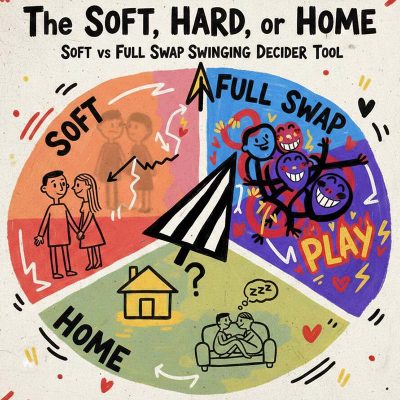
Don't let a "Soft Swap" night turn into a "Hard Feelings" morning.
Walking into the club with different expectations is a grenade waiting to explode. He thinks it’s a free-for-all; she thinks it’s just drinks and dancing. That silence in the car ride home? That’s the sound of a preventable disaster.
Stop guessing. Use this tool to sync your "sexual GPS" before you leave the driveway. Determine exactly how wild you’re getting tonight, so the only surprise is how much fun you have.

The fantasy of swinging is electric, but that cold sweat you feel when thinking about your partner with someone else? That’s your survival instinct warning you that your foundation is at stake. Most couples don’t fail because they lacked desire; they fail because they lacked a safety net. Ambiguity is where jealousy festers, and "winging it" is the fastest way to turn a dream into a nightmare of resentment and "what have we done?"
The Essential Guide to Swinging is your anxiety-proof roadmap through the chaos. Don't gamble your marriage on hope. Build a fortress of trust, master the repair chats, and ensure your exploration is defined by care, not a catastrophe
Full swap is the deep end. The rush is intense, but so is the risk of emotional wreckage. That tightening in your chest isn’t just nerves; it’s the fear that a "fun night" could become a permanent scar on your marriage. You can’t un-ring this bell, so never strike it without a plan.
The Essential Guide to Full Swap Swinging replaces reckless gambling with calculated discipline. From ironclad vetting to "emergency brake" scripts, we provide the safety architecture required to swap bodies without losing your minds. Don't just hope it goes well, engineer it
Gemini said
The fantasy is electric. The reality? It can be a grenade that blows up your marriage and your social circle. That tightening in your chest isn't just nerves. It is a warning that you are risking everything on a vibe. "Winging it" is the fastest way to turn a fun group chat into a toxic war zone.
The Essential Guide replaces the chaos with ironclad protocols. We provide the vetting tools, jealousy airlocks, and privacy scripts needed to swap bodies without losing your mind. Secure your safety first.
The fantasy of swinging is electric, but that cold sweat you feel when thinking about your partner with someone else? That’s your survival instinct warning you that your foundation is at stake. Most couples don’t fail because they lacked desire; they fail because they lacked a safety net. Ambiguity is where jealousy festers, and "winging it" is the fastest way to turn a dream into a nightmare of resentment and "what have we done?"
The Essential Guide to Swinging is your anxiety-proof roadmap through the chaos. Don't gamble your marriage on hope. Build a fortress of trust, master the repair chats, and ensure your exploration is defined by care, not a catastrophe
Full swap is the deep end. The rush is intense, but so is the risk of emotional wreckage. That tightening in your chest isn’t just nerves; it’s the fear that a "fun night" could become a permanent scar on your marriage. You can’t un-ring this bell, so never strike it without a plan.
The Essential Guide to Full Swap Swinging replaces reckless gambling with calculated discipline. From ironclad vetting to "emergency brake" scripts, we provide the safety architecture required to swap bodies without losing your minds. Don't just hope it goes well, engineer it
Boundaries you should consider in a swinging ENM dynamic
Boundaries are the fresh air that keeps a complex arrangement from turning chaotic. They are not walls to trap people they are guardrails that keep everyone feeling safe and valued. Boundaries can be soft or hard. A soft boundary means you would prefer something but you could go along if needed. A hard boundary is non negotiable. In swinging ENM these boundaries often relate to sexual activities emotional involvement time allocation and privacy.
Types of boundaries
- Sexual activity boundaries what acts are allowed who can participate where and with whom actions may be performed.
- Emotional boundaries how much emotional involvement is expected with a partner who is not your main. This can include cuddling kissing or sharing intimate details.
- Time boundaries how often you will engage with others how often you will schedule nights and how you balance time with your primary partner.
- Location boundaries where play is allowed meeting places events and travel logistics.
- Privacy boundaries what information is shared publicly what is kept private for the participants and how much transparency is expected with your core partner.
- Communication boundaries how you talk about experiences what needs to be discussed in a timely manner and what can wait until a calm moment.
- Health boundaries consent to testing to STI discussions to protection methods and per couple medical considerations.
How to define boundaries clearly
Start with a calm check in when everyone is open to talk. Use concrete specifics instead of vague ideas. For example instead of saying I want to be careful about things and leave it at that you can say We agree to use condoms for vaginal or anal penetration with every partner even if the other person is a close friend. This reduces confusion and sets expectations clearly.
Boundary maintenance and updates
Boundaries are not carved in stone. They shift as people grow and as relationships develop. Schedule regular boundary reviews every four to six weeks or after a major life event like a new partner starting dates or a shift in work or family obligations. Treat boundary updates as a normal part of relationship maintenance. If someone feels uncomfortable or changed their mind they should be able to speak up without fear of judgment.
Coordinating a group across a swinging ENM dynamic
Coordination is the secret sauce that keeps a group cohesive and respectful. It is not about control it is about mutual clarity and a shared path forward. Coordination involves communication scheduling and a clear process for negotiating changes when life or feelings shift.
From two to three to four or more
As your circle grows the complexity of coordination grows too. Start with a few core rules that everyone agrees on and then add specific guidelines for new partners. Use a shared master document that lists current boundaries safety protocols and planned events. Review this document at least monthly and when new people join the network your group may want to hold a boundary boot camp to align everyone.
Communication rituals that work
- Weekly check in a short voice or text conversation where everyone highlights what is working and what is not.
- Event debriefs after any social gathering or play session discuss what felt good what felt risky and what should be adjusted next time.
- Boundary reset sessions a dedicated time to review boundaries and update agreements as needed.
- Feeling logs individuals write a quick update about emotions and triggers to share in the next check in.
Managing multiple relationships without losing sight of the core bond
The core bond is usually a couple or a small primary unit we can call a center. When the group grows you want to guard that center by ensuring time together with the core unit happens on a regular basis. It is easy to drift into a situation where the center fades and everyone starts chasing new experiences. Make room for the center through planned couple time or date nights a shared vacation or a quiet home night where the core pair reconnects away from the others.
Negotiation the way that actually works
Negotiation is not a battle it is a conversation designed to align desires and boundaries. Do not treat it as a one time event. Negotiation should be ongoing and collaborative. It is normal for people to change their mind or for new information to come up that changes what is permissible. The goal is clarity not control.
How to negotiate effectively
- Set a calm atmosphere with everyone present. Avoid negotiating during a conflict or after a long day at work when emotions are high.
- Describe your desire and the reasoning behind it. Use I statements and focus on feelings.
- Listen without interrupting and summarize what you heard to ensure understanding.
- Propose a test period for a boundary with a clear end date and a plan to review it.
- Document the agreement in the master boundary document and share it with all involved.
Health and safety first in swinging ENM
Health safety and consent are non negotiable. This is not just about avoiding illness it is about respecting others bodies and their comfort levels. You should have a clear plan for STI testing condom use and how to handle issues like withdrawal of consent or accidents in the moment.
Safe sex practices
- Condoms for vaginal and anal intercourse and dental dams for oral sex are standard tools in many groups.
- Discuss latex intolerance and have non latex alternatives available if someone needs them.
- Agree on the current testing status for all involved and update the group when new partners join.
- Keep a clean supply of lube avoid sharing sex toys unless properly cleaned or used with barriers.
Testing and health communication
Be proactive about health. For most groups a baseline STI test every six months for all active members plus after a new partner joins is a reasonable cadence. Encourage honesty about symptoms if something feels off and provide a plan for medical care if needed. Some groups choose to share test results with the group while others keep results private within medical privacy norms. Decide what works for your circle and respect privacy lines.
Privacy and discretion
Privacy is a shared value in many swinging ENM networks. Decide what information about dating partners is shared publicly and what stays private between partners. Some people want to share stories with the entire group while others are comfortable only discussing boundaries and events with close partners. Respect preferences and line up with consistent rules for everyone.
Handling jealousy and complex emotions
Jealousy is a signal not a failure. It points to a boundary that needs attention or a fear that needs reassurance. The polite move is to acknowledge the feeling name it and then talk through what would help. It can be as simple as scheduling more time with a partner or as involved as redefining a boundary to ease the insecurity.
Practical strategies to reduce jealousy
- Keep daily transparent communication about feelings and needs. A quick text each day can prevent misunderstandings from piling up.
- Regularly validate each partner and celebrate their choices alongside you. Support builds trust.
- Use a jealousy journal to note triggers and patterns and bring it to the next boundary review.
- Introduce rituals that boost emotional safety such as a nightly check in or a weekly appreciation round where each person names something they value in the others.
Don't let a "Soft Swap" night turn into a "Hard Feelings" morning.
Walking into the club with different expectations is a grenade waiting to explode. He thinks it’s a free-for-all; she thinks it’s just drinks and dancing. That silence in the car ride home? That’s the sound of a preventable disaster.
Stop guessing. Use this tool to sync your "sexual GPS" before you leave the driveway. Determine exactly how wild you’re getting tonight, so the only surprise is how much fun you have.
The fantasy of swinging is electric, but that cold sweat you feel when thinking about your partner with someone else? That’s your survival instinct warning you that your foundation is at stake. Most couples don’t fail because they lacked desire; they fail because they lacked a safety net. Ambiguity is where jealousy festers, and "winging it" is the fastest way to turn a dream into a nightmare of resentment and "what have we done?"
The Essential Guide to Swinging is your anxiety-proof roadmap through the chaos. Don't gamble your marriage on hope. Build a fortress of trust, master the repair chats, and ensure your exploration is defined by care, not a catastrophe
Full swap is the deep end. The rush is intense, but so is the risk of emotional wreckage. That tightening in your chest isn’t just nerves; it’s the fear that a "fun night" could become a permanent scar on your marriage. You can’t un-ring this bell, so never strike it without a plan.
The Essential Guide to Full Swap Swinging replaces reckless gambling with calculated discipline. From ironclad vetting to "emergency brake" scripts, we provide the safety architecture required to swap bodies without losing your minds. Don't just hope it goes well, engineer it
Gemini said
The fantasy is electric. The reality? It can be a grenade that blows up your marriage and your social circle. That tightening in your chest isn't just nerves. It is a warning that you are risking everything on a vibe. "Winging it" is the fastest way to turn a fun group chat into a toxic war zone.
The Essential Guide replaces the chaos with ironclad protocols. We provide the vetting tools, jealousy airlocks, and privacy scripts needed to swap bodies without losing your mind. Secure your safety first.
The fantasy of swinging is electric, but that cold sweat you feel when thinking about your partner with someone else? That’s your survival instinct warning you that your foundation is at stake. Most couples don’t fail because they lacked desire; they fail because they lacked a safety net. Ambiguity is where jealousy festers, and "winging it" is the fastest way to turn a dream into a nightmare of resentment and "what have we done?"
The Essential Guide to Swinging is your anxiety-proof roadmap through the chaos. Don't gamble your marriage on hope. Build a fortress of trust, master the repair chats, and ensure your exploration is defined by care, not a catastrophe
Full swap is the deep end. The rush is intense, but so is the risk of emotional wreckage. That tightening in your chest isn’t just nerves; it’s the fear that a "fun night" could become a permanent scar on your marriage. You can’t un-ring this bell, so never strike it without a plan.
The Essential Guide to Full Swap Swinging replaces reckless gambling with calculated discipline. From ironclad vetting to "emergency brake" scripts, we provide the safety architecture required to swap bodies without losing your minds. Don't just hope it goes well, engineer it
Templates and practical tools you can start using today
These tools are meant to be practical and actionable. Adapt them to fit your group style. The goal is a living set of agreements that grows with your relationships.
Boundaries and a consent matrix
Create a simple table that lists activities on the left and all partners across the top. In the cells write Y for yes N for no or P for preference only with notes for context. This is a fast visual way to capture complex agreements and is easy to update.
A basic consent process
Before any new encounter ask three questions
- What is being asked and by whom
- What is the boundaries and what would be a hard limit
- What is the safe word or signal if someone becomes uncomfortable
Make sure every participant signs or acknowledges the process in the shared document so that everyone feels included and responsible for the consent decisions.
A post play debrief ritual
After any event set aside twenty minutes a simple check in where each person states one thing that went well and one thing that could be improved. End with a plan to address the improvements before the next event. This keeps the group moving forward without festering resentments.
Scenario play book
Draft a few realistic scenarios that could occur in your circle. For each scenario describe who is involved what is allowed and what would be done if someone wants a boundary change. Practice these scenarios so your real life experiences feel calmer and more predictable.
Example scenario one the center couple invites a new partner into a date night. Boundaries include all participants using condoms for penetration only if allowed and no kissing beyond a certain point without explicit consent. If the new partner feels unsure the couple will slow down or pause the date and check in with everyone involved. If any partner wants to bow out the plan is to gracefully stop and reschedule while preserving respect for all.
When plans shift what do you do
Life changes and your ENM group will shift as well. A new job a move a health issue or a change in relationship status can all alter boundaries. Approach these shifts with a fresh negotiation session. Expect emotions to be present and give time for processing while staying focused on practical next steps. Keep a live document that reflects the current agreements and share updates promptly with everyone affected.
Respecting privacy and building trust
Trust is earned over time. In swinging ENM the trust envelope includes how information is shared and who you talk to about group matters. Decide as a group which information is shared publicly what stays within your circle and what you keep between individuals. Always honor a partner request for privacy and be transparent about exceptions that have a solid reason behind them.
Common mistakes and how to avoid them
- Rushing into new partners without a clear boundary update. Take time to review the current agreements and adjust them with the new person in the loop.
- Assuming consent up front rather than asking for explicit consent at each step. Ask clearly and confirm yes before every new activity.
- Letting jealousy slide into unspoken resentment. Bring concerns into the open in a calm check in rather than letting them simmer.
- Over sharing private information with people who are not directly involved. Maintain privacy boundaries and respect confidentiality.
Realistic scenarios and practice drills
Use real world examples to rehearse how your group will handle common situations. For instance a couple may want to explore an occurrence with a close friend while continuing to nurture their primary bond. Set boundaries about time together who is allowed to participate what partners should the new person be introduced to and what level of emotional involvement is appropriate. Role play these conversations with each other. It will feel strange at first but it is a powerful way to build confidence for the moment of truth.
Advanced structures within swinging ENM
As your network grows you may encounter more complex relationship shapes. A triad is a three person connected dynamic that can be romantic and or sexual. A quad includes four people with evolving connections among all participants. A Vee is where one observer is connected to two others who do not connect with each other. These shapes are not better or worse they are simply tools that can help you organize attraction while preserving consent. The key is to keep communication open and to review boundaries regularly as the structure shifts.
Practical tips for making this work in everyday life
- Put boundaries in plain language. Avoid vague promises and instead spell out exactly what is allowed what is not and what will be revisited if feelings change.
- Hold space for emotion. Ensure aftercare and emotional processing are part of every successful experience.
- Make check ins non negotiable. Regularly ask how everyone feels and what can be adjusted.
- Be willing to pause or stop if someone feels uncomfortable. Consent can be withdrawn at any time and that even applies to ongoing encounters.
- Practice with scenarios before you are in a charged moment. Scripts help you say the right thing with less pressure.
- Always respect privacy and avoid sharing intimate details outside the circle unless every party agrees.
Glossary of useful terms and acronyms
- ENM Ethical non monogamy a term that covers relationships with more than two people with consent and openness.
- Swinging A style of ENM focusing on sexual experiences with others often in social settings.
- Boundary A limit or rule that guides what is acceptable in a relationship or encounter.
- Consent An active agreement to participate in a specific activity.
- Negotiation The process of discussing desires limits and rules to reach a shared understanding.
- Aftercare The supportive actions after a sexual or emotionally intense moment to help everyone feel safe and cared for.
- Jealousy A natural emotion that signals a boundary may need revisiting or reassurance may be needed.
- Triad A three person configuration with potential for romantic or sexual connections among all members.
- Quad A four person network with diverse connections between all participants.
- Vee A relationship layout where one person dates two others who do not date each other.
- Safe sex Practices including protective measures and hygiene designed to reduce risk of infection.
Frequently asked questions
How do we begin a swinging ENM conversation about boundaries
Start with the couple who will host the conversation. A calm environment and a clear intent help. State your goals and invite honest thoughts from your partner. From there invite others into the discussion and write down a shared set of boundaries that feels fair to everyone involved.
What if someone says no to a boundary
Name the boundary and acknowledge the no. Respect the decision and discuss alternatives. Sometimes you can adjust the boundary or propose a trial period to test how it feels with added safeguards. If a boundary cannot be honored the group should consider stepping back or redefining the structure.
How often should we check in about boundaries
In the early stages check in weekly for the first month and then move to a monthly cadence. If life events occur or a new partner joins you may want to schedule an additional review. The goal is to keep communication consistent and friction low.
What should we do about jealousy in a group
Expect jealousy to appear and treat it as a signal that a boundary may need adjustment. Use a compassionate approach and talk privately as needed. If jealousy is frequent a professional facilitator or counselor who understands ENM can help the group navigate.
Is confidentiality important in swinging ENM
Yes confidentiality is essential. Decide what information stays with the group what may be shared with a partner outside the circle and what is private even within a partner group. Clear rules reduce risk of hurt or gossip.
How do we handle a new partner joining the group
Introduce the new partner gradually and ensure they fully understand the current boundaries and norms. A welcome conversation a consent check and a boundary review should be part of the onboarding process. Allow the new person to express needs and concerns and update the master document accordingly.
Can we adjust our structure from a couple centered dynamic to a triad or quad
Yes you can. Adjustments require careful negotiation keeping the core bond in mind. Review boundaries discuss role changes and plan for a trial period with explicit consent and clear communication. Do not rush a structural change give everyone time to adjust.
Don't let a "Soft Swap" night turn into a "Hard Feelings" morning.
Walking into the club with different expectations is a grenade waiting to explode. He thinks it’s a free-for-all; she thinks it’s just drinks and dancing. That silence in the car ride home? That’s the sound of a preventable disaster.
Stop guessing. Use this tool to sync your "sexual GPS" before you leave the driveway. Determine exactly how wild you’re getting tonight, so the only surprise is how much fun you have.
The fantasy of swinging is electric, but that cold sweat you feel when thinking about your partner with someone else? That’s your survival instinct warning you that your foundation is at stake. Most couples don’t fail because they lacked desire; they fail because they lacked a safety net. Ambiguity is where jealousy festers, and "winging it" is the fastest way to turn a dream into a nightmare of resentment and "what have we done?"
The Essential Guide to Swinging is your anxiety-proof roadmap through the chaos. Don't gamble your marriage on hope. Build a fortress of trust, master the repair chats, and ensure your exploration is defined by care, not a catastrophe
Full swap is the deep end. The rush is intense, but so is the risk of emotional wreckage. That tightening in your chest isn’t just nerves; it’s the fear that a "fun night" could become a permanent scar on your marriage. You can’t un-ring this bell, so never strike it without a plan.
The Essential Guide to Full Swap Swinging replaces reckless gambling with calculated discipline. From ironclad vetting to "emergency brake" scripts, we provide the safety architecture required to swap bodies without losing your minds. Don't just hope it goes well, engineer it
Gemini said
The fantasy is electric. The reality? It can be a grenade that blows up your marriage and your social circle. That tightening in your chest isn't just nerves. It is a warning that you are risking everything on a vibe. "Winging it" is the fastest way to turn a fun group chat into a toxic war zone.
The Essential Guide replaces the chaos with ironclad protocols. We provide the vetting tools, jealousy airlocks, and privacy scripts needed to swap bodies without losing your mind. Secure your safety first.
The fantasy of swinging is electric, but that cold sweat you feel when thinking about your partner with someone else? That’s your survival instinct warning you that your foundation is at stake. Most couples don’t fail because they lacked desire; they fail because they lacked a safety net. Ambiguity is where jealousy festers, and "winging it" is the fastest way to turn a dream into a nightmare of resentment and "what have we done?"
The Essential Guide to Swinging is your anxiety-proof roadmap through the chaos. Don't gamble your marriage on hope. Build a fortress of trust, master the repair chats, and ensure your exploration is defined by care, not a catastrophe
Full swap is the deep end. The rush is intense, but so is the risk of emotional wreckage. That tightening in your chest isn’t just nerves; it’s the fear that a "fun night" could become a permanent scar on your marriage. You can’t un-ring this bell, so never strike it without a plan.
The Essential Guide to Full Swap Swinging replaces reckless gambling with calculated discipline. From ironclad vetting to "emergency brake" scripts, we provide the safety architecture required to swap bodies without losing your minds. Don't just hope it goes well, engineer it
