
Group Play Versus One on One Preferences


Welcome to The Monogamy Experiment where we break down complex relationship dynamics with humor, honesty, and practical insights. If you are exploring ethical non monogamy and you live in the swinging world you have probably noticed that people lean toward very different ways of playing. Some couples love the energy of a big group experience while others crave deep one on one connections. This guide walks you through what group play and one on one play look like in swinging ENM and how to navigate preferences with clarity and care. We will explain terms and acronyms so everything is easy to understand and we will share tips you can actually use in real life scenarios. Consider this your practical playbook for choosing between group play and one on one experiences or finding a healthy balance between both.
Quick Links to Useful Sections
- What group play means in swinging ENM
- Common structures you may encounter
- One on one play and its appeal
- Why preferences vary across couples and individuals
- Communication and consent as the foundation
- Practical negotiation strategies
- Real world scenarios with group play and one on one preferences
- Scenario A: A couple at the start of their swinging journey
- Scenario B: A couple who enjoys group play but needs a boundary for emotional safety
- Scenario C: A primary relationship negotiating with a unicorn
- Jealousy and emotional management
- Safety, health, and consent in swinging ENM
- Building and maintaining boundaries over time
- Maintenance of trust and commitment in a swinging ENM setup
- Checklist for navigating group play versus one on one play
- Frequently asked questions
Before we dive in here is a quick glossary of terms so you know exactly what we mean. ENM stands for Ethical Non Monogamy. It is the broad umbrella for relationship styles that involve honest consent and transparent communication when more than two people are involved. Swinging is a form of ENM where partners or couples engage in sexual activity with others outside their primary relationship while maintaining a primary bond. Group play refers to sexual activities that involve three or more adults in a single encounter or event. One on one play means sexual or intimate experiences that involve just two adults at a time. A unicorn is a term used within the swinging community to describe a single person who joins a couple for a potential group dynamic. It is just a label and it should never be treated as a goal or a stereotype. A meta partner is someone who is connected to the primary relationship but not as a direct lover. These terms can be useful shorthand but the real work is in consent, communication, and respect for everyone involved.
What group play means in swinging ENM
Group play in swinging ENM can take many forms. It might be a party with multiple couples and singles where everyone mingles and connects in a permissive social setting. It can also be a structured event such as a three plus two scenario where couples invite a single person into a known dynamic or a small private gathering with a set of pre negotiated rules. The common thread is that more people are involved and there is often a high level of social coordination. The energy tends to be fast paced and playful with room for improvisation. Group play can create a sense of novelty and shared excitement that is hard to replicate in a private one on one situation.
Pros of group play
- High adrenaline and social energy that can feel liberating and fun.
- Opportunities to explore different chemistry in a single setting.
- Momentum can help some couples overcome nerves by demystifying the experience through shared energy.
- It can be a way to broaden your sexual horizons with minimal pressure on any one partner.
Cons of group play
- Increased complexity in communication and boundary management.
- Greater potential for misunderstandings or jealousy if not pre negotiated.
- Logistical challenges such as timing, space, and safe sex protocols.
- Emotional aftercare needs may be higher due to the multi person context.
Common structures you may encounter
Swinging groups come in many flavors. Here are a few typical structures you might see in real life or at a swinger event:
- Couple plus one or more singles joining a pre negotiated schedule for specific activities.
- Two couples and a single in a triad style frame where everyone agrees on boundaries before the interaction begins.
- A larger party setting with rotating pairs and mix and match play that honors consent at each stage.
- Soft swap or full swap depending on the couple and the guests involved. Soft swap means partners may kiss or touch in ways that stop short of intercourse which is a common stepping stone in group play.
One on one play and its appeal
One on one play emphasizes direct connection between two people. It allows for a focused energy that some people find more emotionally manageable and easier to negotiate. A private encounter can be deeply intimate and can help partners build trust and shared language. It is also simpler to track consent, boundaries, and safety when the interaction involves just two people.
Benefits of one on one play
- Clearer communication and fewer moving parts can reduce the risk of boundary drift.
- Deeper emotional intimacy with one partner can feel more sustainable for some couples.
- It is easier to coordinate schedules and logistics for private encounters.
- Greater potential for post encounter debriefing and emotional processing between two people.
Drawbacks of one on one play
- Less novelty if you only involve one other person repeatedly.
- Potential for over focusing on a single experience which can limit exploration for some partners.
- Jealousy or insecurity can become amplified if one partner receives more attention than the other.
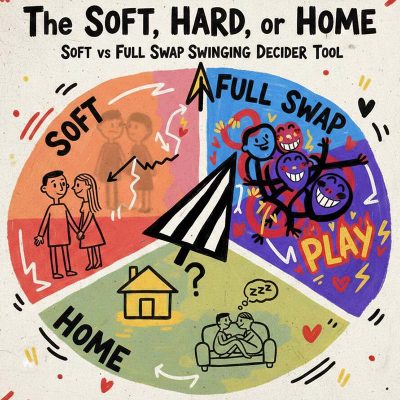
Don't let a "Soft Swap" night turn into a "Hard Feelings" morning.
Walking into the club with different expectations is a grenade waiting to explode. He thinks it’s a free-for-all; she thinks it’s just drinks and dancing. That silence in the car ride home? That’s the sound of a preventable disaster.
Stop guessing. Use this tool to sync your "sexual GPS" before you leave the driveway. Determine exactly how wild you’re getting tonight, so the only surprise is how much fun you have.
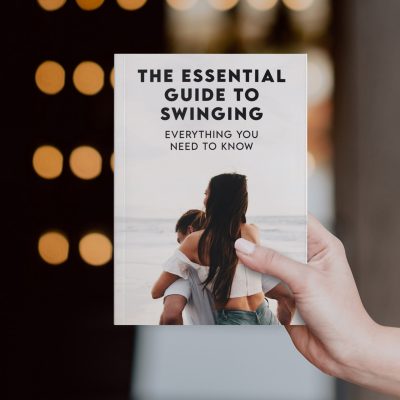
The fantasy of swinging is electric, but that cold sweat you feel when thinking about your partner with someone else? That’s your survival instinct warning you that your foundation is at stake. Most couples don’t fail because they lacked desire; they fail because they lacked a safety net. Ambiguity is where jealousy festers, and "winging it" is the fastest way to turn a dream into a nightmare of resentment and "what have we done?"
The Essential Guide to Swinging is your anxiety-proof roadmap through the chaos. Don't gamble your marriage on hope. Build a fortress of trust, master the repair chats, and ensure your exploration is defined by care, not a catastrophe
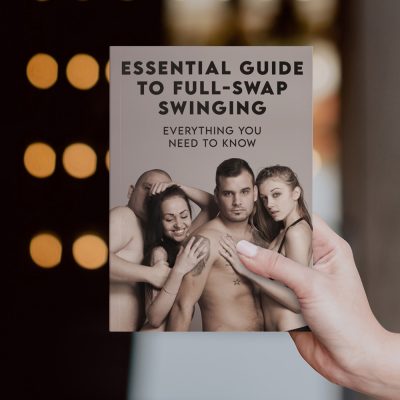
Full swap is the deep end. The rush is intense, but so is the risk of emotional wreckage. That tightening in your chest isn’t just nerves; it’s the fear that a "fun night" could become a permanent scar on your marriage. You can’t un-ring this bell, so never strike it without a plan.
The Essential Guide to Full Swap Swinging replaces reckless gambling with calculated discipline. From ironclad vetting to "emergency brake" scripts, we provide the safety architecture required to swap bodies without losing your minds. Don't just hope it goes well, engineer it
Gemini said
The fantasy is electric. The reality? It can be a grenade that blows up your marriage and your social circle. That tightening in your chest isn't just nerves. It is a warning that you are risking everything on a vibe. "Winging it" is the fastest way to turn a fun group chat into a toxic war zone.
The Essential Guide replaces the chaos with ironclad protocols. We provide the vetting tools, jealousy airlocks, and privacy scripts needed to swap bodies without losing your mind. Secure your safety first.
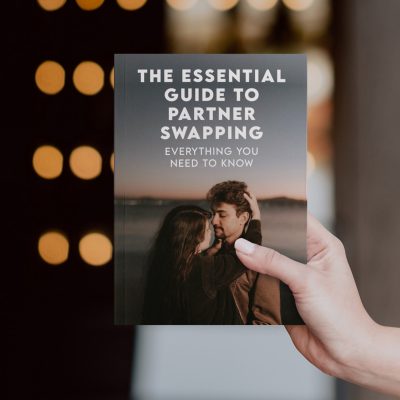
The fantasy of swinging is electric, but that cold sweat you feel when thinking about your partner with someone else? That’s your survival instinct warning you that your foundation is at stake. Most couples don’t fail because they lacked desire; they fail because they lacked a safety net. Ambiguity is where jealousy festers, and "winging it" is the fastest way to turn a dream into a nightmare of resentment and "what have we done?"
The Essential Guide to Swinging is your anxiety-proof roadmap through the chaos. Don't gamble your marriage on hope. Build a fortress of trust, master the repair chats, and ensure your exploration is defined by care, not a catastrophe
Full swap is the deep end. The rush is intense, but so is the risk of emotional wreckage. That tightening in your chest isn’t just nerves; it’s the fear that a "fun night" could become a permanent scar on your marriage. You can’t un-ring this bell, so never strike it without a plan.
The Essential Guide to Full Swap Swinging replaces reckless gambling with calculated discipline. From ironclad vetting to "emergency brake" scripts, we provide the safety architecture required to swap bodies without losing your minds. Don't just hope it goes well, engineer it
Why preferences vary across couples and individuals
Preferences for group play or one on one play are shaped by a mix of personality, past experiences, relationship stage, and current needs. Some people crave constant novelty and social stimulation and group play scratches that itch. Others crave deep personal connection and find one on one play more emotionally sustainable. Several factors commonly influence preference:
- Attachment style and comfort with vulnerability. Some people feel safer when interactions remain within a small private loop.
- Communication habits. Teams who practice explicit check ins and aftercare tend to navigate group play more smoothly.
- Energy management. Some people have limited energy for socialized sexual activity and prefer concentrated connections.
- Boundary clarity. Clear boundaries help people feel safer regardless of the structure.
- Trust and comfort with risk. Group play will inherently involve more people and more variables which can raise perceived risk.
- Lifestyle and schedule. The demands of work, family, and other commitments can influence preferred patterns.
Understanding your own preferences is an ongoing process. The goal is to develop a shared understanding with your primary partner while maintaining respect for each individual’s boundaries and needs. Preferences can evolve over time as you build trust, experience and confidence in navigational tools such as communication rituals and consent protocols.
Communication and consent as the foundation
When you are exploring preferences for group play versus one on one play you need a rock solid framework for communication and consent. A strong framework protects everyone involved and keeps the energy positive. Here are practical steps you can apply:
- Practice explicit consent. Do not assume that a partner is comfortable with a particular activity just because it is on a list or because it happened before. Ask clearly and listen closely to the answer.
- Set joint boundaries. Decide in advance what is allowed and what is not during both group play and one on one experiences. Record these boundaries and revisit them as needed.
- Use a check in language. Before a date or event say we will check in at a designated time or after specific milestones. This keeps the communication honest without derailing the moment.
- Develop a safe word or safe phrase. Even though this is not a medical situation a safety mechanism helps you pause if something feels off. The safe word should be simple and easy to remember.
- Agree on aftercare. Emotional support after an encounter can help both partners process what happened whether it was group play or one on one play. Decide what kind of aftercare works for you both.
- Keep a shared calendar and a private calendar. A shared calendar helps coordinate time and logistics while a private calendar can protect personal privacy and comfort.
Remember that consent is ongoing. Just because something is allowed does not mean it is still desired later on. Check ins matter throughout the process and you should always be prepared to pause or stop if a partner changes their mind.
Practical negotiation strategies
Negotiation is not about victory or control it is about aligning desires and protecting feelings. These strategies can help you negotiate confidently whether you lean toward group play or one on one play or you want to blend both over time.
- Frame the conversation around shared goals. Start with what you both want to experience and why it matters to you as a couple. This keeps the conversation from turning into a bargaining session.
- Use a three tier approach. Tier one covers hard boundaries like safety and health. Tier two covers hard preferences or activities you want to avoid. Tier three covers soft preferences you would consider in the right moment.
- Practice “if then” statements. For example if we decide to do a group play night then we will have a pre agreed signal to pause and check in. This helps set expectations.
- Agree to a trial period. Try a structured group play event or a defined one on one experience and then review how it went. Decide if you want to repeat and adjust.
- Document agreements. Write down the agreements so you can review them later and ensure both partners feel seen and heard.
Negotiation is an ongoing muscle. It gets easier with practice and with a shared vocabulary that grows from experience. A well negotiated plan reduces anxiety and makes it easier to enjoy the experience rather than fear it.
Real world scenarios with group play and one on one preferences
Scenario A: A couple at the start of their swinging journey
Sara and Diego are new to swinging and they want to experiment with one on one play first before trying a group setting. They have a strong trust bond but they want to protect their comfort levels as they learn what feels right. They decide to start with private one on one experiences with trusted friends. They set clear boundaries around safe sex, what is allowed to happen during the encounter and how they will check in afterwards. After two successful one on one experiences they feel more confident to try a small group event with a couple they know well. They discuss in depth what changes and what stays the same as they shift from one on one play to group play. The key here is gradual exposure and deliberate communication so both feel safe and excited by the evolving dynamic.
Scenario B: A couple who enjoys group play but needs a boundary for emotional safety
Alex and Priya enjoy the social energy of group play but they have noticed after a few events that jealousy can creep in for Priya when she sees other women with Alex in intimate contexts. They decide to try a controlled approach. They choose group play nights with a fixed opinion on who can join and an explicit rule about which activities are allowed for each person. They also set a priority for aftercare sessions with both partners to process emotions. The result is a rhythm that feels exciting and emotionally safe for both. They continue to assess how often they want group play versus private interactions and adjust boundaries accordingly.
Scenario C: A primary relationship negotiating with a unicorn
Two partners invite a unicorn into their dynamic to explore a three way with shared connection. They discuss mutual expectations about intimacy, time spent together, and how to ensure the unicorn feels respected and valued as a person rather than a prop. They set a timeline for check ins and a safety net in case one partner feels left out or overwhelmed. They also talk about potential future arrangements such as a more expansive polyamorous structure or a move toward more structured group play. The negotiating process helps them align on a plan that feels fair and exciting for all.
Jealousy and emotional management
Jealousy is a natural human emotion and it can appear in any form of non monogamy. The important thing is how you respond to it. When group play or one on one play triggers jealousy you can use these approaches to keep the relationship strong.
- Acknowledge the feeling without judgment. Naming the emotion is often the first step toward processing it.
- Identify the trigger. Is it a specific partner, a location, or a particular activity?
- Move toward compersion. Try to celebrate your partner's happiness and the shared joy of exploration even if it is not your own moment of pleasure.
- Engage in aftercare. A longer check in after an encounter can help restore emotional balance and reassure both partners.
- Revisit boundaries. If jealousy persists you may need to adjust boundaries and create more space or more safety nets for trust.
Compersion is the opposite of jealousy it is the feeling of joy when your partner experiences something nice with someone else. It is not always easy but it is a skill that grows with honest communication and practice in a supportive environment.
Safety, health, and consent in swinging ENM
Safety and consent go hand in hand in any form of non monogamy. In swinging ENM there is often more physical contact with multiple people which means more attention to safety protocols and health practices.
- Use barrier protection where appropriate. Condoms and dental dams reduce the risk of sexually transmitted infections. Discuss what is preferred by all parties before any contact begins.
- Regular STI testing. Frequency depends on activity levels and risk factors. Discuss a testing schedule that is practical and respectful for everyone involved.
- Discuss contraception arrangements when pregnancy is a possibility. Even in non monogamous dynamics you may still need to address pregnancy risk.
- Respect health concerns. Some people may have medical or mental health concerns that impact what they are comfortable with during encounters. Respect those boundaries unconditionally.
Safety is not only physical. It also includes emotional safety. The best protection for emotional safety is ongoing, transparent conversation about expectations and feelings. The more you practice open communication the safer every encounter will feel.
Building and maintaining boundaries over time
Boundaries are not a set it and forget it thing. They evolve as trust and intimacy grow. Here is how to keep boundaries alive and helpful as you explore both group play and one on one play.
- Revisit boundaries regularly. Schedule a monthly or quarterly boundary check in to see if anything needs adjusting.
- Write down what works and what does not. A simple note can become a powerful reference as dynamics shift.
- Be explicit about non negotiables. There are things that must never happen and it is important to state these clearly to avoid confusion later.
- Be gentle but firm when boundaries are challenged. A calm approach and a willingness to pause can prevent escalation.
The aim is to craft a living boundary system that both partners feel respected by and excited about using. A strong boundary framework is a key enabler for enjoying both group play and one on one play with less stress and more joy.
Maintenance of trust and commitment in a swinging ENM setup
In any relationship the strongest asset is trust. In swinging ENM trust is built through honest communication reliable actions and consistent follow through on agreements. Here are some practical thoughts to maintain trust as you navigate group play and one on one play.
- Be consistent with what you say you will do. Reliability is a trust builder.
- Communicate about failures and learn from them. If a plan does not work adjust next time instead of letting resentment fester.
- Share positive experiences. Celebrate what you enjoy about each encounter and acknowledge the growth that comes from trying new things together.
- Protect each other from social or emotional pressure. If someone is pressuring you to do something you are not ready for, you can decline and still be supported by your partner.
Checklist for navigating group play versus one on one play
- Have a documented consent framework that everyone signs or at least verbally agrees to for the session.
- Agree on the energy you want to explore on a given night whether you are focusing on one on one or group play.
- Define who you will be connecting with and what topics you will not cross. Keep this explicit.
- Set an exit plan for the end of the encounter for emotional safety and care.
- Coordinate with trusted partners about aftercare needs and timing. Aftercare helps you reestablish emotional balance post encounter.
Frequently asked questions
These are common questions people have when weighing group play against one on one play in swinging ENM. If you have more questions you can always reach out to our team at The Monogamy Experiment for practical guidance and a friendly ear.
What is the main difference between group play and one on one play
Group play involves three or more adults in a single encounter or series of interactions often with a shared social environment. One on one play involves only two adults in an encounter allowing for a deeper private interaction. Both require consent clear boundaries and safe practices.
How do I know if I should pursue group play or focus on one on one experiences
Start with your current needs and energy levels. If you crave social energy novelty and variety group play might be appealing. If you want depth connection and privacy one on one experiences may be better. It is common to start with one on one and gradually explore group play as comfort grows.
How do we handle jealousy in both group and one on one settings
Jealousy is natural. The best approach is to acknowledge the feeling and talk through it with your partner. Revisit boundaries check in on what would help and consider pause before continuing if needed. Compersion can grow with practice and supportive communication.
What should be included in a consent discussion for a group play night
Important topics include what activities are allowed who can participate what level of transparency is expected with other people and what post encounter aftercare will look like. You should also discuss STI safety methods and how you will handle any boundary changes during the night.
Is it okay to mix group play and one on one play in the same week
Yes it can be workable if both partners are aligned on boundaries energy levels and time management. It is important to avoid scheduling conflicts and to ensure that red lines remain respected. Communication is the secret sauce here.
How do we talk to a new potential partner about our group play preferences
Be open honest and direct. Explain your current level of experience what you are seeking and the boundaries that you expect. Invite questions and be ready to adjust based on feedback. Respect for all parties is essential.
What if one partner loses interest in group play while the other wants to continue
This is a signal to pause and re evaluate. It is better to slow down and adjust the plan rather than push forward in a way that could undermine trust. Acknowledging and validating each other’s feelings is the first step.
How do we handle safety and health in group settings
Use barrier protection as appropriate and have clear conversations about testing and health practices. Agree on what safer sex means for your group and maintain accessibility to condoms and other protective measures. Health takes priority over a single moment of risk for many people in swinging ENM.
What if we want to involve a unicorn but we are not sure about it yet
Approach the unicorn conversation with respect and clear boundaries. Ensure the unicorn is comfortable with the dynamic and understands your boundaries. Communicate with open honesty and do not pressure anyone into a scenario that feels unsafe or uncomfortable.
Don't let a "Soft Swap" night turn into a "Hard Feelings" morning.
Walking into the club with different expectations is a grenade waiting to explode. He thinks it’s a free-for-all; she thinks it’s just drinks and dancing. That silence in the car ride home? That’s the sound of a preventable disaster.
Stop guessing. Use this tool to sync your "sexual GPS" before you leave the driveway. Determine exactly how wild you’re getting tonight, so the only surprise is how much fun you have.
The fantasy of swinging is electric, but that cold sweat you feel when thinking about your partner with someone else? That’s your survival instinct warning you that your foundation is at stake. Most couples don’t fail because they lacked desire; they fail because they lacked a safety net. Ambiguity is where jealousy festers, and "winging it" is the fastest way to turn a dream into a nightmare of resentment and "what have we done?"
The Essential Guide to Swinging is your anxiety-proof roadmap through the chaos. Don't gamble your marriage on hope. Build a fortress of trust, master the repair chats, and ensure your exploration is defined by care, not a catastrophe
Full swap is the deep end. The rush is intense, but so is the risk of emotional wreckage. That tightening in your chest isn’t just nerves; it’s the fear that a "fun night" could become a permanent scar on your marriage. You can’t un-ring this bell, so never strike it without a plan.
The Essential Guide to Full Swap Swinging replaces reckless gambling with calculated discipline. From ironclad vetting to "emergency brake" scripts, we provide the safety architecture required to swap bodies without losing your minds. Don't just hope it goes well, engineer it
Gemini said
The fantasy is electric. The reality? It can be a grenade that blows up your marriage and your social circle. That tightening in your chest isn't just nerves. It is a warning that you are risking everything on a vibe. "Winging it" is the fastest way to turn a fun group chat into a toxic war zone.
The Essential Guide replaces the chaos with ironclad protocols. We provide the vetting tools, jealousy airlocks, and privacy scripts needed to swap bodies without losing your mind. Secure your safety first.
The fantasy of swinging is electric, but that cold sweat you feel when thinking about your partner with someone else? That’s your survival instinct warning you that your foundation is at stake. Most couples don’t fail because they lacked desire; they fail because they lacked a safety net. Ambiguity is where jealousy festers, and "winging it" is the fastest way to turn a dream into a nightmare of resentment and "what have we done?"
The Essential Guide to Swinging is your anxiety-proof roadmap through the chaos. Don't gamble your marriage on hope. Build a fortress of trust, master the repair chats, and ensure your exploration is defined by care, not a catastrophe
Full swap is the deep end. The rush is intense, but so is the risk of emotional wreckage. That tightening in your chest isn’t just nerves; it’s the fear that a "fun night" could become a permanent scar on your marriage. You can’t un-ring this bell, so never strike it without a plan.
The Essential Guide to Full Swap Swinging replaces reckless gambling with calculated discipline. From ironclad vetting to "emergency brake" scripts, we provide the safety architecture required to swap bodies without losing your minds. Don't just hope it goes well, engineer it
