
Handling Emotional Attachment to Another Couple

Ethical non monogamy or ENM is a broad umbrella that covers many relationship styles. When you add another couple into your dating life the emotional wiring can get surprisingly tangled. This guide is here to help you understand what attachment to another couple can look like in a swinging ENM dynamic and what you can do to handle those feelings with clarity, care and a sense of humor. We will break down terms as we go so you can follow along even if you are new to the scene or returning after a pause.
Quick Links to Useful Sections
- What this guide covers
- Key terms you should know
- Why emotional attachment to another couple happens
- Common patterns you might notice
- Why jealousy is not the enemy
- Compersion as a possible ally
- Boundaries and agreements you should consider
- Practical steps you can take today
- Communication frameworks that help
- Check in conversations
- I feel I statements
- Realistic scenarios and how to handle them
- Scenario 1: You notice growing attachment to the other couple as a unit
- Scenario 2: One member of the other couple becomes a closer confidant
- Scenario 3: Jealousy spikes around a new revelation from the other couple
- Scenario 4: You feel overwhelmed by the pace of the relationship with the other couple
- Balancing space and closeness
- Red flags to watch for
- Taking care of your mental health and wellbeing
- Navigating with your partner(s) step by step
- Glossary of useful terms and acronyms
- Frequently asked questions
What this guide covers
This article dives into the emotional landscape that shows up when you form connections with another couple in a swinging or ENM setup. You will learn how attachment can show up as jealousy or insecurity or even as excitement and admiration. You will find practical steps to communicate your needs, set boundaries and protect your own mental health. You will also see sample scripts you can adapt and you will explore realistic scenarios so you know what to do when the moment arrives. Our aim is to give you a clear path that keeps everyone involved feeling respected and safe.
Key terms you should know
If you are new to ENM and swinging there are a few terms you will hear often. We will define them in plain language so you can follow along without getting tripped up.
- ENM Ethical non monogamy. A relationship style in which partners mutually agree to form intimate or sexual connections with people outside the primary couple.
- Swinging A form of ENM where couples swap partners or engage in group or multi couple sexual activity with the consent of all involved.
- Primary The person or couple who holds the central role in a relationship for emotional investment, time or long term plans.
- Secondary People who are connected to a primary couple but do not hold the same level of commitment as a primary partner.
- Compersion The feeling of joy when another person experiences happiness or pleasure that involves you as a partner or friend, even if the experience is not directly with you.
- Jealousy An emotional response when something you value feels threatened by someone else or a new dynamic.
- Attachment The emotional bond and sense of closeness that develops toward someone. In ENM it can form toward a single person or toward a couple as a unit.
- Boundaries Agreed rules about what is acceptable and what is not in your relationship and in your interactions with others.
- Check in A scheduled conversation to review how things feel and adjust plans if needed.
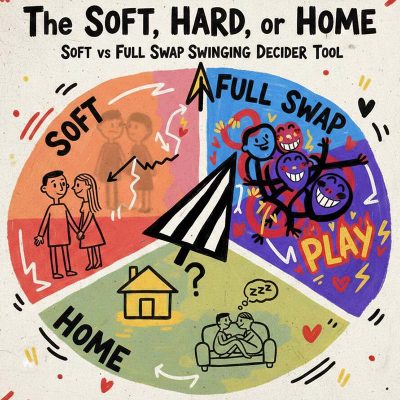
Don't let a "Soft Swap" night turn into a "Hard Feelings" morning.
Walking into the club with different expectations is a grenade waiting to explode. He thinks it’s a free-for-all; she thinks it’s just drinks and dancing. That silence in the car ride home? That’s the sound of a preventable disaster.
Stop guessing. Use this tool to sync your "sexual GPS" before you leave the driveway. Determine exactly how wild you’re getting tonight, so the only surprise is how much fun you have.
The fantasy of swinging is electric, but that cold sweat you feel when thinking about your partner with someone else? That’s your survival instinct warning you that your foundation is at stake. Most couples don’t fail because they lacked desire; they fail because they lacked a safety net. Ambiguity is where jealousy festers, and "winging it" is the fastest way to turn a dream into a nightmare of resentment and "what have we done?"
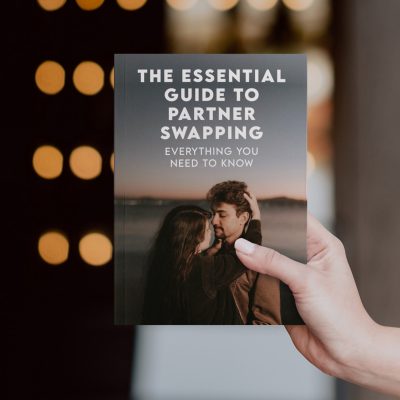
The Essential Guide to Swinging is your anxiety-proof roadmap through the chaos. Don't gamble your marriage on hope. Build a fortress of trust, master the repair chats, and ensure your exploration is defined by care, not a catastrophe
Full swap is the deep end. The rush is intense, but so is the risk of emotional wreckage. That tightening in your chest isn’t just nerves; it’s the fear that a "fun night" could become a permanent scar on your marriage. You can’t un-ring this bell, so never strike it without a plan.
The Essential Guide to Full Swap Swinging replaces reckless gambling with calculated discipline. From ironclad vetting to "emergency brake" scripts, we provide the safety architecture required to swap bodies without losing your minds. Don't just hope it goes well, engineer it
Gemini said
The fantasy is electric. The reality? It can be a grenade that blows up your marriage and your social circle. That tightening in your chest isn't just nerves. It is a warning that you are risking everything on a vibe. "Winging it" is the fastest way to turn a fun group chat into a toxic war zone.
The Essential Guide replaces the chaos with ironclad protocols. We provide the vetting tools, jealousy airlocks, and privacy scripts needed to swap bodies without losing your mind. Secure your safety first.
The fantasy of swinging is electric, but that cold sweat you feel when thinking about your partner with someone else? That’s your survival instinct warning you that your foundation is at stake. Most couples don’t fail because they lacked desire; they fail because they lacked a safety net. Ambiguity is where jealousy festers, and "winging it" is the fastest way to turn a dream into a nightmare of resentment and "what have we done?"
The Essential Guide to Swinging is your anxiety-proof roadmap through the chaos. Don't gamble your marriage on hope. Build a fortress of trust, master the repair chats, and ensure your exploration is defined by care, not a catastrophe
Full swap is the deep end. The rush is intense, but so is the risk of emotional wreckage. That tightening in your chest isn’t just nerves; it’s the fear that a "fun night" could become a permanent scar on your marriage. You can’t un-ring this bell, so never strike it without a plan.
The Essential Guide to Full Swap Swinging replaces reckless gambling with calculated discipline. From ironclad vetting to "emergency brake" scripts, we provide the safety architecture required to swap bodies without losing your minds. Don't just hope it goes well, engineer it
Why emotional attachment to another couple happens
When you date or connect with another couple there is a new social and emotional system in play. You are not only navigating your own feelings but also the feelings of two people who you may care about deeply. Attachment can grow from shared experiences like late night conversations, honest vulnerability, inside jokes and safety built through consistent communication. It is natural to feel excited and even a little possessive at times. The key is to recognize those feelings without letting them drive decisions that harm you or your partners.
People often assume that attachment only grows when romance is involved with a single person. In a swinging ENM dynamic you can still form strong attachments to the other couple as a unit or to individuals within that unit. Attachment to the other couple can look like a sense of wanting ongoing closeness, a wish to spend more time together, or a desire to know every detail of their lives. It can also show up as worry about what they think of you or how your actions are being interpreted by the other couple. All of these feelings are normal. The question is what you do with them.
Common patterns you might notice
- Attachment to the couple as a unit You feel drawn to the whole duo as a pair rather than to each person individually. You may want to spend time with them together and may measure your own worth by how well you fit into their shared space.
- Attachment to one member You find yourself developing a stronger bond with one person in the other couple. This can complicate dynamics if you do not have a shared plan for how to handle it.
- Concern about expectations You worry that you are not meeting the other couple s needs or that you are becoming a source of anxiety for them. This can lead to people pulling back or hedging what they share.
- Fear of missing out You worry that what you share with the other couple might be fleeting and you might lose access to that connection if you push for more or push too hard.
- Desire to prove yourself You may try to perform or overcompensate to win approval from the other couple or from your own partner or partners.
Why jealousy is not the enemy
Compersion as a possible ally
Compersion is a term borrowed from the poly world but it applies to ENM with other couples as well. It is the joy you feel when your partner or your partner s partners experience happiness or pleasure. Building compersion takes practice. It often starts with celebrating small wins and acknowledging that someone else s joy does not threaten your own place in the relationship. Cultivating compersion does not mean denying your own feelings. It means choosing a mindset that supports healthy curiosity about each other s experiences.
Boundaries and agreements you should consider
Clear boundaries reduce miscommunication. In a swinging ENM dynamic with another couple the following categories are worth discussing early and revisiting often.
- Time boundaries Decide how much time you want to spend with the other couple and how to split date nights and private conversations.
- Emotional boundaries Clarify what kinds of emotional sharing are welcome with the other couple and what should be kept for your primary relationships.
- Sexual boundaries Agree on what acts are permitted and with whom. Define safety practices including the use of protection and regular testing where appropriate.
- Communication boundaries Choose how to communicate with the other couple. Some groups prefer direct check ins while others use a neutral third party to help with scheduling or mediate if conflicts arise.
- Privacy boundaries Decide how much personal information you want to share publicly about the other couple and what stays private between your own circles.
- Conflict boundaries Establish a process for handling conflicts without escalating. Decide who can step in if a boundary is crossed or if emotions run hot.
Don't let a "Soft Swap" night turn into a "Hard Feelings" morning.
Walking into the club with different expectations is a grenade waiting to explode. He thinks it’s a free-for-all; she thinks it’s just drinks and dancing. That silence in the car ride home? That’s the sound of a preventable disaster.
Stop guessing. Use this tool to sync your "sexual GPS" before you leave the driveway. Determine exactly how wild you’re getting tonight, so the only surprise is how much fun you have.
The fantasy of swinging is electric, but that cold sweat you feel when thinking about your partner with someone else? That’s your survival instinct warning you that your foundation is at stake. Most couples don’t fail because they lacked desire; they fail because they lacked a safety net. Ambiguity is where jealousy festers, and "winging it" is the fastest way to turn a dream into a nightmare of resentment and "what have we done?"
The Essential Guide to Swinging is your anxiety-proof roadmap through the chaos. Don't gamble your marriage on hope. Build a fortress of trust, master the repair chats, and ensure your exploration is defined by care, not a catastrophe
Full swap is the deep end. The rush is intense, but so is the risk of emotional wreckage. That tightening in your chest isn’t just nerves; it’s the fear that a "fun night" could become a permanent scar on your marriage. You can’t un-ring this bell, so never strike it without a plan.
The Essential Guide to Full Swap Swinging replaces reckless gambling with calculated discipline. From ironclad vetting to "emergency brake" scripts, we provide the safety architecture required to swap bodies without losing your minds. Don't just hope it goes well, engineer it
Gemini said
The fantasy is electric. The reality? It can be a grenade that blows up your marriage and your social circle. That tightening in your chest isn't just nerves. It is a warning that you are risking everything on a vibe. "Winging it" is the fastest way to turn a fun group chat into a toxic war zone.
The Essential Guide replaces the chaos with ironclad protocols. We provide the vetting tools, jealousy airlocks, and privacy scripts needed to swap bodies without losing your mind. Secure your safety first.
The fantasy of swinging is electric, but that cold sweat you feel when thinking about your partner with someone else? That’s your survival instinct warning you that your foundation is at stake. Most couples don’t fail because they lacked desire; they fail because they lacked a safety net. Ambiguity is where jealousy festers, and "winging it" is the fastest way to turn a dream into a nightmare of resentment and "what have we done?"
The Essential Guide to Swinging is your anxiety-proof roadmap through the chaos. Don't gamble your marriage on hope. Build a fortress of trust, master the repair chats, and ensure your exploration is defined by care, not a catastrophe
Full swap is the deep end. The rush is intense, but so is the risk of emotional wreckage. That tightening in your chest isn’t just nerves; it’s the fear that a "fun night" could become a permanent scar on your marriage. You can’t un-ring this bell, so never strike it without a plan.
The Essential Guide to Full Swap Swinging replaces reckless gambling with calculated discipline. From ironclad vetting to "emergency brake" scripts, we provide the safety architecture required to swap bodies without losing your minds. Don't just hope it goes well, engineer it
Practical steps you can take today
Below are concrete moves that can help you navigate attachment to another couple in a swinging ENM setup. Use them as a toolkit you tailor to your own situation. Start with one or two steps and build from there as you grow more confident.
- Name the feeling When you notice a strong emotion say it aloud. For example I am feeling anxious and a little jealous right now. Vocalizing the emotion reduces its power and makes it easier to address.
- Check in regularly Schedule brief weekly check ins with your partner or partners to discuss how you feel about the other couple and any shifts in attachment. Keep the format simple and non blaming.
- Write a personal reflection Keep a private journal about your experiences and your evolving needs. You can share themes with your partner during check ins but keep personal reflections confidential if that helps you stay honest.
- Practice honest but kind communication Use I statements and focus on your own needs rather than blaming the other couple. For example I feel left out when we skip us time. I would like to have a weekly date night together.
- Create a two person practice If your attachment pulls you toward their dynamic overly you can create a two person practice where you and your partner dedicate a specific amount of energy to your own relationship. This helps keeps your own bond strong.
- Develop a shared plan with the other couple Sit with them and discuss what you each want from the dynamic. A shared plan reduces guesswork and helps everyone move forward together.
- Set a cooling off period If emotions spike set a pause on certain activities for a defined period. The pause helps you regain balance without removing the option for future connections.
- Keep safety first Make sure you maintain consent and safety practices for all parties involved. Sexual health is a priority and open communication supports safety for everyone.
Communication frameworks that help
Clear communication is essential in any ENM arrangement with a couple. The right framework helps you speak your truth without escalating tension. Here are two practical approaches you can try.
Check in conversations
Check in conversations are brief and focused. They help you see how everyone is feeling without turning into a debate. Use these prompts as a starting point.
- What is one thing that is working well for us this week related to our connection with the other couple
- What is one thing that could be improved in our dynamic and what would we both be willing to adjust
- What do you need from me this week to feel secure and supported
I feel I statements
Using I statements centers your experience without blaming others. It reduces defensiveness and invites collaboration. Try templates like these.
- I feel jealous when we spend more time with the other couple than with our own team. I would like us to schedule more couple time this week.
- I feel left out when our conversations drift to topics that involve only them. I would like to hear more about your day and share mine as well.
- I feel excited about the possibilities ahead and I want us to talk about how to manage those feelings together.
Realistic scenarios and how to handle them
Thinking through real life moments helps you act with grace rather than panic. Here are several common situations and practical responses you can adapt to your own voice and situation.
Scenario 1: You notice growing attachment to the other couple as a unit
What to do
- Pause and reflect on what this attachment means for your primary relationship.
- Talk with your partner about what you are feeling using I statements.
- Ask what needs to shift in your schedule or boundaries to protect your primary bond while allowing the other connection to continue.
- Consider a short trial period where you limit time with the other couple to assess how you feel.
Scenario 2: One member of the other couple becomes a closer confidant
What to do
- Decide together how much personal information you want to share with that person outside of group settings.
- Establish a boundary around emotional sharing with the other person and check in with your partner about comfort levels.
- Make space for couple time that does not involve the other person to maintain your own connection.
Scenario 3: Jealousy spikes around a new revelation from the other couple
What to do
- Acknowledge the feeling with your partner and the other couple in a calm manner if appropriate.
- Described what you need in order to feel safe and respected.
- Work on a plan to address the trigger, whether that means more transparency or more structured check ins.
Scenario 4: You feel overwhelmed by the pace of the relationship with the other couple
What to do
- Respect your own timing and request a slower pace with a clear rationale.
- Coordinate with your partner to create a shared path that feels sustainable.
- Revisit boundaries and the agreements you have in place to ensure they still fit your needs.
Balancing space and closeness
Finding a balance between closeness with the other couple and space for your own relationship takes ongoing attention. You want to be honest about what you need without making the other couple or your own partners feel unwelcome. The balance point will be different for every group. Some pairs prefer more social time with everyone together, while others build in plenty of private time for each couple. The key is to talk openly and re evaluate as feelings evolve.
Red flags to watch for
Even when you are enjoying a healthy ENM setup there are warning signs you should not ignore. If you notice any of these patterns it may be time to pause and reassess.
- Persistent feelings of insecurity that do not improve with communication
- A pattern of boundary crossing that is not acknowledged by the other couple
- One partner feeling consistently left out or dismissed
- Assuming you know what the other couple wants without asking them
- Joint decisions taken without your input that shift the dynamic in a way that feels unsafe
When red flags arise the best course is to pause and revisit boundaries with all parties present. It can be painful but it is healthier than letting a boundary breach fester and shape your entire experience of the dynamic.
Taking care of your mental health and wellbeing
ENM can be emotionally rich but also emotionally demanding. You must protect your mental and emotional health the same way you protect your physical health. Here are a few ideas to keep yourself resilient.
- Maintain a strong baseline in your primary relationship with clear communication and regular date nights that do not involve the other couple.
- Practice self care that replenishes you whether that is exercise, time with friends, or quiet time alone with a book or a movie.
- Seek outside support from a therapist or counselor who understands ENM dynamics if you notice persistent anxiety or distress.
- Reach out to trusted friends or a community where you can be honest about your feelings without judgment.
Navigating with your partner(s) step by step
If you are in a relationship with two people in another couple you may have multiple conversation channels open. Here is a simple step by step approach you can adapt to your setup.
- Agree on a shared goal for the next month of exploring with the other couple. This could be more time together or a plan to keep a certain amount of time free for your own couple time.
- Schedule a weekly check in for both couples. Keep it brief and focused on feelings and boundaries.
- Record decisions in a shared document that you all can access. This reduces memory drift and miscommunication.
- Share a personal reflection with your primary partner. Keep it honest and not reserved only for the other couple.
- Revisit boundaries and adjust as needed. Do not let fear of discomfort push you into a bad arrangement for too long.
Glossary of useful terms and acronyms
- ENM Ethical non monogamy a relationship model that allows romantic or sexual connections beyond a single couple with consent and communication.
- Swinging A form of ENM that often involves couples engaging with each other in shared sexual experiences with mutual consent.
- Primary The person or couple who holds the central role in emotional life and long term plans.
- Secondary People who have a meaningful connection but not the same level of commitment as the primary partner or partners.
- Compersion The sense of happiness at another person s joy and the ability to celebrate their experiences.
- Jealousy A natural emotional response to perceived threats to a valued relationship or boundary.
- Attachment The emotional bond that develops toward a person or a couple in ENM contexts.
- Boundary A clearly agreed rule about what is allowed and what is off limits in the relationship
- Check in A brief conversation to review feelings and adjust plans or boundaries as needed.
Frequently asked questions
We cover common questions that come up when handling emotional attachment to another couple in a swinging ENM dynamic. If you have a question that isn t listed here you can reach out to us and we will consider adding it with practical guidance.
Can attachment to the other couple be a good thing
Yes attachment can signal closeness and trust the goal is to manage it so it enhances all relationships involved rather than causing harm. The right boundaries and open communication can turn attachment into a source of shared strength rather than a source of fear.
How do I know if I am just feeling left out or truly attached
Left out feelings come from a mismatch in time and attention. Attachment grows when you feel consistently connected and invested in the other couple as a unit or as individuals. Regular honest check ins help distinguish between these experiences.
What if my partner does not want the same level of attachment
That is a real and common situation. You can still respect their stance while exploring what you need. It may mean adjusting your own expectations or changing the pace of the connection with the other couple. You can also seek a balance that works for both of you rather than forcing a single approach on the group.
How do we handle emotional disclosure with the other couple
Decide what level of personal information should be shared with them and what should stay within your primary unit. Clear boundaries here help prevent boundary creep. Also consider having a neutral check in person or via text to ensure everyone feels heard without becoming a breach of privacy.
How do we rebuild if a boundary is crossed
Start with a calm conversation focused on feelings and needs rather than blame. Restate the boundary and what changes you will implement. You may decide to pause certain activities for a period. Rebuilding trust takes time and consistent follow through.
Is it okay to ask the other couple for more transparency
Transparency is usually healthy when all parties consent to it. If your needs for more transparency are not being met you should voice them and discuss a plan. If the other couple is uncomfortable with a level of transparency you will need to decide if that is a deal breaker for your own boundaries.
What if I realize I want this dynamic to be smaller or bigger
Your needs can change. It is normal to scale the relationship up or down. The most important thing is to communicate this clearly to your partner and to the other couple and to renegotiate boundaries in a respectful way.
Can we involve a professional mediator or therapist
Yes you can. A therapist who understands ENM dynamics can help you navigate attachment, jealousy and boundaries. They can offer a neutral space to talk through complex feelings and develop a plan that works for everyone involved.
Don't let a "Soft Swap" night turn into a "Hard Feelings" morning.
Walking into the club with different expectations is a grenade waiting to explode. He thinks it’s a free-for-all; she thinks it’s just drinks and dancing. That silence in the car ride home? That’s the sound of a preventable disaster.
Stop guessing. Use this tool to sync your "sexual GPS" before you leave the driveway. Determine exactly how wild you’re getting tonight, so the only surprise is how much fun you have.
The fantasy of swinging is electric, but that cold sweat you feel when thinking about your partner with someone else? That’s your survival instinct warning you that your foundation is at stake. Most couples don’t fail because they lacked desire; they fail because they lacked a safety net. Ambiguity is where jealousy festers, and "winging it" is the fastest way to turn a dream into a nightmare of resentment and "what have we done?"
The Essential Guide to Swinging is your anxiety-proof roadmap through the chaos. Don't gamble your marriage on hope. Build a fortress of trust, master the repair chats, and ensure your exploration is defined by care, not a catastrophe
Full swap is the deep end. The rush is intense, but so is the risk of emotional wreckage. That tightening in your chest isn’t just nerves; it’s the fear that a "fun night" could become a permanent scar on your marriage. You can’t un-ring this bell, so never strike it without a plan.
The Essential Guide to Full Swap Swinging replaces reckless gambling with calculated discipline. From ironclad vetting to "emergency brake" scripts, we provide the safety architecture required to swap bodies without losing your minds. Don't just hope it goes well, engineer it
Gemini said
The fantasy is electric. The reality? It can be a grenade that blows up your marriage and your social circle. That tightening in your chest isn't just nerves. It is a warning that you are risking everything on a vibe. "Winging it" is the fastest way to turn a fun group chat into a toxic war zone.
The Essential Guide replaces the chaos with ironclad protocols. We provide the vetting tools, jealousy airlocks, and privacy scripts needed to swap bodies without losing your mind. Secure your safety first.
The fantasy of swinging is electric, but that cold sweat you feel when thinking about your partner with someone else? That’s your survival instinct warning you that your foundation is at stake. Most couples don’t fail because they lacked desire; they fail because they lacked a safety net. Ambiguity is where jealousy festers, and "winging it" is the fastest way to turn a dream into a nightmare of resentment and "what have we done?"
The Essential Guide to Swinging is your anxiety-proof roadmap through the chaos. Don't gamble your marriage on hope. Build a fortress of trust, master the repair chats, and ensure your exploration is defined by care, not a catastrophe
Full swap is the deep end. The rush is intense, but so is the risk of emotional wreckage. That tightening in your chest isn’t just nerves; it’s the fear that a "fun night" could become a permanent scar on your marriage. You can’t un-ring this bell, so never strike it without a plan.
The Essential Guide to Full Swap Swinging replaces reckless gambling with calculated discipline. From ironclad vetting to "emergency brake" scripts, we provide the safety architecture required to swap bodies without losing your minds. Don't just hope it goes well, engineer it
