
Handling Mismatched Desire to Swing


Welcome to The Monogamy Experiment where we break down complex relationship topics with a practical twist. Today we are diving into a common yet tricky issue in swinging your ENM dynamic. Mismatched desire happens when one partner wants to swing more and the other wants to swing less or not at all. It is not a failure it is a signal to pause reassess and renegotiate. When handled with care honesty and good boundaries this can become a catalyst for growth or a clean reset if that is what both people truly want. The goal here is to help you turn a potential friction point into a collaborative plan that respects both people and protects the relationship you value.
Quick Links to Useful Sections
- What mismatched desire looks like in swinging
- Why mismatches happen
- Core principles for navigating mismatches
- Starting the conversation the right way
- Prepare before you talk
- Pick a good moment
- Use a clear structure
- Conversation starter scripts
- Practical negotiation strategies
- Soft limits and hard limits
- Desire inventory exercise
- Time box trials
- Joint safety checks
- Compersion reminders
- Real world scenarios with scripts
- Scenario 1 A swing ready partner and a hesitant partner
- Scenario 2 both partners curious but on different timelines
- Scenario 3 a mismatch tied to insecurity
- Safety boundaries and emotional safety
- Emotions jealousy and compersion
- Practical tools you can use today
- Boundary mapping
- Conversation prompts for tough moments
- A simple decision framework
- When mismatches become persistent
- Glossary of useful terms and acronyms
- Frequently asked questions
Before we start we will explain terms and acronyms so everything is crystal clear. If you are new to swinging ENM you are not alone and this guide is written for real life conversations not buzzword bingo. Let us get practical and a little fun with big conversations on the table.
What mismatched desire looks like in swinging
Mismatched desire in a swinging ENM setup can show up in several ways. Here are the most common patterns that couples report when they come to talk things through.
- Your partner wants to swing more often than you do. They crave experiences outside the relationship while you feel content with fewer or no outside experiences.
- One partner enjoys specific activities that the other does not want to participate in. For example one partner loves group play or swinging with multiple people while the other prefers only one on one experiences or solo exploration.
- Time and energy constraints. A busy work life or family commitments mean one partner cannot invest as much time into swinging as the other would like.
- Emotional concerns trump physical curiosity. One partner may be excited by the idea but feels jealousy fear or insecurity when a real situation arises.
- Changes over time. Desire can wax and wane. A person may be hot for swinging for a period and then cool off later or vice versa.
Why mismatches happen
Desire is driven by a mix of biology psychology and life circumstances. In swinging ENM the stakes feel intimate because the dynamic involves trust vulnerability and boundary work. Here are some common reasons couples encounter mismatched desire:
- Evolving boundaries. What felt comfortable a few months ago can feel different after a new experience. Boundaries can shift as the relationship grows.
- Insecurity and comparison. Seeing a partner connect with someone else can trigger insecurities that masquerade as a change in desire.
- Jealousy patterns. Jealousy can flare in certain scenarios especially if there is a history of hurt or if there is perceived asymmetry in attention or effort.
- Life stage and energy. A new job a move a baby on the way or fatigue can drain the appetite for outside experiences.
- Past trauma or emotional safety. Previous negative experiences around sex or sharing can shape how comfortable someone feels toward swinging at a given moment.

Don't let a "Soft Swap" night turn into a "Hard Feelings" morning.
Walking into the club with different expectations is a grenade waiting to explode. He thinks it’s a free-for-all; she thinks it’s just drinks and dancing. That silence in the car ride home? That’s the sound of a preventable disaster.
Stop guessing. Use this tool to sync your "sexual GPS" before you leave the driveway. Determine exactly how wild you’re getting tonight, so the only surprise is how much fun you have.
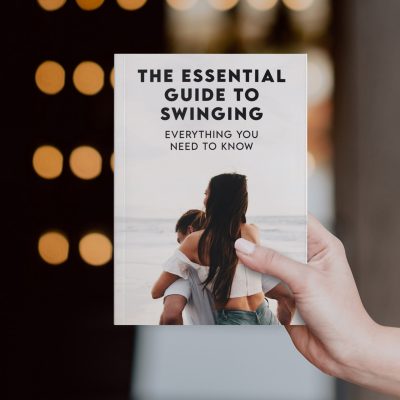
The fantasy of swinging is electric, but that cold sweat you feel when thinking about your partner with someone else? That’s your survival instinct warning you that your foundation is at stake. Most couples don’t fail because they lacked desire; they fail because they lacked a safety net. Ambiguity is where jealousy festers, and "winging it" is the fastest way to turn a dream into a nightmare of resentment and "what have we done?"
The Essential Guide to Swinging is your anxiety-proof roadmap through the chaos. Don't gamble your marriage on hope. Build a fortress of trust, master the repair chats, and ensure your exploration is defined by care, not a catastrophe
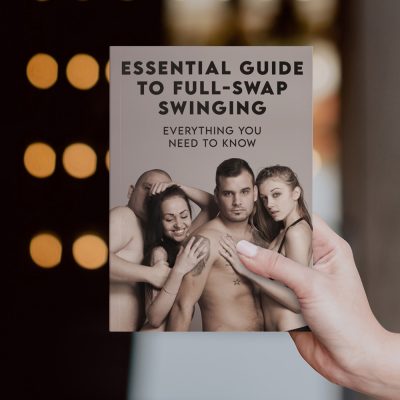
Full swap is the deep end. The rush is intense, but so is the risk of emotional wreckage. That tightening in your chest isn’t just nerves; it’s the fear that a "fun night" could become a permanent scar on your marriage. You can’t un-ring this bell, so never strike it without a plan.
The Essential Guide to Full Swap Swinging replaces reckless gambling with calculated discipline. From ironclad vetting to "emergency brake" scripts, we provide the safety architecture required to swap bodies without losing your minds. Don't just hope it goes well, engineer it
Gemini said
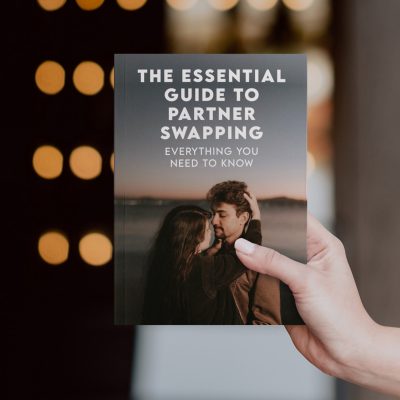
The fantasy is electric. The reality? It can be a grenade that blows up your marriage and your social circle. That tightening in your chest isn't just nerves. It is a warning that you are risking everything on a vibe. "Winging it" is the fastest way to turn a fun group chat into a toxic war zone.
The Essential Guide replaces the chaos with ironclad protocols. We provide the vetting tools, jealousy airlocks, and privacy scripts needed to swap bodies without losing your mind. Secure your safety first.
The fantasy of swinging is electric, but that cold sweat you feel when thinking about your partner with someone else? That’s your survival instinct warning you that your foundation is at stake. Most couples don’t fail because they lacked desire; they fail because they lacked a safety net. Ambiguity is where jealousy festers, and "winging it" is the fastest way to turn a dream into a nightmare of resentment and "what have we done?"
The Essential Guide to Swinging is your anxiety-proof roadmap through the chaos. Don't gamble your marriage on hope. Build a fortress of trust, master the repair chats, and ensure your exploration is defined by care, not a catastrophe
Full swap is the deep end. The rush is intense, but so is the risk of emotional wreckage. That tightening in your chest isn’t just nerves; it’s the fear that a "fun night" could become a permanent scar on your marriage. You can’t un-ring this bell, so never strike it without a plan.
The Essential Guide to Full Swap Swinging replaces reckless gambling with calculated discipline. From ironclad vetting to "emergency brake" scripts, we provide the safety architecture required to swap bodies without losing your minds. Don't just hope it goes well, engineer it
Core principles for navigating mismatches
There are some steady anchors that help keep negotiations constructive even when feelings run hot. Ground these practices in empathy honesty and a shared commitment to the health of the relationship.
- Consent is ongoing. Consent is not a one time checkbox. It is a living conversation that evolves as feelings change.
- Boundaries are assets not cages. Boundaries protect both partners. They are flexible but require mutual respect and clear communication when adjustments are needed.
- Communication beats assumption. Talk about desires fears and limits openly. Do not guess what your partner wants or how they feel without asking.
- Jealousy is a signal not a verdict. If jealousy pops up treat it as information to discuss not as a reason to pull the plug unilaterally.
- Compersion is a muscle you can train. When you feel happiness for your partner's pleasure even if it is not your own, you are exercising a powerful relationship skill.
- Small steps add up. If a big swing feels daunting start with small experiments that provide data and confidence for both people.
Starting the conversation the right way
Approach conversations about mismatched desire with practicality and warmth. The goal is to understand each other better not to win an argument. A well framed talk reduces defensiveness and increases the chances you both arrive at a path that feels fair.
Prepare before you talk
Before you have the talk take a moment to gather your own feelings. Ask yourself these questions:
- What is my current level of desire for swinging and what has changed recently?
- What are my non negotiables or hard limits?
- What would make me feel safe supported and connected even if we decide not to swing right now?
- What would be an acceptable compromise that respects both of us?
Pick a good moment
Choose a time when both of you are rested and free from urgent stress. Do not try to have this talk in the middle of a fight or when one of you is rushing out the door. A calm environment improves honesty and reduces defensiveness.
Use a clear structure
Open with reassurance then outline your perspective then invite your partner to share theirs. Close with a plan or a follow up conversation date. A simple structure can look like this:
- Share how you feel using I statements to avoid blaming language.
- Describe what you want and why it matters to you.
- Invite your partner to share their feelings and perspective without interruption.
- Summarize what you heard and propose a next step that honors both sides.
Conversation starter scripts
These are not rigid scripts but gentle templates you can adapt. They keep the tone respectful and open rather than adversarial.
- I have been thinking about swinging and I want to make sure we both feel good about our options. I would love to hear how you feel about swinging more or less and what would be a comfortable path for us.
- It matters to me that our relationship stays strong while we explore outside experiences. Can we map out a plan that feels fair even if our desires differ?
- I am not sure how to feel about a certain scenario. Could we walk through it together and talk about what would feel safe and exciting for both of us?
Practical negotiation strategies
Negotiation in a swinging ENM dynamic is about balancing needs not about winning. Here are strategies that help keep negotiations productive and fair.
Soft limits and hard limits
A hard limit is a line you will not cross no matter what. A soft limit is a boundary you are willing to revisit under specific conditions or time frames. Make a clear list of both for you and your partner. If either person wants to alter a limit it should come with a check in to ensure safety and consent for both sides.
Desire inventory exercise
Each partner takes a quiet moment to list activities they are curious about along with whether they feel open to trying them with a time frame. Later compare notes and discuss any gaps or overlaps. Use this to identify realistic paths forward rather than abrupt changes.
Time box trials
Agree to a trial period with a defined end date. During this period commit to honest check ins every week. If at the end of the trial period one person is still uncomfortable you pause and revisit the plan. Do not extend a trial if one person is not ready.
Joint safety checks
Make safety a non negotiable. This means STI testing boundaries condom use and clear consent before any new activity. Swap contact information for safe sex reminders and have a plan for what happens if someone feels unsafe at any point.
Compersion reminders
Practice actively feeling happy for your partner in their experiences even if you do not share in those experiences. Remind yourself that your partner’s pleasure does not diminish your own value or your bond with them.
Real world scenarios with scripts
Let us walk through a few realistic situations. These scenarios show how to talk through mismatches and how to negotiate paths forward that feel fair.
Scenario 1 A swing ready partner and a hesitant partner
Jamie wants to swing more and explores with a few contacts while Alex feels safer staying monogamous for now. Here is a possible conversation and plan.
Jamie says I have been thinking about swinging more and I want to be honest about how I feel. I love our relationship and I do not want to pressure you. I wonder if we could try a soft approach like dating one couple for a guided experience with pre agreed boundaries. If you are uncomfortable we can pause and revisit other options. I want us to grow together not apart.
Alex replies I appreciate the honesty. I am not sure I am ready for new people in our bed but I want to support you. Let us set a time to assess after this first experience and we can decide together how to proceed. We can start with a boundary that you can opt out of at any point and we can keep the experience to one couple at a time.
Plan that follows this conversation
- Try a single couple date with clear boundaries and a fixed end time.
- Constrain the encounter to one on one interaction with the outside party rather than a group setting.
- Agree on a post experience check in to discuss emotions and future steps.
- If either person feels uncomfortable after the first experience they can pause swinging for a set period and revisit the plan then.
Scenario 2 both partners curious but on different timelines
Patricia and Sam both feel drawn to swinging but Patricia wants to wait to feel more secure while Sam is eager to explore this summer. Here is a practical path.
Patricia says I feel curious about swinging but I want to give myself some time to process and build more safety in our relationship. I am open to learning about our triggers and practicing better communication. Would you be willing to agree to a six to eight week pause where we discuss and plan together and then revisit the idea?
Sam replies that makes sense. I appreciate that we are being thoughtful. I would like to use this time to prepare and perhaps set up a few resources like readings or a couple workshop to strengthen our communication. If we set up a weekly check in we can track progress and feelings without pressuring each other.
Plan for Patricia and Sam
- Agree on a six to eight week period for education and reflection rather than moving directly into swinging.
- Attend a couple’s communication workshop or read a book together on ENM and boundary setting.
- Weekly check in to share feelings and identify any new concerns or triggers.
- After the period set a date to revisit the idea with clear expectations and boundaries.
Scenario 3 a mismatch tied to insecurity
Rhea loves the idea of swinging but feels anxious about sharing her partner with another. We walk through a compassionate approach to address insecurity while honoring desire.
Rhea says I love the idea of swinging but I have anxiety about my body and about sharing. I want to be honest about my fears and I want to work on my confidence. The plan we should consider needs to focus on emotional safety for me as well as your enjoyment.
Partner replies I hear you and I want us both to feel good. Let us start with a plan that centers your comfort. We can begin with a solo date for me with another partner only if you are fully associated with the process. We can also include a buddy system where you come along to meet people or bring a friend into the conversation who can support you. The key is that you control the pace and we keep talking honestly.
Plan for Rhea and partner
- Set a pace that feels safe including the option to opt out at any time.
- Use a buddy or support person to help with social dynamics and reduce pressure.
- Establish a clear aftercare plan to process emotions after any encounter.
- Schedule a follow up conversation to re evaluate feelings and consider gradually increasing comfort if desired.
Safety boundaries and emotional safety
Safety inside swinging is about physical health emotional well being and trust. The best plans are those that protect all parties while allowing honest exploration. Here are some essential safety boundaries to discuss early in mismatched desire conversations.
- Sexual health Agree on STI testing frequency condom policies and contraception if applicable. Decide how you will handle consent and what happens if someone tests positive for an STI.
- Privacy and discretion Clarify what is shared with friends family and within your social circles. If either partner wants privacy respect that request.
- Companions and introductions Decide how you will meet other people including whether you want to meet on a date with the single boundary or if you will only do this with an established couple.
- Time boundaries Agree on limits for frequency length and scheduling to prevent over extending your energy or creating resentment.
- Emotional aftercare Plan for time after experiences to talk through feelings with care and without judgment.
Emotions jealousy and compersion
Jealousy is a natural reaction in dynamic where desire is not aligned. The goal is not to erase jealousy but to manage it in a healthy way. Compersion is the feeling of joy for your partner's pleasure. It is a muscle you can exercise and strengthen over time with intention and practice.
- Normalize jealousy. Acknowledge it and talk about it without shame.
- Use jealousy as a signal. Explore what triggers it and address those triggers in the next conversation.
- Practice compersion. Celebrate your partner's experiences and share how you can support them even when you are not participating.
Practical tools you can use today
These tools are easy to implement and can be used at any stage of mismatched desire. The aim is to create clarity and reduce anxiety while preserving connection and respect.
Boundary mapping
Create a visual map listing all the activities you are considering with your current hard limits and soft limits. The map helps you see where there is overlap and where there is no room for compromise. Use a simple two column layout one column for your own limits and another for your partner. Compare and discuss with care.
Conversation prompts for tough moments
When feelings get intense use these prompts to exit a defensive loop and return to constructive dialogue.
- What part of this plan makes me feel safest and most alive at the same time?
- What is one small step we could take this week that would move us forward?
- What do you need from me right now to feel supported in this moment?
A simple decision framework
When you face a fork in the path use this three step framework:
- Clarify each partner's core needs and the impact of meeting or not meeting those needs.
- Evaluate risks and benefits for both people including emotional and physical safety.
- Choose a plan that respects both sets of needs and set a date to review it.
When mismatches become persistent
Sometimes mismatches linger despite best efforts. If this happens you can choose to adjust the relationship structure embrace ongoing negotiation or even pause swinging altogether. Here is how to approach those decisions with care.
Are your values still aligned around openness honesty and respect? If not it is time for deeper conversations or a clear reset. A therapist who understands ENM dynamics can provide tools to navigate difficult conversations and to rebuild trust. Pausing can give space to process emotions and evaluate what you both want from the relationship. If you both want to stay together you can renegotiate boundaries schedules and expectations to reflect current feelings.
Glossary of useful terms and acronyms
- ENM Ethical non monogamy a relationship style where all partners consent to non monogamous connections.
- Swinging A form of ENM where partners engage in sexual activity with others usually in a social setting or with trusted couples.
- Hard limit A boundary you will not cross under any circumstances.
- Soft limit A boundary you may reconsider under controlled conditions with consent.
- Compersion Feeling happiness for your partner s pleasure even when you are not sharing in that experience.
- Jealousy A normal emotion that signals fear threat or insecurity related to a relationship dynamic.
- Aftercare Care given after an experience that supports emotional well being and security.
- Boundary map A visual tool that lists activities limits and expectations for both partners.
- Consent Agreement to participate in an activity that is freely given and can be withdrawn at any time.
Frequently asked questions
How do I start a conversation when one of us wants to swing more than the other?
Begin with a gentle inquiry about how each of you feeling today. Use I statements and share your own perspective first. For example I have been thinking about swinging more and I want to understand how you feel about it. Then invite your partner to share honestly and listen without interrupting. Keep the tone collaborative and remind yourselves that the goal is to protect the relationship while exploring possibilities.
What if we cannot reach an agreement that feels fair?
Agree to a structured pause to reassess the situation. Use the pause to work on communication and emotional safety with the help of resources or a therapist. If after a set period you still cannot align you may need to re consider whether swinging is right for your relationship or if you should adjust the level of openness.
Is it okay to swing if my partner is not sure or not ready?
Only if both partners give informed consent and feel safe with the plan. If one person is not ready the plan should be paused or adjusted to fit both sets of needs. Pushing forward without full consent breaks trust and can damage the relationship.
How do we handle jealousy when one person wants to swing and the other does not?
Treat jealousy as information not a verdict. Talk about triggers and memories that cause discomfort. Consider strategies such as more structured check ins more time for intimacy between the two of you and focusing on your own emotional safety and self care. If jealousy remains a problem seek guidance from a therapist familiar with ENM or swinging dynamics.
What is compersion and how can we foster it?
Compersion is choosing to feel happy for your partner s joy. It grows with practice. Start by acknowledging your partner s experiences celebrate their choices and remind yourself that their happiness does not diminish your own. Shared rituals like occasional debriefs after experiences can help build compersion over time.
Should we involve a therapist or coach who specializes in ENM?
Yes if mismatches persist and you want structured support. A therapist or couple coach familiar with ENM dynamics can provide frameworks tools and language that helps you stay connected while negotiating difficult topics.
What practical steps should we take right away?
Start with a clear boundaries discussion around hard and soft limits set a trial period if appropriate and plan a weekly check in. Ensure you cover safety health and aftercare. Commit to honest communication and respect for each other s comfort as you navigate the path forward.
What if we decide to pause swinging altogether?
Pausing can be a healthy choice if one or both partners feel unsettled. Use the pause to strengthen your bond rewrite expectations and address underlying concerns. Schedule a specific date to revisit and decide if swinging should be re introduced or if your relationship will remain monogamous or open within new boundaries.
How do we manage privacy and social circles when swinging?
Agree on who you tell and how much you share with friends family or social connections. Decide if you want to keep swinging conversations private or to share only general feelings. Respect for privacy protects emotional safety and reduces unnecessary pressure.
Don't let a "Soft Swap" night turn into a "Hard Feelings" morning.
Walking into the club with different expectations is a grenade waiting to explode. He thinks it’s a free-for-all; she thinks it’s just drinks and dancing. That silence in the car ride home? That’s the sound of a preventable disaster.
Stop guessing. Use this tool to sync your "sexual GPS" before you leave the driveway. Determine exactly how wild you’re getting tonight, so the only surprise is how much fun you have.
The fantasy of swinging is electric, but that cold sweat you feel when thinking about your partner with someone else? That’s your survival instinct warning you that your foundation is at stake. Most couples don’t fail because they lacked desire; they fail because they lacked a safety net. Ambiguity is where jealousy festers, and "winging it" is the fastest way to turn a dream into a nightmare of resentment and "what have we done?"
The Essential Guide to Swinging is your anxiety-proof roadmap through the chaos. Don't gamble your marriage on hope. Build a fortress of trust, master the repair chats, and ensure your exploration is defined by care, not a catastrophe
Full swap is the deep end. The rush is intense, but so is the risk of emotional wreckage. That tightening in your chest isn’t just nerves; it’s the fear that a "fun night" could become a permanent scar on your marriage. You can’t un-ring this bell, so never strike it without a plan.
The Essential Guide to Full Swap Swinging replaces reckless gambling with calculated discipline. From ironclad vetting to "emergency brake" scripts, we provide the safety architecture required to swap bodies without losing your minds. Don't just hope it goes well, engineer it
Gemini said
The fantasy is electric. The reality? It can be a grenade that blows up your marriage and your social circle. That tightening in your chest isn't just nerves. It is a warning that you are risking everything on a vibe. "Winging it" is the fastest way to turn a fun group chat into a toxic war zone.
The Essential Guide replaces the chaos with ironclad protocols. We provide the vetting tools, jealousy airlocks, and privacy scripts needed to swap bodies without losing your mind. Secure your safety first.
The fantasy of swinging is electric, but that cold sweat you feel when thinking about your partner with someone else? That’s your survival instinct warning you that your foundation is at stake. Most couples don’t fail because they lacked desire; they fail because they lacked a safety net. Ambiguity is where jealousy festers, and "winging it" is the fastest way to turn a dream into a nightmare of resentment and "what have we done?"
The Essential Guide to Swinging is your anxiety-proof roadmap through the chaos. Don't gamble your marriage on hope. Build a fortress of trust, master the repair chats, and ensure your exploration is defined by care, not a catastrophe
Full swap is the deep end. The rush is intense, but so is the risk of emotional wreckage. That tightening in your chest isn’t just nerves; it’s the fear that a "fun night" could become a permanent scar on your marriage. You can’t un-ring this bell, so never strike it without a plan.
The Essential Guide to Full Swap Swinging replaces reckless gambling with calculated discipline. From ironclad vetting to "emergency brake" scripts, we provide the safety architecture required to swap bodies without losing your minds. Don't just hope it goes well, engineer it
