
House Parties Versus Clubs


Welcome to a straight talk guide about how to navigate two popular social settings in the swinging world. If you are exploring ethical non monogamy or ENM for short this piece breaks down house parties and clubs in a way that is practical, fun and easy to translate into real life. We will cover what each setup actually looks like the vibe the expected etiquette the safety basics and real world scenarios so you can decide which path feels like the best fit for you and your partner or partner circle.
Quick Links to Useful Sections
- What does ENM mean and where this fits in
- Defining the two environments
- House parties explained
- Clubs explained
- How to choose between house parties and clubs
- Consent boundaries and communication in each setting
- House party consent and boundary practices
- Club consent and boundary practices
- Etiquette and social dynamics that make or break the vibe
- House party etiquette
- Club etiquette
- Safety first parts to plan for
- Health and protection basics
- Boundaries and aftercare
- Privacy and discretion
- Reality checks and common pitfalls
- Reality oriented planning tools you can use
- Budgeting your ENM social life
- Real world scenarios you might encounter
- Scenario one A couple attends a house party and finds a connection
- Scenario two A group attends a club and navigates a potential swap
- Scenario three A partner feels jealousy or discomfort during a social night
- A practical guide you can reference quickly
- Glossary of terms you will see
- Frequently asked questions
What does ENM mean and where this fits in
ENM stands for ethical non monogamy. In plain terms this is a relationship style where more than two people may have romantic or sexual connections with consent honesty and openness. The core idea is that everyone involved understands the arrangement and agrees to the boundaries and expectations. ENM can look very different from couple to couple and even within a single couple over time. Some people use the term swinging to describe a specific subset of ENM that focuses on sexual experiences with other partners within a social or party based context. Other folks use open relationship or polyamory to describe slightly different dynamics all of which can sit under the ENM umbrella.
In this guide we focus on two common social formats under the swinging ENM umbrella house parties and clubs. Each format has its own strengths and its own set of potential traps. Understanding these can help you communicate clearly with partners plan your time and stay aligned with your values.
Defining the two environments
House parties explained
House parties are usually hosted gatherings at the home of a host or a small circle of hosts. The vibe tends to feel intimate more private and often more controlled because you are in a familiar space. People may know the hosts and sometimes the other guests or at least be meeting them in a comfortable predictable setting. These events can be all ages or age restricted depending on the host and the venue rules. Some house parties are casual drop in style while others require RSVP and a pre screening process.
Key features of house parties
- Intimate space which often means closer conversations and easier small group dynamics
- Potentially lower cost per guest when shared among the hosting group
- Flexible rules around decor music and seating making the atmosphere more adaptable
- More direct personal interaction which can help with consent and boundary checks
Clubs explained
Clubs in the swinging ENM space are typically venues designed for adult socializing with an emphasis on consent safe space boundaries and privacy. Clubs may be private members only or open to the public with a gate or door policy. They often provide amenities like private play spaces spare rooms professional staff on site like hosts or hosts on call and sometimes structured events such as themed nights or educational talks. Club settings can feel like a mix of social club and premium party scene. The energy is usually more public than a closed home gathering and you may encounter a wider mix of attendees from a local community or a traveling crowd.
Key features of clubs
- Professional or semi professional management focusing on safety and consent
- Dedicated spaces for different activities with clear rules for each area
- Ticket or entry fees sometimes include space usage a drink package or membership dues
- More anonymous environment which can suit people who value privacy or space from their usual social circle
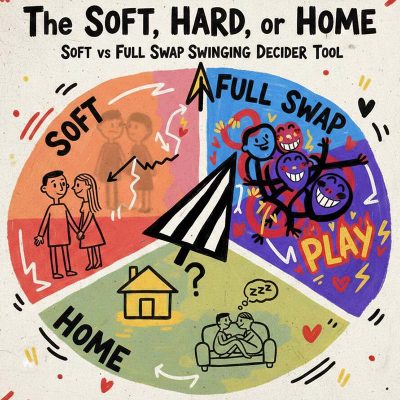
Don't let a "Soft Swap" night turn into a "Hard Feelings" morning.
Walking into the club with different expectations is a grenade waiting to explode. He thinks it’s a free-for-all; she thinks it’s just drinks and dancing. That silence in the car ride home? That’s the sound of a preventable disaster.
Stop guessing. Use this tool to sync your "sexual GPS" before you leave the driveway. Determine exactly how wild you’re getting tonight, so the only surprise is how much fun you have.
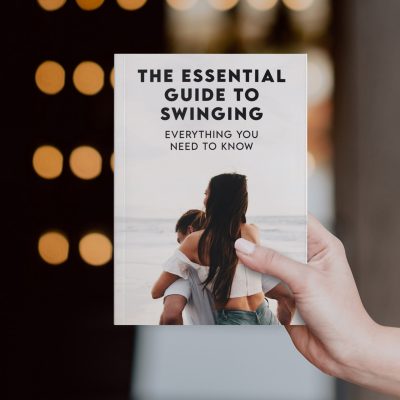
The fantasy of swinging is electric, but that cold sweat you feel when thinking about your partner with someone else? That’s your survival instinct warning you that your foundation is at stake. Most couples don’t fail because they lacked desire; they fail because they lacked a safety net. Ambiguity is where jealousy festers, and "winging it" is the fastest way to turn a dream into a nightmare of resentment and "what have we done?"
The Essential Guide to Swinging is your anxiety-proof roadmap through the chaos. Don't gamble your marriage on hope. Build a fortress of trust, master the repair chats, and ensure your exploration is defined by care, not a catastrophe
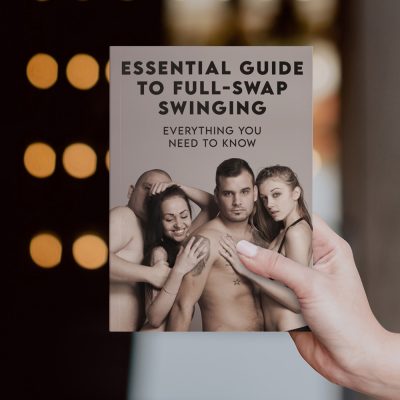
Full swap is the deep end. The rush is intense, but so is the risk of emotional wreckage. That tightening in your chest isn’t just nerves; it’s the fear that a "fun night" could become a permanent scar on your marriage. You can’t un-ring this bell, so never strike it without a plan.
The Essential Guide to Full Swap Swinging replaces reckless gambling with calculated discipline. From ironclad vetting to "emergency brake" scripts, we provide the safety architecture required to swap bodies without losing your minds. Don't just hope it goes well, engineer it
Gemini said
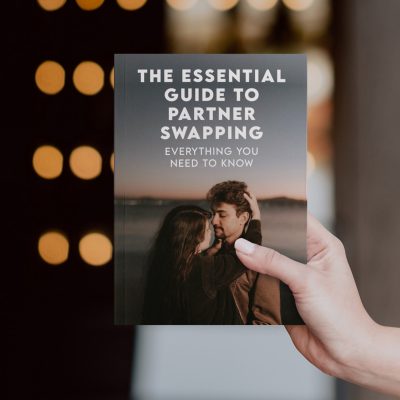
The fantasy is electric. The reality? It can be a grenade that blows up your marriage and your social circle. That tightening in your chest isn't just nerves. It is a warning that you are risking everything on a vibe. "Winging it" is the fastest way to turn a fun group chat into a toxic war zone.
The Essential Guide replaces the chaos with ironclad protocols. We provide the vetting tools, jealousy airlocks, and privacy scripts needed to swap bodies without losing your mind. Secure your safety first.
The fantasy of swinging is electric, but that cold sweat you feel when thinking about your partner with someone else? That’s your survival instinct warning you that your foundation is at stake. Most couples don’t fail because they lacked desire; they fail because they lacked a safety net. Ambiguity is where jealousy festers, and "winging it" is the fastest way to turn a dream into a nightmare of resentment and "what have we done?"
The Essential Guide to Swinging is your anxiety-proof roadmap through the chaos. Don't gamble your marriage on hope. Build a fortress of trust, master the repair chats, and ensure your exploration is defined by care, not a catastrophe
Full swap is the deep end. The rush is intense, but so is the risk of emotional wreckage. That tightening in your chest isn’t just nerves; it’s the fear that a "fun night" could become a permanent scar on your marriage. You can’t un-ring this bell, so never strike it without a plan.
The Essential Guide to Full Swap Swinging replaces reckless gambling with calculated discipline. From ironclad vetting to "emergency brake" scripts, we provide the safety architecture required to swap bodies without losing your minds. Don't just hope it goes well, engineer it
How to choose between house parties and clubs
The choice is rarely either or. Many couples mix both depending on mood energy level and stage in their ENM journey. Here are practical questions to guide your decision making.
- What pace feels right for you and your partner today? If you are new to ENM a house party might feel safer and more conversational to start with.
- How important is privacy and sense of control? House parties tend to have a more intimate feel while clubs offer a broader community and more anonymity.
- Do you want access to play spaces or do you want more socializing without pressure? Clubs often provide clear spaces to explore with others while house parties can feel like a social loop with less formalized play areas.
- What is your budget and what level of commitment makes sense? House parties can be lower cost but may require travel times to a host home whereas clubs may charge entry and sometimes membership fees that add up.
- How do you handle safety and screening? Clubs often have established policies and staff who enforce them while house parties rely more on the trust level among hosts guests and sometimes pre screening conducted by the host.
Consent boundaries and communication in each setting
Clear consent and upfront communication are not optional they are the backbone of ethical ENM in any environment. The setting impacts how you talk about what you want and how you respond when a boundary is approached. Let us break down practical strategies for both house parties and clubs.
House party consent and boundary practices
At a house party you typically know or will meet the hosts. Your conversations can be more nuanced because you have a shared baseline like a host’s rules space layout and the likely presence of other guests you might know. Here are effective tactics:
- Do a pre check in with your partner about what is on the table and what is off limits. Revisit your hard boundaries and soft boundaries and agree on a signal for if you want a pause.
- Ask about the house rules early. Some hosts set limits such as no sex in certain rooms no unprotected sex in common areas or no swapping with certain guests present. Respect these rules as they are part of the space safety plan.
- Engage in ongoing consent checks during conversations with others. A simple pause for a mutual check in keeps things ethical and comfortable.
- Be ready to walk away or reset if a boundary is approached in a way that does not feel safe. Your safety is the top priority.
Club consent and boundary practices
Clubs often provide a community driven environment with posted rules and sometimes staff designated to help with boundaries. In many cases there is a more formalized process for consent and space sharing.
- Read the rules and ask staff if anything is unclear. Do not assume anything about play spaces or who may be interested in swapping partners.
- Be explicit about your limits when you check in with potential play partners. It is fine to say I am only interested in conversation today or I am open to light touching but not full on sexual activity outside a designated space.
- Acknowledge that public spaces may mean higher levels of observation. If you need privacy request a private room or a more secluded space if allowed by the venue.
- Respect any time limits or rotation policies. Some clubs organize play areas with time slots which can help manage flow and reduce pressure.
Etiquette and social dynamics that make or break the vibe
Etiquette is not a list of arbitrary rules it is a practical framework that protects people’s comfort and safety while creating a respectful environment for exploration. Here are etiquette essentials tailored to each setting.
House party etiquette
- Introduce yourself and your partner to new guests. A brief warm hello sets a generous tone.
- Ask before touching or initiating any intimate interaction. Even in a relaxed environment consent is ongoing and can be withdrawn at any moment.
- Be mindful of the hosts work their space and guests time. Avoid monopolizing the hosts attention or the main social areas for long periods.
- Offer help with cleanup or bring a dish as a courtesy if it is a pot luck style event. Acts of service are appreciated and help the energy stay positive.
Club etiquette
- Follow the posted rules and listen to staff directions. They are there for your safety and the smooth operation of the event.
- Respect privacy. Do not share or post photos or stories about other guests without explicit consent.
- Use the spaces as intended. If the club has a play room keep conversations there and keep public areas social and respectful.
- Be mindful of personal boundaries and do not pressure others into anything they are not comfortable with.
Safety first parts to plan for
Safety in ENM is not about fear it is about practical planning. You want to minimize risk while maximizing positive experiences. Here are key safety components for both settings.
Health and protection basics
Discuss health together with any potential partners include STI status testing boundaries and protective measures. Carry protection such as condoms and lube and understand how to use them correctly. If you have any health concerns or recent exposures be honest with your partner and anyone you are considering seeing. Safer sex is a shared responsibility not a complaint it is a practical step to protect your relationship and your health.
Boundaries and aftercare
Boundaries are not a one time talk they are living agreements. Revisit boundaries after a session or after a party if something changes in your feelings. Aftercare means checking in with your partner after an encounter to debrief process emotions and reconnect. This is not a sign of weakness it is a sign of emotional maturity and investment in the relationship.
Privacy and discretion
Privacy may be important for a number of reasons including family members work or personal comfort. Some people are out in the open about ENM while others keep things discreet to protect relationships or careers. Honor privacy preferences and do not discuss others unless you have direct consent. This respect is part of the ethical base of ENM.
Reality checks and common pitfalls
Nobody has a perfect first few ENM experiences. Let us cover common missteps and how to avoid them so you can keep a positive trajectory.
- Over promising and under delivering which creates disappointment. Be clear what you are open to and communicate limits with honesty.
- Agreeing to something to avoid awkwardness then regretting it later. Take a pause and talk it through if a plan feels rushed or unclear.
- Moving too fast into sexual encounters without confirming comfort level. Slow down you can always adjust as you go.
- Neglecting emotional aftercare especially when you are emotionally worn out. A quick check in after a night out goes a long way.
Reality oriented planning tools you can use
Smart planning helps avoid friction and makes the experience more enjoyable whether you are at a house party or a club. Here are practical tools you can apply today.
- Pre event checklist that covers health status boundary review travel plans and child care or pet arrangements if needed
- Consent cards or non verbal signals that help partners communicate when words feel heavy or difficult
- Play partner screening process whether formal or informal depending on the setting
- Safe word or safe phrase agreed to pause or stop any activity at any time
Budgeting your ENM social life
Expense awareness helps you plan without surprises. House parties often come with minimal out of pocket costs while clubs may have cover charges drinks and occasional event fees. If you are trying to balance a schedule with multiple events each month outline a realistic budget and keep a margin for incidental costs like new outfits or travel if you are attending larger events.
Real world scenarios you might encounter
Scenario one A couple attends a house party and finds a connection
In this scenario the couple arrives and starting conversations with a few other guests. Their approach is respectful and measured. They clearly communicate their boundaries and are open to talking through topics before any physical interaction occurs. They check in with each other regularly and use a pre agreed signal if either feels uncomfortable. The night evolves with a mix of flirting light touching and a gentle exchange of numbers to plan a future meetup. The key outcome is positive energy emotional safety and shared memory of a pleasant time together.
Scenario two A group attends a club and navigates a potential swap
The club environment provides more options but also requires stronger attention to consent and privacy. The couple in this scenario has a pre event meeting to confirm what they each want and where their hard lines are. They move through conversations with potential play partners using clear direct language and check ins. After a few potential matches they decide to take a short break go to a quieter area and reassess. They end the night with a night cap and a debrief which strengthens their connection and helps them align for future adventures.
Scenario three A partner feels jealousy or discomfort during a social night
Jealousy is common in ENM and strongest when boundaries feel blurred. The approach here is to pause together talk about what is triggering the emotion and identify what would help. It may be a boundary boundary clarification or simply stepping away from a situation for a few minutes. The focus is on honest communication and mutual support. This scenario is a reminder that open not perfect communication is essential for healthy ENM.
A practical guide you can reference quickly
Use this compact guide to decide what you want and how to act in either environment. It is designed to be a quick read that you can revisit before a night out.
- Face your core boundaries. Decide what is a hard limit and what is a soft preference. Be ready to adapt as you gain experience.
- Communicate with your partner before during and after the event. Keep the conversation honest even if it is uncomfortable.
- Check in with consent with anyone you interact with. If you are ever unsure ask a direct question and accept the answer with grace.
- Respect the hosts rules and the venue policies. The safety plan is there for a reason and following it protects everyone.
- After the event take time to process your feelings with your partner. A short debrief builds trust and aligns future plans.
Glossary of terms you will see
- ENM Ethical non monogamy a relationship style that involves openness honesty and consent about partners outside the primary relationship.
- Swinging A subset of ENM focused on sexual encounters with others usually within social or party settings.
- Open relationship A relationship where partners agree to pursue intimate or sexual connections with others while maintaining emotional closeness.
- Boundaries Personal limits about what is acceptable protected by clear communication.
- Consent A voluntary agreement to engage in specific activities made without pressure or coercion.
- Aftercare Time spent after an encounter to process emotions and reconnect with partners.
- Screening The process of evaluating potential partners to ensure compatibility and safety.
- Safe word A pre agreed word or signal used to pause or stop activities immediately.
- Privacy The choice to keep certain aspects of your ENM life private from people who do not need to know.
Frequently asked questions
What is the difference between a house party and a club in ENM terms
A house party is a social gathering hosted at a home offering a intimate vibe with shared space and close contact. A club is a venue with formal rules safety staff and defined play spaces aimed at a larger more public community. Both settings operate on consent and communication but the context the energy and the scale differ.
How do I know if a host or club is reputable
Look for clear written rules a visible safety plan and staff or hosts who can answer questions. Read reviews where possible ask for a basic outline of the policy on consent and privacy and trust your instincts about how comfortable you feel in the space.
What should I bring to a house party
Bring protection for you and your partner including condoms and lube bring a small bag for personal items and a plan for how you will handle transport and childcare if needed. It is also smart to bring a light preparation kit containing wipes tissues and a small first aid item just in case.
What should I bring to a club
Along with protection and personal items you should bring a valid ID if required by the venue a method for summarizing your boundaries for quick reference and any membership cards or cash for entry drinks and tips if the venue uses them.
How often should couples explore ENM in a month
This varies from couple to couple. Some prefer a monthly rhythm others do quarterly sessions. The key is alignment and communication. Do not force a schedule that feels rushed or unsafe. Build your routine around what keeps the relationship healthy and the shared values intact.
What if I feel left out or jealous after an event
Jealousy is a signal not a verdict. Talk about what happened what you felt and what you may need next time. Consider adjusting boundaries or changing a dynamic so that both partners feel valued and secure. Always prioritize a communication loop that reinforces care and respect.
Is it possible to do ENM without sexual activity
Yes. Many people engage in flirting emotional closeness or deep conversation with others while choosing to limit sexual activity. The most important factor is ongoing consent and clear communication about what is on the table and what is off limits.
Do I need to tell coworkers or friends about my ENM life
Only share with people you trust and who need to know. People often choose privacy for personal and professional reasons. Respect others rights to stay private and avoid discussing intimate details in public or in the workplace.
How should I handle situations when a boundary is crossed
Acknowledge what happened then pause if needed together talk through what went wrong and decide how to move forward. It is okay to step back from a situation and revisit the boundaries in a calm focused way. You can always ask for help from a trusted friend or a professional if the conflict becomes complex.
What if I want to switch from house parties to clubs or vice versa
Start with a clear conversation with your partner about what you want to explore and why. Try a low pressure event in the new format and check in afterward. Small steps help you learn what works without overwhelming you or your relationship.
Don't let a "Soft Swap" night turn into a "Hard Feelings" morning.
Walking into the club with different expectations is a grenade waiting to explode. He thinks it’s a free-for-all; she thinks it’s just drinks and dancing. That silence in the car ride home? That’s the sound of a preventable disaster.
Stop guessing. Use this tool to sync your "sexual GPS" before you leave the driveway. Determine exactly how wild you’re getting tonight, so the only surprise is how much fun you have.
The fantasy of swinging is electric, but that cold sweat you feel when thinking about your partner with someone else? That’s your survival instinct warning you that your foundation is at stake. Most couples don’t fail because they lacked desire; they fail because they lacked a safety net. Ambiguity is where jealousy festers, and "winging it" is the fastest way to turn a dream into a nightmare of resentment and "what have we done?"
The Essential Guide to Swinging is your anxiety-proof roadmap through the chaos. Don't gamble your marriage on hope. Build a fortress of trust, master the repair chats, and ensure your exploration is defined by care, not a catastrophe
Full swap is the deep end. The rush is intense, but so is the risk of emotional wreckage. That tightening in your chest isn’t just nerves; it’s the fear that a "fun night" could become a permanent scar on your marriage. You can’t un-ring this bell, so never strike it without a plan.
The Essential Guide to Full Swap Swinging replaces reckless gambling with calculated discipline. From ironclad vetting to "emergency brake" scripts, we provide the safety architecture required to swap bodies without losing your minds. Don't just hope it goes well, engineer it
Gemini said
The fantasy is electric. The reality? It can be a grenade that blows up your marriage and your social circle. That tightening in your chest isn't just nerves. It is a warning that you are risking everything on a vibe. "Winging it" is the fastest way to turn a fun group chat into a toxic war zone.
The Essential Guide replaces the chaos with ironclad protocols. We provide the vetting tools, jealousy airlocks, and privacy scripts needed to swap bodies without losing your mind. Secure your safety first.
The fantasy of swinging is electric, but that cold sweat you feel when thinking about your partner with someone else? That’s your survival instinct warning you that your foundation is at stake. Most couples don’t fail because they lacked desire; they fail because they lacked a safety net. Ambiguity is where jealousy festers, and "winging it" is the fastest way to turn a dream into a nightmare of resentment and "what have we done?"
The Essential Guide to Swinging is your anxiety-proof roadmap through the chaos. Don't gamble your marriage on hope. Build a fortress of trust, master the repair chats, and ensure your exploration is defined by care, not a catastrophe
Full swap is the deep end. The rush is intense, but so is the risk of emotional wreckage. That tightening in your chest isn’t just nerves; it’s the fear that a "fun night" could become a permanent scar on your marriage. You can’t un-ring this bell, so never strike it without a plan.
The Essential Guide to Full Swap Swinging replaces reckless gambling with calculated discipline. From ironclad vetting to "emergency brake" scripts, we provide the safety architecture required to swap bodies without losing your minds. Don't just hope it goes well, engineer it
