
Money Boundaries and Shared Spending


Welcome to a practical, no fluff guide about money boundaries in the swinging ethically non monogamous world. Think of this as your friendly experimental friend who tells it like it is while keeping things fair, sane, and surprisingly simple. We will break down terms, walk through real life scenarios, and give you templates you can steal and tailor to your crew. The goal is to keep money drama from hijacking your connections so you can focus on the good stuff the connection, trust and fun.
Quick Links to Useful Sections
- Who this guide is for
- What ENM means and how swinging fits in
- Why money boundaries matter in the swinging ENM world
- Core money boundary concepts you will use
- Budgeting for dates and play time
- Shared expenses versus independent spending
- Allowances and compensation models
- Joint accounts versus separate accounts
- Transparency and privacy balance
- Gifts and special purchases for partners
- Debt and lending among partners
- Practical boundary templates you can adapt
- Template A: Shared expenses for a date night with a partner
- Template B: Travel and event budget
- Template C: Personal gifts and toys
- Template D: Allowance and compensation
- Template E: Privacy and transparency policy
- Negotiation and communication strategies that work
- Realistic scenarios you might face and how to handle them
- Scenario 1: You want a weekend away with a couple you both like
- Scenario 2: A new partner joins your group and money conversations start
- Scenario 3: Unequal income among partners
- Scenario 4: You want to explore a group event but the venue has high entry fees
- Scenario 5: Gifts or upgrades for a partner in a separate relationship
- Tools you can use day to day
- Glossary of useful terms and acronyms
- Practical tips to start the conversation today
- Common mistakes to avoid
- Getting started today
- Frequently asked questions
Who this guide is for
This guide is for couples and individuals who practice ethically non monogamy in the swinging dynamic and who want to create clear money boundaries. If you are navigating shared expenses for dates with multiple partners or planning trips with your play partners, this is for you. If you want practical strategies that are not dramatic or theoretical this guide will help. We explain terms and acronyms so everything is easy to understand even if you are new to ENM or swinging.
What ENM means and how swinging fits in
ENM stands for ethically non monogamous. It is a broad umbrella term for relationships that involve forming intimate or sexual connections with other people with consent and communication. Under the ENM umbrella there are several dynamics. Swinging is one popular form where a couple or individual partners engage in romantic or sexual experiences with others often in social settings or events. The key ideas in swinging are clear boundaries communication consent and respect for all involved. We will use the terms in plain language and explain any acronyms as we go so you aren t left guessing.
Terms you might see
- ENM Ethically non monogamous a relationship style that embraces more than two people with consent and open communication.
- Swinging A dynamic within ENM where couples or individuals partner with others for social or sexual experiences often in a community setting or at events.
- Boundaries Rules or guidelines agreed upon by all participants to protect comfort safety and fairness.
- Transparency Being open about money time and emotional commitments to prevent misunderstandings.
- Compersion The joyful feeling you experience when your partner experiences happiness with someone else.
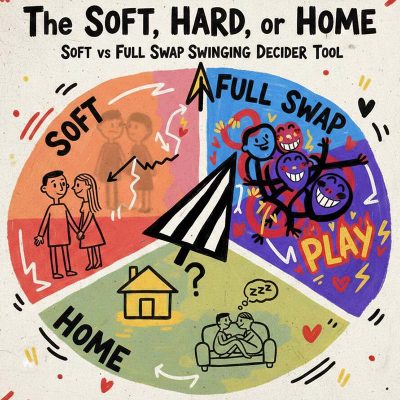
Don't let a "Soft Swap" night turn into a "Hard Feelings" morning.
Walking into the club with different expectations is a grenade waiting to explode. He thinks it’s a free-for-all; she thinks it’s just drinks and dancing. That silence in the car ride home? That’s the sound of a preventable disaster.
Stop guessing. Use this tool to sync your "sexual GPS" before you leave the driveway. Determine exactly how wild you’re getting tonight, so the only surprise is how much fun you have.
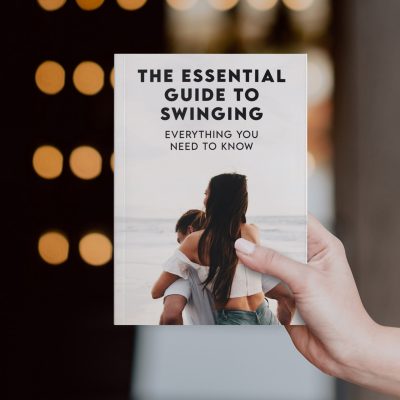
The fantasy of swinging is electric, but that cold sweat you feel when thinking about your partner with someone else? That’s your survival instinct warning you that your foundation is at stake. Most couples don’t fail because they lacked desire; they fail because they lacked a safety net. Ambiguity is where jealousy festers, and "winging it" is the fastest way to turn a dream into a nightmare of resentment and "what have we done?"
The Essential Guide to Swinging is your anxiety-proof roadmap through the chaos. Don't gamble your marriage on hope. Build a fortress of trust, master the repair chats, and ensure your exploration is defined by care, not a catastrophe
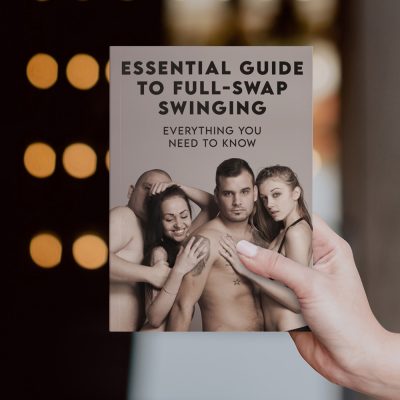
Full swap is the deep end. The rush is intense, but so is the risk of emotional wreckage. That tightening in your chest isn’t just nerves; it’s the fear that a "fun night" could become a permanent scar on your marriage. You can’t un-ring this bell, so never strike it without a plan.
The Essential Guide to Full Swap Swinging replaces reckless gambling with calculated discipline. From ironclad vetting to "emergency brake" scripts, we provide the safety architecture required to swap bodies without losing your minds. Don't just hope it goes well, engineer it
Gemini said
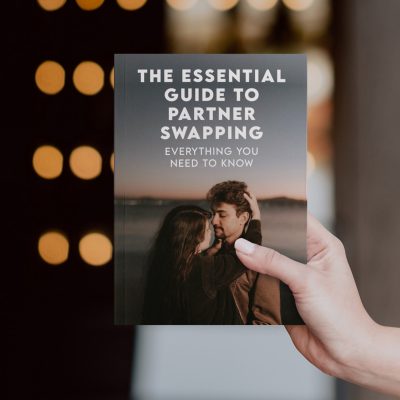
The fantasy is electric. The reality? It can be a grenade that blows up your marriage and your social circle. That tightening in your chest isn't just nerves. It is a warning that you are risking everything on a vibe. "Winging it" is the fastest way to turn a fun group chat into a toxic war zone.
The Essential Guide replaces the chaos with ironclad protocols. We provide the vetting tools, jealousy airlocks, and privacy scripts needed to swap bodies without losing your mind. Secure your safety first.
The fantasy of swinging is electric, but that cold sweat you feel when thinking about your partner with someone else? That’s your survival instinct warning you that your foundation is at stake. Most couples don’t fail because they lacked desire; they fail because they lacked a safety net. Ambiguity is where jealousy festers, and "winging it" is the fastest way to turn a dream into a nightmare of resentment and "what have we done?"
The Essential Guide to Swinging is your anxiety-proof roadmap through the chaos. Don't gamble your marriage on hope. Build a fortress of trust, master the repair chats, and ensure your exploration is defined by care, not a catastrophe
Full swap is the deep end. The rush is intense, but so is the risk of emotional wreckage. That tightening in your chest isn’t just nerves; it’s the fear that a "fun night" could become a permanent scar on your marriage. You can’t un-ring this bell, so never strike it without a plan.
The Essential Guide to Full Swap Swinging replaces reckless gambling with calculated discipline. From ironclad vetting to "emergency brake" scripts, we provide the safety architecture required to swap bodies without losing your minds. Don't just hope it goes well, engineer it
Why money boundaries matter in the swinging ENM world
Money is a part of life in any relationship and ENM adds extra layers of complexity. When two or more people are involved in dating, events, travel or shared play spaces money can become a source of stress if not handled clearly. Setting money boundaries protects emotional safety, reduces surprises, helps manage expectations and creates a fair sphere where everyone can participate with confidence. Clear boundaries also support consent because people know what is permitted financially and what is not. That means you can explore with more freedom and less fear of miscommunication or resentment building over time.
Core money boundary concepts you will use
Below are ideas and terms you will likely encounter. We will explain each concept and show how it applies specifically to swinging and ENM settings. If you already know what a term means you can skip ahead but we include these definitions so everyone is on the same page.
Budgeting for dates and play time
Budgeting means deciding in advance how much money you are comfortable spending on regular dates with a partner or partners, events like swing clubs or parties, and play sessions with others. This is not about limiting joy it is about making sure money stays predictable and aligned with your shared goals. Some people prefer a fixed monthly play budget while others opt for event based budgets. The important thing is clarity and agreement before the money leaves your wallet.
Shared expenses versus independent spending
Shared expenses are costs that benefit all participants or a defined subset of participants. Independent spending covers personal purchases that only benefit one person. In swinging ENM these lines can be blurry. The key is to explicitly define what counts as shared and what counts as personal so there is no guessing later on. Examples of shared expenses include a hotel room used for all partners a group dinner a club or event entry fees. Personal expenses include gifts for a partner personal toys or intimate gear that is used privately.
Allowances and compensation models
An allowance is a pre negotiated amount of money given to a partner or partners for specific purposes. A compensation model is an agreed structure for sharing financial responsibility in the relationship including how money is allocated when someone contributes more time energy or resources. Some ENM households choose proportional contributions based on income while others opt for equal splits or a hybrid approach. The important thing is to have a model that feels fair to everyone involved and that can be revisited as circumstances change.
Joint accounts versus separate accounts
Many couples weigh the choice between keeping all money in a joint account and maintaining separate accounts with a shared budget. A joint account can simplify shared expenses and keep everyone aligned. Separate accounts give more privacy and can reduce friction when partners have different spending styles or income levels. Some groups use a combination where there is a core joint account for shared costs and separate accounts for personal expenses. The key is to document what goes where and who has access to what information.
Transparency and privacy balance
Transparency means being open about financial arrangements with everyone who is affected. Privacy means not sharing private information that could cause harm or discomfort. In a swinging ENM setup you typically aim for a healthy blend where you share essential information about shared expenses and agreements while safeguarding personal financial details that do not affect the group. Agree what needs to be shared and how often you review the information together.
Gifts and special purchases for partners
Gifts can be meaningful markers of care or celebrations. In ENM settings gifts can involve multiple partners which requires a simple policy. Decide if gifts count toward shared budgets or if they are personal gifts from one person to another. Clarify limits and preferred channels for giving gifts to avoid uncomfortable misinterpretations.
Debt and lending among partners
Borrowing money among partners can complicate relationships quickly. If you allow lending define terms set repayment timelines and document agreements. Prefer cash or formal IOUs over informal promises that can sour a relationship if the money is not returned. Many groups choose to avoid large loans between partners to protect trust and reduce drama.
Practical boundary templates you can adapt
Use these templates as starting points. Replace the bracketed text with your details and adjust the language to fit your style. Keep the language clear and concrete so everyone understands the agreement.
Template A: Shared expenses for a date night with a partner
We agree that date night expenses with [Partner Name] will be covered from our shared budget. The limit for each event is [amount] and we will split costs [how you split]. Any additional expenses beyond this limit require a quick check in and mutual approval.
Template B: Travel and event budget
For trips and events that involve multiple partners we set a group budget of [amount]. Each participant contributes [percentage or fixed amount] toward accommodations meals and activities. Receipts will be shared in a shared folder and reviewed at the end of the trip to adjust future plans.
Template C: Personal gifts and toys
Gifts or personal purchases from one partner to another that do not benefit the group will come from personal funds. If a gift is intended to be shared with the group or used jointly it will be treated as a shared expense and budgeted accordingly.
Template D: Allowance and compensation
We maintain a monthly play allowance of [amount] per person for dates and private time with others. If someone contributes additional time or resources to group events their compensation will be discussed and agreed upon in advance. The goal is balance and fairness, not punishment or control.
Template E: Privacy and transparency policy
We share essential information about shared expenses including totals and allocations in a monthly report. Personal financial details stay private unless they affect the group. We review the policy every [time period] and adjust as needed.
Negotiation and communication strategies that work
Money boundaries work best when they are negotiated rather than imposed. Use a process that respects everyone s voice and time. Here is a practical approach you can adapt:
- Set up a calm time to talk about money. Pick a moment that isn t high emotion or right after a date that went well or poorly.
- Describe your goals. Each person states what they want to achieve with the money side of things. Include safety consent and comfort as non negotiables.
- Share a draft. Present a simple written proposal with the main boundaries and budget numbers. Invite feedback from others.
- List concerns and compromises. Note what works for each person and what would need adjustment. Look for win win options.
- Document the agreement. Put it in writing so you can revisit it later. A quick shared document or a simple MOA works well.
- Schedule a check in. Revisit the arrangement after a set period such as 30 or 60 days to make small refinements.
Realistic scenarios you might face and how to handle them
Scenarios help bring the theory into real life. Here are some common situations in swinging ENM where money boundaries are tested and how to handle them with fairness and clarity.
Scenario 1: You want a weekend away with a couple you both like
Consent and inclusivity matter. Decide in advance how much you are willing to spend and who pays what. If the event requires travel or accommodations everyone involved should contribute a fair share from the group budget. If one person wants a premium option or extra experiences you both should discuss whether that falls under shared expenses or personal spending. Document the plan and agree on a cut off if the option becomes too expensive for the group.
Scenario 2: A new partner joins your group and money conversations start
Bring the new partner into the conversation early. Explain your existing policies and ask for input. Create a simple starter budget that includes shared expenses and personal spending. Emphasize transparency and fairness. If the new partner is bringing their own income level or spending style be ready to adjust allocations so everyone feels comfortable.
Scenario 3: Unequal income among partners
Income differences are common in ENM setups. The solution is to agree on proportional contribution rather than equal splits. For example if Partner A earns twice as much as Partner B they might contribute proportionally and keep a personal budget that reflects their income. The shared budget remains fair because it scales with capacity rather than equality by default. Revisit this arrangement if incomes change and keep an open door for renegotiation.
Scenario 4: You want to explore a group event but the venue has high entry fees
We assess the value of the event together. If the group wants to participate we cap the amount from the shared budget and each person decides how much they want to contribute personally. If the event costs more than the group is comfortable with we can either skip the event or choose a more affordable alternative. The key is agreement before purchases are made.
Scenario 5: Gifts or upgrades for a partner in a separate relationship
Define gifts and upgrades as either personal or shared expenses. If a gift benefits the group or is connected to a shared experience it should come from the shared budget. If it is a personal gesture for a partner in a separate relationship it comes from personal funds unless the group agrees otherwise.
Tools you can use day to day
Having the right tools makes money boundaries practical rather than theoretical. Here are some simple tools and practices you can adopt now.
- Shared budget sheet A simple monthly tracker that lists all shared expenses and who contributed what. Keep it accessible to everyone involved.
- Receipts folder A shared digital folder where everyone uploads receipts for shared purchases. This keeps everyone honest and reduces confusion.
- Monthly check in A quick meeting or chat to review the previous month and plan for the next one. Short and purposeful keeps momentum going.
- Emergency fund A small reserve for unexpected costs such as a last minute hotel change or a flight delay. Agree on a contribution amount and who handles it.
- Clear policy on debt Any borrowing between partners should have a defined repayment plan and a written agreement to avoid misunderstandings.
- Privacy controls Decide what financial details are shared and what stays private. Be mindful of boundaries so everyone feels safe.
Glossary of useful terms and acronyms
- ENM Ethically non monogamous a relationship style that welcomes multiple partners with consent and communication.
- Swinging A dynamic within ENM where couples or individuals engage in group experiences with others often in social spaces or events.
- Joint budget Money set aside for shared expenses that affect the whole group or a subset of the group.
- Proportional contribution Each person contributes based on their income relative to the group total.
- Personal budget Money set aside for an individual s personal spending not tied to the group budget.
- MOA Memorandum of agreement a simple written document outlining boundaries and budgets.
- Compersion The joy you feel when your partner finds happiness with someone else.
- Transparency Sharing essential financial information that affects the group in a timely and clear manner.
Practical tips to start the conversation today
- Choose a calm moment and set a clear goal for the discussion.
- Lead with your personal boundaries and invite feedback so the other person feels heard.
- Use concrete numbers and examples. Vague statements lead to confusion.
- Agree on a trial period after which you revisit the agreement and adjust as needed.
- Document the final plan in a simple MOA or shared document that everyone can access.
Common mistakes to avoid
- Assuming everyone has the same spending style. People have different approaches to money and comfort with risk.
- Making big changes without discussing them first. Even small shifts can cause friction if not communicated.
- Oversharing private financial details in public settings. Preserve privacy where it does not affect the group.
- Ignoring the emotional side of money. Finances can trigger worry and insecurity even when plans look fair on paper.
Getting started today
Take the first small step. Sit down with your main partner and pick one boundary to address this week. It might be creating a shared budget for the next month or deciding whether travel costs will be split proportionally or evenly. Write it down use one of the templates above and share it with your partners. Schedule a follow up appointment to review and adjust if needed. The point is to create a clear, practical structure that supports your relationships rather than a rule that feels cold or punitive.
Frequently asked questions
What counts as a shared expense in swinging ENM
Shared expenses are costs that benefit more than one person or the group. This can include hotel rooms group meals travel to events club entries and gear that multiple partners will use together. If a cost only benefits one person it is typically treated as personal spending unless the group agrees otherwise.
How do we handle budgets when one partner earns significantly more
Use proportional contributions based on income or a hybrid approach that combines a base shared budget with proportional additions. The key is that the plan feels fair to everyone involved and is revisited regularly as circumstances change.
Should we keep a joint bank account for shared ENM spending
A joint account can simplify tracking shared expenses but it may not fit every group. If you choose a joint account keep clear rules about what goes in what is spent who has access and how privacy is protected. Some groups use a shared budget account plus personal accounts to preserve privacy while still maintaining transparency around shared costs.
What if someone wants to overspend beyond the agreed budget
Have a predefined escalation process. This could involve pausing further shared purchases until everyone agrees or having a contingency fund that can cover authorized overspend with a quick check in and approval. The aim is to prevent burn out or resentment rather than to punish.
How often should we review money boundaries
Schedule a formal review every 30 to 90 days depending on activity. A light check in monthly plus a deeper review every quarter works well for many groups. Flexibility is important; adjust frequency if your life changes significantly.
How do we handle gifts for partners who are not in our primary couple
Decide if gifts are personal or shared. For shared gifts plan a limit and a method to decide who contributes and how. For personal gifts respect boundaries and ensure that these gifts do not create expectations that affect the group dynamic.
Is it okay to borrow money from a partner in this setup
Only if there is a formal agreement with clear terms and a repayment plan. Personal loans within a close group can strain relationships if there is any ambiguity. It is safer to avoid personal loans and rely on clearly defined budgets and allowances instead.
How to start this with a new partner
Open the conversation early. Explain the existing boundaries and budgets and invite input. It is easier to integrate someone when everyone has a chance to share their expectations and concerns. Record the agreed terms so there is a clear reference point for everyone involved.
Don't let a "Soft Swap" night turn into a "Hard Feelings" morning.
Walking into the club with different expectations is a grenade waiting to explode. He thinks it’s a free-for-all; she thinks it’s just drinks and dancing. That silence in the car ride home? That’s the sound of a preventable disaster.
Stop guessing. Use this tool to sync your "sexual GPS" before you leave the driveway. Determine exactly how wild you’re getting tonight, so the only surprise is how much fun you have.
The fantasy of swinging is electric, but that cold sweat you feel when thinking about your partner with someone else? That’s your survival instinct warning you that your foundation is at stake. Most couples don’t fail because they lacked desire; they fail because they lacked a safety net. Ambiguity is where jealousy festers, and "winging it" is the fastest way to turn a dream into a nightmare of resentment and "what have we done?"
The Essential Guide to Swinging is your anxiety-proof roadmap through the chaos. Don't gamble your marriage on hope. Build a fortress of trust, master the repair chats, and ensure your exploration is defined by care, not a catastrophe
Full swap is the deep end. The rush is intense, but so is the risk of emotional wreckage. That tightening in your chest isn’t just nerves; it’s the fear that a "fun night" could become a permanent scar on your marriage. You can’t un-ring this bell, so never strike it without a plan.
The Essential Guide to Full Swap Swinging replaces reckless gambling with calculated discipline. From ironclad vetting to "emergency brake" scripts, we provide the safety architecture required to swap bodies without losing your minds. Don't just hope it goes well, engineer it
Gemini said
The fantasy is electric. The reality? It can be a grenade that blows up your marriage and your social circle. That tightening in your chest isn't just nerves. It is a warning that you are risking everything on a vibe. "Winging it" is the fastest way to turn a fun group chat into a toxic war zone.
The Essential Guide replaces the chaos with ironclad protocols. We provide the vetting tools, jealousy airlocks, and privacy scripts needed to swap bodies without losing your mind. Secure your safety first.
The fantasy of swinging is electric, but that cold sweat you feel when thinking about your partner with someone else? That’s your survival instinct warning you that your foundation is at stake. Most couples don’t fail because they lacked desire; they fail because they lacked a safety net. Ambiguity is where jealousy festers, and "winging it" is the fastest way to turn a dream into a nightmare of resentment and "what have we done?"
The Essential Guide to Swinging is your anxiety-proof roadmap through the chaos. Don't gamble your marriage on hope. Build a fortress of trust, master the repair chats, and ensure your exploration is defined by care, not a catastrophe
Full swap is the deep end. The rush is intense, but so is the risk of emotional wreckage. That tightening in your chest isn’t just nerves; it’s the fear that a "fun night" could become a permanent scar on your marriage. You can’t un-ring this bell, so never strike it without a plan.
The Essential Guide to Full Swap Swinging replaces reckless gambling with calculated discipline. From ironclad vetting to "emergency brake" scripts, we provide the safety architecture required to swap bodies without losing your minds. Don't just hope it goes well, engineer it
