
Negotiating Consent With Another Couple


Welcome to a no fluff guide for ethical non monogamy in the swinging world. If you are chasing a practical approach to negotiating consent with another couple this is the playbook you want. We keep things clear, respectful and a little bit playful because necessary conversations deserve good vibes. We will break down terms you may hear and give you real world scripts you can customize. Let us dive in and keep things simple and sane.
Quick Links to Useful Sections
- What swinging and ethical non monogamy mean
- Foundations you will want to have in place
- Preparing to approach another couple
- Frame your intent simply
- Share your baseline boundaries
- Propose a safe discovery step
- Suggest a shared check in plan
- A practical consent framework for negotiating with another couple
- Draft conversation skeleton you can customize
- Boundaries you might set in a swinging ENM scenario
- Common scenarios and scripts for negotiating with another couple
- Opening a conversation with a potential couple
- Negotiating boundaries in a first talk
- Handling jealousy or discomfort
- Agreeing to a first simple joint experience
- Red flags and deal breakers you should not ignore
- Practical check ins and communication tools
- Aftercare and ongoing consent maintenance
- Realistic scenarios you might face and how to handle them
- Glossary of useful terms and acronyms
- Frequently asked questions
What swinging and ethical non monogamy mean
Ethical non monogamy or ENM is a relationship model where more than two people engage in romantic or sexual activities with the consent of all involved. Swinging is a subset of ENM that often happens between couples and sometimes includes invites from other couples. In swinging the focus is usually on social play, experimentation and shared experiences rather than long term dating with every person involved. The key word in ENM is consent. Everything should be agreed upon by all parties before any activity takes place. If a party says no or slows down that choice should be respected immediately.
Terms you might hear in this space
- ENM Ethical non monogamy a framework for many types of relationships with consent and open communication.
- Swinging A form of ENM often involving couples who choose to exchange partners for sexual experiences.
- Boundaries Boundaries are limits that define what is acceptable and what is not for each person in a dynamic.
- Soft limits Situations a person is curious about but not sure about yet. They can be revisited with caution.
- Hard limits Boundaries that a person will not cross under any circumstance.
- Consent culture The practice of checking in with everyone involved and treating consent as ongoing and reversible at any moment.
- Aftercare Time spent after an experience to check in, share feelings and ensure everyone feels safe and heard.
- Jealousy management A set of strategies to recognize, name and address jealousy rather than letting it drive decisions.
- Checks in Regular conversations to confirm feelings, boundaries and desires are still aligned.
Foundations you will want to have in place
Before you start talking to another couple it helps to have some personal clarity. You are not trying to force a plan on others you are trying to open a conversation that honors everyone's boundaries. Here are some personal foundations to consider.
- Self awareness Know what you want and what you do not want. Be honest about your comfort with different activities and emotional exposure.
- Health and safety Agree on sexual health practices. Decide on protection strategies whether that means condoms or other barrier methods and decide on STI testing routine if that is part of your plan.
- Communication style Decide how you want to talk about sensitive topics. Is humor okay or would you prefer a more direct approach?
- Time and space Agree on how much time you want to spend in the early stages. Do you want a one off encounter or a longer connection with multiple meet ups?
- Emergency plan Decide how you will handle a moment when someone feels overwhelmed or wants to pause or stop. A pause should be available at any time.
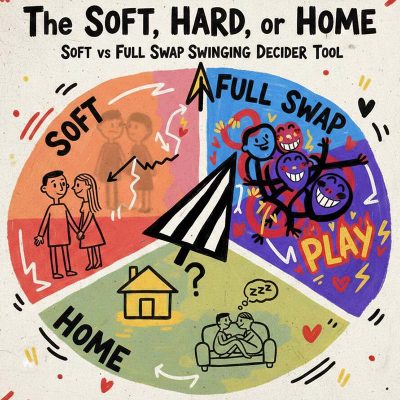
Don't let a "Soft Swap" night turn into a "Hard Feelings" morning.
Walking into the club with different expectations is a grenade waiting to explode. He thinks it’s a free-for-all; she thinks it’s just drinks and dancing. That silence in the car ride home? That’s the sound of a preventable disaster.
Stop guessing. Use this tool to sync your "sexual GPS" before you leave the driveway. Determine exactly how wild you’re getting tonight, so the only surprise is how much fun you have.

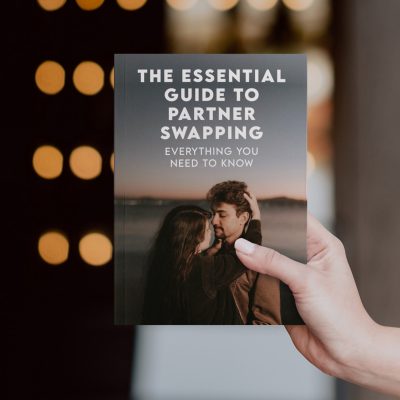
The fantasy of swinging is electric, but that cold sweat you feel when thinking about your partner with someone else? That’s your survival instinct warning you that your foundation is at stake. Most couples don’t fail because they lacked desire; they fail because they lacked a safety net. Ambiguity is where jealousy festers, and "winging it" is the fastest way to turn a dream into a nightmare of resentment and "what have we done?"
The Essential Guide to Swinging is your anxiety-proof roadmap through the chaos. Don't gamble your marriage on hope. Build a fortress of trust, master the repair chats, and ensure your exploration is defined by care, not a catastrophe
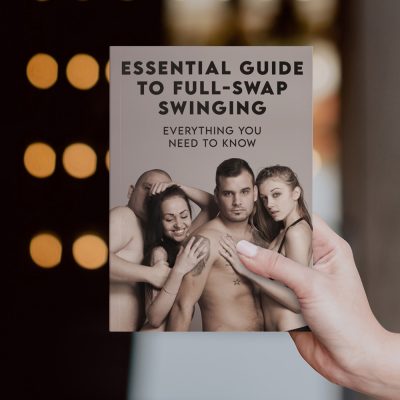
Full swap is the deep end. The rush is intense, but so is the risk of emotional wreckage. That tightening in your chest isn’t just nerves; it’s the fear that a "fun night" could become a permanent scar on your marriage. You can’t un-ring this bell, so never strike it without a plan.
The Essential Guide to Full Swap Swinging replaces reckless gambling with calculated discipline. From ironclad vetting to "emergency brake" scripts, we provide the safety architecture required to swap bodies without losing your minds. Don't just hope it goes well, engineer it
Gemini said
The fantasy is electric. The reality? It can be a grenade that blows up your marriage and your social circle. That tightening in your chest isn't just nerves. It is a warning that you are risking everything on a vibe. "Winging it" is the fastest way to turn a fun group chat into a toxic war zone.
The Essential Guide replaces the chaos with ironclad protocols. We provide the vetting tools, jealousy airlocks, and privacy scripts needed to swap bodies without losing your mind. Secure your safety first.
The fantasy of swinging is electric, but that cold sweat you feel when thinking about your partner with someone else? That’s your survival instinct warning you that your foundation is at stake. Most couples don’t fail because they lacked desire; they fail because they lacked a safety net. Ambiguity is where jealousy festers, and "winging it" is the fastest way to turn a dream into a nightmare of resentment and "what have we done?"
The Essential Guide to Swinging is your anxiety-proof roadmap through the chaos. Don't gamble your marriage on hope. Build a fortress of trust, master the repair chats, and ensure your exploration is defined by care, not a catastrophe
Full swap is the deep end. The rush is intense, but so is the risk of emotional wreckage. That tightening in your chest isn’t just nerves; it’s the fear that a "fun night" could become a permanent scar on your marriage. You can’t un-ring this bell, so never strike it without a plan.
The Essential Guide to Full Swap Swinging replaces reckless gambling with calculated discipline. From ironclad vetting to "emergency brake" scripts, we provide the safety architecture required to swap bodies without losing your minds. Don't just hope it goes well, engineer it
Preparing to approach another couple
Approaching another couple with a clear and respectful frame sets the stage for a positive conversation. You want to convey your interest without pressuring the other couple into a plan they are not comfortable with. A good approach invites curiosity and collaboration rather than a demand. Here is a practical method you can adapt.
Frame your intent simply
Start with a short statement that explains why you are reaching out and what you are hoping for. For example you might say we are exploring a potential experience with another couple and we would like to know if this is something you would be open to discussing. Keep it light and friendly.
Share your baseline boundaries
Offer a quick outline of your non negotiables. For instance we are comfortable with a single partner swap and light play with no intense power dynamics. We would want to know your boundaries as well so we can find a common ground.
Propose a safe discovery step
Suggest a non sexual or low risk step to start the conversation. A coffee meet up or a casual night out with the other couple can help you assess chemistry and comfort before any plans for play are made.
Suggest a shared check in plan
Propose a check in timeline. For example after the first meet up and after any subsequent play session you will all sit down for a debrief. This keeps the process honest and moving in a direction that works for everyone.
A practical consent framework for negotiating with another couple
Use a simple framework so everyone can follow along. The framework keeps conversations organized and avoids drift. It is not a rigid rule set it is a living document you can adjust as you learn more about each other. The framework includes four parts safety boundaries communication and consent checks.
- Safety Health practices physical boundaries and consent to touch and other activities. This part covers what is comfortable and what is off limits for each person.
- Boundaries Clear lines around what is allowed and what is not. Include soft limits and hard limits so everyone knows where they stand.
- Communication Agree on how you will talk about concerns and how you will check in during an experience. Decide who will speak up if someone feels uncomfortable.
- Consent checks Agree on how you will ask for consent during any encounter. Check ins should be explicit and respectful and consent can be paused or withdrawn at any moment.
Draft conversation skeleton you can customize
This skeleton is a practical guide you can copy and adapt. You will want to customize the language for your own voice and your own relationship dynamic.
Opening line example
Hi we are excited to talk with you about exploring a potential connection. We respect your time and your boundaries. We would love to understand what you are hoping for and share a bit about what we want as well.
Boundaries and boundaries discussion
We are comfortable with an introduction and social time then a light level of touch. We are not comfortable with anything that involves power dynamics or any play we have not discussed in detail beforehand. What do you both want to explore and where are your hard limits?
Safety and health checks
We would like to agree on a plan for protection and STI testing. We want to be clear that we want ongoing consent and pauses if anyone changes their mind mid plan.
Play style and tempo
Are we looking at one night or a longer connection? Do we want a soft swap only or are we open to more intense experiences? We should discuss how you want to structure time and location too.
Boundaries you might set in a swinging ENM scenario
Boundaries are personal and non negotiable. You should know yours and be ready to hear the other couple on theirs. Here are categories you can consider as you craft your own list.
- Activity boundaries Decide which activities are allowed. For example kissing may be permitted while certain forms of touch may be off limits.
- Emotional boundaries Decide how involved you want emotions to become. Do you want to avoid dating within the structuring group or is a friendly connection acceptable?
- Time boundaries Set limits on how long you will engage in any encounter and how often you will meet.
- Location boundaries Agree on where activities will take place. This could be a private home a hotel suite or a venue with consent from the host.
- Communication boundaries Determine how you will check in with each other and how you will report changes in feelings or concerns.
- Health boundaries Create a plan for protection and transmission risk reduction if applicable and discuss STI testing routines.
Common scenarios and scripts for negotiating with another couple
Practicing with scoped scripts helps you stay calm and clear. Here are real world style examples you can tailor. Use them as starting points not as final word.
Opening a conversation with a potential couple
Hi we are excited to meet you both and to see if there is a shared vibe. We are a couple who enjoys exploring respectful non monogamy with clear boundaries. We would like to understand your interests and see if a conversation about a potential experience makes sense for all of us.
What you might add after their response
We are open to meeting in a casual setting first and then if there is interest we can discuss boundaries and health practices. Are you comfortable with a light social meet up this week or would you prefer a video chat first?
Negotiating boundaries in a first talk
We are comfortable with light social interaction followed by possibly swapping partners in a low risk way. We want to keep the first experience stress free and focused on getting to know you. Are there any hard limits that you want to set so we do not cross anything you are not comfortable with?
The other couple replies and you respond
That makes sense. We would also like to avoid anything that involves rough play or any pressure to do more than what you are comfortable with. We can pause at any time and we will check in with each other frequently during any encounter.
Handling jealousy or discomfort
If one person feels unsettled during a conversation or after a first meet up you can say
We want to check in because we value everyone's comfort. If something feels off we can pause and revisit the boundaries. There is no rush to proceed if anyone feels unsure.
Agreeing to a first simple joint experience
We would like to start with a social night followed by a light introduction and perhaps a brief non intimate interaction like a friendly kiss. If everyone's comfortable we can plan a short play after we all talk again about what felt good and what did not.
Red flags and deal breakers you should not ignore
Negotiating with another couple is a joint effort. There are things that should stop a plan entirely. Here are clear red flags to watch for and how to address them.
- Pressure If anyone feels forced to agree move away from the idea. Consent must be freely given without coercion.
- Dishonesty If someone hides a hard limit or hides information about health or prior experiences this is a warning sign.
- Gaps in safety planning If a plan lacks a clear safety protocol including protection and consent checks that is a red flag.
- Tone shifts If the conversation becomes aggressive or defensive pause and reassess is wise.
- Unclear consent If you cannot describe a plan in concrete terms that is a sign to slow down or stop.
Practical check ins and communication tools
Clear practical tools keep consent alive and active. You can implement a few simple practices to stay aligned as you move forward.
- Shared calendar Use a calendar to schedule meet ups and to mark when you plan to debrief.
- Consent checklist Create a short list of do nots and do wants that all parties sign off on before any encounter.
- Group chat with boundaries Keep a dedicated chat thread for the agreement and for post encounter debriefs. Do not use this chat for casual day to day talk.
- Regular check ins Schedule a check in after the first meet up and again after the first encounter. Use a simple framework like what worked what did not and what to adjust.
Aftercare and ongoing consent maintenance
Aftercare is a concept borrowed from other relationship styles but it has a place in swinging ENM as well. It is about making sure everyone leaves the experience feeling safe and respected. Aftercare can be a quiet pause a debrief a hug or a shared coffee later. Debriefs can help you learn what works and what does not for your group. You may discover new soft limits or you may realize a new boundary has emerged that feels right for the future. Treat aftercare as an ongoing practice not a one time event.
Tips for aftercare
- Take notes about what felt good and what did not for each person involved.
- Share appreciation for the other couple and acknowledge the effort they put into the conversation.
- Discuss any changes to boundaries for future experiences and schedule a time to revisit plans.
Realistic scenarios you might face and how to handle them
In the swinging ENM space you can encounter a wide range of experiences. It helps to imagine a few likely situations so you can respond calmly and effectively. Here are some common scenarios and suggested responses.
- Situation One person in your group feels a strong emotional push and needs a pause. Response Acknowledge the feeling and pause the plan. Revisit the boundaries and decide how to proceed in a way that respects everyone involved.
- Situation A new partner asks for a boundary that you had not considered. Response Thank them for sharing. Turn the conversation into a collaborative boundary setting exercise and document the updated limits.
- Situation The other couple wants to proceed but you want more time to think. Response Express appreciation for their interest and propose a longer discovery phase with a low risk social meet up first.
- Situation A miscommunication leaves someone feeling exposed. Response Use a calm tone and ask for a quick pause to hear the concerns. Repair and move forward with clarified language.
Glossary of useful terms and acronyms
- ENM Ethical non monogamy a framework for relationships with consent and open communication.
- Swinging A form of ENM often involving couples who exchange partners for sexual experiences.
- Boundaries Limits that define what is acceptable and what is not for each person in a dynamic.
- Soft limit A situation a person is curious about but not sure about yet and can be revisited with caution.
- Hard limit A boundary that a person will not cross under any circumstance.
- Consent An ongoing yes that can be paused or withdrawn at any time during any encounter.
- Aftercare Time and actions after an encounter to ensure everyone feels safe and heard.
- Check in A planned moment to confirm everyone is still comfortable and on the same page.
Frequently asked questions
Below are some quick clarifications you may find helpful when you are navigating consent with another couple in swinging ENM.
What does consent look like in swinging ENM?
Consent in swinging ENM means that everyone involved agrees to specific activities and a specific plan and that all involved can revoke or pause their consent at any time. Consent is not a one time checkbox it is an ongoing process that requires listening and responsiveness.
How do you start a conversation with another couple about swinging?
Lead with warmth and respect. State your interest briefly and invite them to share their interests and boundaries. Propose a low risk first step such as a casual meet up to see if there is a good vibe and shared comfort.
What if someone changes their mind mid encounter?
Acknowledge the change openly and pause the activity. Ask if everyone is still comfortable and what needs to shift for continued participation. Do not pressure anyone to proceed.
How should we handle health and safety concerns?
Agree on a shared health protocol before any encounter. Decide on protection strategies and if needed set a testing routine. Ensure all parties are comfortable with the plan and can ask questions freely.
What should be included in a first boundary discussion?
Clarify what activities are on or off the table the level of emotional involvement you want and the length of time you are comfortable with. Decide how you will handle changes to the plan as things evolve.
How can we keep jealousy from derailing plans?
Prepare by acknowledging that jealousy is a common response and has a practical solution. Use check ins after each step and revisit the boundaries. Keep the lines of communication open and direct.
Is it okay to to talk about past experiences when meeting a new couple?
Yes but keep it balanced. Focus on your current goals and what you want to try now. If a past experience informs a boundary share that with care and with a clear link to how it helps you to be safer or more respectful now.
How long should an initial discovery phase last?
Give yourselves three to six months for a thoughtful discovery phase. You can adjust this as you learn more about each other. The aim is to build trust and establish a reliable pattern of consent and care.
These questions and answers are designed to give you quick clarity without turning a fun conversation into a lecture. When you are negotiating consent with another couple you want to stay curious patient and prepared to listen as much as you speak.
Don't let a "Soft Swap" night turn into a "Hard Feelings" morning.
Walking into the club with different expectations is a grenade waiting to explode. He thinks it’s a free-for-all; she thinks it’s just drinks and dancing. That silence in the car ride home? That’s the sound of a preventable disaster.
Stop guessing. Use this tool to sync your "sexual GPS" before you leave the driveway. Determine exactly how wild you’re getting tonight, so the only surprise is how much fun you have.
The fantasy of swinging is electric, but that cold sweat you feel when thinking about your partner with someone else? That’s your survival instinct warning you that your foundation is at stake. Most couples don’t fail because they lacked desire; they fail because they lacked a safety net. Ambiguity is where jealousy festers, and "winging it" is the fastest way to turn a dream into a nightmare of resentment and "what have we done?"
The Essential Guide to Swinging is your anxiety-proof roadmap through the chaos. Don't gamble your marriage on hope. Build a fortress of trust, master the repair chats, and ensure your exploration is defined by care, not a catastrophe
Full swap is the deep end. The rush is intense, but so is the risk of emotional wreckage. That tightening in your chest isn’t just nerves; it’s the fear that a "fun night" could become a permanent scar on your marriage. You can’t un-ring this bell, so never strike it without a plan.
The Essential Guide to Full Swap Swinging replaces reckless gambling with calculated discipline. From ironclad vetting to "emergency brake" scripts, we provide the safety architecture required to swap bodies without losing your minds. Don't just hope it goes well, engineer it
Gemini said
The fantasy is electric. The reality? It can be a grenade that blows up your marriage and your social circle. That tightening in your chest isn't just nerves. It is a warning that you are risking everything on a vibe. "Winging it" is the fastest way to turn a fun group chat into a toxic war zone.
The Essential Guide replaces the chaos with ironclad protocols. We provide the vetting tools, jealousy airlocks, and privacy scripts needed to swap bodies without losing your mind. Secure your safety first.
The fantasy of swinging is electric, but that cold sweat you feel when thinking about your partner with someone else? That’s your survival instinct warning you that your foundation is at stake. Most couples don’t fail because they lacked desire; they fail because they lacked a safety net. Ambiguity is where jealousy festers, and "winging it" is the fastest way to turn a dream into a nightmare of resentment and "what have we done?"
The Essential Guide to Swinging is your anxiety-proof roadmap through the chaos. Don't gamble your marriage on hope. Build a fortress of trust, master the repair chats, and ensure your exploration is defined by care, not a catastrophe
Full swap is the deep end. The rush is intense, but so is the risk of emotional wreckage. That tightening in your chest isn’t just nerves; it’s the fear that a "fun night" could become a permanent scar on your marriage. You can’t un-ring this bell, so never strike it without a plan.
The Essential Guide to Full Swap Swinging replaces reckless gambling with calculated discipline. From ironclad vetting to "emergency brake" scripts, we provide the safety architecture required to swap bodies without losing your minds. Don't just hope it goes well, engineer it
