
Performance Anxiety and Pressure

Let us be real for a moment. The idea of performance in any sexual scenario can feel like a test you did not study for. In the swinging ethical non monogamy space we add layers because emotions get involved fast and so do expectations. This guide breaks down what performance anxiety looks like in a swinging ENM dynamic and gives you tools to lower the heat without losing the adventure. We will explain terms as we go so you can follow along even if you are new to this world. Think of this as your friendly lab where we test ideas and learn from mistakes without the fear of embarrassment.
Quick Links to Useful Sections
- What performance anxiety means in a Swinging ENM dynamic
- Key terms you will see in this guide
- Why swinging ENM can create intense pressure
- The attention allocation problem
- The fear of letting the group down
- The mismatch between fantasy and reality
- How to talk about pressure before you even get near a scene
- Easy to use pre scene questions
- Concrete language you can use in the moment
- Practical strategies to reduce anxiety before and during play
- Create a pre scene ritual
- Use a clear consent and boundary framework
- Practice open ended check ins during the scene
- Grounding techniques for when nerves spike
- The power of a pause
- How to handle jealousy and build compersion in a swinging ENM setting
- Scenarios that test compersion
- Scripts and templates you can use before and after a scene
- Pre scene check in script
- During scene pause protocol
- Aftercare message template
- Real world scenarios that illustrate the dynamics of pressure and relief
- Scenario 1 First time with a new partner at a swing event
- Scenario 2 Transitioning from couple play to a group play
- Scenario 3 After a difficult encounter
- Daily practices to reduce performance pressure
- Common mistakes to avoid
- Tools and resources that can help
- Glossary of useful terms and acronyms
- Frequently asked questions
What performance anxiety means in a Swinging ENM dynamic
Performance anxiety is the fear that you will not perform well enough or that you will disappoint someone. In a swing scenario that fear can show up as worry about how you measure up to someone else or how your partner will react to what you do or do not do. It can also show up as nerves about making sure everyone feels included and respected. In ENM terms you are balancing honesty with kindness while also reading social cues in a fast moving environment. It is not a moral flaw. It is a signal that a boundary might need a quick check in. The good news is anxiety can be managed with good communication and practical steps.
In this guide we use several terms that commonly pop up in this space. We will explain them as we go so you are never left guessing.
Key terms you will see in this guide
- ENM Short for ethical non monogamy. This is a relationship style where partners consciously navigate more than one romantic or sexual connection with consent and open communication.
- Swinging A form of ENM focused on partner swapping or shared sexual experiences with other couples or single partners in a social setting.
- Compersion The feeling of joy from your partner s pleasure. It is the opposite of jealousy and is a powerful tool in swinging.
- Jealousy An emotion that can arise when you feel your partner is getting attention from someone else. It can be a signal to pause and reconnect or renegotiate boundaries.
- Boundaries Personal and mutual limits that shape what you are comfortable with in a scene or at an event.
- Consent Clear and enthusiastic agreement from all parties involved before any activity begins.
- Aftercare The care and conversation you engage in after a scene to help all people feel safe and respected.
Why swinging ENM can create intense pressure
Swinging happens in a space where many people are present and the pace can feel fast. You might be in a room with other couples or with new partners all in one night. The social energy is high and the expectations can be loud even if people say nothing. Here are some common pressure points that tend to show up and why they matter.
The attention allocation problem
In a traditional dating scene you might feel your partner s attention is split between you and one other person. In a swing setting attention can bounce to multiple people at once. It is easy to start worrying about who is getting more attention or who is enjoying a moment with your partner. The reality is attention can be fluid and does not have to be a competition. A pre agreed plan can turn this pressure into a playful challenge rather than a threat.
The fear of letting the group down
When you enter a swing space you may feel pressure to perform in a way that makes everyone happy. You might fear that your actions will disappoint your partner or the other partner. You are not responsible for the feelings of every person in the room. You are responsible for your own safety and consent and for ensuring your partner s boundaries are honored. Group energy can be exciting and also overwhelming. Grounding yourself and using simple scripts can help you stay centered.
The mismatch between fantasy and reality
Fantasy often includes glamorous ideas about bodies and can set a tall expectation bar. The real moment is different and sometimes messy or awkward. That is okay. You can embrace the imperfect moment and still have a positive experience. The goal is not perfection. The aim is mutual respect and shared pleasure.
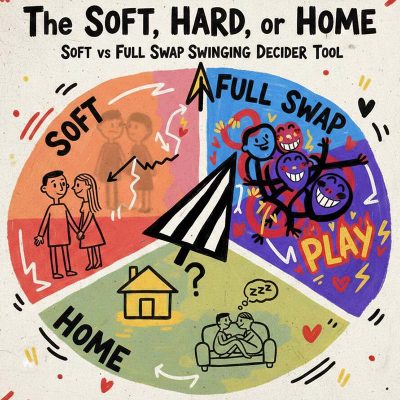
Don't let a "Soft Swap" night turn into a "Hard Feelings" morning.
Walking into the club with different expectations is a grenade waiting to explode. He thinks it’s a free-for-all; she thinks it’s just drinks and dancing. That silence in the car ride home? That’s the sound of a preventable disaster.
Stop guessing. Use this tool to sync your "sexual GPS" before you leave the driveway. Determine exactly how wild you’re getting tonight, so the only surprise is how much fun you have.
The fantasy of swinging is electric, but that cold sweat you feel when thinking about your partner with someone else? That’s your survival instinct warning you that your foundation is at stake. Most couples don’t fail because they lacked desire; they fail because they lacked a safety net. Ambiguity is where jealousy festers, and "winging it" is the fastest way to turn a dream into a nightmare of resentment and "what have we done?"
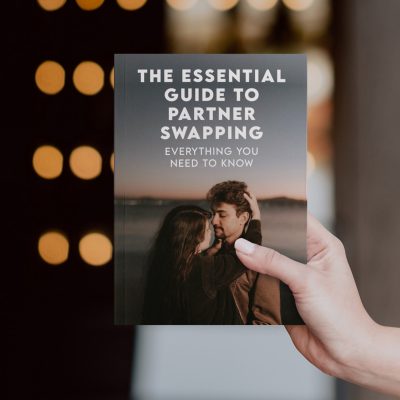
The Essential Guide to Swinging is your anxiety-proof roadmap through the chaos. Don't gamble your marriage on hope. Build a fortress of trust, master the repair chats, and ensure your exploration is defined by care, not a catastrophe
Full swap is the deep end. The rush is intense, but so is the risk of emotional wreckage. That tightening in your chest isn’t just nerves; it’s the fear that a "fun night" could become a permanent scar on your marriage. You can’t un-ring this bell, so never strike it without a plan.
The Essential Guide to Full Swap Swinging replaces reckless gambling with calculated discipline. From ironclad vetting to "emergency brake" scripts, we provide the safety architecture required to swap bodies without losing your minds. Don't just hope it goes well, engineer it
Gemini said
The fantasy is electric. The reality? It can be a grenade that blows up your marriage and your social circle. That tightening in your chest isn't just nerves. It is a warning that you are risking everything on a vibe. "Winging it" is the fastest way to turn a fun group chat into a toxic war zone.
The Essential Guide replaces the chaos with ironclad protocols. We provide the vetting tools, jealousy airlocks, and privacy scripts needed to swap bodies without losing your mind. Secure your safety first.
The fantasy of swinging is electric, but that cold sweat you feel when thinking about your partner with someone else? That’s your survival instinct warning you that your foundation is at stake. Most couples don’t fail because they lacked desire; they fail because they lacked a safety net. Ambiguity is where jealousy festers, and "winging it" is the fastest way to turn a dream into a nightmare of resentment and "what have we done?"
The Essential Guide to Swinging is your anxiety-proof roadmap through the chaos. Don't gamble your marriage on hope. Build a fortress of trust, master the repair chats, and ensure your exploration is defined by care, not a catastrophe
Full swap is the deep end. The rush is intense, but so is the risk of emotional wreckage. That tightening in your chest isn’t just nerves; it’s the fear that a "fun night" could become a permanent scar on your marriage. You can’t un-ring this bell, so never strike it without a plan.
The Essential Guide to Full Swap Swinging replaces reckless gambling with calculated discipline. From ironclad vetting to "emergency brake" scripts, we provide the safety architecture required to swap bodies without losing your minds. Don't just hope it goes well, engineer it
How to talk about pressure before you even get near a scene
Pre scene communication is the best medicine for anxiety. It creates a safe space for every person to share what they want and what they fear. It also helps you identify any non negotiables or red flags before you start. A good pre scene talk can happen in steps and can be done in writing or in person depending on what feels safest for you.
Easy to use pre scene questions
- What am I comfortable exploring today and what is absolutely off the table?
- Which parts of the night feel like a green light and which parts require a pause?
- How do we handle a moment when one person feels left out or overwhelmed?
- Do we have a signal or safe word to pause or stop and what happens after a pause?
- What kind of aftercare feels best for you after an encounter?
Concrete language you can use in the moment
- I want to pause for a moment to check in with you. Can we take two minutes?
- I feel a little overwhelmed. I would like to slow down and breathe for a moment.
- Let us switch to a different activity or go to a quieter space for a bit.
- Thank you for checking in. I feel good to continue when you re ready.
Practical strategies to reduce anxiety before and during play
These strategies are practical and simple. They are designed to fit a busy life and a high energy scene. They work best when you adapt them to your style and your partner s style. The core idea is to reduce uncertainty and to create a container where emotions can be felt without fear of judgment.
Create a pre scene ritual
Develop a small ritual that helps you arrive in the moment. This could be a five minute breathing exercise a quick body scan or a ritualized group hug. The ritual should be easy to repeat and should feel calming rather than ceremonial. The key is consistency. When you do it every time anxiety tends to drop because your brain recognizes the cue that it is time to shift gears.
Use a clear consent and boundary framework
Agree on a framework that works for all parties. A simple framework can be a list of activities with yes no and maybe options. Every person can mark what they want to try and what they do not want to attempt. Having this map reduces pressure because people are less likely to push beyond what was agreed. It also creates a sense of safety and respect.
Practice open ended check ins during the scene
Check ins are not accusations they are care. A quick check in can be a question like how are you feeling right now or would you like to continue. If the answer changes the plan can change. Check ins make it easy to adjust on the fly and keep everyone feeling respected.
Grounding techniques for when nerves spike
- Feel your feet on the floor and notice five points of contact with the ground for a few breaths.
- Describe five things you can see hear or feel in the moment.
- Count to ten slowly while breathing in for four counts and out for six counts.
The power of a pause
A pause is not a failure it is a choice. If you feel anxiety rising you can say I need a pause and change the pace or quiet the environment for a moment. A pause supports safety and comfort and it is a sign of maturity not weakness.
How to handle jealousy and build compersion in a swinging ENM setting
Jealousy is normal and it can be turned into a signal for connection. Compersion is a powerful antidote. It is possible to feel happy for your partner s pleasure even when you are not the primary focus. You can cultivate compersion through acknowledging the other person s feelings and by celebrating your partner s good moments together. Build your own emotional resilience by naming what you need and by seeking support from your partner or a trusted friend when you need it.
Scenarios that test compersion
- Your partner says a new person made them feel seen and cared for. You acknowledge the moment and talk about how you can also have moments that feel good in another way.
- You notice your partner enjoying a fresh dynamic with someone else. You choose to celebrate their joy and remind yourself of your own value in the relationship.
Scripts and templates you can use before and after a scene
Pre scene check in script
Hi babe I want to check in with you about the plan for tonight. I feel a little anxious about performance and I want to make sure we both feel safe and respected. Here is where I stand on boundaries and yes and no options. I am comfortable with these activities and I would prefer to avoid these. If we start something and one of us wants to pause we will take a short break and reassess. I love you and I want us to have a good time together.
During scene pause protocol
If anyone needs to pause we will use a simple phrase like pause for a moment. We will step aside to a quiet space and take a breath. After a couple of minutes we will decide whether to continue or shift to a different activity. We will check in with the group when we are ready to resume.
Aftercare message template
Just a quick note after tonight s scene to say thank you for a respectful time together. I felt a mix of nerves and excitement and we did really well at staying communicative. I would love to hear how you felt about it and what would make the next time even better for you. Much love from [your name].
Real world scenarios that illustrate the dynamics of pressure and relief
Scenario 1 First time with a new partner at a swing event
The couple arrives with a plan and a boundary map. They know their signals and they have a pre scene check in. The new partner is warm and respectful. There is a moment of nerves as the room fills with energy. They pause for a breath and share a quick sentiment about how excited they are to explore together. The moment passes and the scene flows with lighter energy than expected. They discover a shared rhythm and leave space for each person to voice what felt good and what did not. They end the night in a calm aftercare conversation that confirms a desire to see each other again.
Scenario 2 Transitioning from couple play to a group play
During a night with a couple there is a shift toward inviting a third. The group dynamic brings new energy and a chance to test boundaries. The couple uses a boundary checklist and a yes no maybe map. The new partner asks about limits in a direct respectful way. Everyone agrees to a pause if someone feels uncertain. The transition happens smoothly with regular check ins and a short aftercare break after the first round to recalibrate everyone s comfort. The experience ends with a positive mutual vibe and a plan for future meetups if all parties want more.
Scenario 3 After a difficult encounter
One partner feels left out or overwhelmed after a scene. They use a pause mechanism and step away to ground themselves. The other partner checks in with a gentle voice and validates the feeling. The group stays supportive and gives space while ensuring no one is shamed for their emotions. They talk through what went wrong and adjust boundaries or timing for the next outing. This reset helps preserve trust and keeps the relationship strong.
Daily practices to reduce performance pressure
Reducing anxiety is not only about scenes it is about everyday relationship health. A few daily practices can set you up for more ease when you head into a swing night. These habits help you feel valued and capable regardless of what happens in a room full of people.
- Keep a bedtime wind down ritual to improve sleep quality which reduces stress.
- Maintain a gratitude journal focusing on what you appreciate about your partner and your shared experiences.
- Schedule regular check ins that are not about sex but about connection trust and future plans.
- Build a support network of friends or therapists who understand you and your relationship style.
Common mistakes to avoid
- Assuming that comfort will appear instantly in every scene instead of building it gradually over time.
- Trying to perform for others rather than listening to your own needs and your partner s needs.
- Using alcohol or substances to dull nerves instead of facing them with healthy strategies.
- Ignoring aftercare after a scene which can leave people unsettled or emotional.
Tools and resources that can help
Tools come in many forms and you should pick what feels right for you. Here are some ideas to consider adding to your wedge of resources.
- A printed boundary map that all players can view during a scene.
- A simple cue card system to signal pause or shift in tone without disrupting the flow.
- Access to a trusted friend or partner who can help manage the aftercare process if needed.
- Professional counseling or couples therapy with a therapist who understands ENM dynamics.
Glossary of useful terms and acronyms
- ENM Ethical non monogamy a relationship style built on consent clear communication and negotiated boundaries.
- Swinging A form of ENM involving sexual experiences with other couples or single partners in social settings.
- Compersion Feeling happy for your partner s pleasure and connection with others.
- Jealousy An emotion that can signal a need to pause reflect and renegotiate boundaries.
- Boundaries Personal limits that guide what is okay and what is not in a given situation.
- Consent A clear enthusiastic yes from all involved before any activity begins.
- Aftercare The care and conversation that happens after a scene to support everyone s emotional wellbeing.
Frequently asked questions
What is the best way to start talking about performance anxiety with my partner
Begin with honesty and reassurance. Say I am feeling a bit anxious about tonight and I want to talk through what would make this feel safer and more enjoyable for both of us. Then share a specific boundary or request and invite their input. Keep the tone collaborative not blaming.
How do I know if I am overthinking
Overthinking often shows up as persistent mental chatter about possible worst case outcomes. If you notice that your thoughts hammer away even after you have set boundaries and discussed plans it may be time to pause sharpen the plan or seek support from a trusted partner or therapist.
What if my partner wants something I am not comfortable with
That is a red flag that should be addressed immediately. It is okay to say I cannot do that I am not comfortable with that and then offer alternatives that align with your boundaries. No one should persuade you into something you do not want to do.
How can I help a partner who struggles with performance anxiety
Offer reassurance focus on emotional connection not just the act and help them feel seen. Use affirming language and avoid shaming or blaming. Help them rehearse the pre scene plan and remind them of the safety nets you both agreed on. If needed encourage them to pause and take a breath or stop for the night with dignity.
Is there a role for alcohol in managing nerves during a swing night
Using alcohol to calm nerves can backfire. It often increases risk taking and reduces judgment. If you choose to drink keep it moderate and never rely on it to manage anxiety. Prefer strategies that keep you in control and connected.
What is the difference between jealousy and compersion in this context
Jealousy is a signal that you feel threatened or left out. Compersion is feeling glad for your partner because they are enjoying themselves. It is possible to move from jealousy toward compersion with awareness communication and time. It is a skill you can cultivate with practice.
How long does it take to feel comfortable in swing settings
Every person and couple moves at their own pace. Some people feel at ease after a few experiences others need several months. Consistency clear communication and gentle progress help you reach comfort faster.
Don't let a "Soft Swap" night turn into a "Hard Feelings" morning.
Walking into the club with different expectations is a grenade waiting to explode. He thinks it’s a free-for-all; she thinks it’s just drinks and dancing. That silence in the car ride home? That’s the sound of a preventable disaster.
Stop guessing. Use this tool to sync your "sexual GPS" before you leave the driveway. Determine exactly how wild you’re getting tonight, so the only surprise is how much fun you have.
The fantasy of swinging is electric, but that cold sweat you feel when thinking about your partner with someone else? That’s your survival instinct warning you that your foundation is at stake. Most couples don’t fail because they lacked desire; they fail because they lacked a safety net. Ambiguity is where jealousy festers, and "winging it" is the fastest way to turn a dream into a nightmare of resentment and "what have we done?"
The Essential Guide to Swinging is your anxiety-proof roadmap through the chaos. Don't gamble your marriage on hope. Build a fortress of trust, master the repair chats, and ensure your exploration is defined by care, not a catastrophe
Full swap is the deep end. The rush is intense, but so is the risk of emotional wreckage. That tightening in your chest isn’t just nerves; it’s the fear that a "fun night" could become a permanent scar on your marriage. You can’t un-ring this bell, so never strike it without a plan.
The Essential Guide to Full Swap Swinging replaces reckless gambling with calculated discipline. From ironclad vetting to "emergency brake" scripts, we provide the safety architecture required to swap bodies without losing your minds. Don't just hope it goes well, engineer it
Gemini said
The fantasy is electric. The reality? It can be a grenade that blows up your marriage and your social circle. That tightening in your chest isn't just nerves. It is a warning that you are risking everything on a vibe. "Winging it" is the fastest way to turn a fun group chat into a toxic war zone.
The Essential Guide replaces the chaos with ironclad protocols. We provide the vetting tools, jealousy airlocks, and privacy scripts needed to swap bodies without losing your mind. Secure your safety first.
The fantasy of swinging is electric, but that cold sweat you feel when thinking about your partner with someone else? That’s your survival instinct warning you that your foundation is at stake. Most couples don’t fail because they lacked desire; they fail because they lacked a safety net. Ambiguity is where jealousy festers, and "winging it" is the fastest way to turn a dream into a nightmare of resentment and "what have we done?"
The Essential Guide to Swinging is your anxiety-proof roadmap through the chaos. Don't gamble your marriage on hope. Build a fortress of trust, master the repair chats, and ensure your exploration is defined by care, not a catastrophe
Full swap is the deep end. The rush is intense, but so is the risk of emotional wreckage. That tightening in your chest isn’t just nerves; it’s the fear that a "fun night" could become a permanent scar on your marriage. You can’t un-ring this bell, so never strike it without a plan.
The Essential Guide to Full Swap Swinging replaces reckless gambling with calculated discipline. From ironclad vetting to "emergency brake" scripts, we provide the safety architecture required to swap bodies without losing your minds. Don't just hope it goes well, engineer it
