
Race and Fetishization Concerns in Swinging

Welcome to a down to earth guide about race dynamics and fetishization in the swinging world. We are talking about ethical non monogamy in real time with real people not flowery theoretical theories. This article is written for anyone navigating swinging spaces who wants to build safer, more respectful, and more inclusive experiences. We will unpack terms we will look at common pitfalls and we will share practical strategies you can use at parties online spaces and in private play. We will keep the tone clear and practical because that is how we roll in the Monogamy Experiment family. We will call out patterns that drain energy from relationships and we will offer concrete tools to set boundaries address issues and grow as a community.
Quick Links to Useful Sections
- Why this topic matters in swinging ENM
- Key terms and acronyms you might see
- Ethical non monogamy ENM
- Swinging
- BIPOC and POC
- Fetishization and exoticization
- Microaggressions
- Privilege
- Cultural appreciation versus appropriation
- How race can appear in swinging spaces
- Attraction versus fetishization
- Race as a featured trait in play lists and conversations
- Stereotypes and power dynamics
- Colorism and intra group dynamics
- Language and microaggressions
- Realistic scenarios and how to handle them
- Scenario one A misread compliment that lands wrong
- Scenario two A couple of partners pressuring for a race based dynamic
- Scenario three A host notices a repeating pattern of fetishized comments
- Scenario four A new participant enters and asks for sexual play that centers race or ethnicity as the main feature
- Boundaries and consent practices you can use in swinging spaces
- Define boundaries before you enter spaces
- Consent checks during play
- Respectful communication protocols
- Escalation paths for conflict
- Hosting and event etiquette for inclusive spaces
- Create inclusive ground rules
- Moderation and interventions
- Language and signage
- Respecting private spaces and cultural contexts
- Self reflection and growth as an essential practice
- Journaling prompts
- Check ins with partners
- Learning from the community
- Practical steps for individuals and organizers
- Individual steps
- Organizer and host steps
- Resources and communities you can explore
- Frequently asked questions
- Putting it into practice
Why this topic matters in swinging ENM
Ethical non monogamy hinges on consent communication and respect. When race enters the picture it can add layers of complexity. Attraction is not something anyone can control entirely. What matters is how we respond to attraction how we check our own biases and how we show up for others in a way that keeps everyone safe and respected. When race becomes a focal point in a sexual dynamic a simple first step is to name what is happening openly. But naming is not a one time act. It is an ongoing practice of listening learning and adjusting. In swinging spaces there are unique opportunities to celebrate diversity and to challenge harmful patterns at the same time. The result we want is shared pleasure that does not rely on stereotypes or exoticized fantasies that reduce people to a single trait or a caricature.
Key terms and acronyms you might see
This section explains terms so readers can understand what is being discussed. If you see a term you do not know think of it as a small signpost pointing toward a healthier approach rather than a label that stops the conversation.
Ethical non monogamy ENM
ENM stands for Ethical non monogamy. It describes relationship styles that embrace more than one ongoing sexual or romantic connection with consent and openness from all involved. Swinging is one form of ENM where couples or groups engage in sexual activities with others outside their primary relationship with clear boundaries and agreed rules.
Swinging
Swinging is a form of ENM that typically focuses on partnered sex with other couples or singles in a group setting. The goal is shared pleasure with consent and communication as guiding principles. Swinging spaces can include private events parties online communities and social circles. The core idea is mutual enjoyment with respect for everyone involved.
BIPOC and POC
BIPOC stands for Black Indigenous and People Of Color. POC means people of color. You may see these terms used to describe experiences or communities that have historically faced different challenges and systemic barriers. In swinging spaces as in life a person s race can influence how they experience attraction respect boundaries and how they are treated by others.
Fetishization and exoticization
Fetishization happens when someone is reduced to one or two features such as race or ethnicity and treated as a stereotype or fantasy rather than as a whole person. Exoticization is a related pattern where a person is valued mainly for being different or other than the majority. Both patterns can be harmful and dehumanizing even when it is meant as a compliment.
Microaggressions
Microaggressions are everyday remarks or actions that may seem small but can feel hurtful or demeaning. They can be based on race gender or other identities. In swinging spaces microaggressions can show up as backhanded compliments outdated tropes and assumptions about someone s sexual preferences or availability based on race.
Privilege
Privilege describes advantages that come from a person s social position. In the swing world privilege can show up as access to spaces events or partners that feel easier to access for some groups than for others. Acknowledging privilege is not about guilt it is about responsibility and accountability.
Cultural appreciation versus appropriation
Cultural appreciation means honoring the ideas art music or practices of another culture with consent and respect. Cultural appropriation happens when elements from a culture are borrowed in a way that strips meaning or uses them for personal gain without permission or context. In swinging spaces this distinction matters because it influences how participants talk about race culture and identity.
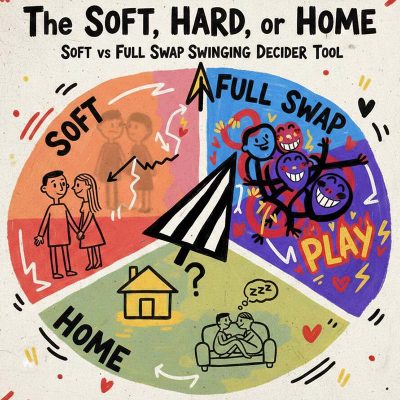
Don't let a "Soft Swap" night turn into a "Hard Feelings" morning.
Walking into the club with different expectations is a grenade waiting to explode. He thinks it’s a free-for-all; she thinks it’s just drinks and dancing. That silence in the car ride home? That’s the sound of a preventable disaster.
Stop guessing. Use this tool to sync your "sexual GPS" before you leave the driveway. Determine exactly how wild you’re getting tonight, so the only surprise is how much fun you have.

The fantasy of swinging is electric, but that cold sweat you feel when thinking about your partner with someone else? That’s your survival instinct warning you that your foundation is at stake. Most couples don’t fail because they lacked desire; they fail because they lacked a safety net. Ambiguity is where jealousy festers, and "winging it" is the fastest way to turn a dream into a nightmare of resentment and "what have we done?"
The Essential Guide to Swinging is your anxiety-proof roadmap through the chaos. Don't gamble your marriage on hope. Build a fortress of trust, master the repair chats, and ensure your exploration is defined by care, not a catastrophe
Full swap is the deep end. The rush is intense, but so is the risk of emotional wreckage. That tightening in your chest isn’t just nerves; it’s the fear that a "fun night" could become a permanent scar on your marriage. You can’t un-ring this bell, so never strike it without a plan.
The Essential Guide to Full Swap Swinging replaces reckless gambling with calculated discipline. From ironclad vetting to "emergency brake" scripts, we provide the safety architecture required to swap bodies without losing your minds. Don't just hope it goes well, engineer it
Gemini said
The fantasy is electric. The reality? It can be a grenade that blows up your marriage and your social circle. That tightening in your chest isn't just nerves. It is a warning that you are risking everything on a vibe. "Winging it" is the fastest way to turn a fun group chat into a toxic war zone.
The Essential Guide replaces the chaos with ironclad protocols. We provide the vetting tools, jealousy airlocks, and privacy scripts needed to swap bodies without losing your mind. Secure your safety first.
The fantasy of swinging is electric, but that cold sweat you feel when thinking about your partner with someone else? That’s your survival instinct warning you that your foundation is at stake. Most couples don’t fail because they lacked desire; they fail because they lacked a safety net. Ambiguity is where jealousy festers, and "winging it" is the fastest way to turn a dream into a nightmare of resentment and "what have we done?"
The Essential Guide to Swinging is your anxiety-proof roadmap through the chaos. Don't gamble your marriage on hope. Build a fortress of trust, master the repair chats, and ensure your exploration is defined by care, not a catastrophe
Full swap is the deep end. The rush is intense, but so is the risk of emotional wreckage. That tightening in your chest isn’t just nerves; it’s the fear that a "fun night" could become a permanent scar on your marriage. You can’t un-ring this bell, so never strike it without a plan.
The Essential Guide to Full Swap Swinging replaces reckless gambling with calculated discipline. From ironclad vetting to "emergency brake" scripts, we provide the safety architecture required to swap bodies without losing your minds. Don't just hope it goes well, engineer it
How race can appear in swinging spaces
Race presents in many subtle and not so subtle ways. The goal is not to pretend race does not exist. The goal is to acknowledge race honestly and to build norms that protect people from harm while still allowing authentic attraction and connection. Patterns to watch for include focusing too much on a single racial trait as a defining feature of a partner chasing certain racialized fantasies that rely on stereotypes and failing to call out disrespectful or dehumanizing language.
Attraction versus fetishization
Attraction is a personal response that can be shaped by many factors including media experiences personal history and social context. Fetishization is when attraction becomes an objectified fantasy that reduces a person to a category. The line can be subtle. A healthy approach is to ask questions about what a partner wants listens to how they want to be treated and respects boundaries that may be linked to race or identity.
Race as a featured trait in play lists and conversations
Conversations about race can be non intrusive and meaningful or they can feel like a wild card pulled from a game. For example someone might say I have always wanted to play with someone from X culture because I find that culture fascinating. That sentence can be a red flag or a starting point for a respectful dialogue depending on tone context and consent. When race becomes a dominant feature in play lists or in the way people describe preferences the risk of objectification increases. The best practice is to keep language focused on consent comfort and shared boundaries rather than on racial stereotypes or exoticized ideas.
Stereotypes and power dynamics
In any sexual dynamic power dynamics matter. Race can intersect with power in complex ways. People with more social capital may control spaces and access. That dynamic can influence how comfortable someone feels when they say no or when they want to pause. Acknowledging power dynamics and creating processes that enable people to opt out safely is essential for healthier swinging communities.
Colorism and intra group dynamics
Colorism refers to bias favoring lighter skin tones within a racial or ethnic group. In swinging spaces colorism can influence dating choices or lead to tension among participants. Being aware of colorism means recognizing it as a real issue and actively countering it through inclusive behavior and explicit consent that centers the person in front of any stereotypes.
Language and microaggressions
Words matter. Some phrases might be well intentioned but can land as dismissive or exoticizing. The same set of words can carry different weight depending on who hears them. A practical approach is to pause before making a comment and ask whether your language might be reinforcing a stereotype or making someone feel othered. If you hear a microaggression in a group setting you can name it calmly and suggest a different phrasing that respects the person you are speaking to.
Realistic scenarios and how to handle them
Below are some realistic scenes that might happen in swinging spaces. Each scenario includes a quick breakdown of the dynamics what could be happening and how to respond in a respectful thoughtful way. The goal is to give you ready to use tools rather than abstract theory.
Scenario one A misread compliment that lands wrong
In a party a couple meets a person they find attractive and the backup remark goes something like You are so exotic I have never played with someone from your culture before. The comment makes the person smile but you can tell it lands awkwardly for others in the room. What to do next is pause ask a clarifying question about what the person means and redirect the conversation toward consent and shared boundaries. If the person seems uncomfortable the best move is to shift away gracefully and perhaps offer to reframe the conversation around mutual interests rather than identity alone. If the moment continues to feel off you can step back and check in with your partner about how to proceed in a way that respects everyone involved.
Scenario two A couple of partners pressuring for a race based dynamic
In a collaboration setting a person of color may sense pressure from multiple people to engage in a scenario that emphasizes racial identity as a sexual prop. In this case consent is paramount. The person should feel empowered to pause the conversation and set a clear boundary that race will not be used as a sexual prop or narrative without explicit consent. The group can practice a protocol during the event that any request that involves race must be articulated in a respectful way and accepted by every participant before it can be considered. The boundary should be explicit and revisited if anyone feels uncomfortable.
Scenario three A host notices a repeating pattern of fetishized comments
At a private event a host overhears several comments that reduce participants to stereotypes only. The host has a responsibility to address the issue quickly and without shaming anyone. A good approach is to pause the activity impose a brief reminder of the house rules and invite participants to share any concerns. Then offer a moment for private conversations with the host or a designated moderator. This keeps the space safe and signals that disrespectful behavior will not be tolerated while still preserving people's agency to participate or withdraw as they choose.
Scenario four A new participant enters and asks for sexual play that centers race or ethnicity as the main feature
New participants may come in with ideas they think are exciting. The better path is to invite a boundary honest conversation. The facilitator should steer the discussion toward consent and mutual respect. If a request relies on stereotypes or reduces someone s identity to a single trait treat it as a red flag and decline clearly. Offer alternative ways to explore attraction that do not rely on race as the primary driver. Keep the door open for future conversations that honor everyone's humanity and dignity.
Boundaries and consent practices you can use in swinging spaces
Clear boundaries and consent checks form the backbone of healthy swinging experiences. Race related conversations require extra care because they can quickly turn into a source of hurt if not handled well. Here are practical tools you can apply to reduce risk and improve understanding.
Define boundaries before you enter spaces
Have a preplay conversation with your partner and anyone else involved about what is and is not allowed. Include race related topics as part of the boundary list. For example a boundary might state that no one will be described as a stereotype or treated as an object because of race. Boundaries should be specific and revisited as needed rather than assumed part of the vibe.
Consent checks during play
Consent is an ongoing process. Check in with partners during interaction not just at the start. A simple check in can be as easy as asking Are you comfortable right now would you like to continue Do you want to pause. Make space for a no or a pause at any moment and honor it without judgment. If someone uses a subtle signal or safeword treat it as a real boundary and respond with respect and care.
Respectful communication protocols
Use language that respects identity and avoids essentializing phrases like everyone from X culture loves Y or all people who share Z trait do A. Instead talk about personal preferences specific boundaries and consent that applies to each person involved. If a comment lands as disrespectful a direct but calm response can be It sounds like that comment is uncomfortable for me and I want to make sure we treat everyone with respect. If someone persists the best course is to disengage and remove yourself from the situation.
Escalation paths for conflict
At bigger events designate a consent officer or moderator who can step in when tensions rise. Create a clear path for reporting concerns either privately or through a written form. People should feel safe to raise concerns without fear of retaliation or being labeled as difficult. A quick debrief after an event can help reinforce what worked well and where you can improve.
Hosting and event etiquette for inclusive spaces
Hosts set the tone. Your style matters. The following guidelines help you create an atmosphere where race concerns can be discussed openly and respectfully while still keeping the focus on consent and mutual enjoyment.
Create inclusive ground rules
Ground rules should be visible and understood by all participants. They should cover consent boundaries safety expectations and respectful language. Ground rules can include a prohibition on derogatory language assumptions or jokes rooted in stereotypes. They should also outline how to handle a boundary being crossed and what steps to take if someone feels uncomfortable.
Moderation and interventions
A well run event includes a moderator or host who can recognize problematic patterns early. The moderator should intervene in a calm firm manner when necessary. They should provide an opportunity for cooling off and re inviting participants to resume only when everyone is ready and consenting to continue. The ability to pause a scene or withdraw is essential for participants who feel unsettled.
Language and signage
Use inclusive language in all communications from invitations to on site signage. Avoid stereotypes and use person centered terms. Clear signage about consent expectations and reporting channels helps people know how to react if something feels off. Visuals and written guidelines should reflect the diversity of participants and ensure that no group is singled out as the default or the norm.
Respecting private spaces and cultural contexts
Be mindful that cultural expressions are meaningful to many people. Refrain from trivializing or appropriating cultural elements in ways that reduce participants to their race or heritage. If a participant introduces a cultural practice in play make sure there is mutual understanding and consent and that the practice is respectfully explained and optional.
Self reflection and growth as an essential practice
Healthy swinging communities require ongoing self reflection. Here are practices that can help you grow beyond reflexive reactions and move toward deeper understanding.
Journaling prompts
Jot down observations after events about what felt safe what felt risky and what you might do differently next time. Note any moments when you felt unsure or when you witnessed a comment you found troubling. Use these notes to inform future conversations with partners hosts and community members.
Check ins with partners
Regular check ins with your primary partner or with the group helps you stay aligned. Use these moments to adjust boundaries update expectations and discuss what you learned about race dynamics since the last event. Check ins should be honest supportive and non punitive.
Learning from the community
Look for resources that address race dynamics within ENM spaces be it books podcasts or community led workshops. You do not have to reinvent the wheel alone. Engage with people who have experience addressing these issues and who can offer practical language scripts and strategies that fit your circle.
Practical steps for individuals and organizers
If you are an individual exploring swinging spaces here are concrete steps you can take today to reduce harm and increase inclusion. If you are an organizer or host use these as a checklist to design events that are welcoming to all backgrounds and identities.
Individual steps
- Practice self awareness. Reflect on your own beliefs biases and desires and check how they influence your behavior.
- Pause before commenting on race or ethnicity and ask whether your words respect the person in front of you.
- Voice concerns when you hear something that makes you uncomfortable and offer a different framing that respects everyone involved.
- Seek consent not just for sexual activity but for topics that touch race and culture where relevant.
- Invite feedback from partners and peers about how you show up and what you can improve.
Organizer and host steps
- Design spaces with clear consent and safety protocols and ensure they apply to all participants equally.
- Provide training or resource materials on inclusive language respectful behavior and how to intervene when needed.
- Encourage people to report concerns and respond promptly with care and privacy in mind.
- Use diverse representation in promotional materials and ensure that events welcome participants from different backgrounds.
Resources and communities you can explore
Exploring outside voices and learning from lived experiences helps you grow as a participant a partner and a host. Look for varied perspectives from educators activists therapists and community organizers who work with ethical non monogamy and with conversations about race and sexuality. Books and articles that tackle consent intersectionality and respectful play can be useful. Podcasts and webinars led by people who live these dynamics day to day can also offer practical language and scenarios you can imitate or adapt to your own life.
Frequently asked questions
Below you will find a set of common questions that people ask when they start exploring race dynamics within swinging spaces. If you have a question that is not listed here you can reach out through the resource channels on this page or within your community circles.
What is meant by fetishization in swinging
Fetishization in swinging means focusing on race or ethnicity as the primary or sole driver of attraction and turning a person into a stereotype or fantasy rather than seeing them as an individual with their own unique preferences and boundaries. It can show up in comments actions or expectations that reduce someone to a racial category rather than respecting the person as a whole.
How can I tell if I am fetishizing someone
Look for patterns in your thinking and behavior. Do you repeatedly seek out people for a single racial trait is every partner defined by race rather than by their personality and consent Do you talk about someone using stereotypes even if you think you are being flattering If the answer is yes you may be fetishizing. The antidotes are to slow down ask questions about consent and acknowledge the person as a whole person not a racial category.
What should I do if I witness a party or group turning race into a sexual script
Address it calmly and privately if you feel safe doing so. If you do not feel safe you can step away from the situation and report your concerns to the host or organizer. It can be helpful to prepare a brief non accusatory statement that highlights the impact and invites a better approach rather than attacking a person personally.
What is the difference between preference and prejudice in this context
A preference is a personal attraction that can be expressed with consent and without reducing people to stereotypes. Prejudice involves harmful generalizations about a group and can lead to discriminatory or dehumanizing behavior. When in doubt ask for consent name what you are seeking and listen to how your words affect others.
How can hosts create safer spaces for participants of diverse backgrounds
Hosts can set explicit guidelines on respectful language ensure all voices are welcome and provide channels for reporting concerns use inclusive imagery and ensure events are accessible to people with different cultural experiences. Training and ongoing dialogue with community members can foster more effective policies and better understanding among participants.
Is it okay to talk about race in a swinging context
Yes it can be appropriate when it is necessary to discuss consent safety or respect for boundaries. The key is to talk about race respectfully as a real aspect of people s identities not as a plot device or a caricature. Focus conversations on how race impacts the experience for individuals and groups and how you can ensure deep respect and consent in every interaction.
How can online dating apps help or hinder this work
Apps can be a useful space to set expectations clearly and to practice respectful language. They can also amplify stereotypes if you are not careful. Start with explicit consent oriented language and be mindful of how you describe race in your profile. Use conversation prompts that invite respectful dialogue about boundaries and preferences rather than making assumptions based on race alone.
Putting it into practice
We want you to leave this guide with tangible steps you can apply right away. Start with a personal pledge to treat people with dignity. Commit to calling out harmful language when you hear it and to supporting colleagues partners and community members who speak up about race related dynamics. Build a practice of ongoing education and reflection. The goal is not to police desire but to cultivate a space where everyone can explore together with consent safety and mutual respect.
