
Red Flags When Vetting Potential Partners


Welcome to a practical guide built for anyone navigating the world of swinging in an ethical non monogamy or ENM setup. We are talking about real life dating where you want clear consent, open communication, and respect for each person involved. The goal here is not to scare you away but to arm you with the awareness and tools you need to spot red flags early. A red flag is a signal that something about the dynamic does not align with your values or your safety plan. When you spot these signals you can pause and reassess before things get messy. This guide covers terms you might hear in the swinging world and helps you evaluate potential partners without turning dating into a minefield.
Quick Links to Useful Sections
- Key terms you should know
- Red flags to watch for when vetting potential partners
- Consent and pressure red flags
- Communication problems
- Safety and health red flags
- Emotional boundary and jealousy red flags
- Boundary misuse red flags
- Privacy and respect red flags
- Reliability and consistency red flags
- Past relationship patterns red flags
- Respect for consent and exit red flags
- Realistic vetting scenarios and how to respond
- Scenario one: pressure to join right away
- Scenario two: unclear safety practices
- Scenario three: possessive behavior with exit strategies
- Scenario four: unicorn expectations and lack of reciprocity
- Scenario five: over sharing about others without consent
- Scenario six: avoidance of accountability after a disagreement
- Practical vetting steps you can take
- Step 1: Know your own boundaries and needs
- Step 2: Create a set of questions and a safety plan
- Step 3: Do a first meeting focused on alignment
- Step 4: Test with a low risk scenario
- Step 5: Build a simple contract in plain language
- Step 6: Practice ongoing check ins
- Step 7: Have a response protocol for red flags
- Must no s and best practices for healthy ENM vetting
- How to handle jealousy and intense feelings in ENM dynamics
- Privacy, disclosure, and community norms
- Keeping a healthy balance between romance and intimacy
- Practical tips for everyday vetting in the swinging ENM world
- A quick recap of the core ideas
- Glossary of useful terms and acronyms
- Frequently asked questions
Key terms you should know
Before we dive into the red flags, here is a quick glossary of terms you might encounter. If any term is new to you or unclear, read it and move on. We explain the terms so you can understand what people mean in context and avoid guessing.
- ENM stands for ethical non monogamy. It means dating or being involved with more than one person with consent and transparent communication among all parties involved.
- Swinging is typically about adults who pursue sexual or experiential connections with others in a consensual way while maintaining primary commitments or relationships.
- Boundaries are explicit rules that define what is acceptable and what is not in a given relationship or encounter.
- Consent means a clear and enthusiastic agreement from all people involved before any activity takes place. Consent is ongoing and can be withdrawn at any time.
- Hot swapping is a term some communities use to describe swapping sexual activity between couples. It focuses on physical experiences with others rather than romance or emotional connections.
- Soft swap describes a scenario where partners engage in some sexual activities with others but do not engage in full intercourse with others outside the couple. It is about boundaries and comfort zones.
- Unicorn refers to a person who wants to join a couple in a committed or quasi committed manner. Unicorns can be sought for friendship or dating depending on the group norms.
- Jealousy management means the ability to handle feelings of envy or insecurity in a healthy way rather than letting them drive decisions or behavior.
- Safety plan is a set of agreed upon steps that cover protection against STIs, emotional safety, and how to end a situation that feels unsafe or uncomfortable.
- Aftercare refers to the care and check ins that happen after an intimate encounter to ensure emotional safety and reassurance for all involved.
- Transparency means sharing relevant information openly and honestly, including prior relationships, expectations, and any concerns that might affect the dynamic.
Red flags to watch for when vetting potential partners
Red flags are signals that something in the dynamic might not be safe or healthy for you. They are not verdicts about a person. They are indicators that you should slow down, ask more questions, and possibly walk away. Here are the most common red flags to watch for in a swinging ENM setting. We organize them by theme so you can spot patterns quickly.
Consent and pressure red flags
- Pressure or hurry tactics to push you into a situation you are not fully comfortable with.
- Any suggestion that you should accept a boundary to please someone else rather than because it feels right to you.
- Requests to remove or bypass protections like condoms or testing to speed things up.
- Direct hints that your boundaries are negotiable when you are clearly stating them.
What to do if you spot these signs. Pause the conversation. Restate your boundaries and give yourself a clear time frame to revisit the topic. If the other person refuses to honor your boundaries in a calm and respectful way, that is a strong sign to walk away.
Communication problems
- Vague or evasive answers when you ask for specifics about expectations or safety practices.
- Gaslighting behavior such as telling you that your memory is wrong or that your feelings are overreacting.
- Inconsistent information about past experiences or current relationships with others involved in the scene.
- Overly dramatic language or blame shifting when a boundary is discussed or a plan changes.
Healthy sign to look for instead is steady, direct communication that sticks to specifics. If you feel like you are coaching someone on how to talk, it is a red flag. You deserve honest dialogue that stays grounded in reality.
Safety and health red flags
- Failure to discuss safer sex practices or STI testing history with your potential partner.
- Unwillingness to show recent test results or to share general health information in a respectful manner.
- Meta messaging that discourages condoms or protective measures in ways that feel coercive.
- Skipping conversations about how frequently all parties get tested or what the testing cadence looks like.
Safety is not a one person job. All parties should be involved in decisions about protection and testing. If someone avoids these topics or makes them feel awkward or shameful, that is a red flag worth noting.
Emotional boundary and jealousy red flags
- Unwillingness to discuss jealousy or to develop a plan for how to handle difficult emotions when an encounter happens.
- Assuming that others are responsible for your feelings or that you must always be happy about every connection.
- Routinely using guilt or shame to manage the other person or to compel agreement on a plan.
Jealousy is a natural part of any non monogamous dynamic. The goal is not to erase jealousy but to manage it through honest talk and consistent boundaries. If someone uses coercive tactics to silence your feelings this is not healthy or sustainable.
Boundary misuse red flags
- Trying to relax or change the boundaries after you have agreed to them.
- Demanding that your boundaries be shared with others or that you disclose private information you are not comfortable sharing.
- Using boundaries as a weapon to control your behavior rather than as a mutual safety tool.
Boundaries are personal and should be respected. If you feel that your boundaries are being weaponized or dismissed, take a step back and reassess the relationship or encounter before proceeding.
Privacy and respect red flags
- Sharing details about your encounters without explicit consent from you or others involved.
- Public or semi public disclosures that reveal private information or present others in a negative light.
- Revealing or spreading information about other people in the group without permission.
Privacy is essential in any ENM environment. If you feel your privacy is being violated or disrespected, that is a sign to slow down or end the engagement.
Reliability and consistency red flags
- Repeated flaky behavior such as last minute cancellations that become a pattern.
- Unreliable communication during crucial moments such as planning a date or a boundary discussion.
- Always excuses or shifting stories about why contact or meetings are delayed.
Reliability matters a lot in swinging communities. You want partners who show up consistently and communicate well when plans change. If you cannot rely on someone for basic coordination, move on.
Past relationship patterns red flags
- Pattern of ending relationships in dramatic fashion or blaming others for the problems you used to have.
- History of manipulating partners or undermining trust across multiple connections.
- Excuses about past behavior that do not show learning or accountability.
Patterns help you predict future behavior. While people can change, repeating problematic patterns is a warning signal you should not ignore. It is reasonable to ask for examples of how they have grown and what they have learned from prior experiences.
Respect for consent and exit red flags
- When someone tries to minimalize consent by saying it is not a big deal or that you can skip it if you really want to.
- Suggesting that there is only one right way to play the game and judging you for choosing to opt out of a scenario.
- Having a mindset that you are replaceable or that your comfort does not matter.
Respect for consent is non negotiable. If you sense any attempt to bypass consent or treat your safety as optional, end the conversation and remove yourself from the situation.

Don't let a "Soft Swap" night turn into a "Hard Feelings" morning.
Walking into the club with different expectations is a grenade waiting to explode. He thinks it’s a free-for-all; she thinks it’s just drinks and dancing. That silence in the car ride home? That’s the sound of a preventable disaster.
Stop guessing. Use this tool to sync your "sexual GPS" before you leave the driveway. Determine exactly how wild you’re getting tonight, so the only surprise is how much fun you have.
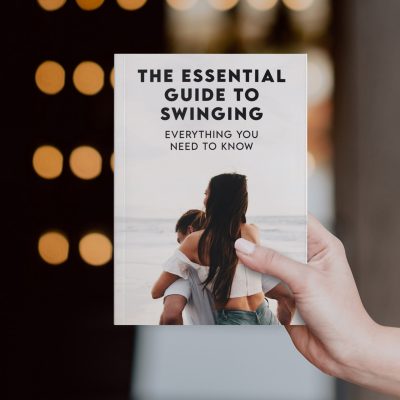
The fantasy of swinging is electric, but that cold sweat you feel when thinking about your partner with someone else? That’s your survival instinct warning you that your foundation is at stake. Most couples don’t fail because they lacked desire; they fail because they lacked a safety net. Ambiguity is where jealousy festers, and "winging it" is the fastest way to turn a dream into a nightmare of resentment and "what have we done?"
The Essential Guide to Swinging is your anxiety-proof roadmap through the chaos. Don't gamble your marriage on hope. Build a fortress of trust, master the repair chats, and ensure your exploration is defined by care, not a catastrophe
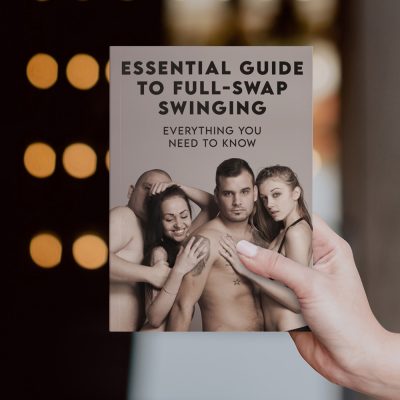
Full swap is the deep end. The rush is intense, but so is the risk of emotional wreckage. That tightening in your chest isn’t just nerves; it’s the fear that a "fun night" could become a permanent scar on your marriage. You can’t un-ring this bell, so never strike it without a plan.
The Essential Guide to Full Swap Swinging replaces reckless gambling with calculated discipline. From ironclad vetting to "emergency brake" scripts, we provide the safety architecture required to swap bodies without losing your minds. Don't just hope it goes well, engineer it
Gemini said
The fantasy is electric. The reality? It can be a grenade that blows up your marriage and your social circle. That tightening in your chest isn't just nerves. It is a warning that you are risking everything on a vibe. "Winging it" is the fastest way to turn a fun group chat into a toxic war zone.
The Essential Guide replaces the chaos with ironclad protocols. We provide the vetting tools, jealousy airlocks, and privacy scripts needed to swap bodies without losing your mind. Secure your safety first.
The fantasy of swinging is electric, but that cold sweat you feel when thinking about your partner with someone else? That’s your survival instinct warning you that your foundation is at stake. Most couples don’t fail because they lacked desire; they fail because they lacked a safety net. Ambiguity is where jealousy festers, and "winging it" is the fastest way to turn a dream into a nightmare of resentment and "what have we done?"
The Essential Guide to Swinging is your anxiety-proof roadmap through the chaos. Don't gamble your marriage on hope. Build a fortress of trust, master the repair chats, and ensure your exploration is defined by care, not a catastrophe
Full swap is the deep end. The rush is intense, but so is the risk of emotional wreckage. That tightening in your chest isn’t just nerves; it’s the fear that a "fun night" could become a permanent scar on your marriage. You can’t un-ring this bell, so never strike it without a plan.
The Essential Guide to Full Swap Swinging replaces reckless gambling with calculated discipline. From ironclad vetting to "emergency brake" scripts, we provide the safety architecture required to swap bodies without losing your minds. Don't just hope it goes well, engineer it
Realistic vetting scenarios and how to respond
Hearing about red flags in theory is different from spotting them in real life. Here are some scenarios you might encounter in a swinging ENM setting. For each scenario we include a practical response plan you can adapt to your own style and boundaries.
Scenario one: pressure to join right away
You are on a first or second date with someone who hints that if you do not join for a same night encounter you are missing a chance. They may say that all the other couples are ready and it would be silly to wait.
- Red flag indicators: pressure, urgency without time to think, attempts to persuade you that waiting is missing out, lack of space for your own pace.
- Response plan: acknowledge your pace. Say you want to take time to think and discuss with your partner or support network. Propose a plan to meet again after a cooling off period. Do not commit to anything you do not feel ready for.
- What to do next: set a specific time to revisit the topic. If they push again, end the conversation gracefully. You deserve to decide at your own speed.
Scenario two: unclear safety practices
A potential partner brushes past questions about condom use or STI testing and shifts toward romance or casual talk. They avoid giving specifics about protection or testing frequency.
- Red flag indicators: vague answers, avoidance of specifics, defensiveness when asked for details.
- Response plan: insist on a concrete safety plan that includes condoms or other protection and a mutual testing cadence. Suggest sharing test results or a recent test window to establish trust.
- What to do next: propose a written safety plan you both agree to. If they refuse to commit, pause the relationship and keep looking for a partner who aligns with your safety standards.
Scenario three: possessive behavior with exit strategies
After meeting, you notice signs of possessiveness or a belief that you belong to one person. They try to limit your interactions with others or monitor your social plans outside the dynamic.
- Red flag indicators: controlling language, attempts to restrict contact with other partners, attempts to isolate you from friends or communities.
- Response plan: state that you value autonomy and open communication. Reaffirm your boundaries and exit if coercive control continues.
- What to do next: consider a longer term separation from this person or end the connection while you assess your own boundaries and safety needs within ENM.
Scenario four: unicorn expectations and lack of reciprocity
You are meeting someone who is interested in joining a couple but expects you to be the only new partner without a reciprocal framework. They push for a fast attachment while you are seeking a more measured process.
- Red flag indicators: one sided expectations, lack of mutual consent on how the dynamic will evolve, rapid escalation without a plan for equity.
- Response plan: press for a balanced plan that includes all parties. Ensure there is space for future introductions and for people to opt out if things do not feel right.
- What to do next: propose a soft introduction with others and a clear exit strategy if feelings become complicated or uncomfortable for any party.
Scenario five: over sharing about others without consent
A partner talks about other people they are dating in a negative light or shares intimate details without the other person or people involved giving consent for such disclosures. This can reveal a lack of discretion and respect for privacy.
- Red flag indicators: gossip like behavior about others, sharing private details without approval, sensationalism about sexual life that is not necessary for safety or clarity.
- Response plan: set a clear boundary about private information. Explain that you will not participate in conversations that discredit or expose others. Move away from the topic if it continues.
- What to do next: consider whether this person can be trusted with your own private details and whether you want to keep them in your dating pool.
Scenario six: avoidance of accountability after a disagreement
You have a boundary discussion or a mismatch and the other person refuses to own their part in the situation. They fault you or others instead of taking responsibility.
- Red flag indicators: blaming, excuses that deflect responsibility, refusal to revisit the boundary in a calm way.
- Response plan: require accountability. State what you observed and what you need to feel safe moving forward. Offer a path to repair only if accountability is present.
- What to do next: if accountability does not appear, exit respectfully and pause the potential for future interactions.
Practical vetting steps you can take
A solid vetting process helps you screen potential partners before you get deep into a dynamic. Here is a practical guide you can adapt to your own rhythm and needs.
Step 1: Know your own boundaries and needs
- Take stock of your comfort zone. List the activities you want to explore and the ones you want to avoid.
- Decide on your must haves such as condoms, testing cadence, open communication expectations, aftercare style, and how you want to handle jealousy.
- Consider your non negotiables. If someone challenges a non negotiable, do not negotiate your safety or core values.
Step 2: Create a set of questions and a safety plan
- Draft questions that cover consent, safety, expectations, boundaries, and capacity for ongoing communication.
- Develop a simple safety plan including how you will handle a consent withdrawal, a plan for ending a scene, and who you will contact if you need support.
- Share your safety plan with your partner or with a close friend who can hold space for you.
Step 3: Do a first meeting focused on alignment
- Meet in a public space first or a neutral environment to discuss boundaries and expectations.
- Ask concrete questions about safety practices, STI testing history, and what a typical encounter would look like.
- Look for clear and consistent answers. If answers feel rehearsed or evasive, slow down the pace of your interactions.
Step 4: Test with a low risk scenario
- Start with a no pressure scenario such as a low stakes social meet up or a cafe date with no sexual plans.
- Assess communication, respect for boundaries, and how each person handles boundaries under mild pressure.
- Use this as a learning experience rather than a confirmation of fit. You can decide to continue or step away after a few conversations.
Step 5: Build a simple contract in plain language
- Create a short written outline that covers who is involved, what activities are included, what protections are in place, how often you will check in, and what to do if someone wants to end the dynamic.
- Make sure every party can agree to the terms and you keep a copy of the plan for your records.
Step 6: Practice ongoing check ins
- Agree on check in times. This can be weekly or after a specific type of encounter. Keep it simple and supportive.
- Talk about how each person is feeling and adjust boundaries as needed. Normalize the idea that boundaries can shift over time.
Step 7: Have a response protocol for red flags
- Decide on a calm and clear response for each red flag you have identified.
- Know when to end a conversation and when to pause a potential encounter.
- Keep a support person informed so you are not alone in difficult moments.
Must no s and best practices for healthy ENM vetting
Below is a concise guide you can print or keep handy. It helps you stay grounded when dating in a swinging ENM world.
- Always get explicit consent for every activity. Consent is ongoing and can be withdrawn at any time. Do not assume consent based on later actions.
- Never pressure someone to skip safety measures or hide details about health or boundaries. Safety comes first for everyone involved.
- Be transparent about your own boundaries and do not pretend to be comfortable with something you are not. You deserve truthful conversations.
- Communicate respectfully even when you disagree. You can disagree without attacking the person or the relationship.
- Respect privacy and do not share private information about others without consent. It is a trust breach that can cause major harm.
- Trust must be earned. If a partner consistently hides information or avoids accountability, re evaluate the relationship or step away.
- Keep boundaries flexible but clear. Boundaries exist to protect your safety and emotional well being. They can change with time and experience.
- Prioritize aftercare. Emotional safety after any encounter helps everyone feel seen and heard.
- Know when to seek outside help. A therapist or a trusted mentor can help you navigate complex feelings and boundary issues in ENM dynamics.
How to handle jealousy and intense feelings in ENM dynamics
Jealousy is part of any relationship and it does not mean you are doing something wrong. Approach jealousy as information about your needs and your boundaries. When jealousy surfaces you can practice concrete steps:
- Name the feeling and describe what triggered it.
- Identify the specific boundary or support you need. It might be more check ins or a pause on a specific activity.
- Communicate with your partner openly and without blame. Use I statements to describe your experience and avoid accusations.
- Implement a plan together to address the trigger and improve safety and trust for the future.
- If jealousy becomes chronic or unmanageable, consider slowing down or reassessing the overall dynamic for your well being.
Privacy, disclosure, and community norms
In swinging ENM circles it is common to discuss safety and boundaries in open forums and in private settings. However privacy remains a core value for each person involved. Treat others with respect and avoid sharing intimate details about someone else without explicit consent. If you are unsure about what information is okay to disclose, ask for explicit permission before sharing or discussing specific details outside the group.
Keeping a healthy balance between romance and intimacy
Swinging ENM is not about replacing romance with casual sexual encounters or vice versa. It is about creating space for authentic connections that can coexist with the core relationship you value. Do not equate number of partners with quality of connection. Focus on meaningful communication, mutual respect and shared values. When you do this you will find a healthier and more satisfying dynamic for everyone involved.
Practical tips for everyday vetting in the swinging ENM world
- Ask for references or talk with people who know the person outside the situation. Social proof can help you gauge reliability and safety mindset.
- Check for alignment on life goals and values. Does the person share your views on respect, consent, and safety?
- Keep clear notes of conversations and boundaries. A written record reduces confusion and supports accountability.
- Practice good emotional hygiene. Take care of your own needs and ensure you have support outside of dating life.
- Move forward only when you feel secure about the plan and your ability to enforce it if needed.
A quick recap of the core ideas
- Vetting is about alignment on consent, boundaries, safety and communication.
- Red flags are signals to pause and reassess not to panic or jump to conclusions.
- Transparency and accountability create the best conditions for healthy ENM relationships.
- Safety and aftercare are essential in every encounter and should be built into your plan from the start.
Glossary of useful terms and acronyms
- ENM Ethical non monogamy, meaning consenting adults engage in multiple relationships or encounters with open and honest communication.
- Swinging A form of ENM focused on sexual experiences with others outside a primary relationship while respecting boundaries and consent.
- Boundaries Clearly defined limits that protect your emotional and physical safety in any encounter.
- Consent A voluntary and ongoing agreement to participate in an activity. Consent can be withdrawn at any time.
- Soft swap A form of swinging where partners may have sexual contact with others but do not engage in full intercourse with other partners.
- Hard swap A more explicit term used by some to describe full sexual activity with others outside the primary relationship.
- Unicorn A partner who joins a couple in a dating or sexual arrangement and can be a one off or ongoing member depending on the group rules.
- Jealousy management The practice of recognizing and addressing jealousy through communication and boundary setting.
- Aftercare The emotional support and reassurance provided after an encounter to help everyone feel safe and valued.
- Transparence The practice of sharing relevant information openly to maintain trust in the dynamic.
Frequently asked questions
Don't let a "Soft Swap" night turn into a "Hard Feelings" morning.
Walking into the club with different expectations is a grenade waiting to explode. He thinks it’s a free-for-all; she thinks it’s just drinks and dancing. That silence in the car ride home? That’s the sound of a preventable disaster.
Stop guessing. Use this tool to sync your "sexual GPS" before you leave the driveway. Determine exactly how wild you’re getting tonight, so the only surprise is how much fun you have.
The fantasy of swinging is electric, but that cold sweat you feel when thinking about your partner with someone else? That’s your survival instinct warning you that your foundation is at stake. Most couples don’t fail because they lacked desire; they fail because they lacked a safety net. Ambiguity is where jealousy festers, and "winging it" is the fastest way to turn a dream into a nightmare of resentment and "what have we done?"
The Essential Guide to Swinging is your anxiety-proof roadmap through the chaos. Don't gamble your marriage on hope. Build a fortress of trust, master the repair chats, and ensure your exploration is defined by care, not a catastrophe
Full swap is the deep end. The rush is intense, but so is the risk of emotional wreckage. That tightening in your chest isn’t just nerves; it’s the fear that a "fun night" could become a permanent scar on your marriage. You can’t un-ring this bell, so never strike it without a plan.
The Essential Guide to Full Swap Swinging replaces reckless gambling with calculated discipline. From ironclad vetting to "emergency brake" scripts, we provide the safety architecture required to swap bodies without losing your minds. Don't just hope it goes well, engineer it
Gemini said
The fantasy is electric. The reality? It can be a grenade that blows up your marriage and your social circle. That tightening in your chest isn't just nerves. It is a warning that you are risking everything on a vibe. "Winging it" is the fastest way to turn a fun group chat into a toxic war zone.
The Essential Guide replaces the chaos with ironclad protocols. We provide the vetting tools, jealousy airlocks, and privacy scripts needed to swap bodies without losing your mind. Secure your safety first.
The fantasy of swinging is electric, but that cold sweat you feel when thinking about your partner with someone else? That’s your survival instinct warning you that your foundation is at stake. Most couples don’t fail because they lacked desire; they fail because they lacked a safety net. Ambiguity is where jealousy festers, and "winging it" is the fastest way to turn a dream into a nightmare of resentment and "what have we done?"
The Essential Guide to Swinging is your anxiety-proof roadmap through the chaos. Don't gamble your marriage on hope. Build a fortress of trust, master the repair chats, and ensure your exploration is defined by care, not a catastrophe
Full swap is the deep end. The rush is intense, but so is the risk of emotional wreckage. That tightening in your chest isn’t just nerves; it’s the fear that a "fun night" could become a permanent scar on your marriage. You can’t un-ring this bell, so never strike it without a plan.
The Essential Guide to Full Swap Swinging replaces reckless gambling with calculated discipline. From ironclad vetting to "emergency brake" scripts, we provide the safety architecture required to swap bodies without losing your minds. Don't just hope it goes well, engineer it
