
Safer Hosting Practices for Home Events


Hosting events at home in the swinging world can be a blast when you plan with care. This guide breaks down practical safety steps, clear boundaries, and vibes that keep everyone feeling respected and comfortable. We speak plainly so you know what to do before guests arrive, during the event, and after the last good night hello goodbye moment. If you are new to the swinging ENM scene or you are a seasoned host looking to tighten up safety, you will find actionable tips you can use tonight.
Quick Links to Useful Sections
- What is swinging ENM and why hosting at home matters
- Key terms and acronyms you may see
- Foundational safety principles you can live by
- Pre event planning steps you can put on a schedule
- 1. Define the scope and vibe
- 2. Create guest guidelines you can share
- 3. Prepare the space
- 4. Stock up on safety supplies
- 5. Health checks and transparency
- 6. Privacy and data handling
- 7. Have a plan for intoxication and boundaries
- 8. Assign roles for the night
- Consent and boundary setting you can implement from moment one
- Establish a simple consent framework
- Check in frequency and method
- How to handle boundaries that shift during the night
- Space design and safety basics you can emulate at home
- Clear zones and signage
- Privacy and discretion
- Hygiene and cleanliness
- Noise and timing
- Health and safety protocols for a home event
- Safer sex supplies and hygiene
- Clear policies on STI status
- Vaccinations and health awareness
- Allergy aware and sensory considerations
- Emergency procedures
- Privacy protection and aftercare after the event
- Respecting guest privacy
- Aftercare routines you can offer
- Documentation and memory sharing
- Realistic hosting scenarios and how to handle them
- Scenario one a guest wants to explore with a specific couple
- Scenario two a boundary is crossed by mistake
- Scenario three a guest arrives intoxicated
- Scenario four multiple couples want to mingle but space is limited
- Hosting checklist you can reuse for every event
- Common mistakes to avoid when hosting home events in the Swing ENM world
- Glossary of useful terms and acronyms
- Frequently asked questions
What is swinging ENM and why hosting at home matters
ENM stands for ethically non monogamous. It is a relationship style where all adults involved agree to explore romantic or sexual connections with others outside their primary relationship while maintaining consent and respect. Swinging is a subset of ENM where couples or groups swap partners or engage in sexual activities with others at social gatherings or venues. When you host at home you have control over atmosphere, timing and safety which makes it a great testing ground for boundaries and communication.
Hosting at home brings a few unique opportunities. You can tailor the space to comfort levels. You can set ground rules that everyone knows in advance. You can build a culture of consent and quick check ins that helps people feel seen and safe. Getting these pieces right is what makes hosting fun rather than stressful. This guide walks you through practical steps that work in real life kitchens living rooms backyards and spare bedrooms. You will see real world examples and checklists you can reuse for future gatherings.
Key terms and acronyms you may see
- ENM Ethically non monogamous a broad label for relationships that involve more than two people with consent from all parties.
- Swinging A form of ENM where couples or individuals engage in sexual activity with other consenting adults usually in a social or party setting.
- Primary relationship The main relationship in a person s life often providing emotional and romantic support.
- Boundary An agreed line that should not be crossed during play or at a event.
- Consent A clear yes given freely by all involved without pressure or coercion. Consent can be withdrawn at any time.
- Safe sex kit A package that includes items like condoms water based lube and cleaning materials to reduce risk and maintain hygiene.
- STI Sexually transmitted infection any infection that can be passed through sexual contact.
- Aftercare Time and space after play to check in with emotions physical needs and comfort.
- Guest agreement A written or spoken set of rules agreed by attendees to protect boundaries and safety.
- Check in A quick conversation to confirm comfort and consent during the event.
- Privacy shield Measures taken to protect the identities and personal information of guests.
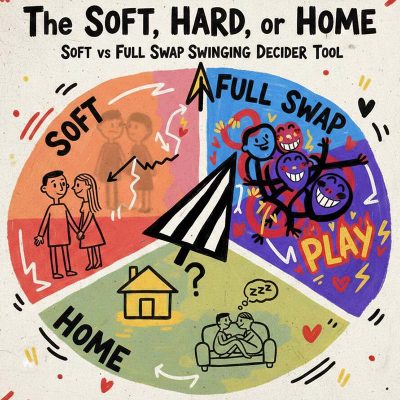
Don't let a "Soft Swap" night turn into a "Hard Feelings" morning.
Walking into the club with different expectations is a grenade waiting to explode. He thinks it’s a free-for-all; she thinks it’s just drinks and dancing. That silence in the car ride home? That’s the sound of a preventable disaster.
Stop guessing. Use this tool to sync your "sexual GPS" before you leave the driveway. Determine exactly how wild you’re getting tonight, so the only surprise is how much fun you have.

The fantasy of swinging is electric, but that cold sweat you feel when thinking about your partner with someone else? That’s your survival instinct warning you that your foundation is at stake. Most couples don’t fail because they lacked desire; they fail because they lacked a safety net. Ambiguity is where jealousy festers, and "winging it" is the fastest way to turn a dream into a nightmare of resentment and "what have we done?"
The Essential Guide to Swinging is your anxiety-proof roadmap through the chaos. Don't gamble your marriage on hope. Build a fortress of trust, master the repair chats, and ensure your exploration is defined by care, not a catastrophe
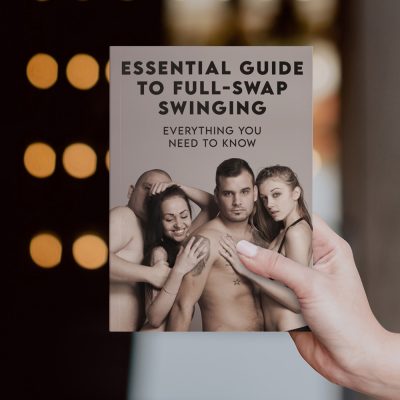
Full swap is the deep end. The rush is intense, but so is the risk of emotional wreckage. That tightening in your chest isn’t just nerves; it’s the fear that a "fun night" could become a permanent scar on your marriage. You can’t un-ring this bell, so never strike it without a plan.
The Essential Guide to Full Swap Swinging replaces reckless gambling with calculated discipline. From ironclad vetting to "emergency brake" scripts, we provide the safety architecture required to swap bodies without losing your minds. Don't just hope it goes well, engineer it
Gemini said
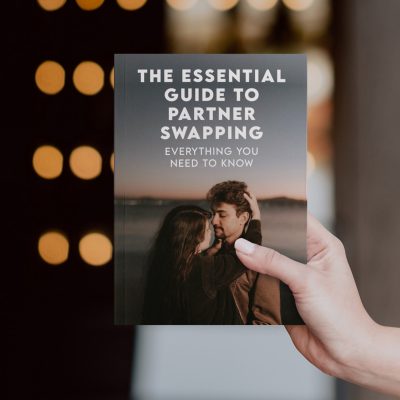
The fantasy is electric. The reality? It can be a grenade that blows up your marriage and your social circle. That tightening in your chest isn't just nerves. It is a warning that you are risking everything on a vibe. "Winging it" is the fastest way to turn a fun group chat into a toxic war zone.
The Essential Guide replaces the chaos with ironclad protocols. We provide the vetting tools, jealousy airlocks, and privacy scripts needed to swap bodies without losing your mind. Secure your safety first.
The fantasy of swinging is electric, but that cold sweat you feel when thinking about your partner with someone else? That’s your survival instinct warning you that your foundation is at stake. Most couples don’t fail because they lacked desire; they fail because they lacked a safety net. Ambiguity is where jealousy festers, and "winging it" is the fastest way to turn a dream into a nightmare of resentment and "what have we done?"
The Essential Guide to Swinging is your anxiety-proof roadmap through the chaos. Don't gamble your marriage on hope. Build a fortress of trust, master the repair chats, and ensure your exploration is defined by care, not a catastrophe
Full swap is the deep end. The rush is intense, but so is the risk of emotional wreckage. That tightening in your chest isn’t just nerves; it’s the fear that a "fun night" could become a permanent scar on your marriage. You can’t un-ring this bell, so never strike it without a plan.
The Essential Guide to Full Swap Swinging replaces reckless gambling with calculated discipline. From ironclad vetting to "emergency brake" scripts, we provide the safety architecture required to swap bodies without losing your minds. Don't just hope it goes well, engineer it
Foundational safety principles you can live by
Before you open the doors to guests it helps to agree on a few bedrock ideas. These form the backbone of safe hosting in any swinging ENM scenario.
- Consent is ongoing People can change their minds at any moment. Check ins are not a one and done task.
- Boundaries are sacred Boundaries are agreed upon ahead of time and must be respected without debate or pressure.
- Clear communication Speak up honestly about desires worries and expectations. The best hosts encourage open dialogue.
- Privacy matters Do not disclose guest details without explicit permission. Respect the trust people place in you as a host.
- Health and safety come first This means practical measures such as safer sex supplies hygiene and clear policies around intoxication and consent.
- Have a plan for issues A simple process for handling a boundary being crossed or someone feeling uncomfortable ensures a calm resolution.
Pre event planning steps you can put on a schedule
Think of planning as laying breadcrumbs so guests can navigate the evening without guesswork. Below are concrete steps you can take in the days leading up to the event. You can adapt these for a small intimate gathering or a larger house party.
1. Define the scope and vibe
Make a short note about what kind of play is welcome what you are comfortable hosting and what is strictly off limits. This helps you and your guests align expectations. If you are unsure it is fine to start with a conservative set of rules and ease into more openness as everyone becomes comfortable.
2. Create guest guidelines you can share
Write down a simple guest guide that explains the rules the consent process the safety expectations and the privacy policy. Share this in advance so guests can decide if they want to attend. A clear guide helps the energy of the night stay positive and respectful.
3. Prepare the space
Mapping your space ahead of time reduces awkward moments. Decide where social mingling happens where play can occur and where private time can be found if someone needs a quiet space. It is helpful to set up a visible private area that is clearly a no play zone for anyone who needs a boundary moment.
4. Stock up on safety supplies
Keep a well stocked safer sex kit within easy reach. Include condoms latex free options if needed lubricant wipes sanitizing gel and clean up cloths. Have towels available in any area that could be used for play or cleanup. Consider having dental dams and gloves as additional safety options depending on guest preferences.
5. Health checks and transparency
Encourage guests to share a general health check in a focused way that respects privacy. For instance you could ask guests to confirm they have tested negative for certain infections within a reasonable time frame or to self declare their health status if they are comfortable doing so. Do not require invasive medical disclosures. The aim is to reduce risk without making people feel exposed or judged.
6. Privacy and data handling
Decide who has access to guest lists and how information is stored. Use password protected documents or simple offline lists to protect identities. Do not publish or discuss personal information in public channels.
7. Have a plan for intoxication and boundaries
Plan how you will handle someone who appears intoxicated or overwhelmed. A responsible host steps in to offer water a break and if necessary helps them leave the space to regain comfort. Remember consent can be impaired if someone is intoxicated; they should not engage in sexual activity until they have regained clear consent.
8. Assign roles for the night
Even a small home event can benefit from having a few trusted helpers. One person can manage the door guest greeting a second can handle safety check ins and a third can be the quiet observer for boundary enforcement. Having helpers prevents any one person from feeling overwhelmed or responsible for everything.
Consent and boundary setting you can implement from moment one
Consent is not a one page form it is a living conversation. The fastest way to reduce confusion is to establish a sign system and check in cadence that everyone is comfortable with.
Establish a simple consent framework
Use a straightforward language that is easy to remember. For example consent to any activity begins with a clear yes. If someone says maybe or hesitates that is a no until they confirm a definite yes. It is perfectly acceptable to pause an activity to check in again. If a boundary is crossed a apologies and a stop is immediate. The person who established the boundary should be respected and the activity should stop without argument.
Check in frequency and method
Decide how often you will check in during the event. Some hosts do a quick verbal check every thirty minutes others use a discreet nonverbal cue such as a hand raise or a signal card. The key is to use a method that is easy for attendees to execute without breaking the mood.
How to handle boundaries that shift during the night
Boundaries can evolve as people feel more comfortable. If someone indicates a change you should acknowledge it with respect and adjust the situation accordingly. If you are unsure about a boundary you should ask for clarification rather than guessing. Remember that a boundary change during the night requires explicit consent before the new activity proceeds.
Space design and safety basics you can emulate at home
Environment matters as much as consent. A well designed space reduces stress and makes everyone feel more comfortable. Here are practical layout ideas you can adapt.
Clear zones and signage
Define social zones a private couple space and a general play area. Use soft lighting and comfortable seating to invite conversation in the social zone. A clearly marked private space should be easy to locate but not visible from the main room to all guests if someone wants privacy.
Privacy and discretion
Be mindful of the possibility that neighbors or acquaintances may attend or pass by. Avoid inviting guests who are not fully aware of the event. Use tinted doors or window coverings if you share a space that could be exposed to sightings from outside. A privacy plan protects everyone involved and maintains trust.
Hygiene and cleanliness
Keep bathrooms clean stocked and accessible. Provide a dedicated clean up area where towels soap hand sanitizer and disposal bags are available. Encourage guests to wash hands before and after activities if practical. A clean environment sends a clear message that safety and respect are priorities.
Noise and timing
Be mindful of the neighborhood class schedules and quiet hours. Even a party at home can be disruptive if it runs late. Consider a time window for most activities and a gentle wind down period where people can mingle without pressure.
Health and safety protocols for a home event
Health matters in every ENM scenario. This section covers practical steps to minimize risk while keeping the vibe alive and fun.
Safer sex supplies and hygiene
Have a stock of condoms latex free options and ample lubricant. Provide wipes and hand sanitizers in multiple locations. Encourage guests to bring their own preferred supplies while giving options for those who may forget. Provide a clearly labeled disposal station for used items to maintain cleanliness and dignity for everyone involved.
Clear policies on STI status
Educate guests that STI status is a private matter and no one should pressure another person to disclose information they are not comfortable sharing. Instead offer practical protections such as barrier methods and hygiene practices. Encourage testing as a regular habit for all partners involved and provide information about local clinics or free testing resources if appropriate to your community.
Vaccinations and health awareness
While not every host will require vaccination information for legal or ethical reasons you can encourage responsible behavior. For example advise guests to consider general health checks especially during flu seasons or outbreaks in your area. When in doubt communicate a clear policy in your guest guide.
Allergy aware and sensory considerations
Some guests may have allergies to latex lubricants or fragrances. Provide latex free options and fragrance free products. If you use strong scents in the space consider labeling them and offering scent free alternatives to avoid triggering sensitivities in guests.
Emergency procedures
Plan a simple response for medical emergencies or conflict. Identify who will call emergency services who will provide first aid supplies and where to meet outside the home if a evacuation becomes necessary. A calm plan helps you maintain order and safety in a crisis.
Privacy protection and aftercare after the event
Hosting is about hospitality and that includes protecting guest privacy and offering aftercare options. People may need time to decompress after an intense evening. A thoughtful approach makes a big difference.
Respecting guest privacy
Do not discuss who did what with whom unless you have explicit permission. Keep the guest list and contact details safe within a private space. When possible share a summary of the night rather than specifics about every interaction. If someone asks for their data to be removed from a list or a memory book update things promptly and respectfully.
Aftercare routines you can offer
Some guests appreciate a moment to talk through the night while others might prefer a quiet corner and some water. Offer both options a short debrief chat with a chosen host or helper or a calm space with soft lighting and music for those who wish to reflect privately. A genuine check in fosters trust and lets people feel cared for.
Documentation and memory sharing
Ask for consent before capturing or sharing any photos or stories from the event. Respect if someone prefers not to be included in memory books or social channels. If you do share content keep names private or use initials or anonymized descriptions to protect identities.
Realistic hosting scenarios and how to handle them
Let us walk through a few common situations you might face at a home event in the swinging ENM world. These are practical scenarios with immediate actions you can take to maintain safety and respect.
Scenario one a guest wants to explore with a specific couple
First check in with all parties. Ensure there is enthusiastic consent from everyone involved including the couple being approached. If any person hesitates the activity should not proceed. If the idea seems to create discomfort for the host or others involved step back and offer a different option such as social time or a group activity instead.
Scenario two a boundary is crossed by mistake
Pause the activity immediately even if it seems minor. Acknowledge the boundary and apologize. Remove the people involved from the space if needed and discuss a course correction. Follow up after the event with a private check in to ensure everyone feels heard. Learn from what happened and update your guest guidelines to prevent repetition.
Scenario three a guest arrives intoxicated
Gently but firmly decline any sexual activity with the intoxicated guest. Offer water a quiet space and contact a trusted friend or partner to assist. If the guest insists on leaving with another guest ensure they have safe transport and do not permit them to drive. Your priority is safety and clear boundaries.
Scenario four multiple couples want to mingle but space is limited
Create a rotation plan that respects everyone s comfort. Provide distinct times to rotate partners or groups to ensure no one feels overwhelmed. If needed move to a larger venue or split the event into two smaller sessions. This approach preserves energy while keeping consent as the driving force behind every move.
Hosting checklist you can reuse for every event
- Share guest guidelines at least 48 hours before the event so attendees can decide if the environment fits their comfort level.
- Prepare a safety kit with condoms lubricants wipes and hand sanitizer placed in accessible locations.
- Designate a private space and a social space clearly so guests know where to go for different needs.
- Explain the consent process including how to pause or stop at any moment and who to talk to if something feels off.
- Have a plan for intoxication including when to intervene and how to ensure safe transport for guests who should not drive.
- Keep a guest list accessible only to a small group of trusted organizers and respect privacy whenever possible.
- Offer aftercare options including a calm space and a short debrief for those who wish to talk about the night.
Common mistakes to avoid when hosting home events in the Swing ENM world
- Ignoring consent or pressuring someone to participate in activities they are not sure about.
- Forgetting to communicate expected behavior and boundaries for the entire group.
- Failing to provide accessible safety supplies or a clear plan for handling conflicts.
- Underestimating the importance of privacy and data protection for guests.
- Just assuming everyone knows how to handle flair ups gracefully without a plan.
- Rushing through the event without time for check ins or aftercare.
Glossary of useful terms and acronyms
- ENM Ethically non monogamous a relationship style where multiple connections occur with clear consent from all involved.
- Swinging A subset of ENM in which couples or individuals engage in sexual activity with others at social gatherings or events.
- Primary partner The main relationship in a person s life usually providing emotional support and companionship.
- Boundary A limit set to protect comfort and safety during interactions and activities.
- Consent A voluntary yes given by all involved that can be withdrawn at any time.
- Safer sex kit A collection of supplies such as condoms lubricants wipes and disposal materials used to reduce risk and maintain hygiene.
- STI Sexually transmitted infection an infection that can be transmitted through sexual contact.
- Aftercare Time after intimacy where emotional and physical needs are checked in with and met if possible.
- Guest agreement A light written or spoken set of rules that helps attendees know what to expect.
- Check in A quick conversation to confirm that everyone feels safe and comfortable before continuing.
- Privacy shield Practices used to protect the identities and personal data of guests.
- Decompress space A quiet area where guests can unwind after intense moments and gather themselves.
Frequently asked questions
What is the best way to start a home event in swinging ENM?
Begin with a clear welcome and a quick read of the guest guidelines. Describe the vibe the consent process and the boundaries that apply. Invite questions and make it easy for guests to voice concerns before any activity begins.
How do I manage boundaries with multiple couples and singles?
Establish shared ground rules and have a system for stating boundaries that works for everyone. Encourage direct communication and keep a non judgemental attitude. If a boundary is unclear ask for clarification and adjust plans accordingly.
What should I do if someone crosses a boundary?
Stop the activity immediately and offer a private space for the person affected to step away if needed. Address the situation calmly with all involved and review the guidelines for future safety. Follow up after the event to reaffirm trust and adjust rules if needed.
Is it okay to require vaccination or testing for guests?
Some hosts opt for a health policy while others do not. It is perfectly acceptable to state a preference but you should acknowledge privacy and legal concerns. Encourage guests to practice safe behaviors and to stay home if they feel unwell.
How do I protect guest privacy during and after the event?
Limit the sharing of personal details and do not publish names or photos without explicit consent. Use anonymized descriptions if you want to capture memories publicly and offer a private memory book option for those who wish to contribute.
How can I make sure alcohol does not derail a safe environment?
Offer non alcoholic beverage options and set a reasonable time frame for alcohol service. Keep an eye on participants speaking up about feeling overwhelmed and be prepared to shift to a low key mode or a wrap up if needed. A sober facilitator can help maintain clear consent during the evening.
What is the best approach to aftercare after a home event?
Provide access to a calm space with water and light snacks. Offer a brief debrief where guests can share what they enjoyed and what felt challenging. Respect privacy and give people time to process before they leave.
Should I take photos at a home event?
Only take photos with explicit consent and do not tag or share anyone without permission. Consider offering a shared memory option such as a private album where participants can approve what gets added.
Don't let a "Soft Swap" night turn into a "Hard Feelings" morning.
Walking into the club with different expectations is a grenade waiting to explode. He thinks it’s a free-for-all; she thinks it’s just drinks and dancing. That silence in the car ride home? That’s the sound of a preventable disaster.
Stop guessing. Use this tool to sync your "sexual GPS" before you leave the driveway. Determine exactly how wild you’re getting tonight, so the only surprise is how much fun you have.
The fantasy of swinging is electric, but that cold sweat you feel when thinking about your partner with someone else? That’s your survival instinct warning you that your foundation is at stake. Most couples don’t fail because they lacked desire; they fail because they lacked a safety net. Ambiguity is where jealousy festers, and "winging it" is the fastest way to turn a dream into a nightmare of resentment and "what have we done?"
The Essential Guide to Swinging is your anxiety-proof roadmap through the chaos. Don't gamble your marriage on hope. Build a fortress of trust, master the repair chats, and ensure your exploration is defined by care, not a catastrophe
Full swap is the deep end. The rush is intense, but so is the risk of emotional wreckage. That tightening in your chest isn’t just nerves; it’s the fear that a "fun night" could become a permanent scar on your marriage. You can’t un-ring this bell, so never strike it without a plan.
The Essential Guide to Full Swap Swinging replaces reckless gambling with calculated discipline. From ironclad vetting to "emergency brake" scripts, we provide the safety architecture required to swap bodies without losing your minds. Don't just hope it goes well, engineer it
Gemini said
The fantasy is electric. The reality? It can be a grenade that blows up your marriage and your social circle. That tightening in your chest isn't just nerves. It is a warning that you are risking everything on a vibe. "Winging it" is the fastest way to turn a fun group chat into a toxic war zone.
The Essential Guide replaces the chaos with ironclad protocols. We provide the vetting tools, jealousy airlocks, and privacy scripts needed to swap bodies without losing your mind. Secure your safety first.
The fantasy of swinging is electric, but that cold sweat you feel when thinking about your partner with someone else? That’s your survival instinct warning you that your foundation is at stake. Most couples don’t fail because they lacked desire; they fail because they lacked a safety net. Ambiguity is where jealousy festers, and "winging it" is the fastest way to turn a dream into a nightmare of resentment and "what have we done?"
The Essential Guide to Swinging is your anxiety-proof roadmap through the chaos. Don't gamble your marriage on hope. Build a fortress of trust, master the repair chats, and ensure your exploration is defined by care, not a catastrophe
Full swap is the deep end. The rush is intense, but so is the risk of emotional wreckage. That tightening in your chest isn’t just nerves; it’s the fear that a "fun night" could become a permanent scar on your marriage. You can’t un-ring this bell, so never strike it without a plan.
The Essential Guide to Full Swap Swinging replaces reckless gambling with calculated discipline. From ironclad vetting to "emergency brake" scripts, we provide the safety architecture required to swap bodies without losing your minds. Don't just hope it goes well, engineer it
