
Swinging as Exploration of Bisexuality


Welcome to a down to earth, no fluff guide about swinging as a way to explore bisexuality. This article dives into the swinging ethically non monogamous dynamic also known as the Swinging ENM dynamic. We will talk through terms, real life tips, boundaries, consent and the kinds of conversations that keep relationships healthy while you explore attraction beyond the couple. Think of this as a friendly experiment manual written from the inside out with practical steps you can actually use. We will break down complex ideas into everyday language so you can think clearly and act with care and curiosity.
Quick Links to Useful Sections
- Who this guide is for
- Key terms you will hear in the swinging ENM world
- Why swinging can be a path to bisexual exploration
- Foundations for exploring bisexuality in the Swinging ENM dynamic
- Open and honest communication
- Consent as a continuous practice
- Managing boundaries with bisexual exploration in swinging
- Emotional safety and jealousy management
- Real life scenarios you might encounter
- Scenario 1: A couple invites a bisexual couple for a date night
- Scenario 2: One partner feels a strong attraction to a bisexual person during a swing
- Scenario 3: A single person joins the scenario exploring bisexual curiosity
- Scenario 4: One partner is not comfortable with bisexual exploration
- Myths about swinging and bisexual exploration
- Must no s in swinging when exploring bisexuality
- Practical tips to navigate swinging as bisexual exploration
- Handling disclosure and labels
- Safety first when exploring bisexuality in swinging
- How to talk about bisexuality with friends and the community
- Maintaining a healthy dynamic while exploring bisexuality
- Glossary of useful terms and acronyms
- Frequently asked questions
Who this guide is for
This guide is for couples and individuals who are curious about bisexuality within the context of swinging. If you are currently in a monogamous relationship and wondering what swinging could do for you as a couple or if you are a single or semi partnered person who wants to explore attraction to multiple genders through swinging this guide is for you. It is also for people who want to understand how to communicate about bisexuality and how to establish and maintain boundaries that feel fair for every person involved. If you want to keep things respectful, consensual and emotionally intelligent this guide is for you.
Key terms you will hear in the swinging ENM world
Understanding terms helps avoid confusion and makes conversations easier. Here are some essential definitions in plain language.
- Swinging A form of ethical non monogamy where committed couples engage in sexual activities with other consenting adults. Swinging usually happens within the context of agreed boundaries and rules.
- ENM Short for ethically non monogamous. A broad umbrella that includes swinging, polyamory and other relationship styles based on informed consent and open communication.
- Bisexuality A sexual orientation where a person experiences attraction to more than one gender. The attraction can vary in strength and may be fluid over time.
- Bisexual exploration The process of learning what bisexual attraction feels like in real life through experiences with different genders in a respectful and consensual way.
- Heteroflexible A label that acknowledges attraction to the opposite gender but with some flexibility toward exploring other attractions occasionally.
- Compersion A positive feeling when a partner experiences pleasure with someone else. It is the opposite of jealousy and a central concept in healthy ENM.
- Boundaries Lines you set about what is allowed and what is not during swinging. Boundaries protect comfort levels and safety for everyone involved.
- Consent An enthusiastic yes from all involved before any activity begins. Consent can be withdrawn at any time and must be respected immediately.
- Safe sex Practices that reduce the risk of sexually transmitted infections and other health concerns. This may include barrier methods, testing, and clear communication about health status.
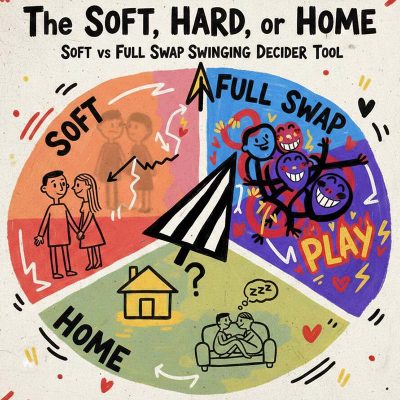
Don't let a "Soft Swap" night turn into a "Hard Feelings" morning.
Walking into the club with different expectations is a grenade waiting to explode. He thinks it’s a free-for-all; she thinks it’s just drinks and dancing. That silence in the car ride home? That’s the sound of a preventable disaster.
Stop guessing. Use this tool to sync your "sexual GPS" before you leave the driveway. Determine exactly how wild you’re getting tonight, so the only surprise is how much fun you have.
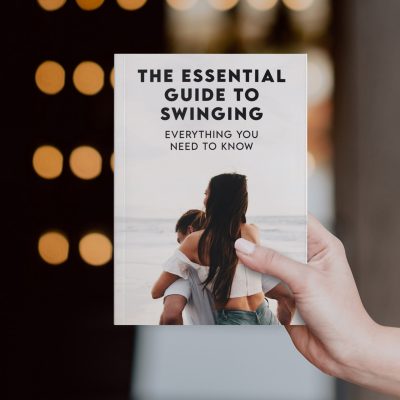
The fantasy of swinging is electric, but that cold sweat you feel when thinking about your partner with someone else? That’s your survival instinct warning you that your foundation is at stake. Most couples don’t fail because they lacked desire; they fail because they lacked a safety net. Ambiguity is where jealousy festers, and "winging it" is the fastest way to turn a dream into a nightmare of resentment and "what have we done?"
The Essential Guide to Swinging is your anxiety-proof roadmap through the chaos. Don't gamble your marriage on hope. Build a fortress of trust, master the repair chats, and ensure your exploration is defined by care, not a catastrophe
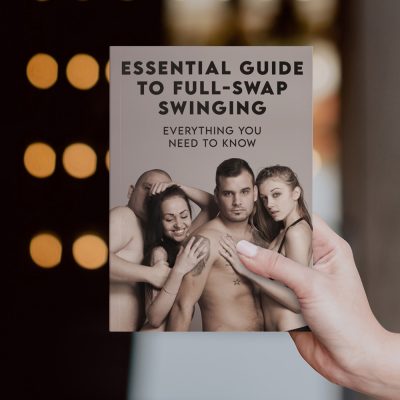
Full swap is the deep end. The rush is intense, but so is the risk of emotional wreckage. That tightening in your chest isn’t just nerves; it’s the fear that a "fun night" could become a permanent scar on your marriage. You can’t un-ring this bell, so never strike it without a plan.
The Essential Guide to Full Swap Swinging replaces reckless gambling with calculated discipline. From ironclad vetting to "emergency brake" scripts, we provide the safety architecture required to swap bodies without losing your minds. Don't just hope it goes well, engineer it
Gemini said
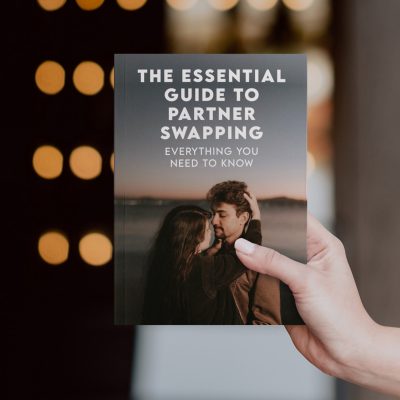
The fantasy is electric. The reality? It can be a grenade that blows up your marriage and your social circle. That tightening in your chest isn't just nerves. It is a warning that you are risking everything on a vibe. "Winging it" is the fastest way to turn a fun group chat into a toxic war zone.
The Essential Guide replaces the chaos with ironclad protocols. We provide the vetting tools, jealousy airlocks, and privacy scripts needed to swap bodies without losing your mind. Secure your safety first.
The fantasy of swinging is electric, but that cold sweat you feel when thinking about your partner with someone else? That’s your survival instinct warning you that your foundation is at stake. Most couples don’t fail because they lacked desire; they fail because they lacked a safety net. Ambiguity is where jealousy festers, and "winging it" is the fastest way to turn a dream into a nightmare of resentment and "what have we done?"
The Essential Guide to Swinging is your anxiety-proof roadmap through the chaos. Don't gamble your marriage on hope. Build a fortress of trust, master the repair chats, and ensure your exploration is defined by care, not a catastrophe
Full swap is the deep end. The rush is intense, but so is the risk of emotional wreckage. That tightening in your chest isn’t just nerves; it’s the fear that a "fun night" could become a permanent scar on your marriage. You can’t un-ring this bell, so never strike it without a plan.
The Essential Guide to Full Swap Swinging replaces reckless gambling with calculated discipline. From ironclad vetting to "emergency brake" scripts, we provide the safety architecture required to swap bodies without losing your minds. Don't just hope it goes well, engineer it
Why swinging can be a path to bisexual exploration
- Dialogue is built in from day one. You negotiate boundaries and rules with your partner before anything happens which creates a habit of intentional conversation.
- Observation of desire in real time. You can notice what you are attracted to and what you are not without assuming everything is permanent.
- Practice in compersion. Seeing your partner enjoy someone else's company can be a learning ground for positive emotions and secure attachment.
- Flexibility in labels. Bisexuality can be a spectrum and swinging can help you understand where your attractions land on that spectrum without forcing a label too soon.
- Community and resources. The swinging world often provides spaces to learn from others who have walked this path, which can reduce confusion and fear.
Foundations for exploring bisexuality in the Swinging ENM dynamic
Before you even swing for the first time with the intention of exploring bisexuality there are practical steps to lay down. These steps help you avoid common mistakes and reduce the risk of misunderstandings that can damage trust.
Open and honest communication
The bedrock of swinging is communication. You want conversations that are specific, frequent and kind. Here is how to shape those talks.
- Share your motivations. Explain why you want to explore bisexuality through swinging and how you hope it will affect your relationship.
- Clarify boundaries together. Decide on what is off limits and what is on the table. Include specifics about activities, locations and the level of intimacy allowed.
- Agree on a safe words or signals. A safe word system gives everyone a clear way to pause or stop if discomfort arises.
- Schedule regular check ins. After experiences with new people set aside time to reassess feelings and adjust rules if needed.
When you talk focus on feelings not accusations. If one person feels uneasy the other should acknowledge the concern rather than dismiss it. Respect and empathy keep lines open and reduce the likelihood of resentment building up over time.
Consent as a continuous practice
Consent is not a one time checkbox to tick. It is an ongoing practice that requires attention. Each new encounter should be evaluated for consent by all parties involved. Even within established agreements you should pause if someone says no or changes their mind at any moment.
- Ask before each new interaction. Even if you have a standing rule it is important to check in as the situation changes.
- Remember that enthusiasm matters. A yes that feels forced is not a true consent. Look for genuine excitement from everyone involved.
- Respect withdrawal of consent immediately. Do not try to reinterpret or negotiate after a person says no.
Managing boundaries with bisexual exploration in swinging
Boundaries are flexible guidelines not rigid walls. They help people feel safe while still allowing exploration. Boundaries should be reviewed and renegotiated as comfort levels evolve.
- Define what kind of touch is allowed. For example kissing may be allowed under certain circumstances while other acts are restricted to specific partners.
- Decide how much information to share. Some couples want full transparency while others prefer a discreet approach for privacy reasons. Pick what works for you.
- Agree on how to handle attraction that is not acted upon. Sometimes you may feel attracted to someone without acting on it. Decide how that should be handled in your relationship.
Emotional safety and jealousy management
Jealousy is common in swinging especially when bisexual attraction enters the picture. The key is to acknowledge the feeling, explore its roots and respond with care.
- Identify triggers. Knowing what specifically sparks jealousy helps you address the feeling head on.
- Use compersion practices. Try to feel genuine happiness for your partner when they have a good experience with someone else.
- Keep emotional aftercare in place. After an encounter take time to reconnect with your partner. Share what you learned and what felt good or challenging.
Real life scenarios you might encounter
These scenarios are common in swinging together with bisexual exploration. They are designed to help you plan responses that keep relationships healthy.
Scenario 1: A couple invites a bisexual couple for a date night
A couple in a long term relationship invites another couple to join for a social evening that leads to intimate moments. The main challenge is balancing attraction, consent and comfort for everyone. Approach this by reaffirming your boundaries and requesting a check in after the first intimate moment. Keep the night light and based on consent from all participants. If at any point someone is unsure the group should pause and talk through the next steps before proceeding.
Scenario 2: One partner feels a strong attraction to a bisexual person during a swing
Feelings can surge during a night of exploration. If one partner feels attracted to a bisexual person it is important to communicate that feeling openly. The other partner should respond with curiosity rather than judgment. Decide together how to proceed in that moment. You may choose to take a break or to adjust boundaries for the rest of the evening.
Scenario 3: A single person joins the scenario exploring bisexual curiosity
Single participants can introduce new dynamics to the couple. Make sure everyone is comfortable with the level of intimacy and the rules for how far things go. The couple should maintain a central role in decision making while respecting the autonomy of the single participant.
Scenario 4: One partner is not comfortable with bisexual exploration
Sometimes one partner wants to explore bisexuality while the other does not. In this case you may need to pause swinging until both partners feel ready. It is possible to convert the exploration into personal exploration for the curious partner while preserving the relationship without compromising anyone’s boundaries. Always respect the decision of the partner who is not comfortable.
Myths about swinging and bisexual exploration
Let us debunk some common myths that can cause confusion or fear. Real talk helps you separate fantasy from practical reality.
- Myth 1: Swinging guarantees bisexual attraction. Attraction is not guaranteed. It is a journey and may reveal or reinforce feelings in different ways for different people.
- Myth 2: If you swing you must identify as bisexual. Swinging can reveal bisexual attractions or simply satisfy curiosity. It does not force a label on anyone.
- Myth 3: Jealousy means you cannot swing. Jealousy is common but with good communication and boundaries it can be managed. Many couples grow stronger after learning to handle it well.
- Myth 4: Daily upheaval will happen. Most couples do not experience constant drama. A thoughtful plan and ongoing check ins help maintain stability.
- Myth 5: Swinging is a cure for relationship problems. Swinging can enrich a relationship but it is not a substitute for addressing core issues. If problems are deep this is a sign to slow down and seek guidance.
Must no s in swinging when exploring bisexuality
There are some things you should avoid to keep the experience safe and respectful.
- Do not pressure your partner into activities they are not comfortable with. Pressure kills trust and can damage relationships irreparably.
- Avoid secrecy. Hidden actions and covert behavior erode trust. Be as transparent as you both can be within your agreed boundaries.
- Do not assume bisexual attraction equals permission to engage with anyone else. Always verify consent from all parties involved. Consent is ongoing and can change at any moment.
- Avoid labeling experiences as permanent decisions. Sexual orientation and attractions can be fluid. Treat swinging as a learning experience rather than a final declaration.
- Do not ignore health and safety. Use protection if required and get regular STI testing as appropriate for your situation.
Practical tips to navigate swinging as bisexual exploration
These practical tips are designed to be easy to implement. They help you build confidence and reduce risk in the early stages of exploring bisexuality within swinging.
- Start with small steps. Begin with a social meeting or a simple shared activity before moving into intimate territory.
- Keep a shared journal. After each experience write about what went well and what did not feel right. Review together during your next check in.
- Practice gentle language. Use phrases that invite dialogue and avoid accusatory tones. The more inviting your words the more open your partner will be to sharing honest feelings.
- Invest in emotional check ins. A few minutes after an encounter talk about what you learned. Saying thanks for listening and sharing helps everyone feel valued.
- Use consent cues that fit you. Some people prefer explicit verbal consent for every new partner while others use easy signals like a thumbs up. Find what works for your group.
- Respect privacy. Some couples want to share openly while others prefer privacy. Respect the preferences of all involved without judgment.
- Practice aftercare. A little cuddle time or a quiet moment together after an encounter can reinforce safety and closeness.
Handling disclosure and labels
Exploring bisexuality through swinging may lead to new self understanding. You do not have to rush to label your sexual orientation. Give yourself time to reflect and talk. Some people find comfort in calling themselves bisexual while others prefer to describe attractions as fluid or open to multiple genders. The important piece is that you are honest with yourself and your partner about what you want and what you feel comfortable with.
Safety first when exploring bisexuality in swinging
Safety encompasses consent, physical health and emotional wellbeing. Make a plan that addresses all three areas.
- Health: Discuss STI testing frequency and the use of barrier methods. Consider sharing health status with partners as appropriate for your comfort level and local norms.
- Consent: Confirm consent for every new encounter. Use a clear system to pause or stop if needed.
- Emotional safety: Monitor feelings of insecurity and be ready to pause or renegotiate boundaries if needed.
How to talk about bisexuality with friends and the community
Not everyone will understand swinging or bisexual exploration right away. Here are some tips to talk about it in a way that protects your privacy and respects others.
- Be selective about what you share. It is okay to keep details private if you do not feel comfortable sharing them publicly.
- Explain the core values. Focus on consent, communication and mutual respect rather than lurid details.
- Acknowledge that everyone has different boundaries. Your circle may have opinions. Stay confident in your own decisions and be willing to listen to feedback without feeling attacked.
Maintaining a healthy dynamic while exploring bisexuality
The aim is to keep the relationship strong while you explore bisexual attraction through swinging. Here are strategies to help maintain a healthy dynamic.
- Prioritize the couple. Your primary relationship should remain the anchor for trust, security and connection.
- Practice regular renegotiation. Revisit boundaries and rules periodically and update them as needed.
- Balance solo experiences and couple experiences. Neither dynamic should feel like a replacement for the other. Variety can be enriching.
- Celebrate successes. Reinforce what works well and what you learned from experiences that were especially meaningful or challenging.
Glossary of useful terms and acronyms
- Swinging An arrangement where committed partners engage in sexual activities with others with consent and boundaries in place.
- ENM Ethically non monogamous. A broad umbrella for relationship styles based on consent and open communication.
- Bisexuality Attraction to more than one gender. It can be fluid and change over time for many people.
- Bisexual exploration The process of learning what bisexual attraction feels like in real life through experiences with different gender identities in a safe and consensual setting.
- Compersion Feeling happy for your partner’s joy with someone else. A healthy ENM dynamic often relies on compersion.
- Boundaries The limits you set to define what is comfortable and acceptable in your swinging experiences.
- Consent A clear and ongoing agreement to participate in an activity. Any person can withdraw consent at any time.
- Safe sex Practices to reduce risk including barrier methods and STI testing as appropriate for your situation.
- Disclosure Sharing information about boundaries, health status and feelings with partners in a respectful and timely way.
- Kink A broad term for a wide range of sexual practices that fall outside mainstream expectations. Not all swinger communities include kink; some do and some do not.
Frequently asked questions
What exactly is swinging in the Swinging ENM dynamic
Swinging in the Swinging ENM dynamic involves committed couples engaging in sexual activities with others with explicit consent and negotiated boundaries. It is about shared curiosity and honest communication rather than about replacing a partner. It can include varying levels of involvement from casual encounters to deeper connections depending on what the couple is comfortable with.
How can swinging help me explore bisexuality safely
Swinging creates opportunities to observe attraction in real life with consent and clear boundaries. It can help you understand what you enjoy and what you do not while keeping your primary relationship stable. It also provides a structured environment to practice communication and emotional management skills that support exploration.
What should I do if jealousy crops up during a bisexual exploration
Jealousy is common and manageable. Start by naming the feeling and exploring its source. Discuss it with your partner in a calm moment. Revisit your boundaries and agree on adjustments if needed. Consider taking a short break to regroup before continuing.
How do I talk about bisexual attraction with my partner
Choose a calm moment and approach with curiosity rather than accusation. Use phrases that reflect your feelings like I have noticed I feel attracted to someone and I want to understand what that means for us. Be prepared to listen and to adjust boundaries based on both partners needs.
Is swinging a good path to label my sexuality as bisexual
Labels can be helpful but they are not mandatory. Swinging can reveal attractions that inform your understanding of your sexuality. It is okay to hold a label lightly if you want to and to drop it later if it no longer fits. The most important thing is honest communication and mutual respect.
What about health and safety when exploring bisexuality through swinging
Health and safety are essential. Discuss STI testing with your partner and possibly with others involved. Use barrier methods as appropriate and be honest about health status. Plan for aftercare and emotional support after encounters.
Should I tell friends or family about my swinging and bisexual exploration
Share only what you are comfortable with. Many people choose to keep their sexual exploration private or to share only with trusted friends. It is perfectly valid to protect your privacy while you pursue your own growth.
Do I need to label every attraction I experience
No. You can acknowledge attractions as they come and decide later whether you want to label them. The focus should be on consent, respect and the health of your relationship rather than fitting every feeling into a fixed category.
How do I start if I am new to swinging
Start with education and small steps. Read about boundaries and consent, talk with your partner, join a reputable community or venue with guidelines that fit you, and begin with low risk activities such as non sexual social interaction before any sexual activity is considered.
Don't let a "Soft Swap" night turn into a "Hard Feelings" morning.
Walking into the club with different expectations is a grenade waiting to explode. He thinks it’s a free-for-all; she thinks it’s just drinks and dancing. That silence in the car ride home? That’s the sound of a preventable disaster.
Stop guessing. Use this tool to sync your "sexual GPS" before you leave the driveway. Determine exactly how wild you’re getting tonight, so the only surprise is how much fun you have.
The fantasy of swinging is electric, but that cold sweat you feel when thinking about your partner with someone else? That’s your survival instinct warning you that your foundation is at stake. Most couples don’t fail because they lacked desire; they fail because they lacked a safety net. Ambiguity is where jealousy festers, and "winging it" is the fastest way to turn a dream into a nightmare of resentment and "what have we done?"
The Essential Guide to Swinging is your anxiety-proof roadmap through the chaos. Don't gamble your marriage on hope. Build a fortress of trust, master the repair chats, and ensure your exploration is defined by care, not a catastrophe
Full swap is the deep end. The rush is intense, but so is the risk of emotional wreckage. That tightening in your chest isn’t just nerves; it’s the fear that a "fun night" could become a permanent scar on your marriage. You can’t un-ring this bell, so never strike it without a plan.
The Essential Guide to Full Swap Swinging replaces reckless gambling with calculated discipline. From ironclad vetting to "emergency brake" scripts, we provide the safety architecture required to swap bodies without losing your minds. Don't just hope it goes well, engineer it
Gemini said
The fantasy is electric. The reality? It can be a grenade that blows up your marriage and your social circle. That tightening in your chest isn't just nerves. It is a warning that you are risking everything on a vibe. "Winging it" is the fastest way to turn a fun group chat into a toxic war zone.
The Essential Guide replaces the chaos with ironclad protocols. We provide the vetting tools, jealousy airlocks, and privacy scripts needed to swap bodies without losing your mind. Secure your safety first.
The fantasy of swinging is electric, but that cold sweat you feel when thinking about your partner with someone else? That’s your survival instinct warning you that your foundation is at stake. Most couples don’t fail because they lacked desire; they fail because they lacked a safety net. Ambiguity is where jealousy festers, and "winging it" is the fastest way to turn a dream into a nightmare of resentment and "what have we done?"
The Essential Guide to Swinging is your anxiety-proof roadmap through the chaos. Don't gamble your marriage on hope. Build a fortress of trust, master the repair chats, and ensure your exploration is defined by care, not a catastrophe
Full swap is the deep end. The rush is intense, but so is the risk of emotional wreckage. That tightening in your chest isn’t just nerves; it’s the fear that a "fun night" could become a permanent scar on your marriage. You can’t un-ring this bell, so never strike it without a plan.
The Essential Guide to Full Swap Swinging replaces reckless gambling with calculated discipline. From ironclad vetting to "emergency brake" scripts, we provide the safety architecture required to swap bodies without losing your minds. Don't just hope it goes well, engineer it
