
Swinging Versus Open Relationships and Polyamory

Welcome to a down to earth exploration of Ethical Non Monogamy or ENM. If you have ever wondered what swinging is all about versus open relationships and polyamory this guide is for you. We will break down terms share real world dynamics and help you decide what could fit your life. Our aim is to be honest practical and a little funny while explaining everything so you can make informed choices without confusion.
Quick Links to Useful Sections
- What do these terms mean
- Ethical Non Monogamy ENM
- Swinging
- Open relationships
- Polyamory
- New Relationship Energy NRE
- Jealousy and compersion
- Boundaries and agreements
- Consent and safety
- Swinging explained what it looks like in practice
- Typical structures in swinging
- Safety and communication in swinging
- Open relationships how they differ from swinging
- How open relationships operate in real life
- Polyamory the possibility of multiple ongoing romantic bonds
- How polyamory plays out in daily life
- Comparing the dynamics side by side
- Real life scenarios to think through
- Common myths busted
- How to choose the right path for you
- Getting started with a first conversation
- Questions to explore before you commit
- Boundaries and agreements by dynamic
- Swinging boundaries
- Open relationship boundaries
- Polyamory boundaries
- Practical tips for a healthy ENM journey
- Glossary of useful terms and acronyms
- Frequently asked questions
- Practical tools to facilitate healthy ENM
- Checklist before you step into any ENM dynamic
Before we dive in a quick note about terms. ENM stands for Ethical Non Monogamy. Ethical means consent honesty and respect guide every interaction. Non monogamy means relationships that include more than one romantic or sexual connection at the same time. This guide focuses on the swinging dynamic but we will also cover open relationships and polyamory so you can compare and contrast. It is not about pushing one path you will see several options and nerve free way to approach them.
What do these terms mean
There is a lot of terminology in this space. Here is a simple menu of the main terms and what they usually mean in everyday practice. We explain each acronym and the concept first so you can follow along easily.
Ethical Non Monogamy ENM
ENM is an umbrella term for relationship styles that involve more than two people with consent and clear agreements. The key idea is that everyone involved is aware of what is happening and agrees to it. ENM is built on honesty boundaries and ongoing communication. It is not about deception or secret hookups. It is about choosing openness with consent rather than secrecy with excuses.
Swinging
Swinging typically involves couples or sometimes singles who swap partners primarily for sexual experiences. The encounters are usually casual and may occur at events houses or social venues. The emphasis in swinging is often on safe play boundaries and mutual consent rather than building long term emotional connections. Some couples engage in swinging as a way to spice up their relationship while others do it as a regular practice.
Open relationships
Open relationships are relationships in which one or both partners pursue sexual or romantic connections outside the primary relationship. The outside connections can be casual or serious and they may involve dating or ongoing relationships. The important thing is that the primary partner agrees to the outside relationships and that there are boundaries and agreements in place. Open relationships can involve sex only or can include romance depending on what the people involved want.
Polyamory
Polyamory is the practice of forming multiple romantic relationships with the knowledge and consent of everyone involved. In polyamory people often have emotional connections and care for more than one partner at the same time. Some polyamorous configurations include triads or quads while others involve several relationships that are independent yet interwoven with consent and open communication. Polyamory is not a one size fits all model and there are many ways to structure it.
New Relationship Energy NRE
NRE is the excitement that happens when a new relationship begins. It can color perceptions make people feel very joyful and sometimes cause misreads or jealousy later. The key in ENM is to acknowledge NRE and manage it with open clear communication and grounding practices. NRE is a natural part of exploring new connections but it should not override ongoing commitments to existing partners.
Jealousy and compersion
Jealousy is a normal emotion that can appear in any relationship style. Compersion is the opposite feeling a sense of happiness when a partner experiences positive feelings with someone else. In ENM many people work to cultivate compersion while owning their jealousy and addressing it with honest conversations and reassurance. These are skills that can be learned with practice.
Boundaries and agreements
Boundaries are the limits that partners set to keep everyone safe and comfortable. Agreements are the explicit rules about how things should happen. They can cover a wide range of topics such as sexual acts safety practices privacy how time is allocated and how information is shared. Good boundaries and agreements are revisited regularly as life changes.
Consent and safety
Consent means all involved people agree to a specific activity freely and with knowledge. It includes ongoing consent where people check in and confirm that they still want to participate. Safety covers physical emotional and mental wellness including safe sex practices and aftercare. In all ENM styles consent and safety come first and are never assumed.
Swinging explained what it looks like in practice
In swinging the focus is typically sexual experiences that involve swapping partners. There are a few common formats you will encounter. Some couples attend sex friendly events or clubs where partners meet and decide who to play with. Others invite another couple or a single friend to join them at a private location. The goal is usually sexual exploration rather than romance with new partners. Many people appreciate the clarity of expectations and the social boundaries that swinging communities provide. It can feel like a dance where everyone is communicating through words and body language to ensure comfort and consent.
Typical structures in swinging
Two common structures show up in swinging communities. One is the single negotiation model. In this model couples discuss boundaries with each other and then make choices in the moment with other couples or singles. The other model is a more formal contract like agreement that lays out what is and is not allowed. Some groups use rules about no dating no kissing in certain rooms or no playing outside of certain events. You may also see structured date nights or house parties that have a built in flow to protect everyone involved. The social aspect of swinging is important because it helps participants feel safe and included. For many people the social dimension matters as much as the sexual encounters themselves.
Safety and communication in swinging
Safety in swinging almost always includes clear consent and safe sex practices. Partners often discuss STI testing and may require recent test results before engaging in sexual activity with others. Communication is ongoing and direct. If someone feels uncertain or uncomfortable the discussion happens sooner rather than later.
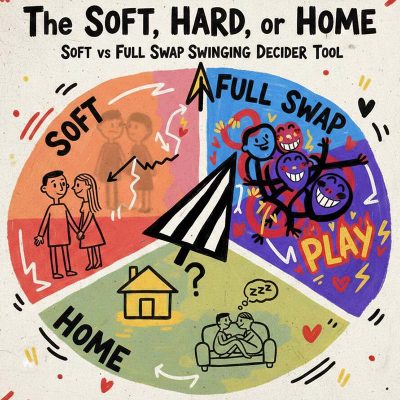
Don't let a "Soft Swap" night turn into a "Hard Feelings" morning.
Walking into the club with different expectations is a grenade waiting to explode. He thinks it’s a free-for-all; she thinks it’s just drinks and dancing. That silence in the car ride home? That’s the sound of a preventable disaster.
Stop guessing. Use this tool to sync your "sexual GPS" before you leave the driveway. Determine exactly how wild you’re getting tonight, so the only surprise is how much fun you have.
The fantasy of swinging is electric, but that cold sweat you feel when thinking about your partner with someone else? That’s your survival instinct warning you that your foundation is at stake. Most couples don’t fail because they lacked desire; they fail because they lacked a safety net. Ambiguity is where jealousy festers, and "winging it" is the fastest way to turn a dream into a nightmare of resentment and "what have we done?"
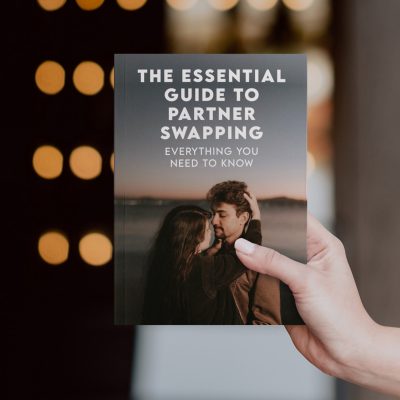
The Essential Guide to Swinging is your anxiety-proof roadmap through the chaos. Don't gamble your marriage on hope. Build a fortress of trust, master the repair chats, and ensure your exploration is defined by care, not a catastrophe
Full swap is the deep end. The rush is intense, but so is the risk of emotional wreckage. That tightening in your chest isn’t just nerves; it’s the fear that a "fun night" could become a permanent scar on your marriage. You can’t un-ring this bell, so never strike it without a plan.
The Essential Guide to Full Swap Swinging replaces reckless gambling with calculated discipline. From ironclad vetting to "emergency brake" scripts, we provide the safety architecture required to swap bodies without losing your minds. Don't just hope it goes well, engineer it
Gemini said
The fantasy is electric. The reality? It can be a grenade that blows up your marriage and your social circle. That tightening in your chest isn't just nerves. It is a warning that you are risking everything on a vibe. "Winging it" is the fastest way to turn a fun group chat into a toxic war zone.
The Essential Guide replaces the chaos with ironclad protocols. We provide the vetting tools, jealousy airlocks, and privacy scripts needed to swap bodies without losing your mind. Secure your safety first.
The fantasy of swinging is electric, but that cold sweat you feel when thinking about your partner with someone else? That’s your survival instinct warning you that your foundation is at stake. Most couples don’t fail because they lacked desire; they fail because they lacked a safety net. Ambiguity is where jealousy festers, and "winging it" is the fastest way to turn a dream into a nightmare of resentment and "what have we done?"
The Essential Guide to Swinging is your anxiety-proof roadmap through the chaos. Don't gamble your marriage on hope. Build a fortress of trust, master the repair chats, and ensure your exploration is defined by care, not a catastrophe
Full swap is the deep end. The rush is intense, but so is the risk of emotional wreckage. That tightening in your chest isn’t just nerves; it’s the fear that a "fun night" could become a permanent scar on your marriage. You can’t un-ring this bell, so never strike it without a plan.
The Essential Guide to Full Swap Swinging replaces reckless gambling with calculated discipline. From ironclad vetting to "emergency brake" scripts, we provide the safety architecture required to swap bodies without losing your minds. Don't just hope it goes well, engineer it
Open relationships how they differ from swinging
Open relationships are defined by the possibility of dating or having sexual relationships with others outside the primary partnership. The key difference from swinging is that open relationships often involve ongoing outside relationships that may include romance. There is a stronger emphasis on emotional connection beyond sex. In open relationships the primary relationship remains central even as outside connections develop. The structure can be very flexible. Some people navigate long term dating outside their main relationship while others simply enjoy occasional dates. The important factor is mutual consent clear communication and shared expectations.
How open relationships operate in real life
In practice open relationships require time management and careful emotional planning. People may use calendars to coordinate dates and to avoid conflicting commitments. They may define time boundaries for the primary partner to ensure that the home life remains stable. They may also set rules about how much information is shared with other people and when. Openness is a choice that must be supported by trust honesty and respect. When done well an open relationship can broaden emotional support networks while still keeping a strong sense of partnership between core partners.
Polyamory the possibility of multiple ongoing romantic bonds
Polyamory invites multiple romantic connections that can be ongoing and emotionally intimate. People in polyamorous arrangements often value transparency honesty and equal consideration for all partners involved. The relationships can be hierarchical where one partner has a primary relationship and others are secondary or non hierarchical where all relationships hold similar importance. Some polyamorous networks include shared friend groups living arrangements and even children. The emphasis in polyamory is on consent and communication across all involved people. It is a flexible approach that allows for a broad range of connections and arrangements.
How polyamory plays out in daily life
Polyamory can involve frequent communication with multiple partners. People often share schedules discuss expectations around time and emotional energy and practice careful boundary setting. The aim is to avoid neglect and to ensure that each connection receives appropriate attention. People sometimes worry about complexity but most who practice polyamory develop routines and tools that help them stay organized and emotionally connected. A common approach is to designate time for each partner and to ensure that each relationship has room to grow while respecting the others.
Comparing the dynamics side by side
Let us put swinging open relationships and polyamory on a simple map. In swinging the emphasis is usually sexual exchange between partners with limited emotional entanglement with the outside partners. In open relationships the outside connections may involve dating and some romance but the primary partnership remains central. In polyamory the emotional tide often flows toward multiple people and the relationships can be equally important. Each path has strengths and challenges. Some people enjoy the social energy of swinging while others prefer the emotional depth of polyamory. The key is to know what you want and to negotiate that clearly with your partner or partners.
Real life scenarios to think through
Scenario one involves a couple who wants to spice up their sex life. They decide to try swinging with another couple at a friendly party. They set a few boundaries including no kissing in the living room and no talking about outside relationships for the night. They explicitly agree to stop any activity if anyone feels uncomfortable. After the event they check in with each other to ensure that both feel positive about the experience. Scenario two follows two partners who decide to pursue outside dating on a monthly basis while maintaining their primary bond at home. They discuss what types of dates count and how much information they share. They also talk about how to handle possible jealousy and how to celebrate the joys of each connection. Scenario three depicts a triad where three people form a single loving unit. They navigate time management emotional availability and household logistics with weekly planning meetings. They emphasize consent honesty and clear communication as the pillars that hold the relationships together.
Common myths busted
- Myth one swinging equals romance free sex. Reality swings often include social bonds and a focus on consent and fun. Some people do seek purely sexual experiences but many also build friendships and supportive networks through swinging.
- Myth two polyamory means infinite partners. Reality polyamory is about multiple relationships that work for the people involved. It does not require dozens of partners. The number is chosen by each person depending on capacity time and energy.
- Myth three open relationships are unstable. Reality well managed open relationships can be stable and fulfilling. They require strong communication trust and mutually agreed boundaries. When these elements are in place relationships can thrive and adapt as life changes.
- Myth four jealously is a sign that ENM is not working. Reality jealousy is common in many relationship styles. It becomes a signal to pause reflect and talk through what is needed to feel secure. Jealousy is manageable with empathy and planning.
Don't let a "Soft Swap" night turn into a "Hard Feelings" morning.
Walking into the club with different expectations is a grenade waiting to explode. He thinks it’s a free-for-all; she thinks it’s just drinks and dancing. That silence in the car ride home? That’s the sound of a preventable disaster.
Stop guessing. Use this tool to sync your "sexual GPS" before you leave the driveway. Determine exactly how wild you’re getting tonight, so the only surprise is how much fun you have.
The fantasy of swinging is electric, but that cold sweat you feel when thinking about your partner with someone else? That’s your survival instinct warning you that your foundation is at stake. Most couples don’t fail because they lacked desire; they fail because they lacked a safety net. Ambiguity is where jealousy festers, and "winging it" is the fastest way to turn a dream into a nightmare of resentment and "what have we done?"
The Essential Guide to Swinging is your anxiety-proof roadmap through the chaos. Don't gamble your marriage on hope. Build a fortress of trust, master the repair chats, and ensure your exploration is defined by care, not a catastrophe
Full swap is the deep end. The rush is intense, but so is the risk of emotional wreckage. That tightening in your chest isn’t just nerves; it’s the fear that a "fun night" could become a permanent scar on your marriage. You can’t un-ring this bell, so never strike it without a plan.
The Essential Guide to Full Swap Swinging replaces reckless gambling with calculated discipline. From ironclad vetting to "emergency brake" scripts, we provide the safety architecture required to swap bodies without losing your minds. Don't just hope it goes well, engineer it
Gemini said
The fantasy is electric. The reality? It can be a grenade that blows up your marriage and your social circle. That tightening in your chest isn't just nerves. It is a warning that you are risking everything on a vibe. "Winging it" is the fastest way to turn a fun group chat into a toxic war zone.
The Essential Guide replaces the chaos with ironclad protocols. We provide the vetting tools, jealousy airlocks, and privacy scripts needed to swap bodies without losing your mind. Secure your safety first.
The fantasy of swinging is electric, but that cold sweat you feel when thinking about your partner with someone else? That’s your survival instinct warning you that your foundation is at stake. Most couples don’t fail because they lacked desire; they fail because they lacked a safety net. Ambiguity is where jealousy festers, and "winging it" is the fastest way to turn a dream into a nightmare of resentment and "what have we done?"
The Essential Guide to Swinging is your anxiety-proof roadmap through the chaos. Don't gamble your marriage on hope. Build a fortress of trust, master the repair chats, and ensure your exploration is defined by care, not a catastrophe
Full swap is the deep end. The rush is intense, but so is the risk of emotional wreckage. That tightening in your chest isn’t just nerves; it’s the fear that a "fun night" could become a permanent scar on your marriage. You can’t un-ring this bell, so never strike it without a plan.
The Essential Guide to Full Swap Swinging replaces reckless gambling with calculated discipline. From ironclad vetting to "emergency brake" scripts, we provide the safety architecture required to swap bodies without losing your minds. Don't just hope it goes well, engineer it
How to choose the right path for you
The decision should begin with a candid conversation with yourself and your partner or partners. Ask questions like what do you hope to gain what fears do you have what boundaries feel essential and what would a successful arrangement look like for you. Consider your current life stage and your emotional capacity. It is perfectly fine to start with swinging to test the waters and then shift toward polyamory or open relationships if that feels right. Be open to changing directions as you grow and as relationships evolve. The most important ingredients are consent honesty and ongoing communication.
Getting started with a first conversation
Choosing the right moment to talk helps. Pick a calm time when you both feel safe and relaxed. Start with a gentle honest tone. Explain your desires your questions and your concerns. Ask for your partner s perspective without interrupting. Listen for real feelings and then reflect together. You can propose a trial period or a pilot plan with clear evaluation points. The goal is a plan that respects both people and sets the stage for trust to deepen or for you to decide to pause and reassess.
Questions to explore before you commit
- What are your core values and does ENM align with them
- What level of emotional involvement do you want outside the primary relationship
- How will you manage time energy and finances
- What are the safety expectations including testing and protection
- How will you handle conflict and what will count as a breach of trust
- How will you protect your privacy and the privacy of others
- What is your plan if one person wants more or less involvement than the others
Boundaries and agreements by dynamic
Swinging boundaries
In swinging many couples set boundaries around who can be involved how far the interaction may go and how information is shared. Common boundaries include no outside dating for a specific period often called a policy the right to stop at any time the agreement to check in with the partner after encounters and rules about the setting of the encounter such as at a club or at a private home. It is helpful to create a simple check in process to ensure that both partners feel respected and heard.
Open relationship boundaries
Open relationships often use boundaries that relate to emotional involvement intimate communication with outside partners and how much detail will be shared. Some partners may want to know when a date is happening who the other person is and how they will conduct themselves during the date. Others may prefer privacy and a more generalized update. The key is to decide together what feels fair to both people and to revisit the boundaries regularly as the relationship grows or changes.
Polyamory boundaries
Polyamory boundaries tend to be more intricate because there are multiple emotional connections. Boundaries may address time allocation emotional energy how to handle holidays or family gatherings and how to manage potential conflicts of interest. Many polyamorous people keep calendars open and use transparent communication practices to avoid surprises. The group may decide on a shared language for messaging dates and a process for discussing new relationships that can affect existing ones.
Practical tips for a healthy ENM journey
- Start with honest discussions about needs and expectations. Avoid assuming. Clarify what each person wants and what counts as a successful outcome.
- Practice ongoing consent. Check in regularly even when things seem to be going smoothly.
- Keep safety front and center. Get regular STI testing when needed and use protection appropriately. Have open conversations about risk and health.
- Respect privacy for everyone involved. Do not reveal private details without consent.
- Be mindful of emotional energy. Don t overextend yourself beyond what you can handle. It is okay to slow down or pause.
- Seek support outside the relationship if needed. A trusted friend therapist or community can help you process emotions and decide what is best for you.
- Develop a strong foundation in your primary relationship. A secure base makes exploring outside connections healthier and more enjoyable.
- Learn the language of consent and communication. Words matter and clear messages reduce misreads and hurt feelings.
Glossary of useful terms and acronyms
- ENM Ethical Non Monogamy. A broad term describing relationship styles that involve more than two people with consent and honesty.
- Swinging A sexual style where couples swap partners for sexual experiences usually with boundaries to protect all involved.
- Open relationship A relationship where outside dating or sexual connections are allowed with the knowledge and consent of the partner.
- Polyamory The practice of having multiple romantic relationships with consent from all involved.
- NRE New Relationship Energy. The excitement and rush that come with starting a new relationship.
- Jealousy An emotion that can arise when a partner forms connections with others. It is a signal to talk and adjust boundaries.
- Compersion A feeling of joy or happiness when a partner experiences positive feelings with someone else.
- Consent Clear voluntary agreement to engage in a specific activity. It is ongoing and can be withdrawn at any time.
- Boundaries Personal limits about what is allowed or not allowed in a relationship or interaction.
- Agreement A stated understanding about how encounters will occur including rules and expectations.
Frequently asked questions
What is the main difference between swinging and polyamory
Swinging focuses on sexual interactions often with a primary couple and typically involves limited emotional involvement with others. Polyamory centers on multiple romantic relationships with ongoing emotional connections that may be equally important as the primary relationship.
Is open relationship the same as swinging
No. An open relationship is about allowing sexual or romantic connections outside the primary relationship with consent. Swinging is a form of ENM that emphasizes sexual experiences often without romantic entanglement with the outside partner.
Can a couple be both swinging and polyamorous
Yes it is possible. Some couples start with swinging then explore deeper emotional connections that evolve into polyamory. The important factor is ongoing consent honest communication and clear boundaries that work for all involved.
How do I know which path is right for me
Take time to reflect on what you want emotionally physically and mentally. Talk with your partner about your needs and how much energy you want to devote to outside connections. Consider starting with a trial period and then reassessing. There is no right or wrong answer only what feels right for you and your partner.
What about children and family in ENM arrangements
Families and children complicate ENM dynamics in unique ways. It is essential to be mindful of privacy and the impact on children. Decisions about disclosure should be guided by what is appropriate for the children and what respects the boundaries of the adults involved. If you have or anticipate children it can help to involve professional guidance to navigate complex situations safely.
How do I manage jealousy when exploring ENM
Jealousy is normal. The best approach is to acknowledge the feeling and name it. Talk about what triggered it and what reassurance would help. Revisit boundaries if necessary and practice self care. It is also useful to shift focus toward compersion to celebrate the happiness of a partner in their other relationship.
Can I initiate ENM with a new partner
Yes you can. The most important step is honest conversation and consent from all involved. Talk about your intentions what you hope to share and how you will handle boundaries. Open communication reduces confusion and sets you up for success.
Do I need to tell friends or family about ENM
Only if you want to share. It is perfectly acceptable to keep your personal life private. If you do choose to share remember that you have control over what you reveal and to whom. You can talk with trusted friends or a therapist if you need support while you navigate these decisions.
What is compersion and how do I cultivate it
Compersion is the positive feeling you may have when your partner experiences joy with another person. Cultivating it involves re framing and focusing on the happiness of your partner rather than feeling threatened. It grows with honest communication and a sense of security in your primary relationship.
Practical tools to facilitate healthy ENM
- Conversation starter templates that help you begin discussions without pressure
- Weekly check in rituals to ensure both partners feel heard
- Simple safety planning including STI testing and consent refreshers
- Privacy controls and boundaries for information sharing
- Clear escalation paths for addressing concerns or breaches of trust
Remember ENM is not a performance it is a way to preserve and enhance relationships while exploring new connections. The path you choose should feel sustainable and supportive for you and your partner. There is no universal right formula the only essential ingredients are consent honesty and ongoing communication. If you feel uncertain you are not alone and there are resources and communities that can help you learn as you go. The Monogamy Experiment is here to explain terms share real world scenarios and help you think clearly about what you want from your relationships.
Checklist before you step into any ENM dynamic
- Confirm your own goals and boundaries first before involving a partner
- Have a candid talk with your partner about what you both want and fear
- Agree on how you will handle NRE and jealousy
- Establish safe sex practices and testing schedules
- Decide how you will communicate about experiences with others
- Determine how you will protect privacy and respect others involved
- Agree on a plan to reassess agreements after a trial period
Don't let a "Soft Swap" night turn into a "Hard Feelings" morning.
Walking into the club with different expectations is a grenade waiting to explode. He thinks it’s a free-for-all; she thinks it’s just drinks and dancing. That silence in the car ride home? That’s the sound of a preventable disaster.
Stop guessing. Use this tool to sync your "sexual GPS" before you leave the driveway. Determine exactly how wild you’re getting tonight, so the only surprise is how much fun you have.
The fantasy of swinging is electric, but that cold sweat you feel when thinking about your partner with someone else? That’s your survival instinct warning you that your foundation is at stake. Most couples don’t fail because they lacked desire; they fail because they lacked a safety net. Ambiguity is where jealousy festers, and "winging it" is the fastest way to turn a dream into a nightmare of resentment and "what have we done?"
The Essential Guide to Swinging is your anxiety-proof roadmap through the chaos. Don't gamble your marriage on hope. Build a fortress of trust, master the repair chats, and ensure your exploration is defined by care, not a catastrophe
Full swap is the deep end. The rush is intense, but so is the risk of emotional wreckage. That tightening in your chest isn’t just nerves; it’s the fear that a "fun night" could become a permanent scar on your marriage. You can’t un-ring this bell, so never strike it without a plan.
The Essential Guide to Full Swap Swinging replaces reckless gambling with calculated discipline. From ironclad vetting to "emergency brake" scripts, we provide the safety architecture required to swap bodies without losing your minds. Don't just hope it goes well, engineer it
Gemini said
The fantasy is electric. The reality? It can be a grenade that blows up your marriage and your social circle. That tightening in your chest isn't just nerves. It is a warning that you are risking everything on a vibe. "Winging it" is the fastest way to turn a fun group chat into a toxic war zone.
The Essential Guide replaces the chaos with ironclad protocols. We provide the vetting tools, jealousy airlocks, and privacy scripts needed to swap bodies without losing your mind. Secure your safety first.
The fantasy of swinging is electric, but that cold sweat you feel when thinking about your partner with someone else? That’s your survival instinct warning you that your foundation is at stake. Most couples don’t fail because they lacked desire; they fail because they lacked a safety net. Ambiguity is where jealousy festers, and "winging it" is the fastest way to turn a dream into a nightmare of resentment and "what have we done?"
The Essential Guide to Swinging is your anxiety-proof roadmap through the chaos. Don't gamble your marriage on hope. Build a fortress of trust, master the repair chats, and ensure your exploration is defined by care, not a catastrophe
Full swap is the deep end. The rush is intense, but so is the risk of emotional wreckage. That tightening in your chest isn’t just nerves; it’s the fear that a "fun night" could become a permanent scar on your marriage. You can’t un-ring this bell, so never strike it without a plan.
The Essential Guide to Full Swap Swinging replaces reckless gambling with calculated discipline. From ironclad vetting to "emergency brake" scripts, we provide the safety architecture required to swap bodies without losing your minds. Don't just hope it goes well, engineer it
