
Warning Signs of Unhealthy Swinging Dynamics

Welcome friend. If you are exploring the swinging ENM world which stands for ethical non monogamy you are not alone. This guide is here to help you see red flags early so you can protect your wellbeing and your relationships. Swinging is about freedom to connect with others while keeping respect and consent as the North Star. When that framework shows stress or starts to crumble you may be entering an unhealthy space. This guide explains the warning signs in plain language with relatable examples and practical steps. We break down terms so you never get lost in the jargon and we offer real world strategies to address issues before they become deal breakers.
Quick Links to Useful Sections
- What swinging means in this context
- Common healthy patterns to hold onto
- Red flags you should not ignore
- 1. Boundary violations without accountability
- 2. Pressuring consent or insisting on activities
- 3. Gaslighting or denying feelings
- 4. Persistent secrecy and hidden arrangements
- 5. Imbalance of emotional labor or decision making
- 6. Belittling or shaming language
- 7. Jealousy that never clears or becomes chronic
- 8. One partner controls the social life or access to friends and events
- 9. Repeated safety or health risks without a plan
- 10. Coercive financial or practical pressure
- 11. The relationship feels unsafe or emotionally volatile
- Important terms and acronyms explained
- Ultra practical signs you need to pause and talk
- How to address red flags in a constructive way
- What to do if you feel unsafe or there is emotional abuse
- Realistic scenarios and how to handle them
- Scenario A how to voice a boundary calmly
- Scenario B addressing coarse or coercive language
- Scenario C dealing with a health risk
- Scenario D dealing with social boundaries
- Practical safety and health considerations
- The exit option is a valid option
- Checklist for a healthy swing into next steps
- Glossary of useful terms and acronyms
- Frequently asked questions
We treat this topic with care and a touch of humor because the last thing you want is a boring lecture when you are navigating something personally charged. If you are new to swinging or you are re evaluating a current dynamic this article is for you. It is written in a straightforward style and includes concrete steps you can take today.
What swinging means in this context
First a quick refresher. Swinging is a form of ethical non monogamy where committed partners choose to engage in sexual activities with other people usually as a couple or with a partner outside the couple. The key idea is consent honest communication and renegotiation as needed. There are many flavors of swinging from casual occasional play to structured rules and ongoing arrangements. The core idea is openness and mutual respect even when desire runs hot.
In a healthy swinging dynamic all parties feel heard and safe. Boundaries are discussed before any sexual activity happens and there is a plan for risk reduction and health. In unhealthy dynamics those boundaries are ignored the safe space is not respected and the emotional price tag goes up quickly. The difference is usually clear in the daily lived experience. When you see patterns of control secrecy coercion or neglect it is a sign to pause and check in.
Common healthy patterns to hold onto
Before we dive into warning signs it helps to name a few healthy indicators so you can spot the contrast more easily. In healthy swinging dynamics you will often see:
- Regular and honest communication about needs desires and boundaries
- Clear consent that is ongoing and freely given
- Mutual respect for both partners together and individually
- Open conversations about jealousy and how to handle it
- Practice of safe sex and clear agreements about sexual health testing and protection
- Time for the primary relationship and sensitive attention to emotional needs
- Willingness to renegotiate rules when life changes or when something does not feel right
- Non punitive responses when mistakes are made and apologies offered when needed
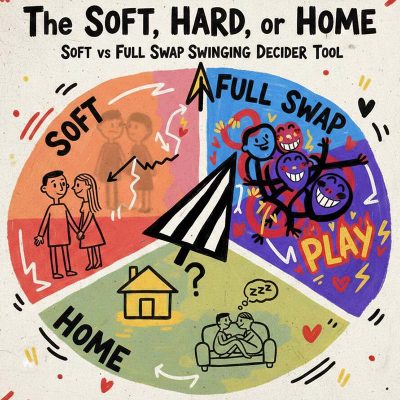
Don't let a "Soft Swap" night turn into a "Hard Feelings" morning.
Walking into the club with different expectations is a grenade waiting to explode. He thinks it’s a free-for-all; she thinks it’s just drinks and dancing. That silence in the car ride home? That’s the sound of a preventable disaster.
Stop guessing. Use this tool to sync your "sexual GPS" before you leave the driveway. Determine exactly how wild you’re getting tonight, so the only surprise is how much fun you have.
The fantasy of swinging is electric, but that cold sweat you feel when thinking about your partner with someone else? That’s your survival instinct warning you that your foundation is at stake. Most couples don’t fail because they lacked desire; they fail because they lacked a safety net. Ambiguity is where jealousy festers, and "winging it" is the fastest way to turn a dream into a nightmare of resentment and "what have we done?"
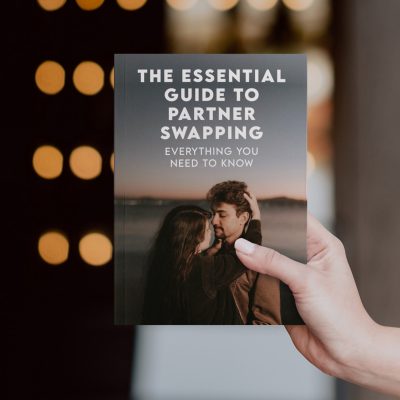
The Essential Guide to Swinging is your anxiety-proof roadmap through the chaos. Don't gamble your marriage on hope. Build a fortress of trust, master the repair chats, and ensure your exploration is defined by care, not a catastrophe
Full swap is the deep end. The rush is intense, but so is the risk of emotional wreckage. That tightening in your chest isn’t just nerves; it’s the fear that a "fun night" could become a permanent scar on your marriage. You can’t un-ring this bell, so never strike it without a plan.
The Essential Guide to Full Swap Swinging replaces reckless gambling with calculated discipline. From ironclad vetting to "emergency brake" scripts, we provide the safety architecture required to swap bodies without losing your minds. Don't just hope it goes well, engineer it
Gemini said
The fantasy is electric. The reality? It can be a grenade that blows up your marriage and your social circle. That tightening in your chest isn't just nerves. It is a warning that you are risking everything on a vibe. "Winging it" is the fastest way to turn a fun group chat into a toxic war zone.
The Essential Guide replaces the chaos with ironclad protocols. We provide the vetting tools, jealousy airlocks, and privacy scripts needed to swap bodies without losing your mind. Secure your safety first.
The fantasy of swinging is electric, but that cold sweat you feel when thinking about your partner with someone else? That’s your survival instinct warning you that your foundation is at stake. Most couples don’t fail because they lacked desire; they fail because they lacked a safety net. Ambiguity is where jealousy festers, and "winging it" is the fastest way to turn a dream into a nightmare of resentment and "what have we done?"
The Essential Guide to Swinging is your anxiety-proof roadmap through the chaos. Don't gamble your marriage on hope. Build a fortress of trust, master the repair chats, and ensure your exploration is defined by care, not a catastrophe
Full swap is the deep end. The rush is intense, but so is the risk of emotional wreckage. That tightening in your chest isn’t just nerves; it’s the fear that a "fun night" could become a permanent scar on your marriage. You can’t un-ring this bell, so never strike it without a plan.
The Essential Guide to Full Swap Swinging replaces reckless gambling with calculated discipline. From ironclad vetting to "emergency brake" scripts, we provide the safety architecture required to swap bodies without losing your minds. Don't just hope it goes well, engineer it
Red flags you should not ignore
1. Boundary violations without accountability
Boundaries are the agreed lines that protect comfort and safety. When boundaries are discussed they should be clear and documented in some form. If one or more boundaries keep shifting without a real discussion or if someone habitually crosses a line and excuses the behavior you have a boundary violation problem. When violations happen and there is no meaningful accountability people start to feel disrespected and unsafe. This is a strong indicator of an unhealthy pattern.
2. Pressuring consent or insisting on activities
Consent must be enthusiastic and ongoing. If one partner consistently pushes for new experiences even after the other person says no or seems unsure that is a coercive pattern. Coercion is a red flag that can shift a dynamic from curious and playful to controlling and unsafe. Talk about why a partner feels pressure and whether pressure relates to insecurity or fear. Address underlying needs rather than forcing outcomes.
3. Gaslighting or denying feelings
Gaslighting means denying your emotions claiming you are overreacting or making you feel crazy for noticing things. In a healthy dynamic partners validate each other and work through concerns even when it is uncomfortable. If a partner constantly questions your memory or your right to feel how you feel this is a serious red flag.
4. Persistent secrecy and hidden arrangements
Secrecy is a surefire way to erode trust. If one partner hides dates plans details or who they are with you are living in a covert environment. Healthy swinging relies on transparency where both people are comfortable with sharing at least the essential details. If secrecy becomes the norm you should pause and talk through why information is being withheld.
5. Imbalance of emotional labor or decision making
In a balanced dynamic both partners contribute to planning communication emotional maintenance and decision making. If one person carries all of this heavy lifting and the other person is passive or dismissive you are looking at a power imbalance that can cause resentment over time. Emotional labor should be shared and renegotiated as needed.
6. Belittling or shaming language
Words matter. If you hear comments that shame your body your choices or your desires that creates a toxic atmosphere. A healthy dynamic uses respectful language even when voices rise or opinions differ. Humiliation is a sure sign that the relationship is headed for trouble.
7. Jealousy that never clears or becomes chronic
Jealousy is a natural signal that something needs attention. In a healthy dynamic jealousy is acknowledged discussed and managed with concrete steps to feel safer. If jealousy grows and never improves or becomes a reason to punish or control a partner you are dealing with unhealthy patterns.
8. One partner controls the social life or access to friends and events
Control over who a partner sees where they go or what they do socially is a red flag. A healthy dynamic supports other relationships and social connections. If one person uses social control to isolate or manipulate the other this is a serious warning sign.
9. Repeated safety or health risks without a plan
Safety comes first. If there are persistent sexual health risks without a plan for testing protection or communication you are playing with physical health. This includes ignoring STI status misrepresenting testing results or avoiding open discussion about protection methods.
10. Coercive financial or practical pressure
Money and logistics can be a pressure point. If someone uses money time access or housing as leverage to push a certain outcome this is a coercive tactic. Healthy ENM dynamics separate romance from money and always keep agreements fair and explicit.
11. The relationship feels unsafe or emotionally volatile
Abuse can show up as emotional volatility fear of leaving a room constant arguing or a sense of danger when a partner is present. If you feel unsafe in any room or conversation trust your instincts and seek support. Nobody should justify fear as part of a sexual adventure.
Important terms and acronyms explained
We will explain common terms you may encounter in swinging oriented conversations. Knowing these helps you speak clearly and set better boundaries.
- ENM st and for ethical non monogamy. A broad term for relationships that are open to more than one romantic or sexual connection with all parties aware and consenting.
- Swinging A form of ENM where committed partners engage in sexual activities with other people usually in a social setting or through planned experiences while maintaining a primary relationship.
- Boundaries The explicit lines that define what is acceptable and what is not in a relationship. Boundaries are personal and may be updated over time.
- Consent The agreement to participate that is given freely and can be revoked at any time. Consent must be informed and enthusiastic.
- Jealousy A natural emotion that occurs when a person perceives a threat to a valued relationship. Healthy dynamics address jealousy with empathy and practical steps.
- Compersion The positive feeling when a partner experiences joy through the happiness or pleasure of another partner. A goal in many ENM circles but not a requirement.
- Communication plan A structured approach to how partners talk about needs desires jealousy and boundaries. This plan often includes regular check ins and agreed methods for difficult conversations.
- Safe sex practices Actions taken to reduce risk of sexually transmitted infections including the use of barriers regular testing and clear discussions about sexual health status.
- renegotiation The process of revisiting and adjusting agreements as life changes or feelings shift. This is a normal and healthy part of any ENM dynamic.
- Unicorn A term used to describe a person who joins a couple in a romantic or sexual dynamic. Some consider the term problematic so schools of thought vary on use.
Ultra practical signs you need to pause and talk
Let us zoom in on practical signs you can notice in daily life that indicate the dynamic may be moving toward an unhealthy space. This list is not exhaustive but it mirrors common experiences reported by people in swinging circles who later realized they were in trouble.
First do a quick gut check. If the answer to most of these questions is yes then take time to slow down and discuss with your partner or partners. The goal is safety and honesty not punishment or guilt.
- Do you feel you cannot express fear or jealousy without being accused of being closed minded or unfair to your partner
- Are there repeated hidden plans that exclude you from important decisions or conversations about play
- Do you notice a pattern of last minute cancellations or rescheduling that consistently favors one partner
- Is there a sense that one person is controlling the pace of the dynamic and the other is handcuffed to the plan
- Are you constantly apologizing for your reactions or feeling dismissed when you raise concerns
- Is there a sense that safety measures like condom use or STI status are being ignored or minimized
- Have you seen a drift in emotional support where one partner gives less empathy or less attention to the primary relationship
- Do you hear phrases that threaten to end the relationship if you do not comply with a specific sexual arrangement
How to address red flags in a constructive way
If you spot warning signs the next move matters. Here are practical steps you can take to address concerns while preserving safety and respect for all involved.
- Pause the activity Put the planned play on hold while you have a serious conversation. A break in activity gives space to think and heal.
- Schedule a dedicated boundary session Set aside time to discuss boundaries boundaries must be clear and revisited if needed. Do not mix with everyday chores or casual talk about feelings.
- Share specifics not accusations Use concrete examples to explain how a boundary was crossed or why a feeling rose. Avoid generalizations that can escalate tensions.
- Check in with the primary relationship first Your core bond matters most. Make sure you are both emotionally connected and supported before expanding into other sexual territories.
- Document agreements Write down what was decided and how you will handle future changes. A simple written plan can prevent misunderstandings.
- renegotiate with fairness Re balance if life changes or if someone feels overwhelmed. A fair renegotiation can save a relationship that is worth saving.
- Seek outside support If the tension feels heavy or if there is fear of harm consider seeing a therapist or a couple's counselor who is experienced with ENM issues.
What to do if you feel unsafe or there is emotional abuse
Your safety comes first. If you fear for your physical safety or if you experience ongoing emotional abuse you should take immediate steps to protect yourself. Reach out to trusted friends family or a professional for support. If there is imminent danger contact local emergency services. You do not have to stay in a situation just to avoid conflict or to keep someone else from feeling upset. There are resources and there is a path to safety and healing.
Realistic scenarios and how to handle them
Let us walk through a few simple scenarios with practical responses. The aim is to give you language you can actually use in a tense moment. These samples are not legal or medical advice but they model constructive conversations you can adapt to your own voice and circumstances.
Scenario A how to voice a boundary calmly
Imagine your partner wants to pursue a play night with a new partner without telling you details. You feel uncertain and want more transparency. A good approach is to say I feel anxious when we plan without a shared overview of who is involved and what is expected. I would like us to review plans together and confirm consent and boundaries before any new activity takes place. Does that feel possible for you
Scenario B addressing coarse or coercive language
If your partner uses guilt or pressure you can reply I hear that you want this outcome but I cannot consent to a plan that makes me feel trapped or pressured. I want to discuss what would make this feel safe for both of us and I am not prepared to proceed until we have that conversation. Let us slow down and talk through the concerns together.
Scenario C dealing with a health risk
Say we have a new plan and one of us learns about a possible exposure risk. A useful response isThank you for telling me. I want us to pause and arrange STI testing for both of us and review our safety plan. I am personally committed to protecting our health and we can decide together how to move forward after the results are in.
Scenario D dealing with social boundaries
If a social event involving another partner would cause discomfort you can state I am not comfortable with a public event right now. I want to continue with private meetups until we are both confident we can handle social settings together. We can revisit this after a few honest conversations and a clear plan for how we will communicate during the event.
Practical safety and health considerations
Health and safety are non negotiables in swinging. Here are practical steps to keep everyone safe and respectful. This is not about policing desire but about reducing risk and ensuring consent remains active and enthusiastic.
- agree on open and honest health status disclosure including testing frequency and results
- use barrier methods consistently and carry protection for spontaneous play
- schedule time for regular check ins about sexual health concerns and emotional safety
- document agreements and ensure all parties know the current rules and when they were last updated
- practice consent as ongoing not a one time checkbox and revisit if feelings shift
The exit option is a valid option
Sometimes the healthiest thing is to step back from swinging entirely or to restructure the arrangement. If you feel your needs are not being respected or if fear or pain dominates each attempt to connect then stepping away can be the most respectful choice. Ending or pausing a dynamic does not reflect badly on you. It reflects your commitment to safety and authenticity.
Checklist for a healthy swing into next steps
- Have you clearly defined boundaries and obtained enthusiastic consent from all involved
- Is there an ongoing plan for communication and renegotiation
- Are health safety measures clear and practiced by all
- Is there visible emotional support for the primary relationship and individual partners
- Do you have a clear plan for how to pause or exit if needed
Glossary of useful terms and acronyms
- ENM Ethical non monogamy a family of relationship styles that embrace honesty consent and open communication when pursuing more than one sexual or romantic connection.
- Swinging A form of ENM where couples engage sexually with others often in social settings or planned events while maintaining their primary relationship.
- Consent A voluntary and informed agreement to participate that can be withdrawn at any time. It must be freely given and enthusiastic.
- Boundaries Boundaries are personal rules about what is okay and what is not in your relationship. They can be updated as needed.
- Jealousy A normal emotion that signals a need for attention or reassurance. It is best handled with empathy and practical actions.
- Compersion The sense of happiness when your partner experiences joy with someone else. It is a goal but not always easy to achieve.
- renegotiation Re examining and updating agreements based on new feelings or life changes. This is a normal part of ENM life.
- STI A sexually transmitted infection. Regular testing and safe practices reduce risk and build trust.
- Unicorn A term sometimes used to describe a single person who joins a couple for a sexual or romantic arrangement. Language around this term varies across communities.
Frequently asked questions
What are the warning signs of an unhealthy swinging dynamic
Warning signs include boundary violations without accountability secrecy and hidden arrangements coercion pressure emotional abuse and persistent safety concerns without a plan. If you notice more than one red flag it is time to pause and discuss with your partner or partners and consider seeking professional help.
How can I talk to my partner about concerns without triggering a fight
Use a calm tone state your observations without blame and express how you feel. Use specific examples and avoid generalizations. Propose a plan for addressing the issue together and invite input from your partner. The goal is to solve the problem not to win an argument.
What should I do if I feel pressured into something
Acknowledge the pressure name it and pause the activity. Say I do not feel comfortable with this at the moment and I need to pause to think. If the pressure continues you may need to restrict contact or consider stepping back from the dynamic while you regain clarity and safety.
Is jealousy always a red flag
Jealousy is a normal signal that deserves attention. It becomes a red flag when it is managed with cruelty coercion or constant manipulation. If jealousy is persistent and unaddressed it is time to seek help and renegotiate boundaries or consider stepping away from play until you feel safe again.
How do I protect my health in a swinging dynamic
Make health a central agreement. Discuss STI testing schedules protect against infections with barriers and use honest communication about results. Do not engage in sexual activities with someone until you are certain about protection and status and you have consent from all parties involved.
What is compersion and why does it matter
Compersion is the ability to feel happy for your partner when they experience joy or arousal with someone else. It is a sign of emotional maturity in ENM spaces. It can be difficult but it is a useful goal that strengthens trust and connection.
When should I consider ending the swinging arrangement
If boundaries are repeatedly crossed without accountability if coercion is present if secrecy is normal if safety concerns are not addressed or if the relationship feels unsafe or unsustainable then ending the arrangement is a valid option. Your safety and happiness come first.
Don't let a "Soft Swap" night turn into a "Hard Feelings" morning.
Walking into the club with different expectations is a grenade waiting to explode. He thinks it’s a free-for-all; she thinks it’s just drinks and dancing. That silence in the car ride home? That’s the sound of a preventable disaster.
Stop guessing. Use this tool to sync your "sexual GPS" before you leave the driveway. Determine exactly how wild you’re getting tonight, so the only surprise is how much fun you have.
The fantasy of swinging is electric, but that cold sweat you feel when thinking about your partner with someone else? That’s your survival instinct warning you that your foundation is at stake. Most couples don’t fail because they lacked desire; they fail because they lacked a safety net. Ambiguity is where jealousy festers, and "winging it" is the fastest way to turn a dream into a nightmare of resentment and "what have we done?"
The Essential Guide to Swinging is your anxiety-proof roadmap through the chaos. Don't gamble your marriage on hope. Build a fortress of trust, master the repair chats, and ensure your exploration is defined by care, not a catastrophe
Full swap is the deep end. The rush is intense, but so is the risk of emotional wreckage. That tightening in your chest isn’t just nerves; it’s the fear that a "fun night" could become a permanent scar on your marriage. You can’t un-ring this bell, so never strike it without a plan.
The Essential Guide to Full Swap Swinging replaces reckless gambling with calculated discipline. From ironclad vetting to "emergency brake" scripts, we provide the safety architecture required to swap bodies without losing your minds. Don't just hope it goes well, engineer it
Gemini said
The fantasy is electric. The reality? It can be a grenade that blows up your marriage and your social circle. That tightening in your chest isn't just nerves. It is a warning that you are risking everything on a vibe. "Winging it" is the fastest way to turn a fun group chat into a toxic war zone.
The Essential Guide replaces the chaos with ironclad protocols. We provide the vetting tools, jealousy airlocks, and privacy scripts needed to swap bodies without losing your mind. Secure your safety first.
The fantasy of swinging is electric, but that cold sweat you feel when thinking about your partner with someone else? That’s your survival instinct warning you that your foundation is at stake. Most couples don’t fail because they lacked desire; they fail because they lacked a safety net. Ambiguity is where jealousy festers, and "winging it" is the fastest way to turn a dream into a nightmare of resentment and "what have we done?"
The Essential Guide to Swinging is your anxiety-proof roadmap through the chaos. Don't gamble your marriage on hope. Build a fortress of trust, master the repair chats, and ensure your exploration is defined by care, not a catastrophe
Full swap is the deep end. The rush is intense, but so is the risk of emotional wreckage. That tightening in your chest isn’t just nerves; it’s the fear that a "fun night" could become a permanent scar on your marriage. You can’t un-ring this bell, so never strike it without a plan.
The Essential Guide to Full Swap Swinging replaces reckless gambling with calculated discipline. From ironclad vetting to "emergency brake" scripts, we provide the safety architecture required to swap bodies without losing your minds. Don't just hope it goes well, engineer it
