
What Counts as Cheating in a Swinging Agreement


Okay friend, let us get real about swinging and ethical non monogamy. You might be in a swinging setup where couples agree to explore sexual experiences with other people while keeping core relationship bonds intact. You might also be new to the idea and wondering what counts as cheating in that world. The short answer is this: it depends on the exact agreement you and your partner or partners have made. There is no one size fits all rule book. The longer answer is that cheating is any action that falls outside the boundaries you have all explicitly agreed to or that is kept secret and not discussed. This guide breaks down what counts as cheating in swinging agreements, explains key terms, offers realistic scenarios and gives you practical steps to keep you and your partners aligned. We keep it practical, down to earth and easy to apply in the wild chaos of dating apps, busy lives and busy brains.
Quick Links to Useful Sections
- Swinging and ethical non monogamy in plain terms
- Key terms you should know and what they mean in practice
- What counts as cheating in a swinging agreement
- Crossing explicit limits
- Secret acts and hidden encounters
- Deception and misrepresentation
- Non disclosure of feelings and impact
- Ambiguous or poorly defined boundaries
- Boundary evolution and renegotiation
- Common boundary templates you can adapt
- Real world scenarios and how to read them
- Scenario one a casual chat with a coworker turns into more
- Scenario two a spontaneous meetup at a party
- Scenario three an online encounter that stays online
- Scenario four evolving feelings after an encounter
- Scenario five a boundary becomes restrictive over time
- Scenario six testing a boundary with consent
- Jealousy and emotions in swinging agreements
- How to prevent cheating before it happens
- What to do if cheating happens in a swinging agreement
- Negotiation and renegotiation as a recurring practice
- Communication strategies that keep swinging agreements healthy
- Glossary of useful terms and acronyms
- Practical tips for keeping a swinging agreement tidy
Swinging and ethical non monogamy in plain terms
Before we dive in, a quick primer on the dynamic to keep everyone on the same page. Swinging is a form of ethical non monogamy known for couples exchanging sexual experiences with others. It is not about sneaking around but about consent communication and boundary setting. When you hear swinging a lot of people think about parties or dedicated events. In real life swinging can happen in many places from private play spaces to social meetups to spontaneous experiences when all parties are on the same page. Ethical non monogamy or ENM is the umbrella term for relationship styles where honesty, consent and openness are valued over secrecy. The goal is to meet everyone’s needs without stepping on anyone else’s boundaries.
In a healthy swinging setup you will hear a few common concepts pop up again and again. Boundaries are the lines you all agree not to cross. Consent is the ongoing yes given by everyone involved. Communication means regular check ins and honest updates about feelings and experiences. Compersion is the positive feeling you get when your partner enjoys themselves with someone else. Metamours are your partner s partner or partners who are not you. These terms help you speak the same language even when feelings get complicated. Now let us get into the specifics of what counts as cheating in this context.
Key terms you should know and what they mean in practice
- Ethical non monogamy ENM A relationship approach that favors honesty consent and open communication rather than secrecy or lies.
- Swinging A form of ENM in which couples choose to engage in sexual experiences with other people, typically with rules or boundaries to protect the primary relationship.
- Boundaries The explicit limits that define where activities stop and who is involved. Boundaries are negotiated by all involved and can change over time.
- Transparency Sharing information about feelings plans and encounters in a timely and honest way so trust can stay strong.
- Consent A voluntary enthusiastic yes from all people involved before any activity begins. Consent is ongoing and can be withdrawn at any time.
- Compersion A feeling of happiness or satisfaction when a partner experiences joy with someone else rather than jealousy or envy.
- Jealousy management A set of strategies to recognize name and address the uncomfortable emotions that can come with ENM.
- Metamour The partner of your partner who is not you.
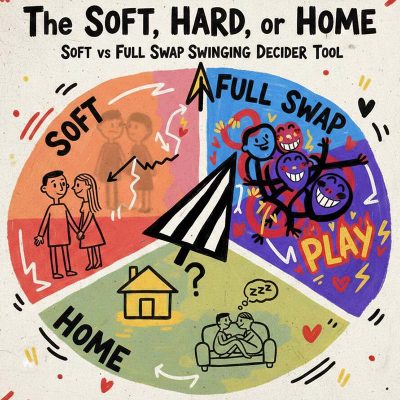
Don't let a "Soft Swap" night turn into a "Hard Feelings" morning.
Walking into the club with different expectations is a grenade waiting to explode. He thinks it’s a free-for-all; she thinks it’s just drinks and dancing. That silence in the car ride home? That’s the sound of a preventable disaster.
Stop guessing. Use this tool to sync your "sexual GPS" before you leave the driveway. Determine exactly how wild you’re getting tonight, so the only surprise is how much fun you have.
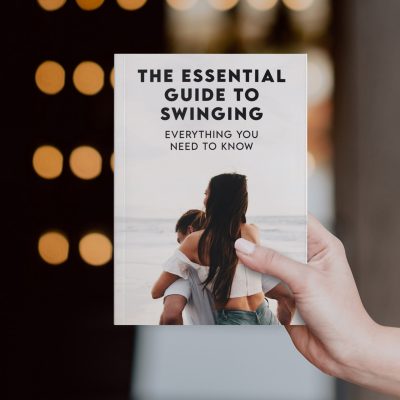
The fantasy of swinging is electric, but that cold sweat you feel when thinking about your partner with someone else? That’s your survival instinct warning you that your foundation is at stake. Most couples don’t fail because they lacked desire; they fail because they lacked a safety net. Ambiguity is where jealousy festers, and "winging it" is the fastest way to turn a dream into a nightmare of resentment and "what have we done?"
The Essential Guide to Swinging is your anxiety-proof roadmap through the chaos. Don't gamble your marriage on hope. Build a fortress of trust, master the repair chats, and ensure your exploration is defined by care, not a catastrophe
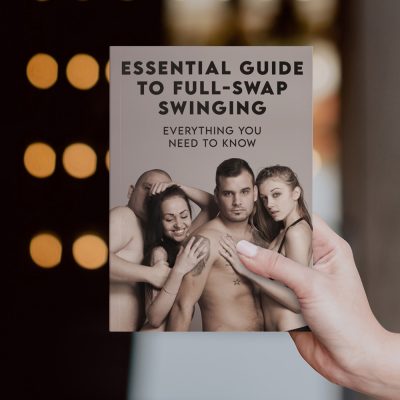
Full swap is the deep end. The rush is intense, but so is the risk of emotional wreckage. That tightening in your chest isn’t just nerves; it’s the fear that a "fun night" could become a permanent scar on your marriage. You can’t un-ring this bell, so never strike it without a plan.
The Essential Guide to Full Swap Swinging replaces reckless gambling with calculated discipline. From ironclad vetting to "emergency brake" scripts, we provide the safety architecture required to swap bodies without losing your minds. Don't just hope it goes well, engineer it
Gemini said
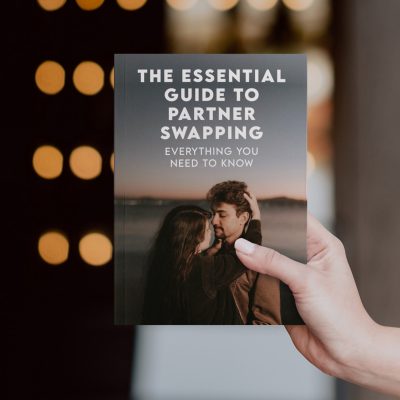
The fantasy is electric. The reality? It can be a grenade that blows up your marriage and your social circle. That tightening in your chest isn't just nerves. It is a warning that you are risking everything on a vibe. "Winging it" is the fastest way to turn a fun group chat into a toxic war zone.
The Essential Guide replaces the chaos with ironclad protocols. We provide the vetting tools, jealousy airlocks, and privacy scripts needed to swap bodies without losing your mind. Secure your safety first.
The fantasy of swinging is electric, but that cold sweat you feel when thinking about your partner with someone else? That’s your survival instinct warning you that your foundation is at stake. Most couples don’t fail because they lacked desire; they fail because they lacked a safety net. Ambiguity is where jealousy festers, and "winging it" is the fastest way to turn a dream into a nightmare of resentment and "what have we done?"
The Essential Guide to Swinging is your anxiety-proof roadmap through the chaos. Don't gamble your marriage on hope. Build a fortress of trust, master the repair chats, and ensure your exploration is defined by care, not a catastrophe
Full swap is the deep end. The rush is intense, but so is the risk of emotional wreckage. That tightening in your chest isn’t just nerves; it’s the fear that a "fun night" could become a permanent scar on your marriage. You can’t un-ring this bell, so never strike it without a plan.
The Essential Guide to Full Swap Swinging replaces reckless gambling with calculated discipline. From ironclad vetting to "emergency brake" scripts, we provide the safety architecture required to swap bodies without losing your minds. Don't just hope it goes well, engineer it
What counts as cheating in a swinging agreement
Cheating is best understood as any act that breaches clear boundaries or goes against the explicit terms of your agreement while hiding it from your partners. It can also be cheating if someone lies about what they did or hides the full truth about an encounter. The key is honesty and adherence to the contract you all have agreed to. Here are the core categories to consider when you are counting as cheating in a swinging arrangement.
Crossing explicit limits
When you and your partner lay out specific boundaries that say no sex with third parties or certain activities in certain locations or at certain times, crossing those explicit limits is cheating. The violation is not a mystery. It is a breach of the contract you agreed to. Examples include a couple agreeing no penetrative sex with others but one partner engages in penetrative sex anyway without telling the other. Or a bound partner sneaks in an encounter in a location you all agreed not to meet. In swinging agreements the real issue is not the act by itself but the secrecy and lack of consent around it.
Secret acts and hidden encounters
If you do something with another person and you do not tell your partner or partners in a timely and direct way then you are operating in secrecy. Secrets are the red flag that often signals cheating in the eyes of many couples. The act itself might be within a boundary if everyone has given consent but silence converts it into a breach of trust. Transparency is a safety mechanism that protects emotional well being. You do not want to be the person who sprints into a situation with a hidden story later on to be revealed in a less than ideal moment.
Deception and misrepresentation
Honesty is the backbone of ENM and swinging. Cheating includes lying about what happened who was involved or how you felt afterward. If someone present learns that details do not match the story given then trust erodes. It does not matter if the encounter was within the stated boundaries if the details were manipulated to shield the truth. This is not about punitive blame it is about keeping the lines of trust clear and intact.
Non disclosure of feelings and impact
Sometimes a breach is not about what happened but about how you handle the aftermath. If an encounter triggers strong emotions you owe your partners a narrative about how you feel and how you intend to navigate the situation. If you withhold information about jealousy discomfort or pain you are not honoring the open honest communication that makes swinging work. Honest disclosure helps prevent small issues from turning into large breaches of trust.
Ambiguous or poorly defined boundaries
Sometimes people create boundaries that are too vague to be useful. For example saying you can do anything with anyone as long as it does not get romantic is still too vague for some people. Ambiguity can lead to misinterpretation and ultimately claims of cheating. The cure is to turn vague boundaries into concrete ones and to revisit them regularly as feelings evolve.
Boundary evolution and renegotiation
Boundaries are not stone tablets. They shift as people change and as relationships grow. If your life changes a new job a move a new partner a shift in desire then renegotiating the boundaries is not cheating it is a healthy part of ENM. The important part is to discuss the new boundaries openly with everyone affected and to document the updated agreement so there is a shared reference point.
Common boundary templates you can adapt
Every couple or group will have their own flavor. Here are some common templates you can adapt to your own dynamic. Use them as a starting point and tailor them to fit your needs.
- No sexual activity with anyone outside the core relationship without prior consent from all parties involved.
- Romantic involvement with a third party is allowed only with explicit agreement from all partners including metamours.
- No kissing or making out with others unless all partners approve it in advance.
- Limit encounters to certain venues such as private homes or approved venues and avoid public spaces unless approved by everyone.
- All encounters require disclosure within 24 hours to the primary partner and a debrief after the event within 48 hours to discuss feelings and boundaries.
- When alcohol or substances are involved the activity is paused until everyone is clear headed and in agreement to proceed.
- Safety first rules such as safe sex practices and consent reminders are mandatory at all times.
Real world scenarios and how to read them
These are not one size fits all stories but they illustrate how boundaries work in practice. Read these and think about how you would respond in a real life situation. What would you count as cheating in each scenario and why.
Scenario one a casual chat with a coworker turns into more
A couple agrees that casual chatting with others is fine but any sexual content or intention must be cleared first. In this scenario one partner starts chatting with a coworker about fantasies and exchange flirty messages without notifying the other partner. This crosses a boundary because the content and intention escalate beyond casual conversation. Cheating for this couple would be the sexual component and the lack of disclosure.
Scenario two a spontaneous meetup at a party
At a party a partner flirts playfully with someone and ends up sharing a kiss. The boundary in this couple to avoid romance or sexual contact at social events was stated clearly. Since the kiss occurred and it was not pre approved the act counts as cheating unless the partner who was present was informed immediately and the boundaries adjusted in the moment with mutual consent. Some couples may allow a kiss if both agree in the moment. The key factor is consent and disclosure.
Scenario three an online encounter that stays online
One partner connects with someone online exchanging messages and photos but there is no in person interaction. If the couple agreement permits online interaction with certain restrictions this would not count as cheating. If the online interaction crosses into sexual contact or romantic intentions without consent it would count as cheating. The important thing is to document what counts online and what counts in real life.
Scenario four evolving feelings after an encounter
One partner develops strong feelings for someone they met while swinging. They continue to see that person and do not inform their partner. This is not automatically cheating by action but it becomes cheating if the partner later learns of the situation and discovers it was concealed or minimized. The best approach is to disclose feelings early and renegotiate boundaries if needed to protect the relationship from harm.
Scenario five a boundary becomes restrictive over time
A couple agrees to soft boundaries where the experiences are light and non sexual. After a few months one partner starts wanting more explicit experiences with others. They discuss it but cannot agree. Not being able to reach a new consensus means the boundaries should be paused and renegotiated. If one partner proceeds they should expect that the other will consider that cheating given the prior agreement.
Scenario six testing a boundary with consent
Two partners are unsure about a boundary and decide to test it with enthusiastic consent from all involved. This is a healthy approach in which everyone agrees to a controlled experiment. If anyone changes their mind during or after the test the boundary is revised immediately. If the test reveals a non consensual shift the experiment stops without judgment or blame.
Jealousy and emotions in swinging agreements
Jealousy is a normal human emotion and it does not mean your relationship is doomed. In ENM swinging it is a signal to pause and check in with your feelings and with your partners. Some practical steps to manage jealousy include naming the feeling specifically what triggered it and choosing a response that aligns with your boundary. It can help to schedule regular check ins with your partner and to use a jealousy journal or a feelings map to track patterns over time. A common technique is to practice compersion by focusing on the joy your partner experiences and recognizing that their happiness does not have to diminish your own.
How to prevent cheating before it happens
Prevention is better than reaction. Here are practical steps you can implement to reduce the chance of cheating and to handle things in a mature proactive way.
- Have a written boundary document that is reviewed at least every few months or whenever life changes occur.
- Hold regular check in conversations that include talking about feelings what is working what might need adjustment.
- Keep a shared calendar or etiquette note so all partners know when and where encounters may occur and who is involved.
- Agree on disclosure timelines and formats for after encounter reports and discussions to prevent a build up of secrets.
- Establish a simple escalation path for disagreements including third party mediation or therapy if needed.
What to do if cheating happens in a swinging agreement
First breathe. Then address it with honesty and without shame. Here is a practical order of operations you can follow to restore trust or renegotiate the relationship boundaries.
- Identify what happened and why it violated the agreement. Be specific about actions not intentions alone.
- Share your feelings openly but calmly. Use I statements to avoid blame and to stay focused on impact.
- Ask for the other person s experience and perspective. Listen actively even if you disagree.
- Decide together whether to adjust boundaries or to pause certain activities until trust is rebuilt.
- Set a plan for accountability including timely disclosures and agreed check ins.
- Consider talking to a relationship coach or therapist who understands ENM and swinging dynamics.
Negotiation and renegotiation as a recurring practice
Boundaries are living documents. They should be revisited as relationships, life stages and needs shift. When you renegotiate, do it with the right mood and the right process. Start with a joint session where each partner shares what is working and what is not. Propose concrete boundary adjustments and decide together which changes to implement. Document the new terms and schedule a follow up to review how the new boundaries feel after a set period. This approach reduces friction and helps everyone stay on the same page.
Communication strategies that keep swinging agreements healthy
Clear communication is the oxygen of ethical non monogamy. Here are practical strategies that help you stay connected even during awkward conversations or after a tricky encounter.
- Use regular check ins to discuss emotions and experiences rather than waiting for a meltdown moment.
- Be specific about what happened why it mattered and how you felt about it.
- Ask for permission to share sensitive details rather than assuming it is welcome in every setting.
- Practice active listening focusing on understanding before offering solutions or judgments.
- Develop a shared language for feelings such as a feeling scale from mild to overwhelming to describe emotional intensity quickly.
- Reserve a private debrief time after any encounter to process together away from other people and distractions.
Glossary of useful terms and acronyms
- ENM Ethical non monogamy a relationship approach that embraces honesty consent and openness among all parties.
- Swinging A form of ENM where couples engage in sexual experiences with others while maintaining commitment to their primary relationship.
- Boundaries Explicit limits agreed upon by all participants that guide what is allowed and what is not.
- Consent An ongoing enthusiastic yes given freely by everyone involved at every stage of an encounter.
- Transparency Open sharing of plans feelings and experiences to maintain trust and avoid surprises.
- Compersion Positive feelings about a partner s joy or pleasure with someone else.
- Metamour The partner of your partner who is not you.
- Disclosure The act of sharing information about encounters or feelings with all involved parties in a timely manner.
Practical tips for keeping a swinging agreement tidy
- Document your boundaries in a shared note or simple contract that all parties can access and edit.
- Schedule regular check ins and make them a habit rather than a sporadic event.
- Keep a feelings log to capture emotional responses and to help you talk through them with your partner or partners.
- Use a simple code word or phrase that signals you need to pause or revisit a boundary during an encounter.
- Share post encounter debriefs in a calm time window so emotions can settle before you discuss next steps.
If you are unsure whether a particular action would count as cheating in your swing, the safest route is to pause and discuss it before taking action. The intention behind your actions and the presence or absence of consent are the keys to understanding whether something crosses a line. The more you practice honest and thoughtful communication the more you will prevent misunderstandings and the more resilient your relationships will become.
Don't let a "Soft Swap" night turn into a "Hard Feelings" morning.
Walking into the club with different expectations is a grenade waiting to explode. He thinks it’s a free-for-all; she thinks it’s just drinks and dancing. That silence in the car ride home? That’s the sound of a preventable disaster.
Stop guessing. Use this tool to sync your "sexual GPS" before you leave the driveway. Determine exactly how wild you’re getting tonight, so the only surprise is how much fun you have.
The fantasy of swinging is electric, but that cold sweat you feel when thinking about your partner with someone else? That’s your survival instinct warning you that your foundation is at stake. Most couples don’t fail because they lacked desire; they fail because they lacked a safety net. Ambiguity is where jealousy festers, and "winging it" is the fastest way to turn a dream into a nightmare of resentment and "what have we done?"
The Essential Guide to Swinging is your anxiety-proof roadmap through the chaos. Don't gamble your marriage on hope. Build a fortress of trust, master the repair chats, and ensure your exploration is defined by care, not a catastrophe
Full swap is the deep end. The rush is intense, but so is the risk of emotional wreckage. That tightening in your chest isn’t just nerves; it’s the fear that a "fun night" could become a permanent scar on your marriage. You can’t un-ring this bell, so never strike it without a plan.
The Essential Guide to Full Swap Swinging replaces reckless gambling with calculated discipline. From ironclad vetting to "emergency brake" scripts, we provide the safety architecture required to swap bodies without losing your minds. Don't just hope it goes well, engineer it
Gemini said
The fantasy is electric. The reality? It can be a grenade that blows up your marriage and your social circle. That tightening in your chest isn't just nerves. It is a warning that you are risking everything on a vibe. "Winging it" is the fastest way to turn a fun group chat into a toxic war zone.
The Essential Guide replaces the chaos with ironclad protocols. We provide the vetting tools, jealousy airlocks, and privacy scripts needed to swap bodies without losing your mind. Secure your safety first.
The fantasy of swinging is electric, but that cold sweat you feel when thinking about your partner with someone else? That’s your survival instinct warning you that your foundation is at stake. Most couples don’t fail because they lacked desire; they fail because they lacked a safety net. Ambiguity is where jealousy festers, and "winging it" is the fastest way to turn a dream into a nightmare of resentment and "what have we done?"
The Essential Guide to Swinging is your anxiety-proof roadmap through the chaos. Don't gamble your marriage on hope. Build a fortress of trust, master the repair chats, and ensure your exploration is defined by care, not a catastrophe
Full swap is the deep end. The rush is intense, but so is the risk of emotional wreckage. That tightening in your chest isn’t just nerves; it’s the fear that a "fun night" could become a permanent scar on your marriage. You can’t un-ring this bell, so never strike it without a plan.
The Essential Guide to Full Swap Swinging replaces reckless gambling with calculated discipline. From ironclad vetting to "emergency brake" scripts, we provide the safety architecture required to swap bodies without losing your minds. Don't just hope it goes well, engineer it
